Category: african art

  • Stephanie A Lindquist about philosophy of plants and art

    Stephanie A Lindquist about philosophy of plants and art


    Stephanie A Lindquist is a New York based artist and photographer, whose photo collages gather ideas of plants with world-wide origins.  Her works bring forth anscestral memories from diasporic places, and create meaning mapping our global existence as travelers and settlers. Food has always played enormous role in peoples adaptation to new places, creating and sustaining cultures. Art can have as much to say about this subject too. 

    Firstindigo&Lifestyle: I have understood your recent photography art is based on your research on plants that are native, local  or indigenous to areas. How did you start this art project?

    Stephanie A Lindquist: I started gardening and reading about plants and how to grow them. I was especially inspired by farmer, philosopher Masanobu Fukuoka. He is the father of natural farming and a proponent of natural dieting–both of which he believed to be beneficial for the environment and human health. According to Fukuoka, a natural diet consisted of local and preferably ancient plants–something nearly impossible for any urban dweller like me to accomplish.

    This sparked my interest in identifying and promoting many little-known indigenous food plants from my ancestors in Africa and Europe, to where I currently live in the Americas.

    Firstindigo&Lifestyle: Where did you grow up, and live prior to New York City?

    Stephanie A Lindquist: I grew up in Los Angeles. I’ve also had opportunities to travel abroad to Europe and Central America.

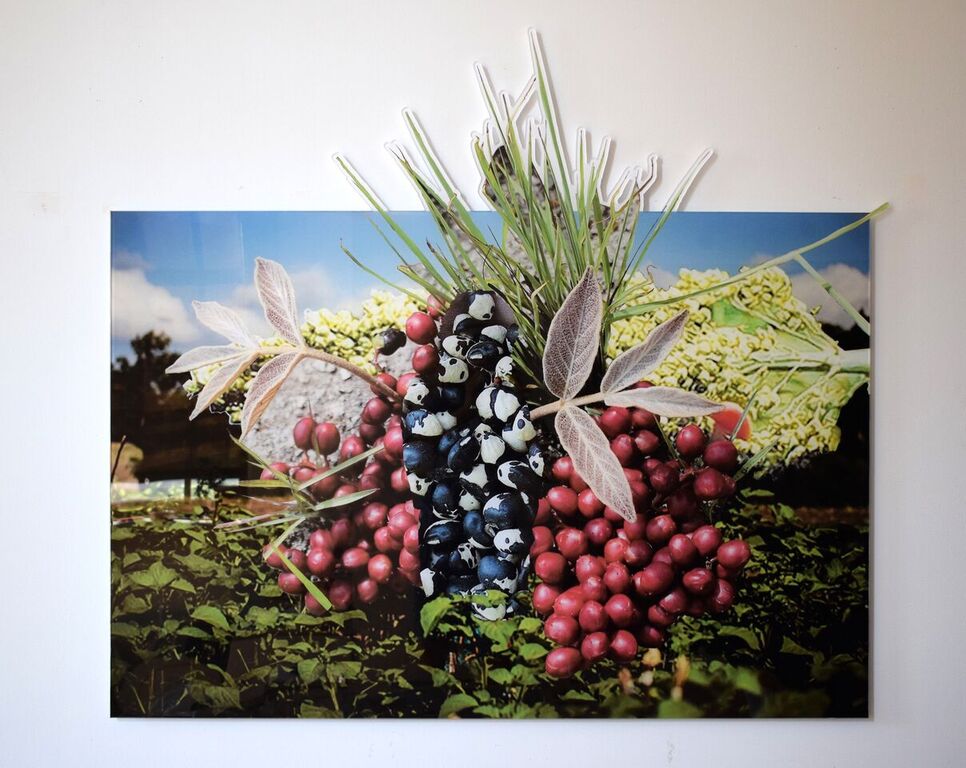
    Stephanie Lindquist, Lablab oryza glaberrima celosia, 2017, Digital print on aluminum diode, Edition of 3, 4’ x 4’ in.
    Stephanie Lindquist, Lablab oryza glaberrima celosia, 2017, Digital print on aluminum diode, Edition of 3, 4’ x 4’ ft.


    Firstindigo&Lifestyle: As one major inspiration behind your art making are the plants, do you cultivate or grow plants yourself and have your own garden?

    Stephanie A Lindquist: I garden regularly in East Harlem and the South Bronx. It is an essential part of my practice and life. Gardening allows me to cultivate, consume and appreciate some of the plants I study first-hand. It is a way to immediately begin creating a more reciprocal relationship with nature.
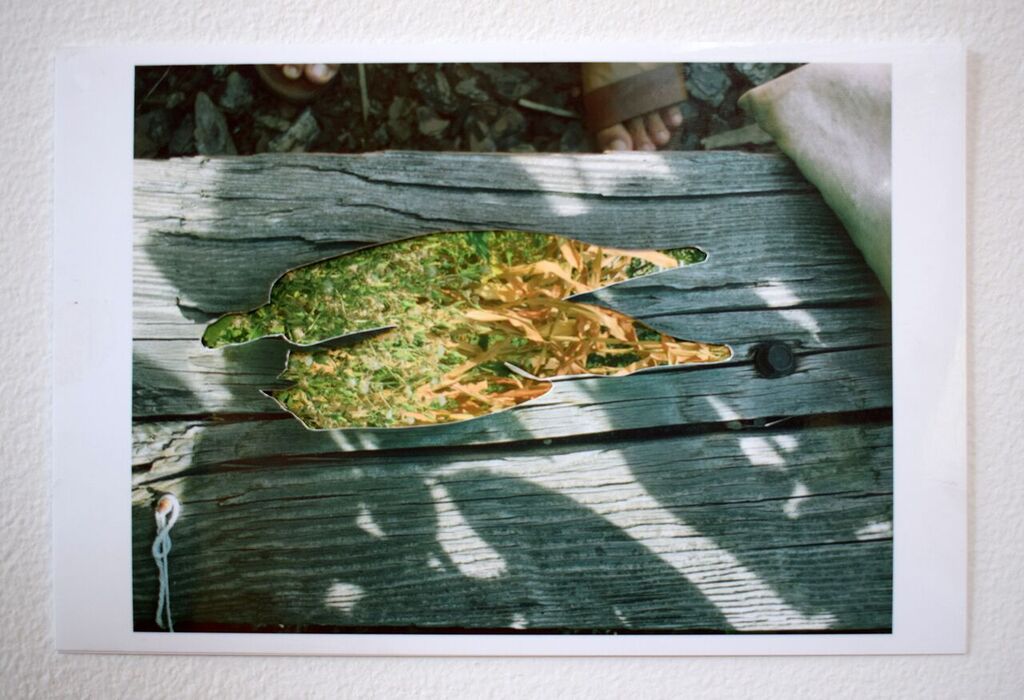
     

    Stephanie A Lindquist, Okra at 103rd 2018 Photo collage, Edition of 5, 7.5” x 10” in.
    Stephanie A Lindquist, Okra at 103rd 2018 Photo collage, Edition of 5, 7.5″ x 10″.


    Firstindigo&Lifestyle: Do you think that flowers, fruits and vegetables, etc. as subjects of art carry ideas about sustainability and environmental philosophical concepts?

    Stephanie A Lindquist: Definitely. Potawatomi scientist Robin Wall Kimmerer writes about our need to listen, observe and learn from plants as our teachers–rather than only learn about plants. I truly believe that plants can teach us how to lead sustainable lives if we listen. 

    Cultures close to nature have the benefit of accumulating indigenous knowledge of a diverse number of plants and their uses than city-dwelling folks. To see, recognize and know thousands of local, indigenous food plants is a powerful way to live in communion with the world. By taking care of widely diverse plants within our local ecosystem, we begin to take care of ourselves too–physically and spiritually.

    It is my aim to heighten our awareness and appreciation of indigenous food plants and to collectively reimagine the local cuisine of specific regions.

    Firstindigo&Lifestyle: Are there other concepts and philosophies attached to your art?

    Stephanie A Lindquist: My work is inspired by the work of many scientists including Mary Abukutsu-OnyangoSince the 90s she has been promoting the cultivation and sustainable consumption of African indigenous vegetables and fruits. On a continent plentiful with plants, it is surprising that most do not eat a sufficient amount of vegetables.

    The promotion of these plants have commercial and cultural implications as well as physical and spiritual effects on our health. Most of these plants have been purposefully displaced by genetically engineered cash crops and changing tastes. To rekindle our relationship with the oldest, local plants is also to remember the unique history of the land and how we arrived here.

    Stephanie A Lindquist, Cowpea Lannea Edulis Sorghum African Nightshade (East Africa) part of Founded series 2018 Digital print on acrylic 44“ x 50” in.
    Stephanie A Lindquist, Cowpea Lannea Edulis Sorghum African Nightshade (East Africa) part of Founded series 2018 Digital print on acrylic 44“ x 50”.

    Firstindigo&Lifestyle: Do people act amazed when seeing and hearing about  your work?

    Stephanie A Lindquist: It has been very satisfying to hear people’s reactions to my work. Even urbanites like me are full of surprising information about plants and their uses, which I happily add to my arsenal of knowledge.

    As the daughter of a Liberian-American immigrant and descendant of Swedish and Irish immigrants, I have been invested in reclaiming ancestral knowledge for a long time. Conversing with others about indigenous plants has been a very satisfying way of piecing together our ancestral knowledge of the natural world around us.


    Firstindigo&Lifestyle: Who inspires you to do your art?

    Stephanie A Lindquist:  I admire many artists including Julie Mehretu and Wangechi Mutu. I am also inspired by the authors I read and the emerging artists I meet everyday.


    Firstindigo&Lifestyle: How do you design your collages and what is the process like in making photographic prints?

    Stephanie A Lindquist:  I begin by researching a number of indigenous plants to a specific region and learning about their history, uses, and the people who cultivate them. Next I collect images of them, and if accessible take original photographs of the plants.

    I cut the prints by hand and arrange the composition on a smaller scale until satisfied. Next, I digitally produce and print the collage at a larger scale or sometimes hand-cut a larger collage on fine paper.

    Firstindigo&Lifestyle: Tell a little more about yourself, where did you study art?

    Stephanie A Lindquist:  I have studied art since I was little. I received by BA in Urban Studies and Visual Arts from Columbia University. Since then, I’ve had the opportunity to participate in residencies in Rome, Berlin and Staten Island, and to exhibit my work in museums and alternative spaces in New York and California. I also work as an arts administrator.


    Firstindigo&Lifestyle: Your objects and prints seem to carry domestic ideas in them, or it gets transmitted as a feeling with the coffee cup on a table, or with  the flowers. Does this resonate with your intentions?

    Stephanie A Lindquist: Yes, my previous body of work in photo collage was concerned with capturing colorful, jarring, domestic still lives. I often chose the materials used to create the stage in memory of family and friends in my life, like my mother, my partner, or a particular place like the Kitchen Floor. Through collage I bring new meanings to these objects, in this case now where an okra blossoms and fruits. Their patterns are playful, somewhat minimal, abstract, full of textile, and tactile.


    Stephanie A Lindquist, Kitchen Floor 2017 Photo collage 14.5“ x 17.5” in.Stephanie A Lindquist, Kitchen Floor 2017 Photo collage 14.5“ x 17.5”.


    Firstindigo&Lifestyle: Some collages of yours are really colorful. Do you find that colors have significance and carry meaning?

    Stephanie A Lindquist:  The colors reflect my mother’s textiles, family photographs, and the landscape around me.

    Firstindigo&Lifestyle: Do you consider yourself similar to feminist art practices in which domestic life and the everyday gives to details and form in the art?

    Stephanie A Lindquist: Yes, in many ways I make my art to create space for feminism and equality among humans and all that lives in the world. I treasure these often feminized spaces of the home and garden. And I enjoy propagating this image into my viewer’s subconscious of a plentiful, sustainable earth.


    Firstindigo&Lifestyle: Also your knitted objects would signify not only sculptural dimension as objects that hang on the wall, but also about art-historical connection to the women artists?

    Stephanie A Lindquist: The knitted objects Needles and String and Rosary for me were living sculpture–something I could create and disassemble again and again as a public performance and private meditation.


    Firstindigo&Lifestyle: How do you separate your own artistic practice from curating, and working with other artists in your work?

    Stephanie A Lindquist: I make time for it. I also let it bleed into my research interests and writing. My practice gains a lot from being in such close contact with artists and curators on a daily basis. I am constantly listening to and collaborating with other visually creative minds.

    Firstindigo&Lifestyle: Can you describe what art projects are you planning for the future?

    Stephanie A Lindquist:  I am thrilled to show recent work around indigenous food plants at Smack Mellon as a part of AFRICA’S OUT! inaugural benefit exhibition, Carry Over: New Voices from the Global African Diaspora curated by Kalia Brooks Nelson. To have my work in the context of Firelei Báez, Layo Bright, Melissa Calderón, Baseera Khan, Jasmine Murrell, Anna Parisi, Keisha Scarville, Pamela Phatsimo Sunstrum and Saya Woolfalk is a joy!

    The exhibition is on view June 2-30. More information about the s  how in Brooklyn http://africasout.com/exhibition-carry-over

    I am also looking forward to presenting work at CTRL+SHFT Collective in Oakland this summer. Other than that, I’m excited to spend part of the summer camping and learning more about plants indigenous to the eastern seaboard.

    I treasure these often feminized spaces of the home and garden. And I enjoy propagating this image into my viewer’s subconscious of a plentiful, sustainable earth.

  • Intervention Raphael Red: A fine stilt dance in Boston

    Intervention Raphael Red: A fine stilt dance in Boston

    Brooklyn based Mexican-born artist Laura Anderson Barbata got interested in stilt dancing in 2001, while being a resident artist at the Caribbean Contemporary Arts CCA7 in Trinidad and Tobago. She studied local carnival traditions embedded in the surrounding places, and started fusing her visual arts practice with elements of local performance. While working on a project which included paper making, the performance element stepped naturally into the costumes she was making from paper. The resulting works had a connection to local carnivals. In this context, she ran into workshops that were targeted for young people, in which local youth was learning stilt dancing as an alternative hangout to the streets. Eventually, Anderson Barbata brought her experience back to her home in New York, finding new collaborators who were based in the city. The  artist has ever since worked on various projects with the Brooklyn Jumbies, a NYC group specialized in the African Diaspora performances, including stilt dancing of the West Indies and West Africa.

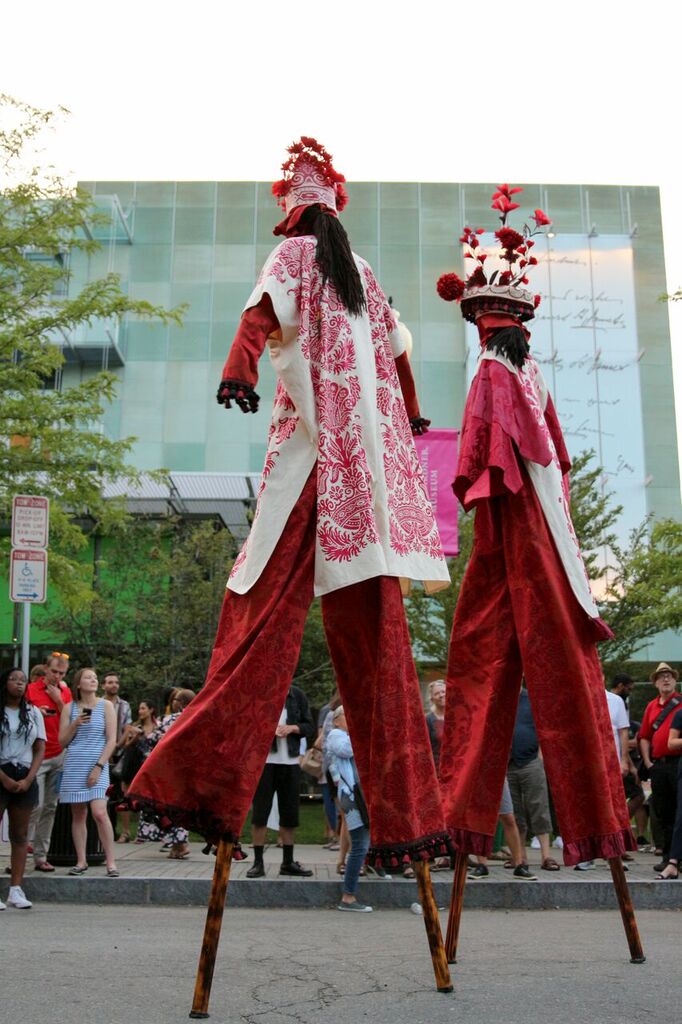
    On August 10, 2017, Laura Anderson Barbata’s new work Intervention Raphael Red was performed as part of Isabella Stewart Gardner Museum’s Neighborhood Night Block Party in Boston. For the event, the Brooklyn Jumbies were joined with local Spontaneous Celebrations in Jamaica Plain performers, all dressed in strong and dramatic red and white costumes that have their source of inspiration in the art museum’s interior. Anderson Barbata created the costumes and headgear for the performers from the luxurious silk velvets that were recently added on the walls of the Isabella Stewart Gardner Museum’s renovated Raphael Room. She found inspiration on the brocades and patterns, and developed the ideas and materials into new styles of costumes. Even as the artist does not consider herself to be a costume designer intrinsically, she has found a prominent voice with projects that involve textiles. Her work presents meticulous details, and is her artistic tool for innovation. Anderson Barbata found the current project Intervention Raphael Red, while the conservators at the Isabella Stewart Gardner Museum were transforming the historic Raphael Room. She has been an Artist-In-Residence at the museum.

    Dancers at the Block Party_Isabella Stewart Gardner_2017
    The Queen and stilt dancers, Brooklyn Jumbies, at the Block Party hosted by the Isabella Stewart Gardner Museum, August 10, 2017. Photos: Isabella Stewart Gardner Museum.

    Over the past year, the art museum in Boston has added new ways to connect audiences to its historic galleries. The programming at the Isabella Stewart Gardner Museum has involved contemporary performances from sound art to pop-up dance performances. This Block Party introduced museum’s Raphael Room to the outside world, namely bringing its aesthetics and content in a contemporary form to the streets. Anderson Barbata’s project brought the costumed dancers and musicians as a procession down the Boston’s streets. Together with the Brooklyn Jumbies, who are the masters on stilts, there was a queen as part of the procession. It introduced also a herd of zebras as puppets that were animated by volunteers and the museum’s Teens Behind The Scenes, who are there to learn about the life and work in the museum. Guests were also invited to take part in the gallery activities and art-making in the studio. The evening filled with art and party had more performances in the gardens, Palace, and Calderwood Hall of the museum.

    Audience of the Isabella Stewart Gardner Museum Welcomes dancers on stilts.
    Audiences and Isabella Stewart Gardner Museum welcome stilt dancers.

    Anderson Barbata’s collaboration with the Brooklyn Jumbies started in 2007. The group performs stilt dancing, which is considered one of the numerous cultural forms that come with the African and Caribbean diaspora.

    Jumby means “ghost” in Afro-Caribbean, and also serves as a substitute for “stilt-walkers” who function like above ground roots connecting the undead with the rituals of the ancestral African world. Barbata and the Brooklyn Jumbies blend tradition with elements of social contemporary culture, group participation, and protest.


    Block Party_Isabella Stewart Gardner_August 2017
    Performers at the Procession introducing Anderson Barbata’s work as “Intervention Raphael Red”.

    What is remarkable in Anderson Barbata’s focus and approach is that she has anthropological sensitivity to the subject matter. The artist has studied the ancestral components behind the performance tradition. She has brought contemporary messages into its form constantly adding new aspects to its current performing context.

    Stilt dancing for me combines many things. To start, we are working with scale– larger-than-life characters that have the possibility to capture our attention. The movement vocabulary of a dancer towering over us expands in space. They are accentuated and can extend themselves through their use of textiles and different materials. This is where costuming is essential to the performance visuals and the message. But also very important to me is the symbolism and tradition that is embedded into this practice. -Laura Anderson Barbata

  • Curator Dalaeja Foreman’s recent interventions

    Curator Dalaeja Foreman’s recent interventions

    Dalaeja Foreman is a curator, community organizer, first generation Caribbean-American and Brooklyn native. Her curatorial practice seeks to combat misconceptions of oppressed people and resistance through direct action, cultural esteem and the arts. She is a graduate from the Visual Presentation and Exhibition Design program at the Fashion Institute of Technology. Dalaeja is also alumni of No Longer Empty Curatorial Lab 2015. In January-February 2016, she co-curated a show ‘Speak Out’ for the BronxArtSpace. The exhibition addressed legacies of injustice and practices of institutional racism, offering alternative views and acts of empowerment for the artist in their communities, creating realities that affirm that #BlackLivesMatter.

    Firstindigo&Lifestyle: You co-curated a show ‘Speak Out’ for The Bronx Art Space. Could you tell about the roots for establishing that collaboration?

    Dalaeja Foreman: That I have! Alongside Linda Cunningham and Eva Mayhabal Davis.

    After working with her on a No Longer Empty curatorial fellowship exhibition, Linda (Director of BronxArtSpace) asked me if I would be interested in co-curating an exhibition she was conceptualizing. An exhibition about institutionalized racism, as a white woman, Linda did not feel as though this was an exhibition she should be curating without the voice of a person of color (A decision I respected and cherished deeply, giving me the assurance of her allyship ). After meeting with one another and having a long conversation about the significance of this discourse she told me she would give me curatorial license over the exhibition and asked if I would want to work with anyone. I suggested we work with another No Longer Empty fellow, Eva Mayhabal Davis.

    Firstindigo&Lifestyle: The concept had several outcomes as art works, performances, and community events. Could you tell how it all came together and succeed?

    Dalaeja: The exhibition was submission based, inspired by the Respond exhibition at Smack Mellon Gallery. Linda selected a panel of artists (including Eva and I) to review the 80+ submissions. Once we selected the works,  Eva and I thought very thoroughly about the themes and counter themes in each selected work and put them in conversations with one another accordingly. We decided it would be best to give extended labels to the works to give our audience as much contextual knowledge as possible. Since the Mott Haven area of the Bronx is heavily Spanish speaking, we also provided the labels in Spanish.

    As a strong believer in activating art spaces for radical acts, I wanted to be sure the exhibition had as many programs that responded to the many intersections of racism in our society as our capacity could handle. These themes varied from the criminalization of black and brown youth to the celebration and use of black love and Black Girl Magic as a radical acts.

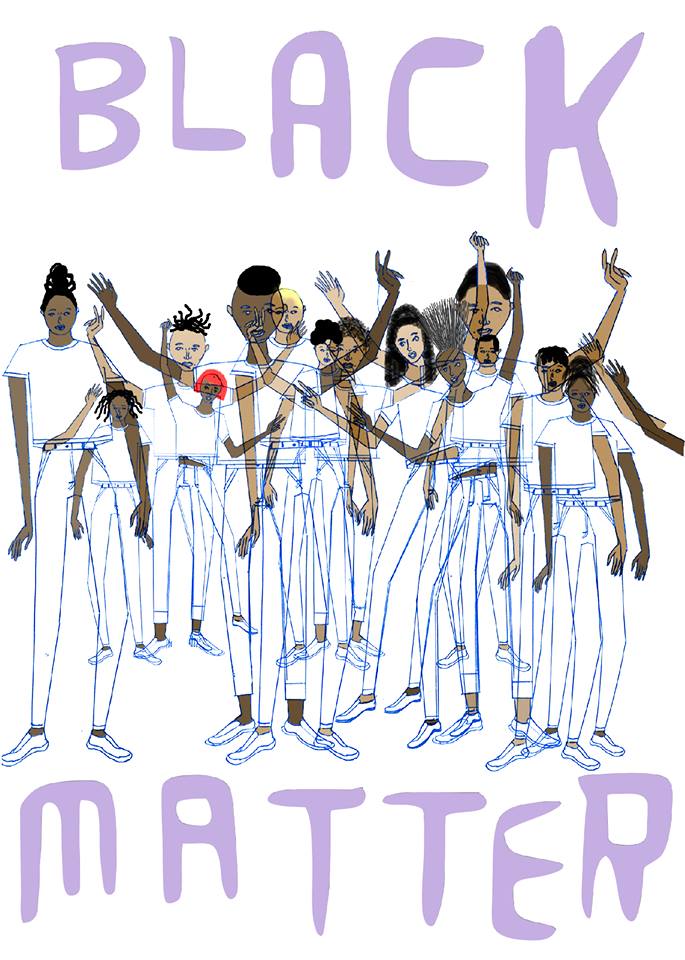
    'Speak Out' -exhibition poster in Bronx Art Space #blacklivesmatter
    Illustration by Rafael Melendez

    Firstindigo&Lifestyle: How was your experience in Bronx, in comparison to Brooklyn, where you are from?

    Dalaeja: Aside from being a Curator and Arts administrator, I am a first generation Caribbean-American, community organizer and Brooklyn Native. As an organizer, I have done a considerable amount of work around the mass-displacement of working-class communities (most often communities of color) in Brooklyn. Sadly, Art has been used as as a catalyst for what I consider the cultural erasure of my native borough.

    I see the arts as yet another tool for social change, and art has been used historically to work as ancillary support for communities of color. Whether it be thru healing or practical solutions for community issues. Although this is a truth for Brooklyn’s artistic history, I feel as though this concept has been stronger in Bronx history due to the many ways State and city institutions have historically neglected Bronx county.

    Artists can use their talents for exposing truth for the benefit of their communities and this seems to be particularly weaved into the fabric of the artistic history of the Bronx. A history I have incredible respect for, that continues on.


    Firstindigo&Lifestyle: How important was the role of social media in creating networks, and establishing new audiences?

    Dalaeja: Eva is more of the social media wiz. I was more concerned about the ways in which we could ensure the community members knew about the exhibition and we’re involved in our programming. This outreach included, working with the BronxArtSpace interns to outreach to local high schools, doing physical flying for the exhibition, dropping flyers off at local bodegas and restaurants. As well as dropping information of at local libraries and speaking/building relationships with community members. Some of whom were artists in the exhibition, which made me soon happy!

    Firstindigo&Lifestyle: What is your ideal audience for the art?

    Dalaeja: Since I truly see art as a tool for inspiring radical action, my ideal audience is always working-class people (some of whom also happen to be artists and art enthusiast). Especially in the case of the ‘Speak Out’ exhibition because, it took place in a working class community. If these spaces aren’t intended for their own communities, why should they exist there? This is a concept Linda truly understands which is yet another reason I LOVE working with her.

    Firstindigo&Lifestyle: What is your background in coming to curating arts?

    Dalaeja: I began working in the arts as a part-time Gallery Assistant at the Milk Gallery then began working as an exhibition manager for a small gallery that specialized in 20th and 21st century counter-cultural ephemera (say that 10 times fast. bahaha). This experience helped me realize the significance the arts have had on social movements of the past and inspired me to pursue curation.  I began taking online course with Node Center to learn more. After the gallery lost funding and I lost my job I decided to use the little bit of money I had saved to invest in my interest and started applying for fellowship programs. After my incredible experience with the No Longer Empty fellowship, I decided this is surly a way I could use my interest in the arts pragmatically to help plant the psychological seeds for social change. I still have so much to learn to pursue my practice as radically and community-collaboratively as I can, and am currently a Create Change Fellow with the INCREDIBLE Laundromat Project.

    Firstindigo&Lifestyle: How did you education support your current directions and help you to develop your vision?

    Dalaeja: I studied Visual Presentation and Exhibition design at The Fashion Institute of Technology, this experience helped me truly understand my love of space and it’s possibilities. I minored in International politics which further introduced me to the ways in which politics (on a community level) and exhibitions/display can merge. Most of my curatorial focused knowledge has been from lived experience, work experience and continuing education programs. As a lover of knowledge, I am interested in perusing a Masters degree in Contemporary Art and Art Theory of Africa and Asia.

    Firstindigo&Lifestyle: How do you develop your curatorial concepts, is there a phase of writing or visualizing things in a specific manner, or talking?

    Dalaeja: It is a bit of all of those things. I am a ranter by nature so that really helps with getting concepts across that I believe are worth exploring.

    Often I am inspired by the political education meetings with the organization I am a part of (The People Power Movement) as well as my friends and family members. Or I may have a design concept in mind that I think is worth collaborating with artists one. BUT most importantly, I am inspired by the Art work and the concepts that artist is exploring.

    Dalaeja Foreman at the 'Speak Out' exhibition.
    Dalaeja Foreman (right), at the ‘Speak Out’ -exhibition. Photos: Alex Seel. Courtesy of Order Vision Productions for Bronx Art Space.

    Firstindigo&Lifestyle: What do you think is a role of a curator in society in large, in other words, how do you think the micro ideas meet the macro levels?

    I believe Curators have a powerful platform, giving us the ability to work with artists and communities to push narratives into the mainstream consciousness. These narratives can help people critically think and sympathize deeply about concepts in which they weren’t even aware of. This is a responsibility of utmost importance, one with the opportunity to empower a community, a people and a generation. -Dalaeja Foreman


    Firstindigo&Lifestyle: Your political activism has a mind of a movement, in which people power takes a different stance. Does New York City represent a special place for activism to you?

    Dalaeja: New York City means a great deal to me in regards to activism, but that is because it is the only place I’ve ever known as home. Although a wide array of injustices are happening in my city, they are also happening everywhere in the country. A political revolution could be sparked anywhere at anytime, the important thing is that we support one another’s actions and grow together using people power and a thirst or justice as our binding force toward a political system that works for the majority.

    Firstindigo&Lifestyle: Do you have favorite art forms, or is the medium secondary to other things that matter?

    Dalaeja: I do, I love sculpture and painting, textured art objects and photographs. I’m trying to challenge myself to work more with performing artists since it’s not my go-to. However, content that compliments aesthetics and artistic merit (according to my opinion of those concepts) are of most importance.

    Firstindigo&Lifestyle: How do you identify and experience yourself as a black woman art professional in NYC art community, or does that resonate in a professional level to you personally? 

    Dalaeja: My Black woman experience is at the forefront of all of my experiences because it is the only lens in which I can see the world and is often the most determining lens in which the world sees me.  With that being said, as a young arts professional I believe it is my duty to ensure that people who are marginalized (like myself) demand their voices heard in institution that effect our lived experiences. Whether they be our schools, museums or workplaces. And MOST IMPORTANTLY create our own institutions that work for us from conception onward.

    Firstindigo&Lifestyle: What is your next dream of consciousness, where are you heading to collaborate next?

    Dalaeja: As an Art Administrator in the Bronx, I am really excited to learn more about what artists are and have been doing in the borough and figuring out how I can best support them and the communities they collaborate with. As well as, continuing and improving my organizing and hopefully trying to figure out some more schooling while doing all of that (inside and outside the education institutions).

    Dalaeja Foreman’s website: http://www.dalaeja.co/