Category: art education&management

  • Artist spotlight: Johanna Tuukkanen, The Outstanding performer

    Artist spotlight: Johanna Tuukkanen, The Outstanding performer

    I interviewed Johanna Tuukkanen, who is currently preparing her PhD in art education and cultural policy. She is a well-known curator and art-maker herself, and the Artistic Director of ANTI festival based in Finland’s Kuopio. This week, January 30, 2015, she will also have a premiere of a new work Panopticon together with her colleague, choreographer Pirjo Yli-Maunula in Oulu, which is a vibrant capital in Northern Finland. Their new multidisciplinary work will articulate a hot topic of women’s ‘controlled bodies’, as they are often portrayed in fashion industry and magazines, taking a theme of aesthetic violence in relation to women’s bodies as a starting point in their performance. Simultaneously, their performance asks, are we allowed to mock this phenomenon, and even make fun of it in the arts? Johanna Tuukkanen has been making noise with her performance art for good 15 years now, highlighting women’s bodies in her performances many times before.

    Johanna Tuukkanen in Huippusuoritus, Outstanding Performance, Photo: Pekka Mäkinen
    Johanna Tuukkanen in Huippusuoritus, Outstanding Performance, Photo: Pekka Mäkinen

    Firstindigo&Lifestyle: Johanna, I have known you from the early 2000s onwards. It seems that there has been a lot of currency exchange around your artistry since that time. Finnish art scene, I believe, has also developed and changed during the past 15 years. Could you highlight in a nutshell, how did the 21-century look so far in the art world from your personal point of view? What are your greatest pros and cons in the field as a participant with so many roles?

    Johanna Tuukkanen: You are right, things really have changed! After studying performance and new dance in the Netherlands and Germany in 1990s, I moved back to Finland in 1997. In terms of the art scene, it was a kind of culture shock for me and it definitely took some time to find my way around it. From very early on, I found myself thinking how else I could make a difference in the arts other than working just as an artist.

    Since then, I do see and have also personally experienced that the field has expanded greatly, it has opened and it is accepted – not totally but more and more – that for example in the field of dance, there are multiple traditions from which an artistic practice can stem from, not only one or two. Also the growing interest in site-specifity, a kind of ‘trend’, has resulted in other kinds of expansions and effected how a cultural production organization whether a museum, a theatre, a festival or a freelance collective might operate. Currently I’m thinking a lot about the concept of social in the arts as many artists are producing socially engaged works in collectives and communities where the artist is not the central point of the work but the interest in a process, in shared authorship, in participation and dialogue…

    As a participant in the field, I feel that there are several communities in the art world where one can find a kind of ideological home and vast amount of possibilities. Yet, at the same time, although we do have some rather brave funding bodies, generally speaking our funding structures have not been able to develop in line with the field – thinking especially the amount of work that it produced by the freelance artists and companies in comparison with the institutions established in the 70s.

    Firstindigo&Lifestyle: You are known as a hardcore doer, and as a hands on professional when it comes to performance and to its management, to your curator’s role as well, and to a founder of a successful art-festival. Where lies the secret behind it all, how do you manage all your roles, or your doings, and don’t get burned-out at the same time? You seem to be shining.

    JT: Wow, thank you! I don’t really see myself that way… But yes, to say that I’m a doer is perhaps a good way to put it. I suppose I’ve been interested in many things and just started doing them, rather naively sometimes. I’ve not been waiting around for someone else to do the work but really dug my hands into stuff, working beyond my comfort zones, not counting hours… I can’t recommend it to anyone! To be enthusiastic, to get excited is a great energy and force also. For me doing different things is also very energizing, things feed off each other and I never feel that ‘I’m doing the same job’. Maybe also because I’m not a very organized person!

    But to be honest, time management is a big issue for me. I’m a very work oriented person and I have to actively work on prioritizing time for my family and friends and my own well-being. But I do do it! These days I prioritize regular exercise, try to eat well and sleep enough. I try to have one day off every week but if it’s not possible, I’ll make up for it by taking extended weekends off or mini holidays.

    I’m lucky to be working for organizations and things I really believe in and I feel connected to and supported by an international community. I’ve also managed to organize my life so that I live with my lovely family in a beautiful house where I can enjoy everyday aesthetics, quietness, the Finnish lake landscape, the forest and an amazing sauna.

    Firstindigo&Lifestyle: I associate you strongly with ANTI Contemporary Art Festival. How did this idea come forth, and develop into an international success story?

    JT: This is a long story but to put it short, I was working in the Regional Arts Council of North Savo at that time and with my regional artist colleague we wanted to create a new, international multidisciplinary contemporary art festival in Kuopio, to create international networking opportunities for local artists and to active the city and different sites in Kuopio through art. We really didn’t know how it would turn out, it was a real experiment! But already since the first festival, there was a lot of international interest and the festival was a great success. The networks I’d started building in the early 2000 were crucial for our international growth and reputation and of course artists themselves are great messengers of a quality festival. I’ve personally always thought that international networking is very important and for me it has also set the standards how to run a festival. But I suppose the most important thing is that ANTI has a unique concept and in fact, it’s also modelled in different parts of the world. This all has taken an enormous amount of work and I’m grateful for the wonderful individuals who have worked for the festival over the years.

    Firstindigo&Lifestyle: I admire your knowledge on the performance field, internationally you seem to have a network of artists that resonate with your own way of working. Was it organic to find collaborators accross the country borders?

     JT:  Yes, it all has happened very organically. ANTI has also been a partner in two European projects and it has been a great gift and learning process to collaborate with international live art curators and festival directors.

    Firstindigo&Lifestyle: Finland is getting a Dance House finally, how did the miracle happen?

     JT: Well, I’m extremely happy to be working for the Dance House but the background work with the private funding bodies was done and negotiated before I even started so I can’t take any credit for it. The Dance House initiative is very lucky to have a fantastic project manager, Hanna-Mari Peltomäki, but also the time was right – the Finnish dance sector was ready, the private funding partners were ready and lots work was done in a rather short amount of time.

    Firstindigo&Lifestyle: What does living and working in Finland mean to you? Where else in the world would you imagine to live?

    JT:  Living in Finland and outside the Helsinki area has been a very conscious cultural political choice for me. I’ve wanted to show that great art can be made anywhere and it is really crucial to have artists and cultural professional working and making an impact in different regions. These days, especially with digitalisation and good connections, I don’t really think it matters so much where you live.

    But in recent years, as my children are getting older and as I want to find new professional challenges, I’ve become open to other options as well. Like I said earlier, I’m very work oriented so it’s probably work that will take me somewhere… There many places I could imagine living i.e. Australia and Denmark. But where ever I’d go, my work has to be meaningful. I can’t really imagine moving somewhere for the sake of the place or city.

    Firstindigo&Lifestyle: Where are you heading next, any specific plans for the future?

    JT: Good question. I’m open and up for new challenges. I completed an MA in Cultural Policy last year and enjoyed that process greatly. What a luxury to deepen one’s knowledge and expertise! I’m the beginning of my PhD so probably for the next years I will be juggling my time between the Dance House, ANTI Festival and my research…unless something totally unexpected happens. Which of course is very likely in this life.

    Johanna Tuukkanen and Pirjo Yli-Maunula, Panopticon, Photo: Pekka Mäkinen
    Johanna Tuukkanen and Pirjo Yli-Maunula, Panopticon-premiere, Jan 30, 2015. Photo: Pekka Mäkinen
  • Training artists for innovation: Competencies for New Contexts

    Training artists for innovation: Competencies for New Contexts

    photo: Wilma Hurskainen: “He Doesn’t Like Water”, 2012

    The book Training artist for innovation: Competencies for new Contexts was published in 2013, (the Theatre Academy of the University of the Arts in Helsinki in Finland). It discusses the topic of artists who are trained for creating innovation in various contexts outside their own artistic practice. The book is  based on a  project, which  gathers together different agents in European countries, who are leading artistic innovation. Kai Lehikoinen and Joost Heinsius are the editors of the book.

    The book-project brought together artists, companies, organizations, universities and cities, which have experienced artists working with them.  The idea for the publication came from the challenge that both society and businesses need new solutions and interventions, as they face changes.  Professional artists with artistic interventions can respond to challenges of today, bringing in new questions and ways of thinking. Artists “offer contradiction, as well as confrontation and friction, and they provoke new ideas.”  

    Training Artists for Innovation: Competencies for New Contexts argues that artists who take the challenge for artistic interventions need specific training to establish their artistic know-how for new contexts. Artistic competencies can be trained, so to speak. Innovation can occur where artists, with their own practice and methods, contribute to the arts sectors and organizations, to the business world and sectors, where societal policies are made. The book responses to a framework of European context, but the idea can be shifted to other parts of the world.

    A very basic question; are artists not innovative by nature, opens up a dialogue between artists and new contexts.  According to editors Heinsius and Lehikoinen, “A gap has risen between the arts and society that needs to be bridged and closed” .

    Art can intervene not only on the walls of office spaces, but it can come to peoples’ working life as well.  This statement is inspired by models learned from community art, and by the experience coming from social and health sectors, where art has always been respected as part of human life.  The new innovation comes in the intersection, where businesses and organizations want to raise their creativity,  and understand their creator capacity in conjunction to human-based factors. As the book shows, the arts can add value, for example, by  bringing in emotional and aesthetic dimensions. Artistic interventions can boost creativity and raise energy, bring in new ways of listening, managing, and interacting with others. The book emphasizes that the term artistic intervention is understood as “interdisciplinary professional practice that takes places in business settings and involve professional art-making and creative arts practices”.

    What are, then, the issues that interventions can tackle? Topics and issues of course vary, and depend on each context. Artistic interventions can be connected to strategy and concept development, to work processes, to team-building and social interactions, and to public relations, for instance. In the level of cultural policy, the arts have a key role, together with other creative sectors, to add into the diversity of society. In a larger societal (European) policy level, the following seems very relevant and welcomed, when thinking of the creative economy:

    “At the national level, the starting points differ from country to country.  In some countries, it is the perceived gap between the arts sector and the rest of society that needs to be acknowledged – that is, the need for the arts to appear as relevant to other sectors in society. In other countries, innovation development welcomes the arts as the perception of shifting from technological innovations to social innovations and creativity.”

    Training Artists for Innovation: Competencies for New Contexts  is a book that asks a relevant question of,  how to do it with the arts. It gives several examples of the relevant competencies that artists can embody for their interventions. Gerda Hempel and Lisbeth Rysgaard,  from Danish Artlab, write in their chapter Competencies – in real life, about their own model of working with artists and businesses.  What they suggest is that artists need to manage a variety of specific tasks that relate to understanding the culture of the organization: such as developing and describing the concept, knowing how to sell and negotiate, and,“how to engage and conduct the process, how to extract learning and evaluate, and how to support the implementation within the organization.”

    Their chapter reveals that when artists share a common denominator, the artistic base, methods and tools vary in different art forms. For example, a violinist in the opera house has a different approach than an avant-garde performer who works in an experimental performance space.

    Artlab founders and consultants Gerda Hempel and Lisbeth Rysgaard bring in the artist perspective of working with businesses. They open their Artlab Entrepreneurial Model (that is based on their 12-year experience in the field) and reflect this in relation to real artists, who they interviewed. This shows how artistic interventions function from the artists point of view. The model itself is like a metaphoric artistic house, which includes 4 interactive work spaces and a storage. Its aim has been to help professional artist who want to go entrepreneurial and find new job opportunities, or look for new management skills for their career. The house allegory with 4 spaces  includes: The Shop/Back office, The Workshop/Development, The Scene/Artistic intervention, The Shop/Front office, and Storage/place for new ideas. Artlab’s  model functions as a visual guideline to see  parallel tracks. It offers artists a tool to plan and prioritize their work.

    Training Artists for Innovation: Competencies for New Contexts has a message for everybody working in creative industries. It offers chapters with real examples, and discusses  how real artists have solved their tasks, approached different organizations and worked with businesses. The book is a guideline to discussing competencies that artists need in order to work with various sectors.  It clearly opens a discussion, which goes to two directions. 1. Artists need more than ‘just’ their own artistic skills and competencies to go outside their craft. 2. Yet, artist have special skills and innovative qualities that (only) come from their artistic work and expertise.  To bring these two to meet; some common ways can be created.

    In summary, artists need special qualities to work with organizations and companies; this includes knowledge of those cultures. They should have pedagogic competencies to set up methods and approaches for intervention. Artists also benefit from research competencies to find information, and to critically view the information and other collected material. What artists also should learn about, are skills in project management and marketing. 

    (The book Training Artists for Innovation: Competencies for New Contexts is licensed under Creative Commons as BY/NC/ND, and it can be downloaded from the page/click the book’s link)

  • "Elephant Love" Pop-up Shop: Crowdsourcing for art and charity

    "Elephant Love" Pop-up Shop: Crowdsourcing for art and charity

    By Patricia Chow
    Last weekend I had my first photography show in Chelsea (New York City), as part of the High Line Open Studios.  Since my day job is in statistical research, this was my first experience putting together an art show – and it was fabulous!  The show was a great way for me to combine three completely separate facets of my life: the artistic side (I am a photographer and graphic artist); the volunteer side (I teach ESL 3 days a week); and my personal and professional networks, which were instrumental in ensuring the success of the show.
     
     
    I first started to photograph when I was living in Spain in 1995, and much of my photography focuses on the different perceptions that a newcomer has of ordinary surroundings. Since beauty can only exist in the eye of the beholder, I have tried to convey the essence of what I find beautiful in a place, rather than what is commonly considered beautiful, which, in many cases, is simply familiar.  There are a few images below – you can view more of my work on my photo blog.  Selected images are available for purchase as prints on Society6 and facebook.


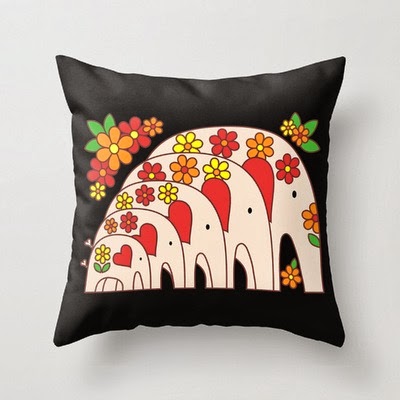
    In addition to photography, I also create whimsical, stylized elephant designs.  “Elephant Love” is the brand name for these designs, which are also sold on Society6 and facebook.  They are inspired by artists and design companies such as Marimekko, Keith Haring, Andy Warhol and Walasse Ting, as well as by traditional folk arts such as Russian matryoshka (nesting) dolls and the molas that are embroidered by the Kuna Indians in Panama.  A variety of home decor and novelty items are available with these designs, such as posters/prints, blank stationery cards, throw pillows, iPhone covers, tote bags and clothing (t-shirts, tank tops, hoodies, etc.).  The bright colors are great for decorating your apartment or nursery/kid’s room.

    Because my work is primarily digital, I appealed to my friends and family for donations to cover the cost of producing physical items for my show. This was my first attempt at crowdsourcing and I was very impressed by how supportive everyone was.   
    In order to encourage people to support my show, I promised to donate the profits from the sale of artwork and merchandise to a good cause: the Institute for Immigrant Concerns, where I am a board member.  The Institute is a New York City non-profit that provides free English classes and basic social services to low income immigrants, refugees and asylees.  The amazing stories of our alumni have been featured in the New York Times and other newspapers.  I was a volunteer English teacher with them for two years before becoming a board member, and 
     
    I continue to volunteer with them about 12 hours a week.  The combination of the artistic cause and the social cause was a great way to reach a wider audience.

    We are planning one more open studio day in a few weeks (possibly Thursday, November 7), so stop by if you happen to be in the area!  Details about the event to follow soon…  In the meantime, check out my website, blog and facebook page!  Thank you for your support!
     
    Patricia Chow  

    Photographer, Block-by-Block Photography
    Graphic Artist, Elephant Love
    (Read Patricia’s Firstindigo&Lifestyle interview from April 2013 here)