Category: art review&curating

  • On The Edge

    On The Edge

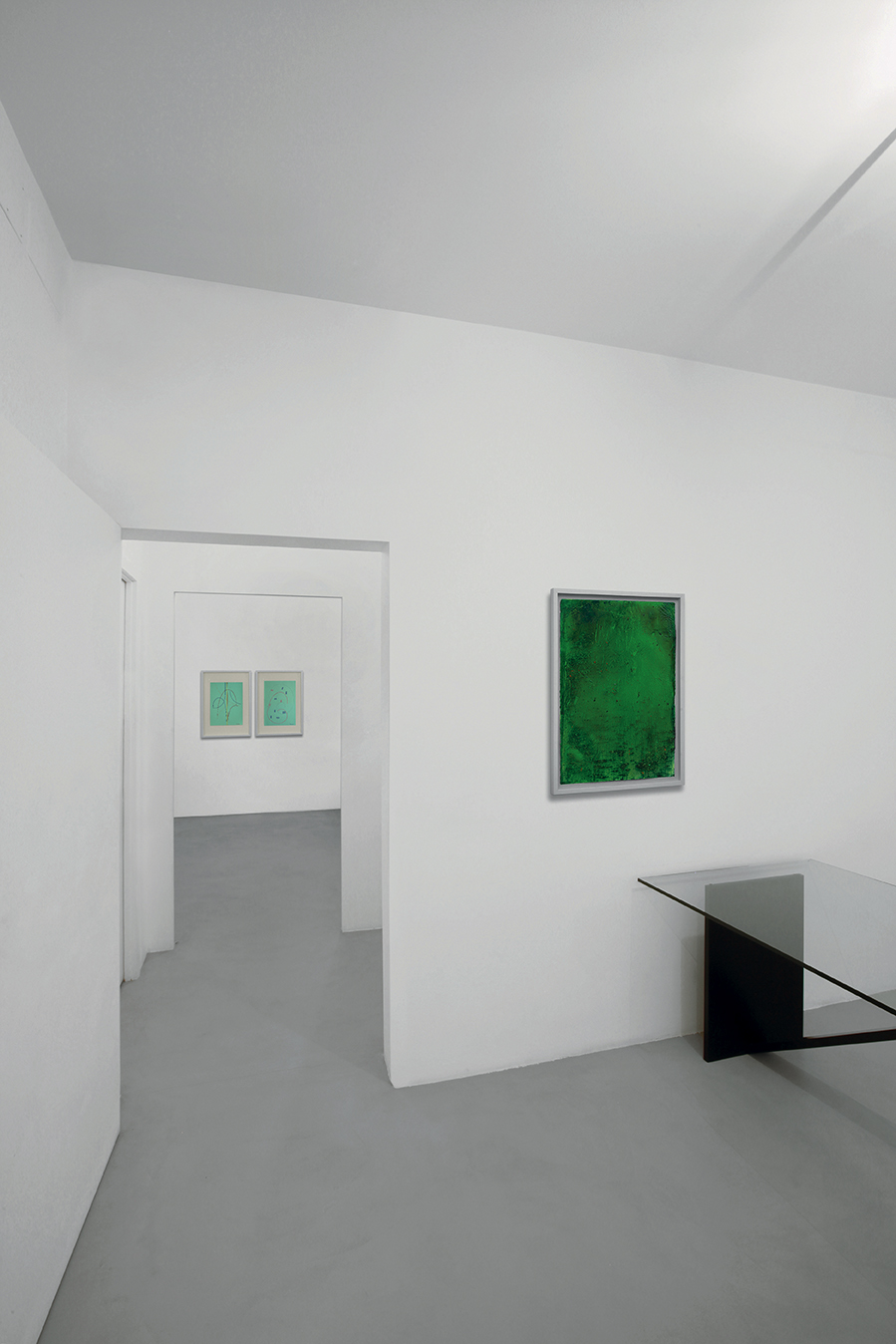
    Milanese gallery will run their current exhibition SUL MARGINE, ON THE EDGE, until February 24th, 2021

    “After the exhibition Close Up in 2016, which examined aspects of closeness and intimacy of vision, the meditations on small-format works continues here, highlighting another crucial aspect, which is that of their extreme, liminal intensity and bodily materiality.


    Sul Margine/On the Edge -exhibition, offers a possibility to experience the art works as an intimate and proximate event, which pushes the viewer to the very limits of our tactile world. While examining the shape and color, light and dark shades, we get to reconsider, what are the boundaries of our conscious world, and how our knowledge can go beyond the every day perception.

    The timespan of the presented, Italian and international artists, creates a great sense of wonder. A continuation, a thread between generation of artists. View that does not limit art work only into its material box, but offers it as a habitual dwelling, a tangible sense of the movement, and transformation, showing an image of art as a living body. Curated exhibition with juxtaposed ideas, where living artists enter into the realm of works created by artists who are no longer in this world.

    Discussion about the terms of the art work in a realm of meaning beyond material form, is not new. Dadamaino, a Milanese painter exploring spatio-temporal approach to painting, was a pioneer in the avant-garde of 1950s. She was looking for the immaterial, when her ‘holes’ were detesting matter. And like with some other pioneers of avant-garde, measured the intervals and pauses of time in the context of art.

    We can say that the catastrophic effect of the World War II, was creating a void, having power to influence both the avant-garde of art and theory. Perhaps now, in 2020- 2021, the historic moment of the global pandemic creates a reiteration of the question of a similar void. In the art-world, it affected change, shattering meaning of the physical space and the virtual world. The COVID-19 restrictions, social distancing protocols, safety measures; have all demanded different applications for contact, and applauded new exhibition modes.

    In the new “reality”, or very present, we can echo historic references and find similarities between the two. The patterns of “now” are recreated with more of what is sensed and sentient. The pioneering works can take us to a liminal treshold, on the borderline between here and there, the time of past and now. In both cases, it is the experienced and the unknown. When facing the global pandemic, we still see the limits of our understanding, questioning our very existence and being. What comes, when we die.
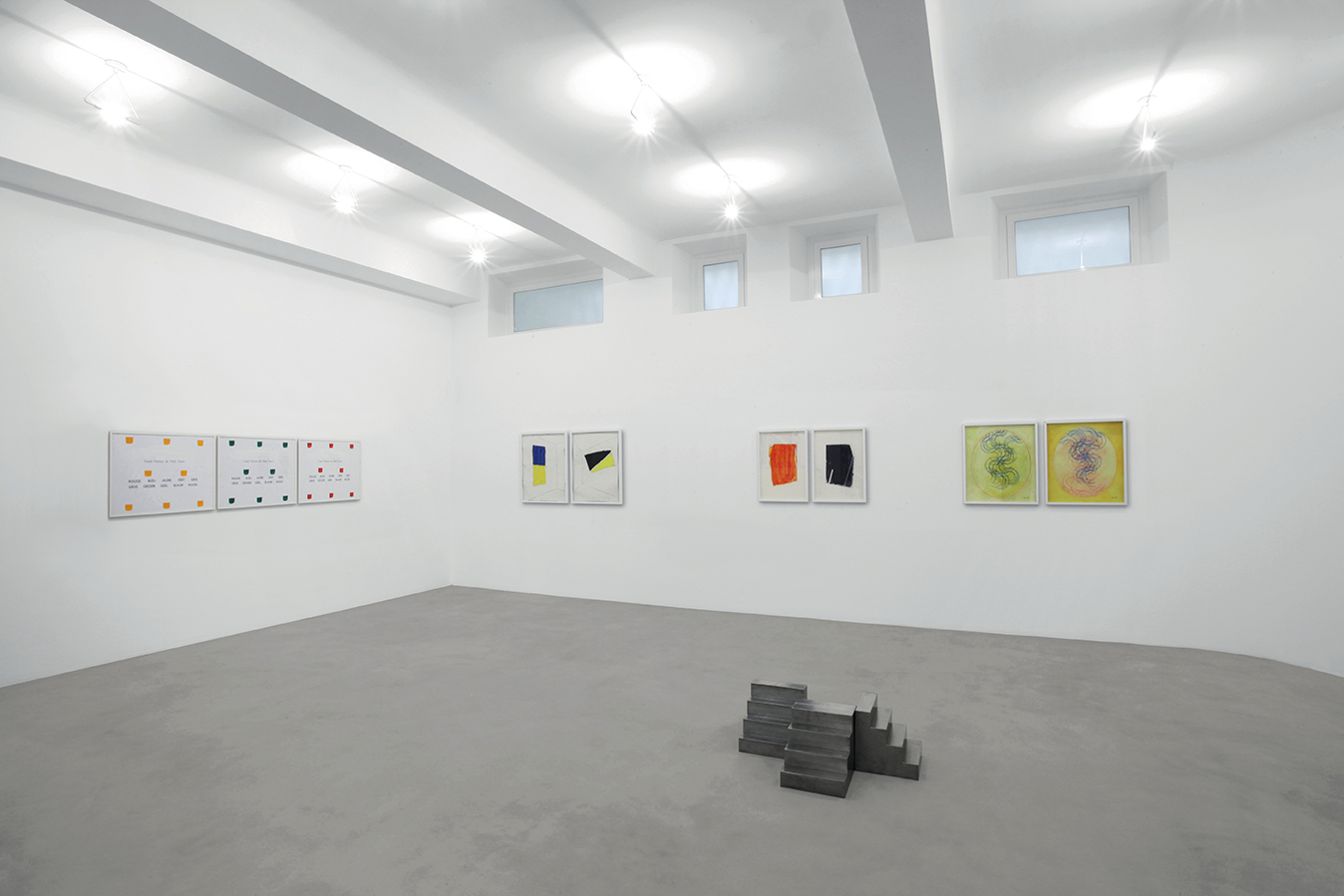
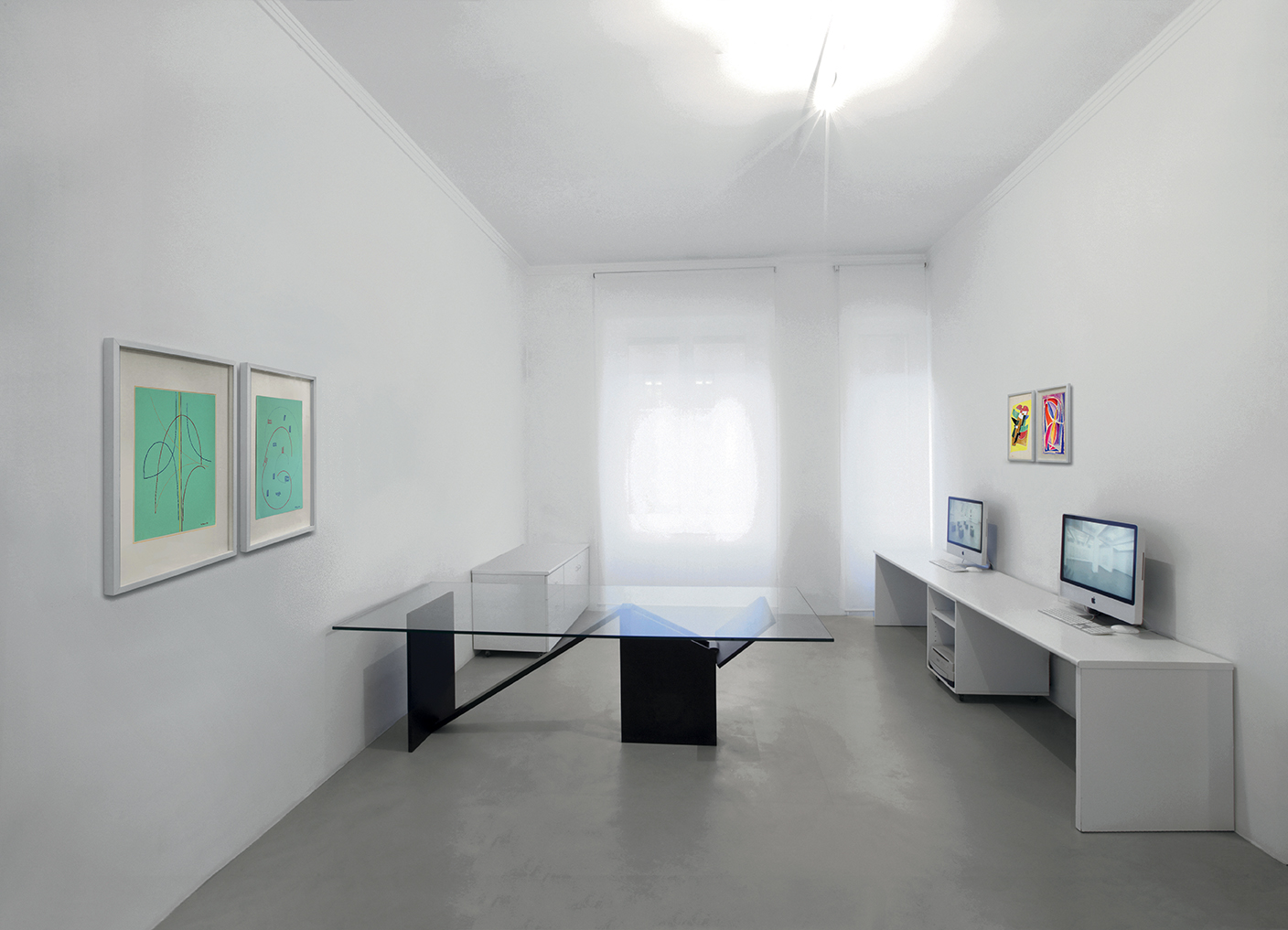
    Partial views of the exhibition On the Edge. Courtesy A arte Invernizzi, Milan. Photos: Bruno Bani, Milan.

    We thus find ourselves in the midst of these images, which are like places of the mind: a constellation of metaphysical entities on the ridge that separates life from death, the striving for knowledge from a truth of an unattainable absolute that, on the threshold of existence, allows us to perceive the correspondence between the individual and the cosmos.” (Francesca Pola)


    Featured yellow image: Carlo Ciussi, Untitled 1989. Mixed media on paper, 70×60 cm/ Courtesy A arte Invernizzi, Milan. Photo Mattia Mognetti, Milan.

    The exhibition tour (in Italian) on view through this link: https://m.youtube.com/watch?v=5iP-NGUdCwY&feature=youtu.be

    — — — — —
    A bilingual catalogue of the exhibition has been published with an introductory text by Francesca Pola, contributions from Giuseppe Cristian Bonanomi, Angela Faravelli, Daria Ghirardini and Davide Mogetta, with reproductions of the works on display.

    EXHIBITED ARTISTS: RODOLFO ARICÒ, GIANNI ASDRUBALI, FRANCESCO CANDELORO, NICOLA CARRINO, ALAN CHARLTON, CARLO CIUSSI, GIANNI COLOMBO, DADAMAINO, PHILIPPE DECRAUZAT, RICCARDO DE MARCHI, PIERO DORAZIO, LESLEY FOXCROFT, IGINO LEGNAGHI, FRANÇOIS MORELLET, MARIO NIGRO, PINO PINELLI, BRUNO QUERCI, ULRICH RÜCKRIEM, ANGELO SAVELLI, SALVATORE SCARPITTA, NELIO SONEGO, MAURO STACCIOLI, NIELE TORONI, DAVID TREMLETT, GÜNTER UMBERG, GRAZIA VARISCO, ELISABETH VARY, MICHEL VERJUX, RUDI WACH
  • Linda Cunningham’s Whose Land? Whose God?

    Linda Cunningham’s Whose Land? Whose God?

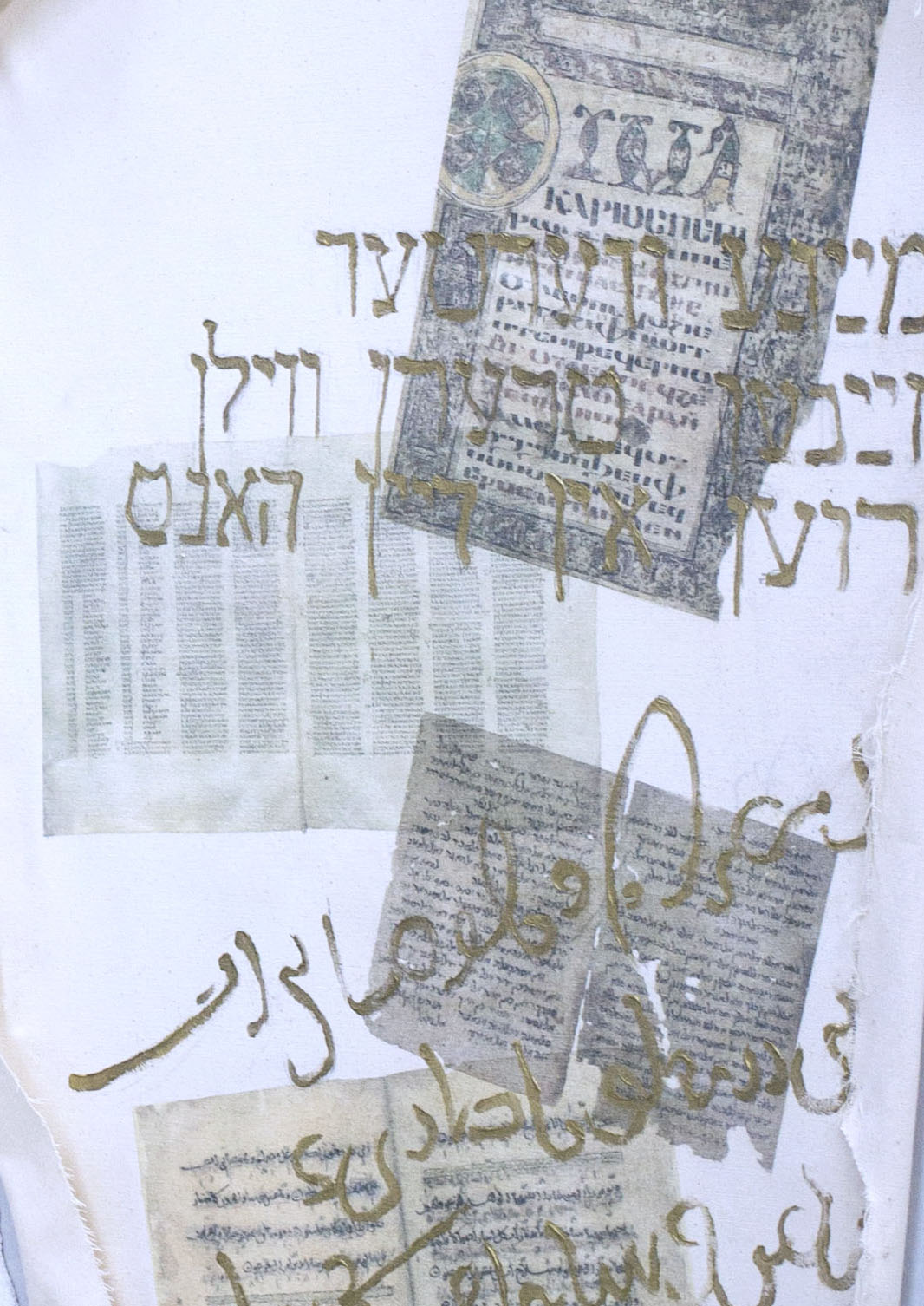
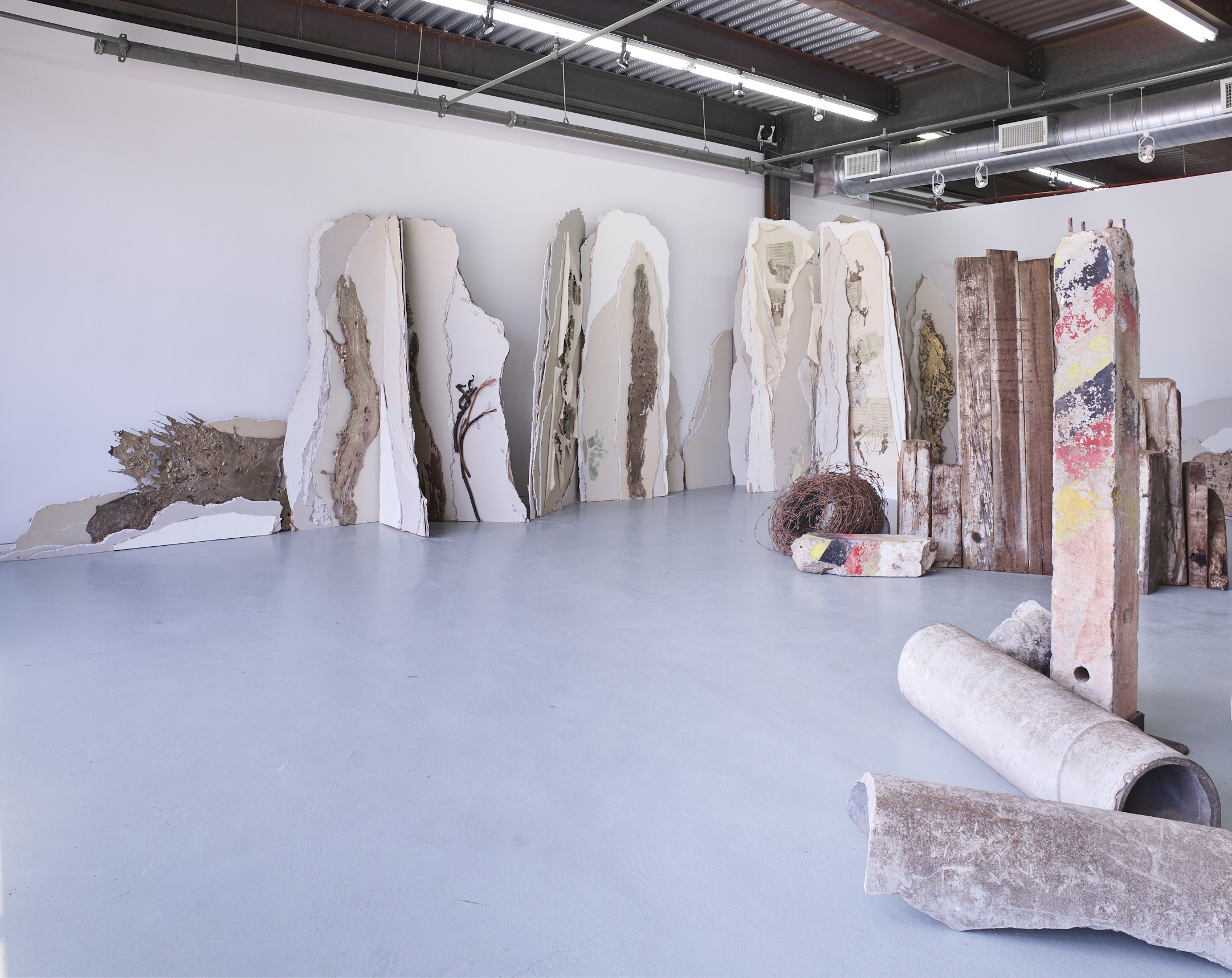
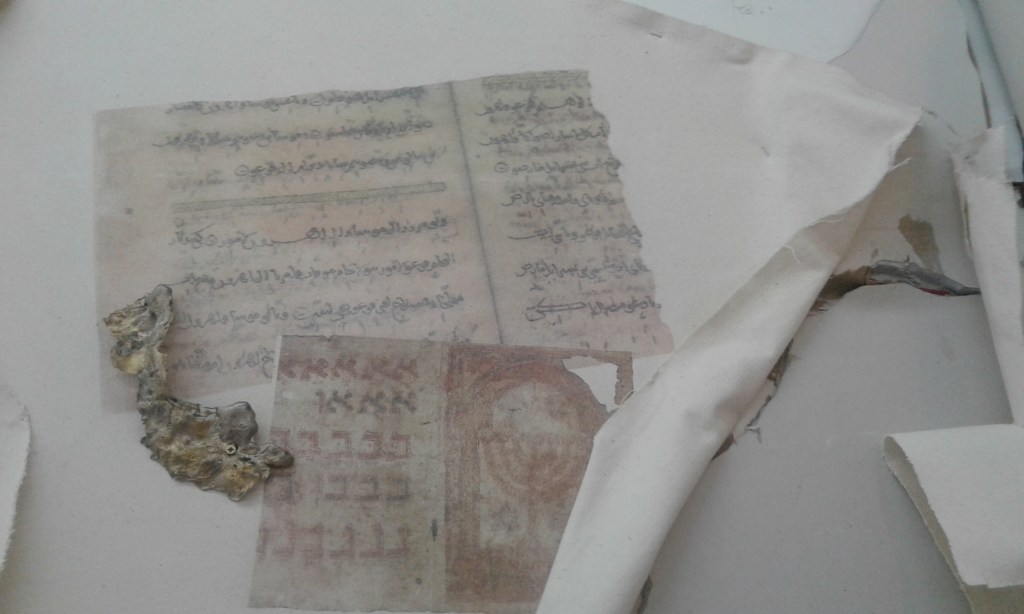
    Linda Cunningham’s sculptural installations speak many languages. Much of her recent work has been tapping into environmental specificity relating to the South Bronx waterfront. The artist has explored a topic of climate change in urban environments. Through July-August, Cunningham has her solo exhibition up in Brooklyn at the celebrated ODETTA. The current show features a large installation of her sculptural pieces well put together with drywall photo collages, both mediums that Cunningham frequently works with. This time Cunningham’s exhibition features textual patterns as mixed media works. The images display historic texts, which carry references to three monotheist World religions (Judaism, Christianity, and Islam) in earlier times when the cultures co-existed peacefully, a scenario impossible to imagine now. Many of the texts seem to be fragments that have been saved, depicting religious writings in Coptic, Hebrew and Arabic. The title of her exhibition: Whose Land? Whose God?, also includes remnants, which the artist acquired from the Berlin Wall in 1989. As the artist herself is well-traveled, behind the exhibition story is an expedition.

    Firstindigo&Lifestyle: Let’s talk a bit about the bronze as a material in the exhibition. As I understood, you were running your own bronze workshop in Pennsylvania? 

    LC: As a young professor at Franklin & Marshall College, I was challenged to create a bronze casting facility to make use of a very old oil burning furnace that a former professor had acquired for the sculpture facility. Enthusiastic art students and guest professors helped me build the facility and develop the expertise to do traditional bronze casting which I later taught in Advanced Sculpture classes. I eventually ran some women’s bronze casting weekend workshops which was wonderfully empowering for the participants who never had had such an opportunity.

    Firstindigo&Lifestyle: About the process of pouring the metal, how do you create the movement so evident in your sculptures. What is the methodology behind the pouring, and using sand in the process?

    LC: I eventually became interested in much more experimental casting methods that sculptors like Isaac Witkin were using, pouring bronze in single sided shallow molds filled with foundry sand. I developed the technique of pouring long thin forms that record the flow of the hot melted bronze. The bronze freezes the flow patterns and splatters creating the highly textured surface as it solidifies in seconds. Early on I found a way to acquire scrap military bronze and was using these lacy bronze forms to create 11 ft high shells of figures I called “War Memorial.” I thought of them of as vulnerable survivors. Five of those bronze images framed the entrance to the City University Graduate Center when it still stood for many years on 42nd St across from Bryant Park. They are now owned by Grounds for Sculpture in Hamilton, New Jersey.

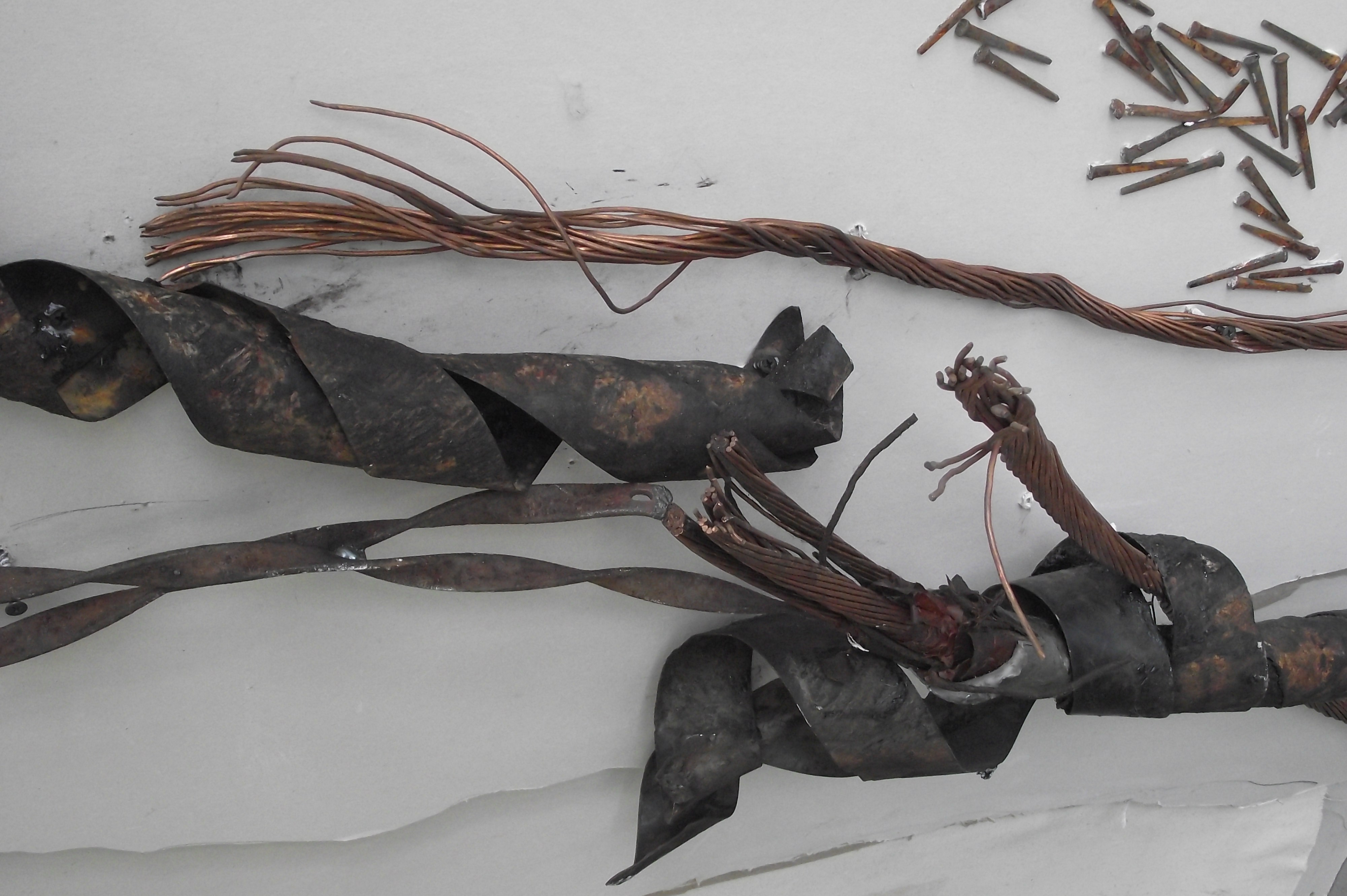
    detail_panel_wire_nails.jpg
    Linda Cunningham’s innovative bronze becomes part of a drywall sculpture.

    Firstindigo&Lifestyle: Your exhibition Whose Land? Whose God? is inspired by an exhibition that you saw in Germany, when and where did this exhibition take place?

    LC: The text Images were taken from the catalog of an exhibition I saw and was deeply impressed by in Berlin, 2015 titled: ‘One God: Abraham’s descendants on the Nile. Jews, Christians and Muslims in Egypt from late Antiquity to the Early Middle Ages’ at the Staatliche Museen zu Berlin, known as the Bode Museum on the Museum island in Berlin.


    Firstindigo&Lifestyle: How many texts, including a variety of liturgical, bible & prayer books, are there included in your exhibition? 

    LC: I used 16 different examples. Many more were included in the exhibit in Berlin.

    Detail of Coptic and Hebrew.
    Linda Cunningham, installation detail at ODETTA. Textual imagery is relevant to early history of three monotheist World religions. Often saved as fragments like this.

    Firstindigo&Lifestyle: How about the pieces in the exhibition that you acquired from the Berlin Wall, what is the story behind them?

    LC: I was invited to create a sizable installation in an alternative arts factory building in Kassel as an alternative documenta exhibit in 1992 about 2 1/2 years after the wall had opened up. A man who worked in the factory that was sponsoring the project took me to the town where he lived that was just over the former border where mountains of posts, fence, electrical cable and barbed wire were assembled as they dismantled the border that reach across the entire country. They were happy to have me take what I could fit in his van and charged me 50 Deutschmarks. The elements fit perfectly into the theme of the installation I was working on at that time.

    Firstindigo&Lifestyle: How did the transportation of the wall pieces take place, literally from Germany to the US?

    LC: When the exhibition came to an end after 90 days, I couldn’t bear to throw them out and storing was also prohibitive. My German friends helped me to get crates built and one friend drove the crates to Hamburg to get them loaded on a freighter. I picked them up with a van at a New Jersey port outside Newark. I always intended to exhibit them again and they have been schlepped from one studio to the next ever since.

    Linda Cunningham's installation view at Odetta Gallery.
    Installation view to Linda Cunningham’s exhibition at ODETTA. Remnants of the Berlin Wall are on the right.

    ***

    More exhibition info: 

    Linda Cunningham Whose Land? Whose God? 

    July 7 – August 20, 2017

    ODETTA | 229 Cook Street, Brooklyn, NY 11206

    Artists Talk: Sunday, August 6, 3 pm

    Odetta Gallery: http://www.odettagallery.com/

    Artist website: http://www.lindalcunningham.com/

    Read about the visit to Linda Cunningham’s studio as featured in Firstindigo&Lifestyle.


  • Bill Viola: The Moving Portrait

    Bill Viola: The Moving Portrait

    Bill Viola: The Moving Portrait is a retrospective exhibition happening at the National Portrait Gallery in Washington DC. The exhibition, on view until until May 2017, is celebrating a career of a pioneering video artist Bill Viola. The artist is recognized for his groundbreaking use of video technologies; and his works are known as poetic and performative, exploring the spiritual and perceptual side of human experience. Installed in multiple darker rooms, the show takes a viewer into a few episodes with the moving portraits. They are diverse, as one can imagine, and with each work the viewer’s experience becomes more fluid than staged or patterned. The works follow more circular way of reasoning than linear logic in storytelling.

    The portrait of Bill Viola himself is titled Self Portrait, Submerged, 2013 (color high-definition video on LED display; stereo sound; 10:18 minutes). This portrait connects to an idea of mortality, the artist himself is appearing underwater. He looks as if being still with his eyes closed, and he does not seemingly breath. However, the movement becomes present with the unfolding effect of the water moving and altering the stage so to speak. For Viola, self-portrait is an evergoing reflective way to figure oneself out. Self-portrait is always a self-representation. As an artistic discovery it would be more like looking beyond a merely simple representation of oneself; attaching a subjective and changing viewpoint into a larger psychological canvas. We live in an era of selfies, so what more is there to discover, beyond a representation? Where does the normative cultural portrait end, and the new interpretation start?

    In many of his works, Bill Viola summons the characters, young and old, male and female. These portraits are submerged underwater in a similar manner as his Self Portrait Submerged. A group of seven works are titled The Dreamers (2013). The portraits appear in a dark room as an installation of plasma displays mounted on the wall. They radiate very subtle visuality. There is water underneath of each character as their personal stage. It is the essence of the water that animates the otherwise still portraits to become sifting moments in space. The plasma videos are accompanied with a sound of a running water, which appears as a surrounding pulse for the portraits. These portraits take form as immersing works. In a way they are virtual, or the time is stopped as if there was an episode happening in another realm or in outer space. Each personality emerges as colors, when their fabric and hair covered bodies measure the dimensionality of the water. They contour and camouflouge barely within its surface.

    A very different video setting is formed around a work titled The Reflecting Pool originating from 1977-79. In the video, a man is emerging from the forest standing in front of the pool. As he is leaping up in a sudden movement, jumping into the water, the image freezes. The person remains still in the center of the image; he is frozen whilst the water in the pool is slightly moving and changing. Another take on a theme of time passing. This time, the person is also immersed into the surroundings even more, and perhaps becoming one with the green lush with all his senses.

    In a massive one screen video installation, a group of nineteen men and women from various ethnic backgrounds are struck by a great amount of water coming from a high pressure hose. The video called The Raft (May 2004), expresses different actions and reactions from the people to a seemingly catastrophic situation. Some are struggling physically showing hardship of survival with their bodies, the others remain more upright; yet all characters are touched and moved by the sudden force. The scene of the people reacting with their personal response, with their bodies moving, resisting, twisting, and falling, is effective. In the end, the water stops and leaves people with altered positions. The narrative brings into mind a natural force, which takes over peoples’ lives and controls their surroundings. An occurrence, which people cannot control. The video story opens a new stance to altered ways of being flooded, or being carried away with life occurrences.


    Bill Viola: The Moving Portrait exhibition is a well curated retrospective to the artist’s forty year career. It includes several works investigating life cycles, and the process of aging. It touches a question of gender, and the metaphysical place for people in the world. His video works speak with the language and gesture of the body and face. They confront us with emotion and presence. Portraits are not always beautiful, or the characters are not always beautiful in a sense of how we measure our bodily image. But they echo beauty with their truthfulness and soul, which goes further than a normative cultural presentation.

    Bill Viola started his discovery with a Portapak camera in the early 1970s. Since that time, the video has been his medium of expression.

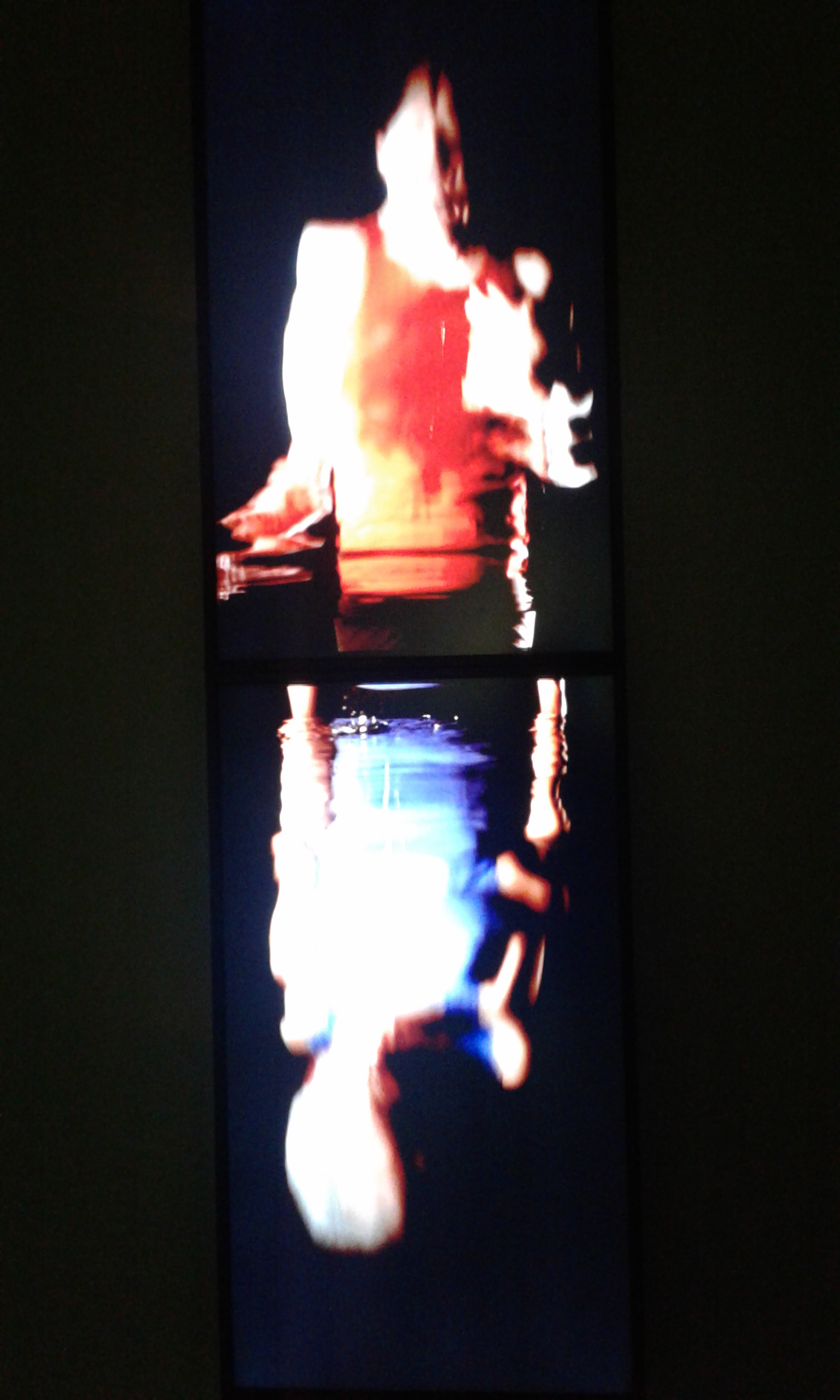
    Bill Viola, Surrender, 2001. Color video diptych on two plasma displays mounted vertically on wall; 18:00 minutes. Performers: John Fleck, Weba Garretson.
    Bill Viola, Surrender, 2001. Color video diptych on two plasma displays mounted vertically on wall; 18:00 minutes. Performers: John Fleck, Weba Garretson.

    ***

    More info about Bill Viola: The Moving Portrait exhibition at the National Portrait Gallery 

    More info about the artist on James Cohan Gallery 

    Artist website: http://www.billviola.com/