Category: art review&curating

  • Subodh Gupta’s Seven Billion Light Years

    Subodh Gupta’s Seven Billion Light Years

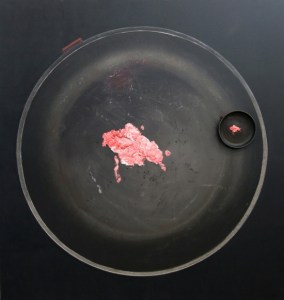
    Subodh Gupta, Seven Billion Light Year V, 2014
    Subodh Gupta, Seven Billion Light Years V, 2014. Oil on canvas, found utensil, resin, 241.3 x 226.1 x 10.2 cm / 95 x 89 x 4 in

    Subodh Gupta’s new exhibition ‘Seven Billion Light Years’ opens with multiple content, showing his performative sculptures, installations, films and a body of new paintings at Hauser & Wirth starting on February 10th. The exhibition takes root in the life in India which is his native country, addressing the local life where mundane and sacred exist side by side. Gupta is known for utilizing found everyday objects in his artworks, resonating meaning with utensils used in making and cooking food, as well as larger vessels such as a bicycle, on which smaller everyday objects are stacked. His works narrate about the culture of accumulation, where the people, food, and the daily exchange gets fused, appearing both chaotic and ritualistic. As a centerpiece of the gallery’s current exhibition is a series of new paintings called ‘Seven Billion Light Years’. These belong to Gupta’s signature subject of using basic kitchen utensils that are familiar to every Indian. Gupta’s art works raise questions, addressing what it means if the world’s people are not anonymous, but have identity and a bit of infinity. In the level of the paintings, the artist uses three-dimensional objects that are fixed to canvas with resin. These paintings carry the exhibition’s title, but there is more behind the meaning.  The title refers to the seven billion inhabitants on the earth echoing about the materiality and the material fragility of our human lives. It displays the idea of intrinsic marks that we leave on the earth’s surface throughout the years. The objects speak about the human marks in the cosmos as well; the distance between our mortal lives and the cosmos appears as unfathomable.

    Anthropologist and writer Bhrigupati Singh has written about Gupta’s work. The artist reminds us that what is near is

    ‘no less cosmic or mysterious – on the surfaces of our ordinary domestic vessels that journey with us, sometimes for years. What we discover in the process are intricately crafted pieces of the cosmos.’

    Gupta’s film ‘I go home every single day’ (2004/2014), narrates his commute between New Delhi and his native home in Patna. The journey in the film poetically tells about the changing landscape of the urban cityscape and the more traditional Indian home. The home is a place, where the camera lens repeatedly comes back to focusing on outdoor areas interpreting smaller details, in which the white wall becomes a surface of nuances. It acts as a backdrop for objects, ropes, plants and canvas totes. The yard itself as entrance stands as a sign for the domestic; water pipe carry a meaning that water is a sustenance, without it there would be nothing. Everything in-between the train and the home is in evolving chaos, where progress lives as  traditional life changes and even disappears.
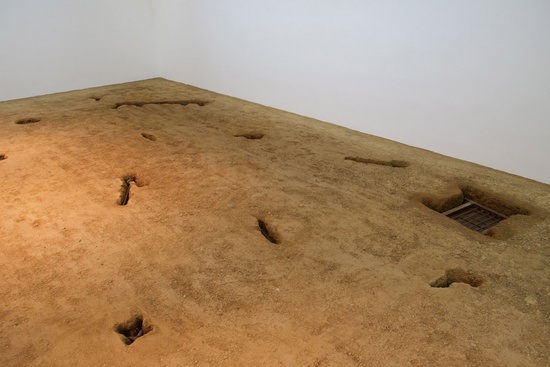
    Pure (1), 1999-2014, Mixed media, Dimensions variable, installation view, 'Subodh Gupta, Everything is inside', Museum für Moderne Kunst Frankfurt am Main, Germany, 2014. Photo: Axel Schneider
    Pure (1), 1999-2014, Mixed media, Dimensions variable, installation view, ‘Subodh Gupta, Everything is inside’, Museum fur Moderne Kunst Frankfurt am Main, Germany, 2014. Photo: Axel Schneider

    As a counterpoint to Gupta’s recent paintings called ‘Seven Billion Light Years’, Hauser & Wirth also presents an installation  ‘Pure (I)’ (1999 / 2014), which is a variation of a piece exhibited last year at the Museum fur Moderne Kunst in  Frankfurt am Main, Germany. Gupta’s early work ‘Pure (1)’ originates back to 1999, and it was first presented at the Khoj workshop in Modinagar, India. This initiated the ongoing project on the everyday objects as vessels of larger cosmic power. The artist started collecting household utensils around New Delhi, including a hookah an a plough, sinking them into a field which was composed of a paste of mud and cow dung.  He also covered himself with the same paste laying at the center of the field in a yoga posture of shavasana (the corpse).  This, according to the artist, resulted in the state of ‘meditative blankness’.

    At Hauser & Wirth, ‘Pure (I)’ has become a new work, in which Gupta is revisiting his own artistic process that took place 15 years ago. At the gallery, he presents a group of household objects that are partially buried in pure earth, along with a group of black and white photographs which stand for the neighbors from whom he borrowed the original objects for the earlier piece in 1999. These photographic portraits hang opposite of the earthy field, where gallery visitors can also walk, and hence experience its entity. The group of photographs present the people as de facto collaborators from the artist’s time of making his art.

    Another big piece of art is an installation ‘This is not a fountain’ (2011-2013), that comprises of a large number of timeworn aluminum utensils that the artist collected. In the midst of it are water pipes, which while dripping ‘keep washing’ the surface of the installation. The artist states that he has been interested in the uniform of the mass-produced dishes. Yet, what comes out is the water as an essential element that pours as a ritualistic connotation for purity, showing the basis of things themselves. Meanwhile, the other art works at the gallery exhibition also reflect about Gupta’s own biographical attachment to his subject. His own middle-class background allows him to show the contrastive realities of the deprived and poor versus the richer classes. His use of everyday vessels made of various materials, where the socially humble turns into a shiny bronze, displays a sharp division between different social classes, whilst in the global exhibition space the meaning gets circulated into other levels as well, perhaps becoming a subtle divider between east and west. Additionally, the short film playing with the same title ‘Seven Billion Light Years’ (2014/2015, film, 2. min), meditates a Hindu philosophical idea of the cosmos as leela, which means play and dance in the traditional philosophy. The daily bread-baking becomes a metaphor with cosmic turns, where bread flies lightly like moments in life.

    ‘Seven Billion Light Years’ will be on view 10 February 2015 at the Hauser & Wirth’s downtown gallery location at 511 West 18th Street, and be on view through 25 April. The exhibition coincides with the debut of a major work by Subodh Gupta in the exhibition ‘After Midnight: Indian Modernism to Contemporary India 1947/1997’, which opens 8 March 2015, at the Queens Museum in New York NY.

    More info: Hauser & Wirth: http://www.hauserwirth.com/

    To map Gupta’s work a little more in its context, the following video presented on New Delhi TV (NDTV) along with his short interview, is a good start:
     

  • Sarah Oppenheimer’s reoriented space

    Sarah Oppenheimer’s reoriented space

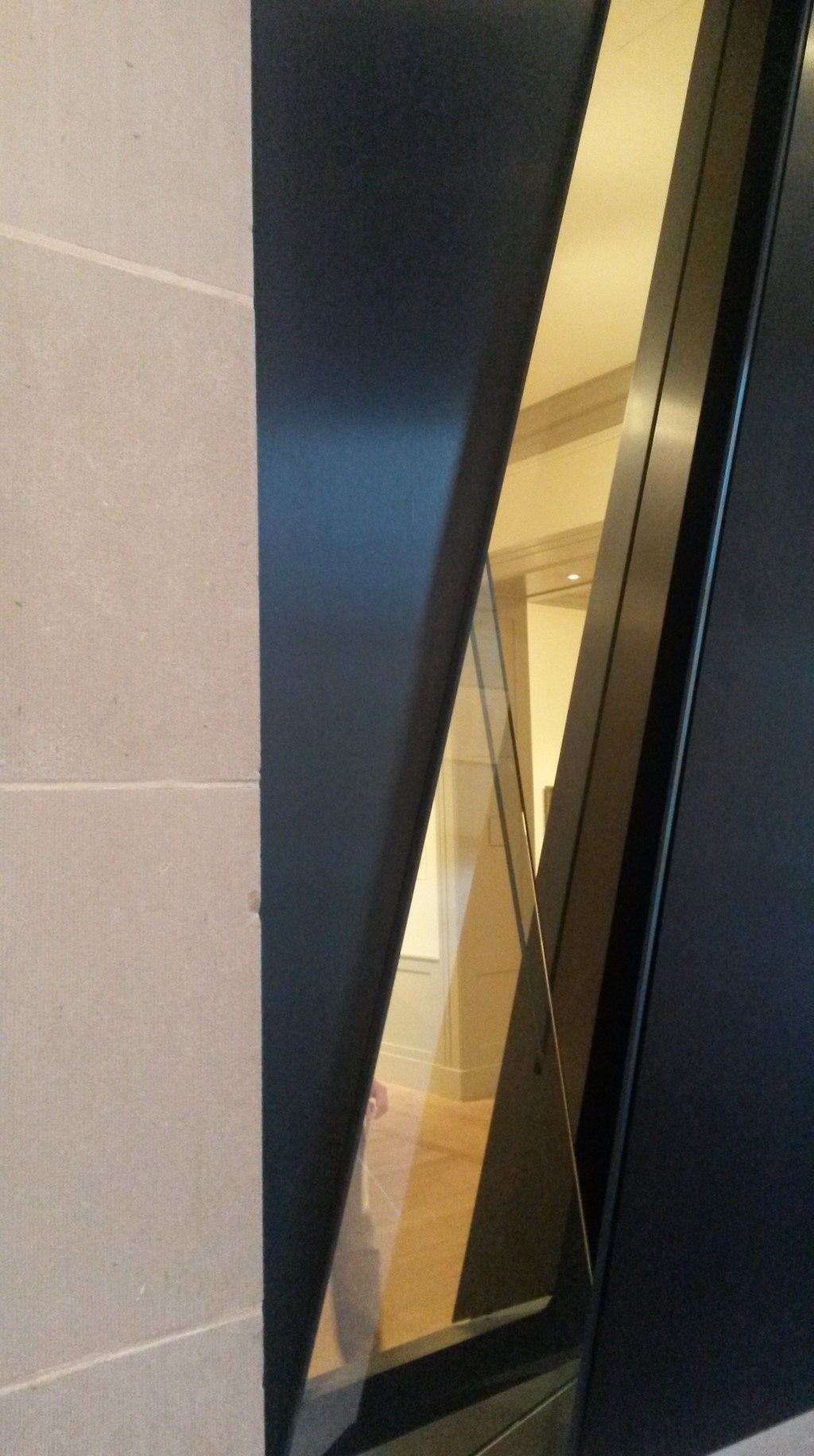
    Sarah Oppenheimer’s installations and public art works “W-120301 x P-010100” were commissioned for the Baltimore Museum of Art’s Contemporary Wing which reopened after its complete renovation in 2012 (built in 1994). The two-part permanent art work was concretely made in conjunction with the architectural space. It involved cutting holes in the museum walls and ceilings of various galleries. The holes, then, were filled with panes of metal and reflective glass to create new dimension for viewing at the space and art on different galleries, including visitors – who happen to be wandering through spaces simultaneously; and are reached by multifaceted and virtually charged viewing. The holes created ‘sightlines’ between the 2nd and 3rd floors of the Contemporary Wing and through the wall between the contemporary and Cone collections. What the installation claim is that the museum visitors can get glimpses and optical illiusions into spaces that are on different levels. Oppenheimer’s works radicalize the notion of museum space from a contemporary virtual perspective. The ’holes in the walls’ change the viewer’s perception when he/she suddenly sees others randomly passing by their visual screen that the artwork is.  The unexpected encounters create experiences with others simultaneously in the museum. My own ‘looking-at’ the sightlines makes me perceive someone on the other part of the museum as if they were sharing my experience. Its partially theoretical, and yet is twisting seriously with the architecture. With this installation, we can view art museums from a new perspective, as if this kind of illusory tool enables us to grasp art simultaneously from various historical eras. The sightlines allow viewers to see unexpected views of fellow visitors, art works, and galleries above, below, and across from them.

    The Baltimore Museum of Art is the first art museum to commission a site-specific installation by award-winning artist Sarah Oppenheimer. Anyone interested in Oppenheimer’s works would also say that the architectural dimension is much more than ”just” art. In fact, the installation combines art and curiosity borrowed from sciences that are engaged in visitors’ participation. The museum as architectural space and as encounters, interacts with its visitors and the institution’s daily life. The installation does not only play with space and our perception, but it encompasses it on a new level. Museum architectures might sometimes appear as ‘static’ and locked in particular histories.  The artist’s intervention of architectural space is a dynamic way to create interaction, encounters, and puzzles, and bring also art history discussions into new levels.

     Artist’s website:  http://www.sarahoppenheimer.com/


  • Happening in Tokyo / Re: A universe of artists to Re:discover

    Happening in Tokyo / Re: A universe of artists to Re:discover

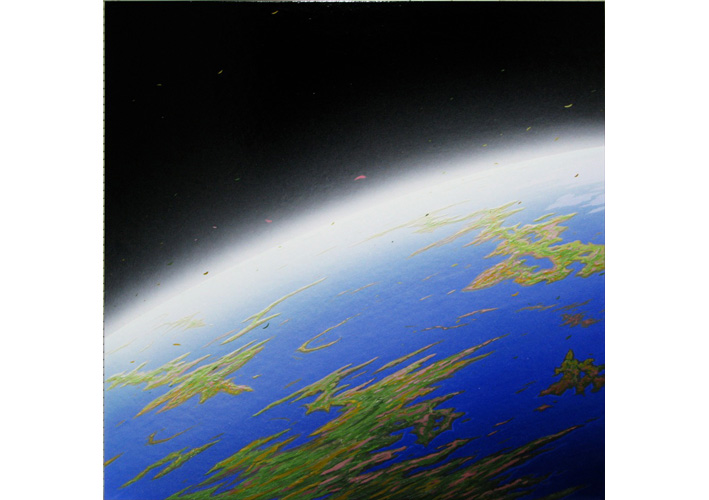
    The group show will display pieces from these young artists that the Tokyo art gallery, namely Gallery of Art Composition, has worked with, and it will feature some works that have been represented overseas but not in Japan before. Takaya Nakamura’s planets were shown at the New City Art Fair in Chelsea, New York City in March of 2014. The painter has graduated with two respective degrees in Japanese painting form Kyoto, and has worked three years in New York assisting Hiroshi Senju. His planets were effective in New York art fair next to Haruna Sato’s detailed paintings that show human babies with delicacy. Sato’s works were captivating and sending a powerful message when joined together with Nakamura’s universum. As if asking, where the future of our humanity will be?

    Takaya Nakamura, Gallery of Art Composition, Tokyo. Takaya Nakamura @New City Art Fair in New York, March 2014.
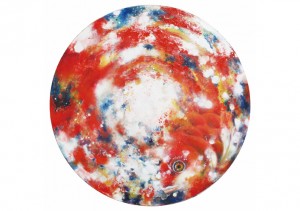
    Ayako Fujimoto, courtesy of Gallery Art Composition.
    Ayako Fujimoto, courtesy of Gallery Art Composition.

    The round shape of the universe also comes forth with Ayako Fujimoto’s colorful globe. The surface displays energy and contrast. The artist tells how the shape takes form with emotion:

    I feel in myself swirling a clash of passion and impulses. At the time the work is sublimed by this embodiment, I feel an ephemeral catharsis…At the starting point of the creative process, the work of art is just canvas and oil paints. The Art comes later, thanks to a physical action combined with an inner approach to get to the root of what I want to express -Ayako Fujimoto.

    Kuroudy Tsuji’s animal sculptures stand out from the group show with their prehistoric utopia. The concept behind the works relate to the creation of animals that are made of recycled iron, representing “Life”. The idea behind the sculptures is that everything is alive. Questions, such as what is the living, and what does it means to be alive, is materialized in the sculptures that are not pure objects but a living entity.

    It is because they see the life in it, that they can have such a consideration. It is the reason why the posture of the animals I make are not exaggerated. I want it to be natural. For me, all animals are “Drinking, Sleeping” creatures. As a main material, I have chosen old pieces of machinery. Because this material reminds me of two things: “A system that creates the movement” and “Pieces of machinery that are not used anymore (that has died)”. -Kuroudy Tsuji.

    Kuroudy Tsuji, Save Animals, Gallery Art Composition, Tokyo.
    Kuroudy Tsuji, Save Animals, Gallery Art Composition, Tokyo.

    Kazuyuki Takishita‘s art has been on view in New York a few times, including the Asian Art Fair in 2007, and a show at Dillon Gallery in 2008. His divine characters deploy colorful canvas appearing as timeless, and bringing nostalgic past to present day imagery. Another take from history are Mitsuya Watanabe’s visual references that play with the symbolic. In the works the drawings and texts both add to each others meaning.

    I would like the viewers to experience a rite of passage through my creation. It is a place of initiation where the destination looks similar to the beginning. It is the labyrinth where you cannot flee from the fact that you are a sign. I would like my creations to be the space for solemnities where signs can evolve to be a little different from before. – Mitsuya Watanabe.

    gallery website: http://www.galleryartcomposition.com/en/