Category: asian art

  • Yuko Mohri creates the Japan Pavilion in Venice

    Yuko Mohri creates the Japan Pavilion in Venice

    Yuko Mohri is creating Compose for the Japan Pavilion in this year’s Venice Biennale. Mohri is putting focus on environmental issues with her work, which acts like a circular economy approach to creating art. With a title that etymologically references “to place together” (com+pose), the exhibition questions what it means for people to be together – at home, in society and at work – that pandemic changed. The post-pandemic world also faces a planetary climate emergency.

    The exhibition in the 60th Venice Biennale runs from April 20 to November 24, 2024, with the inauguration on April 17 in Japan Pavilion (Giardini di Castello, Venice). Compose is curated by Sook-Kyung Lee, Director of The Whitworth in Manchester UK, and it is organized by The Japan Foundation.

    Mohri who is interested in organic ecosystems is right at home in Venice. She has focused on the 2019 Venice floods and rising sea levels. The theme ’soft and weak like water’, which is a reference to the classical Chinese text ‘Dao De Jing’, is a source of inspiration for Mohri. The text by Lao Zi acts as a metaphor for change as “generated through gentle and persistent force”. The artist also created work for the 14th Gwangju Biennale in the Japan Pavilion. Her collaborator, curator Sook-Kyung Lee was the artistic director of the Biennale.


    Yuko Mohri has long been interested in the crisis and its connections to paradoxical creativity. She was interested in the Tokyo subway workers who needed to find solutions to water leaks.

    Utilizing materials that are sourced locally, from Venetian antique stores and furniture shops, as well as from grocery stores, liquor stores, and farmers and flea markets, Mohri took over the whole pavilion and made it to her own studio for a few months prior to its public opening.


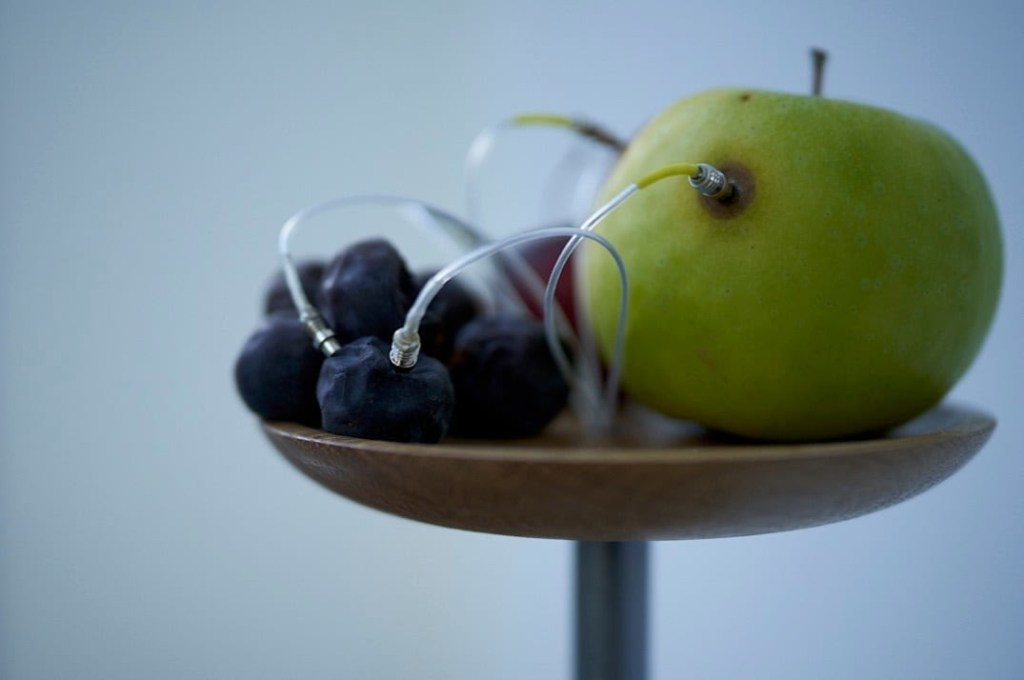
    From floor to ceiling – installation’s organic forms include experimental elements and acoustic sculptures, which are made of rotting fruit. Mohri’s creation repeats a series a works that are unified by a common element: water. The artist’s latest installations, Decomposition and Moré Moré (Leaky) will emerge as rare site-specific, one-time realizations presented in the Venice Biennale.

    The work Compose, additionally references the legacy of composers and artists; Erik Satie, Marcel Duchamp, John Cage, Nam June Paik, and the Fluxus Movement. All of these artists had an experimental approach, using methods of chance and improvisation as a basis, and strongly commenting on everyday mundane life with their works.

    Yuko Mohri takes a stance on nature, which is disappearing, and environmental catastrophe. Even if not literally, what is highlighted as the latent “changing events” of creating ecosystems that will be disappearing, are bound to water, the scarcity of it, and the flood that comes with it. Still using very familiar everyday objects as their backdrop.

    Known for her installations that are like ‘events’, Mohri creates changing environmental conditions for the Pavilion. It will be an event of light, sound, movement and smell.

    Mohri was born in Kanagawa, Japan in 1980 and now lives and works in Tokyo. She has been included in a number of international group shows including the 14th Gwangju Biennale (2023); 23rd Biennale of Sydney (2022); Asian Art Biennial (2021); Bienal de São Paulo (2021); Glasgow International (2021); Tai Kwun Contemporary, Hong Kong (2021); Ural Industrial Biennial of Contemporary Art, Russia (2019); Palais de Tokyo, France (2018); Asia Pacific Triennial of Contemporary Art (2018); Biennale de Lyon, France (2017); Centre Pompidou-Metz, France (2017); Kochi-Muziris Biennale, India (2016); Yokohama Triennale (Japan, 2014), among others.

    Featured photo: Courtesy of Yuko Mohri and Tanya Bonakdar Gallery.
  • Southeast Asian voices in Venice Biennale

    Southeast Asian voices in Venice Biennale

    A historic Venetian palazzo is a stage for the Southeast Asian artists to showcase during the 20204 edition of the Venice Biennale. The palazzo is located in the Cannaregio district near the grand canal and hosts an exhibition “The Spirits of Maritime Crossing”. A group exhibition by artists from Southeast Asia, examines topics of displacement, the diaspora, and colonialism using the ocean as a metaphor. The exhibition is on view from 20th April to 24th November 2024 at Palazzo Smith Mangilli Valmarana. The space hasn’t been accessible to the public for 11 years.

    The exhibition highlights a timely topic of colonialism and wars that have happened throughout the Southeast Asian region. When the voices also include indigenous points of view, the artists have chosen to speak about the importance of nature and the spirituality that is embedded in the land and its ancestral connotations.

    The Spirits of Maritime Crossing exhibition is curated by Prof. Dr. Apinan Poshyananda, who is also Chief Executive and Artistic Director of Bangkok Art Biennale (BAB). With the BAB Foundation, the Venice exhibition is co-hosted by One Bangkok.


    The curator shares about the exhibition,

    “We are delighted to present a survey of Southeast Asian artists to international audiences in the Global North to coincide with the Biennale Arte, ahead of Bangkok’s own biennale in October 2024. Moreover, it is a great honor that a new short film featuring world-renowned Marina Abramović, winner of the Golden Lion at Venice Biennale in 1997, will be shown within the exhibition. The contents of this film and exhibition that focuses on sea travel, displacement and diaspora relate directly with the main Exhibition. It is fascinating to see such synergy across Venice.” (Prof. Poshyananda)


    Prof. Poshyananda created a film which brings the East and West together. The film features well known performance artist Marina Abramović together with Thai dancer and choreographer Pichet Klunchun.

    Mediums such as painting, sculpture, mixed media and video installations, bring together fifteen artists from Cambodia, Indonesia, Laos, Myanmar, Malaysia, The Philippines, Singapore, Vietnam and Thailand. The complex realities and diverse cultures, as well as the histories of the region, meet the Western narratives in this Venice exhibition.

    Cambodian artist Khvay Samnang, directed Calling for Rain, which explores deforestation that has been a major problem in Cambodia. Other films include Hunting & Dancing: 15 years by Moe Satt; There’s no Place by Jakkai Siributr; The Sea is a Blue Memory by Priyageetha Dia and many more works by renowned artists displayed across the palazzo. A collaborative two-channel video installation by Chitti Kasemkitvatana and Nakrob Moonmanas, presents a montage reflecting on the parallel worlds of Italy and Thailand, displaying the multitude of languages and cultures.

    The exhibition is a journey from Southeast Asia to Venice through cultural and diasporic experiences looked through the eyes of those who don’t live in their homeland; this includes both physical and spiritual aspects.

    Southeast Asian artists share many similarities, while also differing in ethnicity, religion, and their languages. This can create a sense of ‘foreignness’ among the artists. The legacy of each of them, however, resonates with a notion of a ‘cultural hybrid’, as among them are also refugees, immigrants, and stateless people, who create new identities in the diaspora.

    Many of the artistic works dive into the indigenous histories, and narrate about the environmental impact of colonialism. Many of us know that environmental destruction, loss of land and livelihood as well as displacement, are common struggles told in the Southeast Asian stories.

    Cambodian artist Khvay Samnang’s video work examines hegemony and deforestation in Cambodia. It is a story of local worship inspired by Ramayana, an ancient poem. Yee I-Lann’s film depicts a collaboration with weavers and local sea-based communities to revive ancestral knowledge. The story is about the maritime and indigenous histories in Malaysia. Jakkai Siributr has used textiles to provide commentary on ethnic cleansing in society. The topic resonates in the intricate embroideries that have been created together with asylum seekers. Moe Satt, who is a performance artist, uses his body for identity and estrangement. He has a voice about survival of the violence in his homeland Myanmar. Also, a performer, Kawita Vatanajyankur creates works about foamy blue dye highlighting female labor in patriarchal society and focusing on the role of water in the context of femininity and the textile industry. Priyageetha Dia’s video of the deep sea examines ancestral migratory movements from India to the Malay Peninsula. Truong Cong Tung shows an installation of gourds that draws upon mystical ritual and indigenous mythologies.

    The Spirits of Maritime Crossing-exhibition also features paintings and a bronze sculpture by Natee Utarit, who blends Buddhist philosophy and Western art history, showing a meeting of East-West influences. Metal sculptures by Bounpaul Phothyzan are crafted using found bombshells, exploring the historical impact of American occupation in Southeast Asia, documenting the region’s tumultuous past.

    Jompet Kuswidananto’s installation of shattered chandeliers examines the history of colonization, with a focus on missionary work across Indonesia. Alwin Reamillo’s mixed media work utilizes found objects and assemblages to reveal layers of colonialism. References to Christian iconography in the Philippines, and the influences of migration and globalization. The artist’s work presents the 14 Stations of the Cross. It is a Catholic devotion that commemorates Jesus Christ’s last day on Earth as a man.

    The exhibition builds on the local voices and narratives. The regional histories are a significant meeting point of cultures with trade and cultural references overlapping from one area to the other. The proximity of geographical relationships between places is one strong signifier.

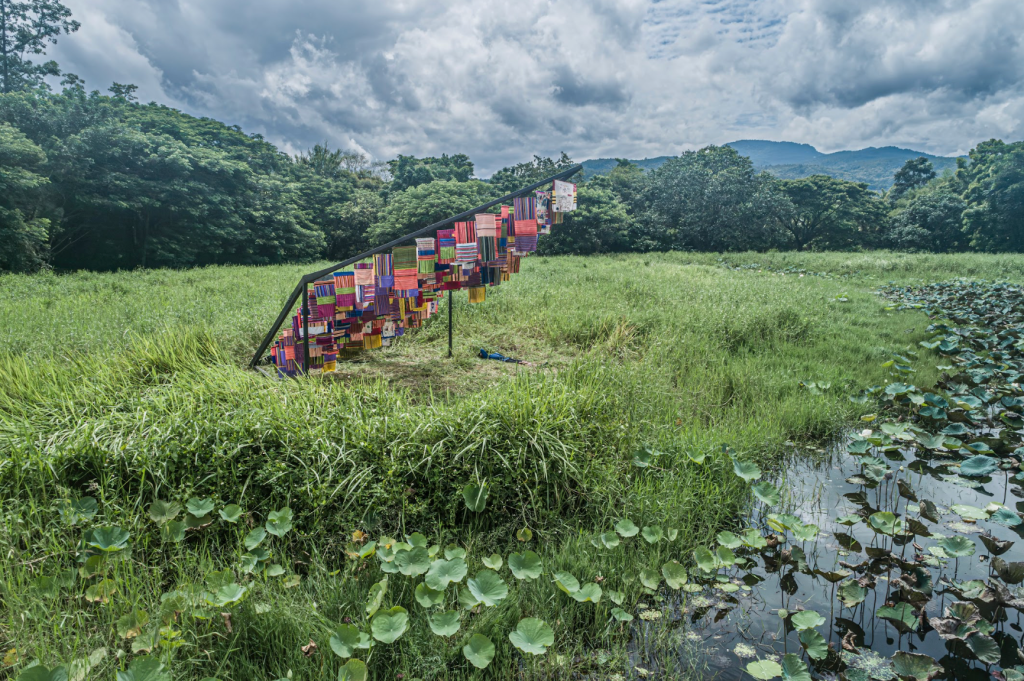
    Photo credits: Jakkai Siributr, There is no Place, 2020. Courtesy of the artist. 

  • Flowers on a River: The Art of Chinese Flower-and-Bird Painting 1368-1911

    Flowers on a River: The Art of Chinese Flower-and-Bird Painting 1368-1911

    On March 23, 2023 China Institute Gallery in New York is reopening to the public afer a renovation. The new exhibition in the galleries celebrates Chinese flower-and-bird paintings. On display are masterpieces of Chinese paintings that span over five centuries. The museum is the only in the United States to exclusively exhibit Chinese art, and this exhibition is the largest survey of its kind outside of China. The works are from Tianjin Museum and Changzhou Museum respectively.

    Flowers on a River: The Art of Chinese Flower-and-Bird Painting 1368-1911, includes more than 100 masterworks from 59 artists. The works were created during a 500 year time period between the Ming and Qing dynasties. Not only the individual styles of the artists are highlighted in the exhibition, but it will also detail the academic and literati aspects of the works.


    With these paintings we can escape to nature and imagine the natural world, which has inspired artists throughout centuries everywhere. The imagery of the paintings communicate a deeper meaning of art. In Chinese thinking, the humanity is resilient when it connects to the natural world, living in harmony with its diminuent details and magnificent forces.


    Yun Lanxi (dates unknown) and Zou Yigui (1686-1772) Eight Immortals in the Flower World Album of 8 leaves; ink and color on paper 12 1/8 x 19 in. (30.8 x 25.2 cm) Tianjin Museum (Leaf 3)


    “Flowers on a River will explore the natural world in the context of the human experience. revealing links that tie the genre’s imagery and the country’s everyday life and social customs.”

    Traditional Chinese painting has landscape and figure at its center. The flower-and-bird motives are in their own category. The exhibition will be presented in three parts: Precious Plums of the Palace: Academics and Court Artists; Fragrant Plums in the Wild: The Literati Art, Painters and Painting Schools; and Vitality of Nature: Flower-and-Bird Painting and Social Customs.


    What is really advanced curating in the context of this exhibition is the inclusion of so many women artists. The Ming and Qing periods saw the rise of women artists. They excelled in flower-and-bird painting. The exhibit will display works from eight women artists. Among others, there are scrolls by two of the most acclaimed, Ma Quan and Yun Bing. During Qing dynasty, they were noticed by their talent; and as was typical to those times, through the legacies of their fathers and grandfathers.


    ‘Flowers on a River’ is curated by Willow Weilan Hai, China Institute Gallery and guest co-curators Chen Zhuo, former Director of Tianjin Museum; Lin Jian, Director, Changzhou Museum; and David Ake Sensabaugh, former Ruth and Bruce Dayton Curator of Asian Art at Yale University Art Gallery. The exhibition is organized by the China Institute Gallery together with the Tianjin Museum and Changzhou Museum.

    “We are enormously excited for the reopening of China Institute Gallery and are honored to present some of Chinese art’s greatest treasures.” – Willow Weilan Hai, Lead Curator of the exhibition, Director and Chief Curator, China Institute Gallery.


    The 42-foot horizontal scroll by Zhu Da, one of the greatest artists in Chinese history, is taking the center stage. It is considered one of the masterpieces of Chinese painting. Zhu Da (1626-1705) is also commonly known as Bada Shanren. His large painting was last seen outside of China in the 2013 exhibition of Masterpieces of Chinese Painting at the Victoria & Albert Museum in London.

    “Bada Shanren pushed the expressive possibilities of monochrome ink and brush to the extreme, resulting in incredibly rich effects with an unmistakable individual character,” -Willow Weilan Hai.

    The exhibition is accompanied by illustrated bilingual catalogue featuring commissioned scholarly essays and detailed exhibition entries. China Institute Gallery is featuring a series of events including lectures, an international symposium, and other programs.

    The artists in Flowers on a River include: Lin Liang, Lü Ji, Shen Quan, Hu Mei, Yuan Jiang, Yuan Yao, Gao Qipei, Jiang Tingxi, Qian Weicheng, Miao Jiahui, Chen Lu, Chen Hongshou, Ma Shouzhen, Wen Zhengming, Tang Yin, Zhou Zhimian, Lu Zhi, Chen Chun, Wang Guxiang, Xu Wei, Xiang Shengmo, Zheng Xie, Jin Nong, Hua Yan, Li Shan, Huang Shen, Luo Pin, Gao Fenghan, Bian Shoumin, Shitao, Zhu Da, Yun Shouping, Tang Yuzhao, Ma Yuanyu, Ma Quan, Yun Bing, Yun Lanxi, Zou Yigui, Yun Guangye, Li Jue, Tang Shishu, Zhao Zhiqian, Pu Hua, Xugu, Ren Yi, Zhang Xiong, Wu Changshuo, Tang Luming, Zhu Cheng, Leng Mei, Chen Zun, Fan Qi, Wang Wu, Zhang Cining, Wang Caiping, Li Boyuan, Zhang Sheng, Sun Di, and Aisin-Gioro Yuying.