Category: design

  • Fashion Curating: Unsustainability, gender and class readdressed

    Fashion Curating: Unsustainability, gender and class readdressed

    Fashion Interactions is a multidisciplinary exhibition that explores fashion culture by means of contemporary art, design and media. The exhibited works comment, on the unsustainability of the fashion industry, analyze the relationship of fashion and corporeality, and investigate how people use clothing as a tool for building identities. The exhibition is Curated by Annamari Vänskä & Hazel Clark and it presents works from: Federico Cabrera, Heidi Lunabba, Jasmin Mishima, Anna Mustonen, Nutty Tarts, Timo Rissanen, Salla Salin, Heidi Soidinsalo, Saara Töyrylä and Timo Wright. This exhibition opens on Friday November 15, 2013 in New York City. It is a collaboration with Parsons The New School for Design and the SheilaC. Johnson Design Center, Finnish Cultural Institute in New York, and the Centre for Fashion Studies (Stockholm University).

    Image 

    (Fashion Interactions-exhibition, Timo Wright-‘un fit’ video still)

    FASHION CURATING NOW is a daylong symposium at Parsons The New School for Design on Saturday November 16 9:30 am-5 pm. The symposium reflects the subjects around the Fashion Interactions exhibition focusing on the possibilities and challenges of contemporary fashion curating on a global scale. Critical points of view are stressed, as is contemplation of fashion’s kinship with art, design, industry, performance, and self-presentation. I asked a few questions from Leena-Maija Rossi, who is the Executive Director of Finnish Cultural Institute in New York, about the seminar and other related topics. 

    Firstindigo&Lifestyle: Can you explain the background of the seminar?

    L-M Rossi: The background of the Fashion Curating Now is in the exhibition project Fashion Interactions. It has its origins in the show Boutique, curated by Annamari Vänskä, which was part of Helsinki’s World Design Capital year in 2012. Finnish Cultural Institute wanted to bring a new edition of the show to New York and partnered with Parsons New School for Design in order to do that. The process of “re-curating” an already existing exhibition made us think of curating fashion at large: how to present fashion in an interesting way “outside the  market”? How to make engaging exhibitions on fashion, how to show its entwinement with fine art, how to find new fora for curating, e. g., in the new media? How to make visible the political aspects of fashion?

    Firstindigo&Lifestyle: Finnish fashion and design have gained more international visibility, creating their own trends as well, how do you see current research field is following trends from the industry?

    L-M Rossi: I see fashion research as a developing and dynamic field, especially when it connects with studies on class and consumerism, and, of course, studies of gender and sexuality. I do not know if the task for the research is to follow the trends, I rather see research as a field for critical interventions.

    Firstindigo&Lifestyle: In Finland, it seems that industries have also been able to point to cultural questions, what do you see as current research themes coming from the field/industries themselves?

    L-M Rossi: Sustainability is of course a timely research theme, and the way it intersects with the issue of class. I am also really interested in the potentiality of queer fashion research, and I would really like to see more analysis on gender nonconformity, not so much of equaling queer with identity categories.

    Firstindigo&Lifestyle: Yourself, you have written about advertising, media, gender representations/performance-related, in the contemporary visual culture. What do you see this global exchange is giving to these themes?

    L-M Rossi: I think fashion is a crucial part of visual culture at large, especially because of its border-crossing nature. Gender is being profoundly done by people’s choices of dressing up and wearing their clothes, and these choices are, again, influenced by advertising. So one could say that the fields of fashion and advertising are constantly participating in the global processes of doing and undoing gender.

    Firstindigo&Lifestyle: How well or how do Finnish fashion industries communicate globally? How do you see the branding, would it be more individual voices than a canon etc.?

    L-M Rossi: It seems that many Finnish designers communicate quite naturally in the international field of fashion. Like visual artists, I think they first and foremost present their individual voices; it is very difficult to build a uniform “brand.” But then again, many seem to be thinking of such issues as high quality materials and sustainability. 

     Firstindigo&Lifestyle: Art, fashion, design: How would you speed-describe these together?

     L-M Rossi: Fashion and design are artforms, fashion is an interesting field within design. All of them make difference in everyday life.  
     Image

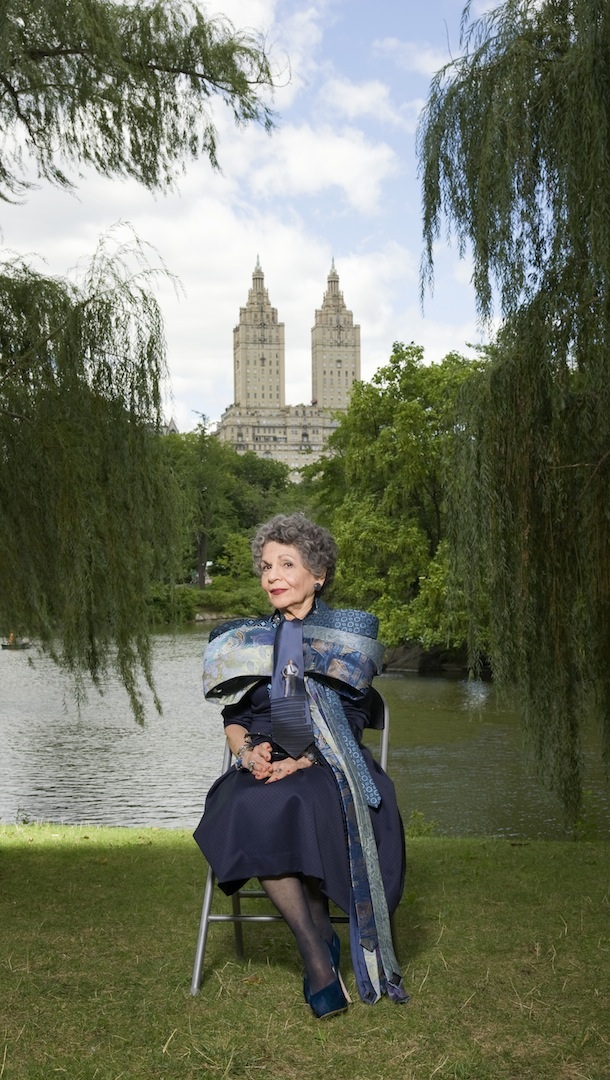
    (Fashion Interactions-exhibition, Nutty Tarts & Heidi Lunabba) 

    /// INFO: FASHION INTERACTIONS ///

    Fashion Interactions-Exhibition

    Opening: Friday November 15, 6pm – 9pm

    November 11 – December 13, 2013

    Open daily 12pm – 6pm

    Arnold and Sheila Aronson Galleries

    Sheila C. Johnson Design Center

    Parsons The New School for Design

    66 Fifth Avenue at 13th Street, New York

    The exhibition is supported by the Finnish Ministry of Education and Culture, Frame Visual Art Finland and Consulate General of Finland in New York.

       /// FASHION CURATING NOW ///
    Symposium, Saturday November 16, 9:30am – 5:00pm

    David Schwartz Fashion Education
    Parsons The New School for Design
    560 Seventh Avenue at 40th Street
    New York

    Finnish Cultural Institute in New York Facebook.

    http://www.ficultureny.org/node/330

    http://www.newschool.edu/sjdc

  • "Elephant Love" Pop-up Shop: Crowdsourcing for art and charity

    "Elephant Love" Pop-up Shop: Crowdsourcing for art and charity

    By Patricia Chow
    Last weekend I had my first photography show in Chelsea (New York City), as part of the High Line Open Studios.  Since my day job is in statistical research, this was my first experience putting together an art show – and it was fabulous!  The show was a great way for me to combine three completely separate facets of my life: the artistic side (I am a photographer and graphic artist); the volunteer side (I teach ESL 3 days a week); and my personal and professional networks, which were instrumental in ensuring the success of the show.
     
     
    I first started to photograph when I was living in Spain in 1995, and much of my photography focuses on the different perceptions that a newcomer has of ordinary surroundings. Since beauty can only exist in the eye of the beholder, I have tried to convey the essence of what I find beautiful in a place, rather than what is commonly considered beautiful, which, in many cases, is simply familiar.  There are a few images below – you can view more of my work on my photo blog.  Selected images are available for purchase as prints on Society6 and facebook.


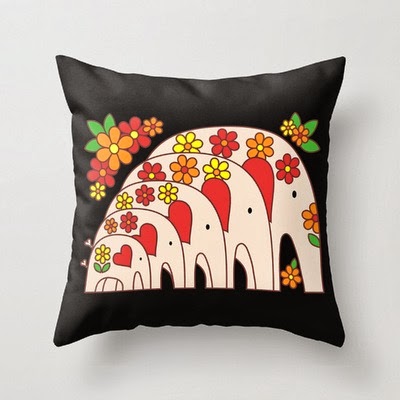
    In addition to photography, I also create whimsical, stylized elephant designs.  “Elephant Love” is the brand name for these designs, which are also sold on Society6 and facebook.  They are inspired by artists and design companies such as Marimekko, Keith Haring, Andy Warhol and Walasse Ting, as well as by traditional folk arts such as Russian matryoshka (nesting) dolls and the molas that are embroidered by the Kuna Indians in Panama.  A variety of home decor and novelty items are available with these designs, such as posters/prints, blank stationery cards, throw pillows, iPhone covers, tote bags and clothing (t-shirts, tank tops, hoodies, etc.).  The bright colors are great for decorating your apartment or nursery/kid’s room.

    Because my work is primarily digital, I appealed to my friends and family for donations to cover the cost of producing physical items for my show. This was my first attempt at crowdsourcing and I was very impressed by how supportive everyone was.   
    In order to encourage people to support my show, I promised to donate the profits from the sale of artwork and merchandise to a good cause: the Institute for Immigrant Concerns, where I am a board member.  The Institute is a New York City non-profit that provides free English classes and basic social services to low income immigrants, refugees and asylees.  The amazing stories of our alumni have been featured in the New York Times and other newspapers.  I was a volunteer English teacher with them for two years before becoming a board member, and 
     
    I continue to volunteer with them about 12 hours a week.  The combination of the artistic cause and the social cause was a great way to reach a wider audience.

    We are planning one more open studio day in a few weeks (possibly Thursday, November 7), so stop by if you happen to be in the area!  Details about the event to follow soon…  In the meantime, check out my website, blog and facebook page!  Thank you for your support!
     
    Patricia Chow  

    Photographer, Block-by-Block Photography
    Graphic Artist, Elephant Love
    (Read Patricia’s Firstindigo&Lifestyle interview from April 2013 here)
     
  • Designer Mari Isopahkala // fresh whirlwind from the Milan Design Week

    Designer Mari Isopahkala // fresh whirlwind from the Milan Design Week

    Firstindigo&Lifestyle: COULD YOU TELL A GREAT STORY FROM MILAN, AN ENCOUNTER, HOW WAS IT LIKE THIS TIME?
    Mari Isopahkala: It was overall a great trip, although these design exhibition weeks are sometimes heavy. Meeting different people and professionals is very interesting and gives you back a lot. As I had to be standing a lot, and walk around long distances between the exhibit places, I kept changing my shoes to feel more comfortable. I got few great contacts. It will be exiting to see what these new things will bring me in the near future.

    Firstindigo&Lifestyle: HOW MANY TIMES HAVE YOU ATTENDED MILAN DESIGN WEEK?

    Mari Isopahkala: Many times, I have not even counted. Not every single year during my active working years, but almost. It is already a very familiar place to me.
     
     
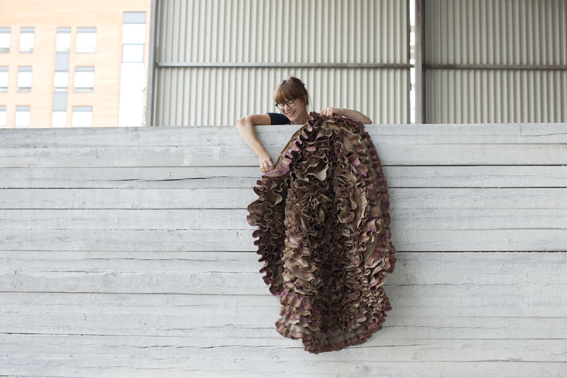
    (Designer Mari Isopahkala with a ruffle carpet, 2009. Capture: Liisa Valonen. Above: Kristallit small glasses, Konkkaronkka cutlery for Marimekko, designed by Mari Isopahkala)
    Firstindigo&Lifestyle: WHEN YOU WERE IN NEW YORK TWO YEARS AGO, WHAT DID THE CITY OFFER?

    Mari Isopahkala: It was good to see what the industry is like in North America. What are the current trends there, who are participating in those trends, and so forth. New York City is definitely quite different from the North Europe. Commercialism and business are in a higher level in the North American marketplace. What I can say about Finland is that we tend to be not so good in selling and marketing. I still have so much to learn about it, and even about how to brand my products. What I admired in New York City was the openness of people, how they have positive energy and courage. They also seemed to be forward thinking.

    Firstindigo&Lifestyle: Your design-language is very poetic, and perhaps minimalistic (or is this a stereotypy that is often attached to Scandinavian design?). In any event, how would you describe your designing?

    Mari Isopahkala: Thank you, poetic is very beautifully put. Well, I would not consider minimalism as a stereotypical thing in the Nordic design. I think that minimalism comes so naturally. We are living that type of lifestyle, and it shows in the designs, which is unpretentious. This notion contains our products and our environment. I would describe my own design-language as clear, and yet personal. It does not shout too loud, yet it does not leave you cold. I hope that my designs are attractive as well. My products have some Ostrobothnian (Finnish) femininity in them. They comply strength, and also sensitivity.  

    Firstindigo&Lifestyle: It is simply amazing that you are so diverse as a designer, you have interior design, jewellery, everyday objects, unique industrial design pieces, lighting design, and so on. Is there a design, which is closer to you personally and why?  

    Mari Isopahkala: Yes, I like to do different things. It keeps my mind open and fresh, and very much helps to discover new things. When I look at the ideas from outside, I have to learn new things. This creates newness and innovation. I enjoy working together with skilled craftsmen from different industries. I have a huge respect for artisan’s skills.  If I had to pick one material, it would be glass. I am so intrigued by the practice in glass factories. It is hypnotic to watch the melting glass. It feels almost sensational.

    Firstindigo&Lifestyle: Can you name a few of your mentors and inspirations, Finnish and international? 

    Mari Isopahkala: I have many inspirations in art, design, and in the everyday life. I have not been following anyone’s path really, but I have been gaining inspiration from many great masters in the past and in the present. The environment where I live inspires me tremendously.

    Firstindigo&Lifestyle: How would you describe the essence of nature in your designs, the Finnish nature-urban dynamics? What comes to mind also is the Nordic nature with mythological traces, how it can be present in our consciousness. Is there room for utopia in your designs?

    Mari Isopahkala: Nature is so important part of my life and that way it probably shows in my designs. It is not an absolute value but it is present. I have tried also other ‘domains’, and any kinds of oppositions interest me. I think I question existing myths in a good way. There is of course room for utopias in my designs. I have a need to move things forward towards the unknown paths.

    Firstindigo&Lifestyle: Can design be masculine and feminine?

    Mari Isopahkala: Good designer can utilize both, and then be without specificity of these qualities. Doing feminine or masculine design can be a conscious choice. I am very aware of my own choices. And I have used both of these two qualities. So I am trying my best.    

    Firstindigo&Lifestyle: What are your future plans?  

    Mari Isopahkala: There are many things, some of the plans are still in the air, so to speak, some on the other hand are in the process. Right now I have worked so hard that its time to start planning the summer. I believe that once you get some rest you gain new perspectives. Then it is also time to make next big decisions. 
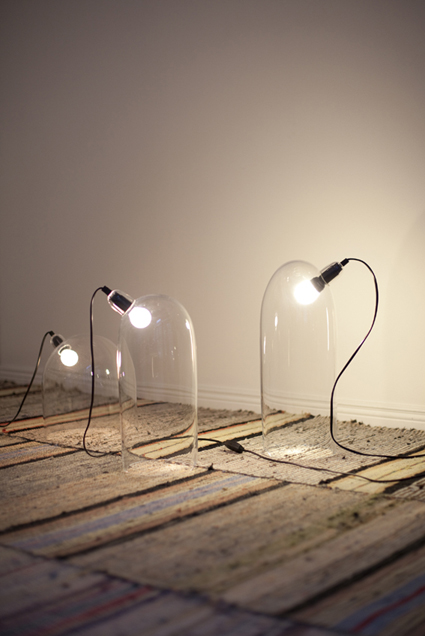
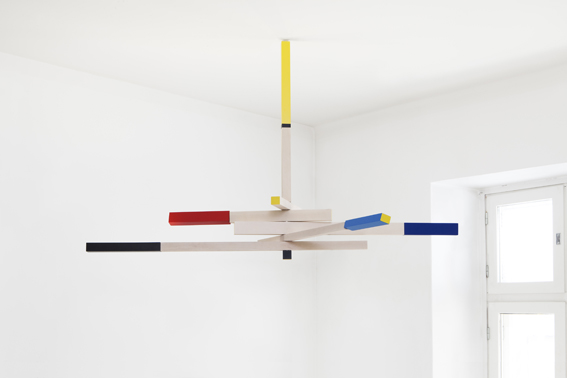
    1. greenhouse light, 2. viikari light in space, 3. viikari basis, 4. no jaa big sculpted light
    5. furing jewellery, 6. winter pearl jewellery, 7. suma fiilis jewellery set,  8. kristallit fat glass