Category: fine and contemporary art

  • Groundwork -exhibition promotes ecological awareness

    Groundwork -exhibition promotes ecological awareness

    Groundwork, an exhibition opening in Dreamsong gallery in Minneapolis this week celebrates our human connection to the ground. As one exhibition artist Ana Mendieta puts it when she references her artistic endeavour: ” from insect to man, from man to spectre, from spectre to plant, from plant to galaxy.” All artists partaking in the exhibition promote ‘terra firma’ both as their subject matter and medium. Groundwork is showcasing in the Twin Cities as part of a Wakpa Triennial Art Festival with opening reception taking place on June 22, 2023.

    The artists, who span generations and territories across the United States, include: Sydney Acosta, Teresa Baker, Moira Bateman, Liz Ensz, Hannah Lee Hall, Alexa Horochowski, Kahlil Robert Irving, Seitu Jones, Stephanie Lindquist, Gudrun Lock, SaraNoa Mark, Ana Mendieta, Alva Mooses, Ryan Gerard Nelson, Nikki Praus, Ian Tweedy, and Mathew Zefeldt.

    We can state that the exhibition is a call for planetary matters and ecological awareness. A soil is the context and source for enlivening nutrients. It is a semiotic signifier of territory and identity, as well as a land/site of conflict over indigenous rights and environmental protection. There is of course a tradition of the Land Art of the 1960s and 1970s. The artists in Groundwork are not purposefully having dialogues with pioneers like Robert Smithson or Michael Heizer, and with a perhaps romanticized idea of ‘empty’ Western landscapes. The artists, rather, wish to discuss their homage to detail, paying more attention to what it means to connect to locally embedded and lived histories. And as such the exhibition relates to questions of how the past legacies echo into the future.

    “Adopting anticolonial, queer, feminist, environmentalist, and other critical lenses, they seek communion with the specificities and spiritual meanings of place, burrow into the legacies and experiences of their ancestors, and express concerns about our collective future.”

    Many artists consider the direct consequences of a fast-deteriorating planet, and their art acts as a kind of site-specific artistic research project showing the case of climate change. Forest fires, colonialist over-use of land, mining, resource extraction, droughts, damages from conflict; the list is endless when we start thinking of ancestral time and memory that it evokes in the context of land and soil.

    Focusing on land in artwork, in which ground acts both as subject and material, the exhibition wishes to engage in the conversations about the earth’s preservation. What do different local contexts and materialities mean? What are the disputes about, for the people with ancestral rights that bear spiritual and physical connection to the territory, to heritage? How about modern built environments with technical challenges in preserving the soil and environment?

    In each of the exhibited artistic projects, metaphorically, the future will be grounded as long as there are innovative strategies that learn from the histories they wish to navigate.

    “the indelible connection between our modern built environment and its raw material is made explicit, our vast inscription upon the earth metaphorized by materially innovative strategies that seek to collapse the boundaries between history, place, and representation.”
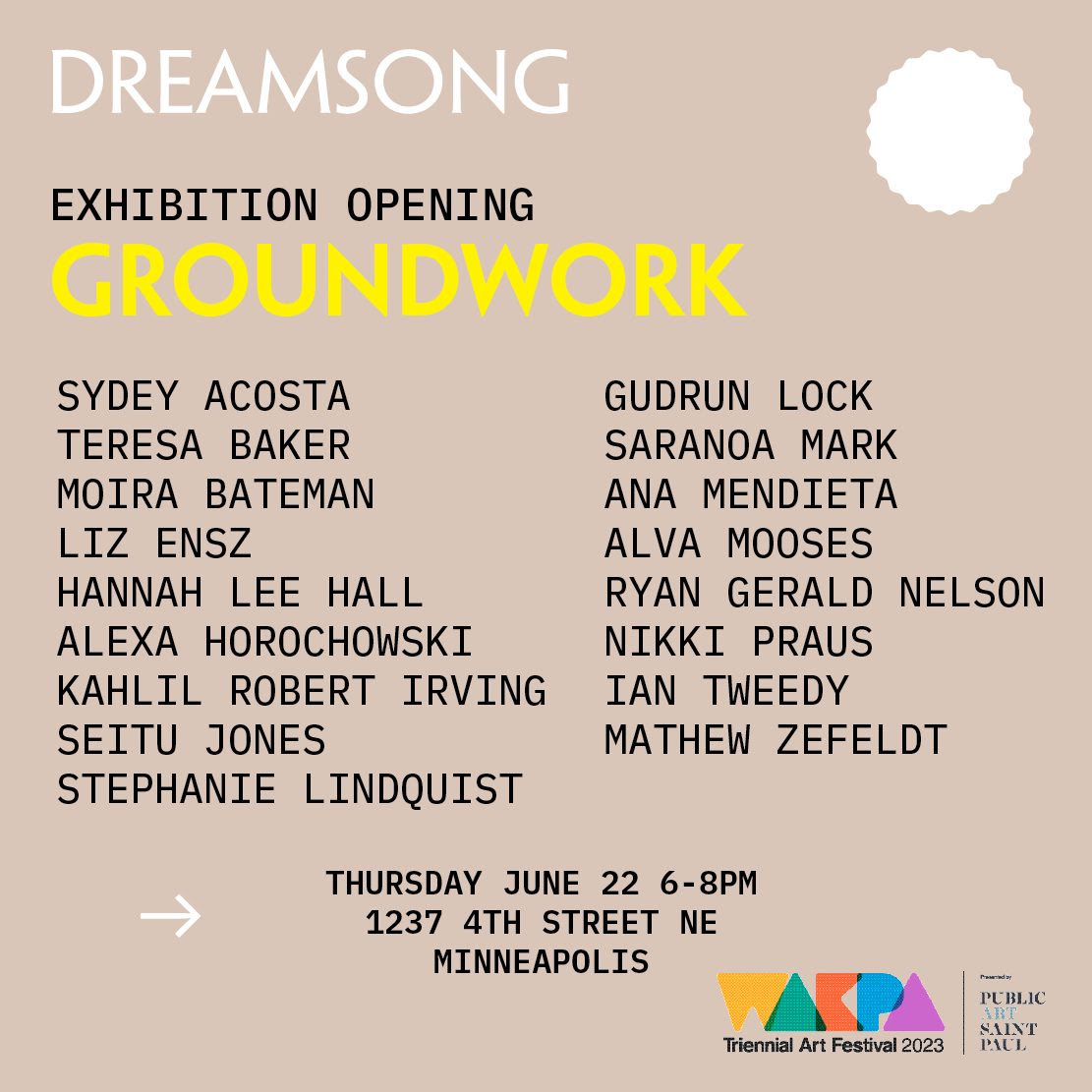
    The exhibition is organized by Public Art Saint Paul. The inaugural edition responds to the theme “Network of Mutuality”, a phrase from Dr. Martin Luther King, Jr.’s Letter from Birmingham Jail, which speaks to social justice, mutual care, interdependence, and inextricable links among humans.

    … … … … …

    Dreamsong is a space for contemporary art comprised of a gallery, a standalone Cinema, and an artist’s residency. Our program is focused on intergenerational emerging and mid-career artists from Minnesota and beyond, with an emphasis on female-identified and under-recognized artists. Founded in June 2021 by Rebecca Heidenberg and Gregory Smith, Dreamsong is located in Northeast Minneapolis.

    Featured Image: Stephanie Lindquist, Tasting Tart Cherries, 2021, acrylic, and cyanotype on canvas,
    40 x 48 in.
  • Why to love Hokusai

    Why to love Hokusai

    The Japanese artist Katsushika Hokusai (1760–1849) is usually recognized for a single image—Great Wave Off the Coast of Kanagawa, which is an icon in the global art world. When we recognize the work, it is as if the unpredictability of the sea holds our attention when a mighty wave breaks against the beach. We are lucky, since The National Museum of Asian Art has had a commitment to build its Hokusai collection. The institution is now showing an exhibition Hokusai: Mad About Painting in the museum’s Freer Gallery of Art.

    In commemoration of the centennial of Charles Lang Freer’s death in 1919, the Freer Gallery presents an exploration of the prolific career of the artist Katsushika Hokusai. Freer himself recognized the richness of the artist’s works assembling the world’s largest collection of Hokusai’s paintings, sketches, and drawings.

    Like the Great Wave, many of Hokusai’s paintings convey his interest in the every-chancing ocean in motion, including its fishermen and sea creatures. The artist created thousands of works throughout his long life. He worked mainly in Edo (modern Tokyo) period with a proximity to the Pacific Ocean.

    Above on the left, we see one of the wave paintings Breaking Waves (Edo period, 1847), created by Hokusai. It is apparent how the rough curving motion really brings the sea to life. The artist was able to masterfully capture the ocean’s free spirit making it the focus of his works. On the right, another Japanese artist of Edo period, Utagawa Hiroshige (1797-1858) depicts Edo landspaces in his work consisting of six panels. A detail of his work Famous Sites of Edo, spreads in the screens in which each panel has a separate painting that is mounted to one panel of the screen. The coastline and sea are visible through these panels illustrating landscapes. Interestingly, during the life of the two artists, by the early nineteenth century, the city of Edo had grown to a metropolis with a population of more than one million.

    Hokusai, Egret on a Bridge Post
    Edo period, ca. 1801-1802
    Japan
    Ink and color on paper
    H x W (image): 85.8 × 25.5 cm (33 3/4 × 10 1/16 in)
    Gift of Charles Lang Freer
    Freer Gallery of Art

    Hokusai showed interest in nature through many of his works. One of them, Egret on a Bridge Post, shows a white egret at night with moonlight illuminating the bird’s pale form. He illustrated the bird on top of a bridge post. Egrets are still seen in Japan’s rivers looking for food.

    The works in the exhibition, including Hokusai’s humorous manga about the everyday life, activities and faces of Japan, shows the vastness and the creative mind of an artist, who thought he might achieve a true mastery in painting, if he lived to the age of 110.

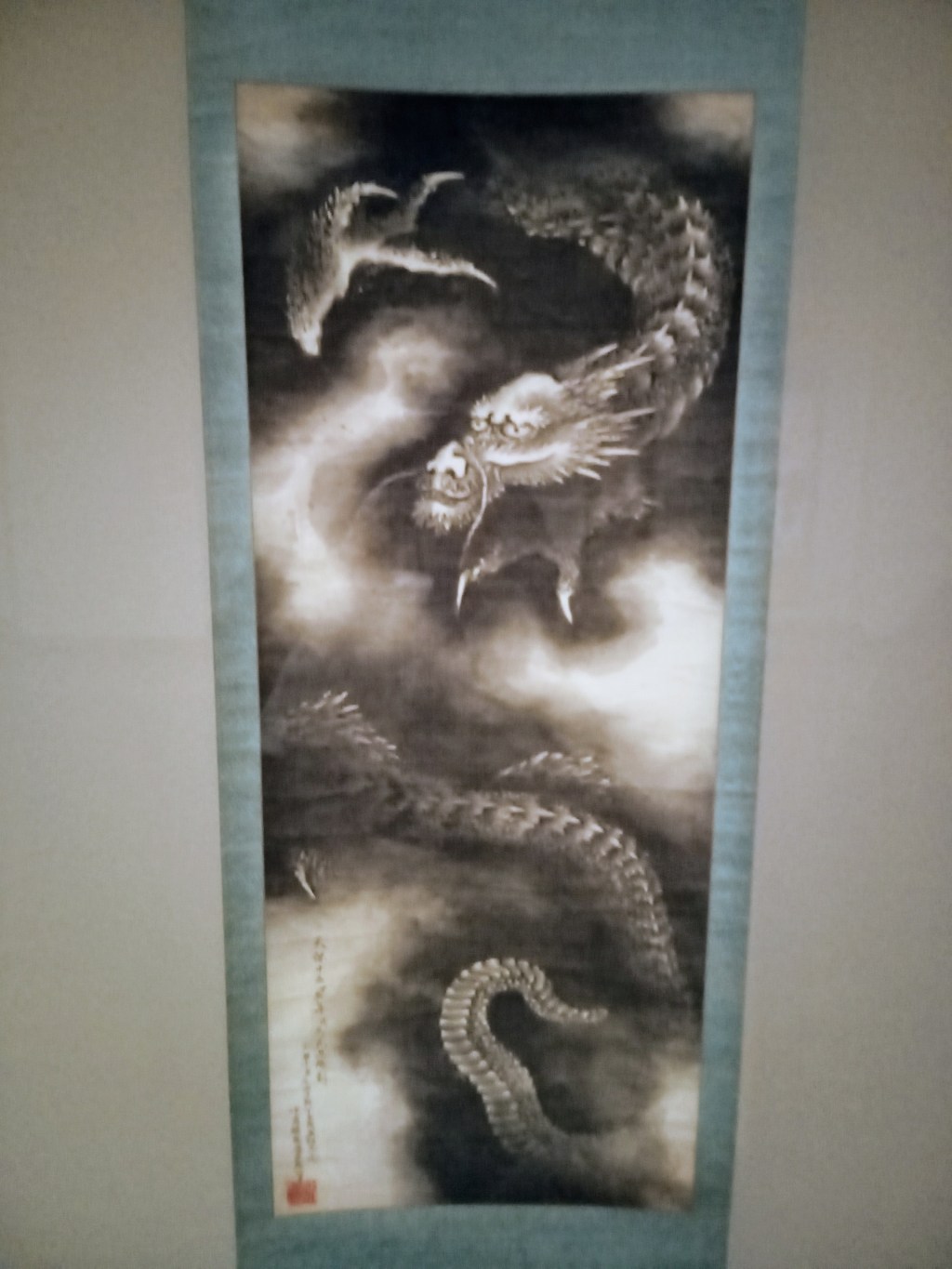
    During his eighties, Hokusai painted several mythical creatures known as dragons. The ultimate interest for him might have been in the character’s energy as the artist himself was ageing.

    One of these works, Dragon and Clouds (Edo period, 1844), was painted when he was at the age of eighty-five. The painting shows energy and vibrancy in the form of mighty mythical creature. The work is an important addition into documenting Hokusai’s life and art.

    Hokusai, Dragon and clouds
    Edo period, 1760-1849
    Japan
    Ink on paper
    H x W (image): 88.2 x 35.6 cm (34 3/4 x 14 in)
    Gift of Charles Lang Freer
    Freer Gallery of Art

    Visit and explore more about the exhibition: Hokusai: Mad About Painting


  • Corning Museum of Glass an innovative place to explore

    Corning Museum of Glass an innovative place to explore

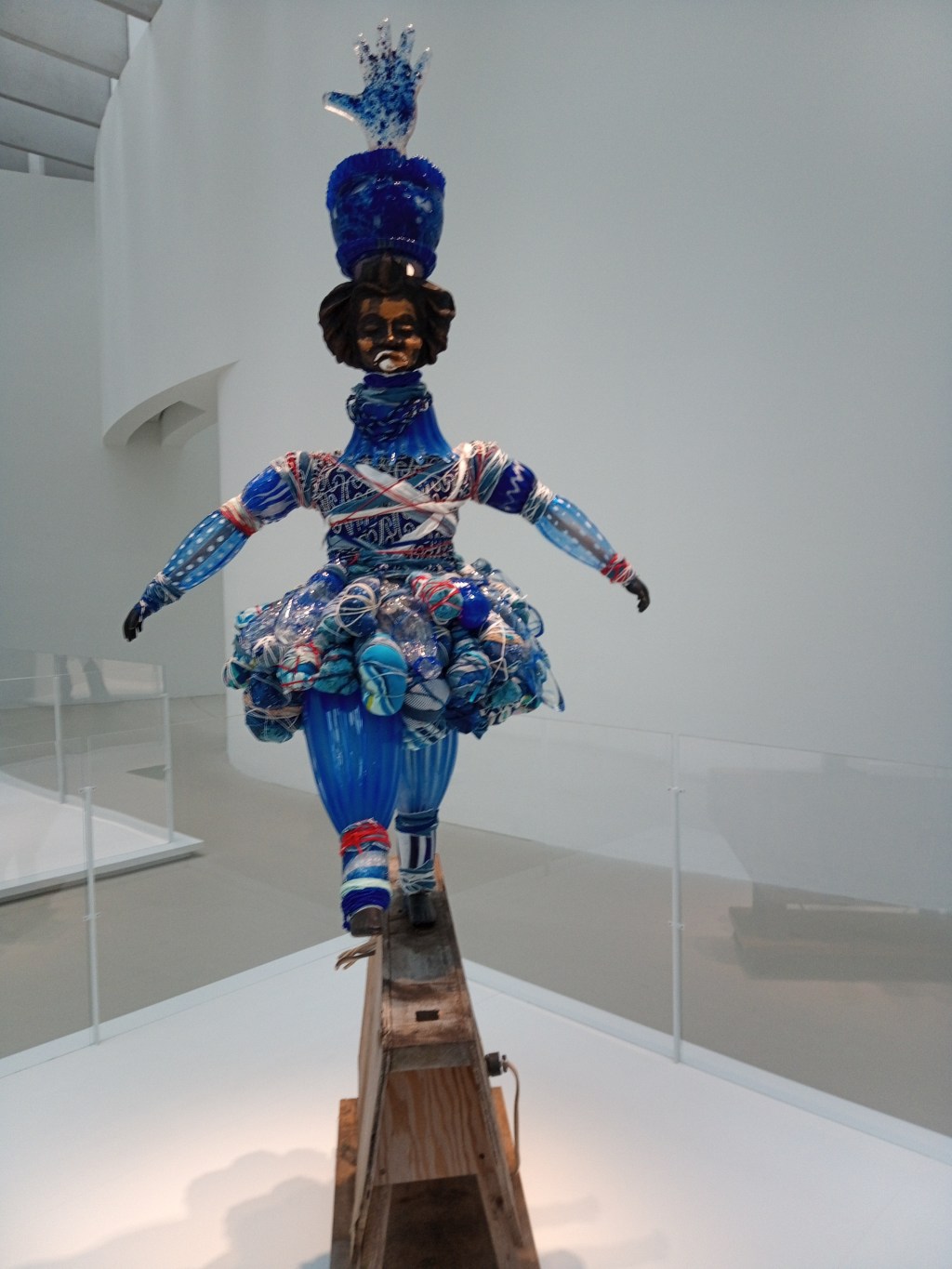
    As I walk into the Corning Museum’s light filled galleries, finally having a chance to visit the world famous glass and art museum, Vanessa German’s new sculpture is greeting me with its elevated presence. The blue sculptural figure is titled “The Walker; for how to honor the price of compassion– how not to die of lies” (2017).

    Vanessa German, The walker; for how to honor the price of compassion– how not to die of lies, 2017.

    This recent acquisition in the museum’s collections is a sculptural work defining new parameters. Vanessa German is a multidisciplinary artist, sculptor, poet, and performance artist. In her work, she has used mixed-media, found objects and blown glass to create a sculpture that celebrate cultures and identities of the black people. Anti-black violence has been a subject matter in her work; the art is showing identity, resilience, and community building, giving a voice for the marginalized.  

    The entry gallery in the museum has a curated theme ‘The Body and Narrative’. The curatorial intent is to display invisible structures attached to the body and identity. Art glass is pushing the contemporary art point of view,  questioning narratives about shared human experiences. On the other hand, works depict ideas and abstractions that create personal and emotional attachments.  

    Cat Burns_Va-Cume! Nemesis to Oliver the Amazing_2019
    Cat Burns, Va-Cume! Nemesis to Oliver the Amazing, 2019.

    Glass. Glass. Glass. Design glass and art glass, functional everyday household goods. Design beyond its formative use, and sculptural glass.  A ‘functional object’ can also become subject for the art glass. Such is the case with a sculpture by Cat Burns. The idea behind her sculpture, “Va-Cume! Nemesis to Oliver the Amazing” (2019), is based on a dog named Oliver. The evil Va-cume comes out of closet sucking up all the crumbs before Oliver can get and eat them. Innovative art glass at its best.

    Speaking about glass sculpture, “Meteor, Flower, Bird” (1980), by Stanislav Libensky & Jaroslava Brychtova is all about transparency in a form, one of the super qualities of glass.

    Transparency is one of the most important and most characteristic aspects of glass. It is penetrating; it dematerializes the material and connects with the atmosphere. – Stanislav Libensky

    Meteor, Flower, Bird, Libensky & Brychtova, 1980.

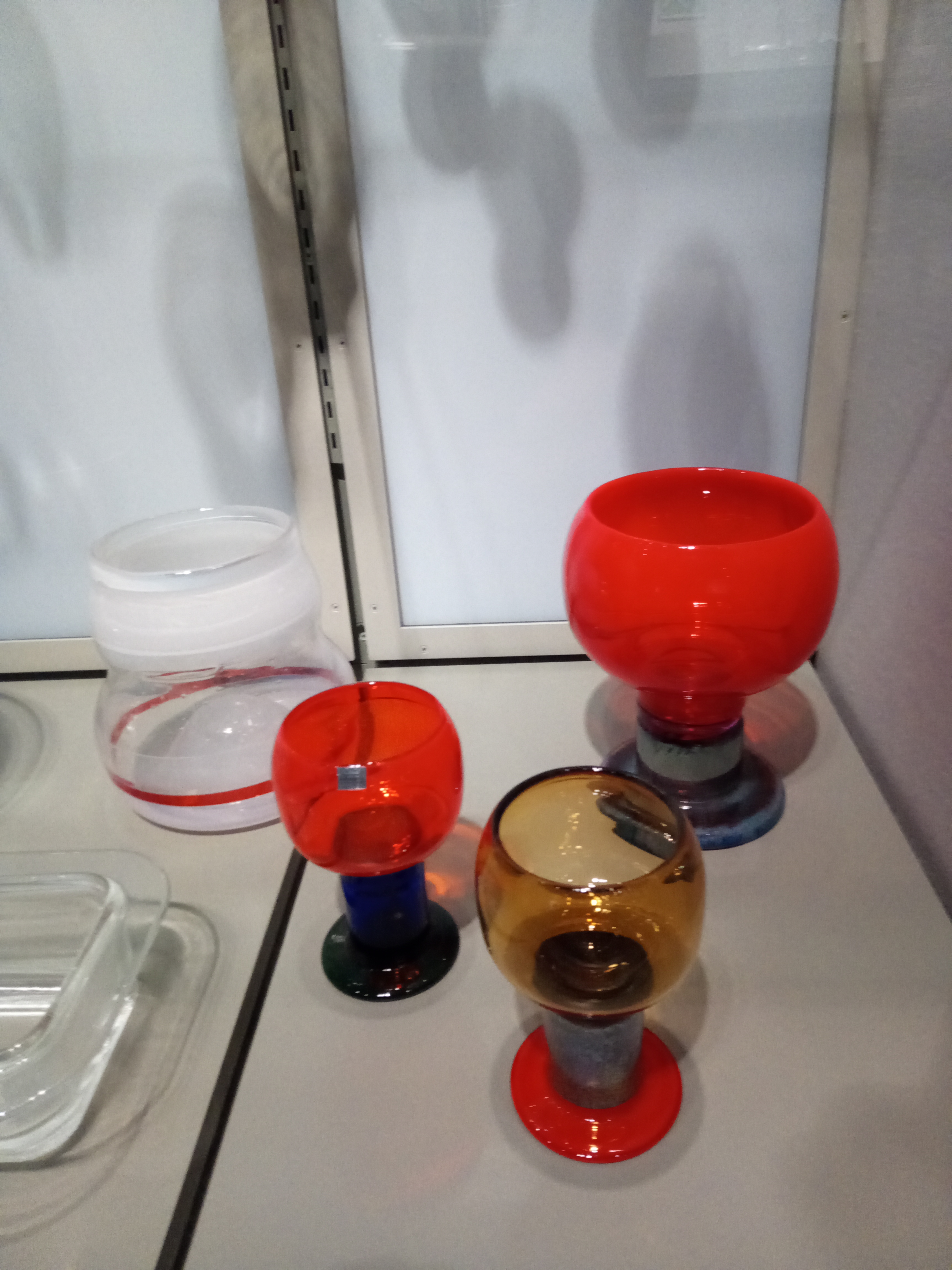
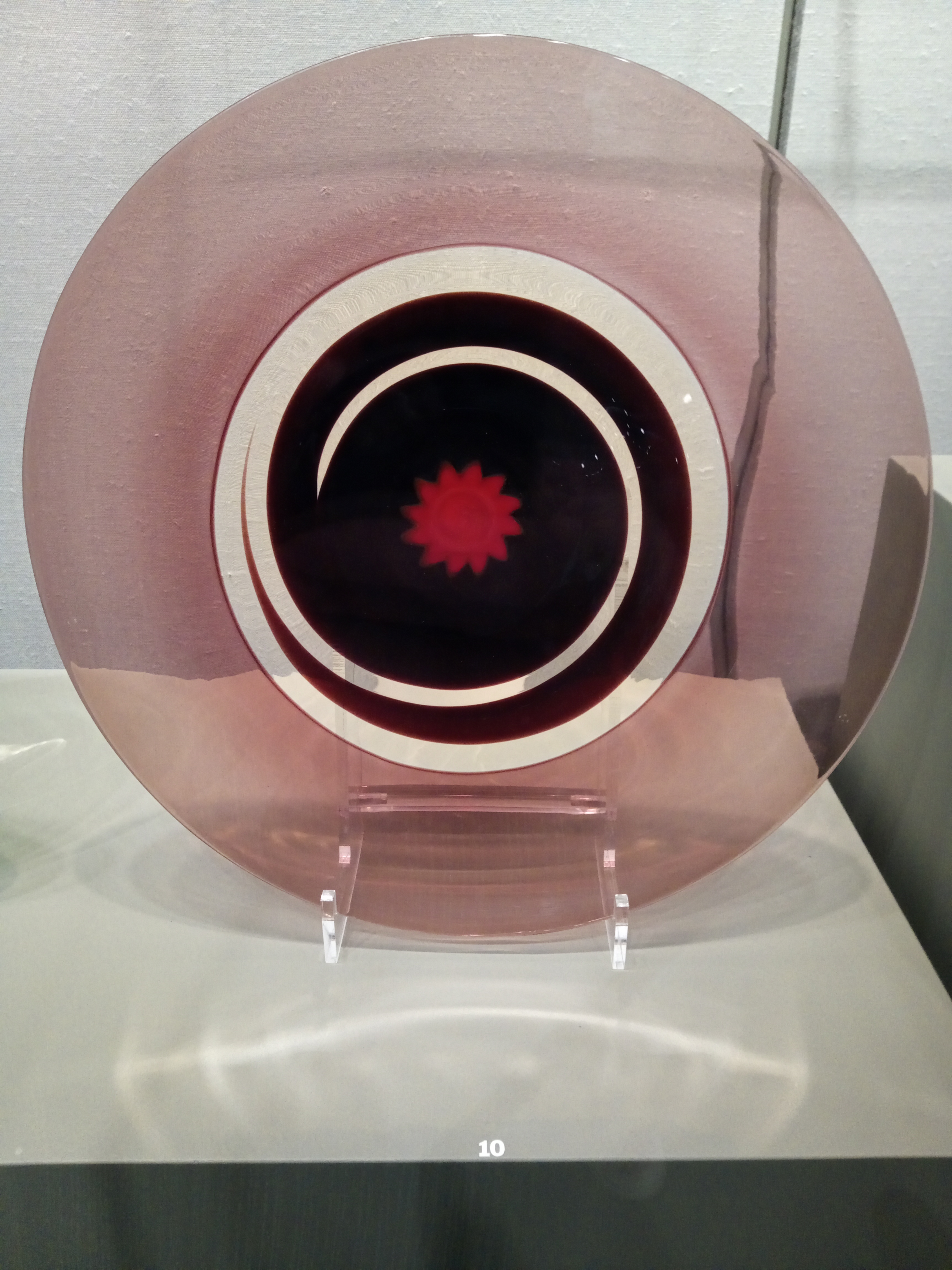
    It’s not only true for the beautiful glass goblets that come in different colors and patterns that capture our attention in glass. Or in the innovative crystal used as fancy glassware. Designs depicting sunsets, introducing reds, yellows, oranges, new shapes, captivating circles. ‘Milky’ glass, textured glass, colored glass, different patterns. In Finland, design glass has been around for everyday use for decades as objects and decorative vases. And, in fact has become world renown since the signature styles have been successfully branded by Iittala. The Corning Museum has its own share of Finnish designers. Tapio Wirkkala, Kaj Franck, and Alvar Aalto, among others, have become household names in the world museums.

    Finnish glass art is inspired by nature, and creates allure with exotic approach to color and form. The Midnight sun being one of the most inspiring phenomenon in the Arctic regions. Here’s to celebrate the Midsummer. 

    1. Kaj Franck, Pokals (1965), made between 1972-77. 2. Tapio Wirkkala, Plate, 1968.