Category: fine and contemporary art

  • Artist Interview: Heino Schmid

    Artist Interview: Heino Schmid

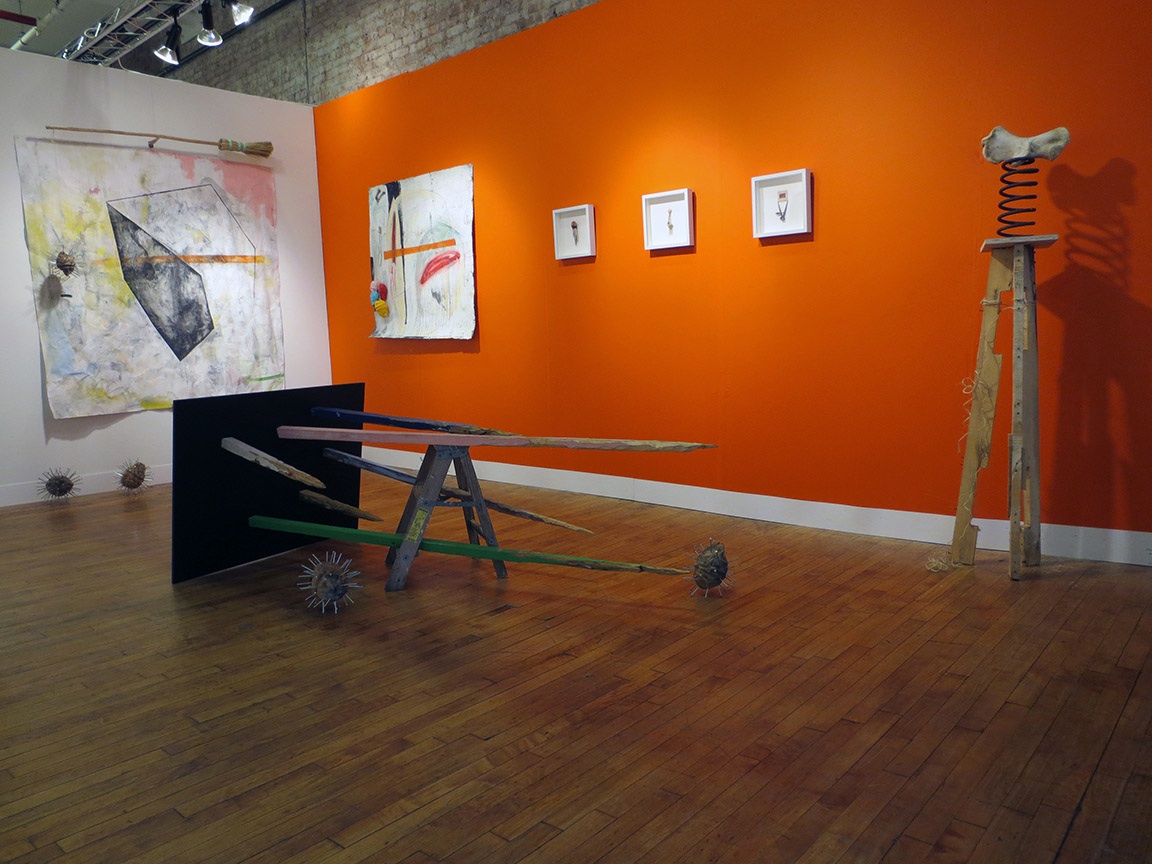
    Heino Schmid is an artist living and working in Nassau, Bahamas. He completed his MA in Fine Arts at the Utrecht School of the Arts in The Netherlands, and got his BFA degree in Photography at the Savannah College of Art and Design in Savannah, Georgia, US. Heino Schmid participated at the VOLTA NY Show with Nassau-based Popopstudios International Center for the Visual Arts in March 2013.

    Firstindigo&Lifestyle: You were born in Bahamas, how did that build your artist identity?

    HS: My father is German and my mother is Bahamian but I was born and raised in the Bahamas where I’ve lived my whole life outside of my education. I did my undergraduate studies in the US and my graduate studies in The Netherlands. My artistic identity is very much rooted in my experiences here and I find a great deal of fodder and inspiration in my immediate environment. As a country The Bahamas really lends itself to a lot of material investigation and I’ve really enjoyed having my studio and my creative practice based here. It’s close enough to the US where I am still able to see significant exhibitions but it’s private enough for me to develop a body of work on my own terms.

    Firstindigo&Lifestyle: What does globalization mean to you?

    HS: Globalization, in terms of the creative process, means communication. Through social media it’s never been easier to have constructive conversations with your peers and that is really exciting. The Internet also levels the playing field in terms of information. It’s a wonderful time to be a creative thinker because there’s so much information available, which I can filter at my own pace and discretion to construct a viable practice.

    Firstindigo&Lifestyle: How did you experience VOLTA, what did it offer you personally?

    HS: The VOLTA NY experience was extremely constructive to me. I believe that as an artist you initially control the medium of the work, the content, the presentation and the context of the work, but the context is the most fluid and gives your work life. It was hugely exciting for me to take my work out of the context in which it was made and place it in an environment where the dialogue would be completely different. The conversations that I had at VOLTA NY were constructive, positive and completely impossible to have, I think, in The Bahamas given the change of context.
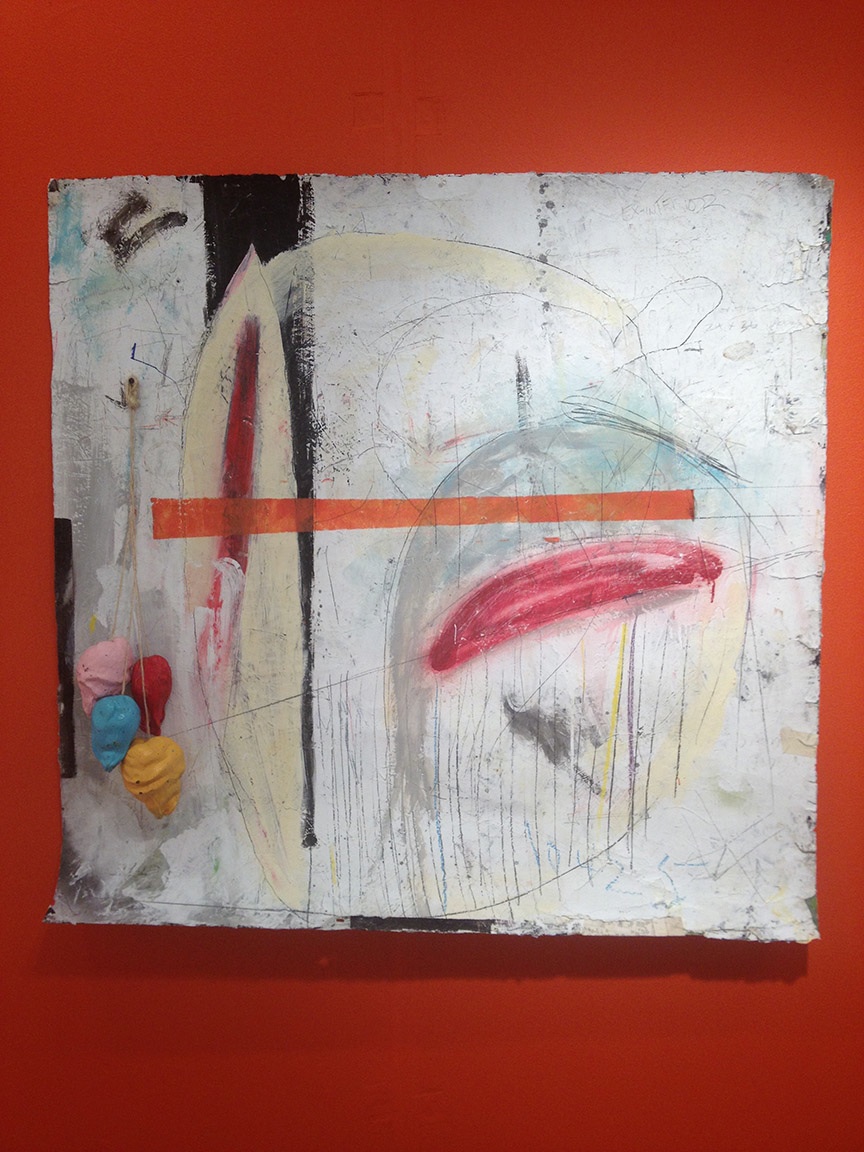
    HEINO SCHMID, Mixed media on paper with painted coconuts, 45 x 45 in, 2003/2013.

    Firstindigo&Lifestyle: Where is your focus as an artist, the media and the location?

    HS: As an artist I try to really approach art in itself as a visual dialogue so the media and the location hold equal sway in the production of my projects. The balance between media and location is always an interesting problem to solve. On the one hand you want to stay open to your environment you’re in no matter where you are to produce work, and on the other hand you want to make the work that’s relevant to your own practice in a sustainable way. When considered responsibly I think the tension between the two is always an exciting and productive challenge to embrace.

  • VOLTA edition #2 Derrick Velasquez

    VOLTA edition #2 Derrick Velasquez

    Artist Derrick Velasquez was presented at VOLTA by Philadelphia-based pentimenti Gallery. His marine vinyl and plywood wall pieces are sculptures, if you like, and at the same time they possess some qualities that are decorative, or design. Yet, this is not entirely summing up what he is doing with the ingredients. The art made by Derrick Velasquez is very physical. The layers of meaning, which come to your mind begins with words, like arts and crafts, ancient, poetics, mechanics, physics, installation, historical play with objects, and the body-art. He says in VOLTA NY 2013 introduction to his work, that his attempt is to ‘construct a language of structure that questions our physical and psychological interactions with industrially manufactured materials that exits in the spaces we inhabit’. Velasquez works with plywood to investigate the gravity or tension on the wood together with the materials of marine vinyl, acrylic and hardwoods. He adds into these the human body dimension. When the body is part of the picture; questions, how the wood can be stretched to measure our physicality, and what is a relationship between the space, the materials used and the body, are relevant. All these questions are also important in design. While his art looks very organic and natural, it also comprises qualities of forced, structured and compressed; so the tension is created.

    The Untitled (draped body) wall pieces series has come out from a meditation process, in which Velasquez discovered  his direct connection and interaction with the large sheets of vinyl. In order to cut the sheets of material, he carried the textile material over his own body that became a table and cutting surface for the work. He tried to think and imagine the visuality of the vinyl draping over his body, when he could not see what it would actually look like from the outside. Overall, his intention has been to take away the ‘consumer use’  of the materials, and let his body create the form for the objects. So this way, the image and spatialization of the form is a continuation of his body, it is an embodiment of the craft, and the weight of his own body, which has shaped and layered the form.

    For his series Untitled, which was on display at VOLTA, Delasquez did meticulous hand cutting of individual strips of marine vinyl placing and accumulating them onto precut wooden forms.

    Derrick Velasquez, Untitled 63, 36 x 24 x 1.5 inches, Marine vinyl, oak, 2013. Courtesy of Pentimenti Gallery, Philadelphia, PA.

    As a bookbinder the vinyl is a material I used as covers for hand bound soft cover journals. The form and process of the formalized wall pieces came from an every day practice of precutting enclosure straps for the journals and placing them on a screw on the wall. As these began to accumulate, I realized I was denying the intended surface of the vinyl and exposing the innards of the synthetic fabric. This creates a new flat surface that lacks the continuity of a sheet of fabric and becomes a construction of sophisticated and subtle color harmonies by way of hundreds of hand cut and layered strips.  As number of the vinyl strips grows, the relationship of the visual structure slowly shifts – the vinyl no longer conforms to the shape of the wood form, but instead rounds out to a gentle curve.


    Untitled (draped structure 2) is a piece inspired by images I’ve taken while driving over bridges. By taking the language of structure that exists within a bridge, I’m referencing the mechanical aspects engineering and physics of a form that has a different set of parameters than the human body.  By draping the vinyl over this invented structure, I aim for an indirect narrative and association between edifice and drapery.  Ideas of gravity, force, tension and repose come to mind as one might observe and think about the relationship between buildings or bridges and the colors placed on them. (Derrick Velasquez, 2013)


    (See also his installation art (Knitting movie) on his website here. Derrick Velasquez was born in Lodi, California, He currently lives in Denver, Colorado. He received his MA of Fine Arts  from The Ohio State University in 2008, and his BA of Studio Arts and Art History degrees from University of California, Santa Barbara in 2004.)

  • VOLTA NY-13 edition #1 LYNN ALDRICH

    VOLTA NY-13 edition #1 LYNN ALDRICH

    VOLTA NY’s 13 art fair is running for the sixth year in a row. The art fair celebrates a brand new location in SoHo’s vibrant 82 Mercer Street. I visited VOLTA during its opening day on Thursday March 7th (until March 10th). Spending time next to the colorful, innovative, thoughtful, provocative, and utterly timely international platform of contemporary art was worth every minute. The two floors packed with art, which were made with diverse techniques and means, and meeting people from around the world, who were enthusiastic about it, did not even feel a bit too much. Also, it was refreshing to stop for a moment, to look out from the large windows and enjoy the street scene, whilst being inside experiencing art. After looking out, I could again discover something new.


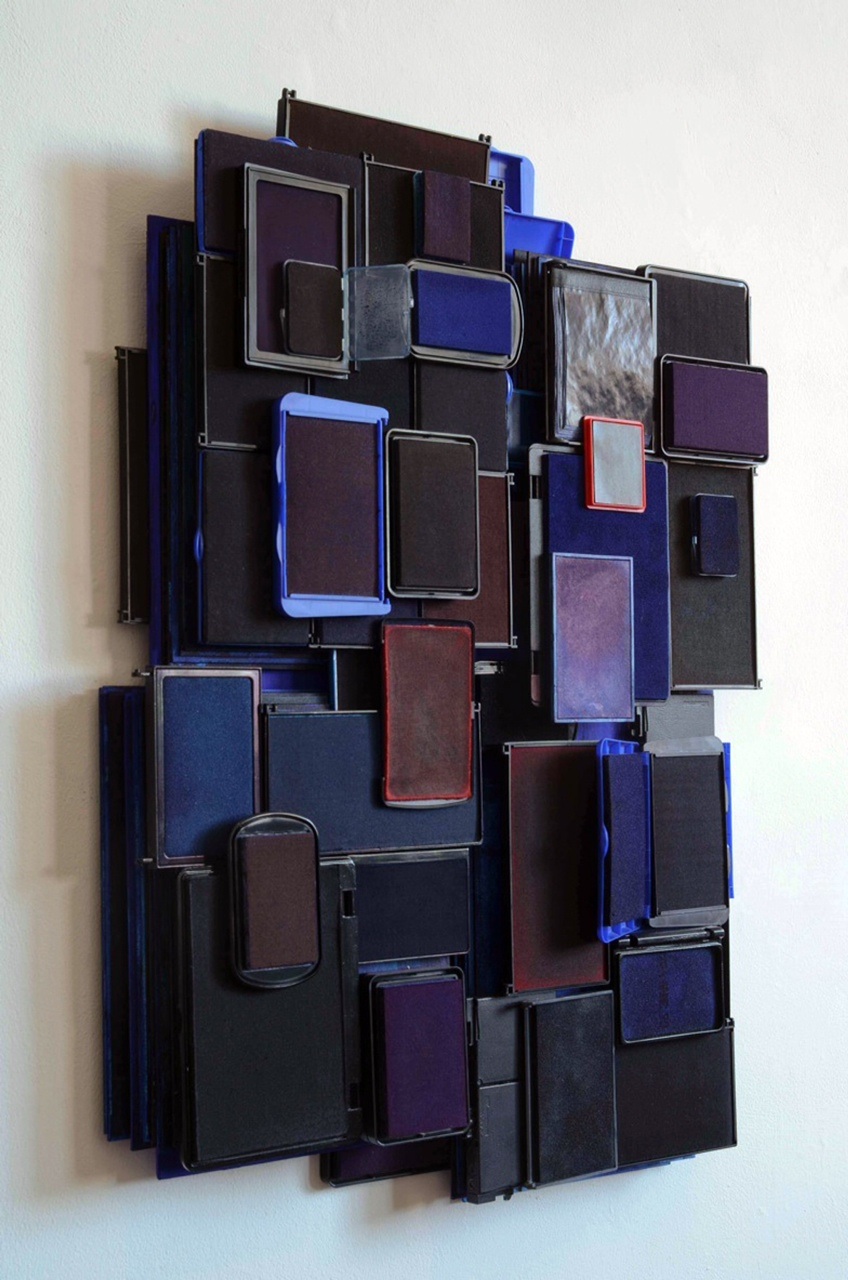
    lynn-aldrich-out-of-the-ink-in-the-dark-2012
    Lynn Aldrich, Out of Ink in the Dark, 2012, ink, ink pads, cartridges, blotting paper, carbon paper, 27 x 20 x 4 in


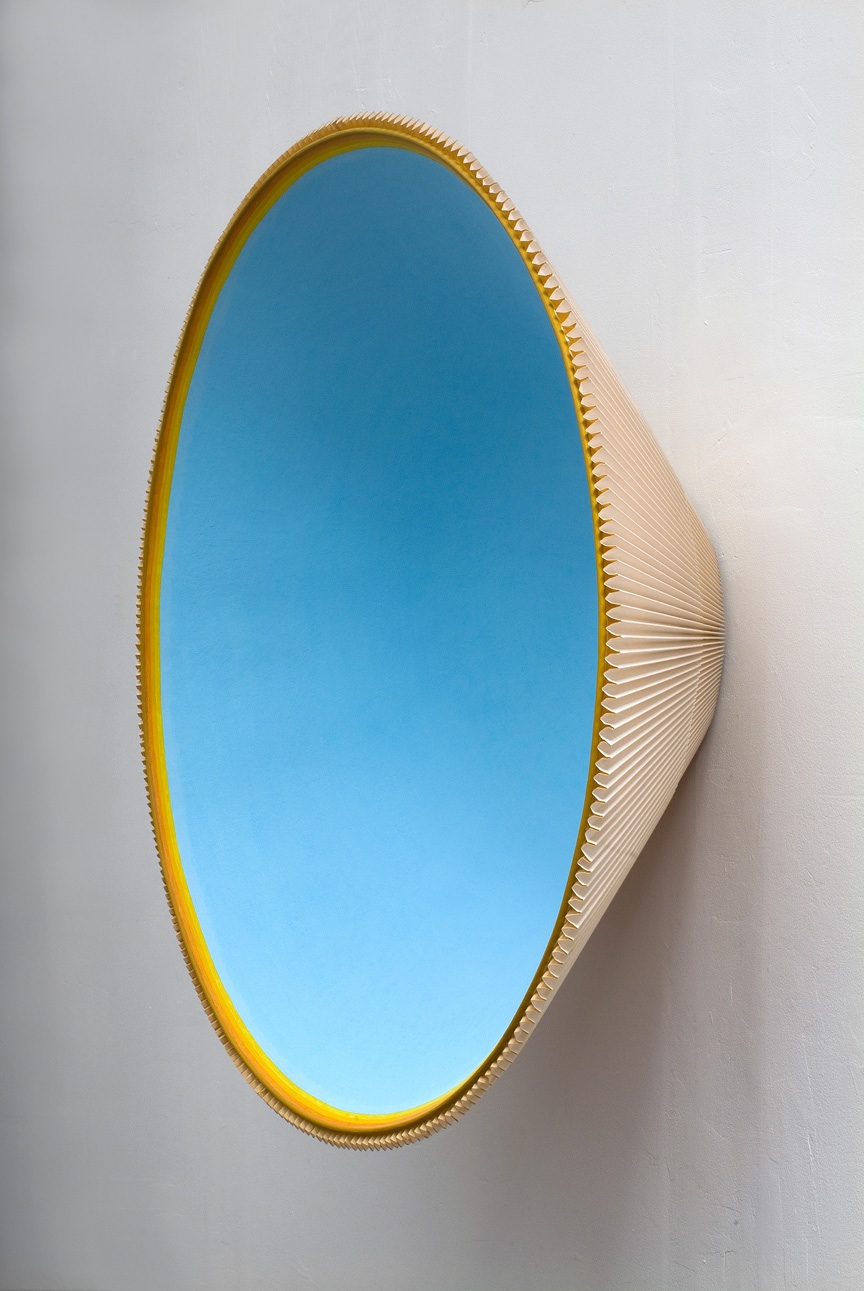
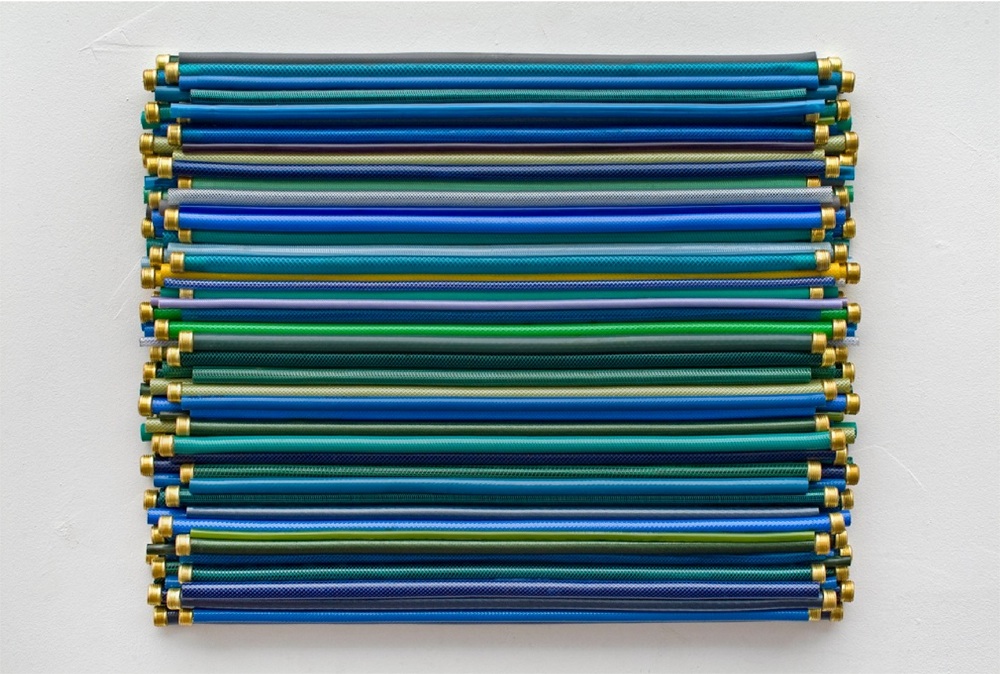
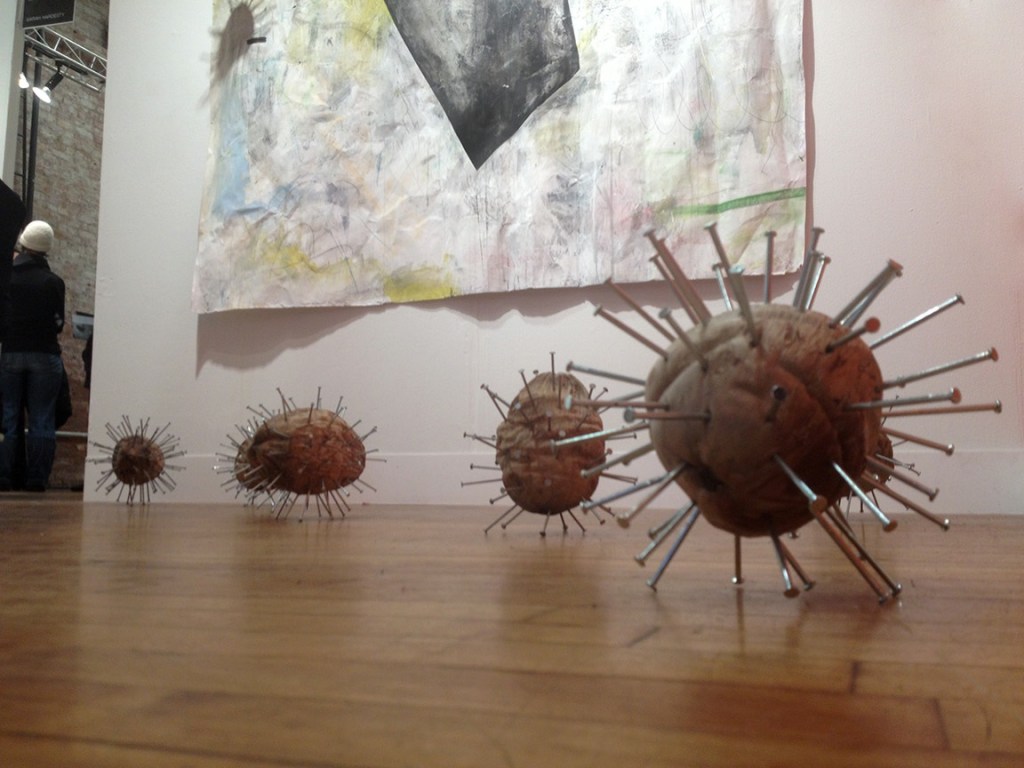
    My first story from the show is about Lynn Aldrich. Los-Angeles based artist Lynn Aldrichs exhibit at VOLTA takes place at the same time as her solo show is at the JENKINS JOHNSON GALLERY in New York. This show called Free Refill: Old & New Works opened on February 7th and is now on display through March 30, 2013. Lynn Aldrich’s creativity is truly on display of her sculptures and installations that show huge potential to the acute topic of environmental change with social relevance. Aldrich’s aesthetic, carefully made almost minimalist works state a question about our excessive consumption and our man-made impact/problem on the environment. Lynn Aldrich uses materials that are part of our everyday collectables from the Home Depot store, for example. Her sculptures and installations contain parts, which, if gathered excessively, lead to problems with waste and garbage. The plastic accumulating in the ocean is one such problem. Her use of bold or natural pastel-like colors melt in with vivid and organic forms, which together create ideas of technological interplays between humans, their sciences and innovations, and the natural environment. What I especially like is that the sculptures evoke clear sensorial responses. The Sky Light (Noon) sculpture, (no. 1 here), radiates turquoise light and invites to be in-contact-with itself. The sculptures also showcase authoritative presence. A work on the wall, Out of Ink in the Dark, 2012, (no. 2 here), possesses loudness and command reminiscing of the devices that have taken so much space in our everyday communication. Plastic Pacific, 2010, (no.3 here) articulates with its title about the Great Pacific Garbage Patch, and echoes about the human imprint on the natural ecosystem. The plastic tubes with oil glaze represent clearly the unnecessary amount of things that we have gotten used to, and have access to. By using everyday objects from Home Depot world, such as hoses, pipes and sponges, Aldrich states their physical functions. Alternatively, she references with the objects, that they represent the water flow of the ocean or the cleaning of the ocean. The works are asking us to pay attention to and listen to its fragile system, and asking us to do something about it. The Desert Springs, 2005-2009, (no. 4 here), with downspouts and gutter extensions, is an installation in which the organic nature-like looking particles are like the Coral in the ocean.


    Lynn Aldrich, Plastic Pacific, 2010, garden hoses, plastic tubes with oil glaze, brass ends on wood panel, 26 x 32 x 3 in
    Lynn Aldrich, Desert Springs, 2005-2009, downspouts, gutter extensions, gutter corners, enamel, dimensions variable ~ 59 x 70 x 62 in