Category: lifestyle

  • Hopefully there will be changes

    Hopefully there will be changes

    Our lives can become targeted, and the world events can break our innocence of time and space. The political turmoils in many areas of the Middle East have evidently shown us that our imagination of cultural space can change rapidly. International media has been ‘good’ in influencing our views of the significance of recent political turmoils.

    Once undergoing a radical process from being a state under oppressive powers, Egypt took a route for re-branding its image in the world. The sequence of events towards a revolution in Egypt took place in Cairo’s Tahrir Square in February 2011. This political performance became a testimony of a new type of nation branding, which operates with the help of global testimony. The advertising value of the events in the international media is in the question of, how did the revolution realize itself through the use of contemporary technologies? The revolution was not only local in terms of its impact, but it was simultaneously taking place in the various surrounding regions, and ultimately it took notice of the entire world through the modern telecommunications devices. SMS messaging, the use of Twitter and Facebook became channels for branding a new and globally more attractive appearance for Egypt. Men and women, young and old, came out from their homes bringing their radical presence, and fighting for the better future.

    As a political performance, Tahrir Square stands as an utmost example of branding a nation. The sequence of events radicalized some common ideas that usually stand for the images of Egypt as an ancient, and merely an anti-modern state. The representations of the region’s backwardness, as it comes to people, its ruling power, and even the medieval imaginary created around the cultural artifacts (use of camels etc.), has been holding a strong place in our imagination. These representations were crashed and set in turmoil. Yet, the immediate surface and media representation, the use of stereotypes by the international media, as it discusses Egypt, still seemed to continue.

    I went to Egyptian novelist Ahdaf Soueif’s lecture on March 3rd in 2011, as she was lecturing at the Edward W. Said memorial lecture at Columbia University. Her view on the local peoples’ communal actions that gave Egyptians new voice throughout the world, was very moving. It seems now that in today’s global world, nation branding involves voicing that promotes both uniqueness and difference. From the cultural political points of view, critical consciousness started building itself in Egypt, that perhaps elsewhere would transform itself to a milder forms of ‘re-imagining our new nations’. Yet, Egypt’s cultural space became an example of nation building that carries across national borders. Its new imagination has become contested in the global space.
  • A great Yellow city

    A great Yellow city

    There is only so much we can do with the urban panning? Move cafes to the rooftops, leave the city center only for taxis? Start using bikes in the city. What remains in the city that never sleeps aka *NYC* are the yellow cabs. As I have gotten used to them in everyday life, I thought to invent something that would describe my mindscape, or, rather, imagine together with the cabs. One rainy day I figured that the rain looked like yellow. The yellow rain landed on our coats, we hurried as usual, yet something was different. It was perhaps the awakening to the spring, the anticipation, or coming into this realization that the colors are there around us. The everyday is packed with shapes, colors, lived and animated livelihood, art, design. Anything.

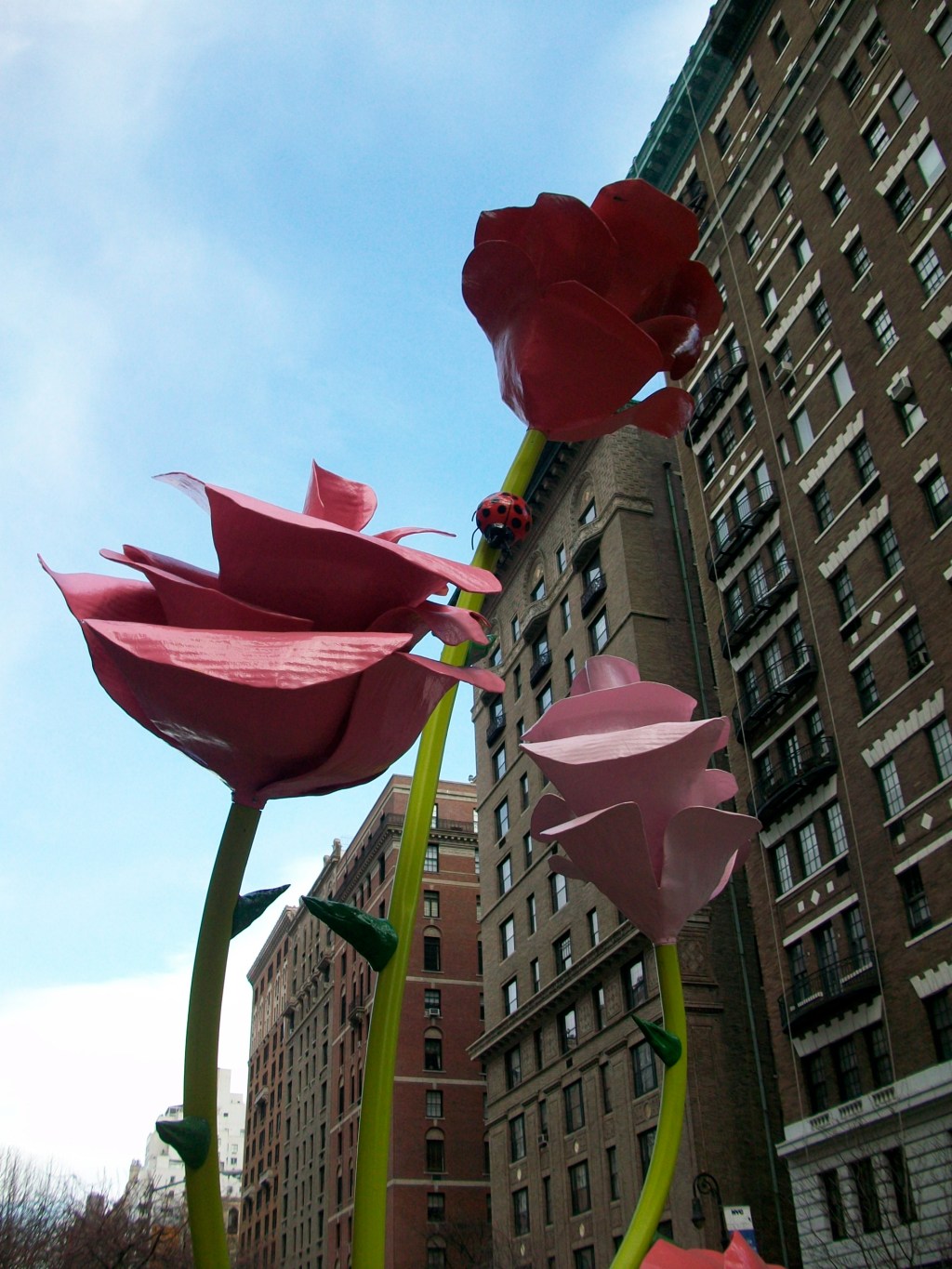
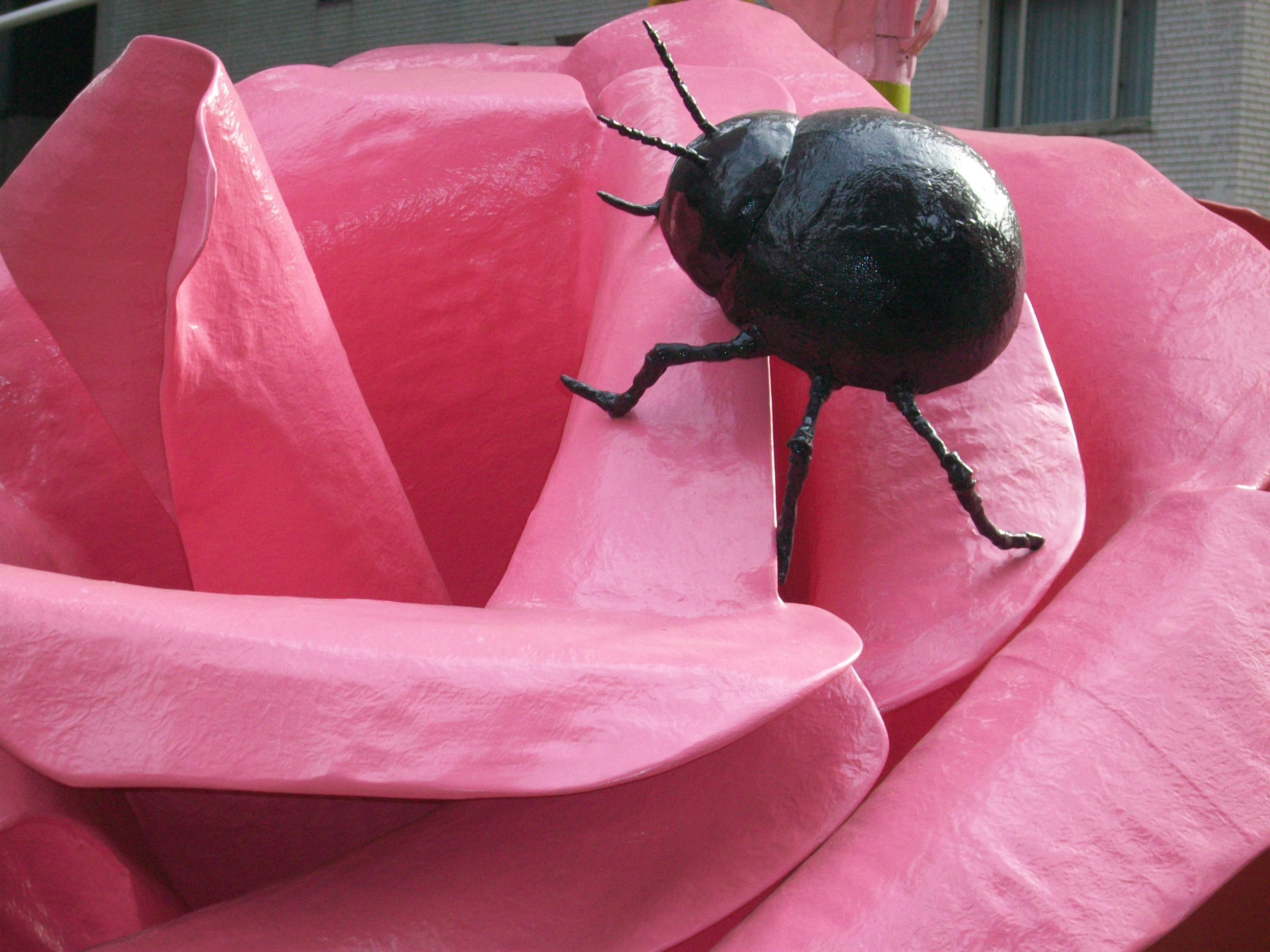
    I love one thing, *pink*. Now, when That color arrives in the city, occupying the busy business and residential avenue of New York, something Is in the Air. Last year this extravaganza color paraded a good amount of time on the street called the Park Avenue. Will Ryman’s Roses created from fiberglass and stainless steel, and thus having a naive and almost clumsy look in them, were just lovely vitamin for the city. Imagine pink and red roses in gigantic size, and then the bugs on top of them. Ryman’s roses were attractive, and most importantly, I found my favorite bug. I had a reason to walk the street over and over again. I had a reason to think that the city is beautiful even on a rainy day when windgusts are kissing my back, when my mind is somewhere far away thinking of the faraway places of the wildest unconquered nature. Here my gigantic bug was making my day happy, and making a boring and secured street plan look childish and funny, a little bit tilted even. It is surprising what art can make out of the convenience of the everyday as it mixes with more serious urban plans. Only a Spider by my favorite artist Louise Bourgeois would make me happier, if I met one on a street corner of course.

  • Feeling good about my environment

    Feeling good about my environment

    I was tuning into Björk’s Joga, looking at videos of Icelandic landscape and thinking about the affective aspects of our environments. Where we grow up, the landscapes that we get used to, has an impact on us. I strongly believe that landscapes shape our emotions and our approaches to different environments.

    When I think about some of Björk’s own comments about the environment she grew up in, I feel the same way as she does about the North. We should reconsider the Arctic resources and the Northern environment, and take climate change more seriously. Rapid climate change would be huge threat to our landscapes, and even change our feelings about them. I recently learned about a new book, which speaks about the unspoken sites of the climate change process. “To Cook a Continent. Destructive Extraction and Climate Crisis in Africa” is a book by Nnimmo Bassey.

    Bassey writes about Africa, where nature and natural resources have been traditionally considered a blessing. His insight is that by using the nature in a wrong way can turn it into a curse. Bassey accuses global North for taking raw materials from Africa. This also means that when the wealthy economies are consuming fossil fuels, indigenous forests, and commercializing the global agriculture, those economies also destruct their own sense of the good. Our question should be, how to maintain our responsible approach to nature and environment? Perhaps one way is to keep enjoying the nature, and also bring that sense into our designing.

    The human aspect in the community development is a central part of the contemporary design of environments. A new and innovative design-thinking considering public spaces is now more focused in the ‘good-feeling’ aspect that can be attached to making the spaces. Adding dimension of ‘feeling good and happy’ recreates the interiors and designs to fit better in our lives, and to serve us better as communities. Design education at its simplest comes with a recognition that people want to feel good, weather they are in their work offices, at home, or visiting serving centers and service points in public spaces.

    Also, another important question is, what is my favorite place and environment? And, how do I define the good feeling attached to my favorite environment?  I consider a human component to be the core factor even when it comes to a work environment. Feeling good would come with additional space for interaction, which would bring awareness and a sense of collaboration. My experience of my favorite environment is attached to my own memory of different places, which I have visited in my life. Then, the collective images surrounding places shape my feelings about them. In retrospect, my feelings about different environments is influenced by various representations about them.

    In modern design the interiors and exteriors can change my perception of my surroundings quite significantly. How I experience the space, of course, depends of my age, size, and my habitat. I have become nostalgic about the childhood landscapes that my family used to visit. Calling those national parks also my favorite places on this earth makes me rethink how important they are today. Feeling good and remembering the favorite places is one way to respect the future of our environments and the nature.