Category: performance&dance

  • Oblivia performance group and the Museum of Postmodern Art

    Oblivia performance group and the Museum of Postmodern Art

    Founded in 2000 in Helsinki, the international performance company Oblivia is truly a unique phenomena in the Finnish performance scene. The group transforms larger than life themes into minimalist performances. Oblivia’s group fuses different genres and nationalities. The members are from Finland and the UK have experiences in music, dance and theory, which allows them to play between suspended tension and sense of humor. Since its beginning, the group has attempted to create a common language in the performance. In June 2013, Oblivia will perform its recent work ‘Museum of Postmodern Art’ in the NEW Performance Turku Festival in Turku Finland. The performance is co-produced by at PACT Zollverein and Espoo City Theatre. The premier took place at PACT Zollverein, Essen in November 2012 and the Finnish premier was at Espoo City Theatre in November 2012. The performance is the first in a series of five and part of the five-year project Museum of Postmodern Art – MOPMA. Annika Tudeer, the founding member of Oblivia tells about the history of the group and about her own background in dance.

    AT: In the late eighties I trained dance, contact improvisation and what was called new dance then. I then worked as a dancer and choreographer until I started at the Helsinki University in 1994 where I studied literature as a main subject, philosophy, theater studies and gender studies. I belong to the rather self-taught generation that mainly acquired knowledge and experience through training and working. I also did amdram and studenthteatre that was quite important as well. Oblivia was founded in 2000 in Helsinki during the European Cultural Capital year. I had this grand idea of creating a network and collective of artists doing site-specific work. However I had not realized that a collective does not have a leader who decides most things (that was me, of course) and is in charge, but that kind of leadership is better suited in a smaller group. We did 4 site specific pieces during that year that were very popular and had therefore a great start, and in the autumn Anna Krzystek from UK joined us and the smaller Oblivia that is still exists was formed.

    I basically wanted to create an alternative working environment to most of what I had experienced in the dance and theater field in Finland, experiment how to work together and have fun and create high quality work, merging theory and art in an organic way, not paying too much attention to theory but rely on the fact that it is there. I was also very interested in structures, all kind of structures: working environmental structures, political structures, artistic structures, architectonical structures, and that was always part for the work somehow. I still organize the practical stuff together with our producer, but the artistic work is purely collective.

     How has the concept developed during the years?

    AT: After doing site-specific work for a few years we decided to move into the black box using light and sound and start to explore the black box. It is the most challenging place and also the place for most concentration and innovation in performing arts we think. We are super organized, working away from 10-17 Monday to Friday over 4 months that are divided over the year. The work has evolved a lot, we work over several months with a piece, with pauses in-between where we tour or do other things (me mainly admin and networking). I also think that we have become much more many faceted in the work and how we perform and at the moment we are very much concerned with ideas of collaboration. Which means a lot of discussions and trials and errors. The work becomes richer and bolder all the time. It is minimalistic and maximalist at the same time. We work with an empty stage and fill it with ideas and images that are created in the heads of the audience.

    How international are you as a group in terms of performances, touring, attending festivals?

    AT: Anna Krzystek lives in Glasgow, so she commutes to Helsinki for rehearsals, we are occasionally on residencies in Europe, and our current project Museum of Postmodern Art that contains 5 performances over 5 years (2012-2016) has first an international premier and then a national premier. We tour as much as we possible internationally and although the growth could be swifter, we are touring quite nicely.

    How do you generate and create the concepts, what are the terms of collaboration?

    AT: Well, we decide on a theme, and since we like long term planning so the previous project Entertainment Island became a trilogy that was finished in 2010 and has toured since and now we have MOPMA (Museum of Postmodern Art) going. We decide on the big theme that is now art for five years and previously was entertainment. Then we decide on what kind of take we take for each new performance a little before we start to work on it. Then we start to improvise, devise material and do free association and a lot of talking and some field trips. Now we are working on the idea of bad art, and what that means to us and what it foes to us. We talked a lot at the beginning, had a workshop and at the moment we are in the second working phase where we go deeper in the material and slowly start to make sense of it and structure it. Basically we are the three of us (Anna, myself and Timo Fredriksson) working away, popping in and out of impros. But we have worked for 13 years together now so we have a secure sense of being in the studio without outside eyes. We have also started to involve our light and sound designers much more that is wonderful, so they share the process, the talking, and the figuring out a lot from the beginning. They also watch rehearsals and comment.


    What is your opinion of the performance field currently, how do art and performance co-exist?

    AT: I have a feeling that the field is growing rapidly, and that the boundaries are blurred totally. We have all diverse trainings: Anna studied at the Cunningham studio in New York for several years, you saw my background and Timo is a classical pianist. This kind of heterogenic diversity is perhaps not that common, but nevertheless companies and projects are vibrant and mixed. It is interesting and exciting times we are living in re: performances. Sometimes I am overwhelmed by the quantity of performances, and work and activities and sometimes I miss a feeling of a clear trend and some leading stars and high quality work is not all too common skilled yes, but work that moves me is not that common at the moment. But in general I think that there is a very exciting scene going on at the moment.


    Your most important influences?

    AT: The old companies like Needcompany, Forced Entertainment, Pina Bausch, John Cage, – the usual suspects…

     Where do you see your project going, how do you balance the work and life, how about the ‘other interventions’?

    AT: We are starting to reach out and are discussing several collaborations with other companies, which is a totally new situation. We intend to tour more and more for each year, and also to communicate more with other artists in various ways. Sometimes we feel a little isolated here, so we are working on breaking out from that isolation and become more part of the world, so to say. For me work and life are intertwined since my husband is Timo who is part of the Oblivia core and we have to deal with how to take care of our 9-year-old daughter as well. I have also been very active in founding the Performance center, ESKUS in Helsinki for working: with three studios, and a shared office for companies and individuals in the performance scene and independent scene in Helsinki. We have residencies, rent out spaces and work on different levels to be a supportive structure without being a venue or a production house.

     Oblivia will premier MOPMA 2 (that is the working title, the real title will emerge soon) in mid September in Trondheim, Norway at the Bastard festival. Until then the company will tour MOPMA 1 in Finland and Entertainment Island in Poland

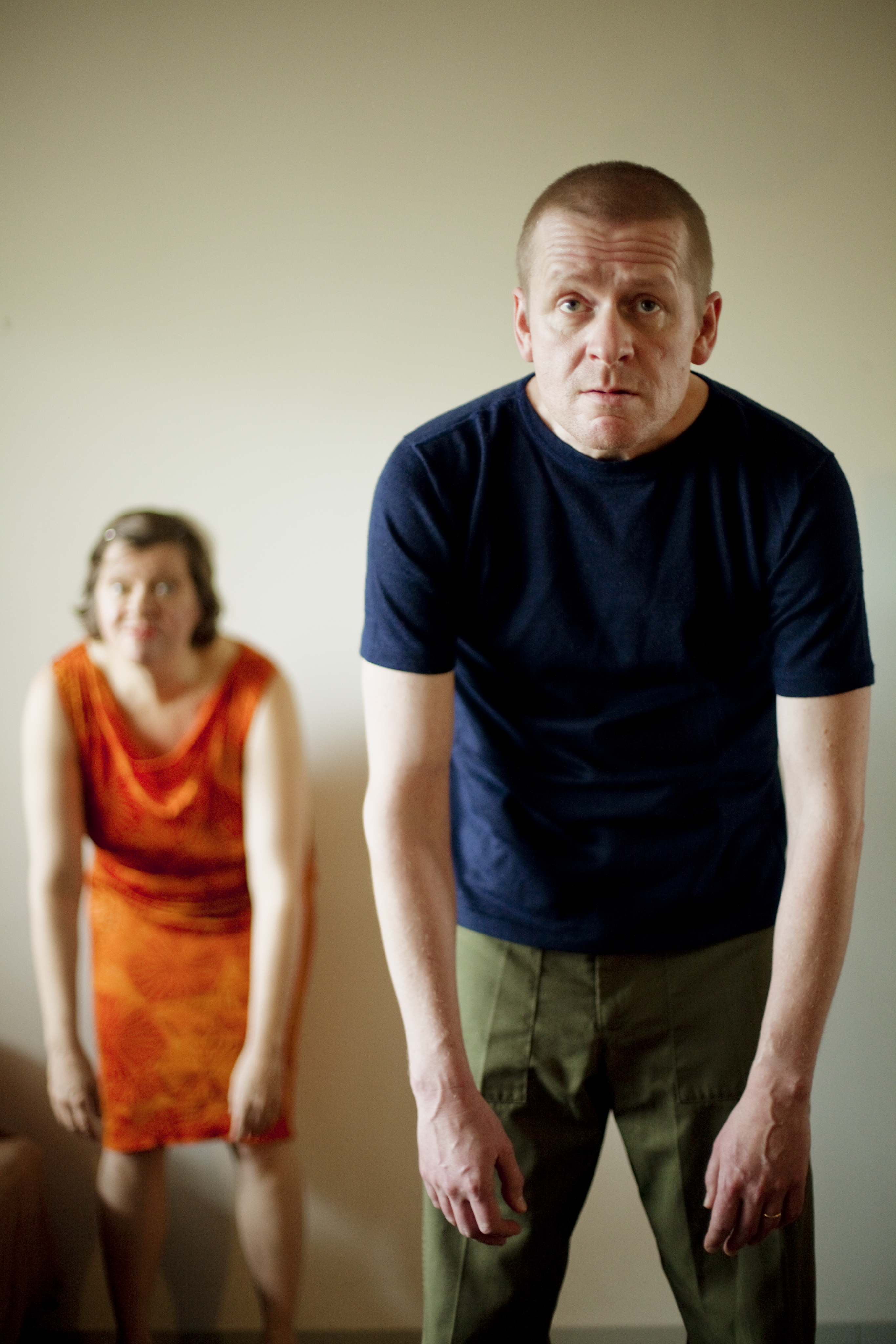
    MOPMA_v2_06
    (Annika Tudeer and Timo Fredriksson. capture: Eija Mäkivuoti)

    Oblivia’s website and Facebook page...

  • Artist Interview: Choreographer Simo Kellokumpu

    Artist Interview: Choreographer Simo Kellokumpu

    Sightseeing is a performative proposal to deconstruct an archetypal figure of tourism through a site specific procedure. It’s about shifting from sightseeing to siteseeing and what this involves in terms of spacialization and temporality of the seeing that can trigger a sight specific experience. (Simo Kellokumpu & Vincent Roumagnac) . Sightseeing is a Dance Film directed by Simo Kellokumpu and Vincent Roumagnac (FRA/FIN 2012, 28 min). The film will be part of the LOIKKA DANCE FILM-FESTIVAL next week in Helsinki.

    Firstindigo&Lifestyle: How did you choose dance and choreography?

    SK: I’m not sure if it is about choosing in my case –  I find it more like a development of perception within the conditions where I have lived. I have realized that choreography is something I have always been interested in, but I didn’t have a word for it before getting to know dance. As dance and choreography are two different media, what interests me now as a choreographer in choreography is to consider it as a form of (an artistic) practice, which articulates, shifts and opens social, temporal, spatial and material contextual circumstances. To think and practice choreography is to be in the movement all the time. When I auditioned for the Theater Academy (TeaK) in Helsinki, I already knew that I wanted to study choreography. They asked me in the final interview about the relation between a dance technique and choreography. Now after more than 10 years later, I still remember it as an important question in a way that I was confident that the choreography as a medium is the right one for me. We had 3 years BA-studies together and after these years there was another audition to the department of choreography. The audition again was an uneasy experience, but I’m very happy that I had the chance to study there 2 more years in that department.

    Firstindigo&Lifestyle: What does interdisciplinarity mean to you as choreographer?

    SK: In practice it’s now about the dialogue between me and my collaborator a French artist Vincent Roumagnac whose roots are in theater and in visual arts. Also, it is about the question how to shift and echo the choreographic process into another medium/and vice versa. In this way, I would prefer to use the term intermediality than interdisciplinarity, because it is about what is at stake ”in between” the different media we use. For example, I think that artists like Bruce Nauman or JulieMehretu have a lot to give for a choreographic process. The history of contemporary performance, the body – and the visual arts is full of makers into whose works I can relate to with my choreographical references. At the moment, I am interested in, what kind of aesthetic forms comes out from the artistic process, whichcombines contextual choreography and the economical and philosophical principles of degrowth. I don’t have any ”artistic ideas”, but I am rubbing the notion of choreography with other contexts, media and circumstances, and speculate on the resulting inter-forms.

    Firstindigo&Lifestyle: Tell me about the project in Iceland, who did participate in it, and what did you do with the landscape?

    SK: I was invited to an international Aeringur contemporary art festival (in Rif 2012) with Roumagnac. The festival invited artists 10 days before the opening to work on the specificity of the site where the festival took place. We decided to work by the volcano/glacier Snaefjellsjökull with the notion of Sightseeing (and playing with homophonic site-seeing…). We aimed to play with these notions from the critical point of view meaning, asking how mass tourism usually consumes landscapes. Therefore, we wished to ask, what logical system of perception does it enclose that the spectator-tourist him/herself imposes an arbitrary framing of the landscape (the cliché). We worked on the deconstruction of this logic of seeing and experiencing the site by embodying (the body of the viewer) and re-framing (the framing of the landscape). So, having alternative forms of perceptual experience of the specificity that is usually attached to the nature-tourism site. We filmed a video of 30-minutes including me + the local people and participants at the Aeringur art festival. We also made an installation for the opening of the festival.

    Firstindigo&Lifestyle: You live in Berlin, how is that now different from Helsinki, or Finnish dance and art scene?

    SK: One of the main reasons to move my base to Berlin was to concentrate on the development of choreographic practice in a vibrant international context. I always thought that I would move to Brussels or Paris, because I’ve studied french for 5 years. But I found in Berlin a lot ofinteresting contemporary art, and colleagues in the same position, so I decided to stay – typical storyfor an artist, I guess.

    When I went to Berlin in 2008, I was in the middle of a serious professional crisis. I was thinking to change the profession because this crisis had been going on already maybe a year or so in Finland, even if I had possibilities to work. I thought to quit practicing/making choreography. But what eventually happened to me was through questioning the logic, aesthetics and social and material conditions of the production-making, where I had been in Finland. I found some possibilities to realize workswhere choreographic thinking is processed out to, or with, the spectator without being subjected to the logic of a dance-piece or production, which is rehearsed and produced to be performed always the same way, no matter what is the context. I think there’s enough productions in the (art)world already. I try to find ways of making art and the living, which escapes this economic logic of the art-market – it’s a tricky equation to solve but I think it’s necessary.

    In Berlin, I also took time to study, what has happened within western contemporary choreography in the last 15 years. I dove into the contemporary arts and understood many crucial things for my professionalcrisis. Berlin was a perfect place to be for this kind of professional process. I think themajority of the art-scene is in Berlin for other reasons than ”making a career” – I think it’s a place for developing your artistic practice. Stimulating art-city it is.

    It’s been at the same time relieving and challenging to step out from the safe small scene into the total anonymity where no one knows who you are, and where you have no artistic institutional support at all. To step out from the familiar, expected and recognizable logic of working and presenting works, you inevitably bump into unexpected and unknown landscapes in many ways. It was right thing for me to do – to change the location doesn’t necessarily bring you something more, it can also be the movement, which prunes and clears out.

    The main differences with Finland are quite simple. Finland is quite homogeneous and the art-scene is small. Of course one of the reasons for this is the geographical position, which already positions artists in a certain way, I mean there’s not that much people going to Finland especially.Finnish choreographers are not yet well-known in the Mid-European scene. I’m happy to see that there are some interesting younger generation choreographers like for example Anna Mustonen on their way. I am confident that they start to appear in critical European contemporary stages and venues as well, if they want to participate into the logic of touring with works.

    In Berlin, there are artists from all over, and it seems to be in constant movement.  It is questioning already things in practice, which haven’t been spreading out yet. Different ways and disciplines of making are mixed, and as a spectator you have a good possibility to experience diverse vital critical art-scene, which challenges your thinking, perception and position. Berlin is poor, and the venues do not support artists the same way than in Finland, but it is a place, where people want to come to show their work even if also the audience is very demanding – in Finland the audience is very polite, and the discourse between the audience and the artist is completely different.

    In Finland, we are not used to talk about art that much. In Berlin it’s common that the spectator has critical questions about the work. Aesthetic talk is an aesthetic talk in Berlin, whereas in Finland I have experienced it more like a personal talk, which is connected to the romantic idea of an inspired artist who expresses him/herself. The tradition of dance and choreography is longer and thicker in Berlin and in Germany – Finland is a young country and the position of a contemporary choreographer is hardly to be taken seriously, or the position of an artist in general. But it’s hard everywhere for artists I guess, especially in these neoconservative political times. What I find meaningful in Berlin, is the history of a place where artists have been stretching, breaking, testing and questioning the ways of making and presenting art. Also this affects to the Berlin’s position as a vibrant, substantial and horizontal art-capital.

    In last 1,5 years, I have been more active again towards the ”scene” and been meeting more people. I have even learned to say no to the proposed possibilities also in Berlin. I’m interested in working with Finnish performers, because I think they are good in the way that they are grounded and down to earth. For the moment, I’m happy to be working in a light collaborative structure, but if there’s a working group included, I’d like to bring the group to Berlin and present the work then in Finland. This way there’s automatically cultural exchange, and stimulation happening to many directions. I am planning now together with a Finnish Berlin-based director Mikko Roiha to create a platform or stage for Finnish performing arts in Berlin. We are working on to find the ways now, and looking for collaborators from Finland and Berlin to get this project going to be able to offer one possibility for Finnish artists to present their work in Berlin.

    Firstindigo&Lifestyle: How do you understand dance technique? What is a Kellokumpu dance technique?

    SK: I think of it as a certain neuromuscular organizational system, what you can study and learn to embody. Nowadays, I have moved on from thinking dance-technique(s) as something necessary for the choreography. I mean, I am interested in finding the ways to understand, how a subject, we call a ”dance technique”, is used and connected to the broader social, aesthetic or historical context. For me as a choreographer, it is necessary to understand these connections more than having a ”dance-technique” – I find it problematic if a choreographer finds his/hers dance technique and sticks only to that without questioning its broader social, historical or aesthetic dimensions. Usually, I have worked with the dancers who have a broad understanding and physical potential. I find (Forsythe’s, if I remember correct) thought about dancer’s body as a body of a monster intriguing. I have certain elements and tasks to combine when it comes to the idea of the movement-texture. But like I said, I’m thinking about choreography nowadays as a medium, which doesn’t necessary need a body to be processed and presented. I am interested in working with the notion of choreography and its possibilities; dancers and dance-techniques can be part of it or not.

    Firstindigo&Lifestyle: So, what are your greatest influences?

    SK: In 2010, we (with Roumagnac) created a solo-work for me which included a staging of my choreographic mothers and fathers so to speak. From Finland, there were Ervi Sirèn and Tarja Rinne. And then, Merce Cunningham and William Forsythe were on stage with me in this work (not physically present, note). I am still aware that these names are important for me when it comes to the personal history of dance and choreography. Like many, I am interested in the 1960’slegacy in the western contemporary arts. To name a few, Judson Dance Theater, Situationists, Minimalists, Arte Povera-, Fluxus-artists and then choreographers like Cunningham, Lucinda Childs, Forsythe and Jérôme Bel are the sources of my inspiration. Of course, my position is nowadays to have a critical point of view to my genealogy as well, and to look ahead by following what is happening in the development of the choreography.

    Firstindigo&Lifestyle: What did you learn while you were spending some time in New York?

    SK: I spent only one month in New York and it was the first time for me there. I mainly wanted to go after Merce’s (Cunningham) footsteps a bit, so to speak. So I took some classes in Cunningham Studios and visited museums and galleries, got to see performances etc. The trip was part of the project of mine what I processed with Roumagnac who was in Paris at that time, it was a continuation for our one month work-trip to Beijing. In New York, I thought a lot about the relevance of being aware about the history and the line(s) where you belong into. I found it significant. I even bought a blue unitard.

    -Check the LOIKKA DANCE FILM-FESTIVAL calendar here.

    -Artist’s website: http://kellokumpu.wordpress.com/2010/09/21/11/

  • Chinese Watersleeves

    Chinese Watersleeves

    Shuixiu is Chinese. The word can be translated literally to ‘water sleeves’. The sleeves are amazing part of the costume, or dress, which a Chinese stage performer wears. Not only are they made of fabric and is part of the costume, but the word refers to performer’s extraordinary skills to perform various movements with the sleeves.

    Water sleeves are ‘double white-silk sleeves attached to the cuffs of a costume’. The long sleeves can express performers’ mood. Overall, the gesture variation that one can perform with the sleeves, are hundreds. These include movements of ‘quivering, throwing, wigwagging, casting, raising, swinging, tossing, whisking, rolling, folding, crossing and so on’.

    Water sleeves can be used for many functions. For example, the sleeves wigwagging in front of face means a fun; one hand pulling another water sleeve sidewards indicates politeness or bowing; sadness and shyness are expressed by one hand pulling another water sleeve to cover the face; wiping tears and whisking dirt on costumes by water sleeves; raising and put up two persons’ water sleeves to embrace each other; water sleeves also indicates the music band when the singing performance starts (cultural-china.com).

    Here is a Female Dancer, a sculpture from Metropolitan Museum’s collection. It depicts fine water sleeves being a fine example of dance in the Chinese sculpture. This model is earthenware with pigments, and it is from the Western Han dynasty (206 b.c.–9 a.d.), 2nd century b.c. China. More information about the sculpture on the museum website here.

    Female Dancer, the Western Han dynasty (206 b.c.–9 a.d.), Metropolitan Museum of Art.