

Kristin Hatleberg is a dancer and educator living in New York City, whose recent efforts include organizing a knitting circle for Sandy relief, (SandyReliefKnittingBee on Facebook).
Firstindigo&Lifestyle: Kristin, how did you get started with the project of knitting?
Kristin: The idea came to me quite simply, and I blurted it out to the right person! My boyfriend and I were making dinner and I said, “You know, I should just start a knitting bee to give everyone a way to help out. I’ve got the yarn—why not?” And that was it, within that evening the idea was public, space was donated, and we were going through with doing it. It started in the week right after the hurricane, because I kept having conversations with people about how they were frustrated at their inability to help out. Lots of people I knew were getting turned away from volunteer centers because they didn’t have long enough windows of time to volunteer. And I thought if only there were a way for everyone to sit down together and process what’s happened, and to do something with all the concern in the air….it felt surreal to return to work and “normal life” when just a mile or two away, within the city limits, things were shattered. Then I remembered I had this huge pile of yarn back at my mother’s house that I knew I was never going to use. Then, I was handed a free meeting space that was connected to a huge network of people. So it all came together on its own, really.
Who joined you in the effort?
Kristin: So many people have made this effort come to life! The managers at Saltlands Studio, Jim Smith and Jackie Werner, were my biggest support and motivators in getting the group off the ground. Jim Smith has helped me organize and facilitate all the planning stages. My two crafting consultants who I relied on heavily for all the initial blanket design decisions were my mom, Lois Hatleberg, and Renee Kurz. I couldn’t have done this without everyone! Lori McCaskill gave me administrative support, big time. Isabella Bruno of Bruno Design created a flyer and our Facebook page so that we were able to reach the knitting communities. Because as soon as I started this I realized I only knew maybe two other knitters in the whole city…so we really did have to reach out.
And the response has been amazing. People from all over the country sought us out, asking to be able to mail in squares and contribute. So we said sure! At the beginning of our knitting bee we already had over eighty finished squares waiting to be sewn into blankets. That was amazing to watch take shape, seeing all the packages come in and getting emails from people who rsvp’d for the event saying they already had two squares done to bring, etc. And at our knitting bee Sarah Louden and Lauren Balthrop both volunteered their homes as meeting sites so we could continue the initiative together. That’s really why Knit Sandy has taken off and been able to do as much as it has so far—because everyone’s response has been so energetic and willing, it’s all just been able to come together.
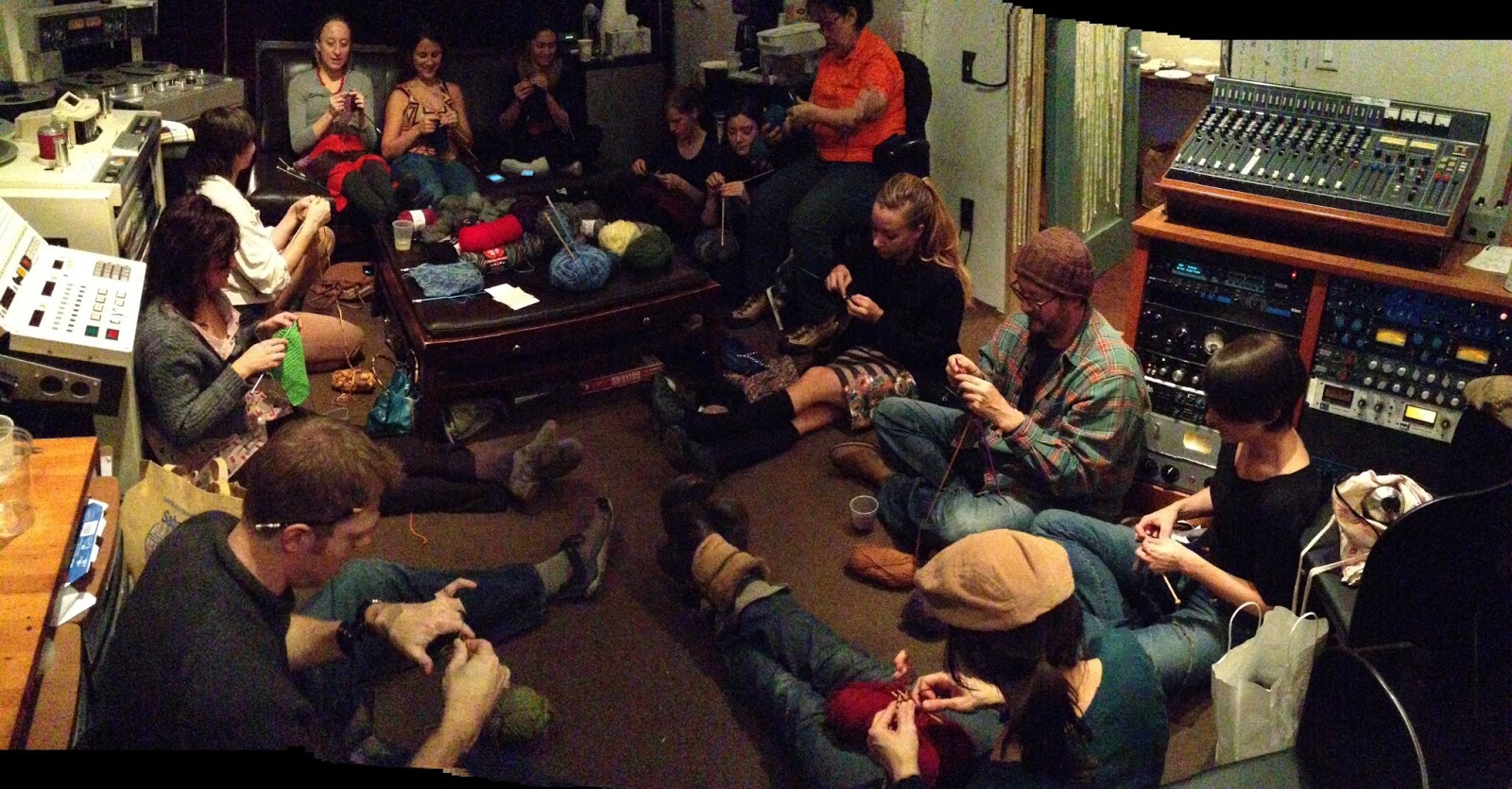
What have your experiences been in organizing the knitting circle?
Kristin: It takes a lot of thinking ahead! That, and listening to everyone’s responses, following through on what I hear. The most incredible thing, other than actually getting our homemade blankets to people who need them, has been the conversations I’ve had. It’s humbling to hear how meaningful a little human touch can be.
What is your perspective for now and the relief? Winter is here, do you see things have moved on with the relief efforts?
Kristin: I’m not sure I know in which sense you’re asking….have things moved on? Yes, in the sense that it seems all the hard work is paying off and the disaster areas are moving from response mode to recovery and rebuilding. No, in the sense that I don’t think people can yet move on. So many people who didn’t suffer major personal damage still care and still want to reach out to those who were more affected. Knit Sandy is still getting at least one message a day from someone new, asking how they can help. People still want to talk about what has happened and what is happening. People I’m in communication with through Knit Sandy are still waiting for their insurance to sort out and let them take action, begin to rebuild. Other people I know through Knit Sandy are still waiting for the basic comforts to be stable, still living off generators and without proper amenities. People are still without their work offices, without their children’s schools. And so, so many people were affected economically. It’s too early to move on, every one is still coping in that sense. It’s still in everyone’s minds.
How is your dancing going these days, what projects are you doing and planning to do?
Kristin: Great! I’ve been doing research work for the past six months, developing an approach to working that feels both immediately effective and bigger in scope, to weave all my interests in dance into one joint focus. It’s been fun. I wrote a dance, called “The Read-Aloud Dance,” out of the notes and writing done in our first major research phase (nine dancers involved). And I’ll probably write some more. It feels balancing to combine the two modes, dance and writing. For now I’m clumping all the dance research under the name “Anima” and working on a few different manifestations, mainly practice rituals that can deepen into performances and film. My friend Cecilia Fontanesi did an Anima performance with this research in the fall. This month I’m on pause with that, because of Knit Sandy and my other dancing. I’m dancing with Dai Jian, and we’ll be doing a gallery-style performance January 17th in Ran Tea House in Williamsburg. Also I’m dancing with Sari! I stepped in for her in a duet she’s making, we’ll dance it at the FLIC Fest in Fort Greene on Feb 1st. Lots going on, always….
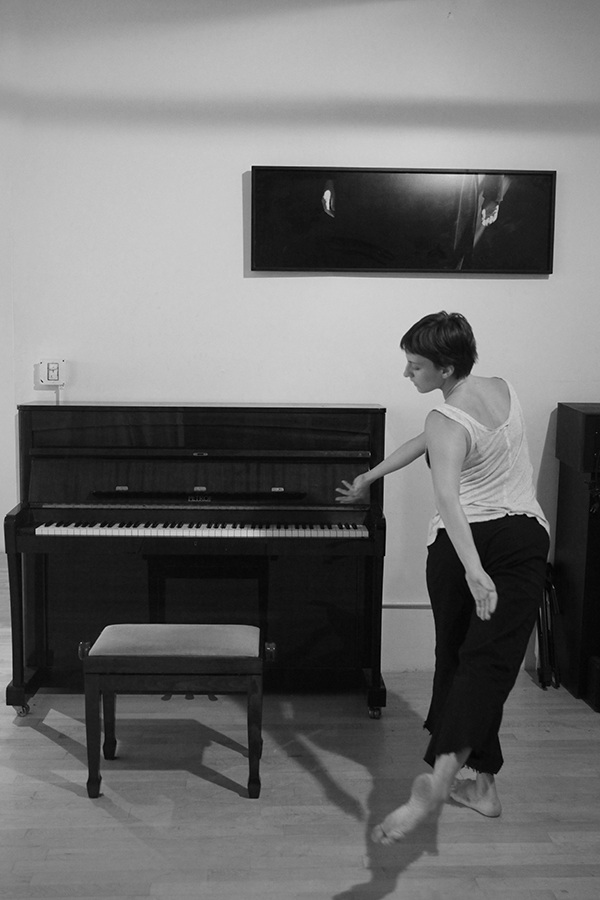
Kristin: Do I get to ask you questions too? How is everything going? What are you working on right now, in your research work and also on the stage?
Thank you, Kristin, that is so sweet of you. Btw, I am waiting to see you and Sari Nordman on stage at FLICfest in February. Myself, I am basically just back from performing at La Mama, another project with Yara Arts. It was wonderful! This year, I will be doing something in the city, video-dancing too, and hopefully also outdoors somewhere. Always ready for new projects. My research, I am swamped with my book-project trying to get a draft by summer, which is somewhat unrealistic.
(Photos of Kristin Hatleberg Marielise Goulene)
Check out the SandyReliefKnittingBee on Facebook.





 Firstindigo&Lifestyle