Category: photography&video

  • Ofri Cnaani’s ‘Wrong Tools’

    Ofri Cnaani’s ‘Wrong Tools’

    Artist Ofri Cnaani has created a new photography exhibition consisting of prints and a performance piece at Andrea Meislin Gallery. Photographies on display echo ideas deriving from Xerox art of the 1960s simultaneously connecting with the visual world of the mesmerizing early photography of the 20th century. The exhibition ‘Wrong Tools’ will be on display until October 24, performances taking place on Wednesdays, Fridays and Saturdays. Cnaani’s Blue Print photographs are like intuitive maps constructed of performative ideas that associate with artist’s own body. With both of her performance and photographs, she creates a presence. The works are building up from fragments, and the pieces are put together in a compelling logic. These could be like ruptures built on the Internet surface, where constant image flows create new associations. Here is Ofri’s interview.

    Firstindigo&Lifestyle: Your ongoing solo exhibition ‘Wrong Tools’, at the Andrea Meislin gallery speaks a strong esthetic and spatial approach with performance element added to the photography gallery. The performative element also looks back from the blueprints, which display hands in various positions doing tasks, perhaps. Are these prints your hands making the past performances, or projects?

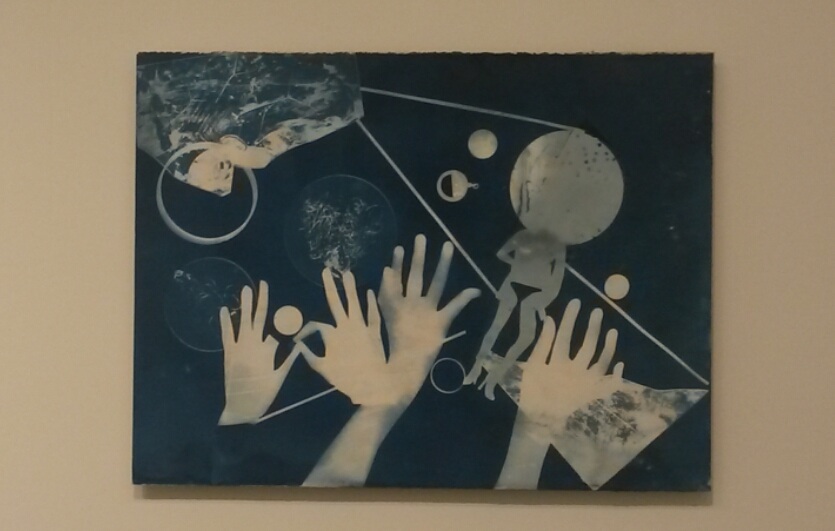
    Ofri Cnaani: In the cyanotypes I’m using my own body. I’m using the special qualities of one of the earliest photo techniques to promote some sort of performative photography. In a way, it is very similar to what I do in the performance: I’m creating an image in a limited amount of time that is constructed from found objects, made objects and my own body. Like in the personalized ‘image maps’ I’m creating in the performance, here too, I have a limited control of the final result. The process is always between failure and magic.

    In your actual performance that I observed taking place during the opening night at the gallery’s foyer with windows, you encounter audience member on a participatory table setting, where each unique guest sits opposites of you. The scene comes out as very intimate and poetic; we are simultaneously looking at the wall where the reflection of the table surface is displayed with your real-time construction of objects and images on it. And, we are grasping the exchange between you and the other person embodying the performance. Quite interesting, a guest was taking pictures with her phone of the very situation as well. What is taking place in these moments? How do the photographs and the recording of the event resonate in the doing of the performance physically?  

    OC: When someone sits with me, I first offer him or her a ‘reading’ of his or her visible future. I used a tarot-like deck that I designed titled ‘future business’. I also ask them to give me one personal item and to choose two items from my collection of small objects. I’m using the message on card they chose and the three objects they selected and gave me as a starting point, to create a live collage-like image. I called it ‘image map’. This image is captured and printed using a special apparatus I build for the show. Lastly I stamped it with a ‘Copy’ stamp and signed it with red ink, handing the Original Copy to my visitor.

    As the title ‘Wrong Tools’ already implies so many interesting visual connotations, could you tell more what is the idea or meaning behind it, is it metaphoric with a larger idea and also coming to the performance? Does it resonate solely with ideas, which derive from computing?

    OC: My husband, who is great in building things, always says everything is very easy if only one is using the right tools. I realized I’m always using the wrong tools.  My studio is a mess and I’m always using the tools that are wrong for the job. I like to think about my method, using the collections of two and three-dimensional objects in my performance, as ‘endless metabolism’. I’m using the same little objects for different performances, as well as for the cyanotypes and other photos. The same objects travel between many of my projects, always been used in different ways, but never used as they were originally meant to be used.
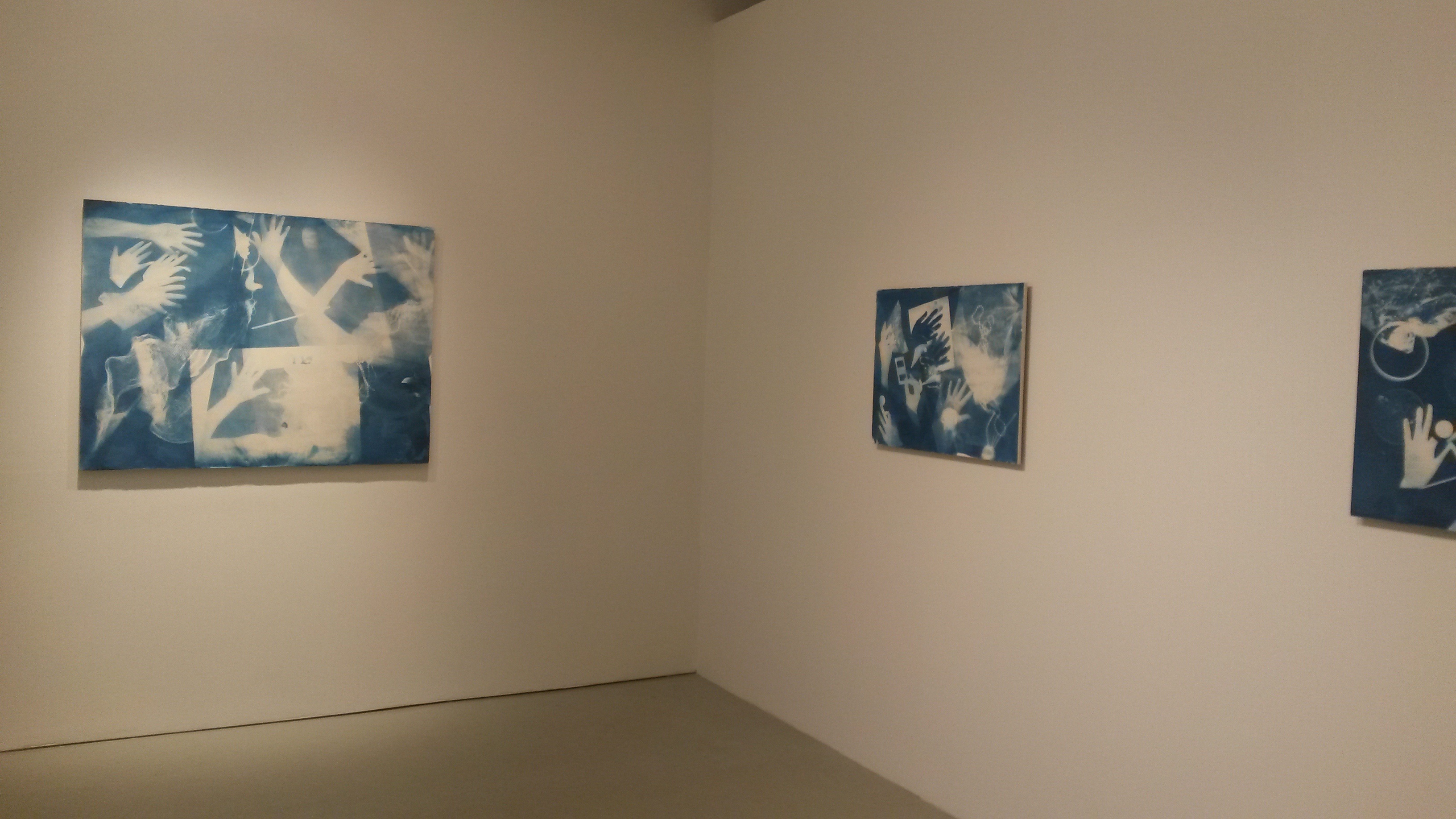
    Ofri Cnaani_OC real and fake-series_Cyanotypes
    Ofri Cnaani, OC real and fake-series, Cyanotypes, at Andrea Meislin Gallery

    Then, your exhibition at the gallery has these colorful images called ‘future business’, that have a short message embedded in them. It seems that they relate to the performance, do they have an element of time in them as well?

    OC: The monoprints are also ‘one of a kind’ and were made in a similar way. I’ve been using cut-outs and flat objects, placed them on paper and rolled them under the press, so each one is a different arrangement, although some of the cut-outs appear more than once. The texts are the same texts on the special edition tarot deck I produced and then use in my performance.

    On each card there is a message we get regularly as an online user like ‘Delete All’ ‘Unsubscribe’ or ‘Change Your Profile’. These lines are charged with a very different meaning when we receive them as messages in a one-on-one ‘reading’ session where we all are so vulnerable.
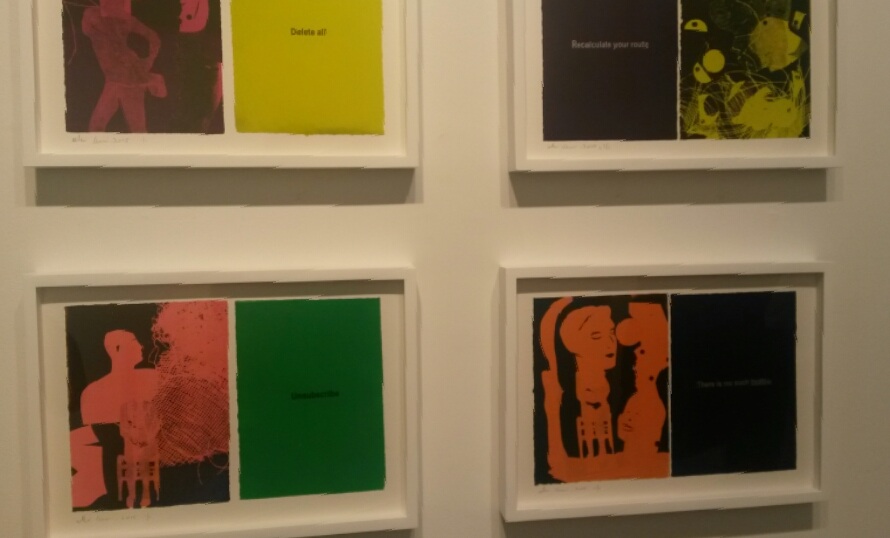
    Ofri Cnaani_future business-series_monotype prints
    Ofri Cnaani, Future Business-series, Monotype Prints, 2015

    Adi Puterman curated your exhibition for Andrea Meislin Gallery, what do you wish to tell about the curating exchange and process, do you know each others tactics well?

    OC: Adi and I worked on the show for over a year and she was very involved with each step: from the concept of having an on-going 6 weeks performance in the gallery, to the selection of the pieces, and communicating my ideas in a written text.

    I have noticed that your artist career includes plenty of performance works, such as the ‘Seven Words’ at the Metropolitan Museum. This past work is also very interdisciplinary. Is a question of the different art forms relevant to you in your own art making, or are all forms closely related?

    OC: I’m driven by concepts and often by time constraints (like a different space I’m working in or a different collection or archive I’m using). I’m less driven by a specific medium or style.

    As an educator of the arts, how do you teach time-based process to your students, do you have guidelines for that?

    OC: We see many projects and discuss them, we read texts and using mind-mapping method in order to understand them and connect them to other ideas, texts and art works.

    I often think that New York city is such a creative hub with so much international potential gathered in one place. Do you consider that as an international artist based in the city you have a specific role or identity, which is perhaps one here, and another that goes back home in Israel communicating and identifying with the contemporary art scene there?

    OC: I’m not sure what do you mean by that but once you leave the place you were born and raised, your identity is always ‘more than one’ and in a constant negotiation.

    You have created public artwork, do these works imply a different kind of activism or sensibility that comes with the public space, or are all ideas you are doing basically interrelated? 

    OC: My work is context specific. When I work in the public realm I work not only with a specific building and its specific history. The process always involves a community or a group of individuals. The process in those projects is part of the final piece. The final images are never known when I start working on a public piece.

    Can you tell a little what are your next steps going to be like?

    OC: Next week I’ll be doing a performance that is similar to the one in the gallery at Dallas Aurora. My project is part of ‘Altered States’ exhibition, curated by Julia Kaganskiy. Next month I’m going to Inhotim in Brazil to work with the park employees to create a participatory performance titled ‘Frequently Asked’ that will be then presented in Inhotim on early December.

    Ofri Cnaani, Blue Print, 38.5x49.5, on display at Andrea Meislin Gallery
    Ofri Cnaani, Blue Print, 38.5×49.5, on display at Andrea Meislin Gallery. Images by Firstindigo&Lifestyle
  • The Thing Itself -photography exhibit at Yancey Richardson

    The Thing Itself -photography exhibit at Yancey Richardson

    The Thing Itself is a summer group exhibition currently on view at Yancey Richardson Gallery in New York City.  Photography is explored as a medium and a subject matter in this show that runs from July 10 until August 22, 2014. As a medium, photography has gone through multiple changes. A change with technological advances occurs whilst there is an ever-increasing movement towards digitization and democratization of our visual cultures. The culture of images, social media’s advancement in the digitization of our social practices, and the media communication has lead to a state where ”there remains almost no materiality to the medium as film, darkrooms, and paper”, they technically recede into obsolescence. Naturally, the artistic response can be many whilst our visual cultures stand for self-reflexivity. But the photographic practices also vary. In The Thing Itselfexhibit, there are works from 16 artists: Mary Ellen Bartley, Anne Collier, Sara Cwyner, Roe Ethridge, Bryan Graf, Bill Jacobson, Kenneth Josephson, Laura Letinsky, Matt Lipps, Vik Muniz, Paul Mpagi Sepuya, Alyson Shotz, Laurie Simmons, Wolfgang Tillmans, Bertien van Manen, and Christopher Williams. When the social conceptions about the images constantly change, artists can now ask what makes something a photograph, what are its new definitions and the practices that define its new physical boundaries. Photography as a subject matter challenges the notion of materiality of photographic prints amongst the digital. The artists have chosen tools and materials of photography including cameras, paper, and scanners, to family snapshots or media images. Self-reflexivity makes the red thread of the show.

    Josephson_Matthew_LR
    Kenneth Josephson, Matthew, 1965, Image 7 x 12 inches / paper 11 x 14 inches, Gelatin silver print, Edition of 50

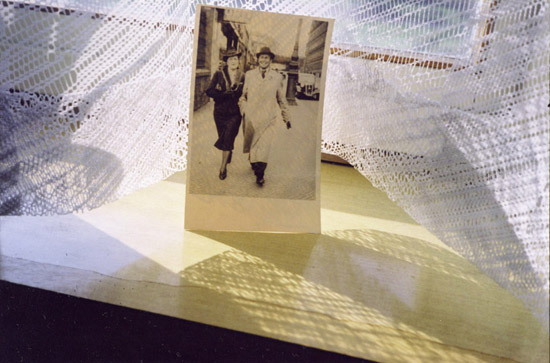
    Kenneth Josephsonʼs 1965 portrait, Matthew, (above), shows technology used in Polaroid where images can be seen/touched immediately. In the photograph, Josephsonʼs son holds a Polaroid image of himself in front of his face, depicting as though holding a camera. Bertien van Manen’s photograph from 2004, Prague (Couple holding hands) (below) is part of the series Give Me Your Image, where the artist photographed valued family photos in the homes of European immigrants. The waning practice of taking, developing and displaying family snapshots is part of the value of the prints, which as such are both tangible objects and vessels of image and meaning.

    Bertien van Manen, Prague (Couple holding hands), 2004, 16 x 20 inches, Chromogenic print Edition of 10
    Bertien van Manen,
    Prague (Couple holding hands), 2004,
    16 x 20 inches,
    Chromogenic print
    Edition of 10
  • Artist spotlight: Hiroaki Umeda discusses his recent works

    Artist spotlight: Hiroaki Umeda discusses his recent works

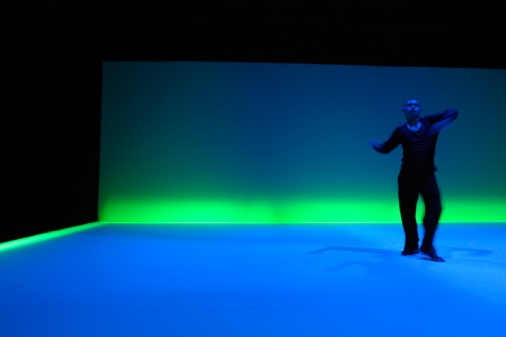
    Japanese contemporary choreographer Hiroaki Umeda recently presented his new choreography Peripheral Stream with L.A. Dance Project at Théâtre du Châtelet in Paris. in 2013, he worked with an ensemble of 11 dancers from GöteborgsOperans Danskompani in Sweden. In the piece, Interfacial Scale, Umeda created the choreography, set, costume, light and sound design. As well as being a choreographer and dancer, Umeda is a visual artist, photographer and video artist. He established his own company S20 in 2000. Umeda has entered the international scene with his multimedia performance works that employ his own body and self-created video images, music and lighting designs. These are recorded on a single notebook computer.

    (On the video Hiroaki Umeda talks about the Interfacial Scale which he created for the GöteborgsOperans Danskompani in Sweden in 2013)

    Since he first drew attention at the 2002 Yokohama Dance Collection R, Umeda has gone on to win praise of dance professionals around the world for the way he wraps his improvisational body movement in intricately woven spaces defined by light (video) and music with the beauty of an art installation. (Tatsuro Ishii for 国際交流基金 / The Japan Foundation Performing Arts Network)

    FIRSTINDIGO&LIFESTYLE: You are known for your own choreographic language that has influences from different styles, and, from the movement point of view is highly flowing and gestural. Is there a way to trace the evolution of it, how did the movement develop?

    Hiroaki Umeda: I started to dance at the age of 20, which is very late in general. At the beginning, I took some dance classes, such as Ballet, Hip Hop and etc. After a year of taking some dance lessons, I realized that there is no specific “dance style” that I want to learn: the dance I wanted to pursue had in fact not existed yet. Plus, I found that what is interesting for me in dance was, not the style, but what lays beneath those styles which is the “principal of movement.” So I started figuring out and understanding the principal of movement by myself, then I applied that principal to my body movement. I would say that my dance should be addressed not as dance but rather as a movement, since I focus on, again, what lays beneath the system of dance, which is the system of movement.

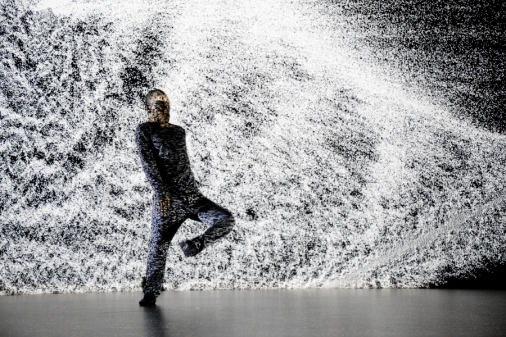
    HIROAKI UMEDA: "Haptic." Photo: Shin Yamagata.
    HIROAKI UMEDA: “Haptic.” Photo: Shin Yamagata.

    You are a Japanese contemporary choreographer, can you describe the dance scene in Japan?

    HU: I have been accepted more abroad than in Japan from the beginning of my career, so I cannot say much on behalf of the Japanese choreographers about what you are asking. However, I personally feel that contemporary dance scene in Japan has not been developed enough yet. The scene is very closed. But on the other hand, it is also true that because of the close-knit circumstances, it has developed very idiosyncratic styles. I cannot say if this close-knit condition is good or not good for the Japanese contemporary dance scene. Anyway, in Japan now, there are so many people who have been struggling and working hard to develop and open-up the scene more; that is a really big hope for me and I thank them a lot.

    You started your artistic career with photography, and then moved towards dance, how did this transition happen?

    HU: I was looking for an art style, which can accept real-time expression, thus, more than photography, I found that dance could be suitable for what I want to express. Dance is an art form in which I can physically put myself into in real time. In photography, on the contrary, it was really hard for me to materialize a piece in real. That is why I shifted to dance from photography. However, I have not totally detached myself from the photographic art form since I have been taking a standpoint throughout that dance can be a form of visual art. Lighting design, which I learned in photography, is now an essential factor for a dance piece.

    The way you construct your choreography seems multidisciplinary. The sound and lighting design, and the visual dimension is crucial in your composition? Can you even differentiate which comes first?

    HU: In practice, I start from abstract drawings, in fact, just lines. This drawing expresses my image of the tension of space, and it functions like the score of the piece to become. According to the drawings, which envision the whole image of the piece, I put together all materials, such as sound, light, dance and etc.

    The visual addition or sometimes ’distortion’ makes your compositions also appear aesthetically ’charged’, could you say something about it?

    HU: In my work, I focus a lot on how the bodily sensation could emerge from the space, and how, in turn, the bodily sensation could change the tension of space. That is, first and foremost, what I am interested in. The basic composition of my piece is always based on choreographing the tension of the space. By acutely tuning into the space, it is possible to attain a lot of stimuli that can provide you with physical sensations.

    What does it culturally mean to be a Japanese choreographer now, from the point of view of globalization?

    HU: have not been working consciously as a “Japanese” choreographer. I have been working as just an artist, focusing on how to bring my pieces to more people all over the world. I think that it is more important to be one of the many artists of the world, than just a Japanese artist.

    Does Butoh as art movement mean anything to you? How about Kabuki, Gutai, and action art? They have also called you ’’avant-garde’’?

    HU: I really appreciate their art works. But actually I am not so close to those Japanese avant-garde cultures. And I cannot tell if they have called me as “avant-garde.”

    What role a nature and technology play in your mind-set?

    HU: Nature and technology are not oppositional concepts for me. As a matter of fact, technology is a tool to understand and approximate nature. By the same token, I think that human beings and art, which human beings create, are a part of nature.

    Where did you grow up? Where do you work these days?

    HU: For the last several years I have been traveling almost all year round. I grew up in Tokyo, and I consider Tokyo as my hometown. But I have been working everywhere in the world. I think that what I do in my art is not connected to any specific country, city or place, so actually I don’t mind working any place in the world.

    You did a work for Gothenburg Dance Company (GöteborgsOperans Danskompani). How was it to work in Sweden, also in terms of cultural exchange? Did dancers like the movement?

    HU: Dancers of the company were from all over the world. They were really skillful and had great intelligence, and were very professional. To start off with, I gave them a system of movement which becomes the under layer of my choreography, and the dancers tried to find their own movements from tapping into that system. I am sure that I enjoyed seeing their movements develop from my system, even more than they enjoyed learning my system. At the moment, I have limited experience as a choreographer for big companies so the dancers helped me a lot and I learned so much from them. I would say that the process was more of collaboration, rather than providing choreography to the dancers.

    In terms of the cultural exchange you are asking, the company was too international to feel any specific cultural differences. I would say that working with them was rather like a kind of universal project, working in various mixed cultures.

    How was it to collaborate in Benjamin Millepied’s LA Dance Project 2? How was the audience response in Paris?

    HU: Compared to LA Dance Project, the Gothenburg Dance Company was strict in terms of working procedures and time schedule precisely because they are a huge public company; I needed to follow their administrative schedule in terms of creative process, which I totally understood. On the contrary, Benjamin’s LA Dance Project is, although they have diverse range or repertoire, still small in scale as a company. For this reason, I could work more closely with the dancers and staff that enabled me to go further and experiment more in the piece. To be very honest, I didn’t expect a good response from audience in the Châtlet. Surprisingly, however, the Paris audience quite openly accepted and appreciated my piece. I was impressed by their open-mindedness.

    Can you name some of your influence or mentors, colleagues?

    HU: There are too many names to list up here.

    What are your plans for the future, and dreams?

    HU: From last year, I have started making choreography devoid of human body. For me, human bodies are not the only elements for choreographic consideration. In fact, I want to really challenge choreographing anything with “movement,” and develop a dance piece with various elements. One of my dreams now is to choreograph water.