Category: scandinavian

  • Stephanie A Lindquist about philosophy of plants and art

    Stephanie A Lindquist about philosophy of plants and art


    Stephanie A Lindquist is a New York based artist and photographer, whose photo collages gather ideas of plants with world-wide origins.  Her works bring forth anscestral memories from diasporic places, and create meaning mapping our global existence as travelers and settlers. Food has always played enormous role in peoples adaptation to new places, creating and sustaining cultures. Art can have as much to say about this subject too. 

    Firstindigo&Lifestyle: I have understood your recent photography art is based on your research on plants that are native, local  or indigenous to areas. How did you start this art project?

    Stephanie A Lindquist: I started gardening and reading about plants and how to grow them. I was especially inspired by farmer, philosopher Masanobu Fukuoka. He is the father of natural farming and a proponent of natural dieting–both of which he believed to be beneficial for the environment and human health. According to Fukuoka, a natural diet consisted of local and preferably ancient plants–something nearly impossible for any urban dweller like me to accomplish.

    This sparked my interest in identifying and promoting many little-known indigenous food plants from my ancestors in Africa and Europe, to where I currently live in the Americas.

    Firstindigo&Lifestyle: Where did you grow up, and live prior to New York City?

    Stephanie A Lindquist: I grew up in Los Angeles. I’ve also had opportunities to travel abroad to Europe and Central America.

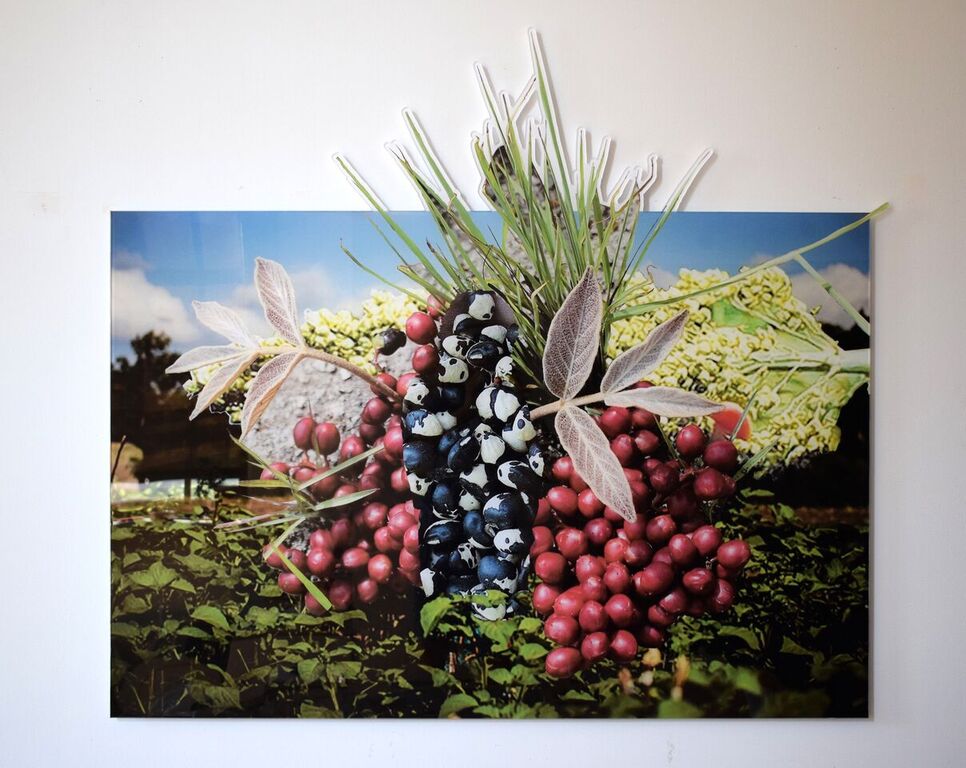
    Stephanie Lindquist, Lablab oryza glaberrima celosia, 2017, Digital print on aluminum diode, Edition of 3, 4’ x 4’ in.
    Stephanie Lindquist, Lablab oryza glaberrima celosia, 2017, Digital print on aluminum diode, Edition of 3, 4’ x 4’ ft.


    Firstindigo&Lifestyle: As one major inspiration behind your art making are the plants, do you cultivate or grow plants yourself and have your own garden?

    Stephanie A Lindquist: I garden regularly in East Harlem and the South Bronx. It is an essential part of my practice and life. Gardening allows me to cultivate, consume and appreciate some of the plants I study first-hand. It is a way to immediately begin creating a more reciprocal relationship with nature.
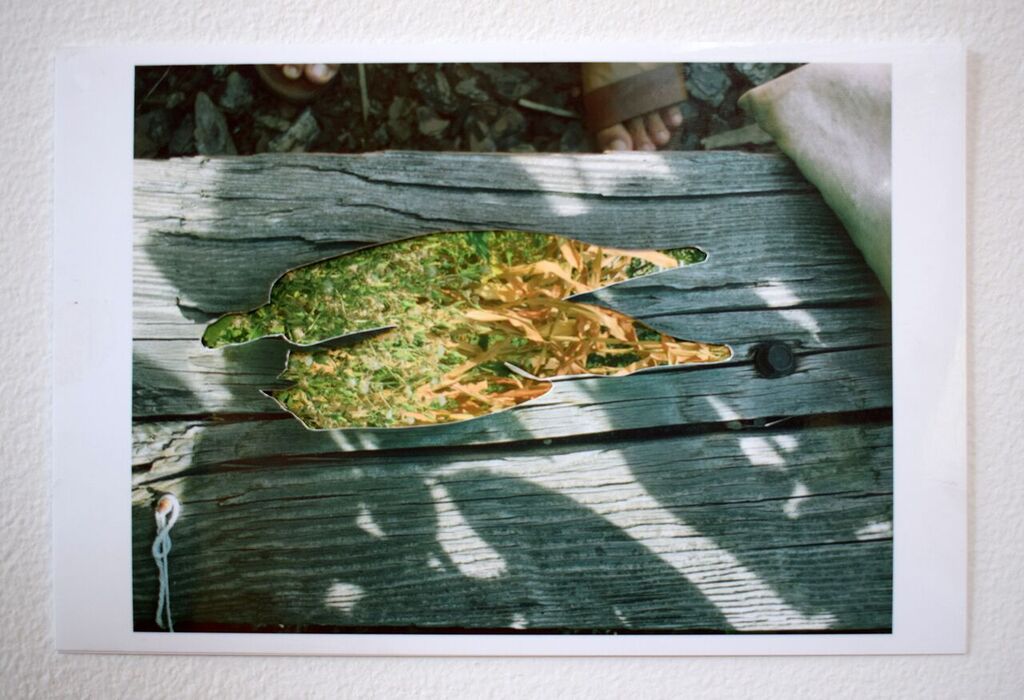
     

    Stephanie A Lindquist, Okra at 103rd 2018 Photo collage, Edition of 5, 7.5” x 10” in.
    Stephanie A Lindquist, Okra at 103rd 2018 Photo collage, Edition of 5, 7.5″ x 10″.


    Firstindigo&Lifestyle: Do you think that flowers, fruits and vegetables, etc. as subjects of art carry ideas about sustainability and environmental philosophical concepts?

    Stephanie A Lindquist: Definitely. Potawatomi scientist Robin Wall Kimmerer writes about our need to listen, observe and learn from plants as our teachers–rather than only learn about plants. I truly believe that plants can teach us how to lead sustainable lives if we listen. 

    Cultures close to nature have the benefit of accumulating indigenous knowledge of a diverse number of plants and their uses than city-dwelling folks. To see, recognize and know thousands of local, indigenous food plants is a powerful way to live in communion with the world. By taking care of widely diverse plants within our local ecosystem, we begin to take care of ourselves too–physically and spiritually.

    It is my aim to heighten our awareness and appreciation of indigenous food plants and to collectively reimagine the local cuisine of specific regions.

    Firstindigo&Lifestyle: Are there other concepts and philosophies attached to your art?

    Stephanie A Lindquist: My work is inspired by the work of many scientists including Mary Abukutsu-OnyangoSince the 90s she has been promoting the cultivation and sustainable consumption of African indigenous vegetables and fruits. On a continent plentiful with plants, it is surprising that most do not eat a sufficient amount of vegetables.

    The promotion of these plants have commercial and cultural implications as well as physical and spiritual effects on our health. Most of these plants have been purposefully displaced by genetically engineered cash crops and changing tastes. To rekindle our relationship with the oldest, local plants is also to remember the unique history of the land and how we arrived here.

    Stephanie A Lindquist, Cowpea Lannea Edulis Sorghum African Nightshade (East Africa) part of Founded series 2018 Digital print on acrylic 44“ x 50” in.
    Stephanie A Lindquist, Cowpea Lannea Edulis Sorghum African Nightshade (East Africa) part of Founded series 2018 Digital print on acrylic 44“ x 50”.

    Firstindigo&Lifestyle: Do people act amazed when seeing and hearing about  your work?

    Stephanie A Lindquist: It has been very satisfying to hear people’s reactions to my work. Even urbanites like me are full of surprising information about plants and their uses, which I happily add to my arsenal of knowledge.

    As the daughter of a Liberian-American immigrant and descendant of Swedish and Irish immigrants, I have been invested in reclaiming ancestral knowledge for a long time. Conversing with others about indigenous plants has been a very satisfying way of piecing together our ancestral knowledge of the natural world around us.


    Firstindigo&Lifestyle: Who inspires you to do your art?

    Stephanie A Lindquist:  I admire many artists including Julie Mehretu and Wangechi Mutu. I am also inspired by the authors I read and the emerging artists I meet everyday.


    Firstindigo&Lifestyle: How do you design your collages and what is the process like in making photographic prints?

    Stephanie A Lindquist:  I begin by researching a number of indigenous plants to a specific region and learning about their history, uses, and the people who cultivate them. Next I collect images of them, and if accessible take original photographs of the plants.

    I cut the prints by hand and arrange the composition on a smaller scale until satisfied. Next, I digitally produce and print the collage at a larger scale or sometimes hand-cut a larger collage on fine paper.

    Firstindigo&Lifestyle: Tell a little more about yourself, where did you study art?

    Stephanie A Lindquist:  I have studied art since I was little. I received by BA in Urban Studies and Visual Arts from Columbia University. Since then, I’ve had the opportunity to participate in residencies in Rome, Berlin and Staten Island, and to exhibit my work in museums and alternative spaces in New York and California. I also work as an arts administrator.


    Firstindigo&Lifestyle: Your objects and prints seem to carry domestic ideas in them, or it gets transmitted as a feeling with the coffee cup on a table, or with  the flowers. Does this resonate with your intentions?

    Stephanie A Lindquist: Yes, my previous body of work in photo collage was concerned with capturing colorful, jarring, domestic still lives. I often chose the materials used to create the stage in memory of family and friends in my life, like my mother, my partner, or a particular place like the Kitchen Floor. Through collage I bring new meanings to these objects, in this case now where an okra blossoms and fruits. Their patterns are playful, somewhat minimal, abstract, full of textile, and tactile.


    Stephanie A Lindquist, Kitchen Floor 2017 Photo collage 14.5“ x 17.5” in.Stephanie A Lindquist, Kitchen Floor 2017 Photo collage 14.5“ x 17.5”.


    Firstindigo&Lifestyle: Some collages of yours are really colorful. Do you find that colors have significance and carry meaning?

    Stephanie A Lindquist:  The colors reflect my mother’s textiles, family photographs, and the landscape around me.

    Firstindigo&Lifestyle: Do you consider yourself similar to feminist art practices in which domestic life and the everyday gives to details and form in the art?

    Stephanie A Lindquist: Yes, in many ways I make my art to create space for feminism and equality among humans and all that lives in the world. I treasure these often feminized spaces of the home and garden. And I enjoy propagating this image into my viewer’s subconscious of a plentiful, sustainable earth.


    Firstindigo&Lifestyle: Also your knitted objects would signify not only sculptural dimension as objects that hang on the wall, but also about art-historical connection to the women artists?

    Stephanie A Lindquist: The knitted objects Needles and String and Rosary for me were living sculpture–something I could create and disassemble again and again as a public performance and private meditation.


    Firstindigo&Lifestyle: How do you separate your own artistic practice from curating, and working with other artists in your work?

    Stephanie A Lindquist: I make time for it. I also let it bleed into my research interests and writing. My practice gains a lot from being in such close contact with artists and curators on a daily basis. I am constantly listening to and collaborating with other visually creative minds.

    Firstindigo&Lifestyle: Can you describe what art projects are you planning for the future?

    Stephanie A Lindquist:  I am thrilled to show recent work around indigenous food plants at Smack Mellon as a part of AFRICA’S OUT! inaugural benefit exhibition, Carry Over: New Voices from the Global African Diaspora curated by Kalia Brooks Nelson. To have my work in the context of Firelei Báez, Layo Bright, Melissa Calderón, Baseera Khan, Jasmine Murrell, Anna Parisi, Keisha Scarville, Pamela Phatsimo Sunstrum and Saya Woolfalk is a joy!

    The exhibition is on view June 2-30. More information about the s  how in Brooklyn http://africasout.com/exhibition-carry-over

    I am also looking forward to presenting work at CTRL+SHFT Collective in Oakland this summer. Other than that, I’m excited to spend part of the summer camping and learning more about plants indigenous to the eastern seaboard.

    I treasure these often feminized spaces of the home and garden. And I enjoy propagating this image into my viewer’s subconscious of a plentiful, sustainable earth.
  • Eyes as Big as Plates arrives in Brooklyn

    Eyes as Big as Plates arrives in Brooklyn

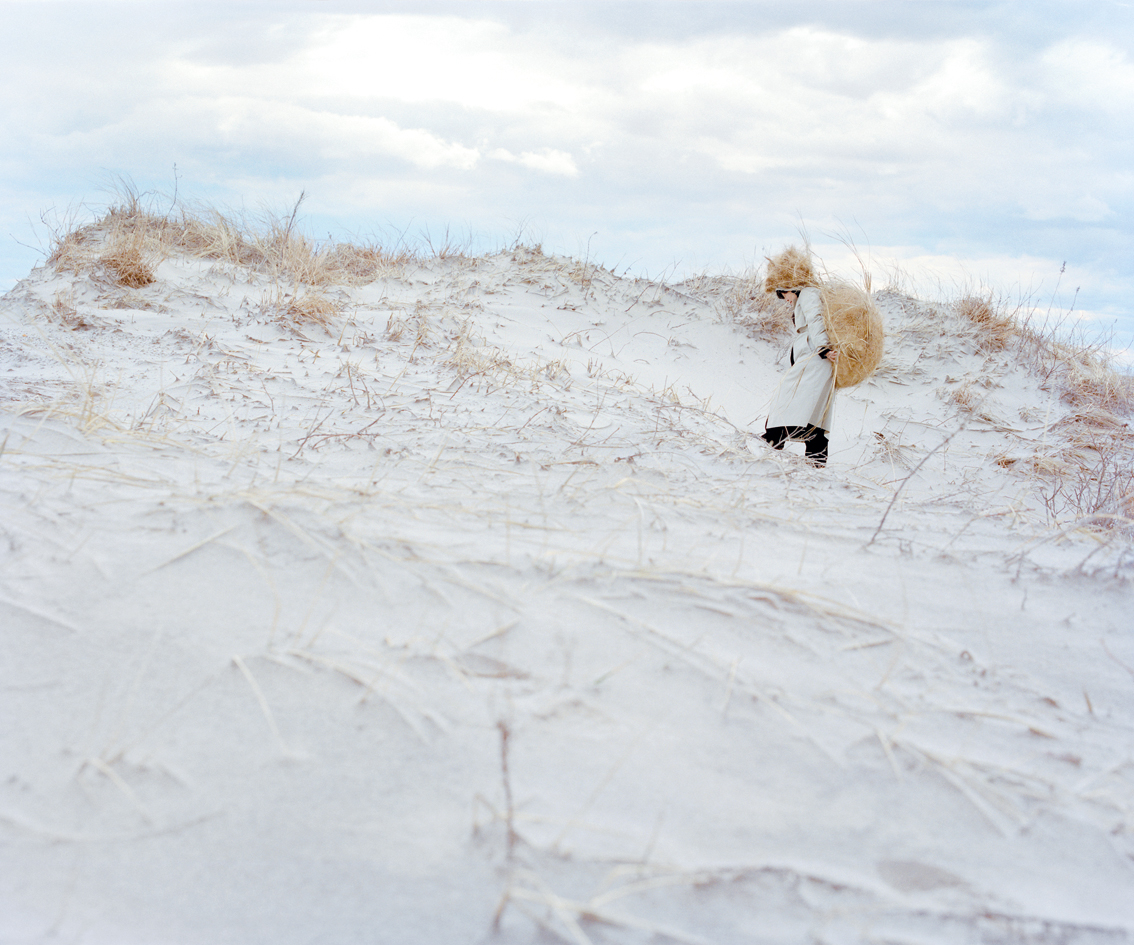
    “Eyes as Big as Plates” is an ongoing collaborative photographic project between the Finnish-Norwegian artist duo Riitta Ikonen and Karoline Hjorth. This unique collaboration is now presented as a solo exhibition in New York City at the Brooklyn based Chimney Gallery. In the exhibition, 12 photographs are installed in the gallery space so that they form a visual unity in a column-like formation. This way the solitary portraits emerge naturally from the gallery space, which itself is raw and original.  Eyes as Big as Plates presents solitary humans standing meditatively in their favored setting.  What makes them special is their organic attire made of leaves, branches, pine needles, rocks, or flowers. The models are senior citizens.  Ikonen’s & Hjorth’s photographs have another layer in them. The wearable sculptures connect the humans into their stages organically, making them part of the world they inhabit.  The Chimney exhibition features newer works from Greenland, South Korea, NY, Iceland, Japan, Finland and Norway.

    Eyes as Big as Plates # Mr Otsubo (Iceland 2013) © Karoline Hjorth & Riitta Ikonen.
    Eyes as Big as Plates # Mr Otsubo (Japan 2015) © Karoline Hjorth & Riitta Ikonen.

    Firstindigo&Lifestyle: Karoline and Riitta, can you tell more about the idea behind the elderly portraits. Where did the idea to do the series originate?

    Karoline and Riitta: The series is produced in collaboration with retired farmers, fishermen, zoologists, plumbers, opera singers, housewives, artists, academics and ninety-year-old parachutists. These are people we meet through friends, relatives and newspaper ads, in hardware stores, noodle bars, indoor gardening society meetings, swimming pools, senior centers, on the city streets etc. Our creative point of departure lies in the collaboration with these contributors, who we consider as co-creators. As we started our investigation into local folktales we reasoned that the older the local interviewee we would work with, the closer we would be to the tellers of the tales and the talking rocks of the stories. Those Nordic hills hadn’t changed since the tales, but the people sure had. So far it doesn’t seem to us that the answer can be predicted by the age of the answerer. Thinking of older people as a unit that operates in a certain manner is rather lazy with much of the western society unnecessarily confused when it comes to the ‘usefulness’ of older people. Attitude with knowledge, life experience and stamina are some of the main traits we have found amongst all our collaborators, as well as a formidable curiosity for new experiences. As Eyes as Big as Plates continues to cross borders, it also aims to rediscover a demographic group too often labeled as marginalized and generate new perspectives on who we are and where we belong.

    Firstindigo&Lifestyle: You shoot the portraits in the nature, so it seems that thoughts about environment, and people’s relationship to it is really part of the visual narrative?

    Karoline and Riitta: Each image presents a solitary figure in a landscape, dressed in elements from surroundings that indicate neither time nor place. Nature acts as both content and context and the characters literally inhabit the landscape wearing sculptures. In the beginning of the project we were curious and on a mission to find out what kind of connection the Norwegians had with their rocks, fjords and hills and especially keen on looking at the folktales where nature or natural phenomenons were personified.

    Folktales often made complex natural and sociological issues understandable and accessible, with phenomena taking on forms and characteristics that even a mere mortal could have a dialogue with. Perhaps our Eyes as Big as Plates images aim to discuss the contemporary human in the nature in a similarly approachable language. As the project started crossing borders, our quest soon turned more towards investigating universal questions about imagination and curiosity, and evolved more into a search for modern human’s belonging to nature.

    Eyes as Big as Plates # Edda (Iceland 2013) © Karoline Hjorth & Riitta Ikonen.
    Eyes as Big as Plates # Edda (Iceland 2013) © Karoline Hjorth & Riitta Ikonen.

    The location is chosen based on conversations with each collaborator, who might have a special connection with a certain landscape or a specific plant in the area. Sometimes we spend days finding the perfect location, sometimes we discover it within minutes. Most often the best collaborators and locations are found through chance encounters and lucky coincidences, which is also some of the main reasons why the project is still ongoing – the unpredictability is highly addictive.

    Each image always starts with a conversation with the contributors. Most often, and ideally, we meet our model before the actual shoot day to chit chat about the world, life, interests, neighbourhood, relationship with nature, opera, moss, fishing, weather…, and see if there is something there that we can just magnify a little. We try to find out as much as possible about who our model and collaborator is beforehand in order to best present them and their relationship with their surroundings. The ‘costumes’ are just a primal response to real people in their settings. We always start from scratch with each contributor. Some of them are eager to participate in all stages of the process, from collecting the materials to deciding on the location and even putting together the sculpture, while others prefer that we make the choices that best reflects them.


    Firstindigo&Lifestyle: I recall that Karoline found Riitta, or was it visa versa, as collaborator in a fun and memorable way?

    Karoline and Riitta: Eyes as Big as Plates started life on the southwest coast of Norway in 2011. When Riitta was searching for a collaborator online, the three words ‘Norway + grannies + photographer’ found Karoline as the top search result, as she had just finished a book on Norwegian grandmothers. Karoline loved Riitta’s work and sense of humour, and one email and two months later, they met for the first time on the doorstep of a little white wooden house in Sandnes.

    It was a very natural marriage of our complementing skills, where we come up with one image from two heads. Part sculpture, part installation and part photography, we work together from beginning to the end of the process. Karoline is the photographer in the duo while Riitta works mainly with the creation of the wearable sculptures in the images, but most importantly we operate with one mindset and vision, to the extent that we barely need to talk during the shoots, as we both know exactly what we are aiming for.

    Firstindigo&Lifestyle: How many countries have you embedded in these portraits, and how many people?

    Karoline and Riitta: Over 60 people from 12 countries (Norway, Finland, Sweden, Iceland, Faroe Islands, Greenland, UK, France, US, South Korea, Czech Republic and Japan.)

    Firstindigo&Lifestyle: Do you remember the most memorable portrait ever in the making of it, perhaps related to the how the situation or process evolved?

    Karoline and Riitta: It is quite impossible to pick one portrait as the most memorable, especially since so many of them feels more and more precious as time passes and our dear collaborators (and us) grow older. There are so many incredible encounters over the years, many that have turned into long-lasting friendships and we feel like we are the luckiest artist duo alive. One day the most memorable portrait is the very first one made together with Halvar in Norway, another day it is the memory of Riitta’s mum midnight swimming back and forth in lake Kalvä side by side with beavers on a freezing Midsummer’s Eve in North Karelia, or the very magical double shoot with Karoline’s grandparents last summer, some days we remember the intense weather conditions, other days we treasure the silence we all experienced, or the eagle that flew past us, the fog that landed just perfectly in time or the ruthless sun that never left the scene, it all depends on the time of year, season and mode of the day what comes into mind.

    Firstindigo&Lifestyle: Your recently published a book about the project, and it bears the title “Eyes as Big as Plates”. What do you want to tell about the book tour?

    Karoline and Riitta: The book is a culmination of the first six years of this ongoing project, and each book is hand-finished, unique with thinly pressed vegetation veiled underneath the cover cloth to honour each of the 60 collaborators in the project. We teamed up with Swedish designer Greger Ulf Nilson and the independent, Oslo based Press Publishing. For the release tour we returned to many of the countries we had visited to produced the works, and enjoyed a fantastic, fun and intense book launch tour to New York, Paris, Helsinki, Oslo, Landskrona, Nuuk, Seoul, Tokyo and London all over the course of 4 months. The book was also shortlisted for the Paris Photo- Aperture PhotoBook awards in the ‘First Photobook’ category, as a finalist from nearly 1000 submissions.

    Eyes as Big as Plates # Marie (US 2013) © Karoline Hjorth & Riitta Ikonen.
    Eyes as Big as Plates # Marie (US 2013) © Karoline Hjorth & Riitta Ikonen.

    Firstindigo&Lifestyle: The book also initiated a Kickstarter fundraising process. Do you want to share some tips, or ideas for this kind of succesful outcome?

    Karoline and Riitta: Our Kickstarter experience was a true rollercoaster and the outcome was just quite unbelievable. We spent weeks preparing, researching and gathering material, editing texts, having the material reviewed, putting together the video piece, sourcing the perfect soundtrack etc. Obviously we already had quite a lot of material from our 6 years of production and process material, and even an established audience that we could reach out to. We took day and night shifts between New York and Oslo emailing people non stop with personal emails, and our magic bullet in the campaign came in the form of Kickstarter’s weekly newsletter where we were recommended amongst 3 other projects to their whole worldwide community. Until this moment, we fought for each and every pledge and it was a slow start. We were lucky to be picked up – and in 24 hours went from 29% to 120% funded…

    Hot tip: Make sure you set aside enough time to babysit and nurture the project and campaign while it is live, throughout the duration of the campaign. Then, once the campaign is successful, starts the aftermath of following up with delivering the rewards. We spent probably nearly a month sending emails, packages, postcards, printing, resending, chasing post etc. It was hard, but mainly exciting and definitely worth it.

    Firstindigo&Lifestyle: Karoline, since you are Norwegian, and I haven’t asked this previously from you, I’m kind of curious what do you want to say about Norwegian art scene and support?

    Karoline: The Norwegian art scene is small, but it has got quite a unique support and funding system in place for artists. There are many different opportunities when it comes to project funding, stipends, grants etc and recently some exhibition venues have slowly started to get used to the thought that artists might also deserve payment for the exhibitions they produce, instead of paying for renting a space, which I understand is more common in for example Finland. Norway still has a long way to go in terms of the gender gap though, both in terms of the most-selling artists, the most represented artists and the movers and shakers of the gallery world.

    Firstindigo&Lifestyle: Do you think that the art education is exceptional in Norway?

    Karoline: I studied abroad, so I cannot speak from my own experience here, but after hearing from my colleagues who did study in Norway, my impression is that there are many other countries with much more progressive art education.

    Firstindigo&Lifestyle: Riitta, you are Finnish, what does ‘Nordic’ collaboration mean to you, do you find that you both share similar ideas or mindset because of the Nordic factor?

    Riitta: We both grew up with an understanding of the outdoors as something intermixable with the indoors. It is part of everyday and the awareness and interaction with our surroundings still drives our practices strongly. Both of us live in big cities so there is a definite need to roll in the leaves regularly.

    Firstindigo&Lifestyle: Where do you see that this project could be developing on its next phase, have you figured out the ‘after’ yet since the book came out?

    Karoline and Riitta: We are taking part in a public art project in Seoul, South Korea this winter with newly produced work made in collaboration with seniors living in and around the Olympic village in the PyeongChang area, these will be on display on the Seoullo 7017, a newly renovated former highway turned into a pedestrian walkway that connects the eastern and western sides of Seoul. We are also taking part in a group exhibition in Germany (The Museum Schloss Moyland) this winter and spring, followed by a solo show in Finland in the summer (Pielisen Museo in Lieksa), and more exhibitions in Detroit in the autumn. We have promised each other that we will continue the project as long as it’s fun and we are still very much enjoying ourselves. In the continuation of the project our focus might shift more to investigating the impact of climate change on people living in different parts of the world. We feel compelled to use our voice and platform to discuss the things we find important and urgent.

    ***
    Karoline Hjorth completed her BA Photographic Arts and MA International Journalism from the University of Westminster (London) in 2009 and Riitta Ikonen graduated from the Royal College of Art in 2008, with an MA in Communication Art.

    RIITTA IKONEN & KAROLINE HJORTH:
    EYES AS BIG AS PLATES
    JANUARY 19 – FEBRUARY 18, 2018
    OPENING FRIDAY JANUARY 19TH, 6:30-9:30PM

    THE CHIMNEY NYC
    200 MORGAN AVENUE
    BROOKLYN, NY 11237

    The Chimney is open on Saturday & Sunday, 2pm-6pm.
    Other days by appointment:
    contact@TheChimneyNYC.com

  • Tamara Piilola: Painter from Finland

    Tamara Piilola: Painter from Finland

    Tamara Piilola is a young generation Finnish painter with almost enigmatic ability to capture natural processes on the canvas. Or more than a process, her images offer views with a hint of gold in them. As a painter her perception seems thoroughly personal, and therefore can touch many. Piilola started the arts as a musician, and perhaps its possible to hear music when looking in to the painter’s landscapes.

    Firstindigo&Lifestyle: Where in Finland did you grow up and study art?

    TP: I grew up in the small city in the west coast of Finland. I studied in the south, in Turku and in Helsinki in the Academy of Fine Arts. I was an exchange student for one year in Leipzig in Hochshule für Grafik Und Buchkunst and spend months in Reykjavik during my studies.

    Firstindigo&Lifestyle: What is your story of becoming an artist? 

    TP: I’m the only child, and I started to think about art first through music. I studied in a conservatory for ten years, but in classical music you don’t have the freedom to play how you like it, or if you do, people think you’re wrong. It’s much longer process, with a lot more technique involved.

    I went through every book that we had in the house. As a child, I remember I was deeply interested about the Old Masters and portraiture by Rembrandt, Holbein and Gainsborough. I was mesmerized by the use of light and the extraordinary talent itself. I wanted to do something similar.

    I got my first camera and Marie’s oil paints as a ten-year old. Around the same time I enlisted myself to a painting course with some grannies (they’re organized everywhere even in the countryside in Finland). As I got a bit older it was certain I wanted to go to art school and quit classical music.

    Firstindigo&Lifestyle: How did you choose oils and painting as your medium?

    TP: I did some photographs as well but in the end paintings have turned out to be the most flexible media for me. The texture is very important for me. Although I did photos in which I used for example liquid chocolate and velvet, the outcome was too cold and the end product had an industrial feel to it. In black and white pictures, you have the softness, but then you lose the colors. I have learned to use only the best materials in my paintings and usually paint just one layer to keep the colors pure and bright. Oils can become dull and lifeless when applied thick. Oil paint is so flexible that I can adjust what I’m doing, and because of the way the pigment is held in the oil, it is beautifully luminescent.

    Firstindigo&Lifestyle: What defines a good painting to you?

    TP: Color, light, composition – all these things make the painting interesting to look at. The eye has to wonder. I love if you are able to grab something, it has some kind of energy, or you can relate to something. Paintings have the ability to embody a series of thoughts and feeling processes, and good paintings are very personal. It’s all there on the canvas as a record.

    Firstindigo&Lifestyle: What is there in the landscape painting that fascinates you, maybe the history of it too. How about the influences?

    The heavy load that comes with the term landscape was at first turnoff for me. When I got in terms with the subject (which I felt I had to do), the whole world opened up to me. It was like a flower that was opening in front of my eyes. I felt I was completely free to do whatever I felt like with this subject. It felt like it was mine, all mine to explore, and that was beautiful. My large canvases of imaginary landscapes present viewers with startling experiences of nature. These detailed views, full of mystery and light, colour and verdancy, draw viewers to their essence and idea.


    TP: These are not recognisable landscapes but the creations of countless memories stored over time as photographs and sketches. Thin layers of paint, bold fluent brushstrokes and the use of pure pigments combined flood the paintings with light. Landscapes do not always have to be beautiful. I paint wastelands, timber stacks and dunghill, emphasising their decorativeness. I depict decaying beauty and allow natural forms to blend into almost abstract surfaces. I’m soaked with art history because I have been interested in art all my life. My favourite painter is Lucian Freud, the master of seductive and complex psychological portraits. My favourite movie directors are Kubrick and Lynch. In music it’s much harder to point out the most influential ones, I listen to music in my studio all the time from almost all genres. In literature there are many great minds that speak to me, Hesse, Nabokov, Murakami, Knausgård, Hustved, Woolf, Wilde. I don’t have a specific landscape painter that has influenced me.

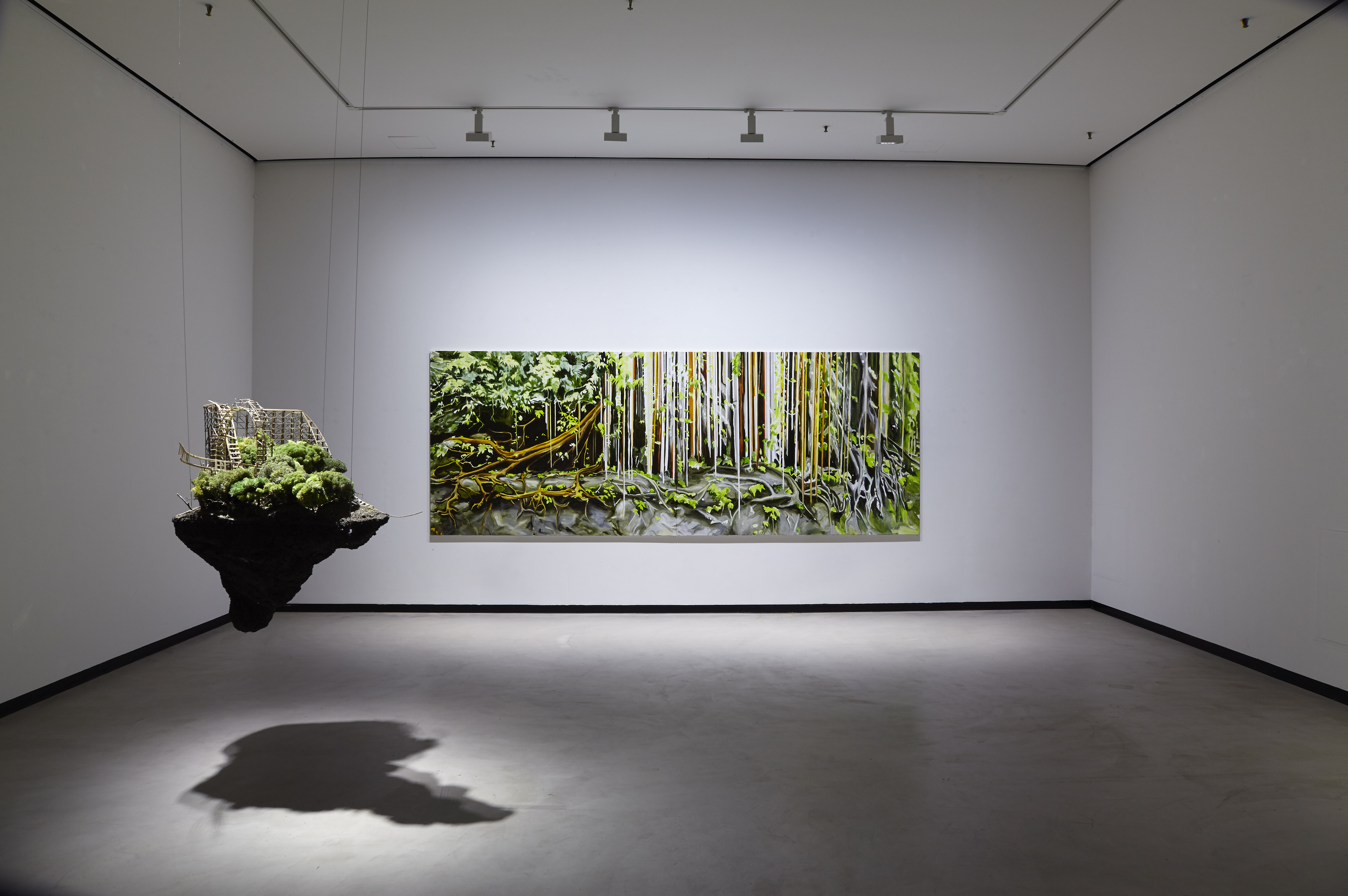
    Tamara Piilola, installation view at Gallery Heino.
    Tamara Piilola, installation view at Gallery Heino.

    Firstindigo&Lifestyle: Is being a figurative painter these days a rare thing. How do you feel the genre is approached in the contemporary art world?

    TP: With suspicion – no just kidding. I think now it’s much more acceptable to be a painter. I think there is the audience and professionals who recognizes the talent and accepts it as it is: A viable art form. As an artist, you always have to be interested of what other artists do. I think there is a lot of theoretical confusion about art. Everybody thinks they have to make theoretical work and be able to explain what they do. I think if you hear this long enough, this kind of stuff gets in your way when you’re coming up with ideas, because you start thinking through a filter.

    Tamara Piilola's oil on canvas in Galleria Heino, August 2017, installation view.
    Tamara Piilola’s oil on canvas in Galleria Heino, August 2017, installation view.

    TP: I always thought that art could move more on the emotional level. You should work with your feelings, because if you’re using language to put things to action, you limit yourself. Many times things in art don’t make sense.

    Firstindigo&Lifestyle: There is almost a photographic precision to your works. Do you layer the works, plan the works with meticulous detail, and come up with the entire idea before starting to paint?

    I have photographic memory and I often work with images that have a lot of details. I start sketching by doing a collage with a computer (I used to work with paper and scissors before). At the end, there is a sketch that gives me a solid structure, the composition to work on top of. This is extremely important stage. After that I can start painting and I have quite a lot of freedom to choose which colors to use, how the brushstrokes will look, and overall how the end result will look. This structure gives me freedom to improvise. The motives have to be challenging, full of details and light to keep the painting process interesting. I love to see a big painting almost ready, I get excited about my own work.

    Firstindigo&Lifestyle: How would you describe your method or process of working?

    TP: I’m a deadline worker and I do exhibitions, not just one painting at a time. I work with about eight paintings at the same time. If I get an idea or a feeling that something should be done it usually takes years to pass through. I have a solid confidence in what I do, but that doesn’t mean I’m satisfied with everything I do. I don’t think it’s a bad thing to question your work. On the contrary – the best thing is to view the work from every angle and to be very skeptical at first if you get a “good idea”. I’m very patient to give my ideas the time they need to develop. I need to build a relationship with the motives: I want them to be familiar. When I know I can start, I go through my picture bank to fill the missing pieces in the collage. I focus on the composition and not so much on the colors.

    Firstindigo&Lifestyle: Do you have an artist motto?

    TP: Yeah, trust your intuition.

    Firstindigo&Lifestyle: Are you in love with nature as it is your playground in a way, how about the trees that come out so vividly in your works?

    TP: I think it’s not about loving though I love nature, it’s about respect. I recognize certain similarities in Finnish and Japanese cultures. We have both had our animistic past. The recognition of energy in things was very natural for me as I  was raised up by the sea, and the wilderness started right behind the fence. I think materials can be very sensual to look at and touch. In our times, it’s a luxury to have the time to look at things in peace. That’s what I do, I look and appreciate things.

    Firstindigo&Lifestyle:  Did you ever think of becoming an environmental artist?

    TP: No. I’m afraid to destroy things in the nature and I have no interest to mess with wild things. I think there is such perfection in natural order, and to show “art” in that context feels utterly fake.

    Firstindigo&Lifestyle: When looking back at your career, how have your paintings developed through the years?

    TP: I went here and there in the beginning. About ten years ago I accepted the fact that it’s OK to do what I do best: Big paintings with a lot of details.

    Firstindigo&Lifestyle:  Is there anything particularly special to you about being a ‘woman’ artist?

    TP: I don’t consider myself a woman artist, I am simply an artist. My works can be labeled feminine because they can be quite decorative. But I think it’s a drag to label things. I don’t think artist’s gender makes the work interesting unless the gender is the concept of the work. What is feminine and masculine? I’d like to go around those labels, because everyone and everything can be both depending on the culture.

    Firstindigo&Lifestyle:  You recently attended a group show in Galleria Heino in Helsinki. Have you collaborated with the gallery before?

    TP: This was the first show I did with Heino. I love to work with them because they have the courage to show artistically ambitious shows, with basically no art market to sell them in Finland. Rauli Heino is a true art lover and I consider myself to be very lucky to be in their team.

    Firstindigo&Lifestyle:  Do you work with curators or more directly with museum and gallery directors? What is your experience on building a show? 

    TP: I work with all of them, it depends on the project. I listen very carefully what people are after and it’s always a pleasure to work with professional people. The structure of the new show is in my hands and it has to be, otherwise it’s not my show. I will do the best I can to make things work. To have the atmosphere of support and trust is very rewarding. To have fun, to discover and do wonderful things together, isn’t that what life’s about?

    Firstindigo&Lifestyle:  Do you think that you have had many successful shows?

    TP: Yes, I think so. Success for me means that I am able to do the things the way I intend to. To do a good show means you must have the time to do it. It helps a lot when you learn to say no to projects that are not that beneficial to you.

    Tamara Piilola, Kruunu, oil on canvas.
    Tamara Piilola, Kruunu, oil on canvas.

    Firstindigo&Lifestyle:  How about such labels as ‘Finnish’ painter? If you consider to be one, what do you think about an international career?

    TP: The world is definitely smaller than let’s say in the beginning of the nineties. Long stays abroad, mainly in France and Germany have influenced my work. I live and work in Helsinki, and I guess nowadays the place you live defines you. It’s an interesting question. I certainly recognize my subject matter to be very Finnish, and that’s fine. Does that make me a Finnish artist?

    To be able to build an international career I need contacts to good international galleries. I would love to show my work especially in the Nordic countries, in the U.S. and in Canada. I think my work could meet some interest in these places since we have similar cultural values.