Category: sustainability

  • Future perspectives in verses

    Future perspectives in verses

    Climate Change brings to mind emissions, which require solutions, such as futures with bikes and more car free highways. The planet Earth is calling us to bring nature to the negotiation table. These are the verses for the new year.

    "Nature's rhythm is different from the pace of the contemporary society."

    What we don’t seem to realize is that nature is in fact offering space without asking us to limit our dreams. Two years into the pandemic has changed our everyday perspectives; we have voluntarily moved our lives more outdoors. We suddenly pay attention to dear little details that we see in nature, and think about the future livelihood and living on this planet.

    Nature’s rhythm is different from the pace of the contemporary society. This is also something that this pandemic has taught us oh so well. Did we ever imagine that we would be capable to pause, and start dreaming of a different future? Some of us did dream, at least.

    Looking at the birds in winter, as they descend to a freezing environment.
    "Looking at the birds in winter, as they descend to a freezing environment." 

    Let’s take birds in the winter as an example. What is it in their circumstances, the birds in suburban environments, that is causing us to pause and consider if the animals have enough food.

    Cars, parking lots, people going shopping in their vehicles, trains, commercial projects surrounding geese habitat. What is so special about these animals living next to human habitation, geese in our urban and suburban parks. They make us think changes in season, and how the big birds used to migrate someplace warmer.

    Humans are responsible for destroying wilderness, wetlands, populations, to name a few. With geese, as their extinction was more evident due to destruction of the species natural habitat – the birds were brought into urban areas where they had never been living before. The natural migration cycle stopped and the geese stayed in their new settings. Humans have since then found that the birds’ new existence is perhaps too close, birds taking over parks and parking lots.

    "We can be thankful that they still have some wilderness to roam and be birds."  

    A question of food for geese is a problematic one, since feeding and making them accustomed to vacate human habitat eventually means that nature’s own cycle is being interrupted. Not because geese themselves were opting for these new environments. We can be thankful that they still have some wilderness to roam and be birds.

    "Future perspectives do imply stricter and more compassionate approaches, when it comes to ever busy air and street spaces."
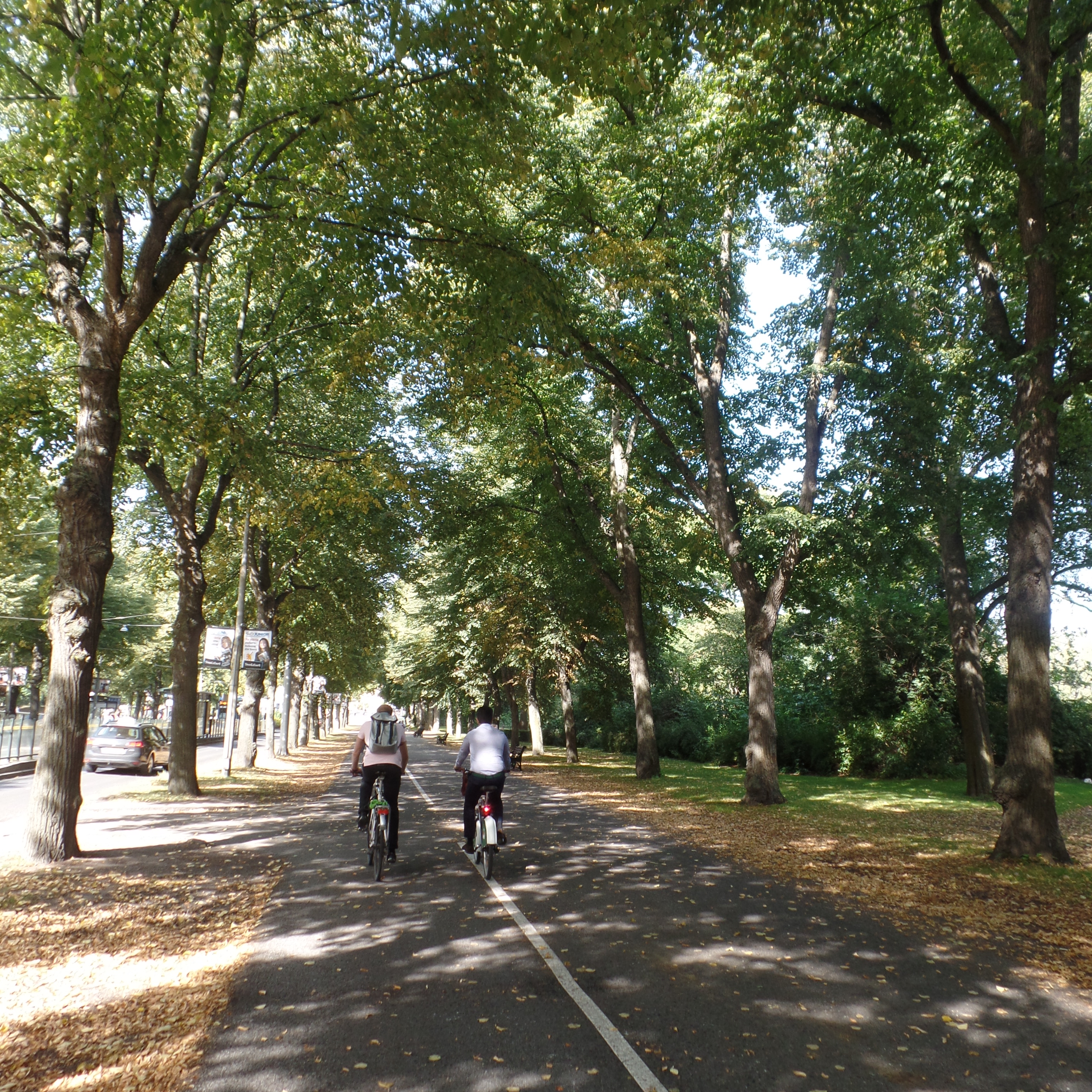
    Biking is an old fashioned green new deal. It also goes together with the nature’s rhythm. The pace is one of wondrous.
    "Biking is an old fashioned green new deal. It also goes together with the nature's rhythm. The pace is one of wondrous." 

    To participate in a green new deal, cutting back emissions is of course not just an act of love for many of us who like to travel and seek far away adventures. Yet, future perspectives do imply stricter and more compassionate approaches, when it comes to ever busy air and street spaces. Cutting down greenhouse gas emissions is easily a foreign language concept or theory that stay away from the realities of modern individuals, who can count cars in the garage. Everybody needs their own car just to get around. How to explain this in simple terms, how to change this pattern?

    "The awakening is bringing nature closer to our communication, forming new communities." 
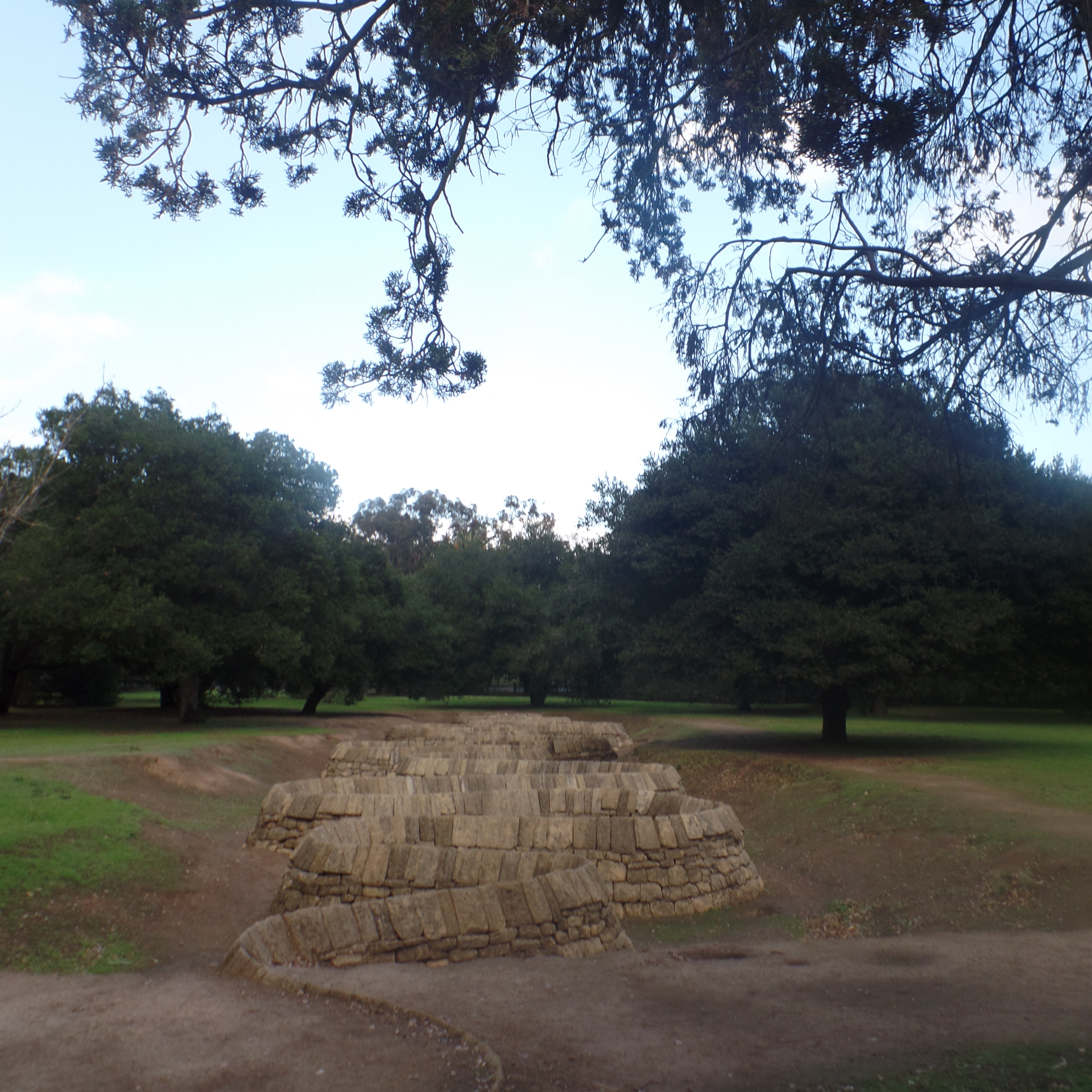
    Stone River by Andy Goldsworthy outside the Stanford University Cantor Center for Visual Arts.

    Futures hold promises for the world in the form of awakenings. Climate coalitions and awakenings for earthy subjects are thankfully becoming one kind of new normal.

    "World, in which constant profit is a standard, and where sustainability and co-creation are like dialects of foreign languages."

    When it comes to art, fundraising is meeting with auction house practices to make equity and ethical planetary standards meet in the productions. How much sustainability can we create with these methodologies, is yet to be discovered – not just in the form of capital, but as acts of recycling, repurposing, and meeting circular economy standards.

    World, in which constant profit is a standard, and where sustainability and co-creation are like dialects of foreign languages. Co-creation implies a communal aspect of creating together. As such it is somewhat strange to Western notions, which rather highlight the success of ego-driven selves.

    At its best, the awakening is bringing nature closer to our communication, forming new communities. Community and art can meet in various ways. The art works that take over public spaces are a great example.

    Outside the Stanford University’s Cantor Center for Visual Arts is a Stone River, a large wall created of sand stones. A sculptural serpentine project created by artist Andy Goldsworthy (2002), is blending with its campus environment, growing naturally in the landscape of trees and meadow, bringing joy for people working and visiting the campus and the Art Center. These stones are remnants of campus buildings. The stones had fallen during two earthquakes that hit the bay area in 1906 and 1989.

    Stone River is composed of rumble that was left behind after two earthquakes.

    The Stone River was inaugurated in 2002 at the campus. Goldsworthy found out that the campus had remnants of historic earthquakes that shook the area, in 1906 and 1989 respectively, forming stone rumble that had fallen off the buildings. He instantly gained a feeling that stones could organically return back to earth, forming a flow which almost seemed that it had archeological origins. As if the stones had been there for a long long time.

    Goldsworthy is referencing rural Scotland, where there is archeological presence of people layering stones, layer after layer like this.

    In Stone River, the stacked stones in the sculpture, set in a nearly 3 1/2-foot trough dug in the earth, rise from a 4-foot wide base to an almost impossibly precise undulating line. “I call it a river, but it’s not a river,” Goldsworthy said. The sculpture is “about the flow. There’s a sense of movement in the material, through the individual stones, so you just see this line.” –Barbara Palmer, Stanford Report
  • A shock of an image: Are we going backwards?

    A shock of an image: Are we going backwards?

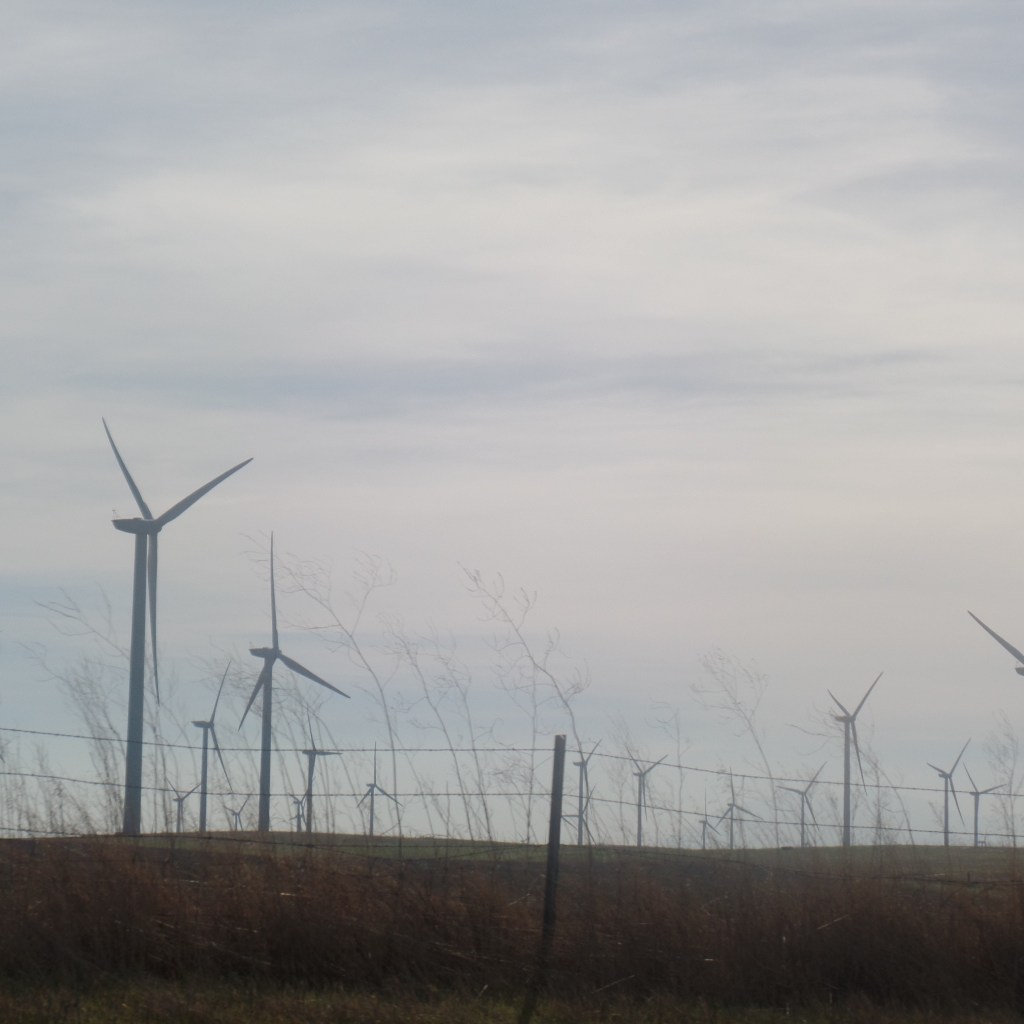
    There is a test for a humankind, which is almost beyond measure. Health crisis with the current pandemic, too little or complete lack of solidarity for the #blacklivesmatter, environmental crisis, climate emergency: you name it, we almost seem to be moving backwards. To try to locate it in a visual-literacy sphere, it appears like a shock of an image. A complete inaccuracy of any portraiture of a situation. Yet we must.  We need to find new images, create new existence for love and peace, and keep on finding creative solutions for our planet.

    Artistic practices and curatorial interventions are still valid ways to express movement forward. They show legitimate approaches to voices speaking against structural injustice and discrimination. The power of art is that it can change our perceptions and attitudes. It can inform us. It can take a stance, which is strong, shocking, and informative at the same time, for example about refugees in the world. In the #blacklivesmatter movement, new curatorial openings can be made, and more voices will be put on center stage, so stories will be heard and seen. Not forgetting that gender equality is still a dream in the global art world.

    The environmental crisis needs more of our attention as well. How to navigate a jungle of opinions in this world and speak in a creative, artistic and curatorial manner about the climate emergency. Relying on ‘safe’ structures, and displaying ice cubes that are melting on concrete in front of our eyes. Are we running out of ways to create imagery of a crisis? ‘A shock of an image’ of something that would be a gathering of species dying, a globe that was burnt, and/or left behind without mankind, a nature that is not natural as we know it, but could be imagined as anthropocene. We did it already.

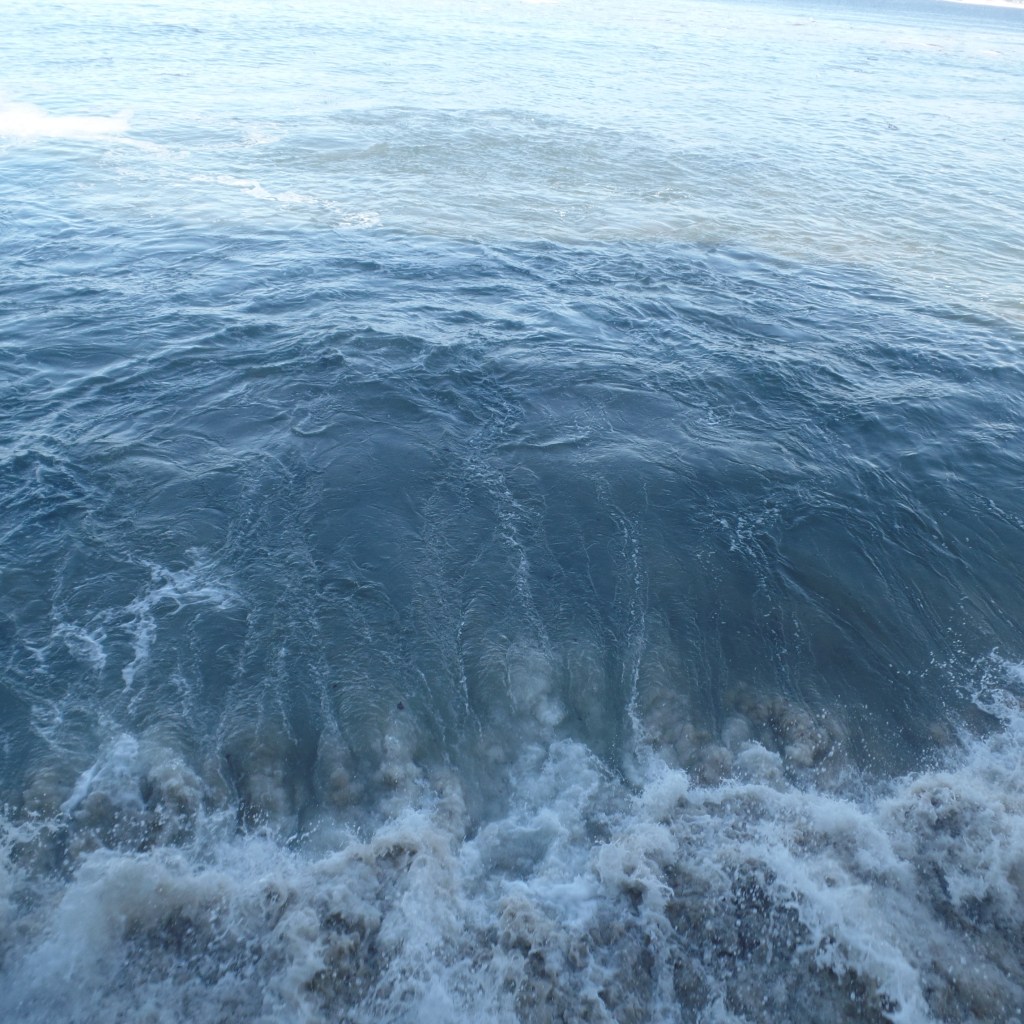
    Water crisis, a water scarcity and the inequality that it creates in the world is almost unparalleled. A Quarter of Humanity Faces Looming Water Crises, is a great article published in New York Times giving an introduction to the problem.  Climate change creates a high risk to water resources in places that have experienced enduring droughts. Water reserves are running out in hot and populated industrialized areas. For example, the clothing industry uses groundwater in Bangladesh, and creates a severe problem for its people. Mexico City is sinking after using its relied water resources. In Mexico City, the Zócalo, the main square in the historic city centre, is at a lower elevation than ancient Lake Texcoco; the city was built on its basin.

    Global fresh water scarcity can be caused by droughts, a lack of rainfall or simply pollution. Will our experience economy stop from creating more pollution in the future? ‘Backwards’ is a metaphorical attest to imply that shock doesn’t come without imagery.

    This year, World Environment Day on June 5, 2020, celebrates biodiversity. The mission is to educate people that with one million species facing possible extinction, it is now time to focus on biodiversity. Biodiversity can be imagined in the world’s forests or oceans, for example. We can safeguard the nature they provide, and prevent extinction.  


  • Shakespeare and Earth Day

    Shakespeare and Earth Day

    Earth Day and Shakespeare’s Birthday both take place in April, a month known for its showers and blossoms. The poetry month of April resonates with the nature’s big events, and surely that of playwright and poet William Shakespeare’s imagination. Earth Day is celebrated on the 22nd, and Shakespeare gets his day on the 23rd.

    Earth Day wishes to bring us back to thinking of hope in the days of chaos, and optimism for our futures during crisis. Each of us has a voice in creating our ideas for, what the future might hold, and what kind of world would we rather imagine. Perhaps a look back in the history will show us, how not to live in the future. From the point of view of conservation, Shakespeare’s times weren’t necessarily better than our more recent past.

    The Shakespearean Forest” is a book written by Anne Barton (Cambridge University Press, 2017). The book handles woodland in early modern drama. “The Shakespearean Forest” puts the playwright’s work within a historical, social and literary world of forests. It also questions, how the forests might have been staged in the early theater. Forests as surroundings were also “stages” for leisure hunting, and preparation for warfare. 

    Shakespeare’s birthplace, the town of Stratford-upon-Avon, was surrounded by the Forest of Arden. This forest was already in decline in his time. It is believed that during his lifetime, trees were more of a commodity, used as timber for building houses and ships, and functioning as fuel for cooking and heating. 

    To see nature in a positive light in Shakespeare’s work is not hard though. Nature acts as a metaphor in his writings numerous times. One of the greatest is from “King Henry“: Let heaven kiss earth! now let not Nature’s hand Keep the wild flood-confin’d! let order die! And let this world no longer be a stage To feed contention in a lingering act.(Henry IV, Part 2).

    There are so many beautiful and accurate comparisons between seasons and our life cycles, seeing weather as a backdrop for actions, and setting its moods for our own. Not to mention how romantic sentiments are created within nature. Shakespeare’s “Sonnet 98” is an appraisal for the month of April, a song of Spring. 

    From you have I been absent in the spring,
    When proud-pied April, dressed in all his trim,
    Hath put a spirit of youth in everything,
    That heavy Saturn laughed and leaped with him.
    Yet nor the lays of birds, nor the sweet smell
    Of different flowers in odour and in hue,
    Could make me any summer’s story tell,
    Or from their proud lap pluck them where they grew:
    Nor did I wonder at the lily’s white,
    Nor praise the deep vermilion in the rose;
    They were but sweet, but figures of delight
    Drawn after you, – you pattern of all those.
        Yet seem’d it winter still, and, you away,
        As with your shadow I with these did play.

    meadow @Firstindigo&Lifestyle
    meadow @Firstindigo&Lifestyle

    The Folger Shakespeare Library,  in Washington D.C., opened in 1932 being an independent research library devoted to advanced study of the Renaissance and the early modern period in the Western hemisphere. It is a world-class research center with an outstanding collection of editions of Shakespeare’s plays. The Library has one of the world’s finest collections of 15th- through 18th-century rare books and manuscripts from Great Britain and Europe.