Category: sustainability

  • Riikka Theresa Innanen on dances

    Riikka Theresa Innanen on dances

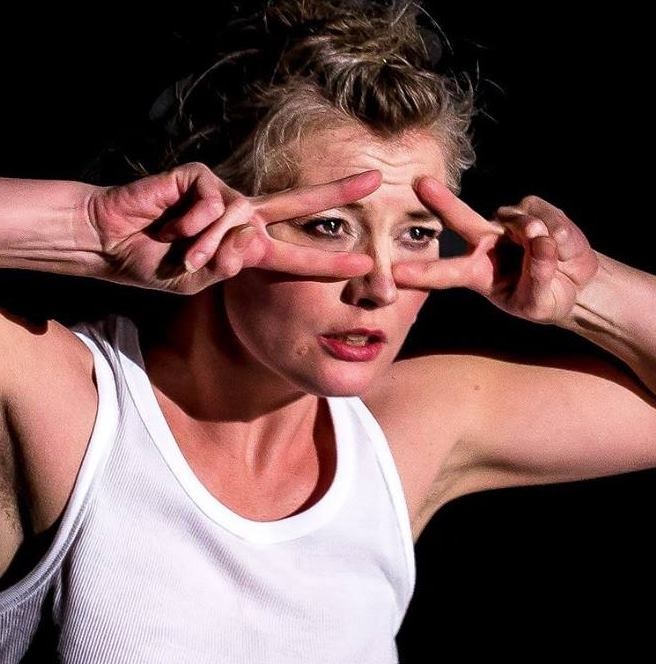
    Riikka Theresa Innanen: After I had decided to stop dancing at the age of 6, (I was to dance a duet with a boy, and I got too embarrassed and offended to go on), I totally got swept away with Break dancing at the age of 12, and had to start again. For a girl in 1980’s in a small town in Finland it wasn’t too easy to develop my passion, but I was equally inspired by the Fame that was on TV. I though I could support my street dancing with jazz dance classes. This developed further to ballet and modern dance until I stopped again. After a year of dancing flamenco as a hobby and trying to find a “real profession”, I realized that the only thing I really love and know to do is dancing. I studied dance and choreography 4 years in Amsterdam at SNDO (1993-1997). SNDO together with working a year in a residency at Daghdha Dance Company in Ireland has possibly left the biggest imprint on me as an artist. In both these places I was lucky enough to study there when it still was very mixed with varying trainings and aesthetics. The students came from the world continents and from different walks of life. Then I could also learn how to use my passion in visual arts, music and computers as an asset for my dance work and artistic thinking. I taught at the Theatre school for 4 years before moving back to Finland in 2001. In Finland, working with Side Step Festivalhas been important as well as connecting with various “off ” groups such as Reality Research Center, and z-score. After 8 year in Finland, I felt more supported abroad and left for Daghdha Dance Company. The structure (now sadly finished) of daily commitment, small salary and a workspace (even if open and shared) together with the support of the fellow resident artists and staff, made a big change in how I see my work placed, and how I want to continue developing my work.

    YOUR STORY IS VERY INTERESTING, YOU HAD AN INTERNATIONAL CAREER, AND THEN YOU CAME BACK TO FINLAND. YOU DESCRIBE THAT WORKING WITH ‘OFF’ SCENES FITS YOU BETTER. IN ANY EVENT, YOU ARE A MULTIPLE DANCE ARTIST.

    R-T: Well, in a nutshell my career is a weave made of many different lines varying from improvising to creating choreographies to working as a dancer to teaching dance for camera for professionals to creating work with immigrant youth in Finland. I guess I’m mostly looking from outside-in: I grew up between cultures and still live in mix of different languages, social statuses and religions, I studied abroad and then moved back yet never stopped working abroad, so it’s just how life has made me. My aim as a maker is to take the audience to/through situations of reflection and enable subtle, personal experiences that can people move from within. To provoke non-violently but consciously. In my soul I’m a lonely nomad yet I work best in collaborations and groups. I truly get inspired by difference and excellence, despite of the discipline, of which working with the Irish mathematician Alex Clancy on Number is a good example. I tend to go for cross pollination rather than for purity. I’m interested how to choreograph beneath the surface rather than shapes and how systems or Minds grow from that mix of different elements into “self sustained intelligent systems” and surprise me. Keeping control over the work becomes besides the point when you can instead be watching creation happen. Probably my early attempts to program on my first Commandore 64 computer left it’s traces. This together with starting dancing on the street during the first wave of hip hop mixes with the later dance education during the 90’s at SNDO has create my attitude.  I’m passionate about composition and systems, of improvisation and danger and about dancing, purely and plainly. The brain needs to be be busy with science, philosophy and understanding life and structures but it’s pretty amazing to be “just taken” by dance and be led to unknown, unthought territories as well.

    TELL ABOUT YOUR RECENT PERFORMANCE PROJECT AT FULL MOON DANCE FESTIVAL IN FINLAND, WHAT WAS THE EXPERIENCE LIKE, HOW ABOUT THE CONCEPT AND AUDIENCE PARTICIPATION? DO YOU HAVE OTHER REMARKS FROM THE FESTIVAL?

    R-T: The project is about Happiness with a version called Tree of Happiness. The work is fundamentally a choreographed interface to make people move, think and interact on one level with me but also collectively through actions in a civic spaces and by being emotionally moved in a way which can ripple into their own lives. Practically it is a durational piece: for 3 days I meet with people, discuss and propose to answer 3 questions about Happiness on a peace of paper, which they then can hang on a tree as a leaf. The individual actions are multiplied, and make a visible installation grow, which anyone interact with. It is a very simple structure but as always, the human factor is multiplied with many participants, and creates complexity and variation, and depth. This work is very much based on a source code- choreographing approach, and the participants do not need to see or understand the structure, which happens beneath the surface to engage with and contribute to the work.

    At the Full Moon Dance Festival, I also wanted to extend the movement into the social media as well, as I’m convinced Internet has radically changed how we interact, think and construct social relations and realities. Additionally I wanted to involve locals, and so through during 3 pop up events we could experience something unique, a shared personal experience of Happiness. We had a silent walk in the nature with local wilderness guide, a session to learn how to play ukulele with the local Uke-guru and a “How to be your own Tree of Happiness in 15 min” – of course led by myself.

    YOU ALSO DID A PROJECT WITH DEBORAH HAY, WHO IS SUCH LEGEND IN THE FIELD. WAS THIS EXPERIENCE A KIND OF LANDMARK IN YOUR CAREER? HOW DID YOU DECIDE TO JOIN THE PROJECT, WHERE DID YOU PERFORM, AND WHAT DID YOUR LEARN?

    R-T: Yes and no. Deborah Hay has been landmarking my career on regular 10 year intervals since I 1st saw her perform in 1993 during my 1st year at SNDO. She was such an odd appearance which stayed with. Ten years later we invited her to Helsinki for Side Step festival. I followed closely and filmed the process as she worked with a group of soloists adapt her work. Even if I read her books, listen to her closely I did not feel dancing her work was something for me. Only in 2012, 19 years after I first saw her, did I finally feel ready to dance the Dance. It came along at period with many changes in all aspects of my life including learning the solo while still relearning how to walk after an operation on both of my knees, so I Think Not (the choreography I learned with Deborah Hay), fitted to that perfectly. So she has been landmarking my life on regular intervals, always in different ways. I’m very attached to dancing the solo adaptation, even if I will ever totally “get it”, or Deborah but somehow realizing the impossibility of theconundrum (that there is nothing to “get”) will keep me engaged with the dance for the rest of my life. And Deborah might keep landmarking my career even the next 10 and 20 years with new inputs.

    WHAT IS YOUR FAVORITE CITY IN AMERICA, AND WHY?

    R-T: That’s a really hard question to answer. The country is so wast and varied. I did fall in love with San Francisco, but I might have been most surprised with Austin, TX. Never expected it to be so lovely, lively and arts-friendly place, good to live and work in. Also I felt a strong spiritual connection to the land and its native history, which touched me deeply.

    THERE IS SO MUCH GOING ON IN YOUR OWN CAREER. HOW WOULD YOU DESCRIBE THE FINNISH CONTEMPORARY DANCE AT THE MOMENT?

    R-T: That is the toughest question. I’ve been so much away and I don’t really follow what is being programmed as I’m not a great consumer of dance but I know most of the makes as friends and colleagues, so hard to get an objective perspective. I guess the main stream Finnish dance scene struggles with being relevant. In a social and political climate, which is very anti-art, the big work to be done is to make art and dance a vital and essential part of the society. From the US we have learned the new independent funding methods are possible together with the old, which in very short time has created a stronger footing of freelance dancers. They are joining forces creating collectives and sharing spaces more courageously than before. This is great as in the end of the day 80% of all dance performances in Finland are created not by big institutions but by freelancers. The existing Funding structures are also looking for new ways to support the field but I’m not to optimistic in their abilities to truly change. But after the Full Moon Dance Festival, I’m hopeful. The new generation of makers is wild. They are totally renegotiating the premises and aesthetics of Finnish dance, which is really not easy to reinvent: Thanks to the strong heritage of Finnish architecture and design, and the lack of social struggle, the works tend to be more visual than topic oriented and that is what audience and funding sources are accustomed to go for. The really cool side of Finnish art is that we really don’t belong to neither Western nor the Slavic culture. Our heritage and mentality is strongly connected to Nature and our shamanistic heritage lurking just beneath our modern surface. We have a knack in being potentially totally bizarre and unique, if we only allow it to come out.

    WHAT ARE YOUR PLANS FOR THE FUTURE?

    R-T: I hope to keep up with the mosaic. The big process brewing inside is the aftermath of spending last winter in residency in West Africa. My research there was into how we create realities, how art is a part of the daily and social life, and to observe and finally live the difference. Living the difference made something very deep inside of me change. To live in the world were art, dreamworld, work life, family life and big and small rituals are totally integrated together, was striking in Africa. Returning back to a reality where everything is divided in to factions has been interesting but not easy: art being a separate part of an institutionalized system of money, power and consumption feels very violating and unsustainable for me right now. I don’t feel out of tune with my work but rather the structures and my relation to funding and producing.  Luckily projects like Tree of Happiness, helps me ponder through my work how things could be differently supported to grow. In any case this kind of reassessment seems to happen regularly through out my career. I seem to need to push myself of the beaten track to find substance and interest. In the end of the day, I see my career as a long path, based on an ongoing search with the daily practices, bringing out the “branches”, which develop into specific manifestations and can be shared with the public/audience. Ever branch is different and unique but connected to the core trunk. I will keep developing further the Happiness project and the Tree of Happiness piece, and working on developing new choreographic systems. Hopefully my adaptation of Hay’s solo will follow me the rest of my life. This autumn I’ll mostly work as a dancer and maybe in the future I will return to curating and organizing, after the experience of Side Step and Daghdha there are interesting structures to keep developing further.

    I’m very happy to be able to stay in Finland this autumn and work as a dancer for other makers: first for the Danish Hello!Earth group and then with Liisa Pentti+Co in Liisa’s work Space Particles. Playing music and drawing seems to occupy more of my time so I’m curious to see how it will seep into my works. I will keep teaching and traveling with residencies, hopefully returning to Africa but at least there will be working in Island next January with  Hello!Earth continuing our Kedja Wilderness residency there.

    FOLLOW Riikka Theresa Innanen’s website here.

    SEE HER VIMEO here..


  • Artist Interview: Choreographer Simo Kellokumpu

    Artist Interview: Choreographer Simo Kellokumpu

    Sightseeing is a performative proposal to deconstruct an archetypal figure of tourism through a site specific procedure. It’s about shifting from sightseeing to siteseeing and what this involves in terms of spacialization and temporality of the seeing that can trigger a sight specific experience. (Simo Kellokumpu & Vincent Roumagnac) . Sightseeing is a Dance Film directed by Simo Kellokumpu and Vincent Roumagnac (FRA/FIN 2012, 28 min). The film will be part of the LOIKKA DANCE FILM-FESTIVAL next week in Helsinki.

    Firstindigo&Lifestyle: How did you choose dance and choreography?

    SK: I’m not sure if it is about choosing in my case –  I find it more like a development of perception within the conditions where I have lived. I have realized that choreography is something I have always been interested in, but I didn’t have a word for it before getting to know dance. As dance and choreography are two different media, what interests me now as a choreographer in choreography is to consider it as a form of (an artistic) practice, which articulates, shifts and opens social, temporal, spatial and material contextual circumstances. To think and practice choreography is to be in the movement all the time. When I auditioned for the Theater Academy (TeaK) in Helsinki, I already knew that I wanted to study choreography. They asked me in the final interview about the relation between a dance technique and choreography. Now after more than 10 years later, I still remember it as an important question in a way that I was confident that the choreography as a medium is the right one for me. We had 3 years BA-studies together and after these years there was another audition to the department of choreography. The audition again was an uneasy experience, but I’m very happy that I had the chance to study there 2 more years in that department.

    Firstindigo&Lifestyle: What does interdisciplinarity mean to you as choreographer?

    SK: In practice it’s now about the dialogue between me and my collaborator a French artist Vincent Roumagnac whose roots are in theater and in visual arts. Also, it is about the question how to shift and echo the choreographic process into another medium/and vice versa. In this way, I would prefer to use the term intermediality than interdisciplinarity, because it is about what is at stake ”in between” the different media we use. For example, I think that artists like Bruce Nauman or JulieMehretu have a lot to give for a choreographic process. The history of contemporary performance, the body – and the visual arts is full of makers into whose works I can relate to with my choreographical references. At the moment, I am interested in, what kind of aesthetic forms comes out from the artistic process, whichcombines contextual choreography and the economical and philosophical principles of degrowth. I don’t have any ”artistic ideas”, but I am rubbing the notion of choreography with other contexts, media and circumstances, and speculate on the resulting inter-forms.

    Firstindigo&Lifestyle: Tell me about the project in Iceland, who did participate in it, and what did you do with the landscape?

    SK: I was invited to an international Aeringur contemporary art festival (in Rif 2012) with Roumagnac. The festival invited artists 10 days before the opening to work on the specificity of the site where the festival took place. We decided to work by the volcano/glacier Snaefjellsjökull with the notion of Sightseeing (and playing with homophonic site-seeing…). We aimed to play with these notions from the critical point of view meaning, asking how mass tourism usually consumes landscapes. Therefore, we wished to ask, what logical system of perception does it enclose that the spectator-tourist him/herself imposes an arbitrary framing of the landscape (the cliché). We worked on the deconstruction of this logic of seeing and experiencing the site by embodying (the body of the viewer) and re-framing (the framing of the landscape). So, having alternative forms of perceptual experience of the specificity that is usually attached to the nature-tourism site. We filmed a video of 30-minutes including me + the local people and participants at the Aeringur art festival. We also made an installation for the opening of the festival.

    Firstindigo&Lifestyle: You live in Berlin, how is that now different from Helsinki, or Finnish dance and art scene?

    SK: One of the main reasons to move my base to Berlin was to concentrate on the development of choreographic practice in a vibrant international context. I always thought that I would move to Brussels or Paris, because I’ve studied french for 5 years. But I found in Berlin a lot ofinteresting contemporary art, and colleagues in the same position, so I decided to stay – typical storyfor an artist, I guess.

    When I went to Berlin in 2008, I was in the middle of a serious professional crisis. I was thinking to change the profession because this crisis had been going on already maybe a year or so in Finland, even if I had possibilities to work. I thought to quit practicing/making choreography. But what eventually happened to me was through questioning the logic, aesthetics and social and material conditions of the production-making, where I had been in Finland. I found some possibilities to realize workswhere choreographic thinking is processed out to, or with, the spectator without being subjected to the logic of a dance-piece or production, which is rehearsed and produced to be performed always the same way, no matter what is the context. I think there’s enough productions in the (art)world already. I try to find ways of making art and the living, which escapes this economic logic of the art-market – it’s a tricky equation to solve but I think it’s necessary.

    In Berlin, I also took time to study, what has happened within western contemporary choreography in the last 15 years. I dove into the contemporary arts and understood many crucial things for my professionalcrisis. Berlin was a perfect place to be for this kind of professional process. I think themajority of the art-scene is in Berlin for other reasons than ”making a career” – I think it’s a place for developing your artistic practice. Stimulating art-city it is.

    It’s been at the same time relieving and challenging to step out from the safe small scene into the total anonymity where no one knows who you are, and where you have no artistic institutional support at all. To step out from the familiar, expected and recognizable logic of working and presenting works, you inevitably bump into unexpected and unknown landscapes in many ways. It was right thing for me to do – to change the location doesn’t necessarily bring you something more, it can also be the movement, which prunes and clears out.

    The main differences with Finland are quite simple. Finland is quite homogeneous and the art-scene is small. Of course one of the reasons for this is the geographical position, which already positions artists in a certain way, I mean there’s not that much people going to Finland especially.Finnish choreographers are not yet well-known in the Mid-European scene. I’m happy to see that there are some interesting younger generation choreographers like for example Anna Mustonen on their way. I am confident that they start to appear in critical European contemporary stages and venues as well, if they want to participate into the logic of touring with works.

    In Berlin, there are artists from all over, and it seems to be in constant movement.  It is questioning already things in practice, which haven’t been spreading out yet. Different ways and disciplines of making are mixed, and as a spectator you have a good possibility to experience diverse vital critical art-scene, which challenges your thinking, perception and position. Berlin is poor, and the venues do not support artists the same way than in Finland, but it is a place, where people want to come to show their work even if also the audience is very demanding – in Finland the audience is very polite, and the discourse between the audience and the artist is completely different.

    In Finland, we are not used to talk about art that much. In Berlin it’s common that the spectator has critical questions about the work. Aesthetic talk is an aesthetic talk in Berlin, whereas in Finland I have experienced it more like a personal talk, which is connected to the romantic idea of an inspired artist who expresses him/herself. The tradition of dance and choreography is longer and thicker in Berlin and in Germany – Finland is a young country and the position of a contemporary choreographer is hardly to be taken seriously, or the position of an artist in general. But it’s hard everywhere for artists I guess, especially in these neoconservative political times. What I find meaningful in Berlin, is the history of a place where artists have been stretching, breaking, testing and questioning the ways of making and presenting art. Also this affects to the Berlin’s position as a vibrant, substantial and horizontal art-capital.

    In last 1,5 years, I have been more active again towards the ”scene” and been meeting more people. I have even learned to say no to the proposed possibilities also in Berlin. I’m interested in working with Finnish performers, because I think they are good in the way that they are grounded and down to earth. For the moment, I’m happy to be working in a light collaborative structure, but if there’s a working group included, I’d like to bring the group to Berlin and present the work then in Finland. This way there’s automatically cultural exchange, and stimulation happening to many directions. I am planning now together with a Finnish Berlin-based director Mikko Roiha to create a platform or stage for Finnish performing arts in Berlin. We are working on to find the ways now, and looking for collaborators from Finland and Berlin to get this project going to be able to offer one possibility for Finnish artists to present their work in Berlin.

    Firstindigo&Lifestyle: How do you understand dance technique? What is a Kellokumpu dance technique?

    SK: I think of it as a certain neuromuscular organizational system, what you can study and learn to embody. Nowadays, I have moved on from thinking dance-technique(s) as something necessary for the choreography. I mean, I am interested in finding the ways to understand, how a subject, we call a ”dance technique”, is used and connected to the broader social, aesthetic or historical context. For me as a choreographer, it is necessary to understand these connections more than having a ”dance-technique” – I find it problematic if a choreographer finds his/hers dance technique and sticks only to that without questioning its broader social, historical or aesthetic dimensions. Usually, I have worked with the dancers who have a broad understanding and physical potential. I find (Forsythe’s, if I remember correct) thought about dancer’s body as a body of a monster intriguing. I have certain elements and tasks to combine when it comes to the idea of the movement-texture. But like I said, I’m thinking about choreography nowadays as a medium, which doesn’t necessary need a body to be processed and presented. I am interested in working with the notion of choreography and its possibilities; dancers and dance-techniques can be part of it or not.

    Firstindigo&Lifestyle: So, what are your greatest influences?

    SK: In 2010, we (with Roumagnac) created a solo-work for me which included a staging of my choreographic mothers and fathers so to speak. From Finland, there were Ervi Sirèn and Tarja Rinne. And then, Merce Cunningham and William Forsythe were on stage with me in this work (not physically present, note). I am still aware that these names are important for me when it comes to the personal history of dance and choreography. Like many, I am interested in the 1960’slegacy in the western contemporary arts. To name a few, Judson Dance Theater, Situationists, Minimalists, Arte Povera-, Fluxus-artists and then choreographers like Cunningham, Lucinda Childs, Forsythe and Jérôme Bel are the sources of my inspiration. Of course, my position is nowadays to have a critical point of view to my genealogy as well, and to look ahead by following what is happening in the development of the choreography.

    Firstindigo&Lifestyle: What did you learn while you were spending some time in New York?

    SK: I spent only one month in New York and it was the first time for me there. I mainly wanted to go after Merce’s (Cunningham) footsteps a bit, so to speak. So I took some classes in Cunningham Studios and visited museums and galleries, got to see performances etc. The trip was part of the project of mine what I processed with Roumagnac who was in Paris at that time, it was a continuation for our one month work-trip to Beijing. In New York, I thought a lot about the relevance of being aware about the history and the line(s) where you belong into. I found it significant. I even bought a blue unitard.

    -Check the LOIKKA DANCE FILM-FESTIVAL calendar here.

    -Artist’s website: http://kellokumpu.wordpress.com/2010/09/21/11/

  • VOLTA NY-13 edition #1 LYNN ALDRICH

    VOLTA NY-13 edition #1 LYNN ALDRICH

    VOLTA NY’s 13 art fair is running for the sixth year in a row. The art fair celebrates a brand new location in SoHo’s vibrant 82 Mercer Street. I visited VOLTA during its opening day on Thursday March 7th (until March 10th). Spending time next to the colorful, innovative, thoughtful, provocative, and utterly timely international platform of contemporary art was worth every minute. The two floors packed with art, which were made with diverse techniques and means, and meeting people from around the world, who were enthusiastic about it, did not even feel a bit too much. Also, it was refreshing to stop for a moment, to look out from the large windows and enjoy the street scene, whilst being inside experiencing art. After looking out, I could again discover something new.


    lynn-aldrich-out-of-the-ink-in-the-dark-2012
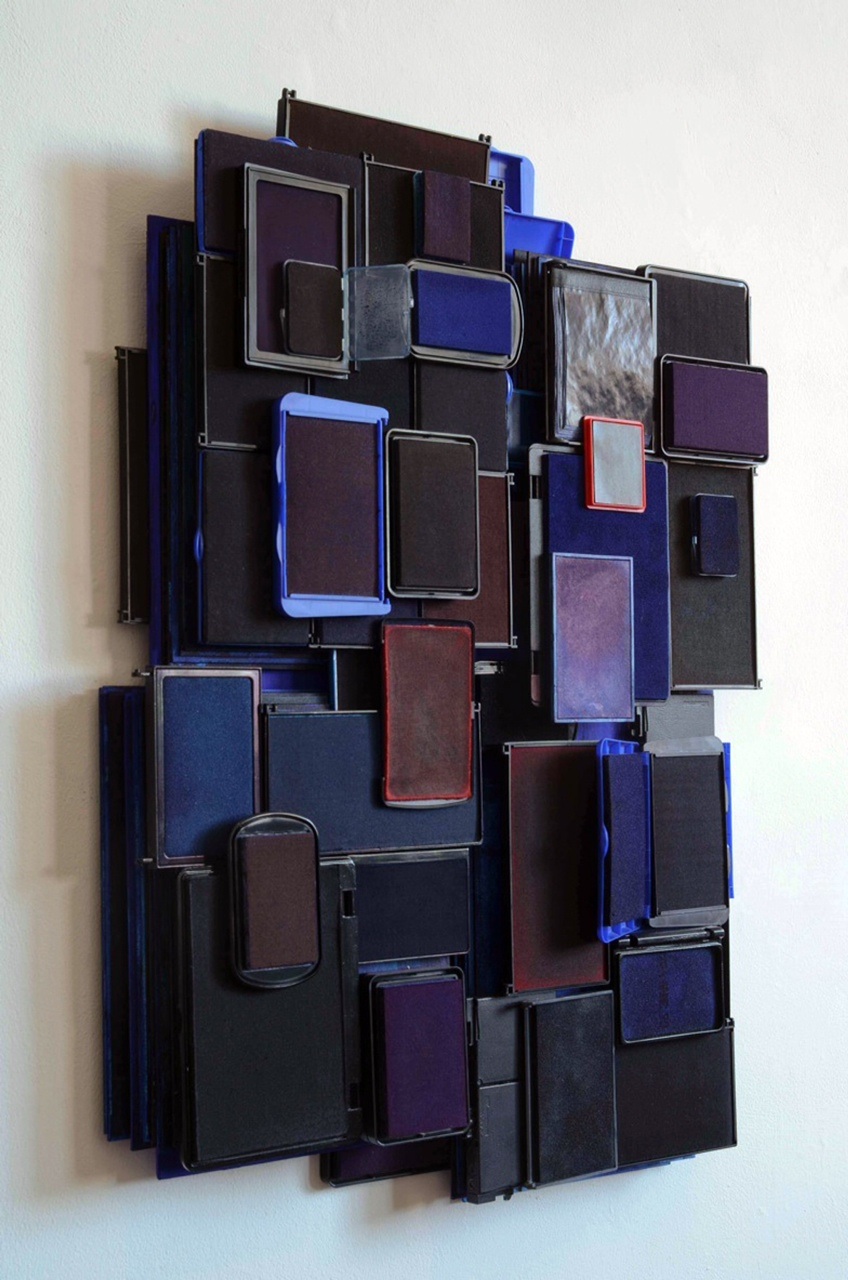
    Lynn Aldrich, Out of Ink in the Dark, 2012, ink, ink pads, cartridges, blotting paper, carbon paper, 27 x 20 x 4 in


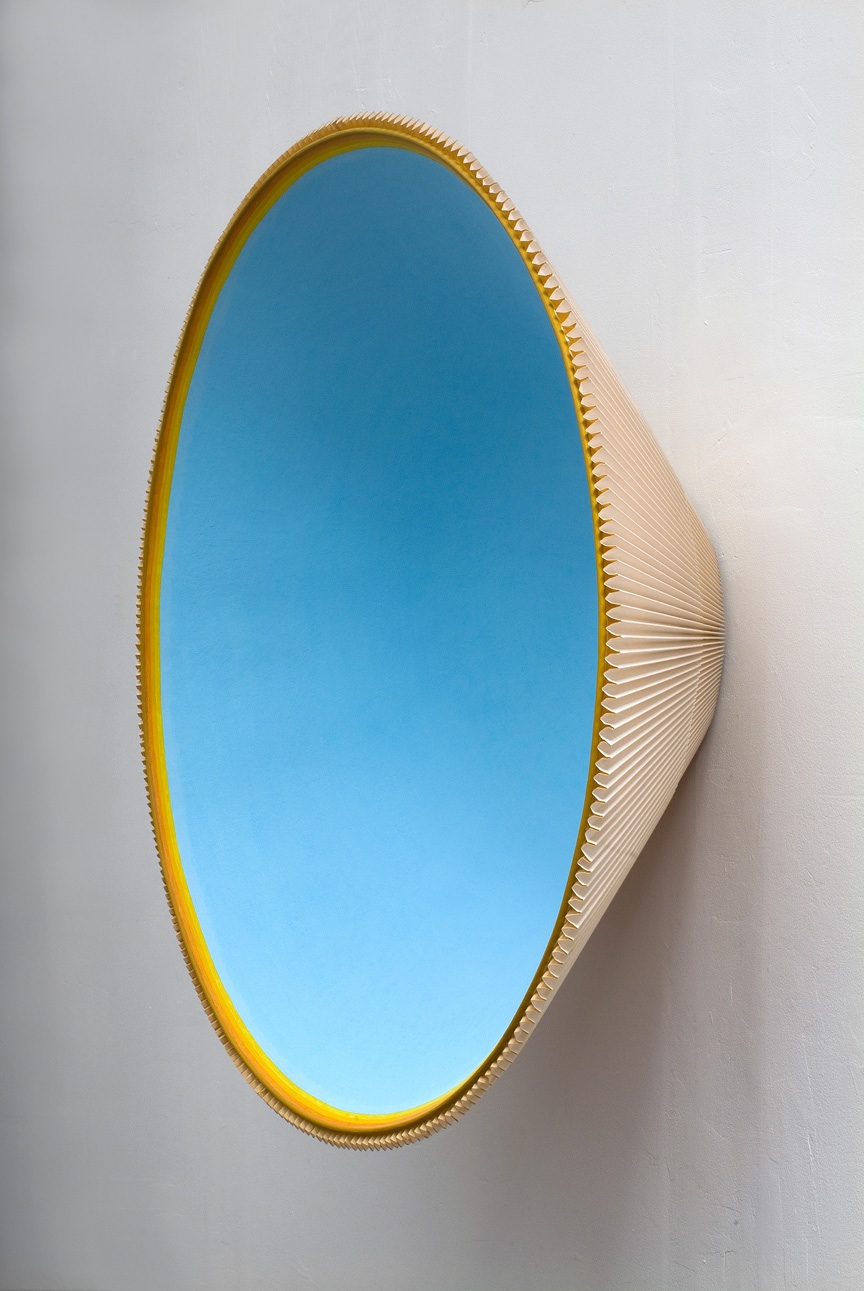
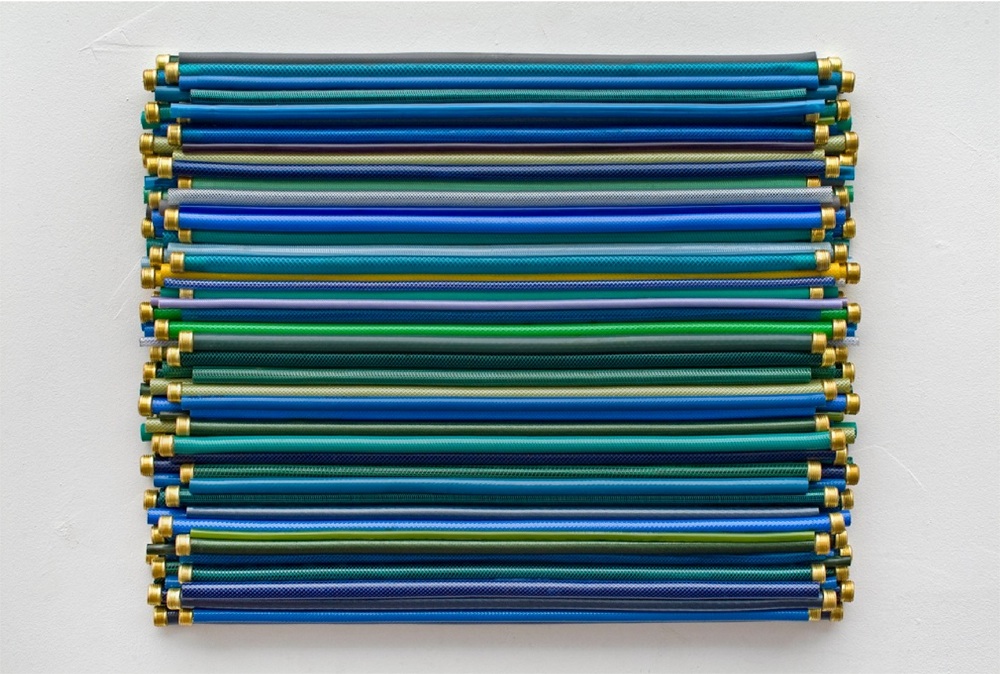
    My first story from the show is about Lynn Aldrich. Los-Angeles based artist Lynn Aldrichs exhibit at VOLTA takes place at the same time as her solo show is at the JENKINS JOHNSON GALLERY in New York. This show called Free Refill: Old & New Works opened on February 7th and is now on display through March 30, 2013. Lynn Aldrich’s creativity is truly on display of her sculptures and installations that show huge potential to the acute topic of environmental change with social relevance. Aldrich’s aesthetic, carefully made almost minimalist works state a question about our excessive consumption and our man-made impact/problem on the environment. Lynn Aldrich uses materials that are part of our everyday collectables from the Home Depot store, for example. Her sculptures and installations contain parts, which, if gathered excessively, lead to problems with waste and garbage. The plastic accumulating in the ocean is one such problem. Her use of bold or natural pastel-like colors melt in with vivid and organic forms, which together create ideas of technological interplays between humans, their sciences and innovations, and the natural environment. What I especially like is that the sculptures evoke clear sensorial responses. The Sky Light (Noon) sculpture, (no. 1 here), radiates turquoise light and invites to be in-contact-with itself. The sculptures also showcase authoritative presence. A work on the wall, Out of Ink in the Dark, 2012, (no. 2 here), possesses loudness and command reminiscing of the devices that have taken so much space in our everyday communication. Plastic Pacific, 2010, (no.3 here) articulates with its title about the Great Pacific Garbage Patch, and echoes about the human imprint on the natural ecosystem. The plastic tubes with oil glaze represent clearly the unnecessary amount of things that we have gotten used to, and have access to. By using everyday objects from Home Depot world, such as hoses, pipes and sponges, Aldrich states their physical functions. Alternatively, she references with the objects, that they represent the water flow of the ocean or the cleaning of the ocean. The works are asking us to pay attention to and listen to its fragile system, and asking us to do something about it. The Desert Springs, 2005-2009, (no. 4 here), with downspouts and gutter extensions, is an installation in which the organic nature-like looking particles are like the Coral in the ocean.


    Lynn Aldrich, Plastic Pacific, 2010, garden hoses, plastic tubes with oil glaze, brass ends on wood panel, 26 x 32 x 3 in
    Lynn Aldrich, Desert Springs, 2005-2009, downspouts, gutter extensions, gutter corners, enamel, dimensions variable ~ 59 x 70 x 62 in