Category: women in art

  • Discover Teresita Fernández

    Discover Teresita Fernández

    Teresita Fernández’s current solo exhibition is on view until December 31 at Lehmann Maupin’s 536 West 22nd Street location. Her seventh solo exhibit with the gallery coincide with her sculptural installation Fata Morgana, which is on view in Madison Square Park in New York. The gallery shows her latest body of work, including sculptures that are composed of intimate interior landscapes in concrete, cast bronze, and glazed ceramic. Recalling the artist’s earlier Rorschach pieces (2014) – a sculpture made of gold chroming, fused nylon, and aluminum – the new multidimensional works play with the idea of landscape and terrain. The theme of landscape in these Viñales pieces convey three-dimensional forms. The sculptures are detailed yet rough as they are somewhat fragmented, echoing of darkness and distortion, interior and exterior.

    Best known for her unique works and public projects, Fernández explores the natural world, as well as the scale, being sensitive to the act of looking, perhaps finding out about the human versus the landscape. Her conceptually-based art making includes research, and communicates with an entire world of references coming from different sources. In the exhibition, Fernández has created a series of darkened and intimately sized ink and graphite drawings, which are mounted on small-size wooden panels.

    TERESITA FERNÁNDEZ Viñales (8 Nights), 2015 mixed media on wood panel
    TERESITA FERNÁNDEZ Viñales (8 Nights), 2015, detail. mixed media on wood panel.

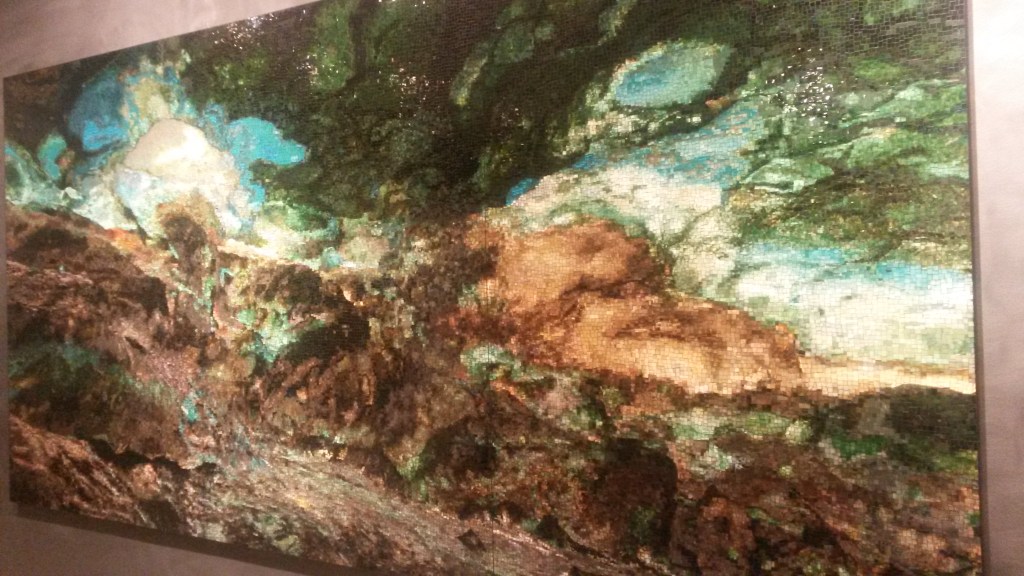
    These small pieces in sequences show her innate interest in scale. The dynamics between the immense and the intimate; the vast and the miniature; the macro and the micro are definitely part of the exploration. As the natural world as a reference is often large, the human viewpoint brings it closer; in other words we can grasp what we may or could see, if we had time and body to get to these places. Nature’s body is too vast to be created as miniatures, but this is what Fernández actually does. She has looked closely into the malachite mineral rocks and at their interiors comparing their material formula into full-sized landscape of the Viñales Valley, an iconic landscape in rural Cuba. She took up the saturated rich greens and turquoise colors from the malachite, being inspired by their clustered formations. These reminded of the aerial views of the green and lustrous landscapes of the rainforests.

    Fernández draws huge parallels between the malachite rocks and her own experience of the caves in Viñales. The whole project is tricky and fascinating. She reflects the idea of the landscapes both visually and physically, taking in both extremities of light and darkness, inside and outside, containment and amplification. In the exhibition, the Viñales landscape merges with the malachite rocks, which come from the Democratic Republic of Congo, and with the sculptural materials that of concrete, bronze, and ceramic. Fernández fuses with these materials and plays with the scale creating metaphorical “stacked landscapes”, which narrate several layers of references to a place.

    The exhibition includes three large-scale works made as glazed ceramic panels. The panels shine as saturated greens forming abstracted images. Their inspiration is the actual landscape of the Viñales Valley with its otherworldly mogotes (rare, limestone tower formations), cave interiors, and the exposed surfaces of minerals. Again, the artist is using clay, which is earthbound material. Yet the result is as if the accumulation of this material creates completely imaginary sense of the landscape itself. This is maybe the way art meets a complex surface of the natural world.
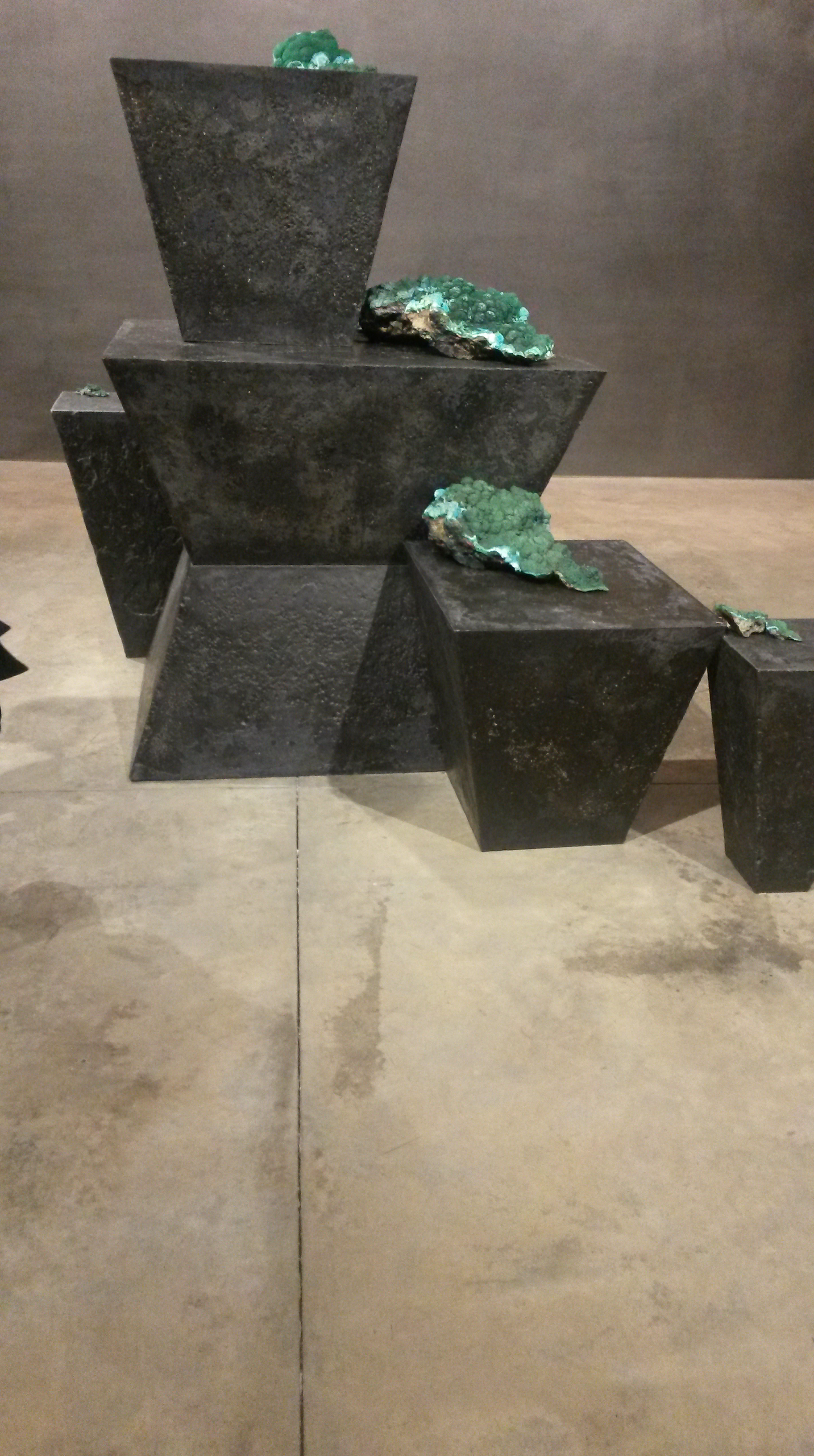
    TERESITA FERNÁNDEZ Viñales (Reclining Nude), 2015
    TERESITA FERNÁNDEZ Viñales (Reclining Nude), 2015
    TERESITA FERNÁNDEZ Viñales (Reclining Nude), 2015
    TERESITA FERNÁNDEZ Viñales (Reclining Nude), 2015

    The central sculpture in the exhibition, Viñales (Reclining Nude), is a horizontal configuration of trapezoidal cast concrete structures of various sizes and heights with descending malachite and bronze forms that evoke the sprawling, verdant landscape from distant to close-up perspectives. As viewers engage with the full-round sculpture, the suggested landscape expands and contracts, prompting viewers to visually construct the image and become the size of what they are looking at.


    Teresita Fernández have a deep rooted association for the cultural and aesthetic language of nature, as she has explored the surfaces of the landscape. She has visited the place, grasping intuitively about something unique of it. Thus the language of the place pours in richly textured forms, being poetic and narrative, echoing about rootedness, history, and different contextual phases. The forms shine through layers, ceramic bits, detailed and yet rough edges of pieces, depicting large and small fragmented knitbits of information. The old, or ancient speaks with the natural, as they have become entangled to stand for their environmental presence. Fernández uses devices like proportion and unconventional materials to draw the viewer into her works. She stands for individualized experiences that ask questions of place and us as humans. Ultimately, the essence reflected in each work could be described as tactile.

    … … …

    Teresita Fernández at Lehmann Maupin
    November 6-December 31, 2015
    536 West 22nd Street, New York

    more information: http://www.lehmannmaupin.com
  • Ofri Cnaani’s ‘Wrong Tools’

    Ofri Cnaani’s ‘Wrong Tools’

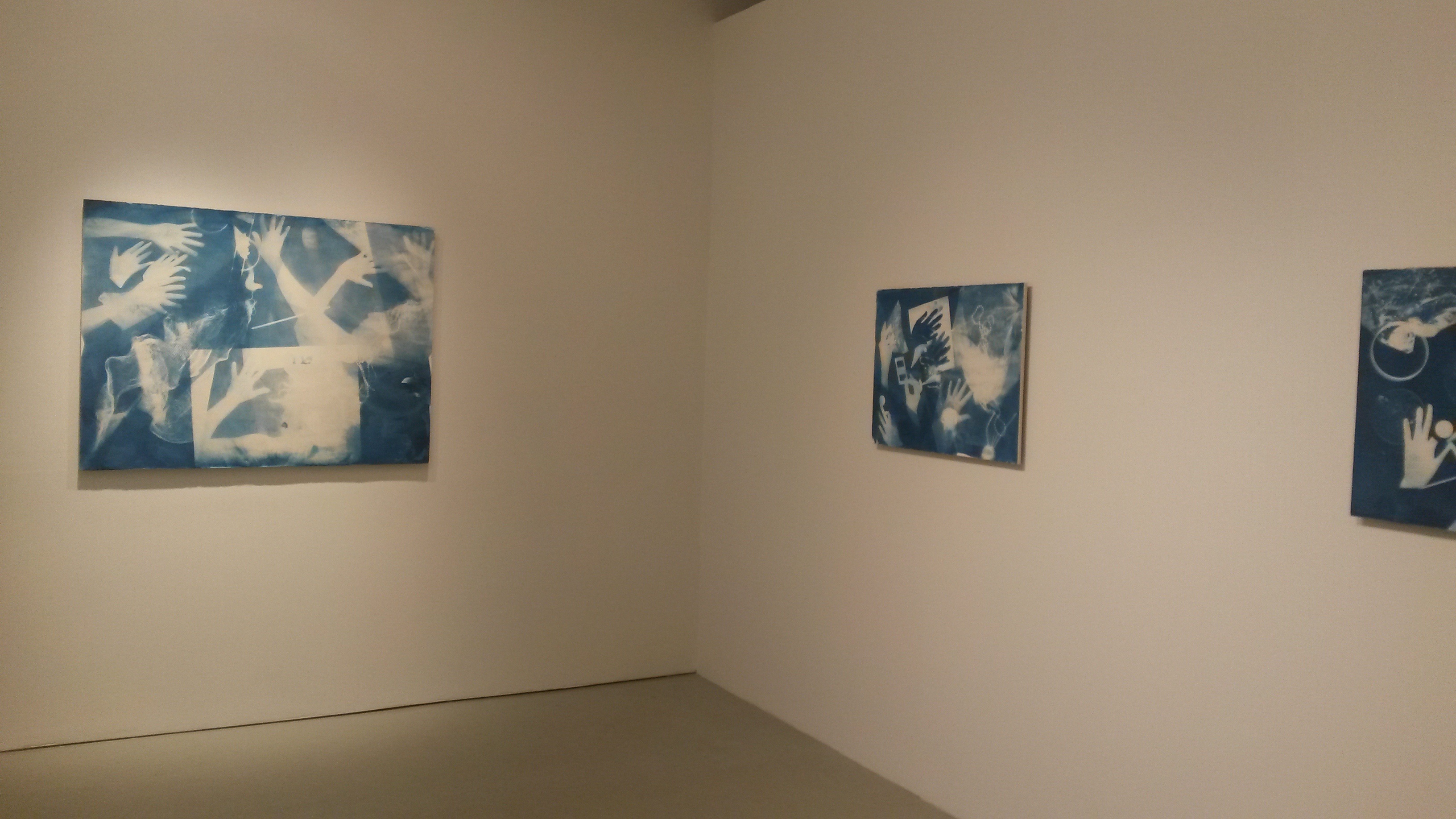
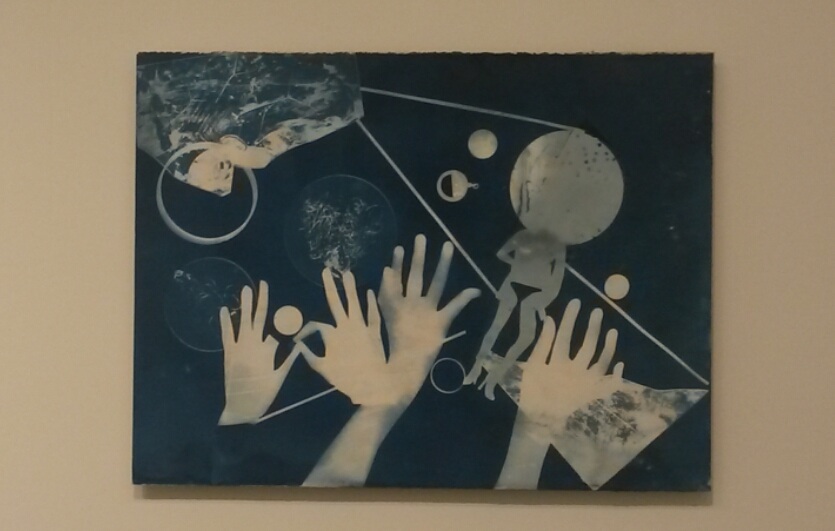
    Artist Ofri Cnaani has created a new photography exhibition consisting of prints and a performance piece at Andrea Meislin Gallery. Photographies on display echo ideas deriving from Xerox art of the 1960s simultaneously connecting with the visual world of the mesmerizing early photography of the 20th century. The exhibition ‘Wrong Tools’ will be on display until October 24, performances taking place on Wednesdays, Fridays and Saturdays. Cnaani’s Blue Print photographs are like intuitive maps constructed of performative ideas that associate with artist’s own body. With both of her performance and photographs, she creates a presence. The works are building up from fragments, and the pieces are put together in a compelling logic. These could be like ruptures built on the Internet surface, where constant image flows create new associations. Here is Ofri’s interview.

    Firstindigo&Lifestyle: Your ongoing solo exhibition ‘Wrong Tools’, at the Andrea Meislin gallery speaks a strong esthetic and spatial approach with performance element added to the photography gallery. The performative element also looks back from the blueprints, which display hands in various positions doing tasks, perhaps. Are these prints your hands making the past performances, or projects?

    Ofri Cnaani: In the cyanotypes I’m using my own body. I’m using the special qualities of one of the earliest photo techniques to promote some sort of performative photography. In a way, it is very similar to what I do in the performance: I’m creating an image in a limited amount of time that is constructed from found objects, made objects and my own body. Like in the personalized ‘image maps’ I’m creating in the performance, here too, I have a limited control of the final result. The process is always between failure and magic.

    In your actual performance that I observed taking place during the opening night at the gallery’s foyer with windows, you encounter audience member on a participatory table setting, where each unique guest sits opposites of you. The scene comes out as very intimate and poetic; we are simultaneously looking at the wall where the reflection of the table surface is displayed with your real-time construction of objects and images on it. And, we are grasping the exchange between you and the other person embodying the performance. Quite interesting, a guest was taking pictures with her phone of the very situation as well. What is taking place in these moments? How do the photographs and the recording of the event resonate in the doing of the performance physically?  

    OC: When someone sits with me, I first offer him or her a ‘reading’ of his or her visible future. I used a tarot-like deck that I designed titled ‘future business’. I also ask them to give me one personal item and to choose two items from my collection of small objects. I’m using the message on card they chose and the three objects they selected and gave me as a starting point, to create a live collage-like image. I called it ‘image map’. This image is captured and printed using a special apparatus I build for the show. Lastly I stamped it with a ‘Copy’ stamp and signed it with red ink, handing the Original Copy to my visitor.

    As the title ‘Wrong Tools’ already implies so many interesting visual connotations, could you tell more what is the idea or meaning behind it, is it metaphoric with a larger idea and also coming to the performance? Does it resonate solely with ideas, which derive from computing?

    OC: My husband, who is great in building things, always says everything is very easy if only one is using the right tools. I realized I’m always using the wrong tools.  My studio is a mess and I’m always using the tools that are wrong for the job. I like to think about my method, using the collections of two and three-dimensional objects in my performance, as ‘endless metabolism’. I’m using the same little objects for different performances, as well as for the cyanotypes and other photos. The same objects travel between many of my projects, always been used in different ways, but never used as they were originally meant to be used.

    Ofri Cnaani_OC real and fake-series_Cyanotypes
    Ofri Cnaani, OC real and fake-series, Cyanotypes, at Andrea Meislin Gallery

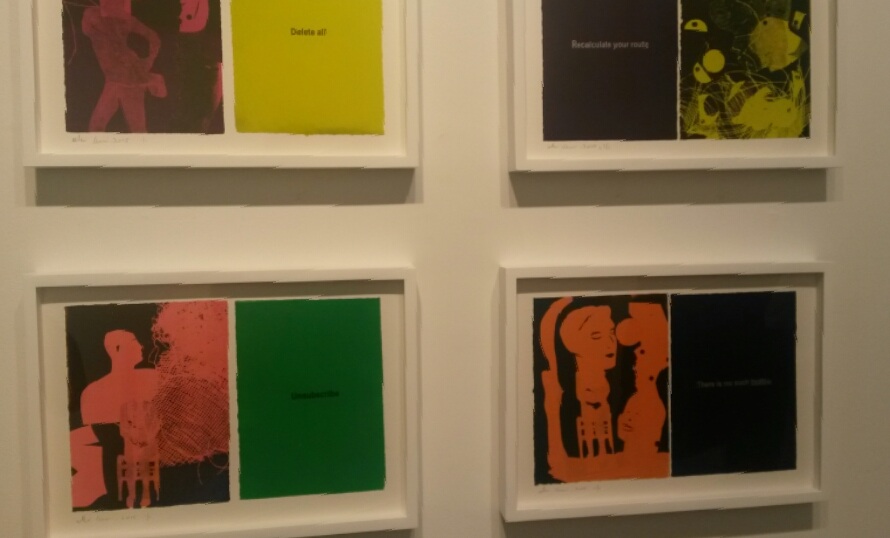
    Then, your exhibition at the gallery has these colorful images called ‘future business’, that have a short message embedded in them. It seems that they relate to the performance, do they have an element of time in them as well?

    OC: The monoprints are also ‘one of a kind’ and were made in a similar way. I’ve been using cut-outs and flat objects, placed them on paper and rolled them under the press, so each one is a different arrangement, although some of the cut-outs appear more than once. The texts are the same texts on the special edition tarot deck I produced and then use in my performance.

    On each card there is a message we get regularly as an online user like ‘Delete All’ ‘Unsubscribe’ or ‘Change Your Profile’. These lines are charged with a very different meaning when we receive them as messages in a one-on-one ‘reading’ session where we all are so vulnerable.

    Ofri Cnaani_future business-series_monotype prints
    Ofri Cnaani, Future Business-series, Monotype Prints, 2015

    Adi Puterman curated your exhibition for Andrea Meislin Gallery, what do you wish to tell about the curating exchange and process, do you know each others tactics well?

    OC: Adi and I worked on the show for over a year and she was very involved with each step: from the concept of having an on-going 6 weeks performance in the gallery, to the selection of the pieces, and communicating my ideas in a written text.

    I have noticed that your artist career includes plenty of performance works, such as the ‘Seven Words’ at the Metropolitan Museum. This past work is also very interdisciplinary. Is a question of the different art forms relevant to you in your own art making, or are all forms closely related?

    OC: I’m driven by concepts and often by time constraints (like a different space I’m working in or a different collection or archive I’m using). I’m less driven by a specific medium or style.

    As an educator of the arts, how do you teach time-based process to your students, do you have guidelines for that?

    OC: We see many projects and discuss them, we read texts and using mind-mapping method in order to understand them and connect them to other ideas, texts and art works.

    I often think that New York city is such a creative hub with so much international potential gathered in one place. Do you consider that as an international artist based in the city you have a specific role or identity, which is perhaps one here, and another that goes back home in Israel communicating and identifying with the contemporary art scene there?

    OC: I’m not sure what do you mean by that but once you leave the place you were born and raised, your identity is always ‘more than one’ and in a constant negotiation.

    You have created public artwork, do these works imply a different kind of activism or sensibility that comes with the public space, or are all ideas you are doing basically interrelated? 

    OC: My work is context specific. When I work in the public realm I work not only with a specific building and its specific history. The process always involves a community or a group of individuals. The process in those projects is part of the final piece. The final images are never known when I start working on a public piece.

    Can you tell a little what are your next steps going to be like?

    OC: Next week I’ll be doing a performance that is similar to the one in the gallery at Dallas Aurora. My project is part of ‘Altered States’ exhibition, curated by Julia Kaganskiy. Next month I’m going to Inhotim in Brazil to work with the park employees to create a participatory performance titled ‘Frequently Asked’ that will be then presented in Inhotim on early December.

    Ofri Cnaani, Blue Print, 38.5x49.5, on display at Andrea Meislin Gallery
    Ofri Cnaani, Blue Print, 38.5×49.5, on display at Andrea Meislin Gallery. Images by Firstindigo&Lifestyle
  • Visiting Linda Cunningham’s studio

    Visiting Linda Cunningham’s studio

    Last month, New York based artist Linda Cunningham showed me her art studio in the Bronx, where she lives and works.  It is located next to the Bronx Art Space that is fostering arts education and collaborative artistic projects. She told me stories behind the art works, both the sculptural works and the collages that combine drawing and photography.  The studio is in a newly renovated building nestling at the heart of the historic urban Bronx.

    Firstindigo&Lifestyle: Linda, you were one of the first artists to come to this location, how was the neighborhood back then, it’s been now a good fifteen years? You did a series of artwork digging into the Bronx history, in which immigration was a theme or a subject. There seem to be real person’s story involved, including documents, such as passports with photos. Could you tell about the project that was exhibited at the Andrew Freedman house in 2012?

    LC: When I first moved to this historic landmarked area of the South Bronx, I began photographing the now renovated 19th Century row houses with brownstone trim, the contrasting graffiti walls with the shopping carts of the homeless. The barbed wire and I merged those images with a young Jamaican’s poetry and rubbings from the historic signage telling about Jordan’ Mott’s iron foundry. Later I was invited to create a large installation in No Longer Empty’s exhibition at the Andrew Freedman House, an amazing building designed like a Renaissance Palace, left from the early 20s when the Bronx was blossoming. My installation was constructed like an open book from broken drywall panels and broken old wood frame windows with each panel referring to an era of Bronx history. I along with other artists scavenged in the water soaked ruins, excavating the papers representing early 20th Century history of the Bronx. Including among them was the unusual passport of a resident of the house with two different last names, both apparently Jewish heritage, along with her photos. She had traveled all over Europe 1936, and through the Third Reich and into Switzerland several times, so her story suggests that she might have functioned as part of an underground.

    Linda Cunningham_bronzesculpture
    Bronze at Linda Cunningham’s Bronx studio

    Firstindigo&Lifestyle: You recently attended an Art Fair in Harlem, titled FLUX art fair in May 2015; do you have any specific notes in regards to engaging with the community during this festival?    

    LC: This was such a lively engaging event during which I enjoyed most interesting conversations about my work. The artwork displayed in this art fair was tough and engaging and in general more accessible than in most other art fairs

    Firstindigo&Lifestyle: What captured my attention was your rich methodology of juxtaposing various elements. Your artwork depicted ancient olive trees in Italy that are approximately 800 years old by now. These trees got bacteria from Costa Rica somehow. Did the local community got involved in saving them? 

    LC: I don’t know anything about the local community. I just read about it in the Times saying that “they” are trying to contain the epidemic.

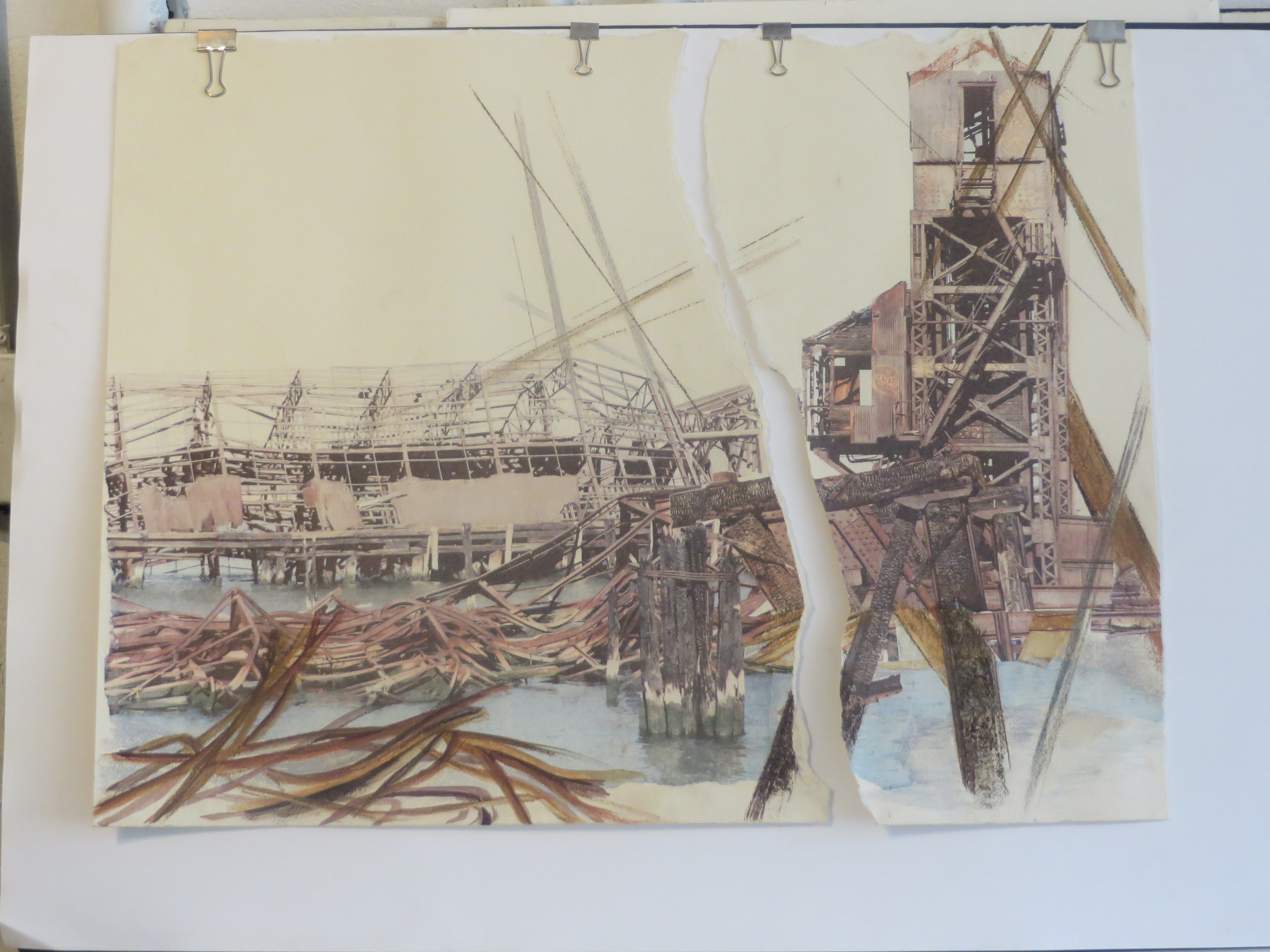
    Firstindigo&Lifestyle: What you did in your collage was that you implemented the trees together with post-industrial photographic scene of Ruhr in Germany. This area used to be a center for coal, and now it’s gone. Tell, what is the particular message behind this juxtaposition?

    LC: Both of these astonishing entities are vulnerable, but these amazing ancient trees will continue being productive and useful for centuries, whereas, the astonishing human designed technology is obsolete in 75 years or less and falls into ruin.

    Linda Cunningham_Collage

    Firstindigo&Lifestyle: You have worked with sculpture. The bronze in them comes from ’recycled’ old weaponry from the Pennsylvania army base. The story behind the material is so intriguing, and the fact that you wished to turn the weapons into ’vegetal’, so the forms are like plants.  The texture of your sculptures remind of natural formations appearing rough, in some parts they are smooth, as if ironed.  Could you tell a little bit about the process, how did you find them, and how was it to work with the material?

    LC: The bronze came from military scrap, which I obtained with some difficulty through a not-for-profit institution where I was teaching for a number of years, Franklin and Marshall College. The scrap bronze, which mostly came from ships, military ships, which are not really weapons. The bronze was smelted and poured into a defined shape in flat, oil-bonded sand molds.  The cooling of the hot bronze creates the rough surfaces as the bronze is poured. I am doing some casting currently.

    Firstindigo&Lifestyle: Another element in your sculptures comes from nature. It’s fascinating how some of the rocks you have in the studio are from the ocean. The nature has worked in them so that the huge pressure in the floor has pressed the shells to attach into the stones. One of the rocks is also volcanic, and comes from the Californian coast. Do you have a specific relation to ocean and water in your artistic thinking, as I see the ocean appear in many of your collages?

    LC: I have always been drawn to the eternal rhythm and power of the waves, but in my youth I had read Rachel Carson’s “The Sea around Us”, a beautiful factual narrative about the origins of life and the vulnerability of the life giving sea so essential to our survival.  Then super storm Sandy gave my early interest a new focus.

    Linda Cunningham_Collage2

    Firstindigo&Lifestyle: Also the technique in your collages is interesting, you are drawing and then adding laser photo transfers to paper. Even the surface has layers, cement or metal appears on the surface of the paper adding three-dimensionality. Could you tell more about this appeal? 

    LC: I have worked as a sculptor, and even when I am engaged with these large drawings I am drawn to include appropriate resonant texture and sensibility.  Even though photography can be manipulated it is essentially documentation and convincing as reality. The veracity of photography seems essential. My exhibition will be at Odetta Gallery in Bushwick in November 2015, and I will include especially drawings fused with sculptural elements. I was working on creating some new spectacular bronze forms that will be included in the show. I work on torn irregular shapes because reality doesn’t fit neatly inside a rectangle shape, rather it’s discontinuous, fractured etc. I work from places I have been, responding to particular environmental and historical issues raised e.g. from flooding of Venice, and a jungle growth strangling Ancient Cambodian temples. I built the installation with the Hebrew text some years ago after I spent a year in Berlin on a Fulbright scholarship. I did an installation In Kassel for an alternative documentary, and obtained many of the elements from the former East/West border known as the Berlin Wall.

    Linda Cunningham_Collage3
    Linda Cunningham’s collage depicting trees and Ancient Cambodian temples

    I have always been drawn to the eternal rhythm and power of the waves, but in my youth I had read Rachel Carson’s “The Sea around Us”, a beautiful factual narrative about the origins of life and the vulnerability of the life giving sea so essential to our survival. Then super storm Sandy gave my early interest a new focus. -Linda Cunningham


    Linda Cunningham_Berlin Wall
    Elements from the Berlin Wall at Linda Cunningham’s studio


    ***

    Artist website: http://www.lindalcunningham.com/

    Check also Bronx Art Space

    All images: Firstindigo&Lifestyle