Category: women in art

  • Leah Oates in spotlight: artist, curator, gallerist

    Leah Oates in spotlight: artist, curator, gallerist

    A woman to watch now in the art world is an artist with multiple roles. Leah Oates runs her own art gallery Station Independent Projects in New York’s Lower East Side. In the interview she sheds light on how she found her path. 

    Firstindigo&Lifestyle: Your photography reflects multiple textures, showing light, contrast, opening up to magical worlds, how did you find your own medium?

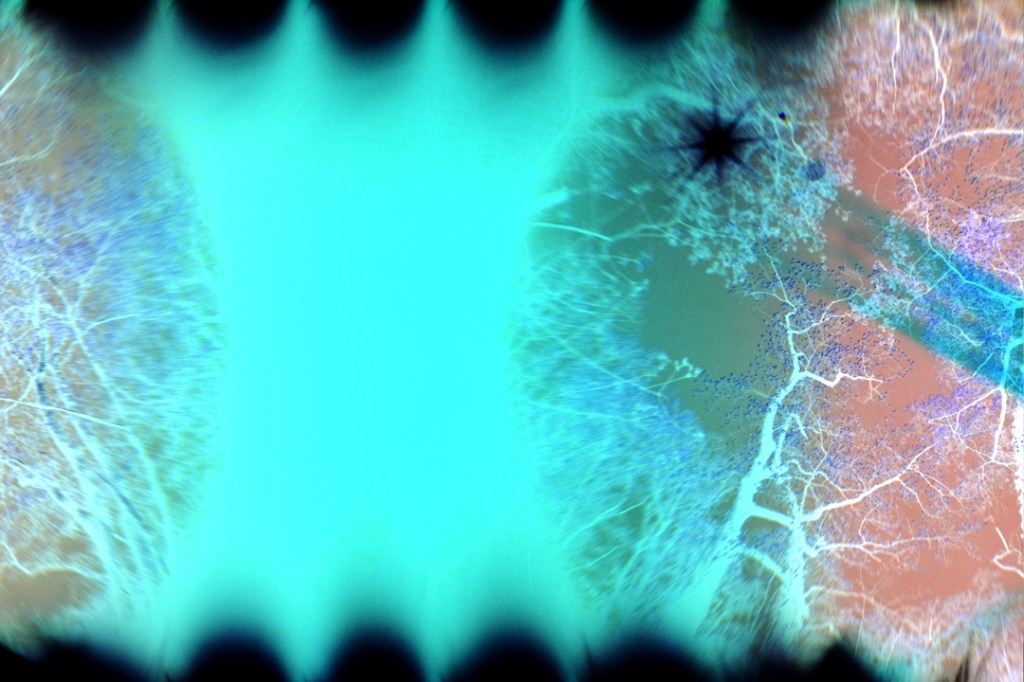
    Leah Oates: I started as a painter and printmaker, and I still see the influence of both in my current work with the layering and density of color and light. The common thread with my past work in other medias was always photography as I painted and printed from photographs but in the past I saw the photos I took at support materials or documentation. At some point I realized that the photography was the main and most continuous thread in my work so transitioned to how I work now.

    Firstindigo&Lifestyle: Do you feel that memories, or where you come from resonates in your art?  Your works have been also exhibited overseas, how was the experience in China, for instance?

    LO: Where I was raised and my specific family definitely connects to my current work. My grandmother is a biologist who studied at Harvard and one of my uncles worked for the Environmental Protection Agency (he is now a private consultant on environmental issues) and another worked for the Army Corp of Engineers. Thus there was a lot of dialogue about the environment, nature, human rights and politics.

    My mom, brother and grandmother are painters and my grandfather was a painter and photographer who ran a photo studio when he was young taking family, wedding and baby photos. He later became a real estate lawyer with a big Irish Catholic brood of six kids including my dad Danny who was a writer and carpenter. I have an uncle who is a successful ceramic artist in Maine and an aunt who is a glass artist in Massachusetts.

    This mix very much informed my work as well as growing up in the city of Cambridge, Massachusetts and in rural town in Sanford, Maine where my family goes back in both states to the 1600s.

    Being and working in China was amazing. We all absolutely loved it there from the street culture to the food to the parks to the incredible energy there. It was wonderful to photograph there and yes its polluted and yes it can be messy but the light is wonderful and the people are friendly, sweet and almost old fashioned. We would go back in a heartbeat.

    With China I had a lot of reverence for their history beyond Mao and the revolution etc. China is an ancient place and much older than the US or Europe with so much amazing history. China is a work in progress and like all places has things to work on but it’s a really vibrant, alive and interesting place.

    My work there dealt with the changes happening in the culture related to climate change, random urban planning that is erasing local culture and customs and how nature reacts to all of this within a rapidly expanding urban setting.

    This slideshow requires JavaScript.

    Firstindigo&Lifestyle: Could you describe in few words how did your road lead to New York?

    LO: My husband Pierre traveled to NYC on a few business trips and instantly loved the NYC. We where living in Chicago at the time and liked it but NYC is closer to both our families in New England and Canada and it has a thriving and large art community so we moved here when I finished up my MFA.  At first I was not sure about living in NYC for that long but gave it a try.

    I began ironically to love NYC after September 11th as the city just melted ones heart. I saw how the city came together in a way I would not have imagined as you know normally is like ‘get outta my way’, or ‘move it fast’, on a daily basis here.  But the thing about New Yorkers is that in a crisis situation they have your back and this is what I learned about NYC that made me really fall for this city.

    And the art community is the best I’ve experienced. People are energetic, they work hard and like to do so, are open to new things and they make things happen and quickly. It’s a hopping, creative, and no nonsense art city. Yes there is the regular nonsense you have in any city but things really get done here and in high volume and at top quality too.  You see the best here and yes the worst too but here we move so fast that there is no time for that stuff. It’s a very discerning crowd here.


    I’ll give an example. Pierre, my husband has shot films in other cities and it always move so much slower than in NYC and he often hits walls initially either from unions or agents etc. In NYC it’s the total opposite where he finds what he needs easily and hears yes a lot! It gets done here without the baloney. Here it’s a YES lets do it mentality which I really like, and opens things potentially for innovation, creativity and hybrids. I now cannot conceive of living anywhere else, and I’m now head over heals in love with this city.

    Firstindigo&Lifestyle: It’s quite easy to imagine that last few years have been truly busy in leading your own art space. How do you feel the transition has been in terms of becoming a gallerist?

    LO: I love running a gallery, and working with my artists to plan their shows.  I’m really happy about the quality of the shows, level of press and number of curator visits and attention that the gallery shows have received and sales have been good.

    It’s been an amazing experience all around. The first few months when I initially opened where very exciting and there was a bit of anxiety about how it would impact our family. Mainly it was our son Max who wanted his mom to be around 24/7 but he really got behind the gallery when he saw the space and saw that it made me happy. He even wanted to serve drinks and where a suit which was so cute! There has been a good balance between family, the gallery and my studio practice for quite some time now so it all good.

    Firstindigo&Lifestyle> What is your secret in balancing between different roles in the art world?

    LO: Most artists or art professionals have jobs so it’s the norm in most cases unless you’re very rich.

    A quote I like is ‘A good artist studies art and a great artist studies everything’. My dream is to be an artist, curator and gallerist, so I’ve followed this to see where it leads. It’s an interesting and rich journey that is worth taking. What I’ve learned too is to plan out the week and get the work done. Just do it and don’t think too much about it. Get your self into studio and get working as through the work interesting stuff happens and if your not there it’s less likely to happen. The same goes for running the gallery.

    Additionally, trust yourself and go for it, plan strategically and it’s ok to say no, rest when needed and spend time with those that make you feel good and even better loved.

    Firstindigo&Lifestyle: You have also featured artists in the art fairs; do you find attending art fairs rewarding?

    LO: The gallery participated in Pulse NY last year and it went really well with sales and press, work placed in a corporate collection and several private collections and so much great feedback and contacts. It was a complete buzz and reinforced that the gallery artists and program was as good as I thought it was. People who visited our booth loved it and where so positive. But with all of this great stuff we only broke even and fairs are expensive to do. But they are now so much a part of the art world that it’s a must to do them as a gallery and again I think it best to be strategic with this and keep to a budget. I have only good thing to say about Pulse from a gallery perspective. This fair is run very professionally and everyone is super nice and efficient. Everything they promised they delivered on.

    As an artist I’m not a huge fan of fairs overall but I do love Pulse, Spring Break and The Independent art fairs. They are so different as fairs but seem to push the dialogue forward and are visually interesting.

    As an artist at fairs I like running into so many people and taking about art but think that fairs can be too formulaic and favor art that is easy to process with too much surface and not enough depth.  As an artist I think fairs are a survey of trends, are about status and art world hierarchy and not so much about art or pushing the dialogue ahead. But again as a gallerist, curator or as an artist participating in a fair you have to do it as it’s for the potential for so much attention in a short period of time and in a condensed fashion.


    Firstindigo&Lifestyle: It is very delighting that Station Independent features Finnish artists. Could you tell in few words about the Finnish collaborations that are coming up this summer?

    LO: Yes I’m pleased that the gallery will be hosting two guest curated shows this summer by Ilari Laamanen and Leena-Maija Rossi both from Finnish Cultural Institute.

    Ilari has curated a group show of Finnish artists called  ‘The Powers That Be’ which is on view from July 17-August 9th. This show is part of FCINY’s 25th Anniversary year’s program on Urban Nature and explores human’s relationship to the environment.

    Rossi has curated a two person show that explores shifting ideas on dwellings in urban space called  ‘(Un)livable’ with work by Kari Soinio and Janet Biggs which opens August 13th and is on view through September 6th.

    Firstindigo&Lifestyle: How would you define your own curatorial motto?

    LO: My curatorial motto is to not follow trends but to follow art and artists. I’ve been following the gallery artists from between 5-25 years. Also, it’s important to love the work your showing and to choose work based on its merits and not on if it’s easy to sell. It’s all about the artwork itself and about dialogues about art within a larger context of the past, present and future.

    ***

    The gallery and artist websites:

    www.stationindependent.com
    www.leahoates.com

  • Artist spotlight: Johanna Tuukkanen, The Outstanding performer

    Artist spotlight: Johanna Tuukkanen, The Outstanding performer

    I interviewed Johanna Tuukkanen, who is currently preparing her PhD in art education and cultural policy. She is a well-known curator and art-maker herself, and the Artistic Director of ANTI festival based in Finland’s Kuopio. This week, January 30, 2015, she will also have a premiere of a new work Panopticon together with her colleague, choreographer Pirjo Yli-Maunula in Oulu, which is a vibrant capital in Northern Finland. Their new multidisciplinary work will articulate a hot topic of women’s ‘controlled bodies’, as they are often portrayed in fashion industry and magazines, taking a theme of aesthetic violence in relation to women’s bodies as a starting point in their performance. Simultaneously, their performance asks, are we allowed to mock this phenomenon, and even make fun of it in the arts? Johanna Tuukkanen has been making noise with her performance art for good 15 years now, highlighting women’s bodies in her performances many times before.

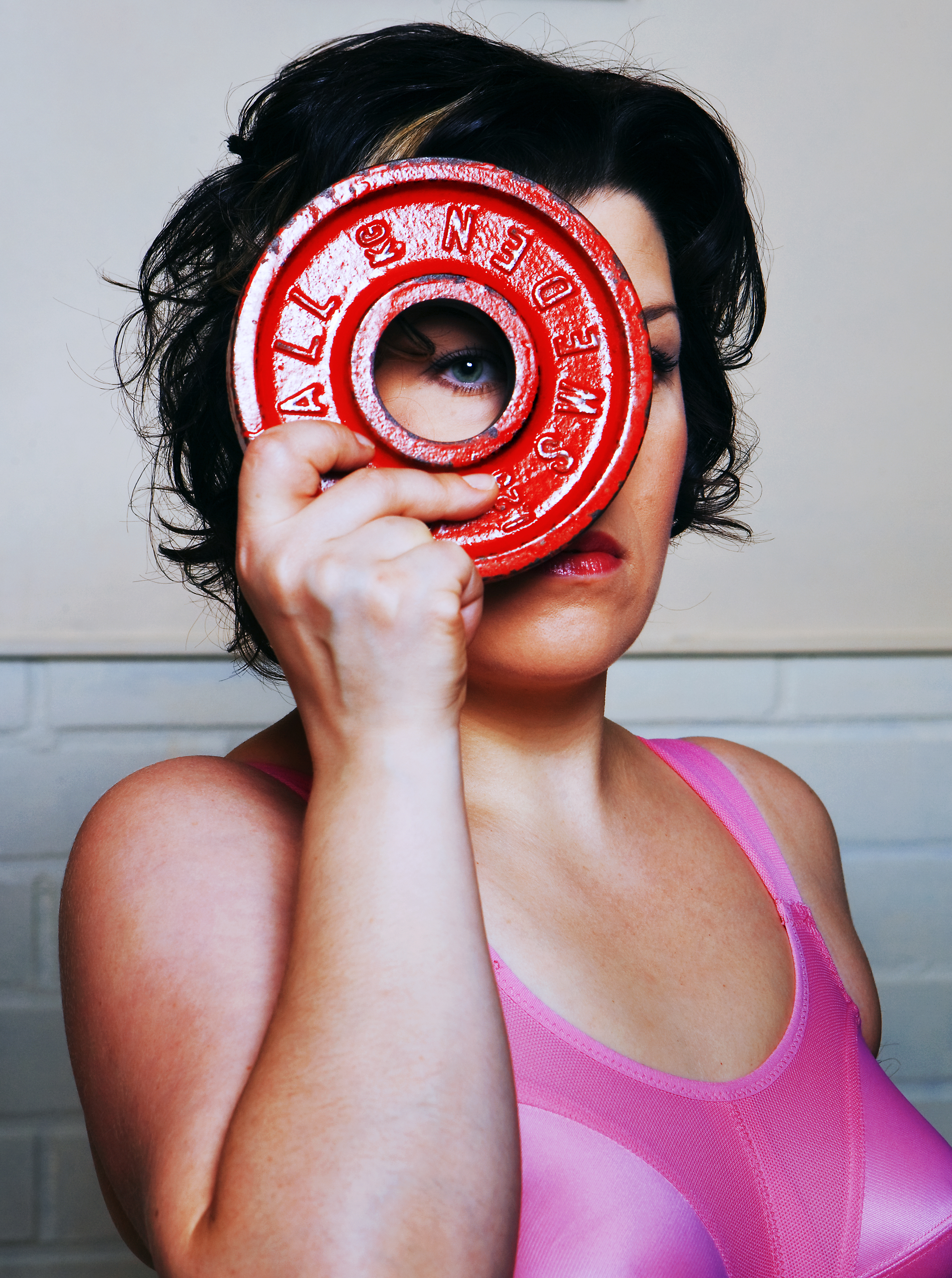
    Johanna Tuukkanen in Huippusuoritus, Outstanding Performance, Photo: Pekka Mäkinen
    Johanna Tuukkanen in Huippusuoritus, Outstanding Performance, Photo: Pekka Mäkinen

    Firstindigo&Lifestyle: Johanna, I have known you from the early 2000s onwards. It seems that there has been a lot of currency exchange around your artistry since that time. Finnish art scene, I believe, has also developed and changed during the past 15 years. Could you highlight in a nutshell, how did the 21-century look so far in the art world from your personal point of view? What are your greatest pros and cons in the field as a participant with so many roles?

    Johanna Tuukkanen: You are right, things really have changed! After studying performance and new dance in the Netherlands and Germany in 1990s, I moved back to Finland in 1997. In terms of the art scene, it was a kind of culture shock for me and it definitely took some time to find my way around it. From very early on, I found myself thinking how else I could make a difference in the arts other than working just as an artist.

    Since then, I do see and have also personally experienced that the field has expanded greatly, it has opened and it is accepted – not totally but more and more – that for example in the field of dance, there are multiple traditions from which an artistic practice can stem from, not only one or two. Also the growing interest in site-specifity, a kind of ‘trend’, has resulted in other kinds of expansions and effected how a cultural production organization whether a museum, a theatre, a festival or a freelance collective might operate. Currently I’m thinking a lot about the concept of social in the arts as many artists are producing socially engaged works in collectives and communities where the artist is not the central point of the work but the interest in a process, in shared authorship, in participation and dialogue…

    As a participant in the field, I feel that there are several communities in the art world where one can find a kind of ideological home and vast amount of possibilities. Yet, at the same time, although we do have some rather brave funding bodies, generally speaking our funding structures have not been able to develop in line with the field – thinking especially the amount of work that it produced by the freelance artists and companies in comparison with the institutions established in the 70s.

    Firstindigo&Lifestyle: You are known as a hardcore doer, and as a hands on professional when it comes to performance and to its management, to your curator’s role as well, and to a founder of a successful art-festival. Where lies the secret behind it all, how do you manage all your roles, or your doings, and don’t get burned-out at the same time? You seem to be shining.

    JT: Wow, thank you! I don’t really see myself that way… But yes, to say that I’m a doer is perhaps a good way to put it. I suppose I’ve been interested in many things and just started doing them, rather naively sometimes. I’ve not been waiting around for someone else to do the work but really dug my hands into stuff, working beyond my comfort zones, not counting hours… I can’t recommend it to anyone! To be enthusiastic, to get excited is a great energy and force also. For me doing different things is also very energizing, things feed off each other and I never feel that ‘I’m doing the same job’. Maybe also because I’m not a very organized person!

    But to be honest, time management is a big issue for me. I’m a very work oriented person and I have to actively work on prioritizing time for my family and friends and my own well-being. But I do do it! These days I prioritize regular exercise, try to eat well and sleep enough. I try to have one day off every week but if it’s not possible, I’ll make up for it by taking extended weekends off or mini holidays.

    I’m lucky to be working for organizations and things I really believe in and I feel connected to and supported by an international community. I’ve also managed to organize my life so that I live with my lovely family in a beautiful house where I can enjoy everyday aesthetics, quietness, the Finnish lake landscape, the forest and an amazing sauna.

    Firstindigo&Lifestyle: I associate you strongly with ANTI Contemporary Art Festival. How did this idea come forth, and develop into an international success story?

    JT: This is a long story but to put it short, I was working in the Regional Arts Council of North Savo at that time and with my regional artist colleague we wanted to create a new, international multidisciplinary contemporary art festival in Kuopio, to create international networking opportunities for local artists and to active the city and different sites in Kuopio through art. We really didn’t know how it would turn out, it was a real experiment! But already since the first festival, there was a lot of international interest and the festival was a great success. The networks I’d started building in the early 2000 were crucial for our international growth and reputation and of course artists themselves are great messengers of a quality festival. I’ve personally always thought that international networking is very important and for me it has also set the standards how to run a festival. But I suppose the most important thing is that ANTI has a unique concept and in fact, it’s also modelled in different parts of the world. This all has taken an enormous amount of work and I’m grateful for the wonderful individuals who have worked for the festival over the years.

    Firstindigo&Lifestyle: I admire your knowledge on the performance field, internationally you seem to have a network of artists that resonate with your own way of working. Was it organic to find collaborators accross the country borders?

     JT:  Yes, it all has happened very organically. ANTI has also been a partner in two European projects and it has been a great gift and learning process to collaborate with international live art curators and festival directors.

    Firstindigo&Lifestyle: Finland is getting a Dance House finally, how did the miracle happen?

     JT: Well, I’m extremely happy to be working for the Dance House but the background work with the private funding bodies was done and negotiated before I even started so I can’t take any credit for it. The Dance House initiative is very lucky to have a fantastic project manager, Hanna-Mari Peltomäki, but also the time was right – the Finnish dance sector was ready, the private funding partners were ready and lots work was done in a rather short amount of time.

    Firstindigo&Lifestyle: What does living and working in Finland mean to you? Where else in the world would you imagine to live?

    JT:  Living in Finland and outside the Helsinki area has been a very conscious cultural political choice for me. I’ve wanted to show that great art can be made anywhere and it is really crucial to have artists and cultural professional working and making an impact in different regions. These days, especially with digitalisation and good connections, I don’t really think it matters so much where you live.

    But in recent years, as my children are getting older and as I want to find new professional challenges, I’ve become open to other options as well. Like I said earlier, I’m very work oriented so it’s probably work that will take me somewhere… There many places I could imagine living i.e. Australia and Denmark. But where ever I’d go, my work has to be meaningful. I can’t really imagine moving somewhere for the sake of the place or city.

    Firstindigo&Lifestyle: Where are you heading next, any specific plans for the future?

    JT: Good question. I’m open and up for new challenges. I completed an MA in Cultural Policy last year and enjoyed that process greatly. What a luxury to deepen one’s knowledge and expertise! I’m the beginning of my PhD so probably for the next years I will be juggling my time between the Dance House, ANTI Festival and my research…unless something totally unexpected happens. Which of course is very likely in this life.

    Johanna Tuukkanen and Pirjo Yli-Maunula, Panopticon, Photo: Pekka Mäkinen
    Johanna Tuukkanen and Pirjo Yli-Maunula, Panopticon-premiere, Jan 30, 2015. Photo: Pekka Mäkinen
  • Sarah Oppenheimer’s reoriented space

    Sarah Oppenheimer’s reoriented space

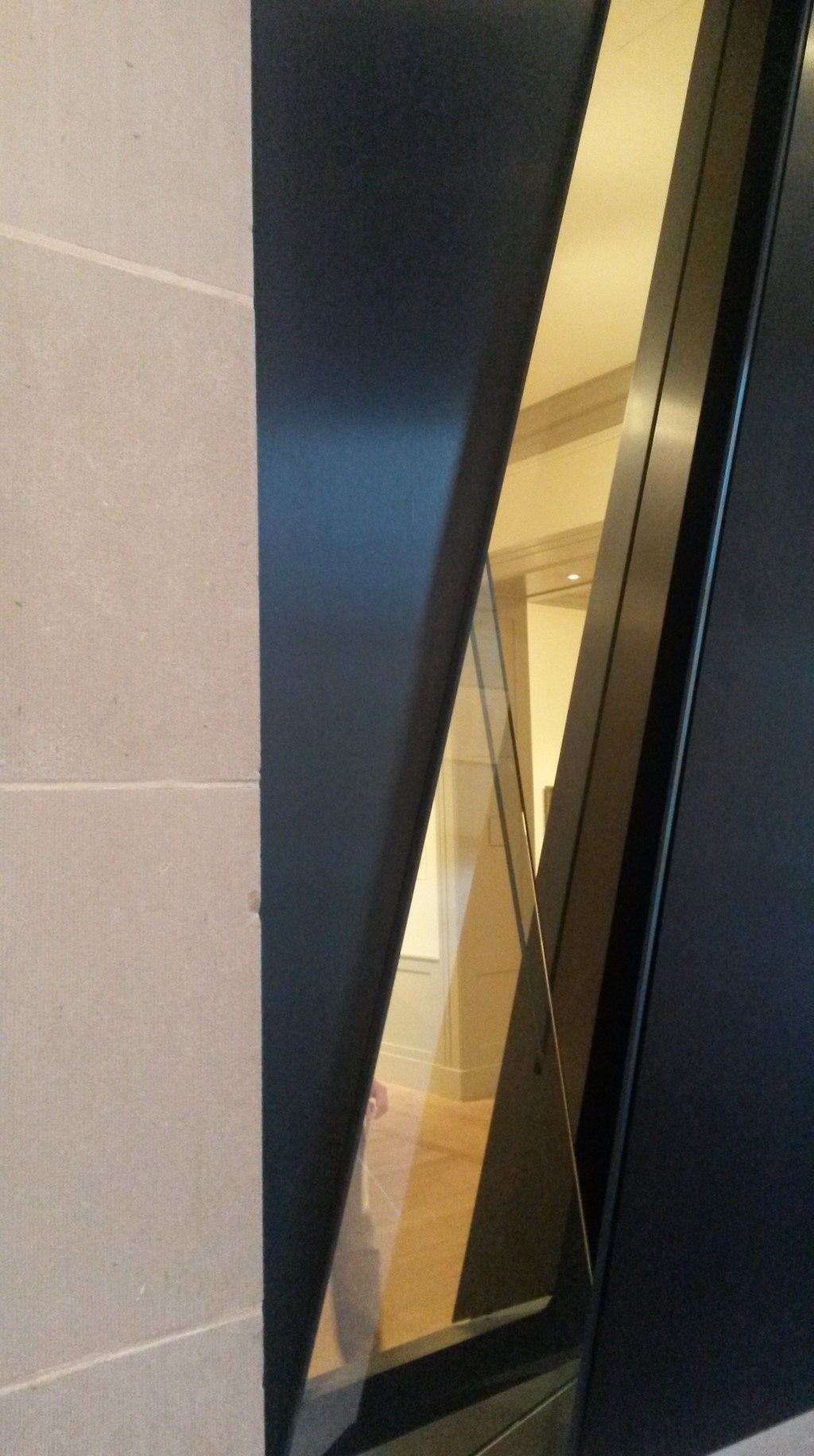
    Sarah Oppenheimer’s installations and public art works “W-120301 x P-010100” were commissioned for the Baltimore Museum of Art’s Contemporary Wing which reopened after its complete renovation in 2012 (built in 1994). The two-part permanent art work was concretely made in conjunction with the architectural space. It involved cutting holes in the museum walls and ceilings of various galleries. The holes, then, were filled with panes of metal and reflective glass to create new dimension for viewing at the space and art on different galleries, including visitors – who happen to be wandering through spaces simultaneously; and are reached by multifaceted and virtually charged viewing. The holes created ‘sightlines’ between the 2nd and 3rd floors of the Contemporary Wing and through the wall between the contemporary and Cone collections. What the installation claim is that the museum visitors can get glimpses and optical illiusions into spaces that are on different levels. Oppenheimer’s works radicalize the notion of museum space from a contemporary virtual perspective. The ’holes in the walls’ change the viewer’s perception when he/she suddenly sees others randomly passing by their visual screen that the artwork is.  The unexpected encounters create experiences with others simultaneously in the museum. My own ‘looking-at’ the sightlines makes me perceive someone on the other part of the museum as if they were sharing my experience. Its partially theoretical, and yet is twisting seriously with the architecture. With this installation, we can view art museums from a new perspective, as if this kind of illusory tool enables us to grasp art simultaneously from various historical eras. The sightlines allow viewers to see unexpected views of fellow visitors, art works, and galleries above, below, and across from them.

    The Baltimore Museum of Art is the first art museum to commission a site-specific installation by award-winning artist Sarah Oppenheimer. Anyone interested in Oppenheimer’s works would also say that the architectural dimension is much more than ”just” art. In fact, the installation combines art and curiosity borrowed from sciences that are engaged in visitors’ participation. The museum as architectural space and as encounters, interacts with its visitors and the institution’s daily life. The installation does not only play with space and our perception, but it encompasses it on a new level. Museum architectures might sometimes appear as ‘static’ and locked in particular histories.  The artist’s intervention of architectural space is a dynamic way to create interaction, encounters, and puzzles, and bring also art history discussions into new levels.

     Artist’s website:  http://www.sarahoppenheimer.com/