Category: women in art

  • Sirkku Ketola: The artistic process of performing Paula

    Sirkku Ketola: The artistic process of performing Paula

    Finnish artist Sirkku Ketola had her performance project A Body Called Paula at the NARS Foundation Gallery in Brooklyn in November. In Finnish the word paula means a ribbon, something to tie or to be enchanted with. It is also a synonym for a trap. Globally Paula is known as a female name, originating from the Greek word ‘Paulus’, which means small.

    In her current project of ten years, Ketola creates an installation that mixes screenprinting with performance. Part installation, part performance, A Body Called Paula is a piece that develops over the days of the installation through long-duration printing sessions. The movements and their soundtrack create an enchanting, sensual machine with the main themes of time and temporality, pleasure, and the meditative process of working.

    The narrative story behind the performance hunts beauty through the themes of light, passion, knowledge, reality, and depth, finally balanced out by darkness. What is the measure of time? Ornament is a universal form of visual art in every culture. The installation at NARS is part of Sirkku Ketola’s long-term project. For the duration of ten years ‘A Body Called Paula’ produces hand printed ornaments, or ribbons.
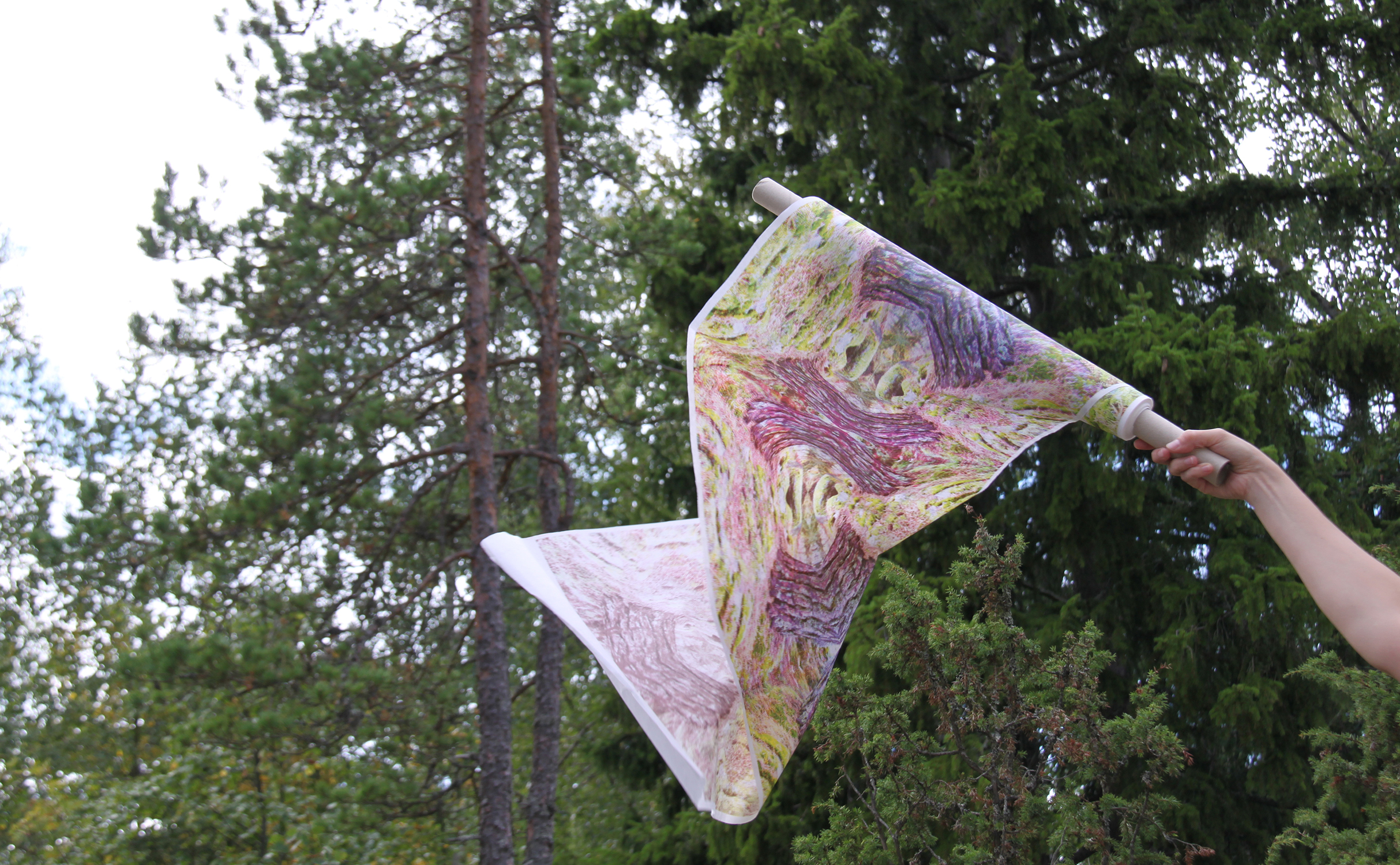

    Paula prints by Sirkku Ketola.
    Paula prints by Sirkku Ketola.

    Firstindigo&Lifestyle: What comes to mind, when you think about your project Paula is that it is so clearly beyond the visual practice, or enhances the physicality of the practice. What is so intriguing is how you dive into the embodiment and stretching of the paper. Is it that the body becomes a continuation of the paper in the printing process, as if being one with the paper? What kind of metaphors would you like to highlight, or are being evoked in the process?

    Sirkku Ketola: I guess I need touchable material to support thinking and understanding. In this case the handling of color and paper together with challenging technical crafting, tune us as one organism, where the tempo is being set in the cohesion of the qualities of the all included matters. The strength of the body, the sensitivity of the hands and the exactness of the eyes, are sensing constantly the fragility, stretching, moistening and drying of the paper, and the consistency and volume of the ink. The local, or should I say site-specific humidity and temperature effect strongly to the functioning of this paper/colour/body formed sensual machine. Also the instant substance of the body, the general vitality, the emotional ambiance, and for example the daytime, give all some special marks, first to the performance, and second to the visual appearance of the ribbon in progress. Imprint is different during mornings and evenings, also in the beginnings and the ends of the ribbons. I have chosen the long and fragile paper to be forced to lose control. The process is too tiring to hold on it. During the series of the performance the same paper roll goes by my hands 12 times so it is impossible to dominate the quality or the crossing effects of different layers. I just must be humble, and let the ribbon teach me. Maybe the greatest thing is that the ribbons still surprise me even though I’ve been working with the same materials for years. The major errors have been avoided, but the danger of errors are constantly present – everything can be irreversibly spoiled even in the last round of printing.
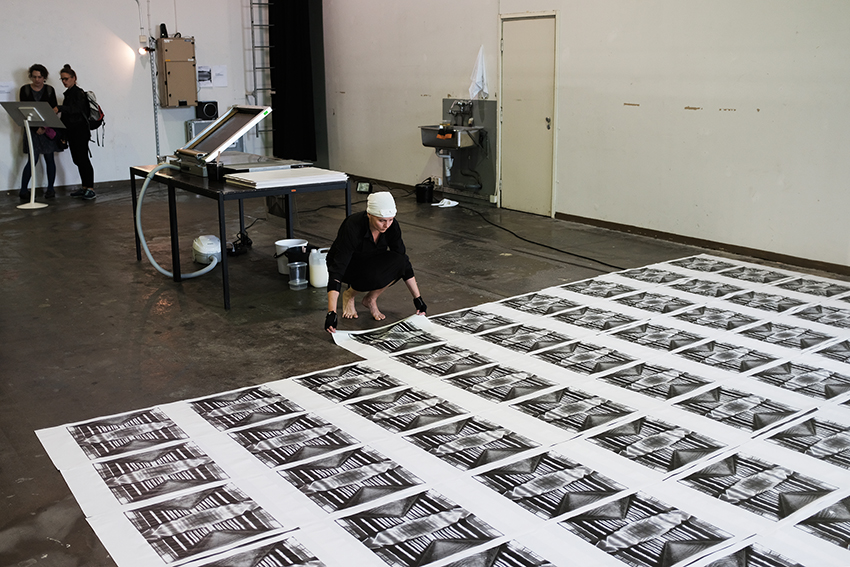
    Sirkku Ketola performing Paula.
    Sirkku Ketola performing Paula in Cable Factory, Helsinki, August 2017.

    Sirkku Ketola: The ornament arises on paper in stages from light to darkness. The colours (yellow/magenta/cyan/black), except being common from every home printer symbolize light, passion, knowledge, reality, depth and darkness. Step by step these colour layers, as named the elements of beauty, while mixing and uniting approach the truth, the code of life or would I say the mystery.

    The hand printed ornament reminds somehow of the DNA. Basically with the repetition of same patterns, the motif is being affected continuously by the changes of the circumstances. All the variations show together endless amount of visual possibilities and diversity. At the same moment the so-called mistakes come part of the entirety and open up routes for the new beginnings.

    Today we talk a lot about unmaterialized art, light and it’s different digitalized reflections. I am blown away by it also, the transfer of energy from one equipment to another accomplishes wonderful outcomes. In my own work process the need of touch, the acception of the tardiness of the body as the part of the thinking self, in other words handling with hands, have so far helped me to the deeper knowledge. I choose to cherish this special bodily tempo – it might be good for human species. When one forces oneself to stop by the slow repetition, one might also have time to understand something essential.
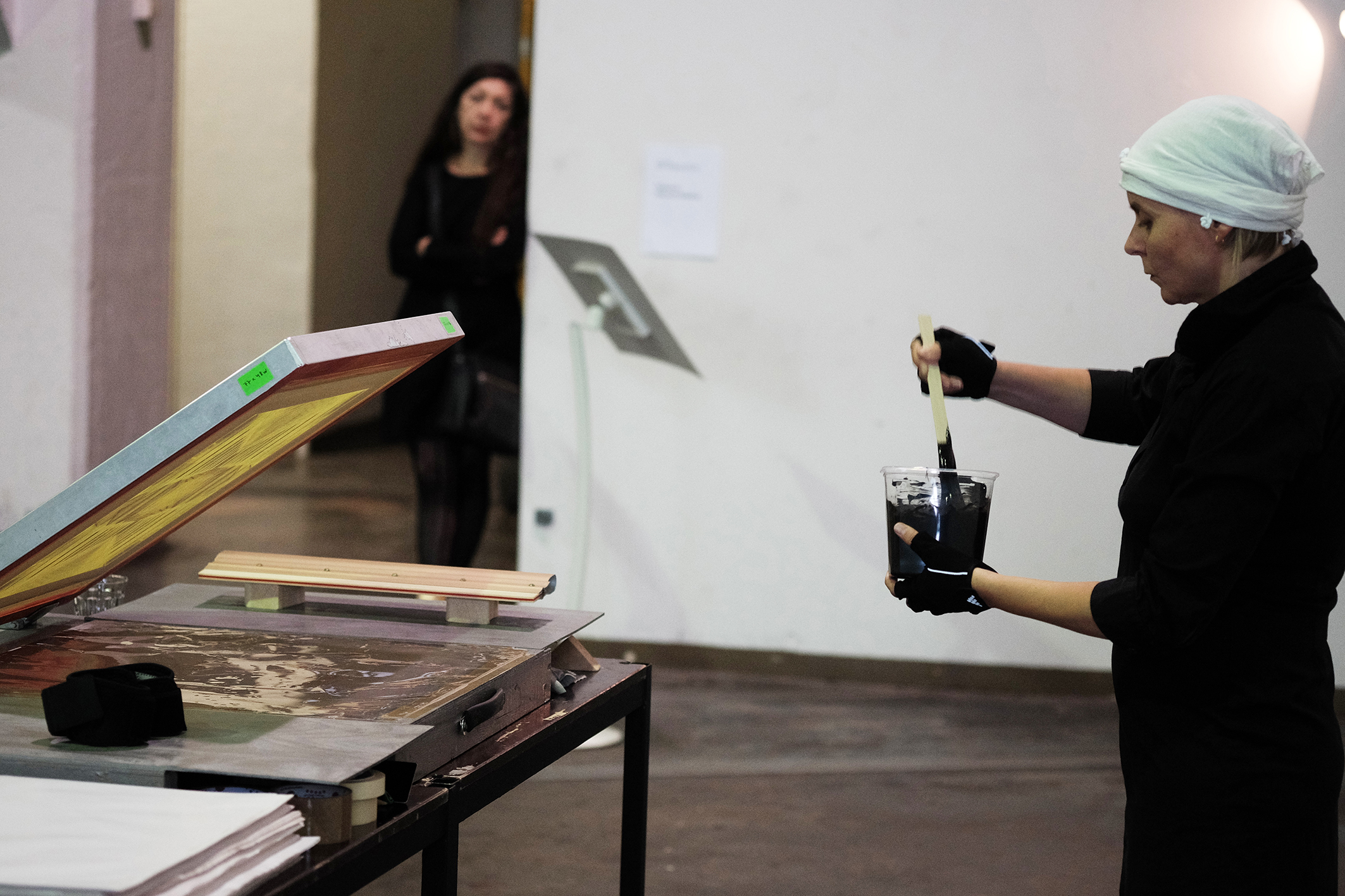
    Sirkku Ketola performing Paula in New York, November 2017.
    Sirkku Ketola performing Paula in Helsinki, August 2017.


    Sirkku Ketola: To be able to do the metamorphosis to become a sensual machine I had to create a role. My character Paula is simultaneously enraptured and trapped (in Finnish there is a sentence with both meanings, derived from the word ‘paula’ which also is a ribbon). She is a metaphor of a small human in cosmos. The name Paula comes originally from the Greek name Paulus which means small. So my Paula works with paula, with her special ribbon. Her job is to communicate visually by printing this repeating and overwhelmingly beautiful ornament. She wanders globally and communicates of the seen beauty. The previous place sets the next pattern, for example the New York effects to Paula will be seen next spring in Helsinki, Finland.

    The machine is slow and time bending. It is a factory that is able to work without problems approximately four times per year. The doctor’s order has set the limit. I forget the rules always in the beginning of the new project, but now, when the Brooklyn ribbon has been finished, the pain in my hands is there and that makes calming down easy. By respecting this manual of the project, it will be possible to enjoy after ten years from now about the yet unknown massive installation, which is made of these forty different and international printed ornament ribbons.

    I feel extremely privileged to be able to define the speed of the assembly line. For that reason the pleasure is an important part of the performance. Paula enjoys her movements and the choreography set by the printing process. The ink flows and the paper glides with the hands accepting to follow the weight of the body. The touch varies from strong to gentle and the rhythm beats with the working steps. The birth of the image feeds the will to come along to the anonymous destination. The possibility for sudden challenges forces the printer into the extreme concentration and to overcome difficulties and accept the errors. With the physicality, the mental part is also reacting all the time to the present. The chosen repetition grows thinking and developes strong pleasure.

    Sirkku Ketola: Feedback, 2016. Handprinted silkscreen on wood. 81 x 105 cm. Process picture.
    Sirkku Ketola: Feedback, 2016. Handprinted silkscreen on wood. 81 x 105 cm. Process picture.

    Firsindindigo&Lifestyle: How do you prepare for the performance of this scale, which is almost a marathon? What is the preparatory phase like, and what happens during the performance aftermath?

    Sirkku Ketola: During the performing period I take specially good care of myself. I try to do the outdoor activities daily, sleep enough and eat healthier. I try also to avoid the evening happenings and alcohol. The preparation for the performance takes mentally the whole day, but the most intense are the two hours before the show. The soundtrack of the performance follows me since morning. I’d like to highlight, the sound scape of my music and the noise of the printing table are essential elements of the performance. When arriving to the show space I tend to eat lightly and drink a lot of water. After it is time to check all the technical equipments and to mix the printing inks, the hue and the saturation needs to be done carefully. I have a special ritual order to do this. After this, I isolate myself, warm up and slowly become my transformation to the role. Thirty minutes before the show it is time to change the costume and become Paula. She doesn’t speak. The aftermath of the show is quick, washing the make up and changing the clothes are rapid, so I’m soon ready to communicate with the world again as myself. Before leaving I clean the colours and check all the technical details for the next day. When arriving home I stretch well and take a warm shower, except in Finland my choice is sauna.

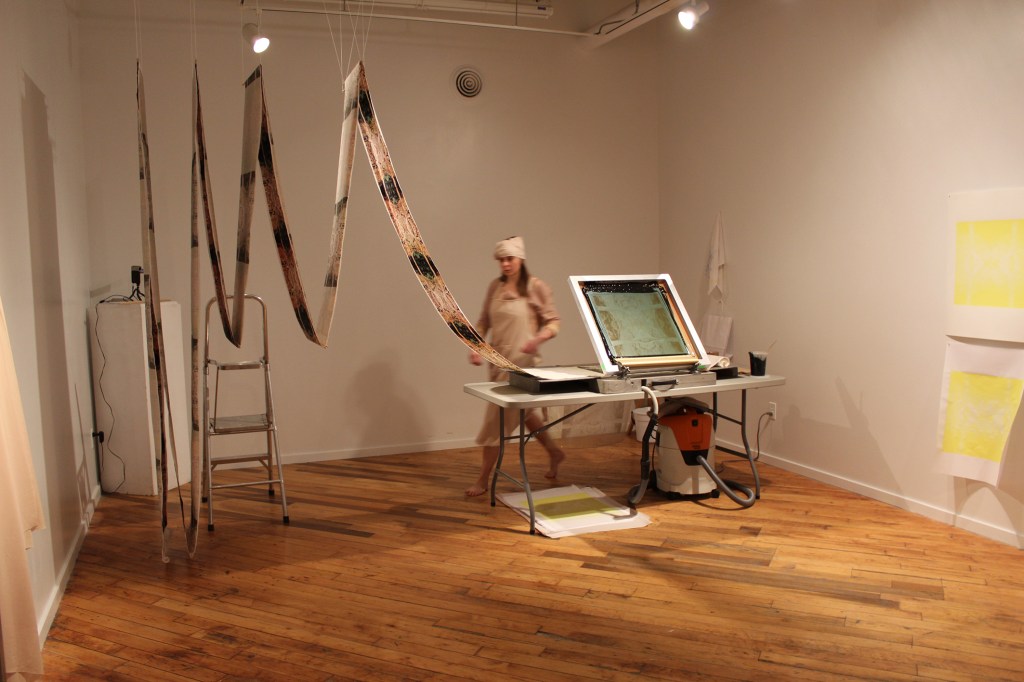
    Paula performance in Nars foundation Photo Nov 17, 3 38 57 PM
    Ketola performing at the NARS Foundation in New York, November 2017.

    Firstindigo&Lifestyle: How is New York as a place different, and this performance venue special, in terms of what is their impact on the quality and outcome of the work? How is the location different from the rest, say, Canada or Finland where you also created this performance piece?

    Sirkku Ketola: The place impacts mainly how the performance is being installed. I like different spaces because they challenge the art work and keep it impossible to predict. The space in NARS in Sunset Park in Brooklyn is many ways special. First, it is near the Finntown, where there was a strong community of Finnish emigrants. During today’s new emigrations flow it felt important to mark the difficult roots of my own country. Second, the size of the gallery was perfect for the project. It fit there well, both visually and functionally. Third, the space is in the building, which is full of working artists, situated in the middle of the industrial Brooklyn. Where else should the sensual machine be? I came to New York as a visiting artist-in-residence of Finnish Cultural Institute for two months. My main goal was to research the structures of the money and power in the contemporary art scene. Beyond A Body Called Paula –project I started to sketch the new large-scale print installation referring to this research theme. The work will be produced during next three years. My colleagues in Brooklyn taught me a lot about independent artists’ living at the capital of contemporary art (NYC).
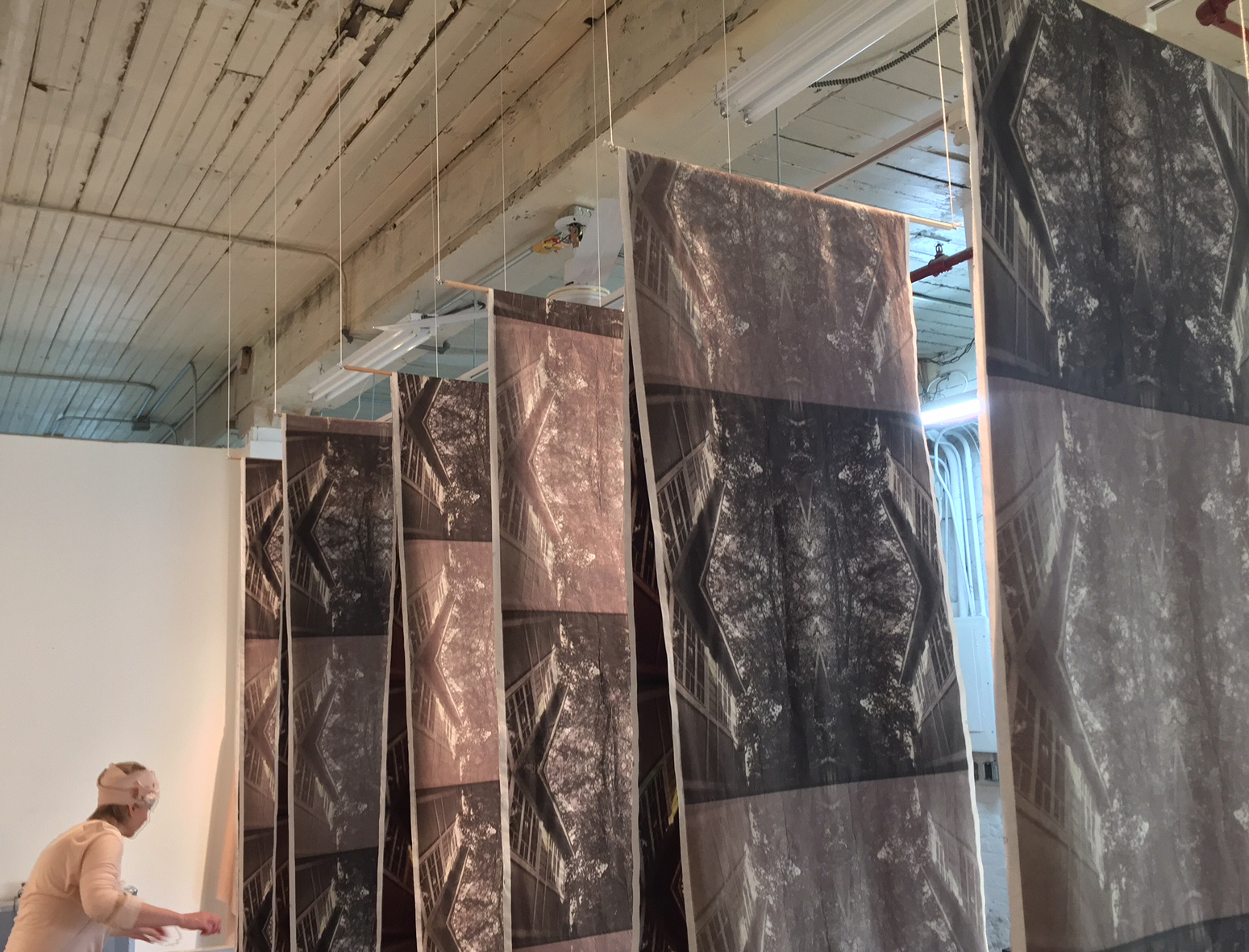
    Paula, NARS foundation.
    Paula performance, NARS Foundation in New York, November 2017.

    The physical dimensions and the quality of the NARS space gave the rhythm for the installation when growing during the performances. The intimate gallery of the Sunset Park made possible to the paper ribbon to take a shape of a visually fine zig zag when it landed to dry to the perches I mounted. Also the rest of the visual elements of the performance found their places to create a dynamic composition. There was space for Paula to move and the audience was able to have several standpoints. The space was also photogenic with A Body Called Paula – and that’s important in our social media time.

    This was the fourth time and the fourth place for Paula. In Toronto it was seen in a gallery with the long hallway. There the magic of Paula worked like in the story of the Pied Piper, when people saw the action from far, they just had to reach to the space. In Helsinki Paula measured the huge hall in Cable Factory during the five hours marathon performance. And in Turku, Finland she worked behind the lightened window in the darkness of the first autumn evenings by the riverside. And in Brooklyn she captured the industrial space around the other artists. I believe that during the next ten years, Paula can capture many different structures and spaces as rich as she has done in her first year of the process. The big scale quality will be seen in the end of the whole process. All in all, these places are valuable treasures for me, and will affect the final installation.


    — — —
    Next time A Body Called Paula will be seen in Helsinki in March 2018. After that Sirkku Ketola travels mostly in Central Europe. She will be back in New York City during autumn 2019.

    — — —

    The screenprints made in New York have been prepared at the Robert Blackburn Printmaking Workshop: http://www.efanyc.org
    More information:

    Introduction: http://sirkkuketola.com
    Previous exhibitions: http://www.la-bas.fi/ketolaeng.html

  • Members Only: Flo Kasearu at the Performa 17

    Members Only: Flo Kasearu at the Performa 17

    Ernest Hemingway once said, “In every port in the world, at least two Estonians can be found”. This is also true about New York, where more than a few community members share their Estonian House, New Yorgi Eesti Maja. The New York Estonian Educational Society was founded in 1929.  As a great coincidence, and as a brilliant and thoughtful part of the Performa 17 biennial, which took place from November 1 to 19, Estonian artist Flo Kasearu created a nostalgic ode to this members’ club house. Her site-specific performance tour guided groups through different rooms of the house. Her artist-led tour highlighted the very house’s past, changing its authentic traditional feeling into an updated stage, in which the local members themselves took part in the performing. All staged and directed by Flo Kasearu.

    Kasearu runs also an artmuseum in her native Estonia. In Tallinn, visitors can book special guided tours in the Flo Kasearu House Museum. The historic wooden house belonged to the artist’s family from the time of its construction.

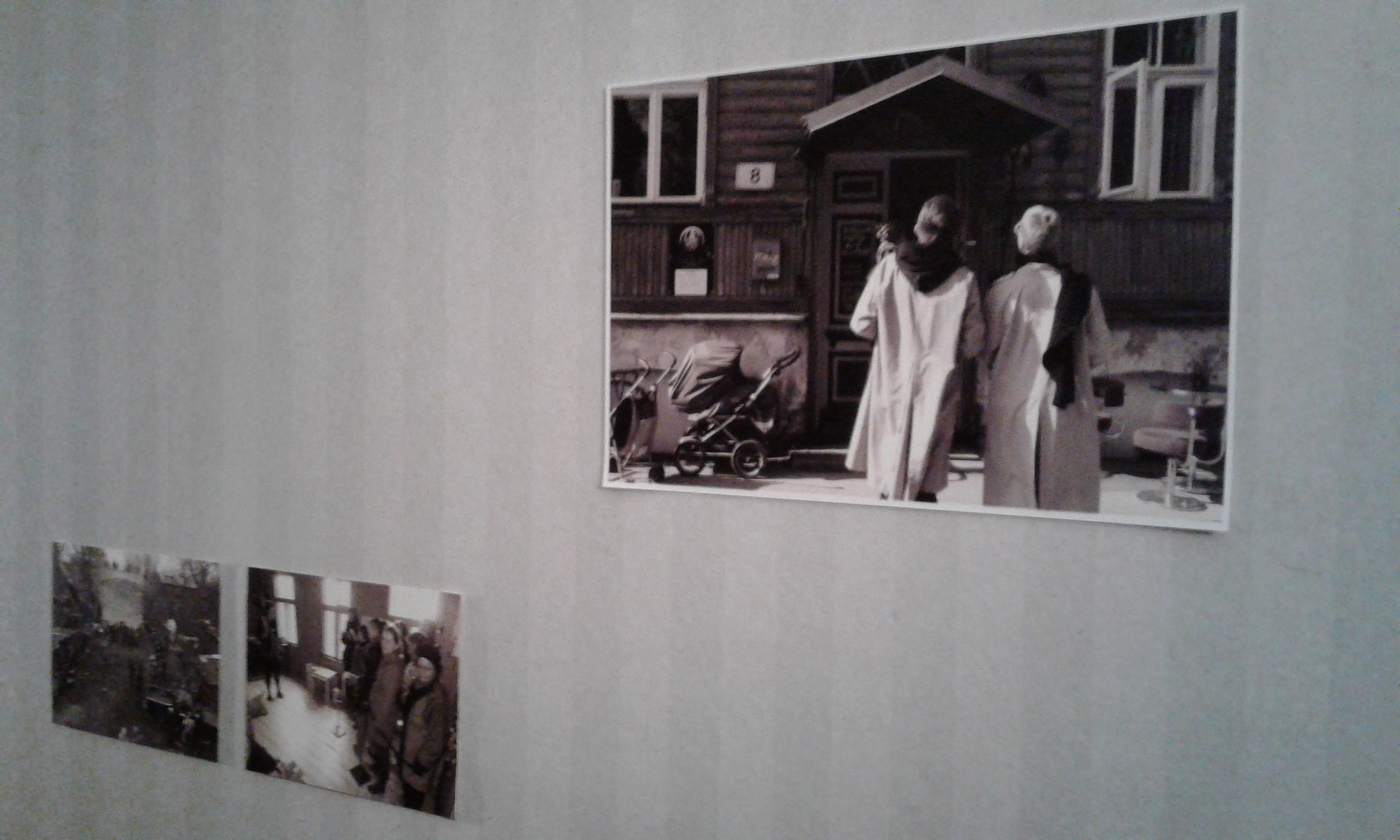
    Flo Kasearu's House in the family history pictures.
    Flo Kasearu’s House in Tallinn in the family history pictures as shown in the New York Estonian House performance, Performa 17.

    Firstindigo&Lifestyle: Your great great-grandmother was building the house in which you live now in Tallinn. How did that heritage inspire you to pick up the idea of bringing performative component of your family house to New York Estonian House?

    Flo Kasearu: Both of my great great grandparents built the house. (I just have a photo of my great grandmother, so I mentioned her in the tour).

    While living there since 2009, and getting involved with so many domesticity issues and problems of living in an over 100-year-old house, many ideas have grown out of the problems. I like to solve my problems through artistic practice, turning them into objective artworks. So I established a Flo Kasearu House Museum in the house, which is open by appointment only. I do guided tours to visitors through the house and its garden. Otherwise it would be difficult to find artworks from the middle of my everyday things.

    The house tour is a sight-specific art project, and as such it’s difficult to transport it elsewhere. I can partly exhibit the tour, or works from it somewhere else.

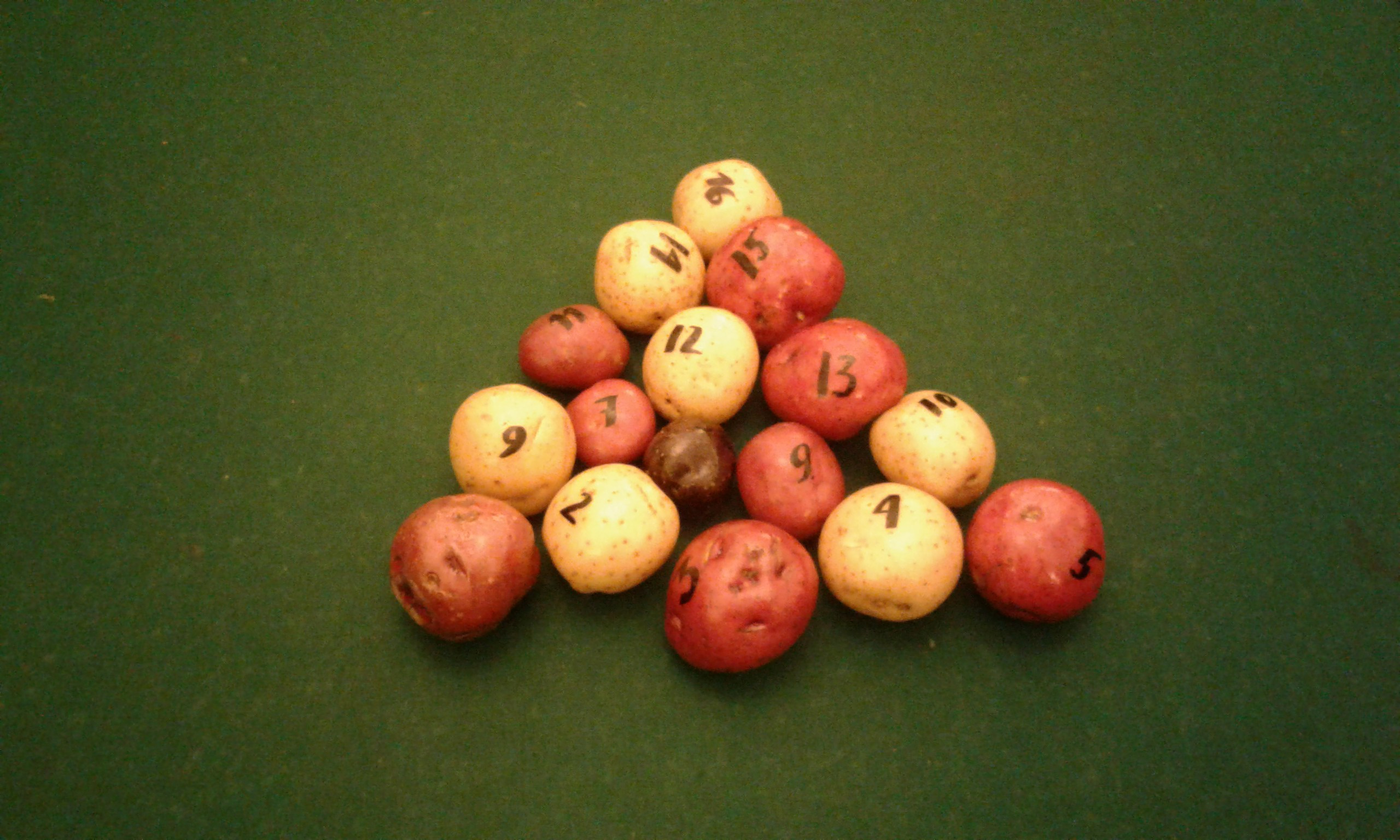
    Flo Kasearu_installation view at the Estonian House.
    Flo Kasearu, Installation view at the Estonian House, staged in the social room ‘potatoes as billiards’, Performa 17.

    Firstindigo&Lifestyle: How long ago was it when your family built the house, and how did Tallinn preserve its old buildings during the times of the Soviet Union?

    FK: The house was built in 1911 and my museum and the tours started in 2013.

    During the Soviet era, most of the private property was nationalised and belonged to the state. After 1991, 20 year-long restitution started taking place, during which the property was given back to successors of original lawful owners. Houses that belonged to the city were taken care by the renters. City of Tallinn, for example, did not put any money into renovating them. During the restitution process houses were in a legal loophole in terms of their ownership, and thus were not dealt with by the renters, as they thought that any original lawful owners could come back and take the houses over.

    Flo Kasearu Performa-project at Estonian House.
    Performer doing kissing sound experiments at the Flo Kasearu tour in the New York Estonian House.

    Firstindigo&Lifestyle: How did you end up doing a similar kind of tour in New York at the Estonia house as part of Performa 17?

    FK: Just the method of being a tour guide is the same anywhere, and talking about the history of my museum house is also the same. But otherwise it is a very different project.

    ‘The Members Only tour’ (Performa 2017 project), is a sight-specific work for New York Estonian House and its community. As I am not a big performer, I did not want to perform it on stage. So doing the guided tour seemed a logical method. The work also included the community members participating in the performance. Guiding people to go through the house, and then becoming like a tour guide in a museum which New York Estonian House is in a way. Everything in the house looks so authentic to its original times and everything is based on old traditions and rituals.

    Firstindigo&Lifestyle: Do you feel that NYC local community members joined your project easily? From an audience member viewpoint everything seemed going smoothly and appeared well rehearsed.

    FK: I took the time to talk with them, listen their stories, so then it was not too difficult to convince them to join. I got recommendations from one member to talk to another member, and then it developed on until I had enough members to invite. I had two ladies cancelling in a last-minute, for example an older lady’s husband got so sick that she had to take care of him and she could not join in the end. But luckily I had also backup members in mind.

    Firstindigo&Lifestyle: You’re a multidisciplinary artist in the true sense. Did performance enter into your working methodology from the very start of your practice?

    FK: I started doing video-performances while I was an exchange student in UDK, Berlin. I was in Rebecca Horn studio, a performance and installation artist, and she told me that there is no point for me to paint for her, as she doesn’t know much to comment on painting. I started doing video-performances, relating myself and my Eastern European identity with this new city and new space. So from that time I have been doing performances once in a while.

    Flo Kasearu_drawing, 2014.
    Flo Kasearu, drawing, 2014. Estonian House staircase presented drawings of the artist. Her fears of what could possibly happen to the house.

    Firstindigo&Lifestyle: In New York City, the visual components in ‘The Members Only’ tour were really stretching the context of the Estonian House in a unique way. How did the imagination for the ‘sets’ evolve?

    FK: They are a combination of ideas that evolve from speaking with people and wanting to bring them and their stories to this very abstract and minimal level. And mixing them with some of my older haunting ideas. It is very sight-specific. And I wanted to bring also humour and irony level in, as I felt this is really lacking in this house.

    Firstindigo&Lifestyle: Now thinking also how the music room was evolving, with the grand piano in it. In your tour, you mentioned that behind the doors there is a choir practice going on, but the scene was so surprising?

    FK: My point was not to repeat the same things that are happening in the house otherwise regularly. I went to see the choir rehearsal happening there, and I noticed the choir teacher who is such a strong character putting also chairs. So I wanted to highlight the choir teacher and show her alone. I have had this kissing-ticking sound long time haunting in my head and I thought to display this in the room as it is kind of abstraction from the emotions that I felt in the choir rehearsal.

    For example, in the choir singing room, instead of singing patriotic songs, the notes are made of this kissing-ticking, which has similar emotion and a character being nostalgic, but abstracted. And then the humor comes in, with over-reacting with this kissing note, and this way it’s also more open to interpretation.

    Flo Kasearu_the music room at the Estonian House.
    Flo Kasearu, The choir room transformed into an installation with kissing-ticking sounds at the Estonian House, Performa 17.

    Firstindigo&Lifestyle: Going back to Estonia. How would you describe the Estonian contemporary art scene today?

    FK: Its tiny but rather interesting. Some years ago art used to be dealing more with the social and political problems, now it is much more in its comfort zone. Although the fees in Estonian art are still quite minimal. The younger generation is more similar to Western formalistic approach, seems to me.


    Guided Tour of Flo Kasearu House Museum (compilation of excerpts) from Flo Kasearu on Vimeo.

    ***

    Artist website: http://www.flokasearu.eu/


  • Laura Anderson Barbata on Julia Pastrana

    Laura Anderson Barbata on Julia Pastrana

    The Eye of the Beholder: Julia Pastrana’s Long Journey Home is a new book edited by Laura Anderson Barbata and Donna Wingate. The essay collection sheds light on the life of historic sensation, Mexican international performer Julia Pastrana, expanding the story from anthropological and art historical perspectives. The book can also be viewed as a personal story of discovery. Artist and writer Laura Anderson Barbata remembers her own process of starting the project that eventually led to this book. How she got engaged in the controversial subject propels ideas of activism, and a passion to rewrite Pastrana’s history from new humanitarian and feminist points of view.

    Firstindigo&Lifestyle: How did you originally get interested in Pastrana’s life?

    Laura Anderson Barbata: In 2003, Amphibian Stage Productions, a theater company directed by my sister Kathleen Culebro, invited me to collaborate with designs for a play that they were about to premiere in New York: The True History of the Tragic Life and the Triumphant Death of Julia Pastrana, the Ugliest Woman in the World, by Shaun Prendergast. This is how I learned about Julia Pastrana. The story, unfolding in complete darkness, details the life of Julia as she traveled through Europe, a performer in a freak show, until her death in Moscow. It also briefly recounts the fate of her mummified body, and that of her baby, until they were added to the Schreiner Collection of human remains in the anatomy department of the University of Oslo. Upon hearing her story, I felt that my duty as a Mexican artist, and as a human being, was to do everything possible to have Pastrana removed from the anatomy collection and returned to Mexico, her place of birth—where she was at the time practically unknown—to receive a proper burial.

    After nearly ten years of effort, Julia Pastrana was finally transferred to Mexican officials in Norway; I represented Mexico. After more than 150 years of being exhibited for her unique physical condition, Ms. Pastrana (1834–1860) was repatriated to Mexico and buried in Sinaloa, Mexico in 2013.

    Firstindigo&Lifestyle: It’s been really a longitudinal project for you personally. How did you get others to get involved? 

    I was not the first person to request the burial of Julia Pastrana and have often asked myself, why was I able to succeed?  Why did other efforts fail? What did I do differently? I think the answer lies in the fact that I am an artist and therefore my methodology was radically different from all others from the start. My extensive collaborative artistic experiences in Mexico, Venezuela, and Trinidad prepared me for a project of this magnitude that ultimately involved international institutions, government officials, various organizations, and scientists.

    LAB: The ten-year plight for Julia’s return for burial began with letters I wrote to the National Research Ethics Committee for the Social Sciences and Humanities, the National Committee for Ethical Evaluation of Research on Human Remains of Norway, the Governor of Sinaloa in Mexico, the Foreign Affairs Department of Mexico, the University of Oslo, journalists, artists, anthropologists, individuals, and various institutions that I reached out to for their professional opinion, advice, and guidance. During this process, they became deeply involved and invested in the outcome. Each one was fundamental for the success of the repatriation and I consider them to be my collaborators.

    Firstindigo&Lifestyle: How many authors are participating in the publication that is coming out now, and what perspectives do they cover from visual and historic perspectives?

    LAB: I edited the book with Donna Wingate, and it includes texts by Jan Bondeson, Rosemarie Garland-Thomson, Grant Kester, Nicolas Márquez-Grant, Bess Lovejoy, and myself. Donna and I researched and selected more than fifty illustrations from the public domain, library collections, archival materials, and works commissioned especially for the project.

    Julia Pastrana, book cover.
    The Eye of the Beholder: Julia Pastrana’s Long Journey Home, book cover. 

    The authors are as follows:

    Dr. Jan Bondeson is a Swedish-born rheumatologist, scientist and author, working as a senior lecturer and consultant rheumatologist at the Cardiff University School of Medicine. Outside of his career in medicine, he has written several nonfiction books on a variety of topics, such as medical anomalies and unsolved murder mysteries.

    As an expert on Julia Pastrana, Bondeson contributed two chapters to the book; the first is a general introduction to the story of Julia Pastrana, and the second recounts how he found her remains in the basement of the Forensic Institute of Oslo in 1988, and how his extensive research established that she suffered from hypertrichosis terminalis rather than hypertrichosis lanuguinosa, as previously believed.

    Dr. Nicholas Márquez-Grant is a Specialist Forensic Practitioner in Anthropology and Archaeology at Cellmark Forensic Services, Abingdon, UK. He is also a Research Associate of the Institute of Human Sciences, University of Oxford.

    His text addresses the history of collections and the anthropological framework of the nineteenth century; the ethics surrounding human remains; the case of Julia Pastrana’s repatriation and its significance; witnessing Pastrana’s body in the chapel during the repatriation process.

    Rosemarie Garland-Thomson is Professor of Women’s Studies and English at Emory University. Her fields of study are feminist theory, American literature, and disability studies. Her work develops the field of disability studies in the humanities and women’s and gender studies.

    Dr. Garland-Thomson’s essay considers the ways that the public display of Julia Pastrana both reinforces and challenges the lines between the self and other, human and non-human, ordinary and extraordinary, that such spectacles rely upon. By analyzing how Pastrana’s display and recent repatriation and burial in Sinaloa invest her body with different meanings, it traces the processes that socially mark human bodies in order to reveal and explicate the inner workings of representational systems, such as race, gender, ethnicity, and disability.

    Grant Kester is Professor of Art History, and Director of the University Art Gallery at the University of California, San Diego. Kester is one of the leading figures in the emerging critical dialogue around “relational” or “dialogical” art practices.

    Dr. Kester’s text discusses how European colonizers were unable to attach specific meaning to the objects they acquired through colonization and thus developed larger meanings for art more generally. Recovering Pastrana’s remains becomes an act of restitution that encourages a confrontation with the historical status of “stolen” objects and encourages a renegotiation of and reconnection to the understanding of the past.

    Bess Lovejoy is a Brooklyn-based writer and editor.
    Ms. Lovejoy’s essay contextualizes Julia Pastrana’s afterlife by considering a number of other notable individuals whose bodies have been preserved in museums. Like Pastrana, many of these individuals possessed bodies that differed from the European norm, either because they were born with physical abnormalities or because they were of non-European ethnicities. Her chapter considers how scientific and ethical considerations complicate the collection and display of such bodies, and how some of these bodies have been the focal point of successful repatriation campaigns, while others have not.

    Laura Anderson Barbata
    My essay describes my own journey: the process, challenges, and partnerships that were formed as I worked for ten years for the repatriation of Julia Pastrana.

    Firstindigo&Lifestyle: Your own artistic research work on Pastrana has included performative phases, how are you implementing this approach on the book?

    LAB: While Julia Pastrana was billed as “The Ugliest Woman in the World,” what is most important to mention is that she was a gifted mezzo-soprano and dancer—she was a very successful performer during her lifetime. Julia Pastrana’s life story and the fate of her body after her death (including her successful repatriation) brings to light issues that remain deeply relevant: beauty, ownership, science and racism, commercialization, objectification, exploitation, human rights, public versus private, international law, colonialism, sexism, respect, responsibility, indigenous rights, memory, sensitivity, the physical body, and the spiritual body.

    In order to unpack all of these subjects, I felt that they must be addressed through different mediums. First, it was important to create a publication to gather the most significant material concerning her life with critical essays from different scholars. Donna Wingate and I worked on this book for over four years—researching archives and discussing the various lenses through which we could gain a deeper understanding of Julia Pastrana. At the same time, our goal was to present a full account of Pastrana as a person, a woman, and an artist, with the dignity she had been denied during her life and after her death. The book includes images of my artworks—works on paper and performances—based on the story of Julia Pastrana.

    Firstindigo&Lifestyle: How would you describe the cultural life in Mexico at the time of Julia over hundred years ago? Also, what was the context that she was surrounded by that addressed her as a celebratory oddity? 

    LAB: Julia only lived in Mexico for the first twenty years of her life. She was born in 1834 in the State of Sinaloa, and according to popular legend, was born in the indigenous village of Ocoroni—or thereabout—in 1834. Today Ocoroni belongs to the municipality of Sinaloa, in the state of the same name, and is located in the foothills of the Sierra Madre Occidental.

    In the decades of the first half of the nineteenth century, Mexico was searching for its own destiny and independence. Since the establishment of the first settlements by European Hispanics in the sixteenth century until the early nineteenth century, the territory of Sinaloa was mainly a mining state. The population, therefore, settled in the mountains and in the valleys. Mining camps and towns were established throughout Sinaloa for the search and exploitation of metallic resources that were coveted by the monarch of Spain.

    Nothing is known about Julia’s parents or siblings, and there are no documents of her birth or baptism. It should be noted that the Office of Public Records (Registro Público) had not yet been created in Mexico; it was legally established on January 27, 1857. Little is known about her childhood, although it is said that an uncle took charge of her after the death of her mother, and in an effort to make a quick buck, sold to her to a small traveling circus—the kind that occasionally passes through these remote villages. Sometime around 1836 until April 1854, Julia was a maid in the residence of Mr. Pedro Sánchez, who had been in charge of the government of Sinaloa from September 28, 1836 to June 3rd, 1837. It is possible that he purchased Julia from the circus that had exhibited her throughout the northwest of the country.

    We believe that her training as a mezzo-soprano and dancer began when she lived at the governor’s house, and he likely presented her before audiences. She spoke four languages: English, French, Spanish, and Cahita, her native tongue. She was taken to Guadalajara to perform in 1854, and news of her reached the United States, as we found in an article in the New York Post. This must have been what sparked the interest of the American Theodore Lent, who worked for Barnum and Bailey and later became Julia’s husband. He traveled to Mexico to meet with Pedro Sánchez and Francisco Sepulveda to discuss a business venture that involved the sale and purchase of Julia Pastrana.

    Firstindigo&Lifestyle: As a phenomenon she became extremely internationalized so to speak. How would you explain this to contemporary audiences, from the perspectives of art, science, and women’s history?

    When Julia Pastrana left Mexico and traveled to the United States with Francisco Sepulveda to meet Theodore Lent to complete a business transaction between Sepulveda and Lent, Theodore Lent secretly convinced Julia Pastrana to marry him, and he immediately became her manager. He presented her to audiences and billed her as the Bear-woman, the Nondescript, the Ape Woman, the Female Hybrid, the Wonderful Hybrid, and Baboon Lady, among other sobriquets.

    LAB: Julia Pastrana was taken to perform in Boston, Philadelphia, Cleveland, and New York, among other cities. After a number of presentations in the US and Canada, Lent decided to take his show to Europe. They traveled to London, and extensively throughout Germany, Poland, and Russia. Julia Pastrana’s shows were very successful, and newspapers throughout Europe wrote about her.

    Julia Pastrana’s story is a reminder that what happened to her is not an experience exclusively from the past—today there are far too many cases of exploitation, abuse, neglect, cruelty, human trafficking, and discrimination. Julia Pastrana is a reminder that we urgently need to forward women’s rights, indigenous rights, children’s rights, and eliminate human traffic to start. We must end gender discrimination, defend the rights of people with differences, protect religious choices and end the voracious dehumanization of people in the name of political, commercial, religious, and scientific purposes. For me, it means that I continue working on the topics related to her, the injustices she lived and how they are still relevant today.

    LAB: Among the works are: a performance piece that is continually evolving, a series of zines that address different topics related to Julia Pastrana such as: repatriation of human remains, museum ethics, exhibition practices, the objectification of people and women, human traffic, beauty and the commercialization of women’s bodies, feminism, animal rights, love, circus arts, among others; in addition, we are working towards an Opera about Julia Pastrana in collaboration with the artist collective Apparatjik, Concha Buika, and Void Design.

    Firstindigo&Lifestyle: Do you think she is appreciated in Mexico today, and how will the book contribute to that?

    LAB: The repatriation of Julia Pastrana sparked a great interest worldwide and in Mexico. Since Julia Pastrana’s repatriation there have been at least three plays written and performed in Mexico about her, and I understand there is a feature film in development by a Mexican director. I have also learned about a woman’s health center that opened recently in Argentina that is named after Julia Pastrana.  Because of my work on the repatriation of Julia Pastrana, I recently received an award by the Instituto de Administración Pública of the State of Tabasco, Mexico for the Defense of Human Rights.

    It is clear to me that all of these responses show that Mexico is embracing Julia Pastrana and is working towards restorative actions for her memory, for the promotion of dignity and justice, and in humanitarian efforts to defend the rights of all.

    ***

    The Eye of the Beholder: Julia Pastrana’s Long Journey HomeAvailable through Art Book/DAP http://www.artbook.com/9780692762189.html

    More on Laura Anderson Barbata

    Artist website: http://www.lauraandersonbarbata.com/