Category: world design capital helsinki 2012

stay in tune, follow up the events and projects here:

http://wdchelsinki2012.fi/en

  • ‘New Nordic Oddity”?…and other design definitions

    ‘New Nordic Oddity”?…and other design definitions

    What I find very intriguing in the current design-discussion, is the questions of how we signify the things, and how we see the world-object -relations from different points of view. What now seems timely, is to define and differentiate ourselves as consumers with more softer values. We are ‘humans’ after all, meaning that we are responsible of the planet, therefore, what kinds of significations we give to the things and objects in the era of mass-production is crucial. How we consume, how we define what we consume, how we differentiate things, adds value to the objects. The meaning-systems behind the branding of products are referential, but they are also truthful from the point of view that they engage our participation in the entire definition-game. As it is also true that what kinds of nouns and adjectives we give to the objects, puts them on the market more.

    Where comes a need to define the objects, which we use, which surround us, and so on? A question is relevant in relation to design, since we incorporate the objects in our daily lives. That is the pre-value of the design. ‘National’, or should we say ‘regional’ or ‘geographical’ instead of a national as we share a global world, is attached to the design-products, and calls for several attributes. This is strongly the case in the branding of Finnish design. Let’s look back to 2008.

    The summer of 2008 generated an exhibition of Finnish design in the Helsinki Design Museum. The exhibition was called Fennofolk-New Nordic Oddity. One of the exhibit curators, professor Timo Salli from the University of Art and Design in Finland, told the newspaper Helsingin Sanomat that the Fennofolk-New Nordic Oddity -exhibition aimed at honoring the local Finnish culture. It tried to find “weapons” from the Finnish culture. Additionally, Salli mentioned that the show was not trying to bring in the latest trends from Paris to be shown “too late” in Finland, but when viewed from the “Slavic-urban” perspective, the contents were precisely that of the “national romanticism” (Pöppönen/HS 11.6.2008).

    In the interview, it became evident that the fennofolk idea had been invented couple of years prior to the show together with Salli and co-artists Jari Leinonen and Paola Suhonen (founder of Ivana Helsinki brand). Fennofolk-New Nordic Oddity displayed works from 80 different artists, who deployed a great variety of media in their works, not just birch and birch bark, which are the traditional folk art materials that Salli himself used in his exhibition designs.

    What inspired me immensely about the show itself, and what also captured my curiosity when I read Salli’s interview,  was the idea of design branding; the core idea of how we choose to define the objects and things, give them certain value. And look at them in respect to our own pasts, weather it is local histories or our own experiences in Finnish forests, for example. The beauty of the Fennofolk-New Nordic Oddity is hidden in the paradox. Finland is, first, a culture of the ‘fenno’, what ever that means. At least it comes with the traditional methods of designing the birch. Second, Finland seems to represent in the design imaginings some kind of New Nordic or Northern Oddity, which could mean something Nordic (as it is part of the Nordic countries) and then something New (as exiting?). What remains is the definition of Oddity. A question remains, what would that be? How do we define Oddity in relation to Finland and its designs?

    Helsinki World Design Capital might come up with some answers…

    See also Paloni Designers on this blog
  • Finnish design pop-up store in the Museum of Arts and Design (NY)

    Finnish design pop-up store in the Museum of Arts and Design (NY)

    Starting end of this week, we can scan bits of Finnish design in a pop-up store in the Museum of Arts and Design (MAD) foyer. The event is taking place soon, in 21-28 of October… Another great chance to get a glimpse to the 2012 World Design Capital…Helsinki and the surroundings. New York is promoting the uniqueness of Finnish design, as 2012 promises to be creating something extraordinary out of the concept thinking that is so true to contemporary design. The materials and products are connecting to the sustainable values, which global north now represents. ‘Arctic design’ is a concept, which will add dimension to Scandinavian design parameters and tradition. Finland’s architectural roots will be visible in Helsinki, so looking back in history is important. What is creating the contemporary presence, yet, is the remaking of the tradition. When looking back in the history of Finnish design, Alvar Aalto (among others) was not only an architect. His Aalto-vases have become well-known products around the world. His glasswork and furniture appear still in North American museums (MoMA, Philadelphia Museum of Art)… The conceptual thinking of adding different ingredients in the pot and then seeing and tasting what is the flavor of the ‘end-product’ describes today’s designs. Urban settings, architecture, city panning, environment, green values, greeneries, food-cultures, music, technologies, and so on, define what has value as a design. What still remains important is the craft and tradition to the content.

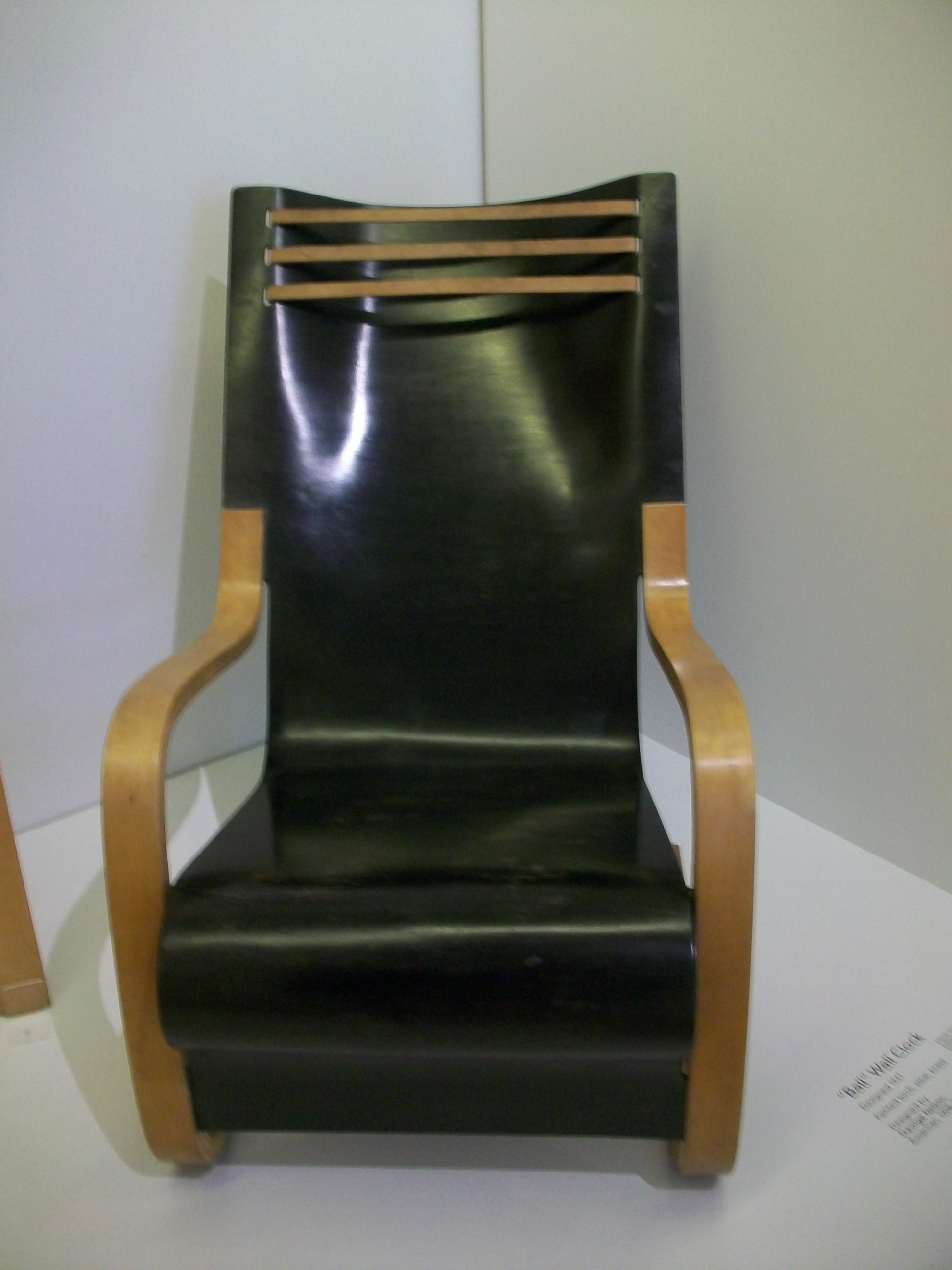
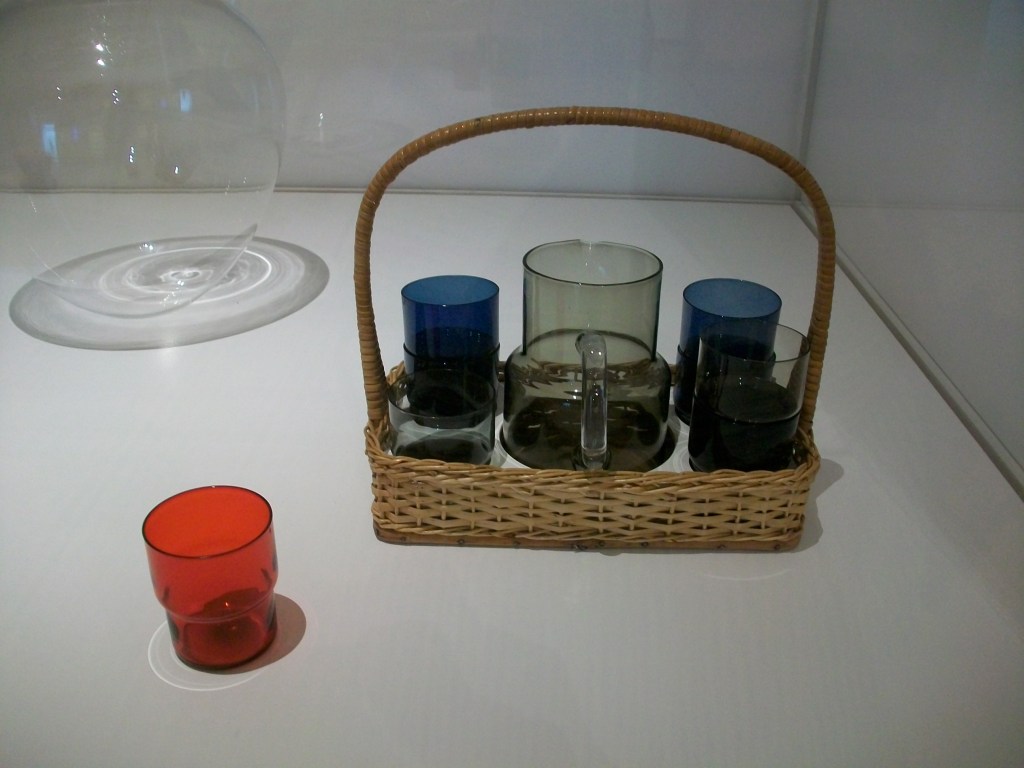
    As Philadelphia Museum of Art was exhibiting Finnish design classics among its contemporary design exhibition in the summer,  Caroline Tiger wrote for The Inquirer (in May 20, 2011: “Philadelphia Museum of Art to open major contemporary design exhibition”): “Although the Philadelphia Museum of Art’s modern design collection has grown to be the biggest and best-regarded of any general museum in the country, it has lived mostly under the radar” . Saying that this ‘low profile’ exhibition in the Perelman building’s modern design gallery showed several interesting pieces from Finnish design masters, is quite modest. Furniture of Alvar Aalto, for example Armchair Model No. 31 (picture below),  ‘Kilta’ Tableware from Kaj Franck, and a pitcher, glasses and basket combo from Saara Hopea (in the picture above).

  • Gigantic cake for a cause/light from recycled bottles

    Gigantic cake for a cause/light from recycled bottles

    What would be more uplifting in the season of the fall with less light approaching us, than to surprise your friends with a gigantic cake to vibrate senses. It is tasting good and creates a visual sculpture with a low cost budget. There is absolutely no reason why not. And it is a great excuse to do some communal action.

    Take this example from Helsinki, a parade of huge cake shared with hundreds of people walking in during one night. The cake definitely creates the performance in itself, and there will be lots to discuss around it. It is a terrific site for some new action plans. How about a theme of recycling, or new energy-saving strategies to create light with the Solar Bottles? The solar bottles is one of the smartest innovation to employ already existing material, namely used soda bottles, and hang them down from the hole in the ceiling/roof. This, of course, fits purposefully in the warmer climates, but one could also think of using them in the summerhouse, or while camping. Most importantly, this is a low-cost solution for the energy problem in South East Asia, where villages suffer from electricity cuts, and where the local areas are over-populated with households. (Go Youtube and search for the topic: Plastic soda bottles become light source…)

    When you start baking your communal action cake, think about solar bottles, recycling, and new design innovations from existing materials. Get involved in creating light. Light is increasing quality of life, it is fighting against depression, sustaining life, engaging our senses.