Bill Viola: The Moving Portrait is a retrospective exhibition happening at the National Portrait Gallery in Washington DC. The exhibition, on view until until May 2017, is celebrating a career of a pioneering video artist Bill Viola. The artist isrecognized for his groundbreaking use of video technologies; and his works are known as poetic and performative, exploring the spiritual and perceptual side of human experience. Installed in multiple darker rooms, the show takes a viewer into a few episodes with the moving portraits. They are diverse, as one can imagine, and with each work the viewer’s experience becomes more fluid than staged or patterned. The works follow more circular way of reasoning than linear logic in storytelling.
The portrait of Bill Viola himself is titled Self Portrait, Submerged, 2013 (color high-definition video on LED display; stereo sound; 10:18 minutes). This portrait connects to an idea of mortality, the artist himself is appearing underwater. He looks as if being still with his eyes closed, and he does not seemingly breath. However, the movement becomes present with the unfolding effect of the water moving and altering the stage so to speak. For Viola, self-portrait is an evergoing reflective way to figure oneself out. Self-portrait is always a self-representation. As an artistic discovery it would be more like looking beyond a merely simple representation of oneself; attaching a subjective and changing viewpoint into a larger psychological canvas. We live in an era of selfies, so what more is there to discover, beyond a representation? Where does the normative cultural portrait end, and the new interpretation start?
In many of his works, Bill Viola summons the characters, young and old, male and female. These portraits are submerged underwater in a similar manner as his Self Portrait Submerged. A group of seven works are titled The Dreamers (2013). The portraits appear in a dark room as an installation of plasma displays mounted on the wall. They radiate very subtle visuality. There is water underneath of each character as their personal stage. It is the essence of the water that animates the otherwise still portraits to become sifting moments in space. The plasma videos are accompanied with a sound of a running water, which appears as a surrounding pulse for the portraits. These portraits take form as immersing works. In a way they are virtual, or the time is stopped as if there was an episode happening in another realm or in outer space. Each personality emerges as colors, when their fabric and hair covered bodies measure the dimensionality of the water. They contour and camouflouge barely within its surface.
Bill Viola, The Dreamers,2013. Video/sound installation, seven channels of color high-definition video on seven plasma displays mounted vertically on the wall; four channels of stereo sound; installation view at the National Portrait Gallery.
Bill Viola, The Reflecting Pool, 1977-79, Videotape, color; two channels of mono sound; 7:00 minutes, Performer: Bill Viola. Installation view to videostill at the National Portrait Gallery.
A very different video setting is formed around a work titled The Reflecting Pool originating from 1977-79. In the video, a man is emerging from the forest standing in front of the pool. As he is leaping up in a sudden movement, jumping into the water, the image freezes. The person remains still in the center of the image; he is frozen whilst the water in the pool is slightly moving and changing. Another take on a theme of time passing. This time, the person is also immersed into the surroundings even more, and perhaps becoming one with the green lush with all his senses.
In a massive one screen video installation, a group of nineteen men and women from various ethnic backgrounds are struck by a great amount of water coming from a high pressure hose. The video called The Raft (May 2004), expresses different actions and reactions from the people to a seemingly catastrophic situation. Some are struggling physically showing hardship of survival with their bodies, the others remain more upright; yet all characters are touched and moved by the sudden force. The scene of the people reacting with their personal response, with their bodies moving, resisting, twisting, and falling, is effective. In the end, the water stops and leaves people with altered positions. The narrative brings into mind a natural force, which takes over peoples’ lives and controls their surroundings. An occurrence, which people cannot control. The video story opens a new stance to altered ways of being flooded, or being carried away with life occurrences.
Bill Viola, The Raft, May 2004, video/sound installation. Color high-definition video projection on wall in a darkened space; 5.1 channels of surround sound; 10:33 minutes. Videostill/installation view at the National Portrait Gallery.
Bill Viola, The Raft, May 2004, video/sound installation. Color high-definition video projection on wall in a darkened space; 5.1 channels of surround sound; 10:33 minutes. Videostill/installation view at the National Portrait Gallery.
Bill Viola: The Moving Portrait exhibition is a well curated retrospective to the artist’s forty year career. It includes several works investigating life cycles, and the process of aging. It touches a question of gender, and the metaphysical place for people in the world. His video works speak with the language and gesture of the body and face. They confront us with emotion and presence. Portraits are not always beautiful, or the characters are not always beautiful in a sense of how we measure our bodily image. But they echo beauty with their truthfulness and soul, which goes further than a normative cultural presentation.
Bill Viola started his discovery with a Portapak camera in the early 1970s. Since that time, the video has been his medium of expression.
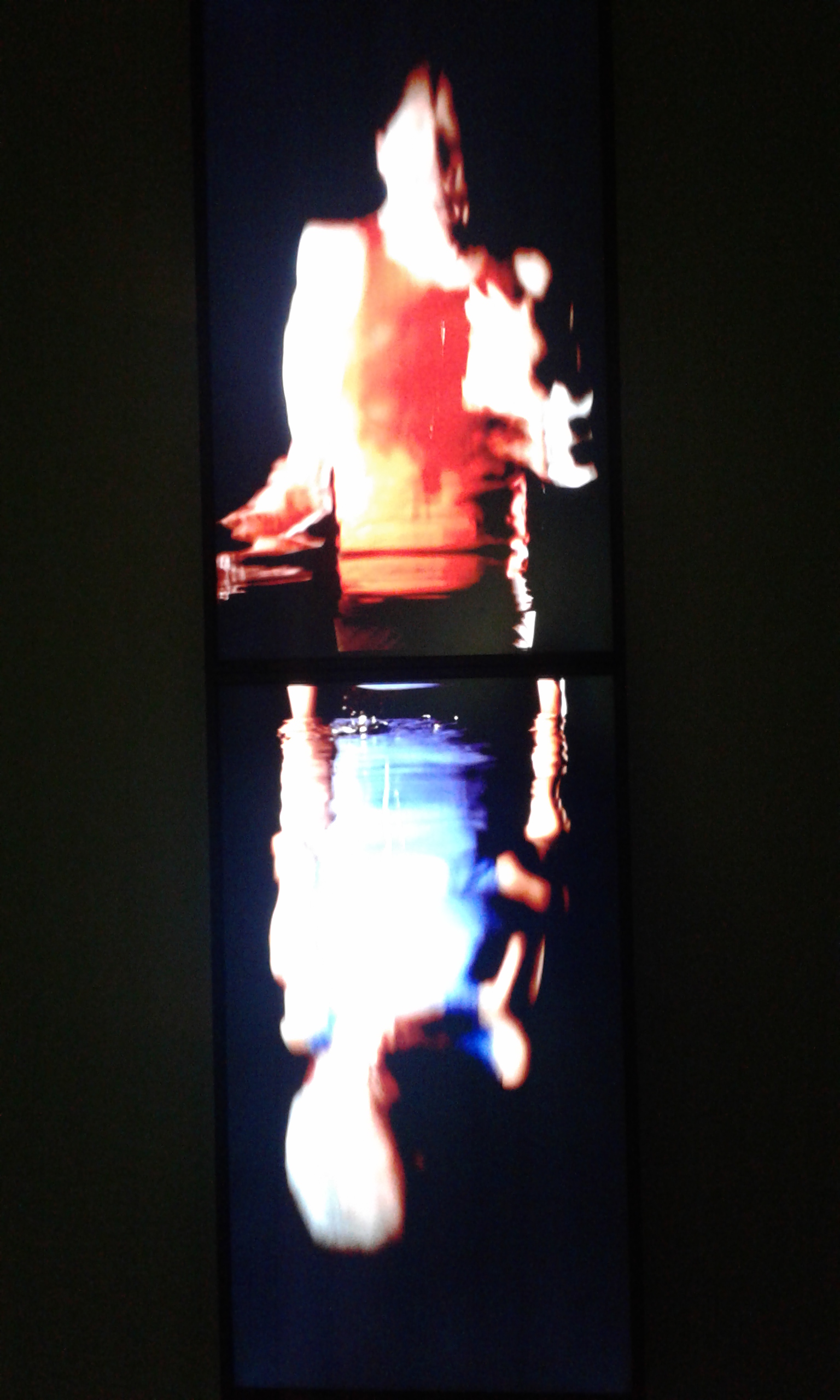
Bill Viola, Surrender, 2001. Color video diptych on two plasma displays mounted vertically on wall; 18:00 minutes. Performers: John Fleck, Weba Garretson.
With the current exhibitions focusing on the historic works of Tyko Sallinen and Tove Jansson, The Helsinki Art MuseumHAM draws attention to modern Finnish art. Both exhibitions opened in January 27, 2017. Sallinen’s exhibition will run until the Fall of this year, and Tove Jansson’s frescos will remain on a permanent display in the museum.
The exhibition of Tyko Sallinen (1879–1955), explores works of a Finnish modernist pioneer in painting who is also a representative of expressionism in art. The exhibition consists of 50 works from the artist’s most important period, the 1910s. Tyko Sallinen’s expressionist works had a meaningful impact on Finnish art in the beginning of the 20th century. He and some other like-minded artists introduced new ideas into the Finnish art field, as their approach met open opposition and critique from the older generations of artists.
Sallinen was painting portraits of people, which became a signature marker of his often personal and intimate works. These one person and group portraits were also considered scandalous in their time because of their expressionist and emotive approach to people. Yet, many of his landscapes create a similar sense of strong moodiness. The landscapes imply that the role of nature was close to the artist’s thinking. The brushwork across different canvases come out with delicate movement, composing trees and horizons with earthy tones. The works bring forth viewer’s personal approach and feeling to the surroundings. Sallinen’s landscape compositions are both classic and reflective, confirming that human mind wishes to connect with its nature with intuitive touch and reflection. Simple blue and green hues of the two landscapes (pictured) convey messages, being poetic with a strong stance.
Tyko Sallinen, Tuulinen huhtikuun päivä, Windy April day, 1914. photo HAMHanna Riikonen.
The other Finnish modernist artist receiving the exhibition in the HAMArt Museum is Tove Jansson (1914–2001). She is famously perceived as a creator, writer, visual artist and illustrator of the Moomin books. With a substantial global recognition, the Moomin characters are now more popular that ever around the world. It is no wonder that Tove Jansson’s visual compositions are among the most loved works in the HAM collection. The art museum has dedicated some of its galleries to an exhibition celebrating the artist’s entire life and works. These include also her less well known frescos, which she originally created on site for several public institutions. Tove Jansson stands out as an impressive woman with a long career as an artist and influential thinker. She was a skilled painter, writer of many genres, a comics artist and illustrator with a humorous larger than life approach, and a script writer. The exhibition shows the history of words and pictures bringing forth her richly illustrated stories.
Tove Jansson and Niilo Suihko paint the fresco Juhlat maalla, Party in the country, at the Helsinki City Hall Restaurant, 1947.
Among the exhibition works are Jansson’s frescos titled Juhlat kaupungissa, Party in the City and Juhlat maalla, Party in the Country (the latter pictured above);and sketches of murals which the artist made for the Aurora Children’s Hospital (Leikki, Play I-III; Play II illustrated below) in Helsinki. The Play I-III series was created in 1955-57 for the walls of the staircases in the Aurora Hospital, and it features several Moomin characters running up the staircases. The hospital is now closed, but during the years of its operation, 1 million children were able to enjoy the art.
TheKaupunginkellari restaurant, known as Helsinki City HallRestaurant, opened in 1947 to serve as a canteen for the people working in the City Hall, and as a venue for official functions. ToveJansson painted the frescos Party in the City and Party in the Country duringthe same year for the restaurant. With these colorful works, the artist wished to express a sentiment of the joy of life, which was important for the country after its experiences and losses in the World War II. Jansson’s frescos were added to the restaurant’s interior, and were accompanied by the group of reliefs designed by Michael Schilkin, as well as pictures etched on windows by Yrjö Rosola. The HAM has also added lamps into Tove Jansson’s exhibition of frescos. They are the same lighting fixtures that were used in the restaurant. Their designer is Paavo Tynell (1890–1973), who made lighting designs for numerous public interiors.
From architectural and design point of view, Helsinki City HallRestaurant represented a remarkable example of Finnish modernism of its day. This was a time in the Finnish art history, when modernism in art was highly approaching different genres of artistry and design; bringing art, design and architecture in closer contact and communication with each other. The art and architecture union made peoples’ everyday life happier and more colorful, creating experiences for multiple senses.
Tove Jansson, Leikki, Play II, 1955, courtesy of Moomin CharactersOy Ltd ™. photo HAMHanna Kukorelli.
***
HAM, The Helsinki Art Museum, concentrates on art collections, which belong to the people of Helsinki. The collection includes over 9,000 works of art, and almost half of the works are on display in parks, streets, offices, health centres, schools and city libraries.
Tyko Sallinen’s exhibition also shows works from artist’s first wife, Helmi Vartiainen, and by their daughters Taju and Eva.
Favela Vera Ortiz is a Finnish-Argentinian choreographer based in Helsinki, Finland. The choreographer has recently been celebrating her artistic anniversary. She is currently finding herself with compositions that extend the boundaries of the body, self, and the space. Vera Ortiz is well known as an inventor of Choreographer’s Appointment, in which participants find their solo movements with the choreographer, and engage in a social form of personal choreography with a performance. The choreographer has worked with multiple themes in her native Finland, in Stockholm, Buenos Aires, Paris, and Melbourne, Australia, to name a few locations.
Firstindigo&Lifestyle: Your career spans over 15 years, and in fact you just celebrated your artistic anniversary. Starting from the time you went to study at the Danshögskolan in Stockholm, how did you end up choosing to go there?
Favela Vera Ortiz: Actually I had tried to get in to some schools already earlier, but always seemed to be the one who almost got in. But I continued dancing all the time and became more and more interested in making choreography. I chose to apply to Danshögskolan because they had a choreography program. I got in on first attempt and was very happy about it.
deux2, Choreography Favela Vera Ortiz. Photo Anna Diehl.
Firstindigo&Lifestyle: What are the key ideas and modes of working you learned while studying choreography in Stockholm, and have they stayed with you?
Favela VO: During the 3 years of education, I learned many tools from several visiting teachers. We were 3 students at the choreography program/education, and one of the learning processes was to be able to follow how the 2 others did their compositions when the starting point was the same for all. For example, professor Örjan Andersson gave a task to use certain compositional tools with 9 dancers and the result was interesting to see how different the works were.
I also invented a method of trying to be free of judgement while making the movement, this was kind of a brainwash that was supposed to get the body to produce material earlier unknown. I am a curious chameleon and tend to try out new things which leads to different works. I’d say styles in my works vary a lot. Similarities tend to pop up afterwards, but it is not intentional.
One example is the question of how to use time. I am very interested in the concept of time being round instead of linear. This shapes the movements and music choices I make, and it has stayed with me from the first work with this “round time” that I did at school. It was a choreography of 15 minutes with several black outs cutting scenes, the shortest scene was only 4 seconds. Work with playing visibility, repetition and strong visual images.
Firstindigo&Lifestyle: Looking back, does it feel that so many elements have changed over this time?
Favela VO: It is a long time – 15 years – and certainly a lot has changed. But it is hard to put a finger on it and say here is a changing point and then something happened. Mostly change comes slowly with several try-outs and when there is a new direction it grows from a process and forms new frame. This overlapping process is a living creature in itself. The old and the new exist at the same time. During the past five years I have done some collaborations with visual artists which is new for me.
Firstindigo&Lifestyle: Many of your works have a strong visual element in them. You have worked with costume designers, in which a dress, costume and also architectural and spatial elements are conducting the narrative, or directing the movements in a way. Is doing choreography sometimes like being a composer with a certain thematic?
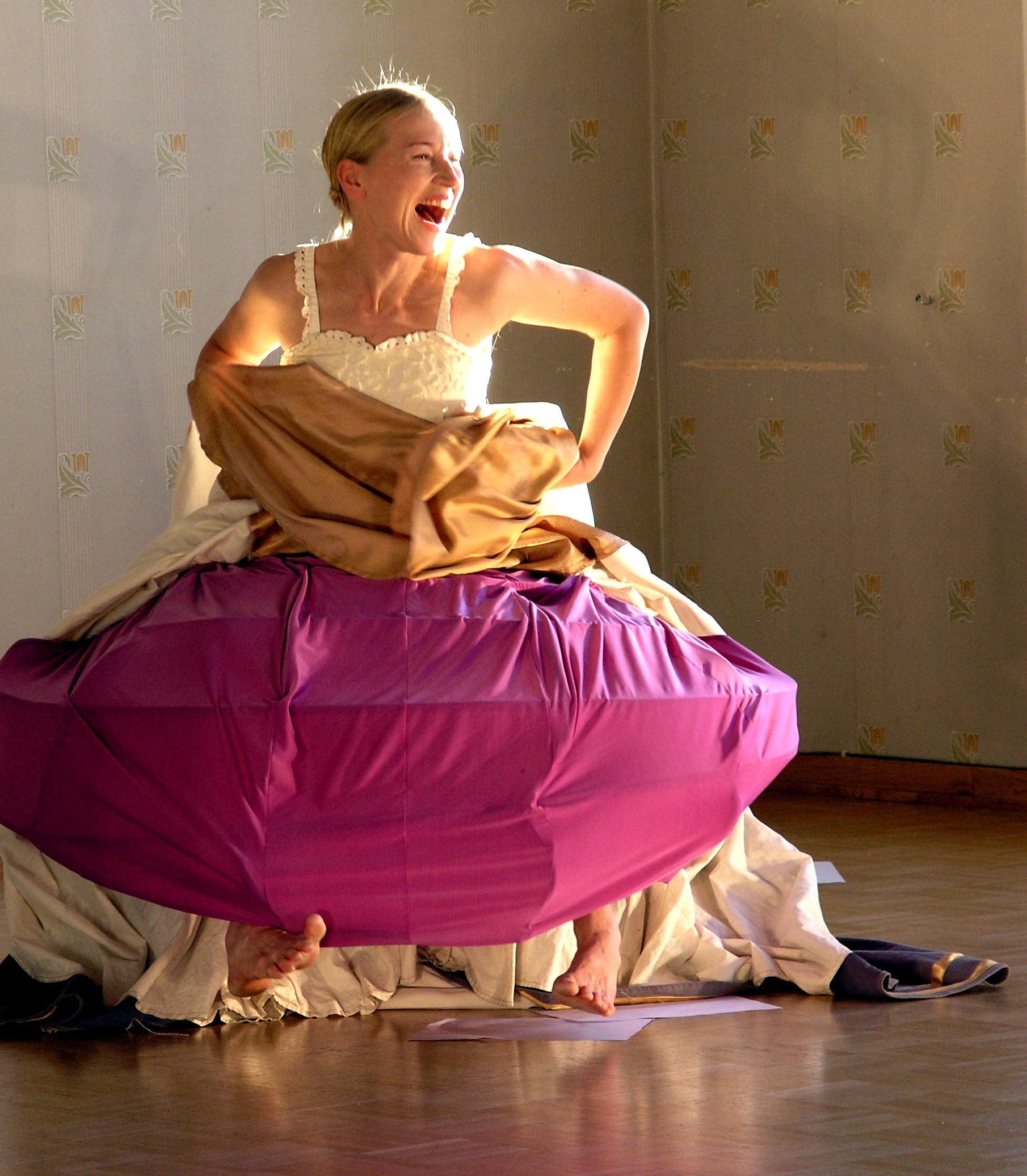
Favela VO: I’d say the thematic sometimes brings the costume or other visual elements conducting the movement. I have often done costume, lights and stage design by myself as it feels they are so closely linked to each other and push the movement to what it is. Last year, for example, I did a site-specific work L’AUTRE in a bomb shelter where the strong visuality comes with shadows on an uneven wall and laser light. I did the lights with five torches. What the photos don’t show very well was the glitter on the body of the dancer, she was covered in gold shiny glitter, very thin layer of it though. (Check the photos of this work here: www.photoslautre.tumblr.com) I also enjoy working in a group with visual artists who bring their ideas to the common table. It is always an adventure to see how the process goes forward and which elements grow to be presented. My latest work OPUS CORPUS III is a beautiful example of this.
Opus Corpus III, Choreography Favela Vera Ortiz, 2016. Photo Valdis Jansons.
Firstindigo&Lifestyle:While working in Buenos Aires, you also started working with plastic wraps or bags that evolved to be headpieces for the performers. Tell about this choreography, which was created in a local park?
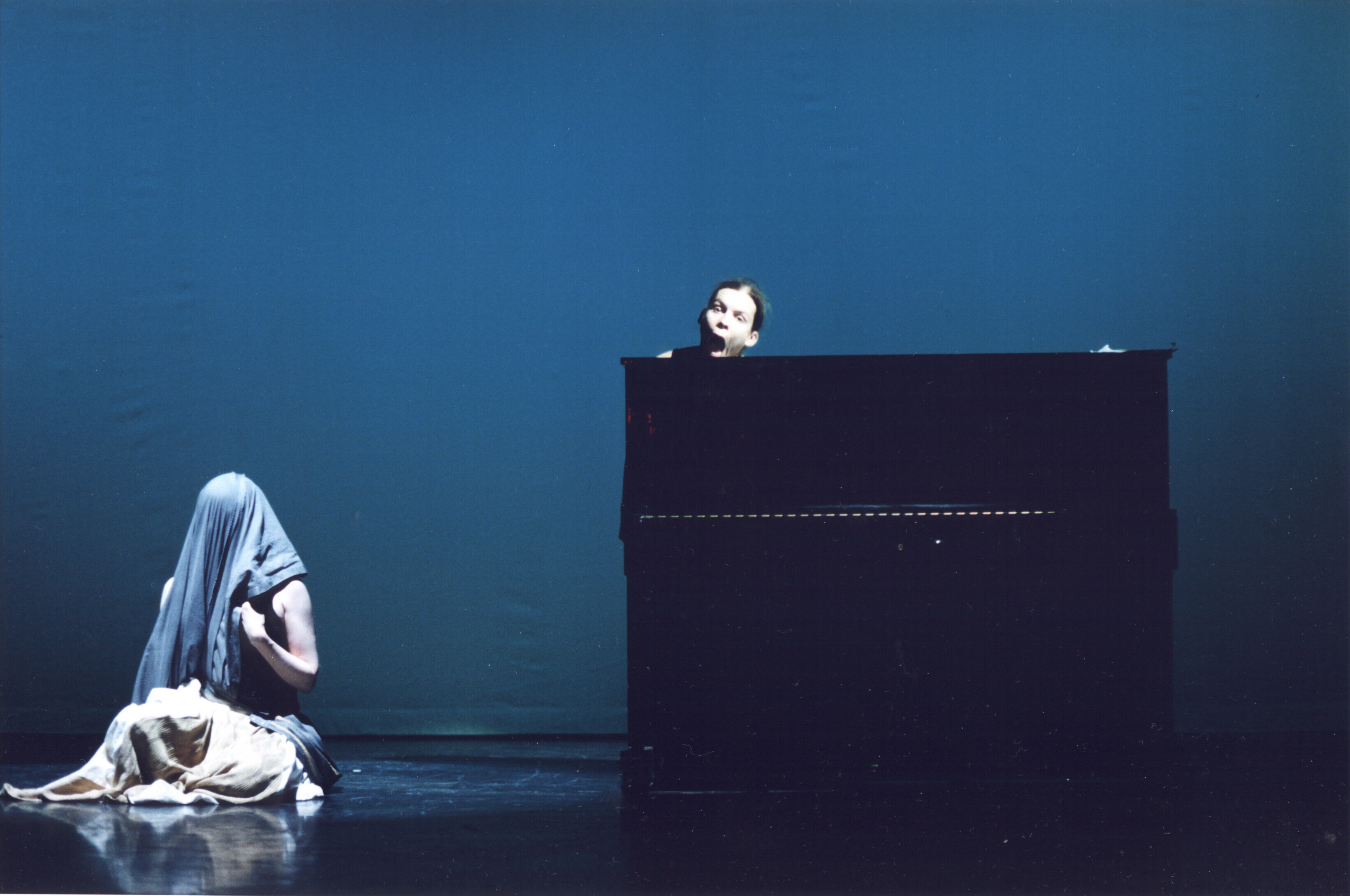
Favela VO: This work I made for three dancers, the inspiration was Greek mythology so the dancers were sort of goddesses. Even the name for the piece is MOERAE which are the three sisters making and cutting the line of life. But it was not a narrative work, merely the inspiration gave some movement ideas. It was made for Villa Ocampo, a cultural house in Buenos Aires. We used the terrace of the house and the park. The idea of using plastic bags to make costume was fabulous, it worked well. I did the wigs and tutus of thin white plastic. We also planned a stage version of the piece and filmed it while I still was in Buenos Aires. Later it got invited to Chile to a dance festival, so there are two versions of this work.
Moerae, Choreography Favela Vera Ortiz. Photo Julian Martinez Ricci.
Firstindigo&Lifestyle:Does word intercultural resonate in your personality, or multicultural, and how?
Favela VO: I am half Finnish, half Argentinian. I have lived a nomad life for several years while working in different artist residencies. I was born in Helsinki and I am still based in Helsinki, but this year is the first full year that I have actually spent here entirely.
Firstindigo&Lifestyle: You have created solos for dancers, for example, for Finnish dancer Riikka Kekäläinen. How much does a dancer direct the development of the work with her personality, and how do ideas come together in the end?
Favela VO: The dancer has an enormous impact for the work. I often use different improvisations to search the movement so it is essential for the dancer. I choose the dancer who I believe is the best for the theme I am working with. The frame for the improvisations come from the vision I have for the theme, but then I choose the material from what comes out while working with the dancer and develop it further with the dancer. It is like a puzzle building the body of the work. One solo for Riikka, which I enjoyed a lot to do was called LA SEULE. It was seen in Finland but also in Paris at the Finnish Institute and in Düsseldorf Tanzmesse. The theme is the history of hysteria.
Firstindigo&Lifestyle: Tell about the work in STOA Cultural Centre in Helsinki, in which the floor had mirrors all over, and the audience was sitting in a tight setting looking at the performer from a close distance?
Favela VO: The work is called 21 notations on human. We had visitors in our rehearsal space. They were 20 persons who each came to share one rehearsal day with us. My question for them was “What is it that interests you in humans?” So, it was very wide question with personal answers. We created movement material with the visitors during the day with the dancer Hanna Ahti and got kind of a movement bank. The work is a selected composition of these things, as the material was several hours of material on video. The 21st notationson human (https://vimeo.com/35870033) is our version. The mirror floor reflects the dancer as many and brings also a visual element with light reflecting to the walls. It is a tender piece with the dancer having a conversation with notations on the body and the surface.
21 notations on human, Choreography Favela Vera Ortiz, Dancer Hanna Ahti. Photo Uupi Tirronen.
Firstindigo&Lifestyle: Somehow there is a sense that dancing for you carries several elements that might be also called as non-human, such as animal like, or vegetal, or spiritual; are these definitions closer to what you are aiming or thinking?
Yes, there is an idea I’ve been working with for some time now where the body is half human, half animal. Like a hybrid body. This creature was more animal in the work Myoclonic (year 2013) and more human than animal in L’AUTRE (year 2015). This year (2016) the work OPUS CORPUS III was asking the question of where is the human, where is the animal, where does it start or end? The whole work seems to be a question so there is no answer. This hybrid is also an alienated body and represents the other, the strange, the weird in each of us.
Firstindigo&Lifestyle: Your time spent in Australia, and doing the piece with yet another visual component, reminds a lot of the spiritual elements that are perhaps inherent to the aboriginal heritage, with the embodiment of place and environment and the essence of the human body in the entire life cycle. Could you tell more about this work?
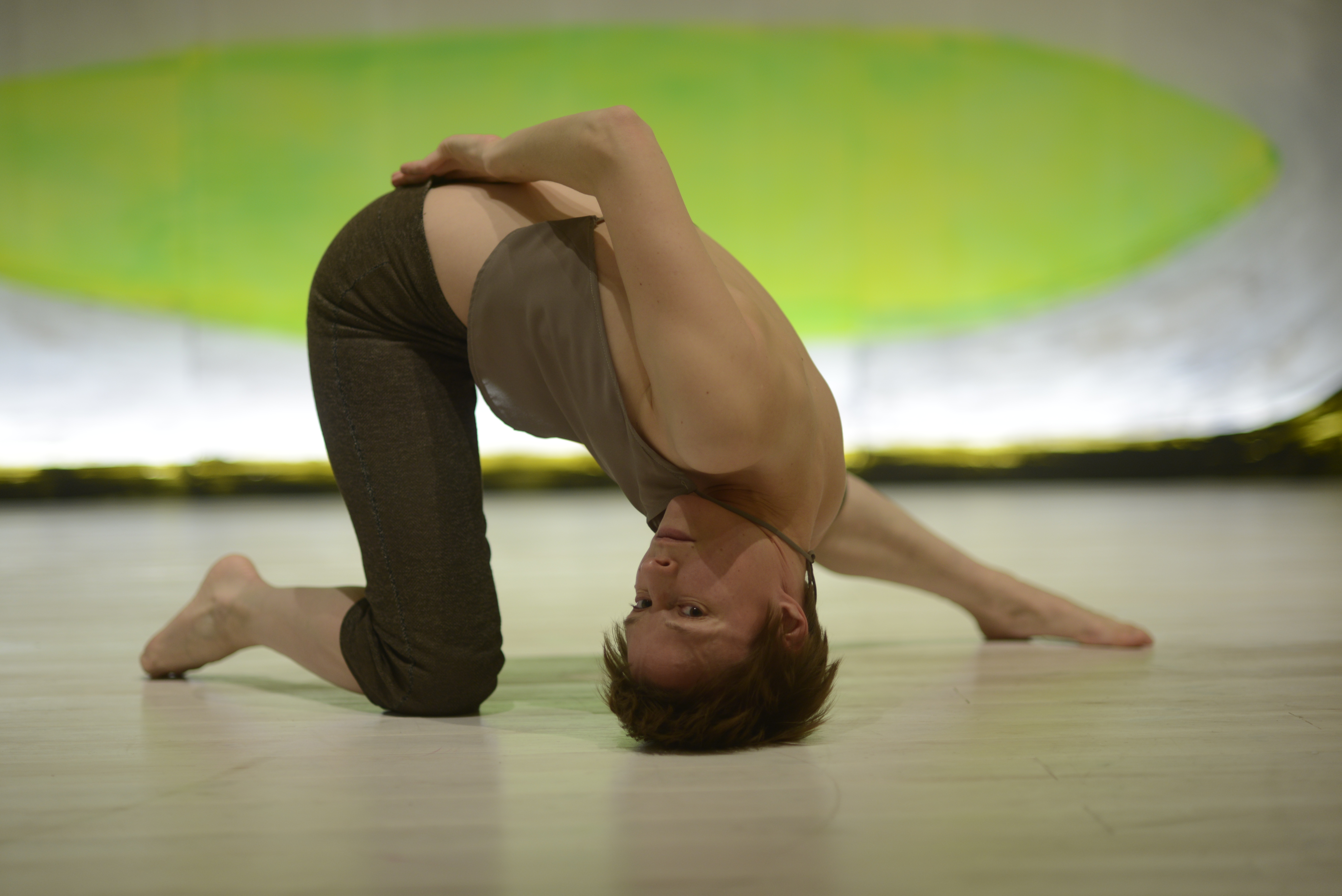
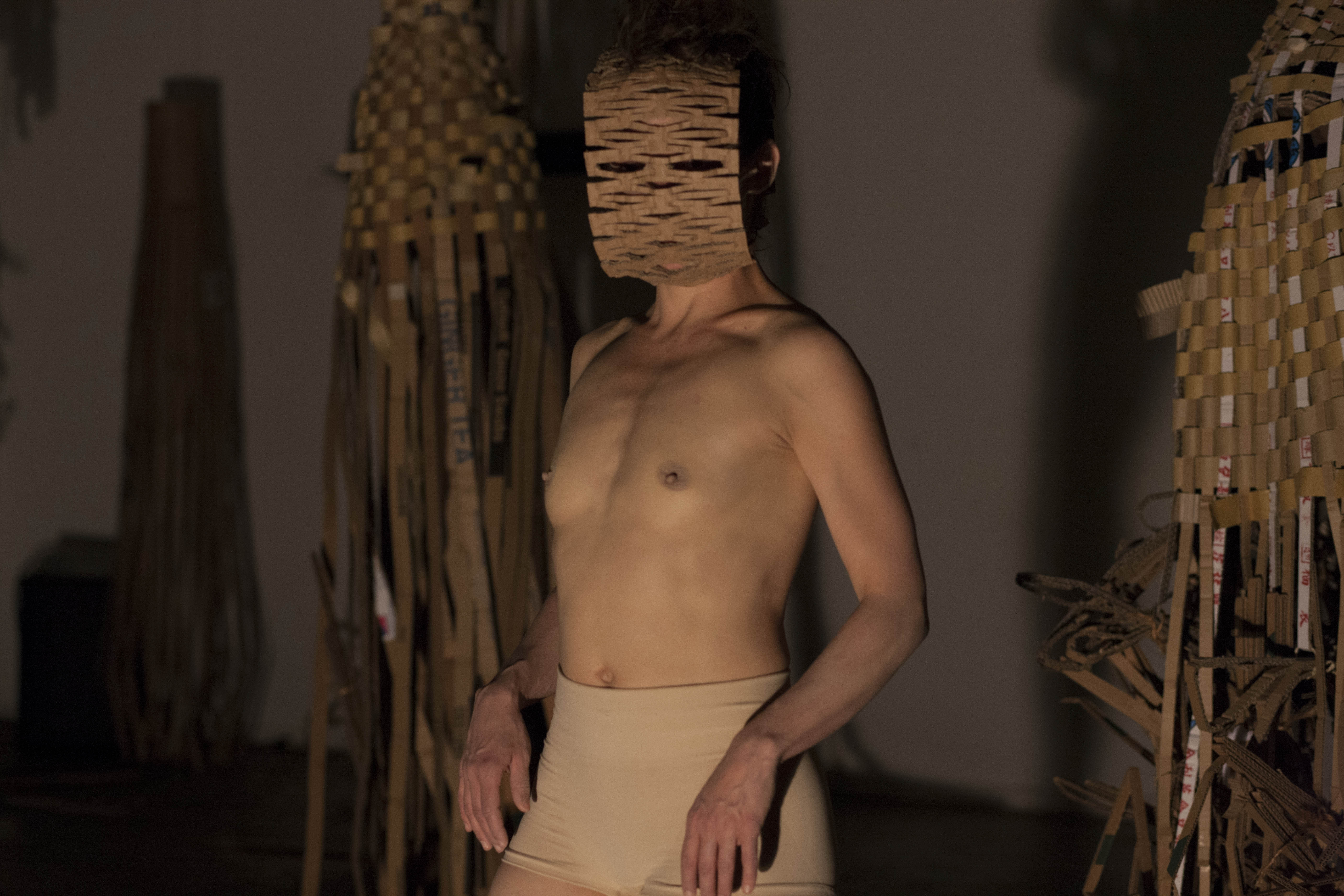
Favela VO: This work started as a collaboration with Annee Miron, a sculptor and visual artist from Melbourne. We met in Paris in the Cité Internationale des Arts residency in 2010. The meeting and our discussions and sharing knowledge of our previous works made both of us interested of a common project. It took some time in between until it happened. I was working in Melbourne with Annee in 2013. The collaboration started with Annee’s project of sleepless, which developed into a performance MYOCLONIC (https://vimeo.com/66894548). Annee built a huge installation at the Yarra Sculpture Gallery, it worked as its own piece but also as a scenography for the dancer. I consider it is some kind of a jungle of mind. Annee used cardboard as the material and we used cardboard mask for the dancer. The performer, Sanna From is a Finnish dancer who came to Melbourne to work with this project. In our working group was also a local artist Anna Brownfield making the video. The work grew with visions of subconciousness and muscle tension of extremes, forming the body of being awake and alert. The name comes from Myoclonic jerks often appearing when falling asleep. The creature grew during the process and became more animal than human. It is as if this animal, creature is a relative to the hanging installation. The idea of animal body gave a strong impact to the piece. The hands were as kangaroos keep them, this certainly came after me seeing kangaroos in live for the first time. I was not thinking of using the aboriginal heritage.
Myoclonic, Choreography Favela Vera Ortiz, 2013. Dancer Sanna From. Photo: Kelly Russ.
Firstindigo&Lifestyle: Finland has a rich contemporary dance culture. How would you describe Finnish contemporary dance scene from your own point of view, and experience, how has it changed over the years?
Favela VO: It has grown a lot during the past 15 years. It has grown hugely since I started to follow contemporary dance as that is about 29 years ago. Now we have more dance artists than ever, which also brings more voices, more variations of how to use dance as an art form, and gives more lively platform to all of us.
Firstindigo&Lifestyle: What are your favorite places to work?
I have enjoyed working in residencies as I enjoy of impulses each place resonates concerning space, energy, people, it is the whole world around – colours, light, different languages, working with local artists and getting other visions. But the absolutely best place to work is whenever the working group is working well, despite in where it is.
Firstindigo&Lifestyle: Who are your greatest mentors or influencers?
Favela VO: During the school I had a strong experience being thought by Hilda Hellwig, a theatre director. I liked her methods of thinking of the working process and leading it with great intuition. I suppose I have tried to keep that knowledge as one base while working. I do not tend to have idols, most of the time, I consider it is more some works that make a strong influence, so it is more one work per each artist I know that I admire. Some of the latest are works by Sophie Calle and Bill Viola. I get inspiration in books, films and exhibitions. Films having strong feeling of movement are special for me, it feels that they fill a dwell in my mind with visions and movement combined, and these strong images bubble and some day grow to live in yet another form. Margaret Atwood is one of my favorite novelists, her latest books with dystopia visions have given inspiration for my work with human/animal/alienated body.
Firstindigo&Lifestyle: Where are your plans for the future, you have a one-year scholarship starting now, where do you think it could take you?
Favela VO: That’s what I am planning at the moment! Not sure yet where it will take me, but I am definitely planning a new residency far away from Helsinki. I also want to continue with my latest working group in Helsinki so surely part of the year I will be spending at home.






 Firstindigo&Lifestyle