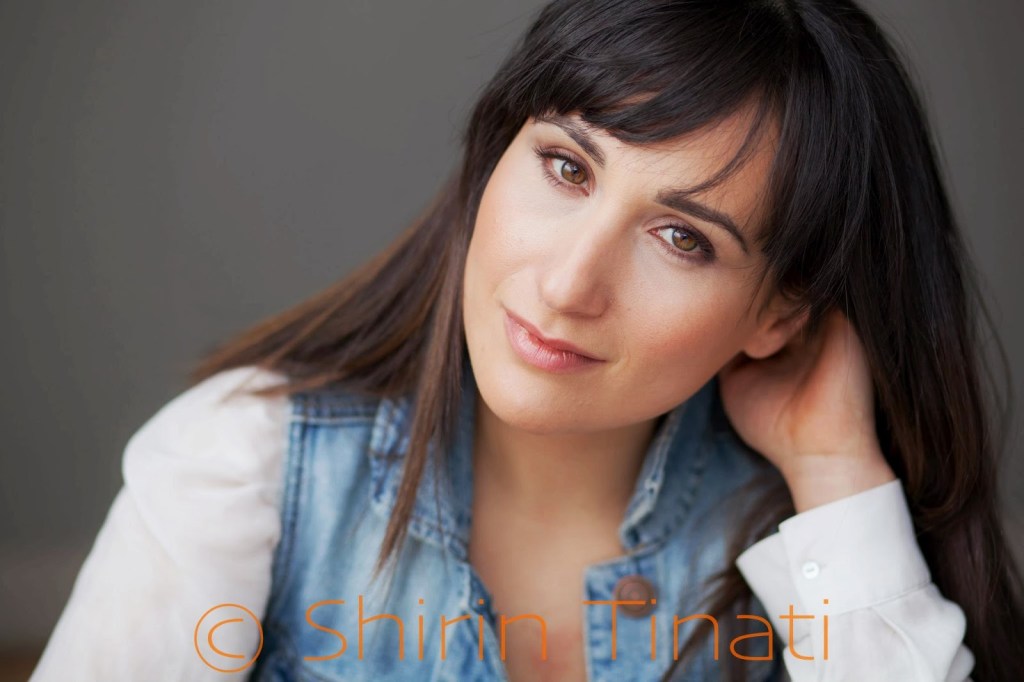
Daniella Rabbani, actress, singer, and a new yorker is currently producing and starring in #GYMSHORTS, a series of Web Shorts. Daniella graduated from New York University’s TischSchool of the Arts with a focus on acting for television. She also studied at The Stella Adler Studio of Acting.
Firstindigo&Lifestyle: What productions/premieres did you do recently?
DANIELLA RABBANI: THE GOLDEN LAND, THE OFF BROADWAY MUSICAL I WAS IN THIS PAST FALL WAS NOMINATED FOR A DRAMA DESK! I GOT TO DRESS UP AND GO TO THE NOMINEE RECEPTION AND THE AWARD CEREMONY. IT WAS SO FUN! I’M CURRENTLY PRODUCING AND STARRING IN #GYMSHORTS ABOUT THE FUNNY THINGS THAT HAPPEN AT THE GYM. IT’S AWESOME. I GET TO DO BE REALLY GOOFY WITH SOME OF THE FUNNIEST ACTORS I KNOW AND PUMP IRON WITH TRAINERS LIKE BRETT HOEBEL FROM THE BIGGEST LOSER. IT’S HYSTERICAL.
Firstindigo&Lifestyle: Who are your greatest mentors and idols?
DR: I’VE BEEN VERY BLESSED IN MY LIFE TO HAVE SEASONED PROFESSIONALS, MASTERS AT WHAT THEY DO, TAKE ME UNDER THEIR WING. I APPRENTICED UNDER THE STELLA ADLER STUDIO’S HEAD OF MOVEMENT, JENA NECRASON, FOR YEARS. SHE TAUGHT ME HOW TO FOLLOW MY INSTINCTS, TO TELL A STORY WITHOUT ANY WORDS AT ALL, TO COLLABORATE AND TO TEACH. I ALSO SING IN YIDDISH. ZALMEN MLOTEK, THE ARTISTIC DIRECTOR OF THE NATIONAL YIDDISH THEATER, HUNKERED DOWN WITH ME FOR HOURS AND HOURS TEACHING ME BEAUTIFUL YIDDISH FOLK AND THEATER TUNES. WE TOURED TOGETHER FOR YEARS. EVEN ARTISTS I HAVEN’T MET YET- GIRLS LIKE GRETA GURWIG, LENA DUNHAM, ZOOEY DESCHANEL, MINDY KALING – GIRLS WHO TAKE THEIR ARTISTRY AND FATE INTO THEIR OWN HANDS- THESE ARE MENTORS TO ME TOO.
What is your favorite performance genre, which one do you like more, musical theater, drama or film?
DR: I’M INSPIRED TO CREATE MORE WEB-BASED FEMALE DRIVEN COMEDIC CONTENT. I THINK THE WEB IS THE WAVE OF THE FUTURE AND I DIG IT. MY BACKGROUND IS IN THEATER, WHICH I TOTALLY LOVE, AND MY FUTURE IS IN TV (IT’S ALWAYS BEEN MY DREAM). STATING A PREFERENCE IS LIKE PLAYING FAVORITES WITH YOUR CHILDREN… EVERYONE DOES IT BUT IT’S NOT THE TYPE OF THING YOU’RE GONNA ADMIT.
Do you tour, how is it different to perform in New York City and elsewhere?
DR: I TOUR LESS THESE DAYS. THE LAST TIME I SANG A CONCERT OUT OF TOWN, WE WERE IN WARSAW, POLAND SINGING TO HUNDREDS OF POLES IN YIDDISH. IT WAS INTENSE. BEAUTIFUL AND INSPIRING, SAD AND HAUNTING… I GOT TO GET TO KNOW WARSAW A BIT AND EVEN TOUR AROUND KRAKOW AND AUSCHWITZ… IT WAS A COMPLICATED, LIFE CHANGING TRIP.
How do you consider yourself as a role model for young people?
DR: WHEN I PERFORM, I TRY TO BE MY FULLEST SELF- BY EMBRACING MY HUMANITY WITH ALL ITS GREATNESS AND EVEN MY IMPERFECTIONS. I HOPE THAT THE AUDIENCE WATCHING CAN FEEL INSPIRED TO LIVE THEIR FULLEST LIVES AS WELL.
Daniella Rabbani’s ownwebsite. Follow @DaniellaRabbani on Twitter., @drabbani on Instagram.
Founded in 2000 in Helsinki, the international performance company Oblivia is truly a unique phenomena in the Finnish performance scene. The group transforms larger than life themes into minimalist performances. Oblivia’s group fuses different genres and nationalities. The members are from Finland and the UK have experiences in music, dance and theory, which allows them to play between suspended tension and sense of humor. Since its beginning, the group has attempted to create a common language in the performance. In June 2013, Oblivia will perform its recent work ‘Museum of Postmodern Art’ in the NEW Performance Turku Festival in Turku Finland. The performance is co-produced by at PACT Zollverein and Espoo City Theatre. The premier took place at PACT Zollverein, Essen in November 2012 and the Finnish premier was at Espoo City Theatre in November 2012. The performance is the first in a series of five and part of the five-year project Museum of Postmodern Art – MOPMA. Annika Tudeer, the founding member of Oblivia tells about the history of the group and about her own background in dance.
AT: In the late eighties I trained dance, contact improvisation and what was called new dance then. I then worked as a dancer and choreographer until I started at the Helsinki University in 1994 where I studied literature as a main subject, philosophy, theater studies and gender studies. I belong to the rather self-taught generation that mainly acquired knowledge and experience through training and working. I also did amdram and studenthteatre that was quite important as well. Oblivia was founded in 2000 in Helsinki during the European Cultural Capital year. I had this grand idea of creating a network and collective of artists doing site-specific work. However I had not realized that a collective does not have a leader who decides most things (that was me, of course) and is in charge, but that kind of leadership is better suited in a smaller group. We did 4 site specific pieces during that year that were very popular and had therefore a great start, and in the autumn Anna Krzystek from UK joined us and the smaller Oblivia that is still exists was formed.
I basically wanted to create an alternative working environment to most of what I had experienced in the dance and theater field in Finland, experiment how to work together and have fun and create high quality work, merging theory and art in an organic way, not paying too much attention to theory but rely on the fact that it is there. I was also very interested in structures, all kind of structures: working environmental structures, political structures, artistic structures, architectonical structures, and that was always part for the work somehow. I still organize the practical stuff together with our producer, but the artistic work is purely collective.
How has the concept developed during the years?
AT: After doing site-specific work for a few years we decided to move into the black box using light and sound and start to explore the black box. It is the most challenging place and also the place for most concentration and innovation in performing arts we think. We are super organized, working away from 10-17 Monday to Friday over 4 months that are divided over the year. The work has evolved a lot, we work over several months with a piece, with pauses in-between where we tour or do other things (me mainly admin and networking). I also think that we have become much more many faceted in the work and how we perform and at the moment we are very much concerned with ideas of collaboration. Which means a lot of discussions and trials and errors. The work becomes richer and bolder all the time. It is minimalistic and maximalist at the same time. We work with an empty stage and fill it with ideas and images that are created in the heads of the audience.
How international are you as a group in terms of performances, touring, attending festivals?
AT: Anna Krzystek lives in Glasgow, so she commutes to Helsinki for rehearsals, we are occasionally on residencies in Europe, and our current project Museum of Postmodern Art that contains 5 performances over 5 years (2012-2016) has first an international premier and then a national premier. We tour as much as we possible internationally and although the growth could be swifter, we are touring quite nicely.
How do you generate and create the concepts, what are the terms of collaboration?
AT: Well, we decide on a theme, and since we like long term planning so the previous project Entertainment Island became a trilogy that was finished in 2010 and has toured since and now we have MOPMA (Museum of Postmodern Art) going. We decide on the big theme that is now art for five years and previously was entertainment. Then we decide on what kind of take we take for each new performance a little before we start to work on it. Then we start to improvise, devise material and do free association and a lot of talking and some field trips. Now we are working on the idea of bad art, and what that means to us and what it foes to us. We talked a lot at the beginning, had a workshop and at the moment we are in the second working phase where we go deeper in the material and slowly start to make sense of it and structure it. Basically we are the three of us (Anna, myself and Timo Fredriksson) working away, popping in and out of impros. But we have worked for 13 years together now so we have a secure sense of being in the studio without outside eyes. We have also started to involve our light and sound designers much more that is wonderful, so they share the process, the talking, and the figuring out a lot from the beginning. They also watch rehearsals and comment.
What is your opinion of the performance field currently, how do art and performance co-exist?
AT: I have a feeling that the field is growing rapidly, and that the boundaries are blurred totally. We have all diverse trainings: Anna studied at the Cunningham studio in New York for several years, you saw my background and Timo is a classical pianist. This kind of heterogenic diversity is perhaps not that common, but nevertheless companies and projects are vibrant and mixed. It is interesting and exciting times we are living in re: performances. Sometimes I am overwhelmed by the quantity of performances, and work and activities and sometimes I miss a feeling of a clear trend and some leading stars and high quality work is not all too common skilled yes, but work that moves me is not that common at the moment. But in general I think that there is a very exciting scene going on at the moment.
Your most important influences?
AT: The old companies like Needcompany, Forced Entertainment, Pina Bausch, John Cage, – the usual suspects…
Where do you see your project going, how do you balance the work and life, how about the ‘other interventions’?
AT: We are starting to reach out and are discussing several collaborations with other companies, which is a totally new situation. We intend to tour more and more for each year, and also to communicate more with other artists in various ways. Sometimes we feel a little isolated here, so we are working on breaking out from that isolation and become more part of the world, so to say. For me work and life are intertwined since my husband is Timo who is part of the Oblivia core and we have to deal with how to take care of our 9-year-old daughter as well. I have also been very active in founding the Performance center, ESKUSin Helsinki for working: with three studios, and a shared office for companies and individuals in the performance scene and independent scene in Helsinki. We have residencies, rent out spaces and work on different levels to be a supportive structure without being a venue or a production house.
Oblivia will premier MOPMA 2 (that is the working title, the real title will emerge soon) in mid September in Trondheim, Norway at the Bastard festival. Until then the company will tour MOPMA 1 in Finland and Entertainment Island in Poland…
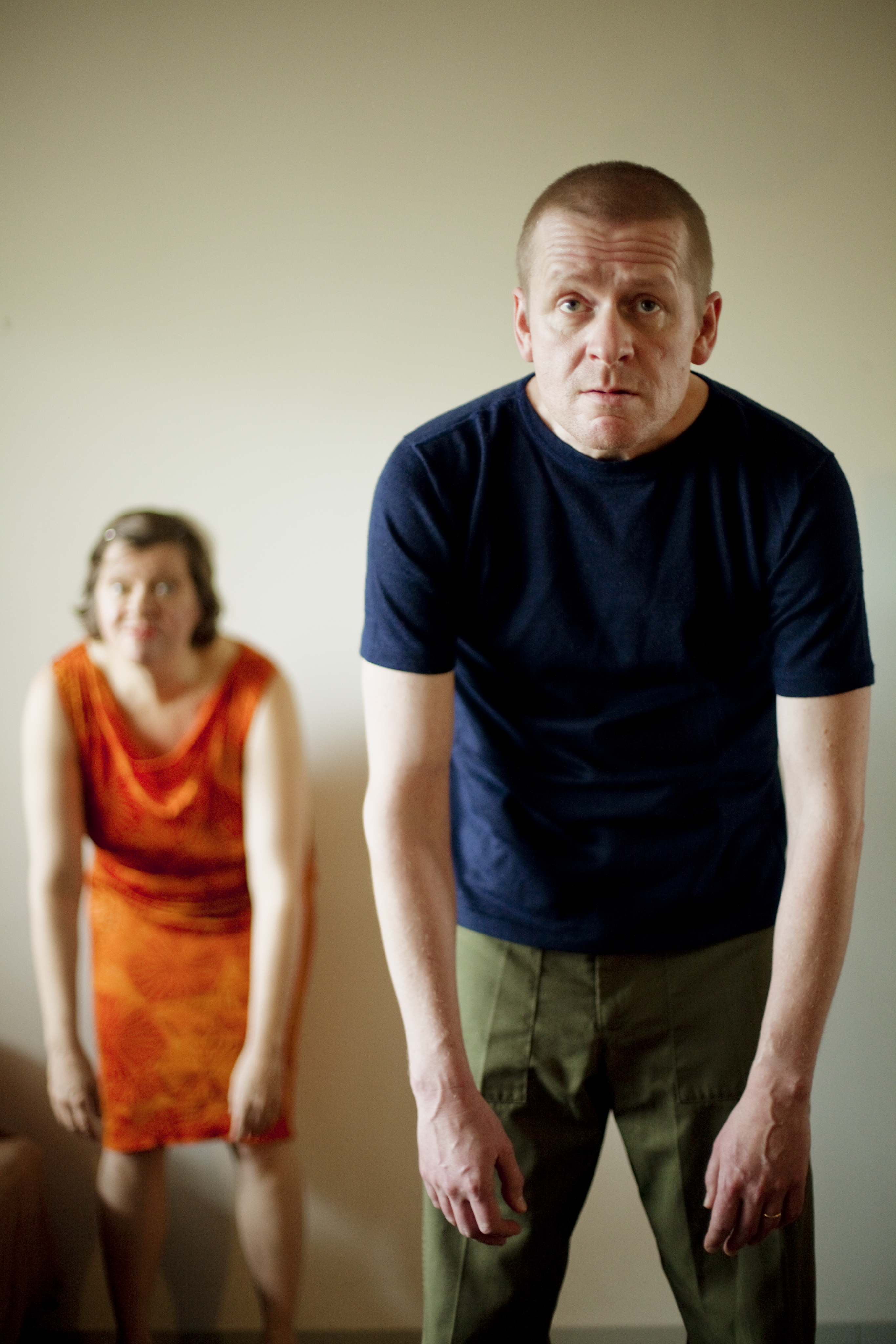
(Annika Tudeer and Timo Fredriksson. capture: Eija Mäkivuoti)
Firstindigo&Lifestyle: COULD YOU TELL A GREAT STORY FROM MILAN, AN ENCOUNTER, HOW WAS IT LIKE THIS TIME?
Mari Isopahkala: It was overall a great trip, although these design exhibition weeks are sometimes heavy. Meeting different people and professionals is very interesting and gives you back a lot. As I had to be standing a lot, and walk around long distances between the exhibit places, I kept changing my shoes to feel more comfortable. I got few great contacts. It will be exiting to see what these new things will bring me in the near future.
Firstindigo&Lifestyle: HOW MANY TIMES HAVE YOU ATTENDED MILAN DESIGN WEEK?
Mari Isopahkala: Many times, I have not even counted. Not every single year during my active working years, but almost. It is already a very familiar place to me.
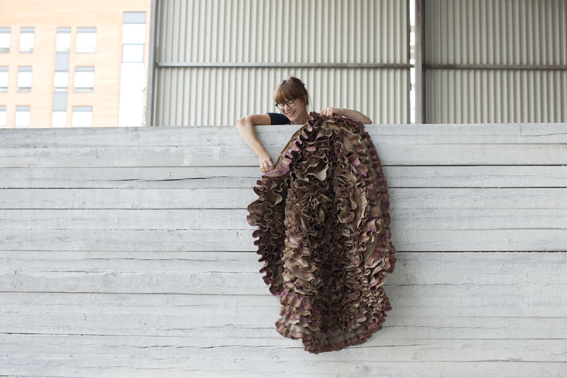
(Designer Mari Isopahkala with a ruffle carpet, 2009. Capture: Liisa Valonen. Above: Kristallit small glasses, Konkkaronkka cutlery for Marimekko, designed by Mari Isopahkala)
Firstindigo&Lifestyle: WHEN YOU WERE IN NEW YORK TWO YEARS AGO, WHAT DID THE CITY OFFER?
Mari Isopahkala: It was good to see what the industry is like in North America. What are the current trends there, who are participating in those trends, and so forth. New York City is definitely quite different from the North Europe. Commercialism and business are in a higher level in the North American marketplace. What I can say about Finland is that we tend to be not so good in selling and marketing. I still have so much to learn about it, and even about how to brand my products. What I admired in New York City was the openness of people, how they have positive energy and courage. They also seemed to be forward thinking.
Firstindigo&Lifestyle: Your design-language is very poetic, and perhaps minimalistic (or is this a stereotypy that is often attached to Scandinavian design?). In any event, how would you describe your designing?
Mari Isopahkala: Thank you, poetic is very beautifully put. Well, I would not consider minimalism as a stereotypical thing in the Nordic design. I think that minimalism comes so naturally. We are living that type of lifestyle, and it shows in the designs, which is unpretentious. This notion contains our products and our environment. I would describe my own design-language as clear, and yet personal. It does not shout too loud, yet it does not leave you cold. I hope that my designs are attractive as well. My products have some Ostrobothnian (Finnish) femininity in them. They comply strength, and also sensitivity.
Firstindigo&Lifestyle: It is simply amazing that you are so diverse as a designer, you have interior design, jewellery, everyday objects, unique industrial design pieces, lighting design, and so on. Is there a design, which is closer to you personally and why?
Mari Isopahkala: Yes, I like to do different things. It keeps my mind open and fresh, and very much helps to discover new things. When I look at the ideas from outside, I have to learn new things. This creates newness and innovation. I enjoy working together with skilled craftsmen from different industries. I have a huge respect for artisan’s skills. If I had to pick one material, it would be glass. I am so intrigued by the practice in glass factories. It is hypnotic to watch the melting glass. It feels almost sensational.
Firstindigo&Lifestyle: Can you name a few of your mentors and inspirations, Finnish and international?
Mari Isopahkala: I have many inspirations in art, design, and in the everyday life. I have not been following anyone’s path really, but I have been gaining inspiration from many great masters in the past and in the present. The environment where I live inspires me tremendously.
Firstindigo&Lifestyle: How would you describe the essence of nature in your designs, the Finnish nature-urban dynamics? What comes to mind also is the Nordic nature with mythological traces, how it can be present in our consciousness. Is there room for utopia in your designs?
Mari Isopahkala: Nature is so important part of my life and that way it probably shows in my designs. It is not an absolute value but it is present. I have tried also other ‘domains’, and any kinds of oppositions interest me. I think I question existing myths in a good way. There is of course room for utopias in my designs. I have a need to move things forward towards the unknown paths.
Firstindigo&Lifestyle: Can design be masculine and feminine?
Mari Isopahkala: Good designer can utilize both, and then be without specificity of these qualities. Doing feminine or masculine design can be a conscious choice. I am very aware of my own choices. And I have used both of these two qualities. So I am trying my best.
Firstindigo&Lifestyle: What are your future plans?
Mari Isopahkala: There are many things, some of the plans are still in the air, so to speak, some on the other hand are in the process. Right now I have worked so hard that its time to start planning the summer. I believe that once you get some rest you gain new perspectives. Then it is also time to make next big decisions.
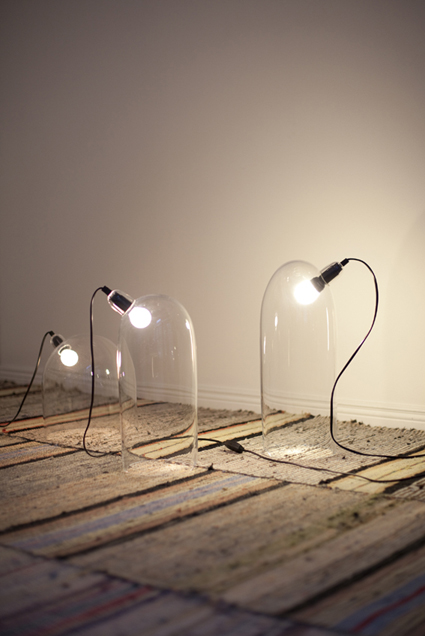
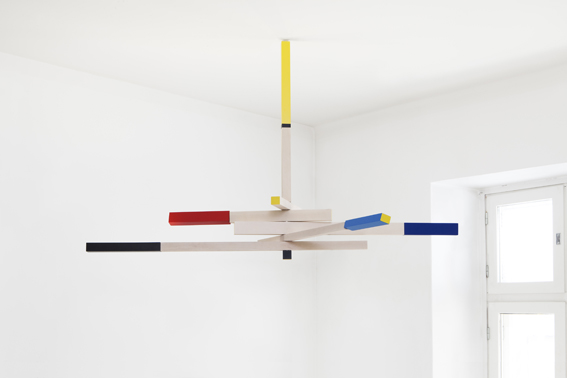
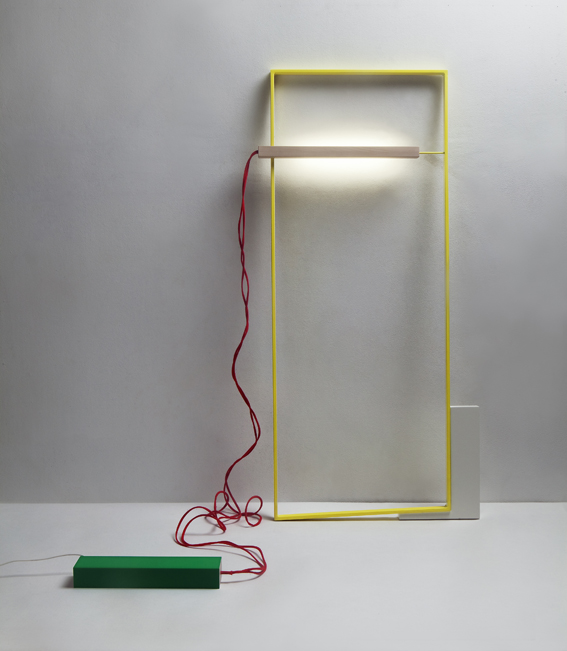
1. greenhouse light, 2. viikari light in space, 3. viikari basis, 4. no jaa big sculpted light








 Firstindigo&Lifestyle