• Future perspectives in verses

    Future perspectives in verses

    Climate Change brings to mind emissions, which require solutions, such as futures with bikes and more car free highways. The planet Earth is calling us to bring nature to the negotiation table. These are the verses for the new year.

    "Nature's rhythm is different from the pace of the contemporary society."

    What we don’t seem to realize is that nature is in fact offering space without asking us to limit our dreams. Two years into the pandemic has changed our everyday perspectives; we have voluntarily moved our lives more outdoors. We suddenly pay attention to dear little details that we see in nature, and think about the future livelihood and living on this planet.

    Nature’s rhythm is different from the pace of the contemporary society. This is also something that this pandemic has taught us oh so well. Did we ever imagine that we would be capable to pause, and start dreaming of a different future? Some of us did dream, at least.

    Looking at the birds in winter, as they descend to a freezing environment.
    "Looking at the birds in winter, as they descend to a freezing environment." 

    Let’s take birds in the winter as an example. What is it in their circumstances, the birds in suburban environments, that is causing us to pause and consider if the animals have enough food.

    Cars, parking lots, people going shopping in their vehicles, trains, commercial projects surrounding geese habitat. What is so special about these animals living next to human habitation, geese in our urban and suburban parks. They make us think changes in season, and how the big birds used to migrate someplace warmer.

    Humans are responsible for destroying wilderness, wetlands, populations, to name a few. With geese, as their extinction was more evident due to destruction of the species natural habitat – the birds were brought into urban areas where they had never been living before. The natural migration cycle stopped and the geese stayed in their new settings. Humans have since then found that the birds’ new existence is perhaps too close, birds taking over parks and parking lots.

    "We can be thankful that they still have some wilderness to roam and be birds."  

    A question of food for geese is a problematic one, since feeding and making them accustomed to vacate human habitat eventually means that nature’s own cycle is being interrupted. Not because geese themselves were opting for these new environments. We can be thankful that they still have some wilderness to roam and be birds.

    "Future perspectives do imply stricter and more compassionate approaches, when it comes to ever busy air and street spaces."
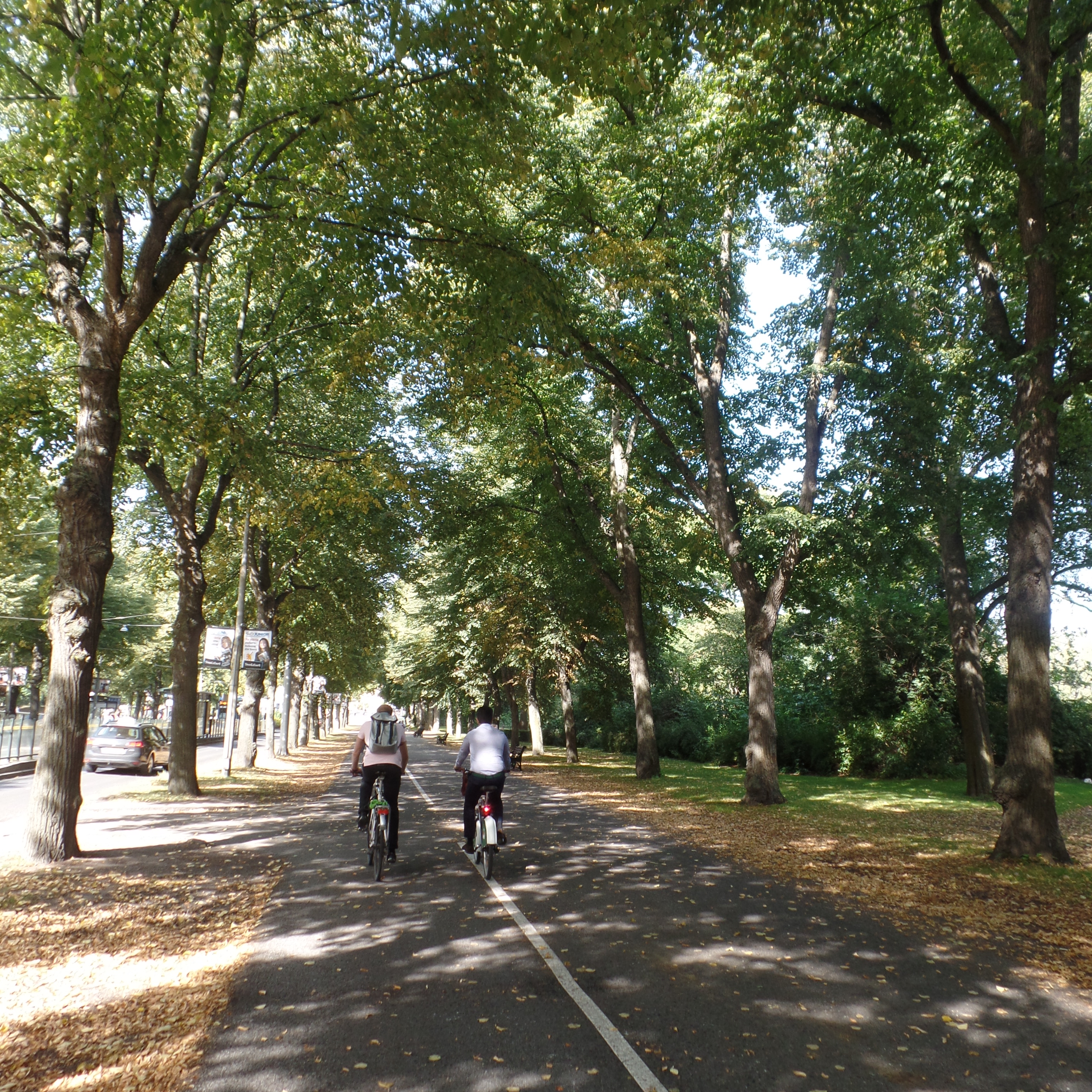
    Biking is an old fashioned green new deal. It also goes together with the nature’s rhythm. The pace is one of wondrous.
    "Biking is an old fashioned green new deal. It also goes together with the nature's rhythm. The pace is one of wondrous." 

    To participate in a green new deal, cutting back emissions is of course not just an act of love for many of us who like to travel and seek far away adventures. Yet, future perspectives do imply stricter and more compassionate approaches, when it comes to ever busy air and street spaces. Cutting down greenhouse gas emissions is easily a foreign language concept or theory that stay away from the realities of modern individuals, who can count cars in the garage. Everybody needs their own car just to get around. How to explain this in simple terms, how to change this pattern?

    "The awakening is bringing nature closer to our communication, forming new communities." 
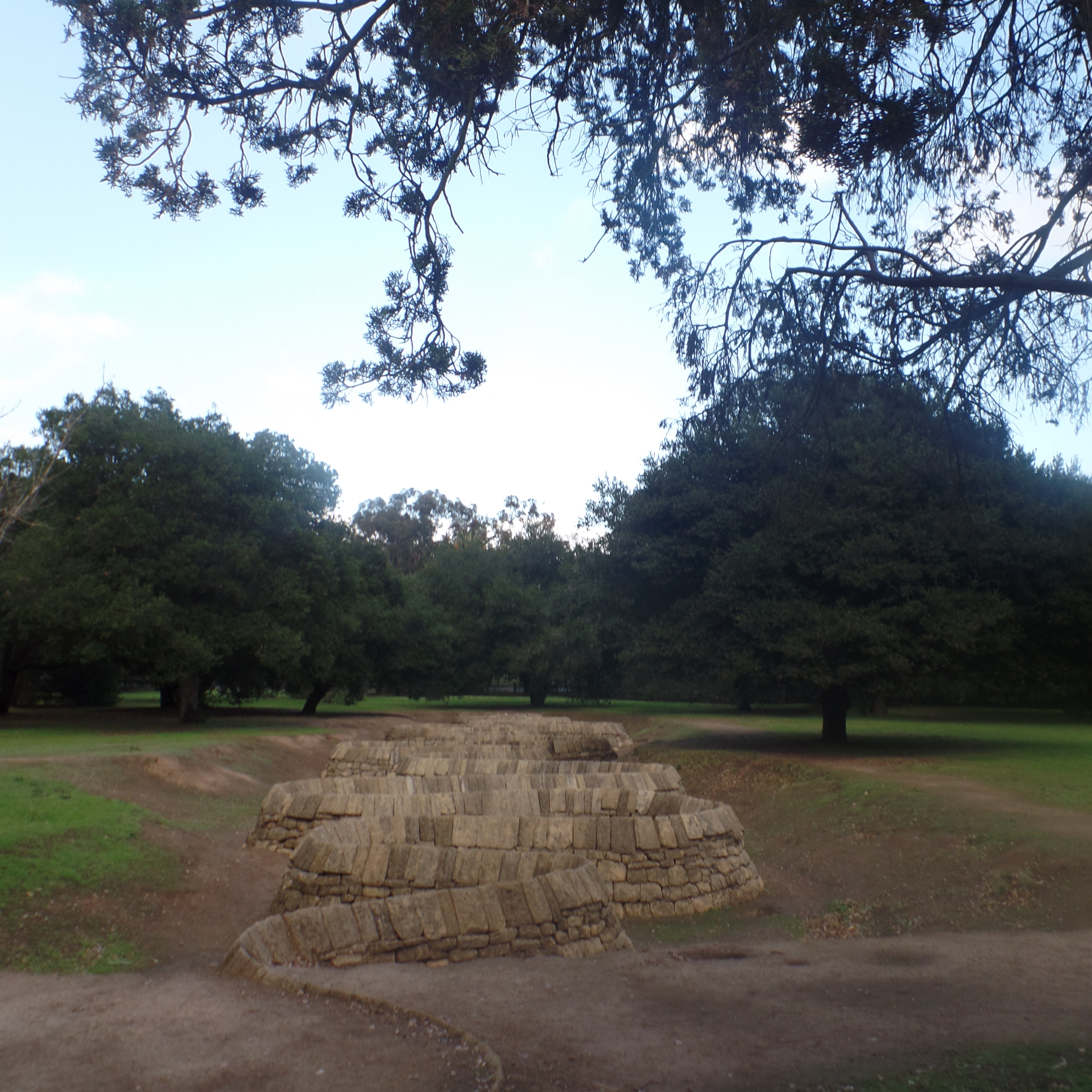
    Stone River by Andy Goldsworthy outside the Stanford University Cantor Center for Visual Arts.

    Futures hold promises for the world in the form of awakenings. Climate coalitions and awakenings for earthy subjects are thankfully becoming one kind of new normal.

    "World, in which constant profit is a standard, and where sustainability and co-creation are like dialects of foreign languages."

    When it comes to art, fundraising is meeting with auction house practices to make equity and ethical planetary standards meet in the productions. How much sustainability can we create with these methodologies, is yet to be discovered – not just in the form of capital, but as acts of recycling, repurposing, and meeting circular economy standards.

    World, in which constant profit is a standard, and where sustainability and co-creation are like dialects of foreign languages. Co-creation implies a communal aspect of creating together. As such it is somewhat strange to Western notions, which rather highlight the success of ego-driven selves.

    At its best, the awakening is bringing nature closer to our communication, forming new communities. Community and art can meet in various ways. The art works that take over public spaces are a great example.

    Outside the Stanford University’s Cantor Center for Visual Arts is a Stone River, a large wall created of sand stones. A sculptural serpentine project created by artist Andy Goldsworthy (2002), is blending with its campus environment, growing naturally in the landscape of trees and meadow, bringing joy for people working and visiting the campus and the Art Center. These stones are remnants of campus buildings. The stones had fallen during two earthquakes that hit the bay area in 1906 and 1989.

    Stone River is composed of rumble that was left behind after two earthquakes.

    The Stone River was inaugurated in 2002 at the campus. Goldsworthy found out that the campus had remnants of historic earthquakes that shook the area, in 1906 and 1989 respectively, forming stone rumble that had fallen off the buildings. He instantly gained a feeling that stones could organically return back to earth, forming a flow which almost seemed that it had archeological origins. As if the stones had been there for a long long time.

    Goldsworthy is referencing rural Scotland, where there is archeological presence of people layering stones, layer after layer like this.

    In Stone River, the stacked stones in the sculpture, set in a nearly 3 1/2-foot trough dug in the earth, rise from a 4-foot wide base to an almost impossibly precise undulating line. “I call it a river, but it’s not a river,” Goldsworthy said. The sculpture is “about the flow. There’s a sense of movement in the material, through the individual stones, so you just see this line.” –Barbara Palmer, Stanford Report
  • Patricia Chow: Vallauris, France in 5 weeks

    Patricia Chow: Vallauris, France in 5 weeks

    Patricia Chow, an LA-based abstract painter who creates place-specific sensory works, returned from her artist residency in France.

    Firstindigo&Lifestyle: You have been living mostly in LA during the Covid. I imagine everyday life experiences have changed for you as well.

    Patricia Chow: I was used to frequent international travel prior to Covid, so it was definitely an adjustment during lockdown. My art practice had been centered around translating place-specific sensory and mental lived experiences into abstract paintings, and needless to say, this failed utterly when the only place I experienced for 16 months was the inside of my apartment. My goal for 2021 was to re-acclimate to life in the world, including rebuilding my place-based art practice.

    Firstindigo&Lifestyle: Why Vallauris, France, how did you find about this place and art residency?

    PC: While the world began to reopen for travel in summer 2021, Covid infection rates continued to surge, so I used my skills from my day job as a data analyst to track international infection rates and identify regions where it would actually be safer for me to stay than Los Angeles, where I currently live. The other piece of the puzzle was to identify residencies in those areas that were still operating and had places for late 2021. Prior to omicron, France had been doing well.

    I had wanted to spend some time in Collioure, France, to investigate the origins of fauvism, so this became a starting point for my search. I ended up 300 miles to the east in the town of Vallauris (val-o-REES), where Picasso did his ceramic work in the 1950s. I was very lucky – the A.I.R. Vallauris residency lasted five weeks, and soon after I left, France’s infection rate skyrocketed to 50,000 new daily cases.

    Firstindigo&Lifestyle: The landscape and atmosphere are probably very different from West Coast of the United States. Can you explain what is special about this residency, regarding of art history?

    PC: The Côte d’Azur region has beautiful light and dramatic scenery which have drawn artists for hundreds of years, as well as many museums dedicated to these artists (Chagall, Cocteau, Matisse, Picasso-who has two museums), and museums located in the former homes of the artists (Bonnard, Fragonard, Léger, Renoir), not to mention the fabulous Fondation Maeght. All of this was definitely a draw.

    Another draw was the residency’s self-contained format. The six cohort artists live in the same historic building and work in the same studios, essentially forming our own Covid pod, which helps limit exposure for everyone. While the living arrangements were quite spartan, I felt very lucky with my cohort – we had a lot of synergy in terms of both artistic and intellectual interests, and the final exhibition turned out to be quite cohesive.

    Firstindigo&Lifestyle: How did the new work get exhibited?

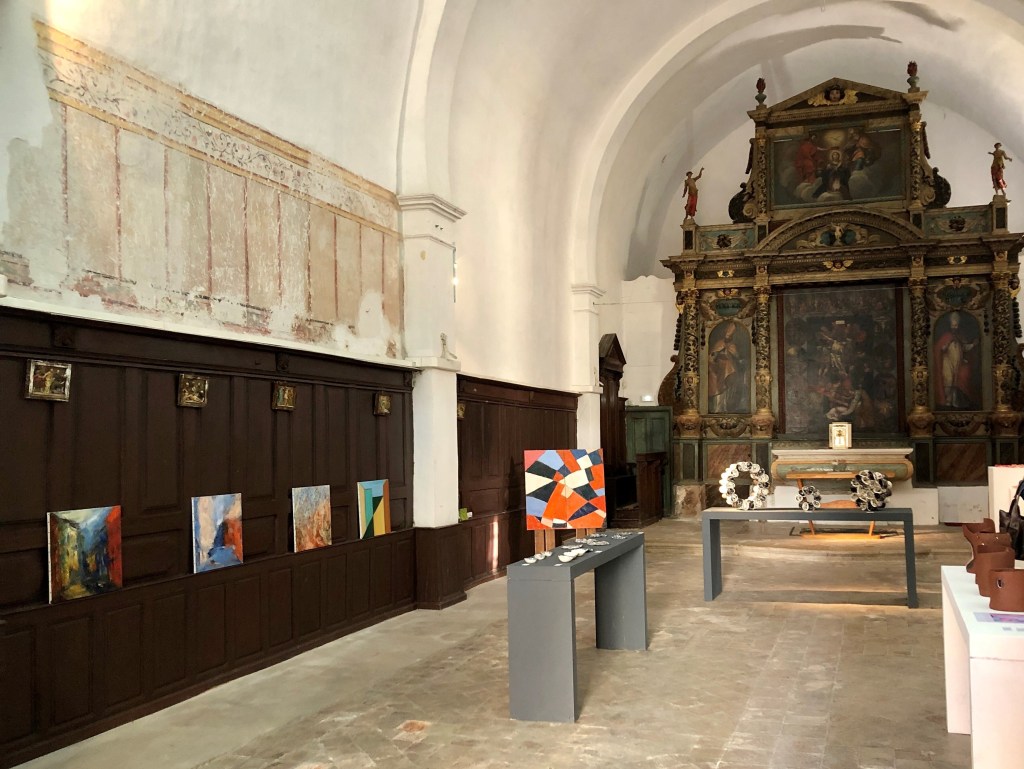
    PC: Another interesting aspect of this residency was the exhibition space for the final show: the Chapelle de la Miséricorde, built in 1664, and housing an enormous Baroque altarpiece from 1724. Of course, this could be both a blessing and a curse – small works might feel overshadowed by the space, and censorship could be a problem for some artists since it is, after all, inside a church.

    Firstindigo&Lifestyle: How would you think this location impacted your creative process, creating new sort of place-specific works?

    PC: I created a series of five mental landscape paintings of Place Lisnard: four 50x50cm studies and one larger painting, a 100x100cm diptych. I call them site-specific paintings because they are the most location-specific paintings I have ever done.

    Place Lisnard is an address, a pin on a map, rather than the conceptual space or idea of a city or place, and the paintings were made specifically for the exhibition space. The series explores different ways of translating the town square in paint, influenced by the many artists who came before me to the region.

    They are unified by a common color palette, which is ubiquitous in the area – found on everything from building exteriors and tromp l’oeil window shutters to bus tickets. The final diptych remains in the collection of the Chapelle de la Miséricorde, where it was first displayed.

    Firstindigo&Lifestyle: What do you feel you were able to take with you from this experience?

    PC: It is so important to stay flexible. Things have a strange way of working themselves out. I had wanted to do a deep dive into André Derain’s fauvist paintings in Collioure, but ended up in Vallauris submerging myself in the landscape paintings of Russian-French painter Nicolas de Staël who had spent some time in the area. One of his paintings from Agrigento is here in L.A., but there is very little written on him in English, and the books in French are hard to obtain in the U.S. But in France, I could just walk into the bookstore at FNAC and pick up a couple of monographs right off the shelf.

    Firstindigo&Lifestyle: During Covid, the material details of our everyday life have also been unusual. Did you experience some hardship during your five week residency, any obstacles and locally specific solutions for overcoming them?

    PC: The availability of materials turned out to be a challenge – the R&F oil sticks I usually use are sold in only two stores in France – and both are in Paris, 900km away. I even wrote to the founder of R&F about it, and he recommended ordering them on Amazon. I ended up pivoting to locally available materials that I had not seen before – Cobra Artist water-mixable oil paint. I had only ever seen the student grade of these in the U.S. The artist grade was much nicer – actually like oil paint, without the complicated cleanup. And since the materials will always dictate to some extent the work that you can do, I ended up painting in thick impasto with a knife, like the de Staël master copies I was doing, while incorporating the specific characteristics of Place Lisnard, the town square where the exhibition space, studio and accommodations were all located.

    Image above: The 5 paintings by Patricia Chow.

  • Corning Museum of Glass an innovative place to explore

    Corning Museum of Glass an innovative place to explore

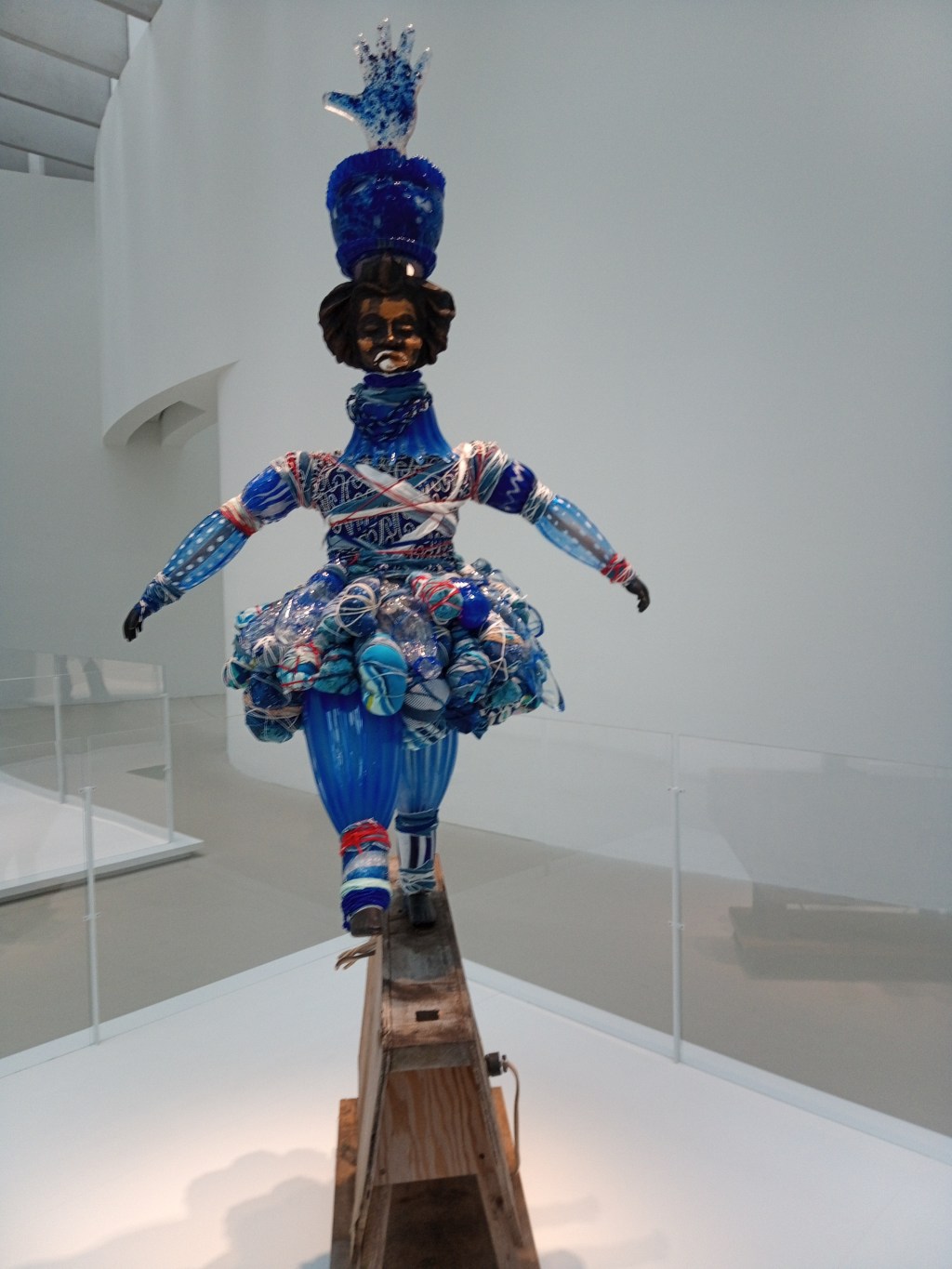
    As I walk into the Corning Museum’s light filled galleries, finally having a chance to visit the world famous glass and art museum, Vanessa German’s new sculpture is greeting me with its elevated presence. The blue sculptural figure is titled “The Walker; for how to honor the price of compassion– how not to die of lies” (2017).

    Vanessa German, The walker; for how to honor the price of compassion– how not to die of lies, 2017.

    This recent acquisition in the museum’s collections is a sculptural work defining new parameters. Vanessa German is a multidisciplinary artist, sculptor, poet, and performance artist. In her work, she has used mixed-media, found objects and blown glass to create a sculpture that celebrate cultures and identities of the black people. Anti-black violence has been a subject matter in her work; the art is showing identity, resilience, and community building, giving a voice for the marginalized.  

    The entry gallery in the museum has a curated theme ‘The Body and Narrative’. The curatorial intent is to display invisible structures attached to the body and identity. Art glass is pushing the contemporary art point of view,  questioning narratives about shared human experiences. On the other hand, works depict ideas and abstractions that create personal and emotional attachments.  

    Cat Burns_Va-Cume! Nemesis to Oliver the Amazing_2019
    Cat Burns, Va-Cume! Nemesis to Oliver the Amazing, 2019.

    Glass. Glass. Glass. Design glass and art glass, functional everyday household goods. Design beyond its formative use, and sculptural glass.  A ‘functional object’ can also become subject for the art glass. Such is the case with a sculpture by Cat Burns. The idea behind her sculpture, “Va-Cume! Nemesis to Oliver the Amazing” (2019), is based on a dog named Oliver. The evil Va-cume comes out of closet sucking up all the crumbs before Oliver can get and eat them. Innovative art glass at its best.

    Speaking about glass sculpture, “Meteor, Flower, Bird” (1980), by Stanislav Libensky & Jaroslava Brychtova is all about transparency in a form, one of the super qualities of glass.

    Transparency is one of the most important and most characteristic aspects of glass. It is penetrating; it dematerializes the material and connects with the atmosphere. – Stanislav Libensky

    Meteor, Flower, Bird, Libensky & Brychtova, 1980.

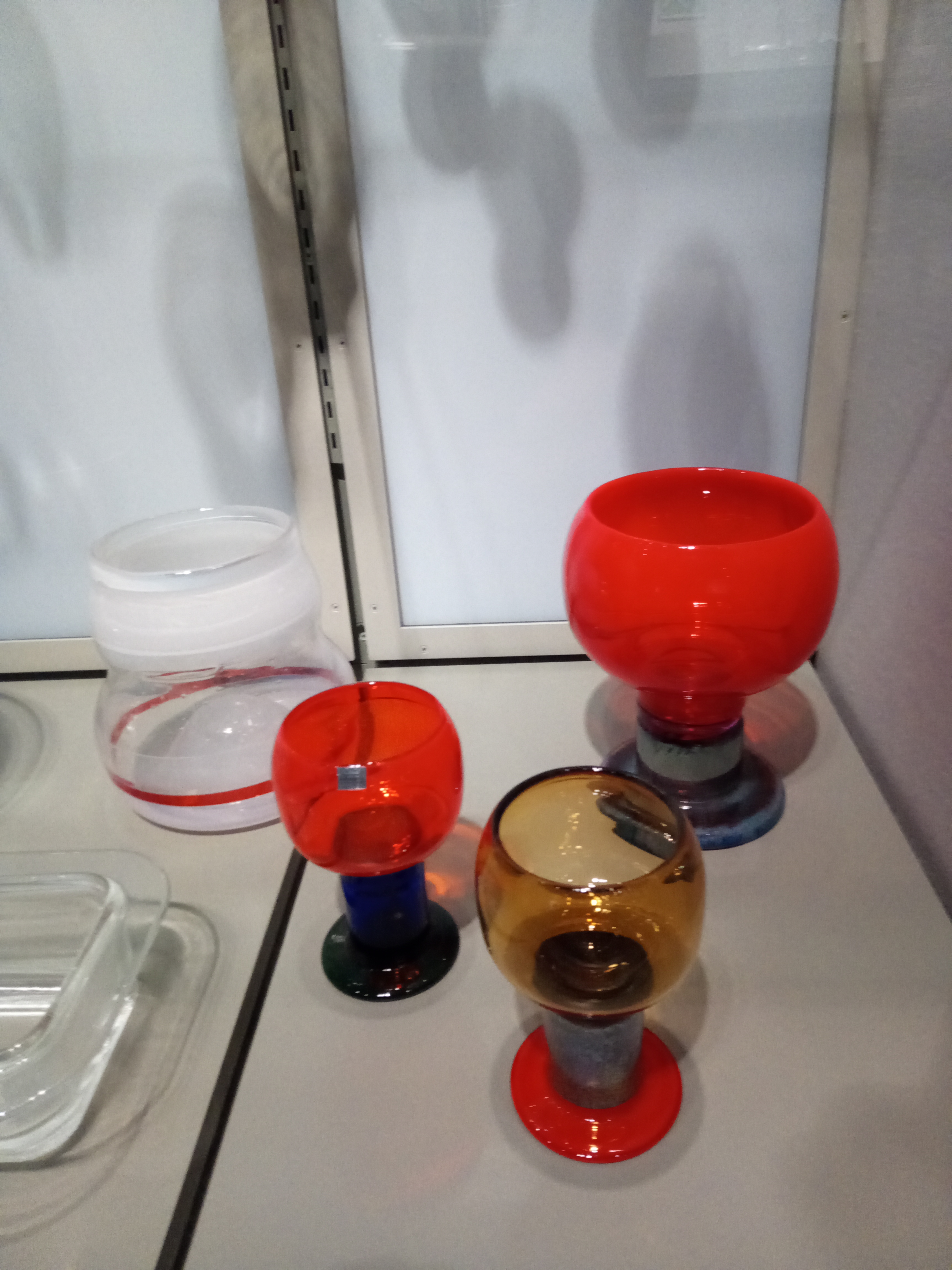
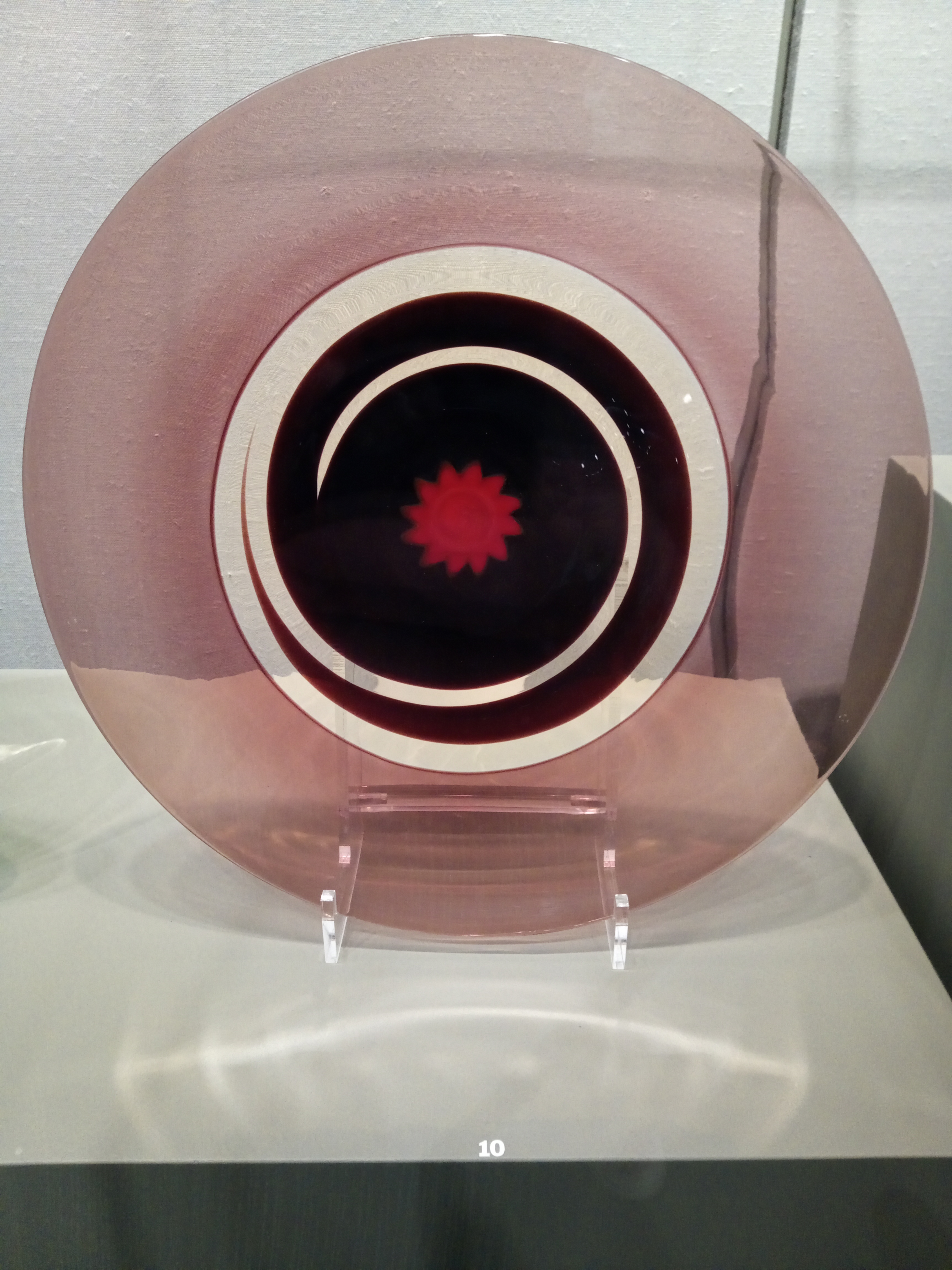
    It’s not only true for the beautiful glass goblets that come in different colors and patterns that capture our attention in glass. Or in the innovative crystal used as fancy glassware. Designs depicting sunsets, introducing reds, yellows, oranges, new shapes, captivating circles. ‘Milky’ glass, textured glass, colored glass, different patterns. In Finland, design glass has been around for everyday use for decades as objects and decorative vases. And, in fact has become world renown since the signature styles have been successfully branded by Iittala. The Corning Museum has its own share of Finnish designers. Tapio Wirkkala, Kaj Franck, and Alvar Aalto, among others, have become household names in the world museums.

    Finnish glass art is inspired by nature, and creates allure with exotic approach to color and form. The Midnight sun being one of the most inspiring phenomenon in the Arctic regions. Here’s to celebrate the Midsummer. 

    1. Kaj Franck, Pokals (1965), made between 1972-77. 2. Tapio Wirkkala, Plate, 1968.