Tag: architecture

  • SFMOMA Serendipity

    SFMOMA Serendipity

    The opening of a new expansion of the SFMOMA art museum was celebrated just a couple of weeks ago. The intention of the new Snøhetta designed museum, is to increase public access to the museum by creating more room for education for the arts and related fields, to bridge the gap between the exhibiting gallery spaces and unticketed areas, as well as connect the outdoor spaces around the museum. More room to hang out, to meet, to educate, to inspire and to be inspired. SFMOMA opened at its current location in 1995, when the construction was designed by Mario Botta. For the reconstruction, Snøhetta design team had a challenge to double the gallery spaces, and help create a museum, which is a hub for new things to emerge. The refurbished museum aims to bring together American and International arts, while the collections span through gestural modernism and conceptual art, to the emerging contemporary art from the Bay Area. SFMOMA has also promised to reach out to global art communities at large.

    The new SFMOMA proves that it is possible to reinvent an art museum. First, the museum architecture plays a huge role in creating the potential for the artworks that are being installed, as innovative architecture contests the boundaries of the space. This time, museum interior communicates with the exterior. Snøhetta has created a construction, which is seamlessly woven into the existing building, adding into the city’s urban dreams. As a result, the museum goes beyond its construction site, and communicates with surrounding parks and alleys. This proves that the ‘institutional’ side of the museum’s bureaucracy is set in the background, and the numerous stages of the public dwellings offered to the visitors is more apparent. A visitor attains the key role through the alteration of the spatial elements. Having so many choices to play with, the architecture transmits the perception, and creates together with the artworks a unique encounter for each visitor. The architectural line, it’s material continuation inside and outside sparks into multiple directions. Second, art plays with architecture in a new and unexpected ways, and changes the constructions too. With Richard Serra, Sol LeWitt, and Alexander Calder, among others, it’s hard to make the space appear as null. But there is so much art in the world to add into the master classics. New works show as much potential to communicate with the space.

    A new contemporary art installation inaugurates the museum’s New Work -space. Leonor Antunes, has created work with a title ‘a spiral staircase leads down to the garden’ (2016).  This piece communicates with the architecture, showing diverse angles to enter the gallery space. The artist has stated that she carries ghosts with her into her works, in bringing artists, designers, and architects whom she admires to her installations. ‘a spiral staircase leads down to the garden’ is no different, appearing as a continuation of the space as an interior. The handcrafted materials cover the floor, hang from the ceiling, light the space, and block a direct path. The installation shows the artist’s interest in the Modernism, highlighting especially the woman practitioners in the history of craft and design.
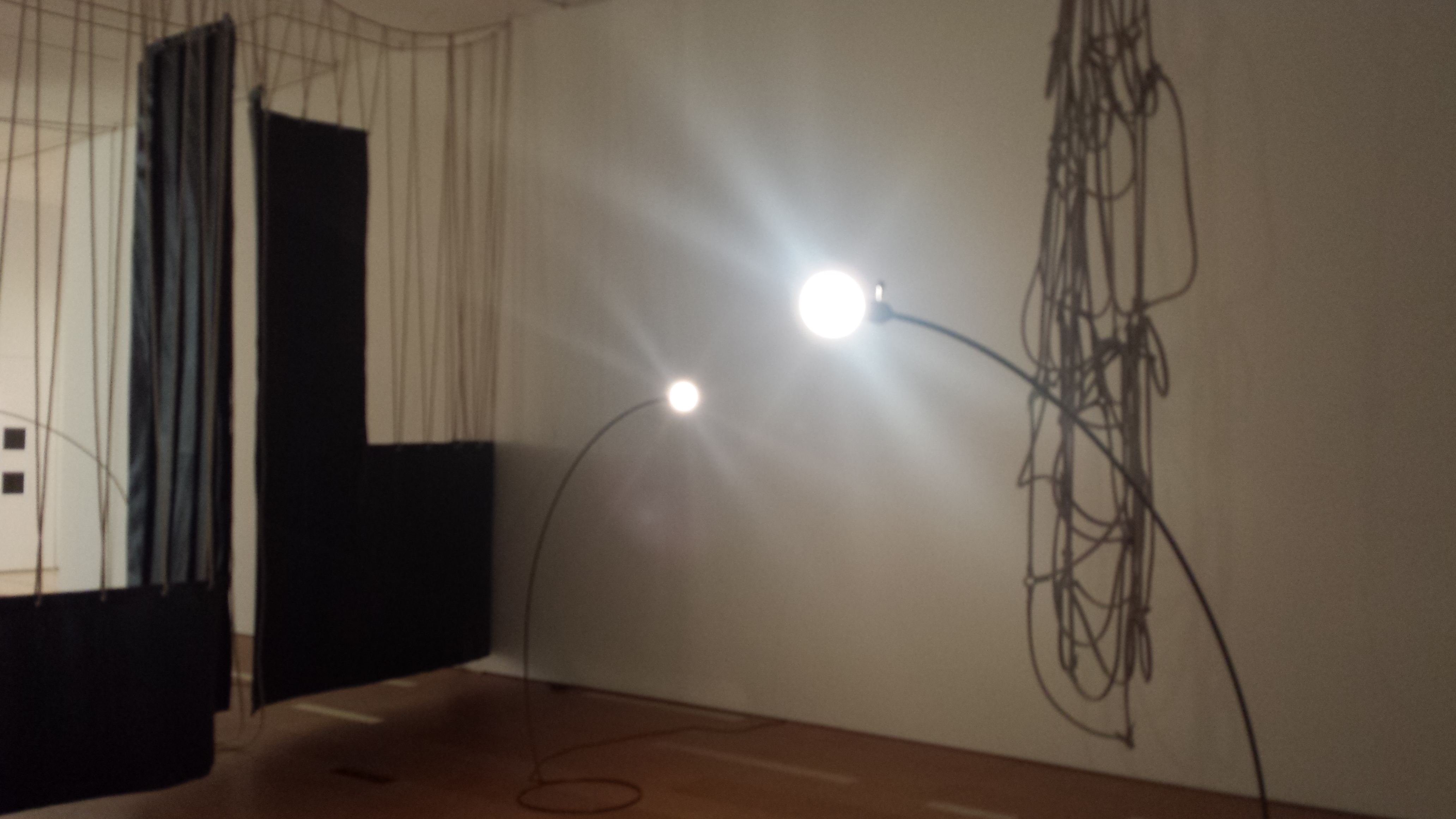
    Leonor Antunes, installation view at SFMOMA.
    Leonor Antunes, 2016, installation views of her new work at SFMOMA.
    Leonor Antunes, new work at SFMOMA.
    Leonor Antunes, ‘a spiral staircase leads down to the garden’, 2016, Brass, cork, leather, hemp rope, nylon yarn, monofilament yarn, steel, electric cables, light pulps, brass and Bakelite light bulb sockets, and foam. Courtesy of the artist and kurimanzutto, Mexico City.

    The Doris and Donald Fisher Collection creates much of the museum’s art collection. In particular, noteworthy is the display around the historic gestural abstraction, which started molding the American Art after the end of the World War II. The movement started to erase questions about the art’s capability to evoke thoughts and feelings. Perhaps it originated in the idea of believing in the healing mechanisms of the art. One work is particularly interesting. Joan Mitchell’s large size triptych ‘Bracket’ (1989), is a great example of the instantaneous moment in art. For her, painting could represent similar forces as the sculpture, forging out the movement and physicality.

    Joan Mitchell, Bracket, 1989, oil on canvas, is an example of the gestural modernism.
    Joan Mitchell, Bracket, 1989, oil on canvas, is an example of the gestural modernism.

    The show around gestural modernism is well thought out as part of the SFMOMA’s new opening. It reaches up to redefining the concept of a gesture via selection of works. This becomes a red thread to other artistic displays as well. The museum exhibits plenty of work coming from the plural identities of the Bay Area, yet, some combining elements construct a more cohesive palette. The best part is that the transitional space of the West Coast and its cultural crossroads confuses the pattern of the gesture as something fixed, measured, white and universal. The inside of the culture is turned outside, as much as the architectural environment overlaps both domains.
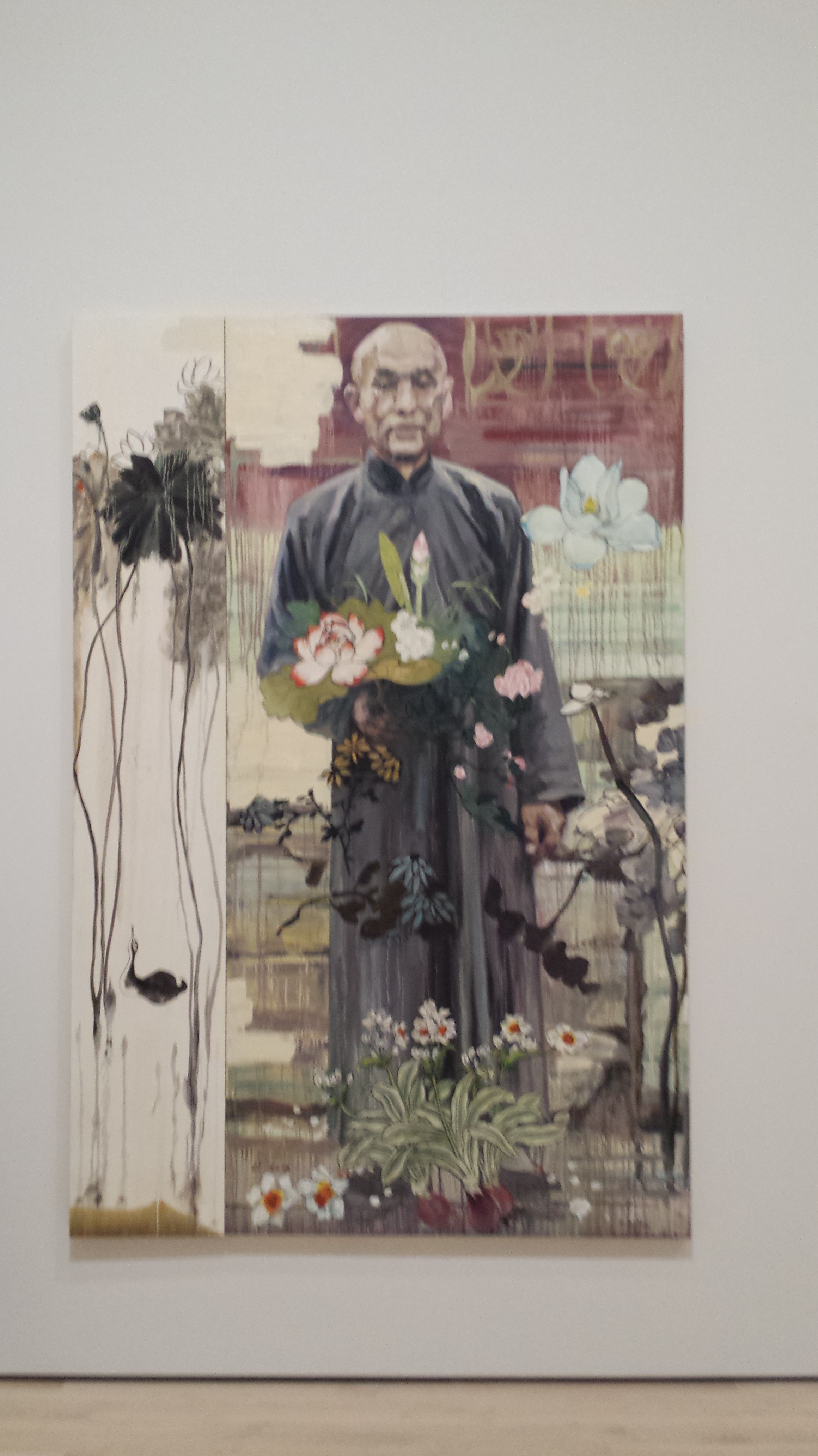
    Hung Liu's oil on canvas.
    Hung Liu, The Botanist, 2013, oil on canvas.

    The contemporary artworks do not create separation, but quite wisely culminate in supporting each other. Series of contemporary works follow black and white patterns, with a hip touch of pop art, and borrowing from chic minimalism of American interiors. These could of course be easily absorbed into the world of design and culture lending to Modernist and Postmodernist architectural patterns. Over all, the sometimes too heavy collective experiences are not so much emphasized, and there is more room for subdued artistic politics. Fragmented selves and posthumous experiences, ghosts of the artist’s personal influences as part of the installation define the process in the contemporary art.


    Images: Firstindigo&Lifestyle.


  • ETH Zurich pavilion attracted during IDEAS CITY festival

    ETH Zurich pavilion attracted during IDEAS CITY festival

    ETH Zurich pavilion was constructed of waste materials and opened to visitors during the IDEAS CITY Festival in May 28-30, 2015. The 3-day biennial festival takes place in New York City in May mapping the future of cities with culture as a driving force. It is a collaborative event, including a conference and street festival, inviting to civic action, as well as giving a platform for creative ideas to be exchanged.  This year’s theme was inspired by Italo Calvino’s literary work Invisible Cities (1972). Participants explored questions such as transparency and surveillance, citizenship and representation, expression and suppression, in their daily lives. 

    Cities, like dreams, are made of desires and fears, even if the thread of their discourse is secret, their rules are absurd, their perspectives deceitful, and everything conceals something else. (Italo Calvino, Invisible Cities)

    The ETH Zurich pavilion hosted events through the festival. What does a truly smart city mean to us was a highlighted theme around the site. The pavilion was entirely made of waste, so while our answers to what smart cities are can be many, an important question is the future scaling of consumption in the cities. ETH Zurich poses a sustainable approach where we need to reconsider what we can do with all the waste that now ends up in landfills.  Some solutions include tackling the pre- and post-consumer waste, while transforming it into construction materials like bricks and panels, which then can be used in making future buildings, homes and new products. 

    ETHZurich Pavilion during Ideas City
    ETH Zurich Pavilion during Ideas City 2015 (all images Firstindigo&Lifestyle)

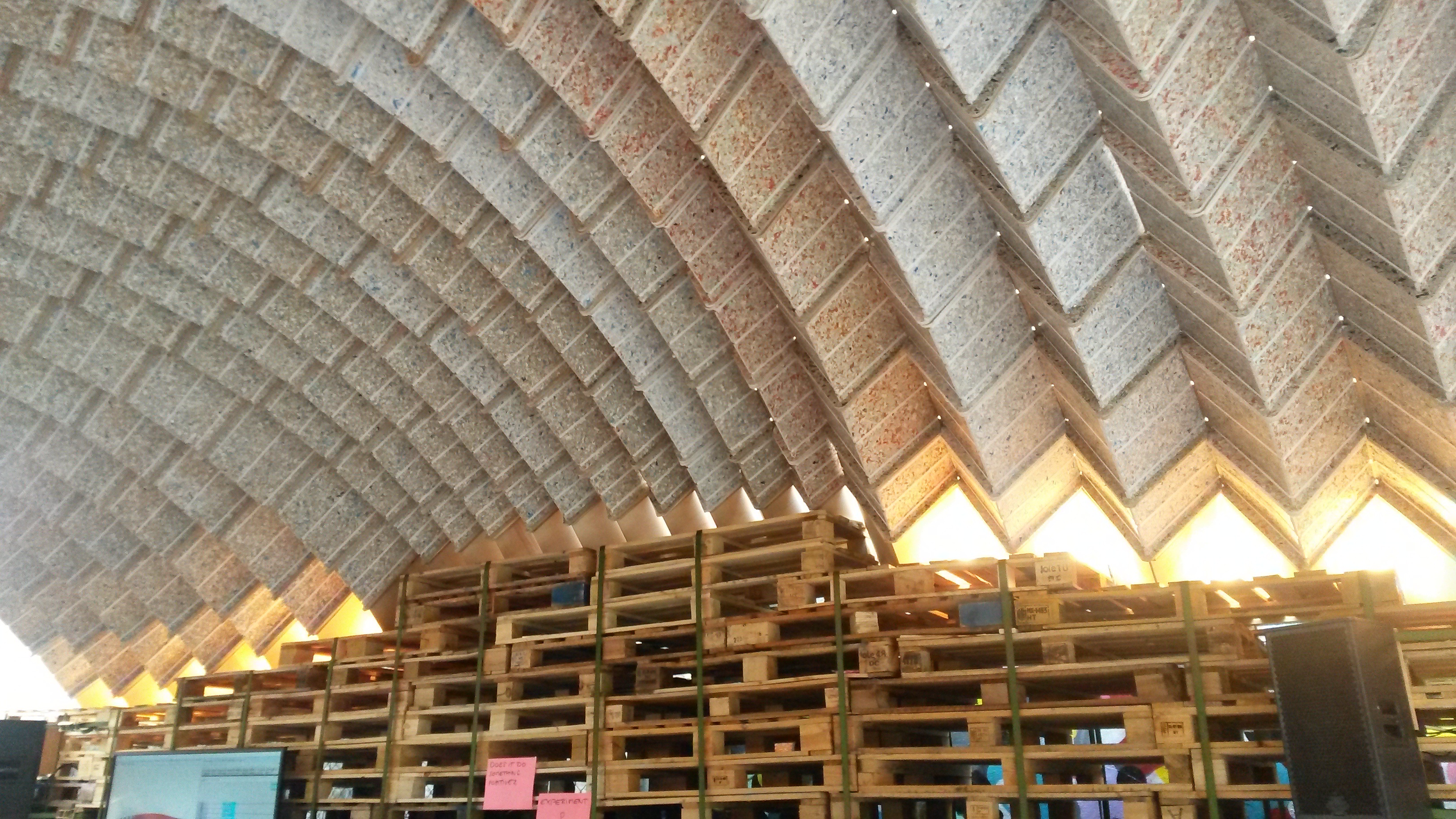
    The pavilion is designed with a vault-like roof, showcasing bricks made of waste. It displays engineering technique that minimizes the use of material through the structure of the design. It lets in a good amount of daylight and feels airy. The structure brings into mind Guastavino tile vaulting as source of inspiration. Some of the Guastavino vaulting can be seen for example in New York subway’s abandoned City Hall station. In that context, the vaulting benefits from a technique that uses self-supporting arches with standardized size tiles. What this Pavilion truly showcases is that in the future, cities will hopefully optimize the designs so the structures will occupy less space. Big cities like New York struggle with lack of space, so fitting the pavilion in-between the buildings in downtown 1st avenue looked and felt smart and savvy.

    The expressive Pavilion was designed to ‘visually float in the narrow slot between the buildings of First Street Garden.’ It is designed by the ETH Assistant Professorship for Architecture and Construction, Dirk E. Hebel and the Block Research Group. What the structure also implies aesthetically and visually is the potential of design to utilize so unstandardized and ‘weak’ materials in construction. The Pavilion’s shape follows the flow of forces, resulting in a compression-only vaulted structure. It has a double curvature and triangular beam-section, giving the structure a higher depth for the same thickness and weight.

    ETH Zurich pavilion during daylight
    ETH Zurich pavilion hosted panels and presentations, where participants pondered what a truly smart city means to them. It also curated an exhibition ‘Building from Waste’, which had over 25 construction materials deriving from waste.
    ETH Zurich pavilion detail reflects daylight
    ETH Zurich pavilion detail reflects daylight bringing out the colors and texture


  • Kamppi Chapel of Silence in the World Design Capital 2012

    Kamppi Chapel of Silence in the World Design Capital 2012

    Kamppi Chapel of Silence opened in May-June 2012 and immediately became a Helsinki World Design Capital architectural landmark. It has become a huge tourist attraction with thousands of visitors coming to see it on a weekly basis, and the architecture has gained international following. The Chapel is designed by the K2S Architects, and is built by the Evangelical Lutheran Church of Finland. It is a collaboration of the City of Helsinki and the Church. Kamppi Chapel of Silence is a unique concept in Finland, being a first of its kind.

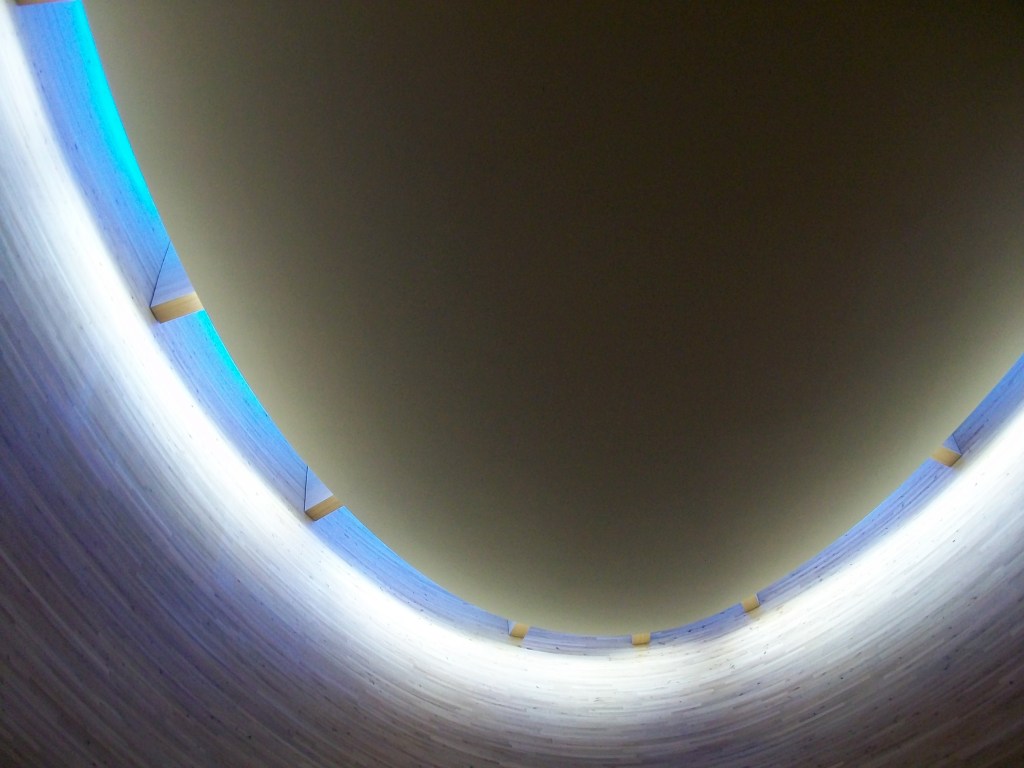
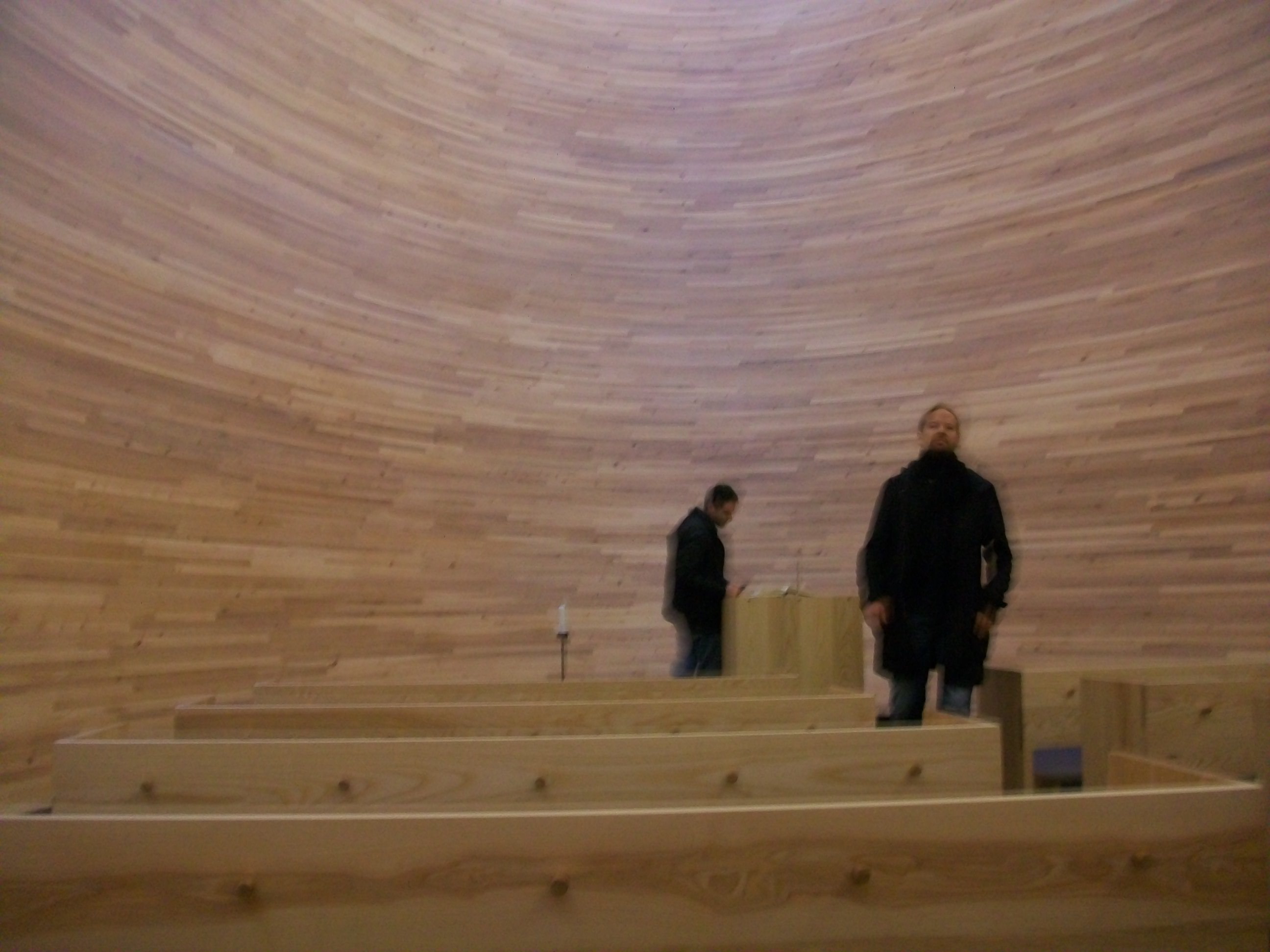
    The Chapel was nominated for the European Union Prize for Contemporary Architecture Mies van der Rohe Award. Nordic Architecture and Design Magazine FORM chose it as the building of the year within Nordic countries. The architectural shape brings in mind, for some, ideas of Noah’s ark, and for others it reminds them of egg or bowl shapes. What is extraordinary about it, is the element of cutting out the sounds of the city. When you enter the space you have come into contact with silence, and you are isolated from the urban mayhem. The Chapel entrance hall is designed for encountering people, there is a service desk for the staff to meet with the community and visitors. The Church offers prayer services and communion, but it does not offer the usual congregational services like weddings and funerals. Its main focus is to be open for people and to assist the surrounding areas. The professionals in the Chapel encounter and help visitors and even meet the youth hanging out in the shopping mall area. This sometimes means dealing with usual social problems of public spaces.

    The building brings in natural light during the daytime. The rest of the lighting is created to keep this natural balance. The lighting is operated by sensors, which adapt to human movement. The Chapel interior is made of alder, with common alder planks cut to shape, the benches are made of ash tree, and the exterior is made of horizontal spruce strips, which are bent at different radiuses. The exterior wood is glazed with a special wax that utilizes nanotechnology, and its frame is prepared of massive glulam beams, which were cut to shape. The exterior consists of 30 kilometers long of the material. The World Design Capital was launching a theme for innovative wood architecture, as it is more ecologically sustainable in the times of the World’s ecological crisis.

    The acoustics are fantastic for musical performance, however there is no room for an organ.  It would be ideal space for baroque ensembles to perform, for instance. The most important concept of the Chapel is to be a service desk for both the locals and travelers alike. The doors are open for anybody to enter either to stop by or spend some quiet time there. The Chapel is located in the middle of the Kamppi market square, which incorporates a big shopping mall and a metro station. The area has hotels and museums nearby so it invites tourists and international visitors. Overall, the square is an ideal location for the Chapel, since it is an intersection of the cultural and the leisurely, bringing in people from all parts of the city. The Chapel itself is a small gathering place holding the most 60 people.

    The City of Helsinki implemented that the World Design Capital projects come up with ideas of service design. Part of the thinking of the design is that it is embedded in the everyday life of people, and it can be more than just objects, material things and products. Design can be experiences, and it can encourage communities to create, to meet and come together, to influence and serve others. When this idea is brought together with architecture it adds another layer of the human experience. Good architecture is there to serve communities, and create meeting points in the busy city-life. The Kamppi Chapel employs professionals from the City and from the Evangelical Lutheran Church of Finland Helsinki parish, employing twelve people.  A pastor and a deacon, a youth social worker, two ushers, and the manager are employed by the Church. The city employs two social workers, two social instructors, and two cleaning professionals.

    inka

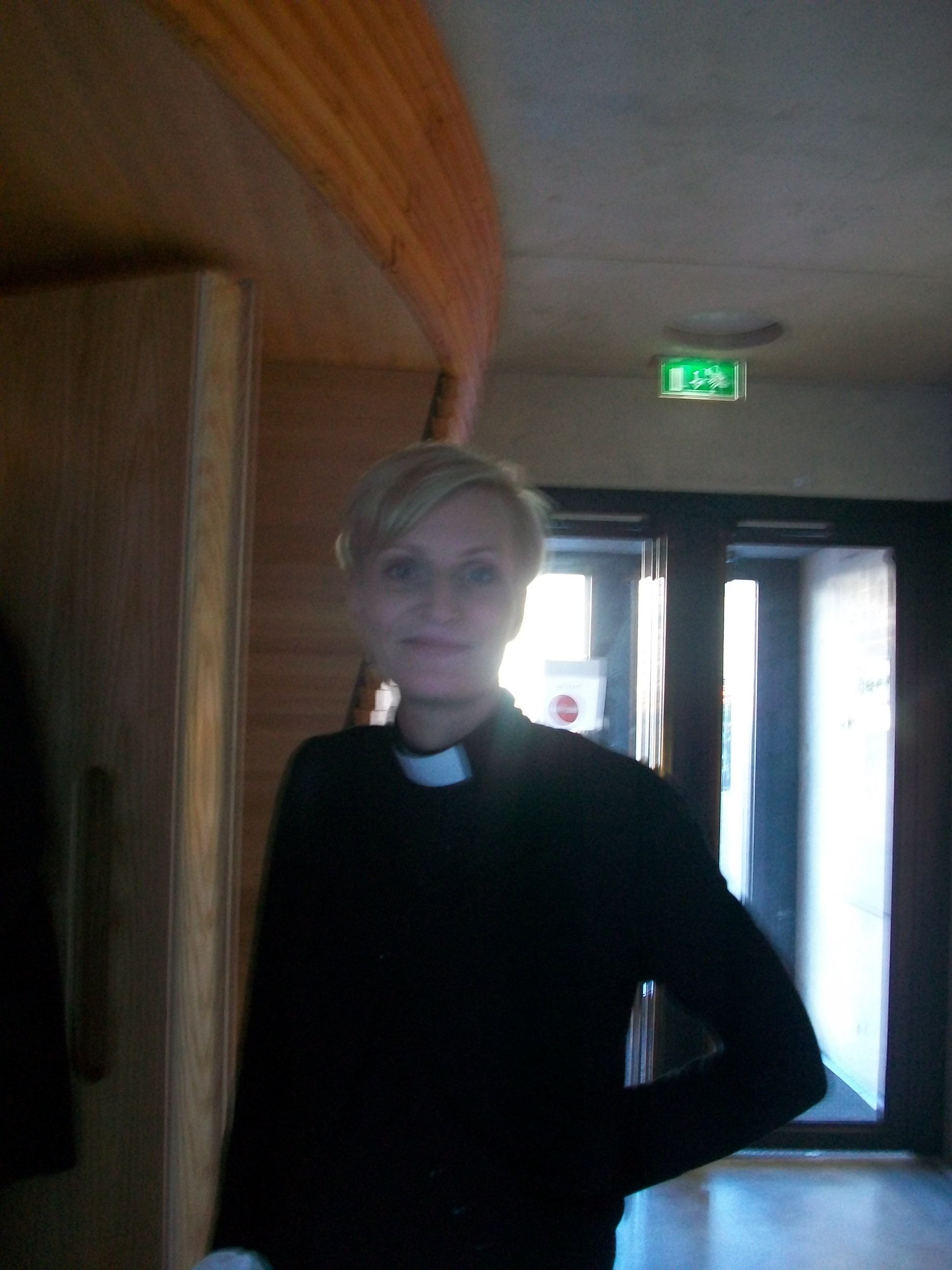
    Pastor Nanna Helaakoski


    December 12, 2012, was a special day for the Kamppi Chapel. 12.12.12. was commemorated there with several weddings in the Chapel. This is an unusual occasions, so I spoke to the Chapel’s pastor Nanna Helaakoski about it.

    – The December 12, 2012 was made a theme day of weddings at the Chapel. We had 16 couples to celebrate their wedding ceremonies. For some of them it was more important to get a rare chance to be married in the Chapel, than to emphasize the 12.12.12 as a special wedding day.

    Websites: K2S Architects Ltd. www.k2s.fi/

    http://www.helsinginkirkot.fi/fi/kirkot/kampin-kappeli

    WDC Helsinki 2012 wdchelsinki2012.fi/en

    (Update: Mice family living in the Kamppi Chapel moved to nature. Pastor Nanna Helaakoski assisted them. The following video was published on Jan 16, 2013 by Kotimaa24:n production’s Päivikki Koskinen and Katri Saarela, 2013.)