Tag: environment

  • Yuko Mohri creates the Japan Pavilion in Venice

    Yuko Mohri creates the Japan Pavilion in Venice

    Yuko Mohri is creating Compose for the Japan Pavilion in this year’s Venice Biennale. Mohri is putting focus on environmental issues with her work, which acts like a circular economy approach to creating art. With a title that etymologically references “to place together” (com+pose), the exhibition questions what it means for people to be together – at home, in society and at work – that pandemic changed. The post-pandemic world also faces a planetary climate emergency.

    The exhibition in the 60th Venice Biennale runs from April 20 to November 24, 2024, with the inauguration on April 17 in Japan Pavilion (Giardini di Castello, Venice). Compose is curated by Sook-Kyung Lee, Director of The Whitworth in Manchester UK, and it is organized by The Japan Foundation.

    Mohri who is interested in organic ecosystems is right at home in Venice. She has focused on the 2019 Venice floods and rising sea levels. The theme ’soft and weak like water’, which is a reference to the classical Chinese text ‘Dao De Jing’, is a source of inspiration for Mohri. The text by Lao Zi acts as a metaphor for change as “generated through gentle and persistent force”. The artist also created work for the 14th Gwangju Biennale in the Japan Pavilion. Her collaborator, curator Sook-Kyung Lee was the artistic director of the Biennale.


    Yuko Mohri has long been interested in the crisis and its connections to paradoxical creativity. She was interested in the Tokyo subway workers who needed to find solutions to water leaks.

    Utilizing materials that are sourced locally, from Venetian antique stores and furniture shops, as well as from grocery stores, liquor stores, and farmers and flea markets, Mohri took over the whole pavilion and made it to her own studio for a few months prior to its public opening.


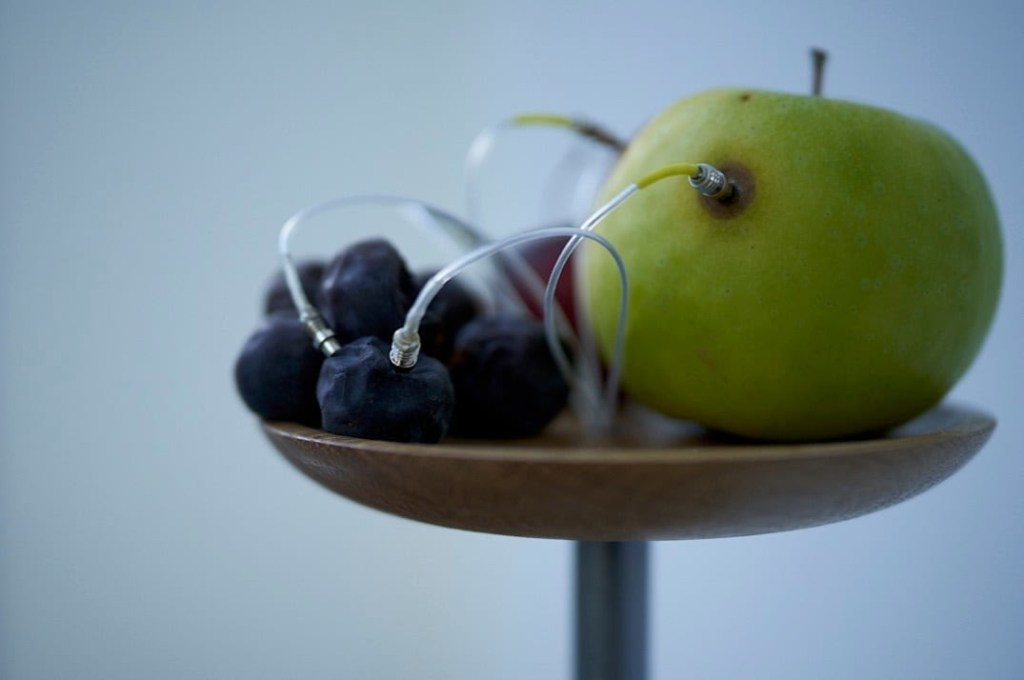
    From floor to ceiling – installation’s organic forms include experimental elements and acoustic sculptures, which are made of rotting fruit. Mohri’s creation repeats a series a works that are unified by a common element: water. The artist’s latest installations, Decomposition and Moré Moré (Leaky) will emerge as rare site-specific, one-time realizations presented in the Venice Biennale.

    The work Compose, additionally references the legacy of composers and artists; Erik Satie, Marcel Duchamp, John Cage, Nam June Paik, and the Fluxus Movement. All of these artists had an experimental approach, using methods of chance and improvisation as a basis, and strongly commenting on everyday mundane life with their works.

    Yuko Mohri takes a stance on nature, which is disappearing, and environmental catastrophe. Even if not literally, what is highlighted as the latent “changing events” of creating ecosystems that will be disappearing, are bound to water, the scarcity of it, and the flood that comes with it. Still using very familiar everyday objects as their backdrop.

    Known for her installations that are like ‘events’, Mohri creates changing environmental conditions for the Pavilion. It will be an event of light, sound, movement and smell.

    Mohri was born in Kanagawa, Japan in 1980 and now lives and works in Tokyo. She has been included in a number of international group shows including the 14th Gwangju Biennale (2023); 23rd Biennale of Sydney (2022); Asian Art Biennial (2021); Bienal de São Paulo (2021); Glasgow International (2021); Tai Kwun Contemporary, Hong Kong (2021); Ural Industrial Biennial of Contemporary Art, Russia (2019); Palais de Tokyo, France (2018); Asia Pacific Triennial of Contemporary Art (2018); Biennale de Lyon, France (2017); Centre Pompidou-Metz, France (2017); Kochi-Muziris Biennale, India (2016); Yokohama Triennale (Japan, 2014), among others.

    Featured photo: Courtesy of Yuko Mohri and Tanya Bonakdar Gallery.
  • Southeast Asian voices in Venice Biennale

    Southeast Asian voices in Venice Biennale

    A historic Venetian palazzo is a stage for the Southeast Asian artists to showcase during the 20204 edition of the Venice Biennale. The palazzo is located in the Cannaregio district near the grand canal and hosts an exhibition “The Spirits of Maritime Crossing”. A group exhibition by artists from Southeast Asia, examines topics of displacement, the diaspora, and colonialism using the ocean as a metaphor. The exhibition is on view from 20th April to 24th November 2024 at Palazzo Smith Mangilli Valmarana. The space hasn’t been accessible to the public for 11 years.

    The exhibition highlights a timely topic of colonialism and wars that have happened throughout the Southeast Asian region. When the voices also include indigenous points of view, the artists have chosen to speak about the importance of nature and the spirituality that is embedded in the land and its ancestral connotations.

    The Spirits of Maritime Crossing exhibition is curated by Prof. Dr. Apinan Poshyananda, who is also Chief Executive and Artistic Director of Bangkok Art Biennale (BAB). With the BAB Foundation, the Venice exhibition is co-hosted by One Bangkok.


    The curator shares about the exhibition,

    “We are delighted to present a survey of Southeast Asian artists to international audiences in the Global North to coincide with the Biennale Arte, ahead of Bangkok’s own biennale in October 2024. Moreover, it is a great honor that a new short film featuring world-renowned Marina Abramović, winner of the Golden Lion at Venice Biennale in 1997, will be shown within the exhibition. The contents of this film and exhibition that focuses on sea travel, displacement and diaspora relate directly with the main Exhibition. It is fascinating to see such synergy across Venice.” (Prof. Poshyananda)


    Prof. Poshyananda created a film which brings the East and West together. The film features well known performance artist Marina Abramović together with Thai dancer and choreographer Pichet Klunchun.

    Mediums such as painting, sculpture, mixed media and video installations, bring together fifteen artists from Cambodia, Indonesia, Laos, Myanmar, Malaysia, The Philippines, Singapore, Vietnam and Thailand. The complex realities and diverse cultures, as well as the histories of the region, meet the Western narratives in this Venice exhibition.

    Cambodian artist Khvay Samnang, directed Calling for Rain, which explores deforestation that has been a major problem in Cambodia. Other films include Hunting & Dancing: 15 years by Moe Satt; There’s no Place by Jakkai Siributr; The Sea is a Blue Memory by Priyageetha Dia and many more works by renowned artists displayed across the palazzo. A collaborative two-channel video installation by Chitti Kasemkitvatana and Nakrob Moonmanas, presents a montage reflecting on the parallel worlds of Italy and Thailand, displaying the multitude of languages and cultures.

    The exhibition is a journey from Southeast Asia to Venice through cultural and diasporic experiences looked through the eyes of those who don’t live in their homeland; this includes both physical and spiritual aspects.

    Southeast Asian artists share many similarities, while also differing in ethnicity, religion, and their languages. This can create a sense of ‘foreignness’ among the artists. The legacy of each of them, however, resonates with a notion of a ‘cultural hybrid’, as among them are also refugees, immigrants, and stateless people, who create new identities in the diaspora.

    Many of the artistic works dive into the indigenous histories, and narrate about the environmental impact of colonialism. Many of us know that environmental destruction, loss of land and livelihood as well as displacement, are common struggles told in the Southeast Asian stories.

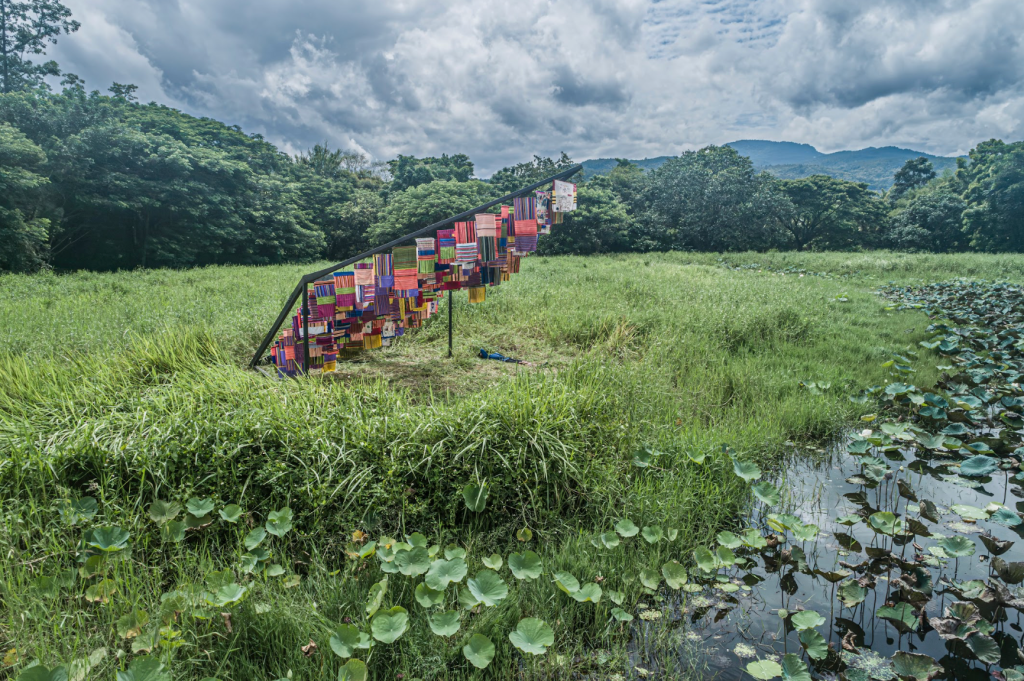
    Cambodian artist Khvay Samnang’s video work examines hegemony and deforestation in Cambodia. It is a story of local worship inspired by Ramayana, an ancient poem. Yee I-Lann’s film depicts a collaboration with weavers and local sea-based communities to revive ancestral knowledge. The story is about the maritime and indigenous histories in Malaysia. Jakkai Siributr has used textiles to provide commentary on ethnic cleansing in society. The topic resonates in the intricate embroideries that have been created together with asylum seekers. Moe Satt, who is a performance artist, uses his body for identity and estrangement. He has a voice about survival of the violence in his homeland Myanmar. Also, a performer, Kawita Vatanajyankur creates works about foamy blue dye highlighting female labor in patriarchal society and focusing on the role of water in the context of femininity and the textile industry. Priyageetha Dia’s video of the deep sea examines ancestral migratory movements from India to the Malay Peninsula. Truong Cong Tung shows an installation of gourds that draws upon mystical ritual and indigenous mythologies.

    The Spirits of Maritime Crossing-exhibition also features paintings and a bronze sculpture by Natee Utarit, who blends Buddhist philosophy and Western art history, showing a meeting of East-West influences. Metal sculptures by Bounpaul Phothyzan are crafted using found bombshells, exploring the historical impact of American occupation in Southeast Asia, documenting the region’s tumultuous past.

    Jompet Kuswidananto’s installation of shattered chandeliers examines the history of colonization, with a focus on missionary work across Indonesia. Alwin Reamillo’s mixed media work utilizes found objects and assemblages to reveal layers of colonialism. References to Christian iconography in the Philippines, and the influences of migration and globalization. The artist’s work presents the 14 Stations of the Cross. It is a Catholic devotion that commemorates Jesus Christ’s last day on Earth as a man.

    The exhibition builds on the local voices and narratives. The regional histories are a significant meeting point of cultures with trade and cultural references overlapping from one area to the other. The proximity of geographical relationships between places is one strong signifier.

    Photo credits: Jakkai Siributr, There is no Place, 2020. Courtesy of the artist. 

  • Future perspectives in verses

    Future perspectives in verses

    Climate Change brings to mind emissions, which require solutions, such as futures with bikes and more car free highways. The planet Earth is calling us to bring nature to the negotiation table. These are the verses for the new year.

    "Nature's rhythm is different from the pace of the contemporary society."

    What we don’t seem to realize is that nature is in fact offering space without asking us to limit our dreams. Two years into the pandemic has changed our everyday perspectives; we have voluntarily moved our lives more outdoors. We suddenly pay attention to dear little details that we see in nature, and think about the future livelihood and living on this planet.

    Nature’s rhythm is different from the pace of the contemporary society. This is also something that this pandemic has taught us oh so well. Did we ever imagine that we would be capable to pause, and start dreaming of a different future? Some of us did dream, at least.

    Looking at the birds in winter, as they descend to a freezing environment.
    "Looking at the birds in winter, as they descend to a freezing environment." 

    Let’s take birds in the winter as an example. What is it in their circumstances, the birds in suburban environments, that is causing us to pause and consider if the animals have enough food.

    Cars, parking lots, people going shopping in their vehicles, trains, commercial projects surrounding geese habitat. What is so special about these animals living next to human habitation, geese in our urban and suburban parks. They make us think changes in season, and how the big birds used to migrate someplace warmer.

    Humans are responsible for destroying wilderness, wetlands, populations, to name a few. With geese, as their extinction was more evident due to destruction of the species natural habitat – the birds were brought into urban areas where they had never been living before. The natural migration cycle stopped and the geese stayed in their new settings. Humans have since then found that the birds’ new existence is perhaps too close, birds taking over parks and parking lots.

    "We can be thankful that they still have some wilderness to roam and be birds."  

    A question of food for geese is a problematic one, since feeding and making them accustomed to vacate human habitat eventually means that nature’s own cycle is being interrupted. Not because geese themselves were opting for these new environments. We can be thankful that they still have some wilderness to roam and be birds.

    "Future perspectives do imply stricter and more compassionate approaches, when it comes to ever busy air and street spaces."
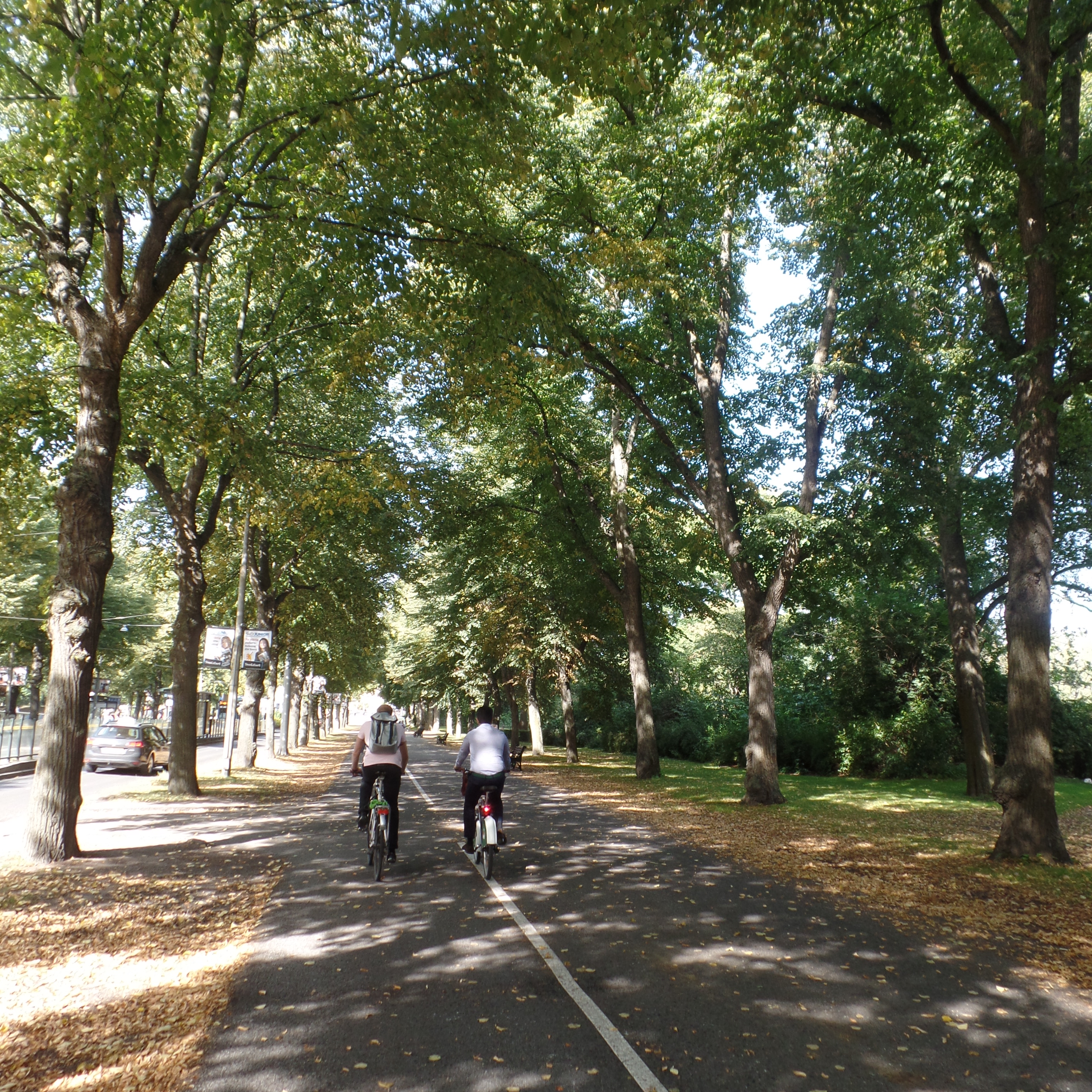
    Biking is an old fashioned green new deal. It also goes together with the nature’s rhythm. The pace is one of wondrous.
    "Biking is an old fashioned green new deal. It also goes together with the nature's rhythm. The pace is one of wondrous." 

    To participate in a green new deal, cutting back emissions is of course not just an act of love for many of us who like to travel and seek far away adventures. Yet, future perspectives do imply stricter and more compassionate approaches, when it comes to ever busy air and street spaces. Cutting down greenhouse gas emissions is easily a foreign language concept or theory that stay away from the realities of modern individuals, who can count cars in the garage. Everybody needs their own car just to get around. How to explain this in simple terms, how to change this pattern?

    "The awakening is bringing nature closer to our communication, forming new communities." 
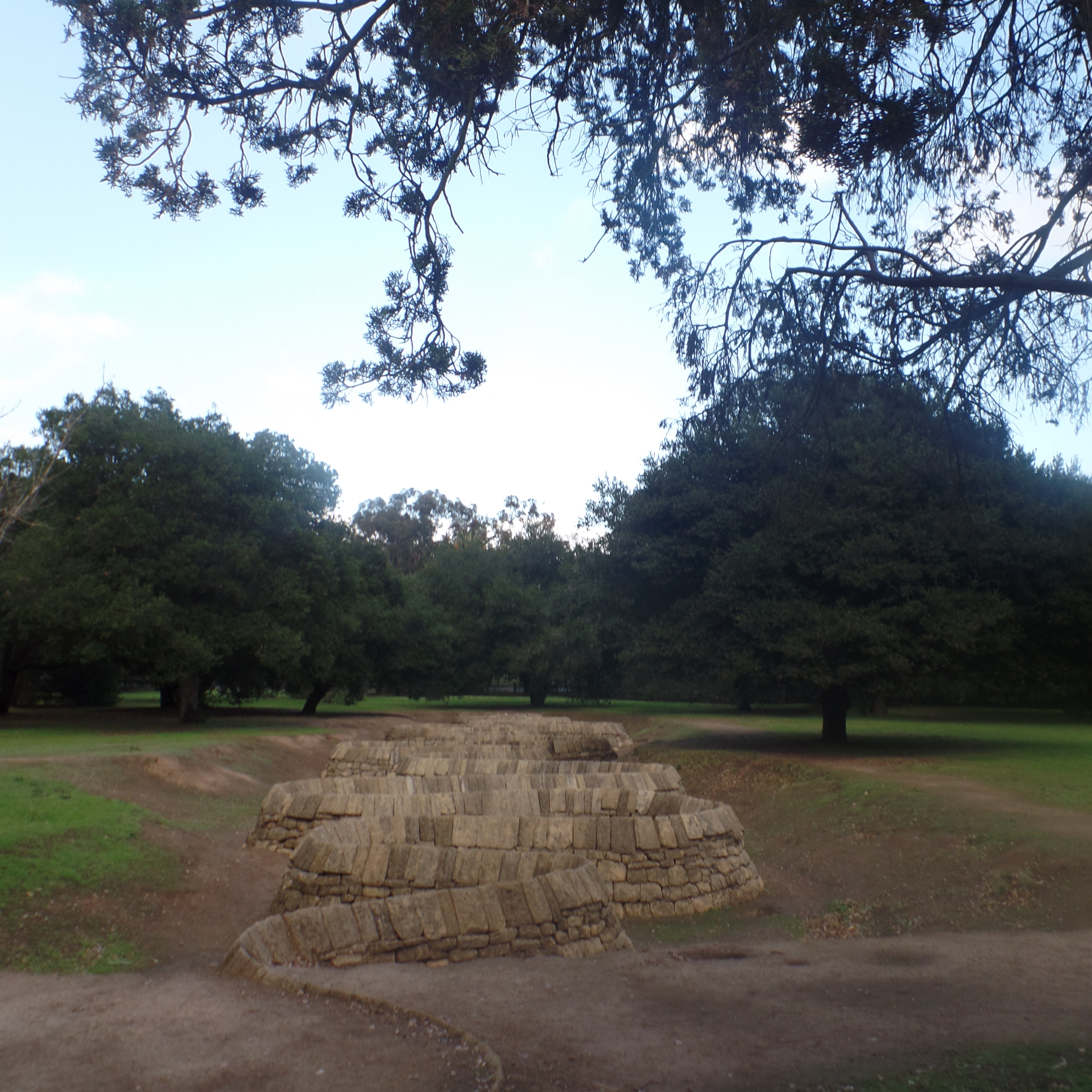
    Stone River by Andy Goldsworthy outside the Stanford University Cantor Center for Visual Arts.

    Futures hold promises for the world in the form of awakenings. Climate coalitions and awakenings for earthy subjects are thankfully becoming one kind of new normal.

    "World, in which constant profit is a standard, and where sustainability and co-creation are like dialects of foreign languages."

    When it comes to art, fundraising is meeting with auction house practices to make equity and ethical planetary standards meet in the productions. How much sustainability can we create with these methodologies, is yet to be discovered – not just in the form of capital, but as acts of recycling, repurposing, and meeting circular economy standards.

    World, in which constant profit is a standard, and where sustainability and co-creation are like dialects of foreign languages. Co-creation implies a communal aspect of creating together. As such it is somewhat strange to Western notions, which rather highlight the success of ego-driven selves.

    At its best, the awakening is bringing nature closer to our communication, forming new communities. Community and art can meet in various ways. The art works that take over public spaces are a great example.

    Outside the Stanford University’s Cantor Center for Visual Arts is a Stone River, a large wall created of sand stones. A sculptural serpentine project created by artist Andy Goldsworthy (2002), is blending with its campus environment, growing naturally in the landscape of trees and meadow, bringing joy for people working and visiting the campus and the Art Center. These stones are remnants of campus buildings. The stones had fallen during two earthquakes that hit the bay area in 1906 and 1989.

    Stone River is composed of rumble that was left behind after two earthquakes.

    The Stone River was inaugurated in 2002 at the campus. Goldsworthy found out that the campus had remnants of historic earthquakes that shook the area, in 1906 and 1989 respectively, forming stone rumble that had fallen off the buildings. He instantly gained a feeling that stones could organically return back to earth, forming a flow which almost seemed that it had archeological origins. As if the stones had been there for a long long time.

    Goldsworthy is referencing rural Scotland, where there is archeological presence of people layering stones, layer after layer like this.

    In Stone River, the stacked stones in the sculpture, set in a nearly 3 1/2-foot trough dug in the earth, rise from a 4-foot wide base to an almost impossibly precise undulating line. “I call it a river, but it’s not a river,” Goldsworthy said. The sculpture is “about the flow. There’s a sense of movement in the material, through the individual stones, so you just see this line.” –Barbara Palmer, Stanford Report