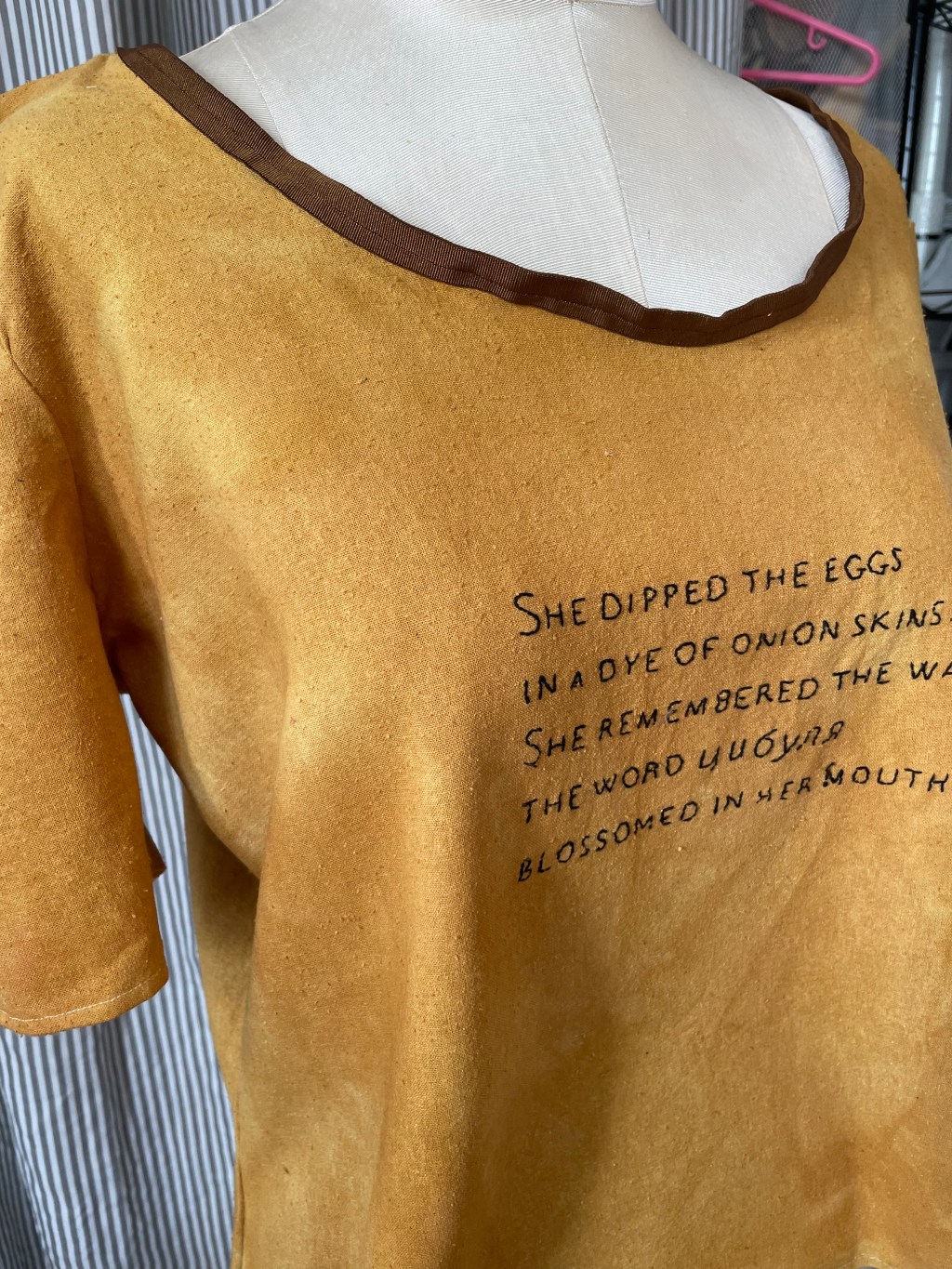
Dip the fabric in a bath of onion skins, like she did. Let the dye cling like her ghost clings to me and to her old furniture, which has become mine, the headboard shaky as names being called, my name over and over. I cannot answer to it. Dip the fabric in a bath of onion skins. I cannot forget her ghost in front of the mirror. I realize her face is framed by my hair. She wanders the maze of armchairs. I fold my body over hers on one of the cushions. She clings to me. There is the end table that was carried with her from the farm where they first settled. Then she opened the window for the first calm in a long time. She felt the discomfort of knowing her family was not part of her peace. This scared her and so did the way their ghosts cling.
I work with art in reaction to poetry. I find textiles work best since they are malleable and react to embroidery, dye, and wax. This helps me focus my poetry. Sometimes I rework the poetry after the textile is completed to create a stronger connection. -Olena Jennings
The idea begins here with collecting onion skins for about a year. They crackle and crunch against each other as thin as a spirit.
The title of the poem “Historical Arrangement” is about the ghost who is a deceased family member, and the voice in the poem is becoming one with history. What is remarkable is that the voice has her furniture and is taking on her features.
The art, a woman’s shirt, is part of the poem because this family member is dyeing with onion skins. The voice in the poem is repeating her acts. My ancestor used onion skins to dye eggs, but I carried the process into my present by dyeing fabric.
_______________
Olena Jennings is a New York City based writer and translator. She is the author of the poetry collection The Age of Secrets (Lost Horse Press, 2022) and the novel Temporary Shelter (Cervena Barva Press, 2021). Olena Jennings has been a translator or co-translator of collections by Ukrainian poets Iryna Shuvalova, Kateryna Kalytko, Vasyl Makhno, and Yuliya Musakovska, among others. She also founded and curates the Poets of Queens reading series and press.
The pandemic lockdown saw the creation of all kinds of things we never would have imagined, such as new best friends you’ve never met, and the ultimate oxymoron: Zoom life drawing.
Life drawing, of course, means ‘from life’. As in the person you are drawing is in front of you. Which, sadly, was not exactly possible during the lockdown. Undeterred (and unemployed), enterprising life models began broadcasting sessions on Zoom from their homes using their phones, with some even setting up elaborate painted backgrounds.
At first, all of this was just temporary, until we could all draw in person again. But as the months became years, worldwide drawing communities developed, crossing time and space boundaries, and, for once, not being limited to models physically present in the area. So when lockdown ended, we still wanted to see our friends AND draw the best models from around the world, even if they were on a screen and you couldn’t choose the angle, so the Zoom sessions persisted.
I personally also didn’t want to give up being able to paint from home without having to lug twenty pounds of supplies across town without a car and having to compete with a dozen other artists for an unobstructed view of the model.
Fast forward four years. I’ve done hundreds of Zoom life drawing sessions with models I have never met in person, despite having drawn them for years. It’s an extremely strange relationship of intimacy. On the one hand, I know the contours of their bodies in great detail. But I don’t know basic things like how tall they are, or their relative size in proportion to “my basic unit of measurement:me”. These things can’t be determined on Zoom.
Let me just mention here that for whatever reason, there is a very large number of Zoom life models based in Buenos Aires, Argentina. There are just a handful of models from all other countries on the Zoom circuit, but I counted 26 models from Buenos Aires that I have drawn on Zoom.
The confluence of several unrelated events brought me to Buenos Aires in October 2024. The timing was determined by the2024 Urban Sketchers Symposium, which was held in Buenos Aires from October 9-12. While I was not planning to attend the Symposium, many friends from around the world would be there for the event, and sketching together is a lot of fun. But it’s still a long way to travel, so I needed more motivation to make the trip.
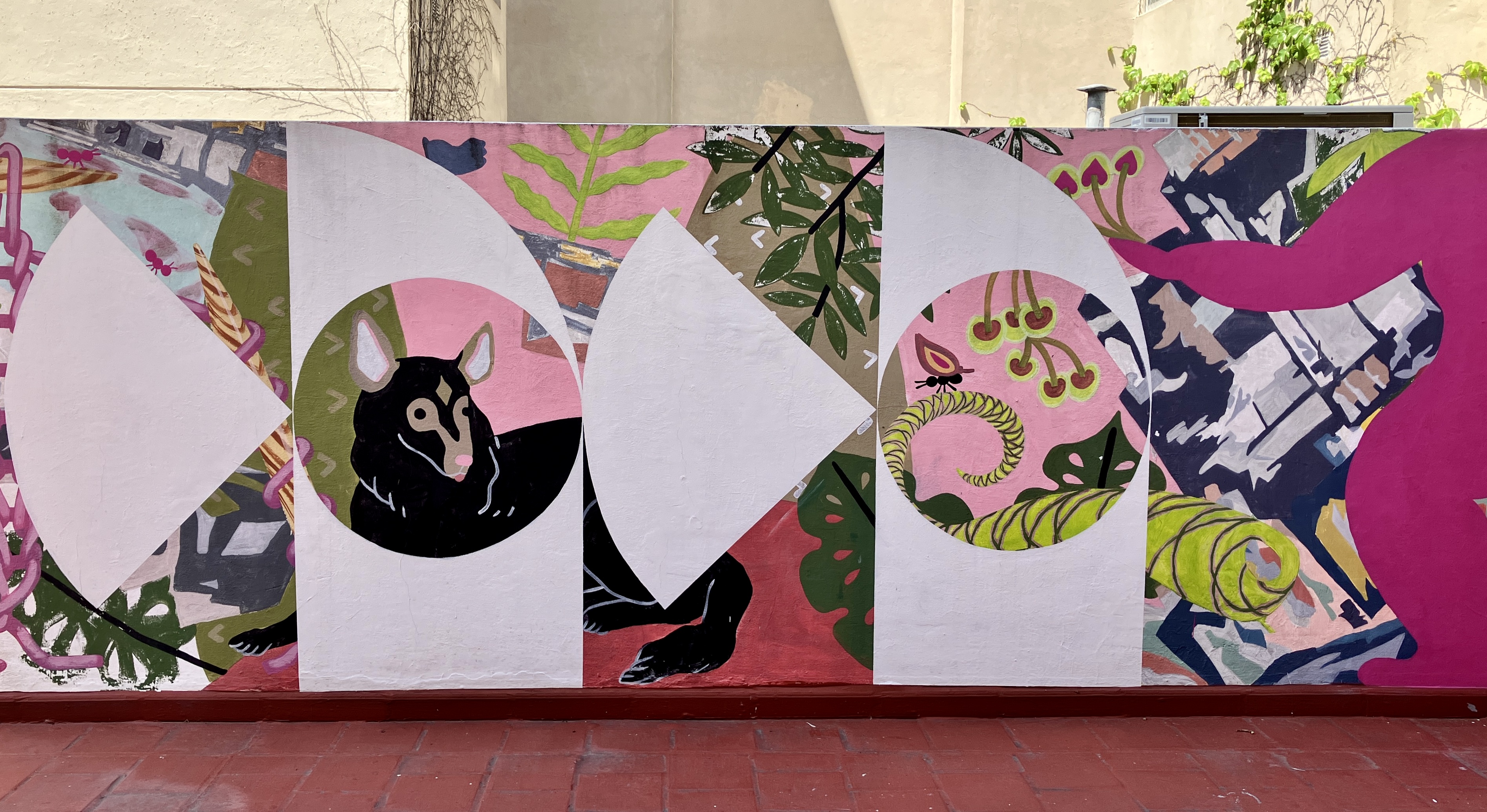
This was provided by a mural painting micro residency at Proyecto’ace, which runs the Palimpsest Project, a mural collaboration over time, where new work is interwoven into the existing murals, instead of painting over them entirely. I like this non-destructive approach, and since I hadn’t previously done any mural painting, I thought this would be a good introduction.
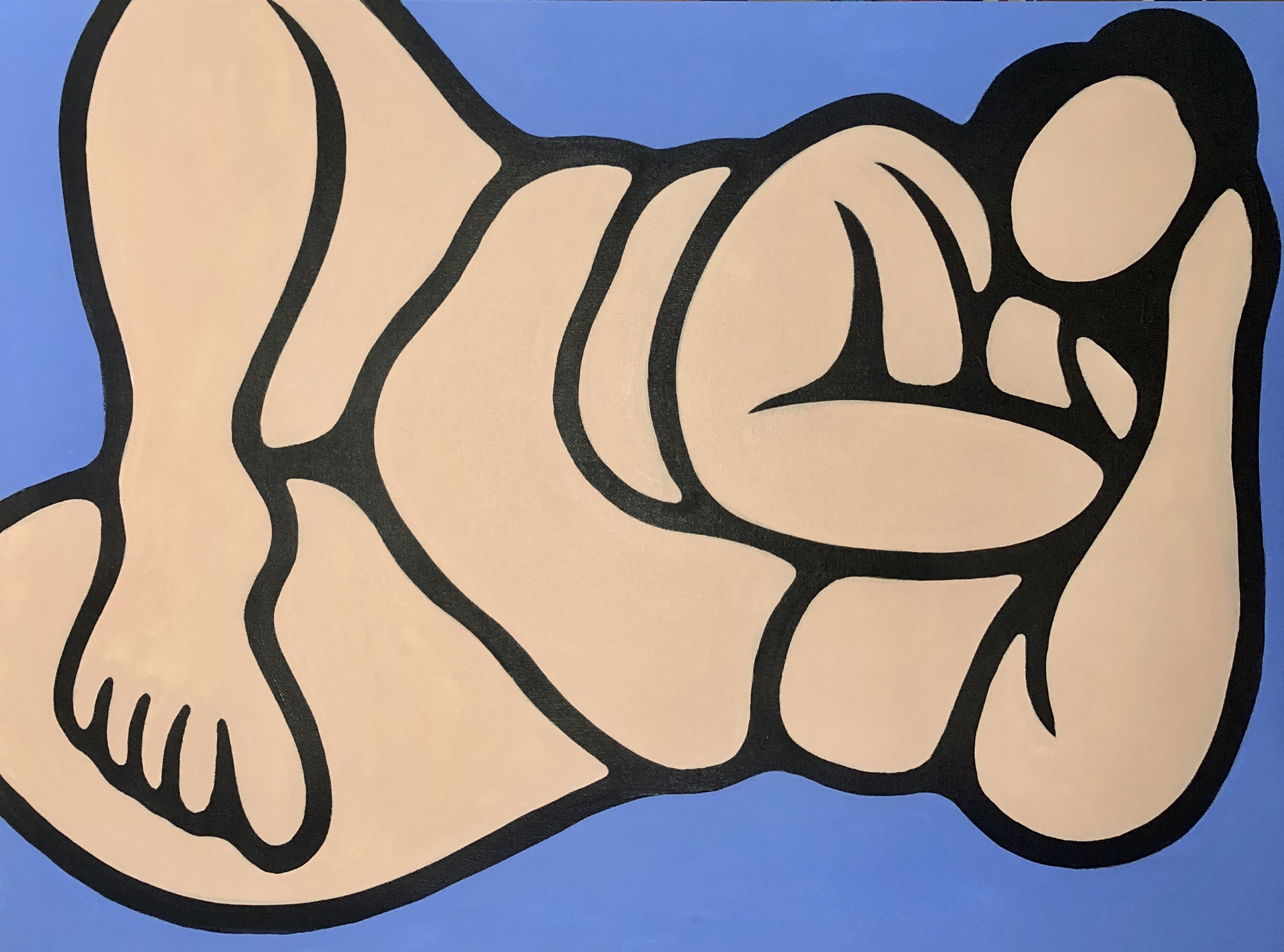
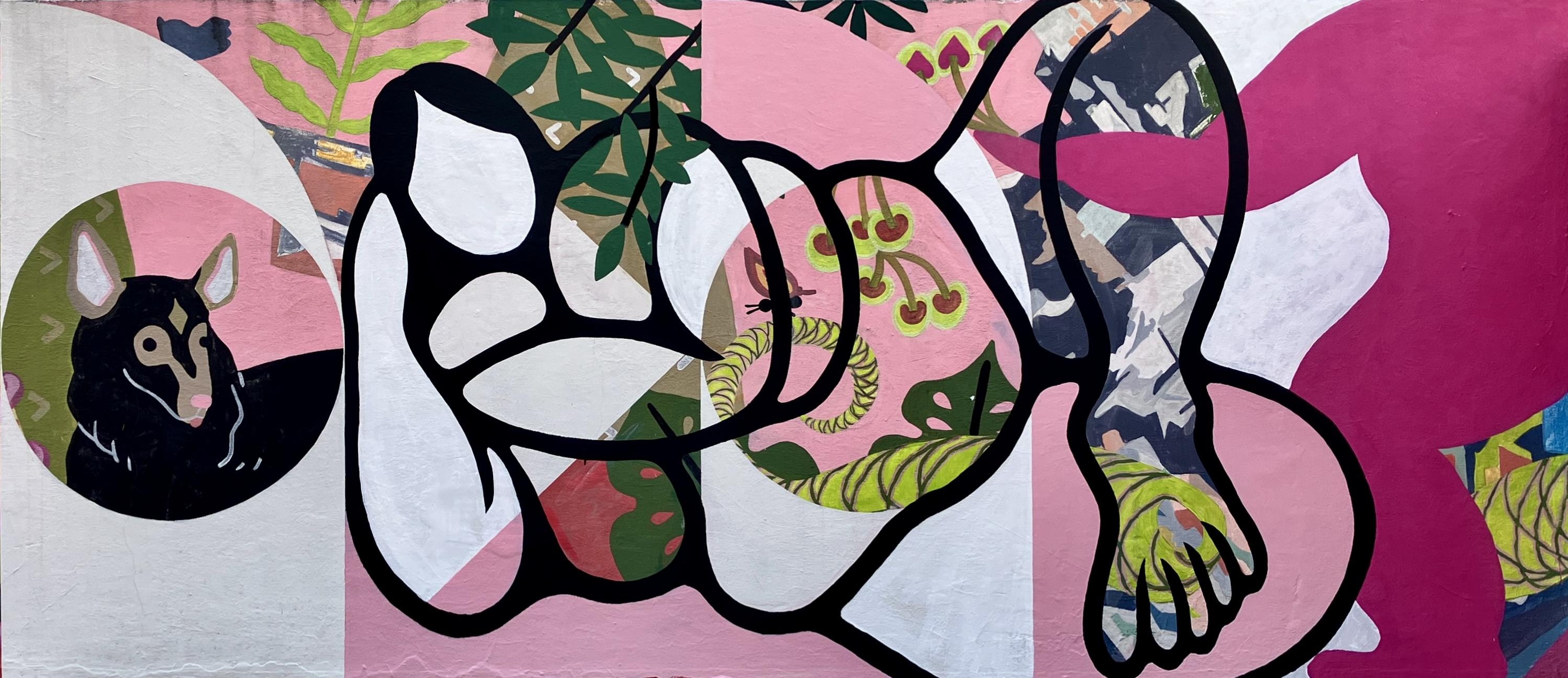
For the mural project, I envisioned a collage of figure drawings, begun during Zoom sessions, and continuing to my time in Buenos Aires, where I would draw the same models in life, thereby adding a layer of time and space. The final mural incorporated only a single figure, my friend Eliana, painted from Zoom the previous year, into the existing mural. While I painted Eliana in various aspects while in Buenos Aires, it was the painting that I had brought for her as a gift that turned out to be the best fit for the mural.
While the artistic experience helped to expand my horizons, introducing me to new media and ways of working, the best part of the trip really was the opportunity to meet some of my favorite life models in real life. It was a bit like meeting a movie star, and chatting like you’ve known each other for years (which technically you have). I did experience the odd sensation of looking up and thinking that the person in front of me really looks like their Zoom persona. Except for the height.
The pandemic lockdown saw the creation of all kinds of things we never would have imagined, such as new best friends you’ve never met, and the ultimate oxymoron: Zoom life drawing.
As the life models themselves admit, you just put the camera on the floor if you want to make yourself look taller, so almost everyone ended up being much shorter than I had imagined. And while I’ve always heard that the camera adds 10 pounds, I’ve never had to subtract those 10 pounds in my imagination–especially not from someone who already looks tiny on Zoom. They turn out to be the size of a child in real life. Quite the surprise for someone from the U.S., where being big is totally normalized. It was a good reminder that the entire rest of the world is not like us.
Yuko Mohri is creating Compose for the Japan Pavilion in this year’s Venice Biennale. Mohri is putting focus on environmental issues with her work, which acts like a circular economy approach to creating art. With a title that etymologically references “to place together” (com+pose), the exhibition questions what it means for people to be together – at home, in society and at work – that pandemic changed. The post-pandemic world also faces a planetary climate emergency.
The exhibition in the 60th Venice Biennale runs from April 20 to November 24, 2024, with the inauguration on April 17 in Japan Pavilion (Giardini di Castello, Venice). Compose is curated by Sook-Kyung Lee, Director of The Whitworth in Manchester UK, and it is organized by The Japan Foundation.
Mohri who is interested in organic ecosystems is right at home in Venice. She has focused on the 2019 Venice floods and rising sea levels. The theme ’soft and weak like water’, which is a reference to the classical Chinese text ‘Dao De Jing’, is a source of inspiration for Mohri. The text by Lao Zi acts as a metaphor for change as “generated through gentle and persistent force”. The artist also created work for the 14th Gwangju Biennale in the Japan Pavilion. Her collaborator, curator Sook-Kyung Lee was the artistic director of the Biennale.
Yuko Mohri has long been interested in the crisis and its connections to paradoxical creativity. She was interested in the Tokyo subway workers who needed to find solutions to water leaks.
Utilizing materials that are sourced locally, from Venetian antique stores and furniture shops, as well as from grocery stores, liquor stores, and farmers and flea markets, Mohri took over the whole pavilion and made it to her own studio for a few months prior to its public opening.
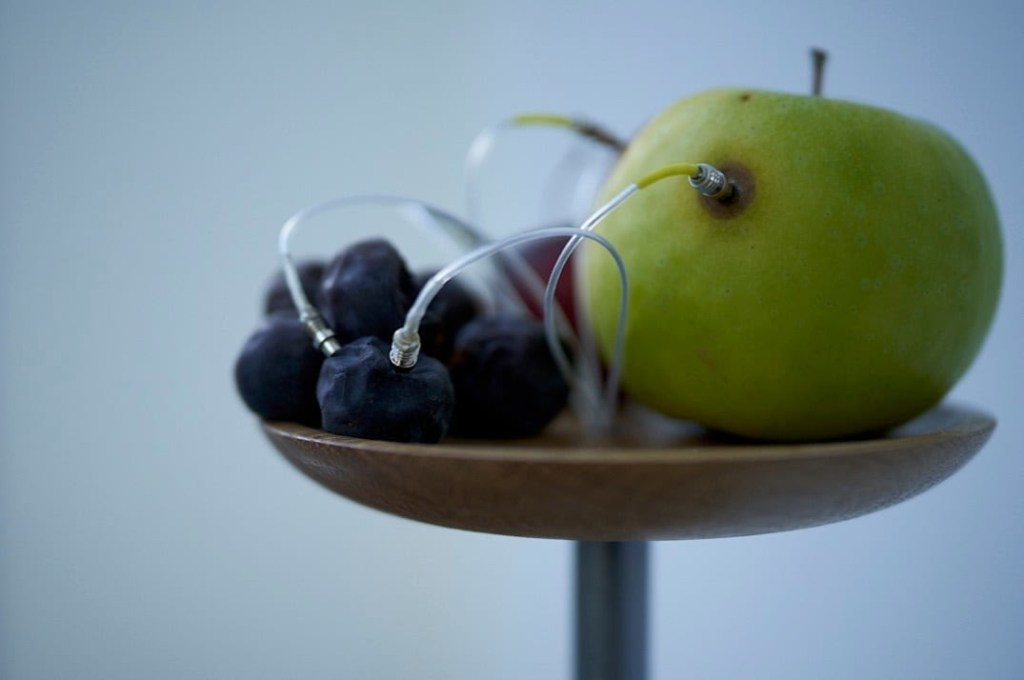
From floor to ceiling – installation’s organic forms include experimental elements and acoustic sculptures, which are made of rotting fruit. Mohri’s creation repeats a series a works that are unified by a common element: water. The artist’s latest installations, Decomposition and Moré Moré (Leaky) will emerge as rare site-specific, one-time realizations presented in the Venice Biennale.
The work Compose, additionally references the legacy of composers and artists; Erik Satie, Marcel Duchamp, John Cage, Nam June Paik, and the Fluxus Movement. All of these artists had an experimental approach, using methods of chance and improvisation as a basis, and strongly commenting on everyday mundane life with their works.
Yuko Mohri takes a stance on nature, which is disappearing, and environmental catastrophe. Even if not literally, what is highlighted as the latent “changing events” of creating ecosystems that will be disappearing, are bound to water, the scarcity of it, and the flood that comes with it. Still using very familiar everyday objects as their backdrop.
Known for her installations that are like ‘events’, Mohri creates changing environmental conditions for the Pavilion. It will be an event of light, sound, movement and smell.
Mohri was born in Kanagawa, Japan in 1980 and now lives and works in Tokyo. She has been included in a number of international group shows including the 14th Gwangju Biennale (2023); 23rd Biennale of Sydney (2022); Asian Art Biennial (2021); Bienal de São Paulo (2021); Glasgow International (2021); Tai Kwun Contemporary, Hong Kong (2021); Ural Industrial Biennial of Contemporary Art, Russia (2019); Palais de Tokyo, France (2018); Asia Pacific Triennial of Contemporary Art (2018); Biennale de Lyon, France (2017); Centre Pompidou-Metz, France (2017); Kochi-Muziris Biennale, India (2016); Yokohama Triennale (Japan, 2014), among others.
Featured photo: Courtesy of Yuko Mohri and Tanya Bonakdar Gallery.



 Firstindigo&Lifestyle