Tag: featured

  • Anna Nykyri and the transient bodies

    Anna Nykyri and the transient bodies

    Pandemic has left many cities different, as if touched by invisible forces that folded a new narrative in front of us, for what is here now, and what might be more common in the future. At least, it is true to New York City. Finnish film director, visual artist and choreographer, Anna Nykyri created a short film “In-Between”, 2020 (2’51), to capture cityscapes during the pandemic. The artist collaborated with the photographers Aukusti Heinonen, Juan Pablo de la Vega and Griselda San Martin in Helsinki, Mexico City, and New York, respectively, to show relationships of the transient bodies that avoid contact with each other in these cities.
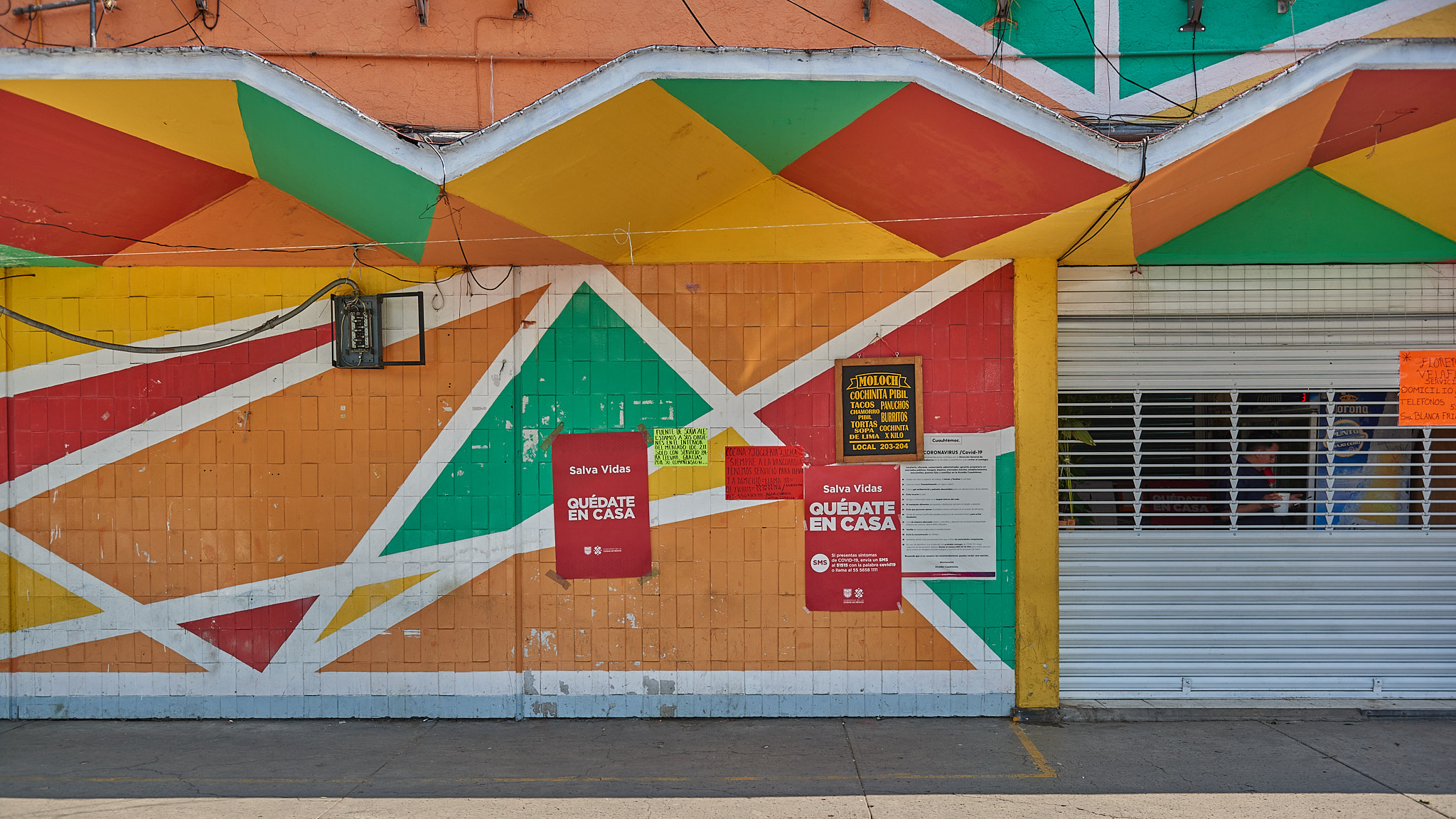
    From short film, In-Between (2020). Image: Juan Pablo de la Vega

    The documentary film curated by Andrea Valencia, is conceived as a montage that compiles photography and moving image to grasp the results of social distancing in the three cities, which are connected by the shared experience of the pandemic. By capturing details and fragments of the spaces and the moving bodies, “In-Between” suggests that, while movement and touch are being restricted, we are living an emotional collective experience.*

    Firstindigo&Lifestyle: As an artist, your practice is quite multidisciplinary. What is interesting is the way your dance and choreography, and film-making, communicate fresh angles to these fields. Maybe there is a level of interconnectivity between these artistic disciplines. Can you tell, how did you eventually pick your artistic practices?

    Anna Nykyri: My intention as an artist has always been trying to create an artform, that would bring together my artistic interests at the time. So, I never tried to be a director, screenwriter, visual artist or choreographer. The current piece that I’m creating matters the most. My definition as an artist can be defined through the piece.  

    Firstindigo&Lifestyle: Where we come from, to some extend defines what becomes of us, or let me put it this way. I think that sometimes we dream very early on, what we want to be doing when we grow up. Where did you grow up and go to school?

    AN: As a 4-year-old, I told my parents I wanted to be a dancer. We lived in the rural countryside and the ballet classes were too far away to attend multiple times a week. Kaustinen, where we lived in, is famous for it’s folk music tradition. So, music it was. During the ten years I played violin, I almost never practiced, was really bad at it but somehow managed to get along with the others to an American tour (twice) and understood what it meant and took to be an artist.

    Later on I started singing and playing piano. After a college of music I went to Kemi-Tornio University of Applied Sciences to study my BA in media, started ballet classes and continued to MA-studies in Finnish Academy of Fine Arts specializing in moving image (MFA). I was lucky to have Eija-Liisa Ahtila, Veli Granö, Salla Tykkä and Liisa Roberts as my professors. They were great teachers and certainly had a great impact on my working processes. During the Academy of Fine Arts I also studied pedagogical dance studies in Jyväskylä University & later MA Choreography studies in Trinity Laban College of Music and Dance in London. I guess I have just always really loved learning new things.

    Firstindigo&Lifestyle: Trinity Laban is a dear place in my own artistic history. When I was a student there, it was a place to find interdisciplinary approaches. You are a recent graduate. Did you find that the choreographer training supported multiple directions and platforms?

    AN: Yes, I absolutely think it did. Still, after attending the MFA studies in Finnish Academy of Fine Arts with an unlimited number of courses to attend with a huge number of supportive one-to-one meetings with teachers & curators, studying in MA Choreography studies in Trinity Laban was much more self-lead. Also, the system of art grading is a different kind of process there, and I feel that being judged by juries was certainly the opposite of the pedagogical angle I had been used to. Of course the school had great teachers, and they are known for having creative professionals doing and implementing the curriculum. But, I personally felt that the system was partly old-fashioned. So, I struggled with disagreeing with some of the principles the system is built on, but fought my way through it, eventually. And learned a lot for sure.

    Sonic Presence of an Absent Choreography

    Firstindigo&Lifestyle: Sound is an important part of your choreographic and creative work as well. In choreography, sound often comes together with the moving bodies. But, how do you compose a dance piece without choreography being visually present on stage, relying solely on sound? 

    AN: I have had the joy to work in artistic collaboration with many great sound designers, sound artists and composers, to mention a few: Petri Kuljuntausta, Olli Huhtanen, Mikko Joensuu, Antti Nykyri and Félix Blume.

    Immersive sound installation and choreographic environment “Sonic Presence of an Absent Choreography” is an artistic collaboration between curator Andrea Valencia (MEX/US), sound artist Félix Blume, choreographer, dancer Veli Lehtovaara and me. The installation was made for Prague Quadrenniale 2019, Finnish ECR Exhibition Fluid Stages and was curated by KOKIMO. The piece consists entirely of recorded sounds of a dance. Through the installation, we aimed to reveal the ephemerality of the body on the stage through the immaterial media of sound.

    In this particular artistic collaboration, the choreography was based on a visual score, an image I brought to the rehearsals. The image is a picture of an empty advertisement board, filled with strands of old, ripped posters. I took the picture during a nighttime in Tampere, while passing by. For some reason I just felt like the empty advertisement board in the silent city environment had all the sound and choreographic elements in it. Choreographer, dancer Veli Lehtovaara looked at the image for a while and then started dancing. Sound artist Félix Blume recorded Veli´s dance and did a great job by creating a sound score for the piece and further mixing the sounds for the installation in artistic collaboration with me and Veli.

    Video documentation from the recordings of the piece, by Félix Blume (6min 41sec):
    https://vimeo.com/289907108

    Firstindigo&Lifestyle: The all encompassing subject at the moment is of course the Covid pandemic. You created a film that was based on the pandemic in different locations of the world. Can you shed some more light on the process of making this short film?

    AN: The short film “In-Between” (2020, https://vimeo.com/432870117 ) is a second work, which I had the chance to work with the great New York/Mexico City based curator Andrea Valencia. I met Andrea whilst working in ISCP residency, New York in 2017 and we instantly bonded, sharing the interest for empty spaces in the cityscape, for instance. Aukusti, who is specialized in photographing architecture, I knew from beforehand and had wanted to work with for a while already, but Juan Pablo, who especially blew my mind with his photos on the cityscapes and Griselda, who is and amazing portrait photographer (for example for New York Times magazine) were introduced to me through our curator Andrea Valencia.

    The documentary film is conceived as a montage that compiles photography and moving images to grasp the results of social distancing in the three cities, which are connected by the shared experience of the pandemic. By capturing details and fragments of the spaces and the moving bodies, In-Between suggests that, while movement and touch are being restricted, we are living an emotional collective experience. -Andrea Valencia

    Firstindigo&Lifestyle: How do you think the collaboration taking place between multiple countries came together from the point of view of editing and bringing the entire visual material together?

    AN: The working process, first of all, included people from various time zones during the pandemic, which created certain restrictions for timing our online meetings. Also, in Helsinki, the Covid situation during the late springtime 2020 was comparably easy, but in New York City and Mexico City, I guess no one really knew the magnitude of things at that point. So, we had to be really strict about the safety of the photographers participating, some of them having small children etc.

    I felt that my main task as director in this particular project was to suggest ideas of the angles from which to shoot the world during pandemic. So, we had long talks with the photographers on the themes of the film, but still wanted to give them a lot of freedom and it was a surprise for me, how they would approach the subject. Editing the photos and videos together was an important part of the process, and reminded of editing an archival montage. During the summer 2020, we edited the film in Helsinki with Jaakko Peltokangas. Sound design of the film was made by Olli Huhtanen, whose work I deeply admire. We wanted to publish the film online so that it would be possible for everyone to access. At the same time, the film was made really fast, the clock was ticking and we knew it would stay online however it would turn out to be, there would be no going back.

    Firstindigo&Lifestyle: It is very inspiring that you are an artist between two or many artistic endeavors. It could also be challenging, but at the same time it seems to be rewarding. What obstacles can you recall having while finding parameters in your career?

    AN: Working as a multidisciplinary artist within film, fine arts, contemporary choreography and sometimes also television, for me the most challenging part has been accepting the fact that it’s OK not to be good at everything, learning as you go. For example, in Trinity Laban, I was surrounded by amazing dancers. Dance has been a part of my life as a hobby and part of my practice for a while already. Still, there were MA Choreography students with amazing talents in that section, while my background was mostly in film and visual arts.

    Visual Score by Anna Nykyri

    Firstindigo&Lifestyle: Can you say that you are more of a choreographer than filmmaker, or is it a completely irrelevant question? 

    AN: I define myself as a visual artist, working with moving image, film, cinematic installations and choreographic environments.

    Firstindigo&Lifestyle: How did your everyday life and work life balance shift, and change during the pandemic so far?

    AN: It certainly changed a lot. Basically, all my artistic collaborations turned into remote work – into zoom meetings etc. During the late fall, I was screenwriting and directing a pilot episode for a documentary television series for YLE. Shooting documentary footage during the pandemic was hard work for all of us – mostly with the extremely tight safety restrictions to keep everyone safe. For the past 1,5 months I’ve been lucky enough to work remotely from a cabin at Iso-Syöte, which is the southernmost fall of Finland.

    My weekly dance classes shifted into online classes (mostly Gaga movement language, developed by choreographer Ohad Naharin, which I can warmly recommend to everyone: https://www.gagapeople.com/en/) and gym training into home workouts. I really am grateful for all the dance & sports practitioners, who have continued teaching online! The online classes and workshops have saved me during these unexpected times.

    Firstindigo&Lifestyle: This year, you are going to be participating in WRO Media Art Biennale in Poland. It is so interesting, as it also consists of a collaboration that you started at the new award-winning Oodi library in central Helsinki?    

    AN: I’m super excited about the WRO Media Art Biennale opening in Wroclaw, Poland, May 12-15, 2021! I’m currently developing a new piece consisting of moving images in collaboration with visual artist Kaisu Koivisto, Helsinki Artist’s Association (project coordinator Anna Puhakka) and curator Agnieszka Kubicka-Dzieduszycka from the WRO Art Center.  The collaboration project, called “Synthesis”, began in Autumn 2020 with a shared exhibition in Central Library Oodi and includes, on top of the WRO Biennale, a following exhibition at Oodi in November 2021. Our interactive video installation will be presented in Wrocklaw in late autumn 2021 as well as in Helsinki, but we will already have an open talk during the opening week of the biennale: https://wro2021.wrocenter.pl/en/works/synthesis/. In the talk we will be reflecting the starting point for our work, Polish artist Pawel Janicki’s algorithmic structure “Synthesis”, and where has it led us.

    The theme of the biennale is “reverso”. Me and Kaisu are at the moment gathering footage from our personal archives and filming some new footage. With this kind of theme, I think it has been a lot of fun to think of, what actually matters to us as artists, going back to the “roots”. Currently we are digging into the possibilities of MaxMSP program, testing the possible outcomes of an interactive installation, a choreographic environment.

    Firstindigo&Lifestyle: There is a lingering feeling that pandemic left us with some new ideas of how to connect and collaborate. Did you have any time to think what you want to do next?

    AN: The year 2021 will be busy with the upcoming exhibitions and a screenwriting process of a fictional short film and a feature length film. Luckily, with the upcoming film works I’m collaborating with an experienced producer, Markku Tuurna and an established dramaturge Tarja Kylmä with both of the films. In 2022, I will also present an installation at the façade of Gallery Forum Box.


    Also, for years already, my dream has been to have the time to focus on a research plan, apply for PhD studies, continuing my artistic research in relation to the choreographic environment within post graduate studies.

    Who knows, what’s going to happen? There’s always a new adventure waiting around the corner.

    — — —
    *‘In-Between’ was supported and commissioned by The Finnish Cultural and Academic Institutes’ Together Alone project and supported by Arts Promotion Centre Finland.

    Directed & screenwritten by: Anna Nykyri
    Photography by: Griselda San Martin, Juan Pablo de la Vega, Aukusti Heinonen
    Edited by: Jaakko Peltokangas
    Sound designed by: Olli Huhtanen
    Curated by: Andrea Valencia

    Featured image:

    Short film, Passing by:
    Passing by (2020)
    Documentary short film 1’50”
    Passing by shows a carcass of a young roe deer slowly decomposing in a forest, whilst cars are fast passing by on a nearby highway. The film creates a strong emotional charge of passing by; moving from the highway into the forest, details of fur, flies, a carcass – then distancing again, leaving the calf to be covered by the forest.

    The film was supported by The Promotion Center for Audiovisual Culture AVEK / Media Art and Arts Promotion Centre Finland.

    Directed and screenwritten by: Anna Nykyri
    Cinematography by: Italo Moncada
    Edited by: Jaakko Peltokangas
    Music by: Mikko Joensuu
    Sound designed by: Juuso Oksala
    Color correction by: Juuso Laatio
  • Nozomi Rose on artistic process during covid

    Nozomi Rose on artistic process during covid

    New York artist Nozomi Rose is a current 2021 artist-in-resident at Lower Manhattan Cultural Council (LMCC)’s Arts Center on Governors Island in NYC. There has been an Island full of snow, couple of birthday cakes, and new artist friends. During times of social distancing, the residency has been fun, and great for exchanging inspirations and ideas.

    Firstindigo&Lifestyle: For artists, Governors Island is a mix of different kinds of approaches and possibilities in place. As you figured your way through the snow, how is it going?

    Nozomi Rose: Yes, what I like about this residency is the true interdisciplinary nature. Our cohort is composed of artists, filmmakers, fashion designers, writers, actors, playwrights, choreographers, etc. If you visit my studio, you see the Jewish “climate change” comic artist Isaac Roller on the right and the black watercolor “house” painter Selwyn V. Garraway on the left. Isaac comes Mondays and Selwyn is there Fridays. The best part of our experience is the ferries. In Kobe, Japan, where I grew up, there were the mountains and the ocean, so this environment brings back my childhood memories, which often appear in my work.

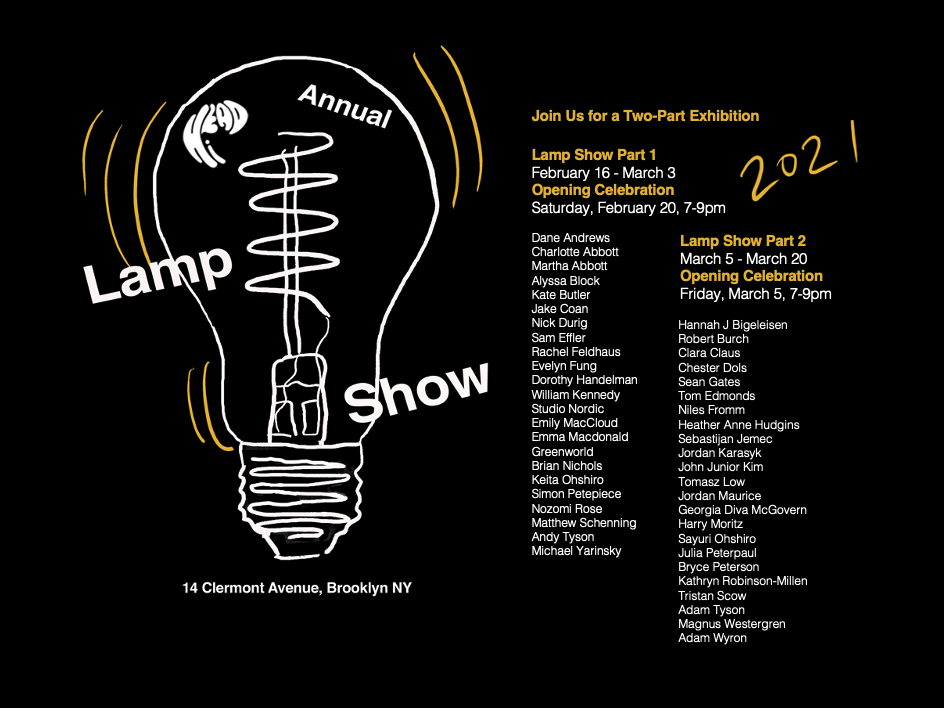
    Firstindigo&Lifestyle: You are also part of a new annual lamp show in Brooklyn. How did you get involved in creating lamps from your paintings?

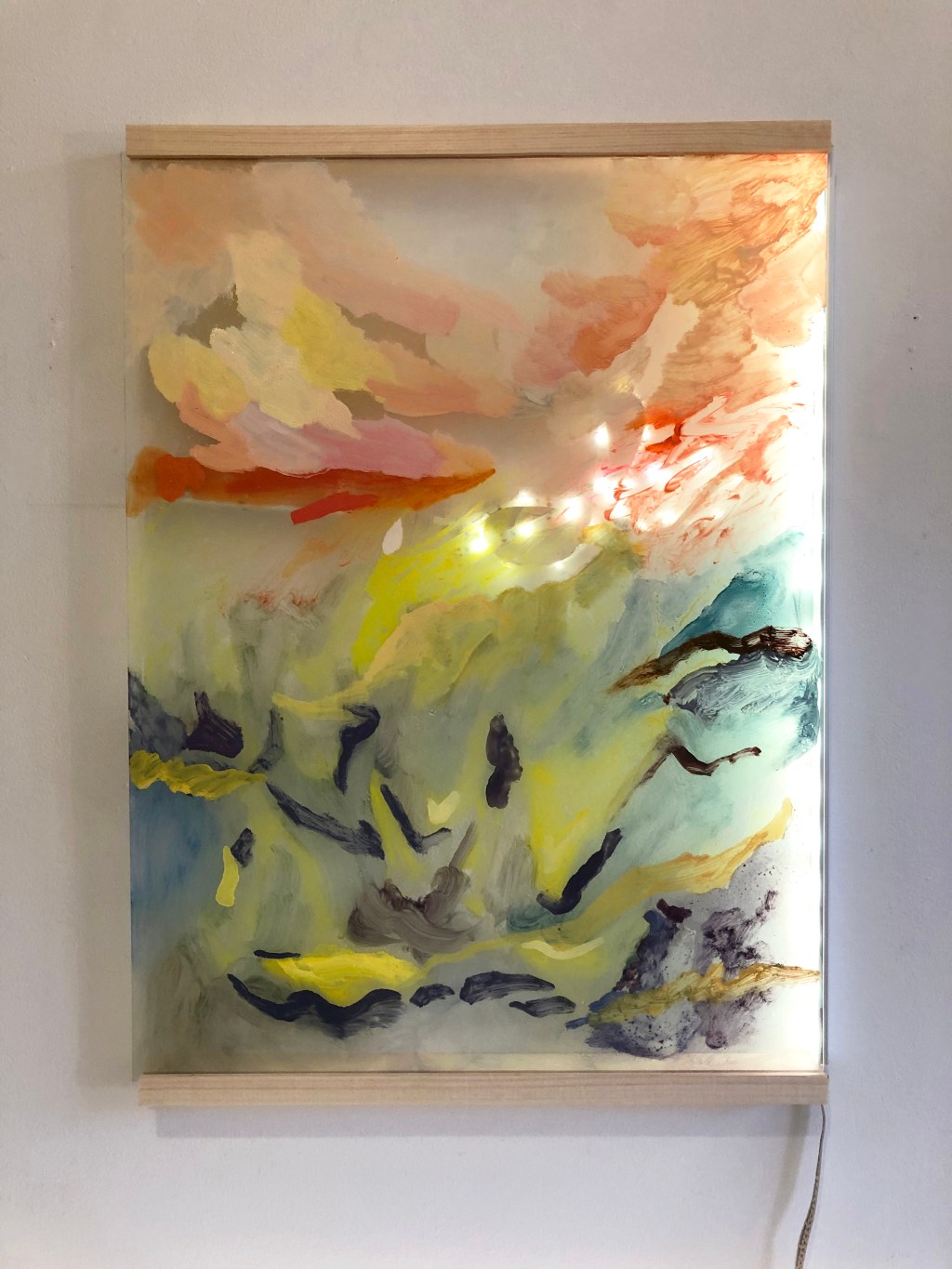
    NR: The annual lamp show started in 2019 when Head Hi Gallery (and art book shop) opened in Fort Greene, Brooklyn/NYC, by the Navy Yard. The exhibition is about creative individuals experimenting with lighting and illuminations, so the owners inspired me to make my “vertical orange lamp” at the time, which visitors can now view at the gallery year-round. My lamp for 2021 is “social distancing lamp” that lights up when someone comes closer than 6 feet.

    Firstindigo&Lifestyle: According to the guidelines by CDC, to practice social or physical distancing, means staying at least 6 feet (about 2 arm lengths) from other people, “who are not from your household.” What is your approach to a ‘social distancing’ work?

    NR: “Social distancing lamp (your word is a lamp to my feet and a light to my path)”, comes with motion activated light system. The work lights up if someone comes closer than 6 feet. For my paintings, I use both pigmented and fluorescent colors. They are combined with gold and silver paints. To achieve the maximum brightness, I started to paint on glass (with acrylic and oil paints) and attach LED light strips to my painting, but not sure, yet, if my direction is something like Mary Weatherford’s paintings. I am still experimenting with this last aspect.

    Annual Lamp Show 2021

    Firstindigo&Lifestyle: You have a very strong sense of color, in which the colors have a meaning attached to your personal history and memory. How about in relation to this work?

    NR: For my social distancing lamp, I had a “yellow and violet” color scheme in mind at first. I was trying to paint the reflections on the water that I saw from the LMCC studios on Governors Island and the sunset from my ferry rides. 

    I like the location of the Head Hi Gallery by the Brooklyn Navy Yard, in part because my grandfather served as a pilot for the Japanese Air Force during the war, which was part of the Japanese Navy. He lived to see his grandchildren. There are certain moments from my direct experiences with nature on the ferries that I tried but could not capture in photographs (with my camera) and that I desired to preserve in painting. Those seascapes resonated with me because of my personal family history. -Nozomi Rose

    Firstindigo&Lifestyle: As you are working with a different medium than usual, being it paint on canvas, and now glass in which colors may appear differently, how do you mix the colors on this surface?

    NR: Regarding my colors, I simultaneously started in both violet in oil and fluorescent yellow in acrylic on glass for this piece. Drying time for yellow was much faster than violet, so I had to plan accordingly. I mixed different shades of each fluorescent color and also their gradations of gold, silver, and pearl versions. Acrylic parts of my work could dry in a few minutes, but I had to wait for at least 24 hours for oil paint to dry. There were certain colors that I preferred to mix in acrylic and also others only in oil, so I layered both materials in some parts and not in others.

    The processes of creating the lamp piece were more complex than my usual paintings and also new to me, from preparing a couple of different brushes for oil and acrylic at the same time to painting on glass to assembling and disassembling different LED lighting strips. They had to happen all at once due to the tight deadline, but I enjoyed the collaborative aspects (with Head Hi Gallery).

    The color scheme of my actual lamp maybe darker than I first envisioned because I decided to make the top part more pink and orange in oil paint with certain abstract details. This was in part because I was planning to place the LED light on the back. You know, white paint catches light and the work was supposed to be back-lit. But, oh well. -Nozomi Rose

    Firstindigo&Lifestyle: Did you have a vision of using this material as a lighting piece, perhaps an artistic direction beforehand for the aesthetical changes?

    NR: My idea of the social distancing lamp stemmed from a “painting that changes composition by itself when the viewer comes closer than 6 feet,” so the image had to be something that immediately grabs people’s attention and intrigues them enough to approach the work in order to observe the detail. And I had to achieve this in abstract imagery.

    I feel like everything I planned went “wrong” at the end, but I am happy that it is on the wall now. I thank Head Hi owners, Alexandra and Mösco, for taking care of it!

    Firstindigo&Lifestyle: As you are currently an artist-in-resident in Governors Island, can you describe your thought processes behind the methods of working. Painting is your primary way of creating art. Are you inspired by, or still interested in abstraction?

    NR: It’s not a secret that I continue to be intrigued by Ab Ex NY (Abstract Expressionism) although I can have figurative elements in my work anytime. Can one person be a conceptual artist and an abstract painter at the same time? If so, that’s me. I aim at expanding colors by going somewhere beyond Modernism and Postmodernism. My practice is almost always informed by painting, but I also change medium often. When people ask, I tend to say my practice is concept-based, but materials guide me. I mentioned Mary Weatherford earlier, but is she a painter or a lamp maker? Why and why not? I think for me, concepts come out of materials.

    I’m curious to see how Ab Ex influences on younger generations will unfold, maybe because I see Japanese/Asian cultures being reflected on American art there. For example, Emily Mason who passed away in 2019 was my former teacher who studied with Hans Hofmann. She sent me to my second Vermont Studio Center Residency in 2019. Emily was deeply influenced by Japanese cultures (in addition to Italian ones).

    My new painting has light in it. Somehow, I’m seeing light as a “filmic” medium here, but my work rejects narrative. Perhaps, I’m attempting to introduce “duration” to my painting, without narrative. Have you ever watched essay films by Daniel Eisenberg? One of his films was about his indirect experiences with the Holocaust that was passed onto him through his parents’ stories. -Nozomi Rose

    Firstindigo&Lifestyle: I interviewed you in 2012 for your solo show at the Consulate General of Japan located in midtown Manhattan. Time flies, so do you remember your works back then?

    NR: I think my color scheme was much darker then – because I was using Nihonga pigments [Japanese folk painting material]. I think I successfully reclaimed Christian painting practice with oil painting materials (just kidding!).

    I recently started to read about artistic development of children and children’s abstract art. Children’s art and adult art are not the same; they visualize rapid brain developments in children. There are neurologically-relevant reasons why small children should take art lessons. Two books on this topic I recommend are: Eric R. Kandel’s “In Search of Memory” and Viktor Lowenfeld’s “Creative and Mental Growth.”

    Firstindigo&Lifestyle: We are gradually starting to think practices after the pandemic, what ever they may appear to be like, in terms of experiences and lifestyles. I don’t know, how much you like to dig into your COVID-quarantine starting last year. But is there something that relates to your routine, work, making your art, and artistic process?

    NR: ATP (All Things Project), had daily Zoom meetings during NYC’s mandatory quarantine, so I attended that every day in the evening. One time, our pastor got sick and had to isolate himself. That was scary for me/us because I imagined that maybe we would just watch each other get sick, but fortunately, he survived and the rest of us did not get sick.

    I have personal interests in art related to the 80’s AIDS crisis. My Covid experience brought me to a new understanding of Gregg Bordowitz’s “Fast Trip, Long Drop” (1993), for example. There is a clip from “HIV Support Group Meeting July 1993” in this film where Gregg says, “[my] biggest fear is that we are just going to…our future is going to be about watching each other getting sick.”

    I watched this film so many times in the past until I memorized part of his script, but I never really thought I got it. Now I think I can sort of feel how that might have been. “David” in the same clip also says, “it’s weird to live with this constant sense of mortality.” I think I can nod now. Gregg Bordowitz has a solo show coming up at MoMA PS1 in May 2021. I found it ironic that the epidemic artist’s show had to be postponed due to the pandemic. -Nozomi Rose

    Firstindigo&Lifestyle: It seems that also social media platforms expanded in the process. People not only took it to the zoom. Instagram has appeared as a new local and global lifestyle. What do you think about that?

    NR: Head Hi offered “Head Hi Live” on instagram every Sunday during/after the lockdown in NYC, so I tuned in with friends from other countries. I liked Mösco’s sound choices, and he sometimes DJ’ed at the Lot Radio in Greenpoint. But the weekly event also had lots of participants from the art world such as Printed Matter (note: Head Hi hosted Printed Matter NY Art Book Fair’s “after party” before the lockdown). It was fun virtually dancing with them when there was no other social life. Head Hi seems to be a community leader during Covid. I think for lots of young people living in Brooklyn, it was psychologically very challenging to wear a mask at first, but one day Mösco had his mask on when cleaning Head Hi’s storefront and that was it. People started to wear a mask and gloves after that day in the neighborhood. Something like that.

    In 2018, I mysteriously decided to move my life mostly indoors (well before the lockdown), so there was no crazy, sudden transition I had to make overnight this time. During Covid, I took online courses, mostly MOOCs, made art, watched movies, and read books.

    Firstindigo&Lifestyle: How has your mother been coping during this time?

    NR: I learned about Hugh Laurie’s acting in the American medical drama “House, M.D.” TV series that my mother likes, and British comedy such as “Jeeves and Wooster” series. My mother is an actress and I try to keep up with those classic movies so that I can converse with her, but I am very behind.

    Firstindigo&Lifestyle: Let’s peek into a possible future with the lamps. Do you have any interest in creating them more, having a brand Nozomi?

    NR: The last lamp show was the first time when I consciously made a lamp, so I asked Head Hi how long they plan to offer lamp shows. They say as long as they can. I guess I will follow the flow. One of the Head Hi owners, Alexandra, told me that her own ambitious, “failed” lamp making three years ago inspired Head Hi to host the first lamp show; she desired to see how people make lamps. They call it “lamping.”

    It’s a community’s annual lamping practice that you witness when you come to see the lamp show at Head Hi Gallery. My show ends on March 3rd and Part 2 with new artists starts on Friday, March 5th.


    — — —

    Nozomi Rose grew up in Kobe and Hawaii, went to school in Paris, Rome, and New York City, and studied Fine Arts at the City University of New York (CUNY) where she was awarded an honor residency at Barnard College/Columbia University as an ICP Scholar. Later, she graduated from Cornell University with a BFA degree in Painting. Her MFA degree in Studio came from the School of the Art Institute of Chicago, one of the top museum schools in the country and the world.

    As a visual artist, she has exhibited her work at Johnson Museum of Art in Ithaca, Vermont Studio Center in Johnson, Sullivan Center at the Art Institute of Chicago, Bridge Art Fair New York, LVL3 in Chicago, the Evanston Art Center in Evanston, All Things Project in Greenwich Village, New Century Artist and Kravets|Wehby in Chelsea/NYC and CANADA gallery in LES/NYC, among others.

    Artist website: 
    https://nozomirose.com/

  • On The Edge

    On The Edge

    Milanese gallery will run their current exhibition SUL MARGINE, ON THE EDGE, until February 24th, 2021

    “After the exhibition Close Up in 2016, which examined aspects of closeness and intimacy of vision, the meditations on small-format works continues here, highlighting another crucial aspect, which is that of their extreme, liminal intensity and bodily materiality.


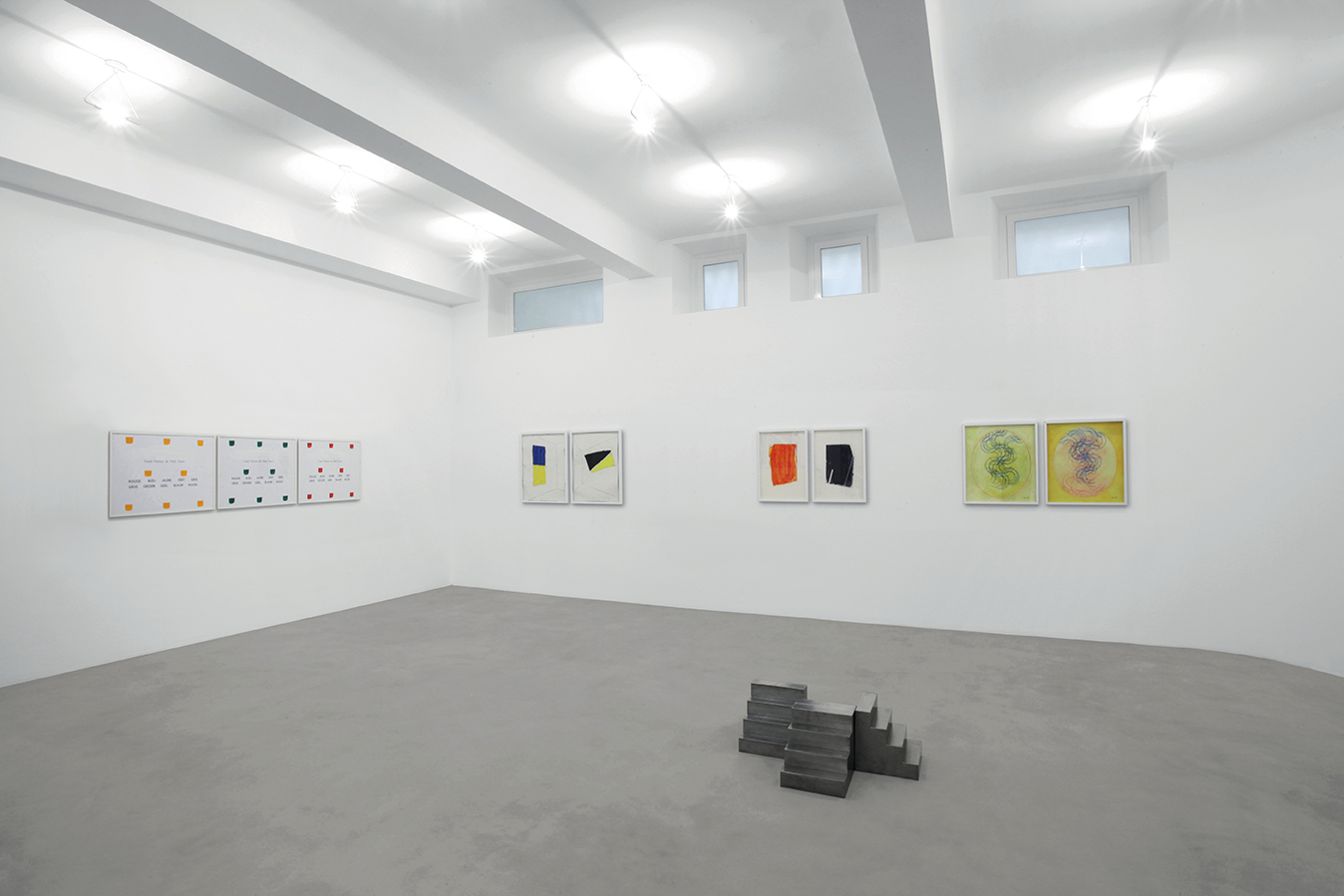
    Sul Margine/On the Edge -exhibition, offers a possibility to experience the art works as an intimate and proximate event, which pushes the viewer to the very limits of our tactile world. While examining the shape and color, light and dark shades, we get to reconsider, what are the boundaries of our conscious world, and how our knowledge can go beyond the every day perception.

    The timespan of the presented, Italian and international artists, creates a great sense of wonder. A continuation, a thread between generation of artists. View that does not limit art work only into its material box, but offers it as a habitual dwelling, a tangible sense of the movement, and transformation, showing an image of art as a living body. Curated exhibition with juxtaposed ideas, where living artists enter into the realm of works created by artists who are no longer in this world.

    Discussion about the terms of the art work in a realm of meaning beyond material form, is not new. Dadamaino, a Milanese painter exploring spatio-temporal approach to painting, was a pioneer in the avant-garde of 1950s. She was looking for the immaterial, when her ‘holes’ were detesting matter. And like with some other pioneers of avant-garde, measured the intervals and pauses of time in the context of art.

    We can say that the catastrophic effect of the World War II, was creating a void, having power to influence both the avant-garde of art and theory. Perhaps now, in 2020- 2021, the historic moment of the global pandemic creates a reiteration of the question of a similar void. In the art-world, it affected change, shattering meaning of the physical space and the virtual world. The COVID-19 restrictions, social distancing protocols, safety measures; have all demanded different applications for contact, and applauded new exhibition modes.

    In the new “reality”, or very present, we can echo historic references and find similarities between the two. The patterns of “now” are recreated with more of what is sensed and sentient. The pioneering works can take us to a liminal treshold, on the borderline between here and there, the time of past and now. In both cases, it is the experienced and the unknown. When facing the global pandemic, we still see the limits of our understanding, questioning our very existence and being. What comes, when we die.

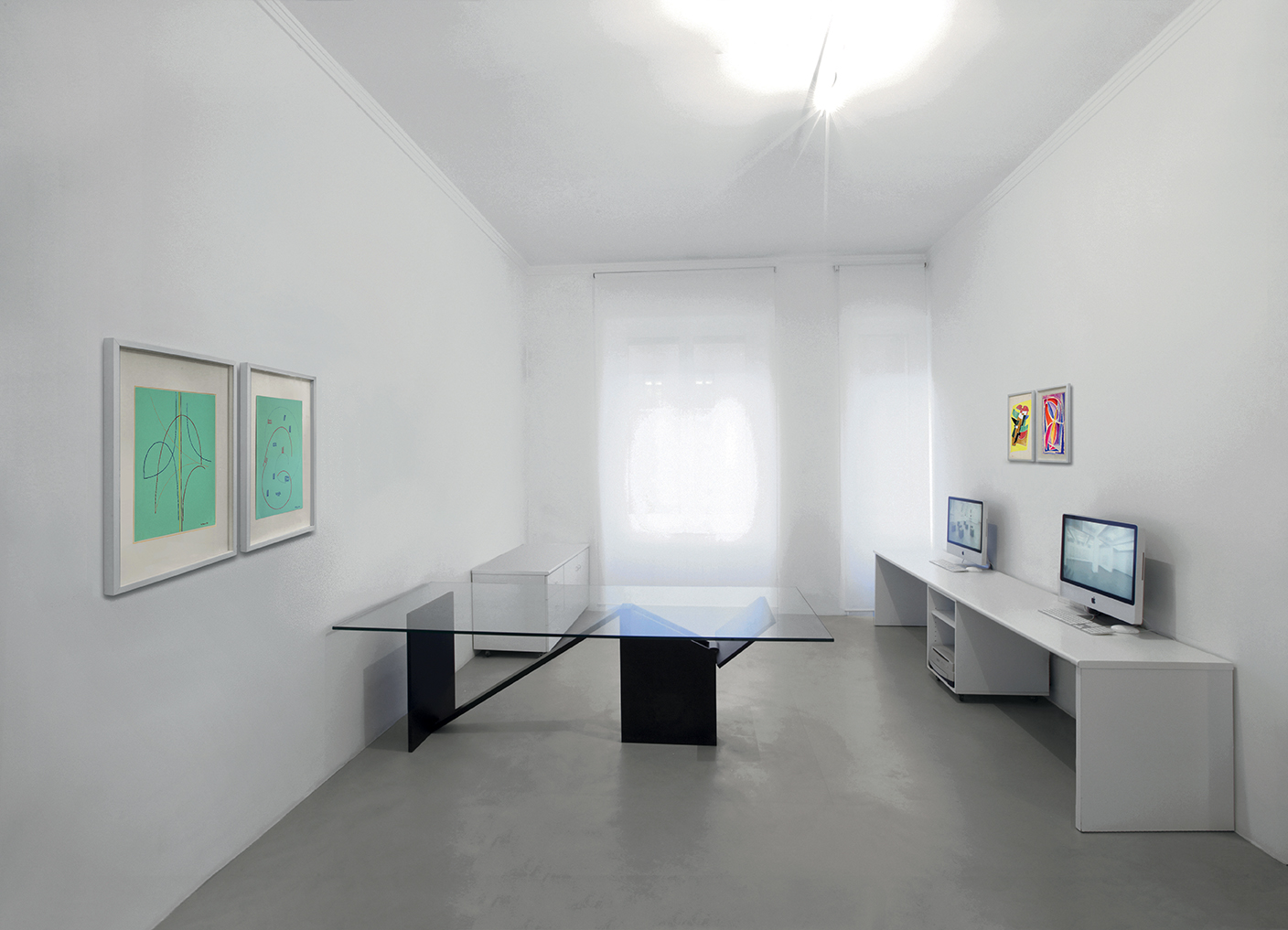
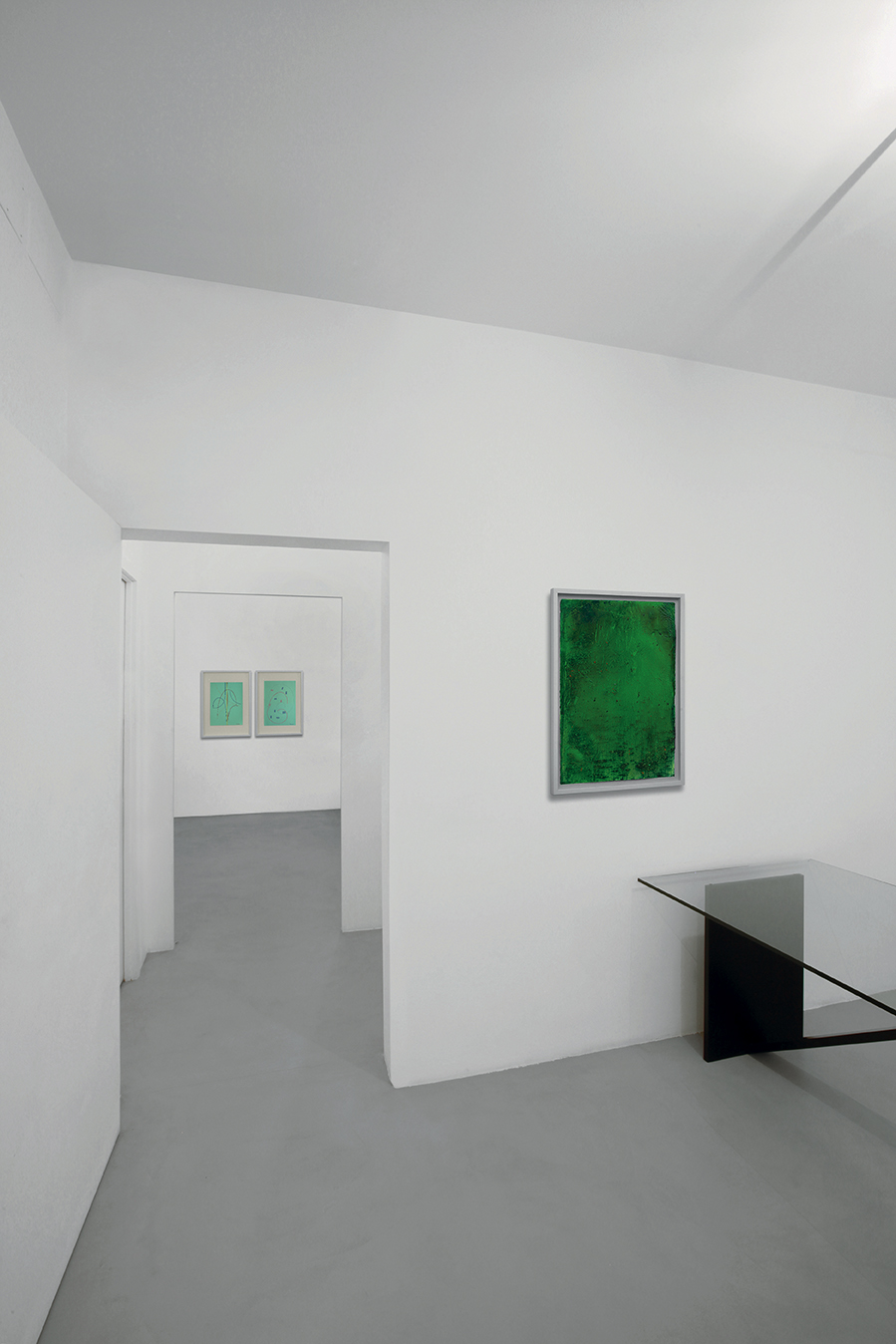
    Partial views of the exhibition On the Edge. Courtesy A arte Invernizzi, Milan. Photos: Bruno Bani, Milan.

    We thus find ourselves in the midst of these images, which are like places of the mind: a constellation of metaphysical entities on the ridge that separates life from death, the striving for knowledge from a truth of an unattainable absolute that, on the threshold of existence, allows us to perceive the correspondence between the individual and the cosmos.” (Francesca Pola)


    Featured yellow image: Carlo Ciussi, Untitled 1989. Mixed media on paper, 70×60 cm/ Courtesy A arte Invernizzi, Milan. Photo Mattia Mognetti, Milan.

    The exhibition tour (in Italian) on view through this link: https://m.youtube.com/watch?v=5iP-NGUdCwY&feature=youtu.be

    — — — — —
    A bilingual catalogue of the exhibition has been published with an introductory text by Francesca Pola, contributions from Giuseppe Cristian Bonanomi, Angela Faravelli, Daria Ghirardini and Davide Mogetta, with reproductions of the works on display.

    EXHIBITED ARTISTS: RODOLFO ARICÒ, GIANNI ASDRUBALI, FRANCESCO CANDELORO, NICOLA CARRINO, ALAN CHARLTON, CARLO CIUSSI, GIANNI COLOMBO, DADAMAINO, PHILIPPE DECRAUZAT, RICCARDO DE MARCHI, PIERO DORAZIO, LESLEY FOXCROFT, IGINO LEGNAGHI, FRANÇOIS MORELLET, MARIO NIGRO, PINO PINELLI, BRUNO QUERCI, ULRICH RÜCKRIEM, ANGELO SAVELLI, SALVATORE SCARPITTA, NELIO SONEGO, MAURO STACCIOLI, NIELE TORONI, DAVID TREMLETT, GÜNTER UMBERG, GRAZIA VARISCO, ELISABETH VARY, MICHEL VERJUX, RUDI WACH