Tag: featured

  • Shakespeare and Earth Day

    Shakespeare and Earth Day

    Earth Day and Shakespeare’s Birthday both take place in April, a month known for its showers and blossoms. The poetry month of April resonates with the nature’s big events, and surely that of playwright and poet William Shakespeare’s imagination. Earth Day is celebrated on the 22nd, and Shakespeare gets his day on the 23rd.

    Earth Day wishes to bring us back to thinking of hope in the days of chaos, and optimism for our futures during crisis. Each of us has a voice in creating our ideas for, what the future might hold, and what kind of world would we rather imagine. Perhaps a look back in the history will show us, how not to live in the future. From the point of view of conservation, Shakespeare’s times weren’t necessarily better than our more recent past.

    The Shakespearean Forest” is a book written by Anne Barton (Cambridge University Press, 2017). The book handles woodland in early modern drama. “The Shakespearean Forest” puts the playwright’s work within a historical, social and literary world of forests. It also questions, how the forests might have been staged in the early theater. Forests as surroundings were also “stages” for leisure hunting, and preparation for warfare. 

    Shakespeare’s birthplace, the town of Stratford-upon-Avon, was surrounded by the Forest of Arden. This forest was already in decline in his time. It is believed that during his lifetime, trees were more of a commodity, used as timber for building houses and ships, and functioning as fuel for cooking and heating. 

    To see nature in a positive light in Shakespeare’s work is not hard though. Nature acts as a metaphor in his writings numerous times. One of the greatest is from “King Henry“: Let heaven kiss earth! now let not Nature’s hand Keep the wild flood-confin’d! let order die! And let this world no longer be a stage To feed contention in a lingering act.(Henry IV, Part 2).

    There are so many beautiful and accurate comparisons between seasons and our life cycles, seeing weather as a backdrop for actions, and setting its moods for our own. Not to mention how romantic sentiments are created within nature. Shakespeare’s “Sonnet 98” is an appraisal for the month of April, a song of Spring. 

    From you have I been absent in the spring,
    When proud-pied April, dressed in all his trim,
    Hath put a spirit of youth in everything,
    That heavy Saturn laughed and leaped with him.
    Yet nor the lays of birds, nor the sweet smell
    Of different flowers in odour and in hue,
    Could make me any summer’s story tell,
    Or from their proud lap pluck them where they grew:
    Nor did I wonder at the lily’s white,
    Nor praise the deep vermilion in the rose;
    They were but sweet, but figures of delight
    Drawn after you, – you pattern of all those.
        Yet seem’d it winter still, and, you away,
        As with your shadow I with these did play.
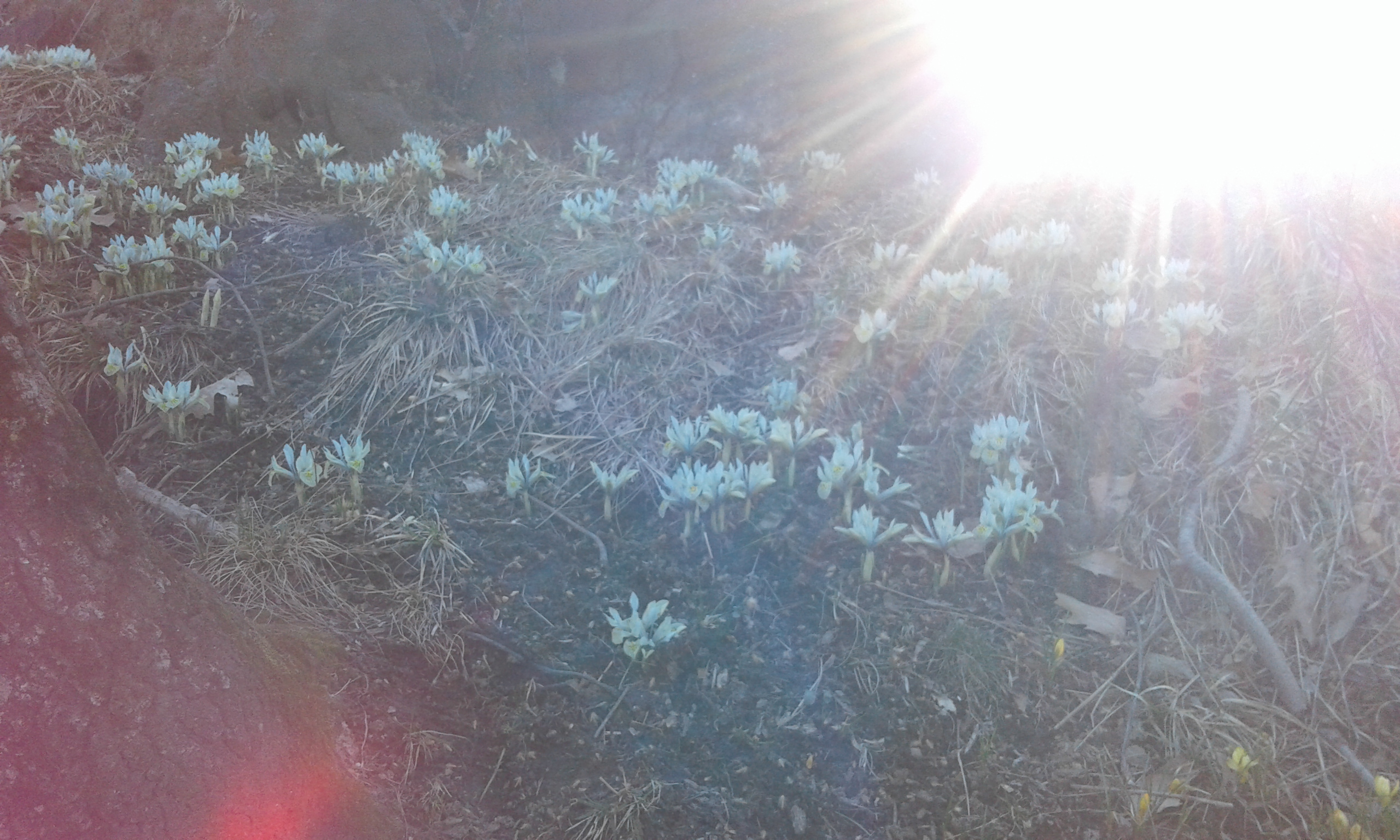
    meadow @Firstindigo&Lifestyle
    meadow @Firstindigo&Lifestyle

    The Folger Shakespeare Library,  in Washington D.C., opened in 1932 being an independent research library devoted to advanced study of the Renaissance and the early modern period in the Western hemisphere. It is a world-class research center with an outstanding collection of editions of Shakespeare’s plays. The Library has one of the world’s finest collections of 15th- through 18th-century rare books and manuscripts from Great Britain and Europe.
  • Armory’s charm

    Armory’s charm

    Almost thought, that I wouldn’t visit The Armory Show, which took place in the first week of March. The art fair’s tiredless self-promotion worked, however, and the show on Piers 92 and 94 didn’t disappoint. Next time, The Armory will move to a new location, providing also different dates. New York’s Javits Center will host the show in September 2021.

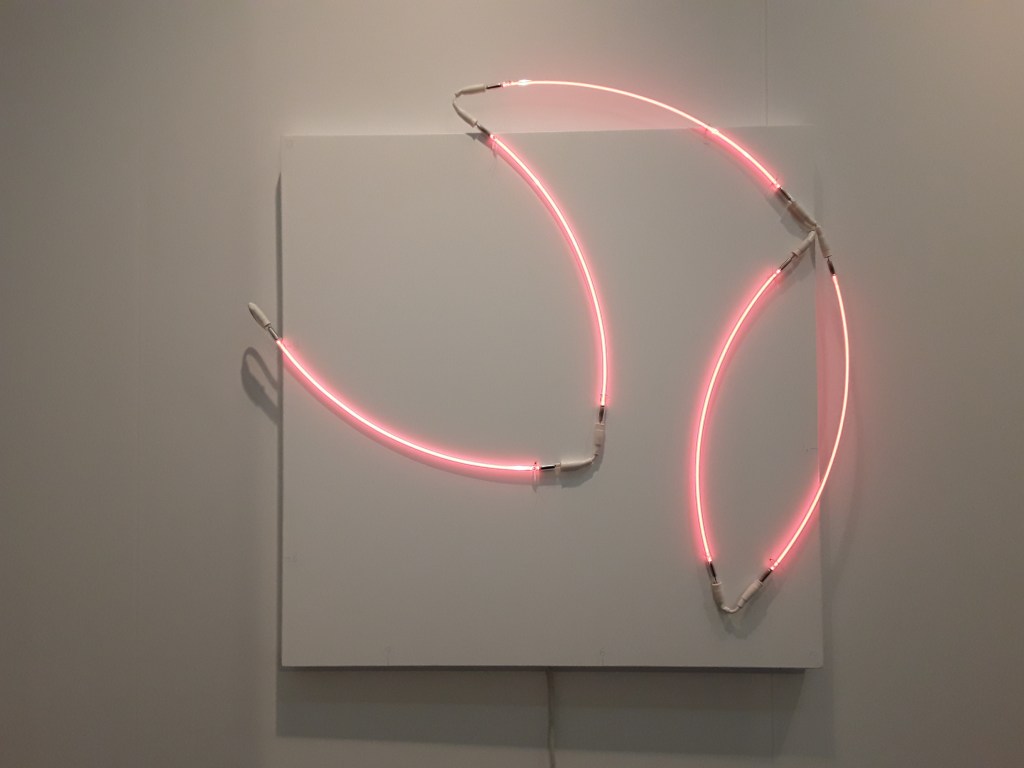
    Exhibitions of delicate, poetic, musical, and folding works, that create beauty in a world full of turmoils, took a center stage. One could pick the art with rose colored glasses. The Women’s History Month approved to be relevant. I immediately fell in love with Francois Morellet’s red neon work “Contorsions” (2007), at a Milanese gallery A Arte Invernizzi’s beautiful and minimalist booth.

    Shahzia Sikander, Double Sight, 2018, glass mosaic with patinated brass frame mosaic.
    Shahzia Sikander, Double Sight, 2018, glass mosaic with patinated brass frame mosaic. Sean Kelly, NY.

    Shahzia Sikander’s “Double Sight” (2018), is a mosaic work that draws from classical miniature painting traditions of Indo-Persian origins. The Pakistani-born international artist has experimented with the medium, and employs multiple perspectives to her works, including those of South Asian, American, Feminist and Muslim. The topics the artist explores are globalisation, languages, trade, empire, and migration.

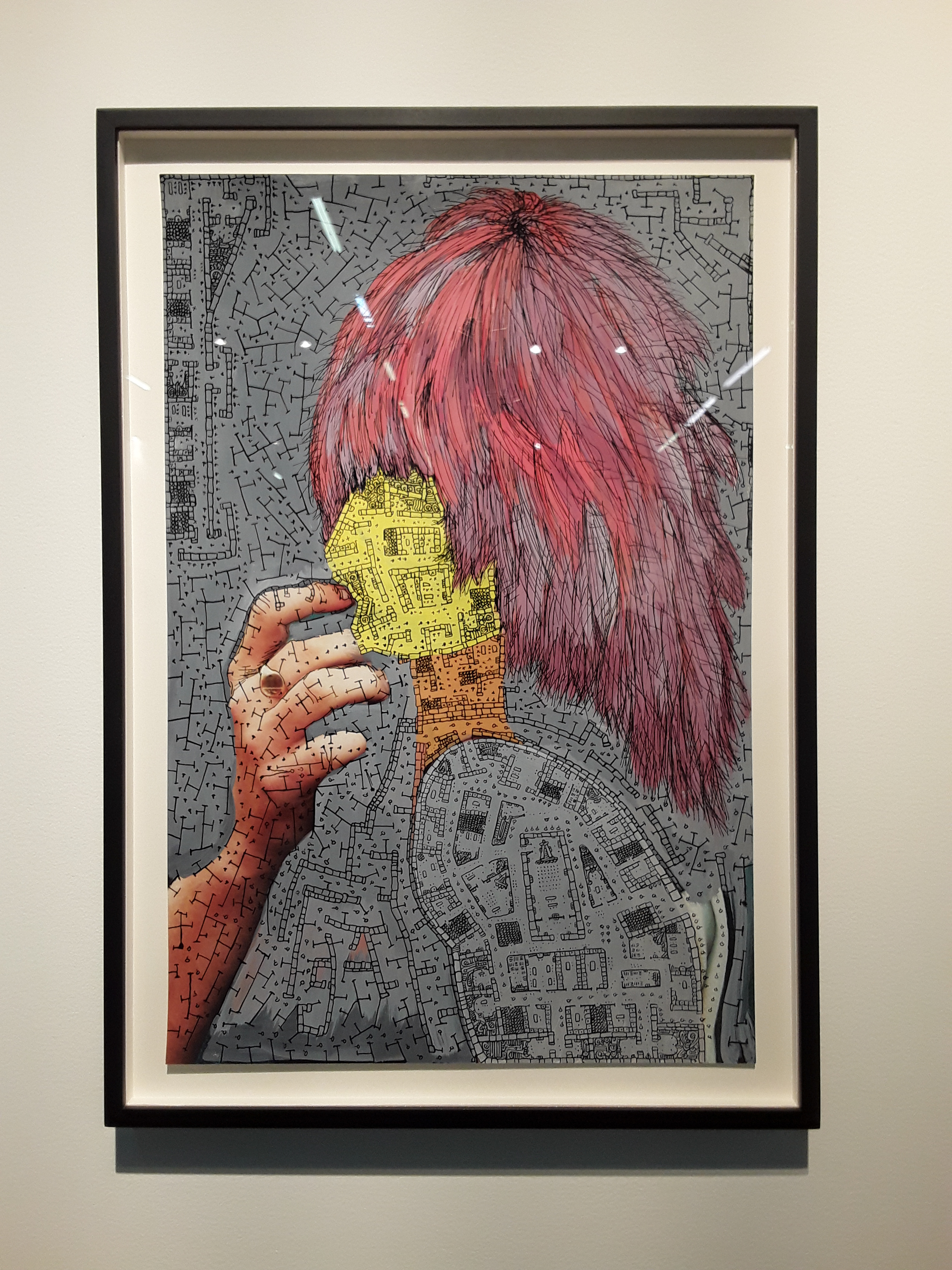
    Kim Jones, Untitled, 2003-2009, acrylic and ink on colour photograph.
    Kim Jones, Untitled, 2003-2009, acrylic and ink on colour photograph. Zeno x Gallery, Antwerp.

    Artist Kim Jones’ photograph has texture. In the one above, the hair is covering a face, while his other works on display were installations made out of wigs. The life of an artist includes time spent in Vietnam War, making his world appear as creating asymmetry, or holding a point of view that is more hidden.

    Rosa Loy’s painting, on the other hand, creates different magic with narratives, in which unknown looms in the air. The Leipzig-based painter makes compositions, in which women perform in seemingly weird and ritual-like settings.

    Rosa Loy, Tu das nicht, 2020, Casein on canvas.
    Rosa Loy, Tu das nicht, 2020, Casein on canvas. Kohn Gallery, LA.

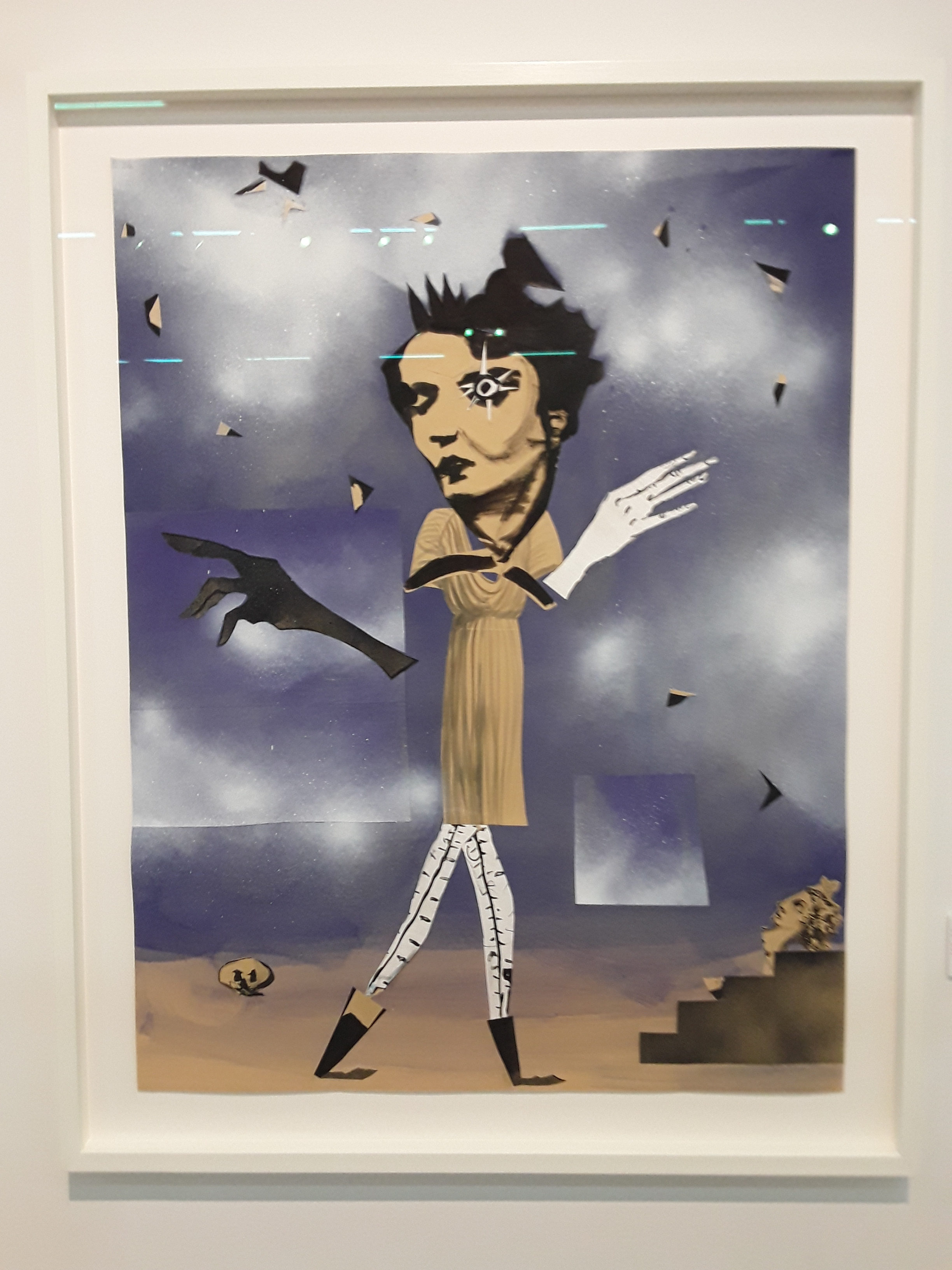
    Moyna Flannigan’s new works include paintings and collages. They draw from art history, mythology, and popular culture to explore issues in the contemporary society. She is interested in the representation of women in art. The figures in her works, have ambiguity in mind. The dark tones are discovered with humor and irony. She is at The Armory with the Ingleby Gallery from Edinburgh.

    Moyna Flannigan, Tear 52, 2019, ink, gouache, spray paint and collage on paper.
    Moyna Flannigan, Tear 52, 2019, ink, gouache, spray paint and collage on paper. Ingleby Gallery, Edinburgh, UK.

    These artworks remind us of the fact that the life is in a state of suspension. The everyday life feels more as if we face it in a raw spacetime continuum. 

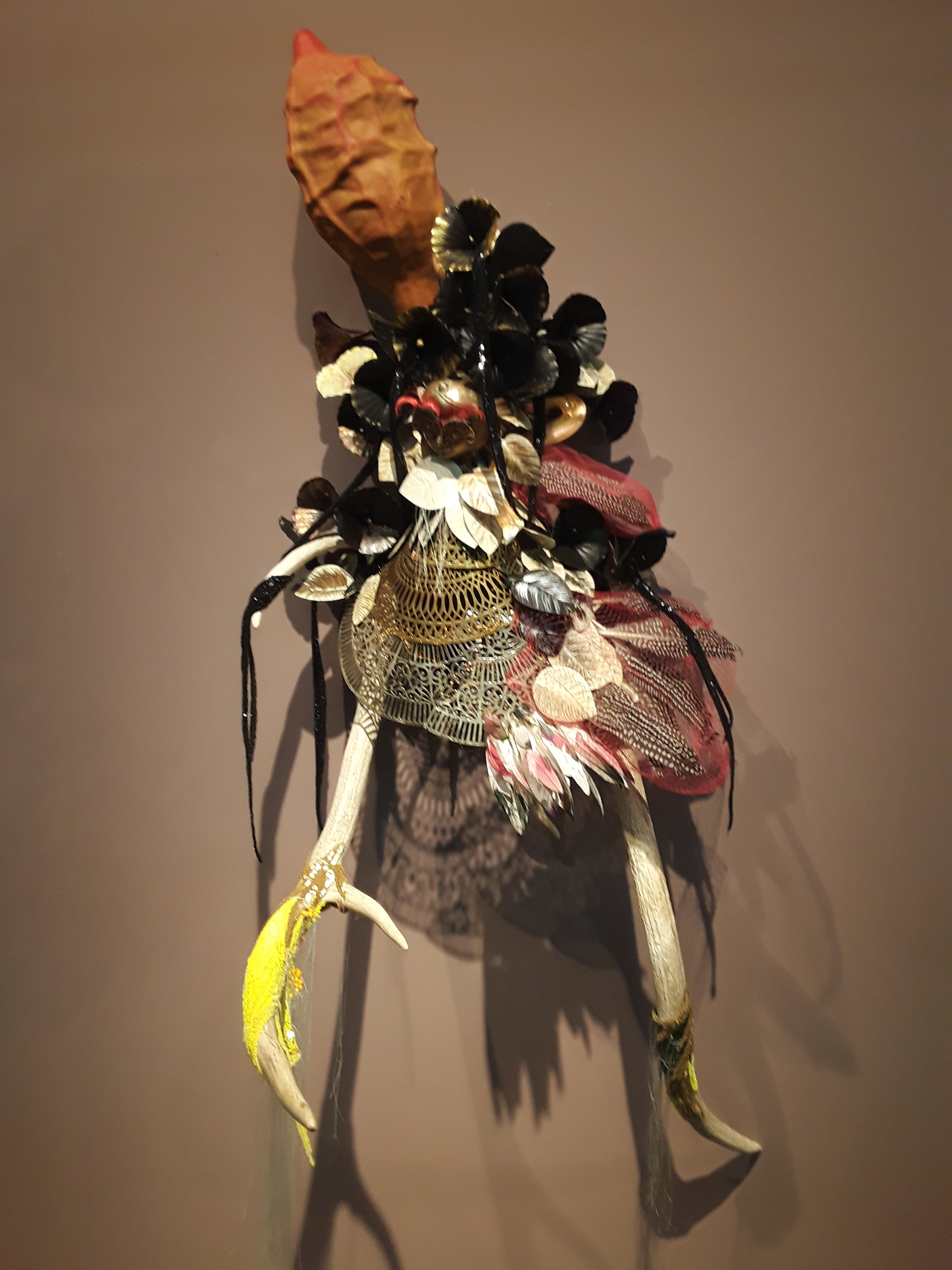
    Rina Banerjee, 2020, installation view. Galerie Nathalie Obadia.
    Rina Banerjee, 2020, installation view. Galerie Nathalie Obadia, Paris, Brussels.

    Rina Banerjee’s recent sculptures are part of her concept of ‘irresistible earth’, that can be described as something uncontrollable and unconditional. In it, our senses play a central role in a process of figuring out, what is right and what is wrong in the migrating destinies of our lives. Banerjee is an Indian artist who lives in New York City, and is represented by Galerie Nathalie Obadia in Europe.  Of her new sculptural work, she writes poetically.

    “Fastened to two walking sticks and lopsided imagined she in a world without opponents, unburdened by squabble and masonary bricks, she a prop propped up man from man not capable of understanding the parts that ripped and torn like partition, camps, detention pockets and passport tangles bottled black glory and tangerine blossom.” (Rina Banerjee, 2020)

    Nancy Wilson-Pajic
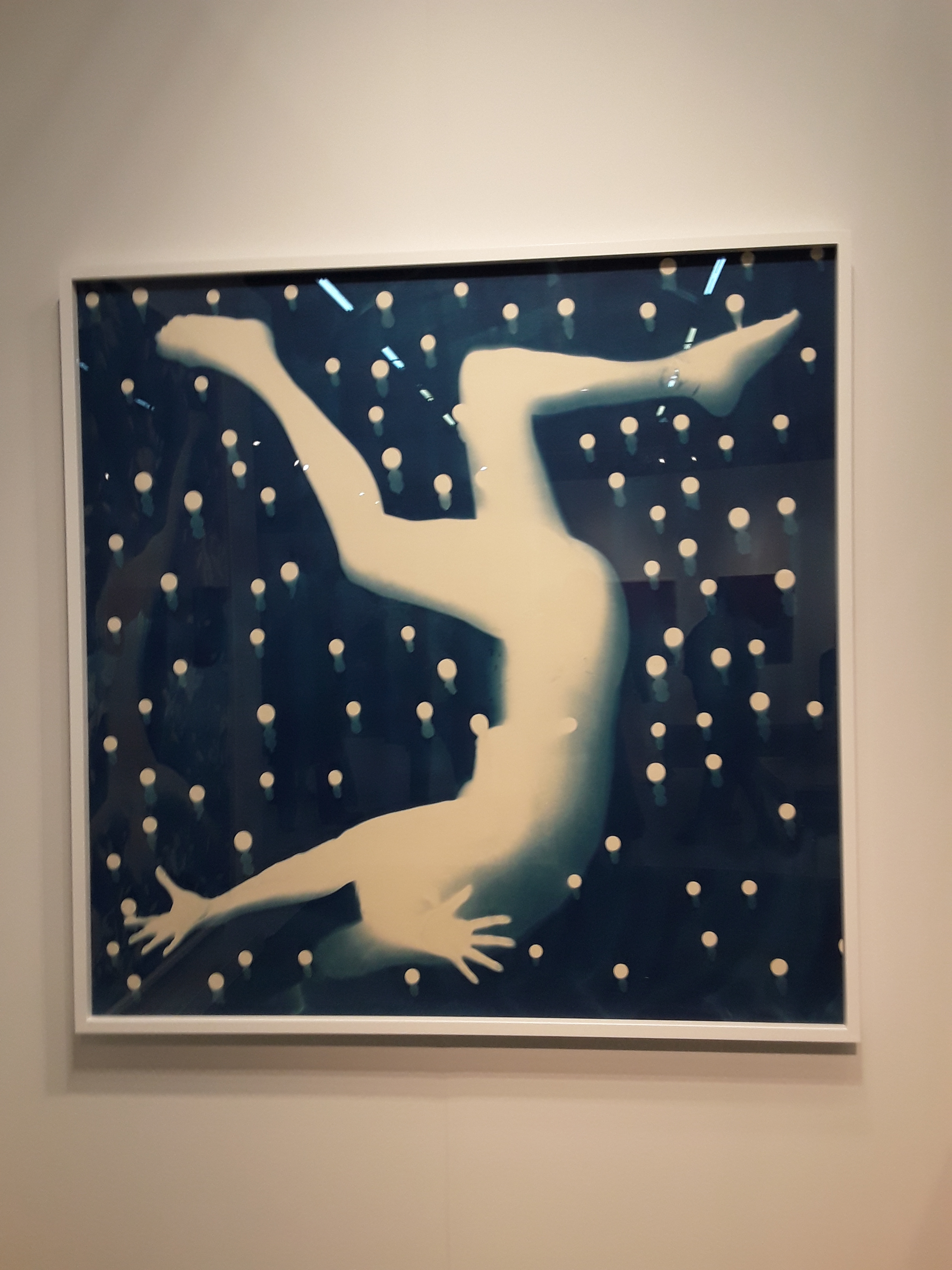
    Nancy Wilson-Pajic, Falling Angels, 1996, unique cyanotype photogram. Robert Koch Gallery, SF.

    For the Women’s History Month, Nancy Wilson-Pajic’s feminist cyanotype photogram recalls the time, in which women artists were not accepted to the canon of the art world. Therefore, the radical expression of her art developed into significant styles that she became known for. Her multidisciplinary art was aiming, “to create mental spaces within which creative reflection may take place.”

    These artworks remind us of the fact that the life is in a state of suspension. The everyday life feels more as if we face it in a raw spacetime continuum. 


  • Asian Smithsonian: Bells, buddhas and the meditation

    Asian Smithsonian: Bells, buddhas and the meditation

    Bells, tools and meditation are all ancient. When it has been confirmed by historic research, that tools and weapons were among the earliest bronze objects in China, the bells also now belong to this bronze age era. The meditative component has eminently added value and appreciation among the Asian arts. People are looking for nurture from art, and statuesque buddhas seem nurturing, even healing with their meditative poses. Massive sculptures are surrounded with the calm that is often lacking from the demands of the everyday life. The journey inwards requires little more participation.

    Chinese bells have a special form that calls for a closer investigation. They are emblems of music, and when tried, the sound can be interestingly different from the Western terms of bell-sound. The church-bells have varying melodies, yet Chinese bells embody tones that are thousands of years old. It is believed, that the sound has not changed since they were casted. Bells still narrate of ancient technology as a soundsystem.

    Chinese bells in the Sackler Gallery.
    Chinese bells Free Gallery of Art & Arthur M. Sackler Gallery

    With the global travel, the world has shrunk, and meditation practices have become increasingly popular. We are at the moment pushed to scrutinize ourselves into increased indoor dwelling, so discovering new possibilities of meditative practices might be useful. Sound is one way to go, listening to music with new awareness, concentrating fully into music or sound may turn the focus into a particular matter. A ‘look’ inwards may be rewarding.

    Meditation is a bodily practice of a mind as operator. A word techne would also fit with its stance of the world. Techne is a philosophical term, which includes knowledge at its core. By using it in reference to bodily practice, it might as well connect to understanding your meditation approach. Learn to meditate by meditating, gain knowledge of meditation by doing it. Knowledge is coming from the act and art of doing.

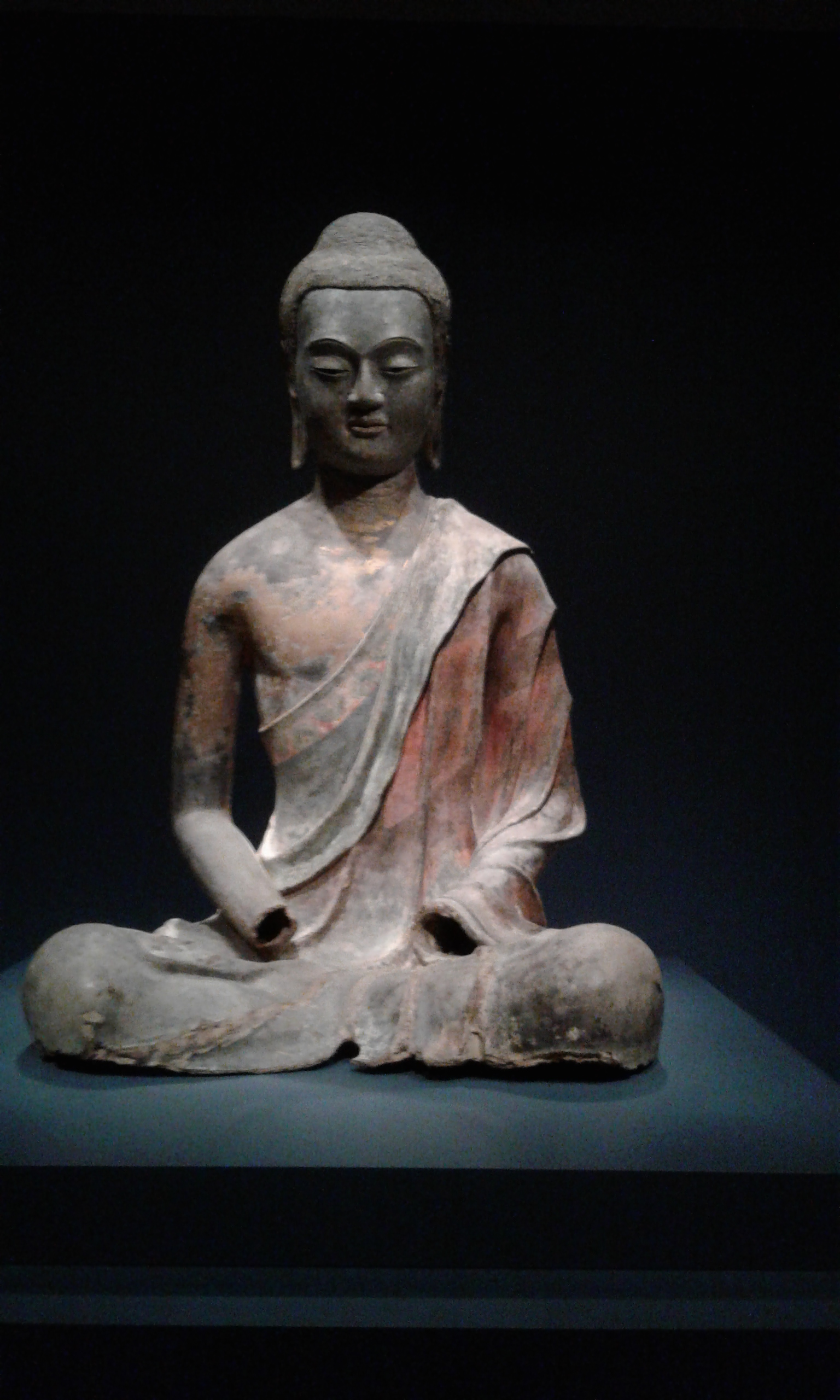
    Sitting buddhas are art works that meditate, giving out a pose with a silent approach that is almost demanding us to participate in a technology of looking inwards, of stopping our other activities, breathing with the sculpture. The art stimulates the senses into a sole pattern of sitting with a more disciplinary attitude.

    Buddha sculpture at the Sackler gallery.
    Buddha sculpture at the Free Gallery of Art & Arthur M. Sackler Gallery.


    Resound: Ancient Bells of China – exhibition on view at the Free Gallery of Art & Arthur M. Sackler Gallery in Washington DC.