Tag: featured

  • Anne Raudaskoski on Ethica and the holistic approach

    Anne Raudaskoski on Ethica and the holistic approach


    Anne Raudaskoski is a Finnish enterpreneur who wishes to create new connection to nature. Her approach can change the game of sustainability. With a background in dance, she has faith on the power of the arts: 

    “Arts provide a holistic approach to existence, and this is what we need to change the current linear system. Human beings are part of the nature; nature isn’t something that is “out there” to be exploited, but rather, we need to re-establish our connection with the nature to realise that we can create sustainable growth and well-being with far better rules than what we presently have”. (Anne Raudaskoski)

    Firstindigo&Lifestyle: When and how did you start Ethica consulting company?

    Anne Raudaskoski: I started Ethica in 2013 with my business partner Paula Fontell. We actually didn’t know each other at the time, but we both had been talking to our mutual friend of having a dream to set up a company focused on sustainability and the circular economy. This friend of ours suggested we should meet and share our ideas. We had our first meeting over lunch and we realised we shared the same vision. Three months later Ethica was formally established.

    Firstindigo&Lifestyle: How did you get interested in the circular economy?

    AR: My approach to CSR (corporate social responsibility) and sustainability has always been very business oriented. It means that there has to be a solid business case for sustainability and it should be embedded in strategy and R&D in such a way that sustainability works as a spring-board for the strategy instead of being an add-on or philanthropy. I wrote about the circular economy (CE) in early 2012 on my blog site after reading some articles on the Ellen McArthur Foundation (the global driver for the CE) site. I felt that some of the questions and pain points that CSR could not resolve – especially the intersection around environmental, strategic and economic issues – were inherently part of the circular economy. So when we started Ethica, it was very clear to us that the circular economy would be part of our service portfolio.

    Firstindigo&Lifestyle: Is it possible to define, what circular economy actually changes?

    AR: Circular economy is an economic model, so it affects all sectors and organisations in some way. I always say that the biggest hurdle in transition from a linear to a circular economy is our current mindset. All our processes, decision-making, governance and actions are based on linear thinking. In a nutshell, this means that we keep overusing natural resources, we accept the concept of waste as de facto, design processes are not based on biological and technical cycles and we haven’t figured out yet how to do business within the planetary boundaries. All this is changing as part of the transition towards the circular economy.

    Firstindigo&Lifestyle: What are the basic principles that define the circular economy?

    AR: The below list of six principles offers a good starting point to explore CE more in detail.

    1 Circular economy is a resource wise economic model that is restorative and regenerative by nature. It operates within the planetary boundaries.

    2. Materials cycle endlessly in technical and biological loops in society. Materials are safe & non-toxic.

    3. The value of products, components and materials is maintained and increased through refinement.

    4. All energy is renewable and is used efficiently.

    5. Solutions are systemic and based on designing life cycles, ecosystems and multiple purposes.

    6. Equal distribution of resources and well-being is in the heart of the circular economy.

    Firstindigo&Lifestyle: How would you describe the ‘ethical’ core of Ethica?

    AR: We want to create a circular future. To us this definition also entails equality, social well-being and in fact, a more just and transparent economic model than what we currently have as the result of the linear economy.

    Firstindigo&Lifestyle: Finland seems to be a forerunner for ethical solutions when it comes to consumption, and the country is also involved in introducing new clean practices. What aspects in Finnish culture support these kind of thinking?

    Indeed, there are quite a few aspects supporting this and I’d say it’s the unique combination of culture, history and welfare state: high number of clean tech innovations; excellent education system that educates children and young people about sustainability topics; frugal manners that our grandparents and parents had to adopt during the war, which then were passed on to younger generations; good recycling infrastructure with incentives…and of course ambitious policies and action plans in place. For example, circular and bio economy are one of the five flagship programmes of the current government. Finland was also the first country in the world to publish a national circular economy roadmap in 2016.

    Firstindigo&Lifestyle: What in your mind defines good consumption?

    AR: Understanding your own impact and power as a consumer. Exploring your own values; what kind of world I want to be building, do I want to be part of the solution or part of the problem? Questioning your own consumption habits: is there something that I could do and choose differently? Being your own leader when it comes to adopting new, sustainable solutions.

    Firstindigo&Lifestyle: Tell more about your Relooping Fashion project?

    AR: Relooping Fashion was about creating circular fashion. We piloted a circular ecosystem consisting of seven business partners ranging from waste management company to fashion retailer and packaging service. So the goal was to build, test and learn how a closed loop fashion ecosystem could work. Another important goal was to test VTT’s (Technical Research Centre of Finland) new technology for cotton dissolution that replaces the use of virgin cotton. Ethica’s role in the project was to model the business ecosystem as well as research the consumer interface. i.e. how to create demand for circular clothing.


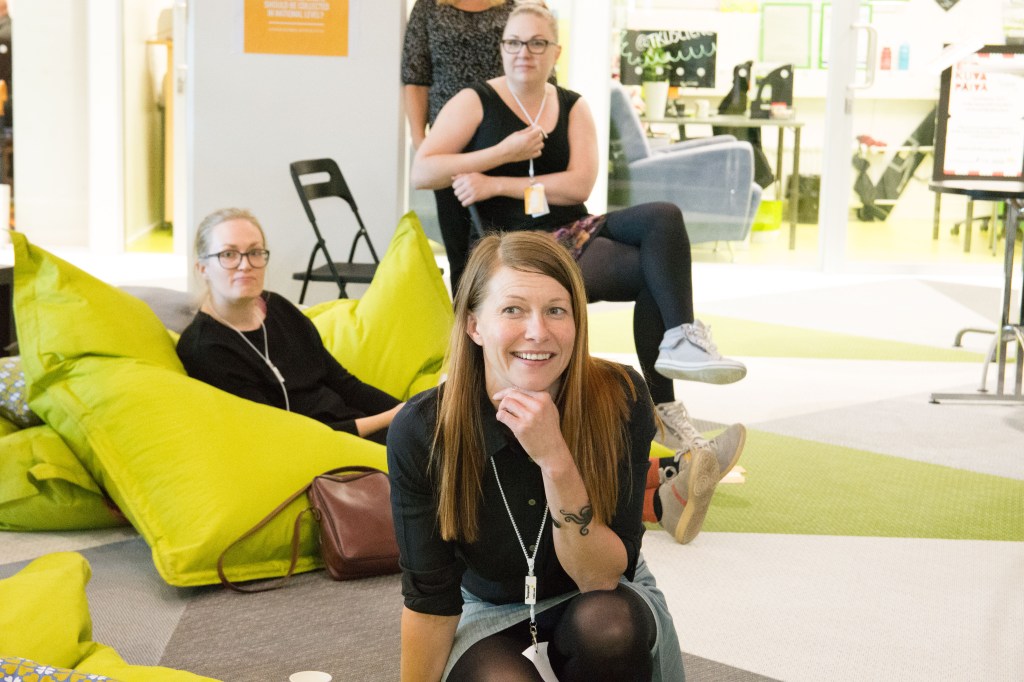
    Anne Raudaskoski, credit Janne Häkkinen, JFramesPhotography.
    Anne Raudaskoski, photo: Janne Häkkinen, JFramesPhotography.

    Firstindigo&Lifestyle: Where do you find your daily inspiration from?

    AR: No matter how cliché it may sound, I simply and truly enjoy my work, so the work itself coupled with the opportunity learn new things is my source of inspiration. Every project is different, we have great clients and collaboration partners to work with and of course our own team is brilliant.

    Firstindigo&Lifestyle: What can the world learn from Finnish innovation in clean practices?

    AR: Great education and innovation support system are essential enablers. I also think that the Finnish way of living and thinking inherently has a fairly good level of social and environmental responsibility, and when these aspects are combined with innovation, you get the solutions that the world needs.

    Firstindigo&Lifestyle: How do you like to influence and motivate people in their everyday life to incorporate more sustainable solutions and choices?

    AR: There are a number of different players who all have a role to play. Of course we need businesses to develop solutions that are not only sustainable, but they’re also the best solutions available. Legislation can speed up the development and help mainstreaming new solutions. Education and the media also play a hugely important role in making sustainable choices the “new normal”.

    Firstindigo&Lifestyle: Do you think that your background as a dancer helped you in your career path?

    AR: It did in many ways. Working as a freelance dancer requires endless curiosity, self-discipline, perseverance and ambitious attitude. You’re always seeking new opportunities and you need to welcome constant change. You need to be a good team player, but at the same time you’re 100% in charge of your own development. There are hardly any permanent vacancies available, so you have to build your own career and make sure you are sufficiently networked just to be even considered to be one of the many candidates. Basically, you work as an entrepreneur without the formal status of entrepreneur.

    Also my dance teacher background has been an asset when running workshops and giving presentations.

    Firstindigo&Lifestyle: In what ways can arts support circular economy?

    Arts can create connections and mental horizons that escape the typical business environment. It can bridge rational and emotional in a way that enables eureka moment, which is a prerequisite for willingness to change the status quo.

    Firstindigo&Lifestyle: How many countries have you visited to lecture and share about your business?

    AR: A few so far: China, the Netherlands, Estonia and Reunion Island (France). We also exhibited in Austin (US) at the EcoExhibition a couple of years ago. Next month I’m going to Sweden.

    Firstindigo&Lifestyle: Is it easy to name clients that are best for your brand?

    AR: The ones who want to work ambitiously, are truly interested in raising the bar and finding new opportunities through the circular economy thinking, no matter the size or sector of the organisation. From the circular economy perspective, we are still at the dawn of the new era and endless opportunities that this new approach can provide us with.

    Firstindigo&Lifestyle: Is the questions of climate change significant and embedded in your models?

    AR: Absolutely. To start with, all energy should be renewable, this is one of the basic tenets of the circular economy. Decoupling growth from the use of virgin raw materials and resources is another key principle. In short, it means doing more with less and designing our products, systems and societies in a circular way so that emissions can be decreased significantly.

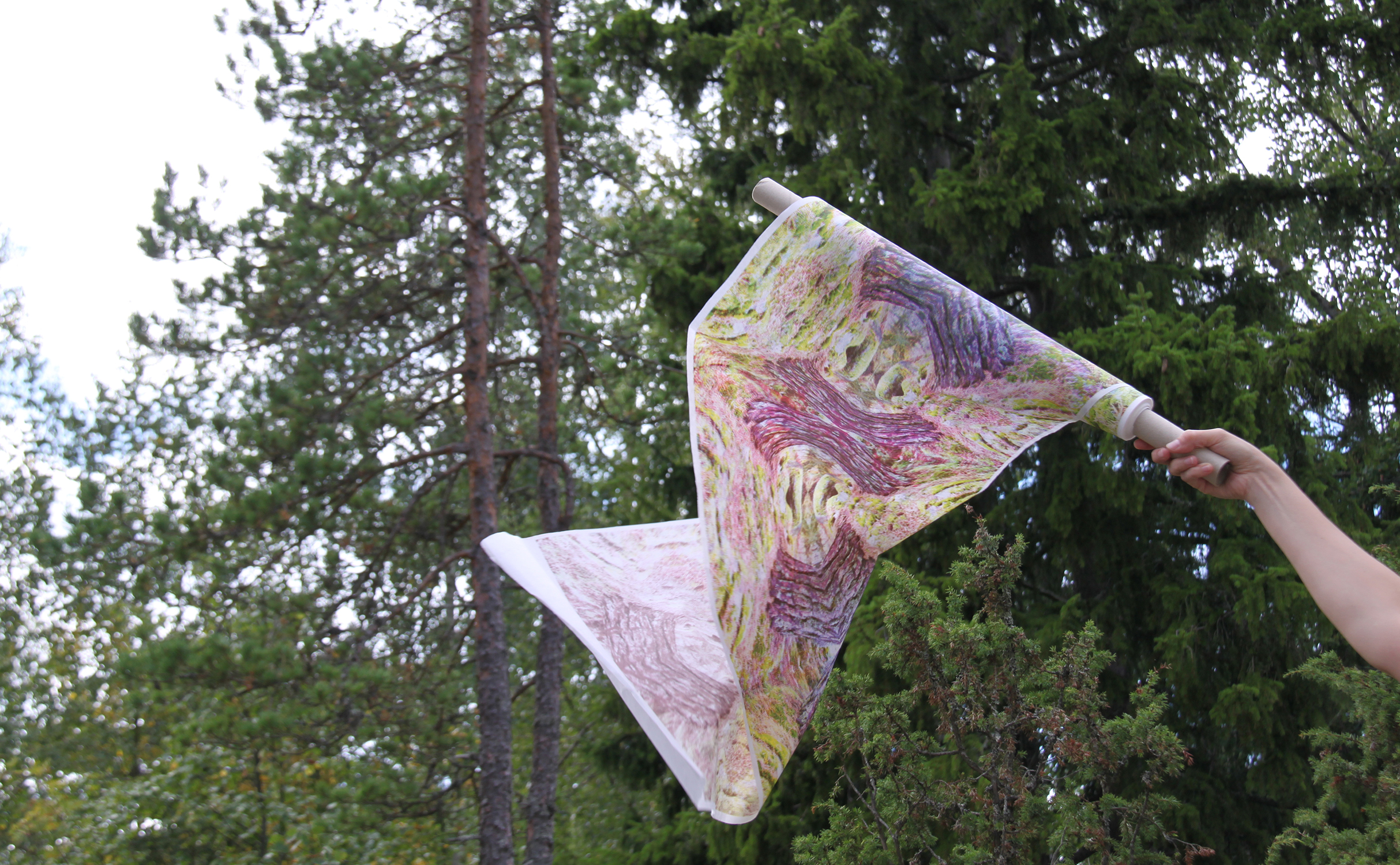
    Featured image credit: textile hackathon, Sara Malve-Ahlroth.
  • Sirkku Ketola: The artistic process of performing Paula

    Sirkku Ketola: The artistic process of performing Paula

    Finnish artist Sirkku Ketola had her performance project A Body Called Paula at the NARS Foundation Gallery in Brooklyn in November. In Finnish the word paula means a ribbon, something to tie or to be enchanted with. It is also a synonym for a trap. Globally Paula is known as a female name, originating from the Greek word ‘Paulus’, which means small.

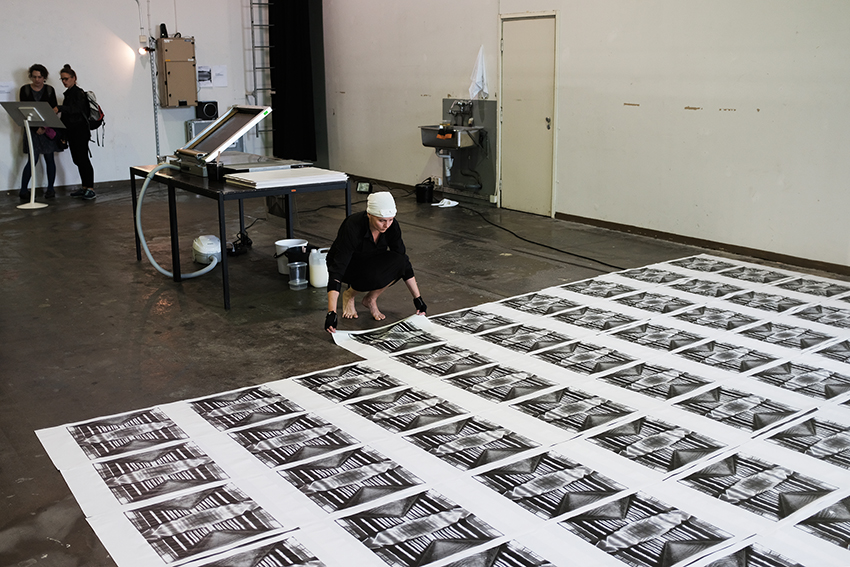
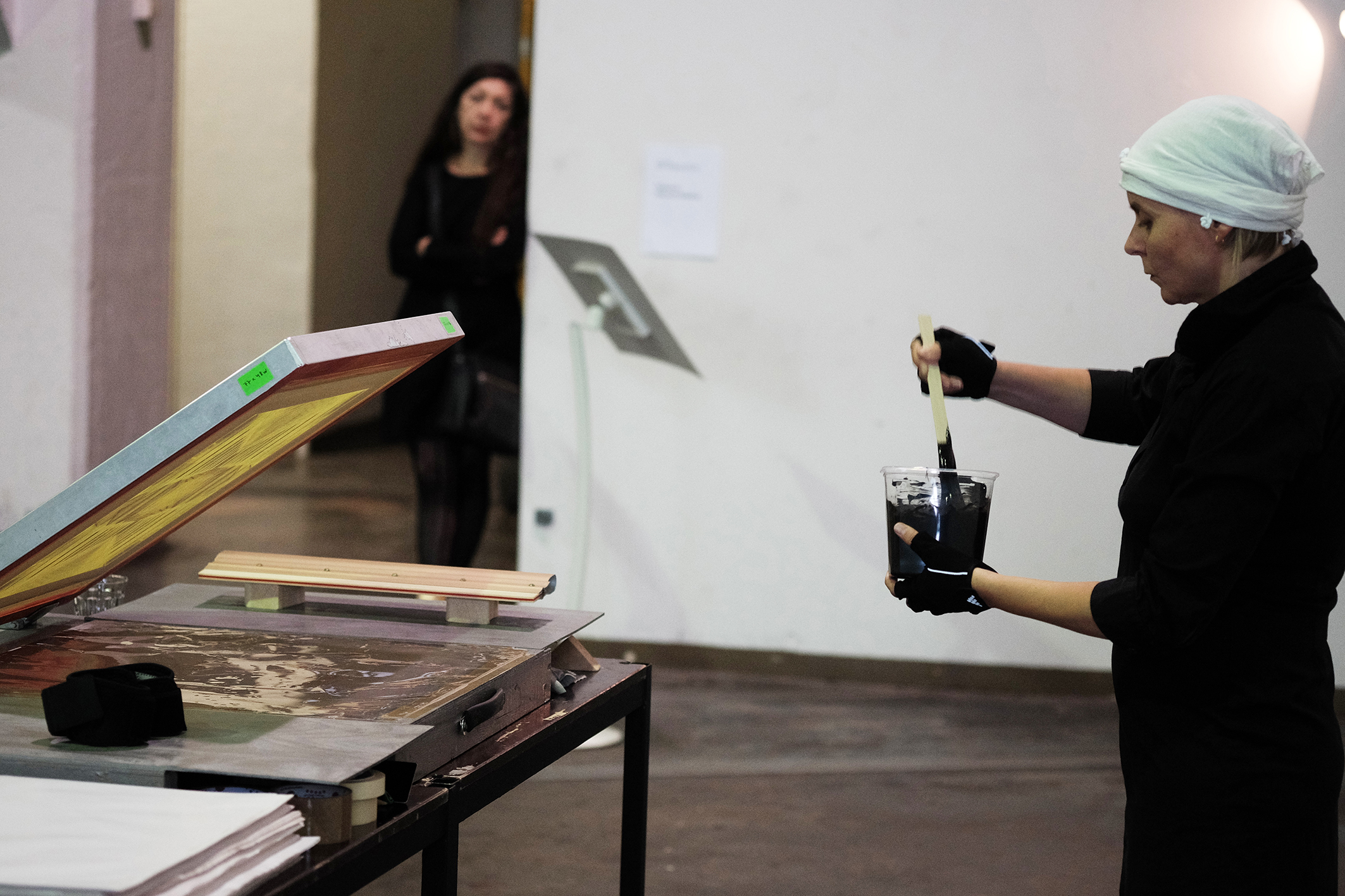
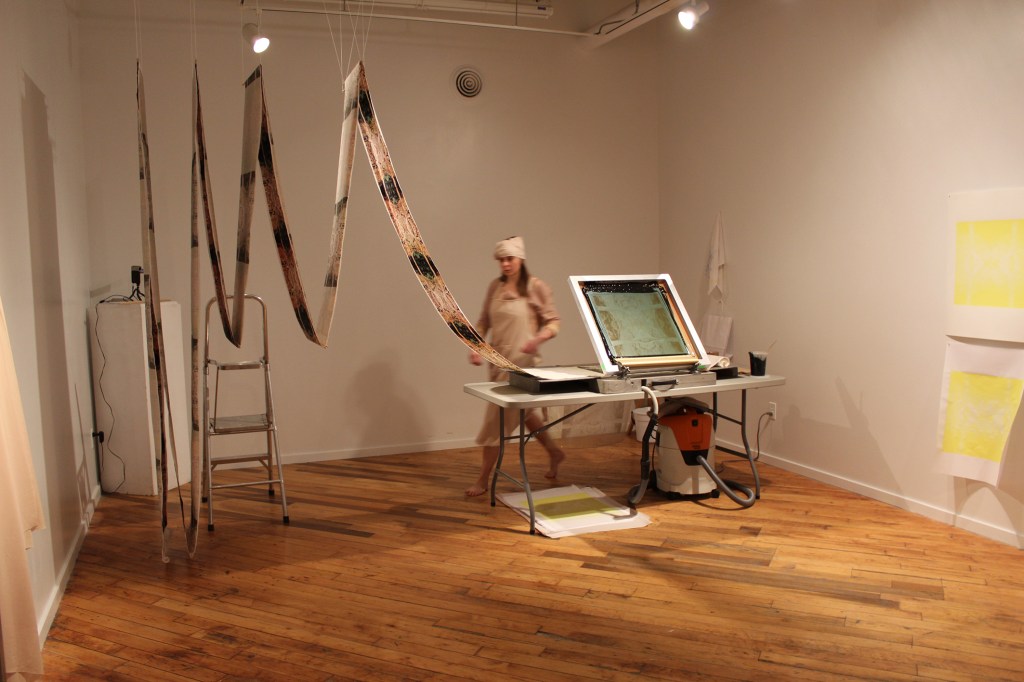
    In her current project of ten years, Ketola creates an installation that mixes screenprinting with performance. Part installation, part performance, A Body Called Paula is a piece that develops over the days of the installation through long-duration printing sessions. The movements and their soundtrack create an enchanting, sensual machine with the main themes of time and temporality, pleasure, and the meditative process of working.

    The narrative story behind the performance hunts beauty through the themes of light, passion, knowledge, reality, and depth, finally balanced out by darkness. What is the measure of time? Ornament is a universal form of visual art in every culture. The installation at NARS is part of Sirkku Ketola’s long-term project. For the duration of ten years ‘A Body Called Paula’ produces hand printed ornaments, or ribbons.


    Paula prints by Sirkku Ketola.
    Paula prints by Sirkku Ketola.

    Firstindigo&Lifestyle: What comes to mind, when you think about your project Paula is that it is so clearly beyond the visual practice, or enhances the physicality of the practice. What is so intriguing is how you dive into the embodiment and stretching of the paper. Is it that the body becomes a continuation of the paper in the printing process, as if being one with the paper? What kind of metaphors would you like to highlight, or are being evoked in the process?

    Sirkku Ketola: I guess I need touchable material to support thinking and understanding. In this case the handling of color and paper together with challenging technical crafting, tune us as one organism, where the tempo is being set in the cohesion of the qualities of the all included matters. The strength of the body, the sensitivity of the hands and the exactness of the eyes, are sensing constantly the fragility, stretching, moistening and drying of the paper, and the consistency and volume of the ink. The local, or should I say site-specific humidity and temperature effect strongly to the functioning of this paper/colour/body formed sensual machine. Also the instant substance of the body, the general vitality, the emotional ambiance, and for example the daytime, give all some special marks, first to the performance, and second to the visual appearance of the ribbon in progress. Imprint is different during mornings and evenings, also in the beginnings and the ends of the ribbons. I have chosen the long and fragile paper to be forced to lose control. The process is too tiring to hold on it. During the series of the performance the same paper roll goes by my hands 12 times so it is impossible to dominate the quality or the crossing effects of different layers. I just must be humble, and let the ribbon teach me. Maybe the greatest thing is that the ribbons still surprise me even though I’ve been working with the same materials for years. The major errors have been avoided, but the danger of errors are constantly present – everything can be irreversibly spoiled even in the last round of printing.

    Sirkku Ketola performing Paula.
    Sirkku Ketola performing Paula in Cable Factory, Helsinki, August 2017.

    Sirkku Ketola: The ornament arises on paper in stages from light to darkness. The colours (yellow/magenta/cyan/black), except being common from every home printer symbolize light, passion, knowledge, reality, depth and darkness. Step by step these colour layers, as named the elements of beauty, while mixing and uniting approach the truth, the code of life or would I say the mystery.

    The hand printed ornament reminds somehow of the DNA. Basically with the repetition of same patterns, the motif is being affected continuously by the changes of the circumstances. All the variations show together endless amount of visual possibilities and diversity. At the same moment the so-called mistakes come part of the entirety and open up routes for the new beginnings.

    Today we talk a lot about unmaterialized art, light and it’s different digitalized reflections. I am blown away by it also, the transfer of energy from one equipment to another accomplishes wonderful outcomes. In my own work process the need of touch, the acception of the tardiness of the body as the part of the thinking self, in other words handling with hands, have so far helped me to the deeper knowledge. I choose to cherish this special bodily tempo – it might be good for human species. When one forces oneself to stop by the slow repetition, one might also have time to understand something essential.

    Sirkku Ketola performing Paula in New York, November 2017.
    Sirkku Ketola performing Paula in Helsinki, August 2017.


    Sirkku Ketola: To be able to do the metamorphosis to become a sensual machine I had to create a role. My character Paula is simultaneously enraptured and trapped (in Finnish there is a sentence with both meanings, derived from the word ‘paula’ which also is a ribbon). She is a metaphor of a small human in cosmos. The name Paula comes originally from the Greek name Paulus which means small. So my Paula works with paula, with her special ribbon. Her job is to communicate visually by printing this repeating and overwhelmingly beautiful ornament. She wanders globally and communicates of the seen beauty. The previous place sets the next pattern, for example the New York effects to Paula will be seen next spring in Helsinki, Finland.

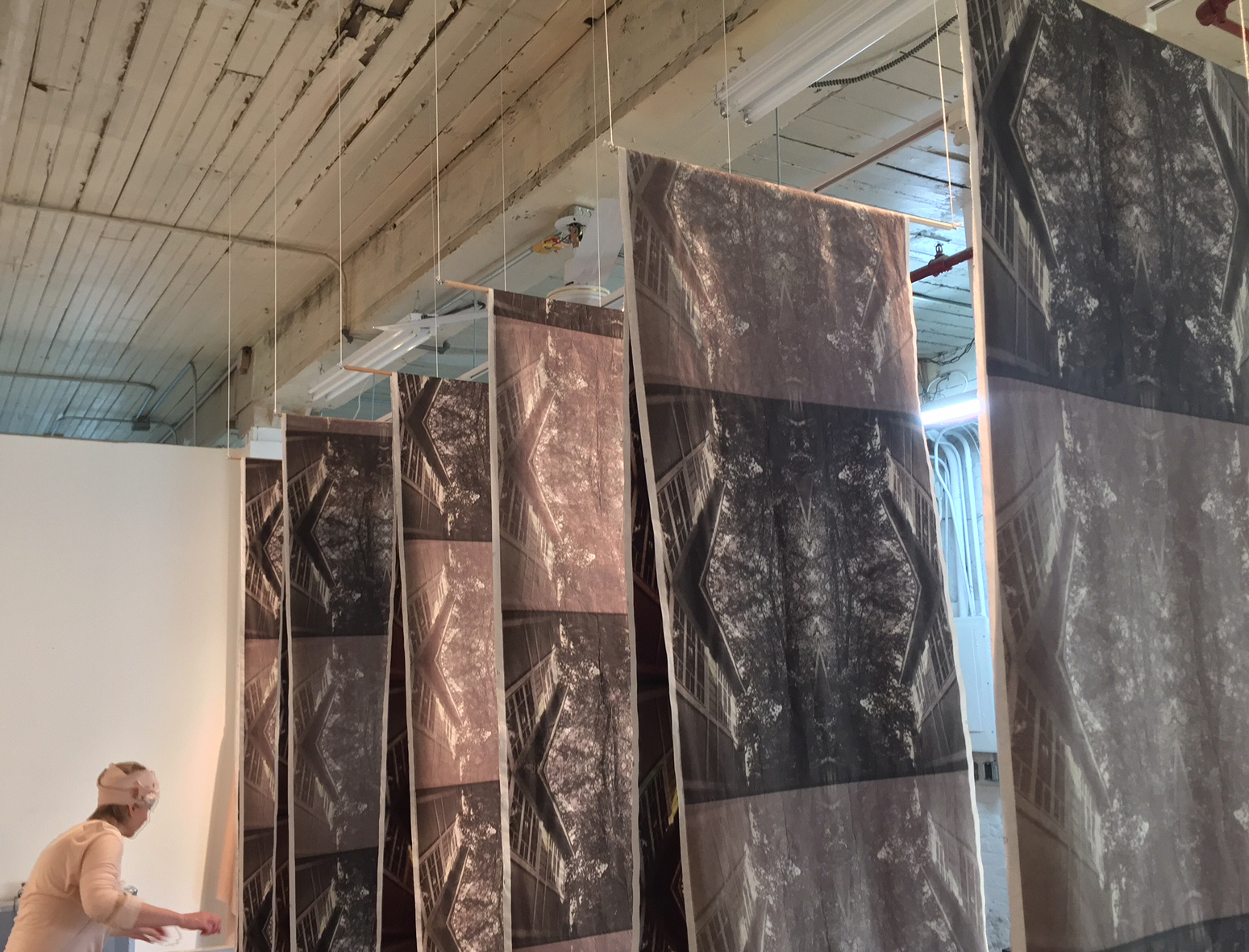
    The machine is slow and time bending. It is a factory that is able to work without problems approximately four times per year. The doctor’s order has set the limit. I forget the rules always in the beginning of the new project, but now, when the Brooklyn ribbon has been finished, the pain in my hands is there and that makes calming down easy. By respecting this manual of the project, it will be possible to enjoy after ten years from now about the yet unknown massive installation, which is made of these forty different and international printed ornament ribbons.

    I feel extremely privileged to be able to define the speed of the assembly line. For that reason the pleasure is an important part of the performance. Paula enjoys her movements and the choreography set by the printing process. The ink flows and the paper glides with the hands accepting to follow the weight of the body. The touch varies from strong to gentle and the rhythm beats with the working steps. The birth of the image feeds the will to come along to the anonymous destination. The possibility for sudden challenges forces the printer into the extreme concentration and to overcome difficulties and accept the errors. With the physicality, the mental part is also reacting all the time to the present. The chosen repetition grows thinking and developes strong pleasure.

    Sirkku Ketola: Feedback, 2016. Handprinted silkscreen on wood. 81 x 105 cm. Process picture.
    Sirkku Ketola: Feedback, 2016. Handprinted silkscreen on wood. 81 x 105 cm. Process picture.

    Firsindindigo&Lifestyle: How do you prepare for the performance of this scale, which is almost a marathon? What is the preparatory phase like, and what happens during the performance aftermath?

    Sirkku Ketola: During the performing period I take specially good care of myself. I try to do the outdoor activities daily, sleep enough and eat healthier. I try also to avoid the evening happenings and alcohol. The preparation for the performance takes mentally the whole day, but the most intense are the two hours before the show. The soundtrack of the performance follows me since morning. I’d like to highlight, the sound scape of my music and the noise of the printing table are essential elements of the performance. When arriving to the show space I tend to eat lightly and drink a lot of water. After it is time to check all the technical equipments and to mix the printing inks, the hue and the saturation needs to be done carefully. I have a special ritual order to do this. After this, I isolate myself, warm up and slowly become my transformation to the role. Thirty minutes before the show it is time to change the costume and become Paula. She doesn’t speak. The aftermath of the show is quick, washing the make up and changing the clothes are rapid, so I’m soon ready to communicate with the world again as myself. Before leaving I clean the colours and check all the technical details for the next day. When arriving home I stretch well and take a warm shower, except in Finland my choice is sauna.

    Paula performance in Nars foundation Photo Nov 17, 3 38 57 PM
    Ketola performing at the NARS Foundation in New York, November 2017.

    Firstindigo&Lifestyle: How is New York as a place different, and this performance venue special, in terms of what is their impact on the quality and outcome of the work? How is the location different from the rest, say, Canada or Finland where you also created this performance piece?

    Sirkku Ketola: The place impacts mainly how the performance is being installed. I like different spaces because they challenge the art work and keep it impossible to predict. The space in NARS in Sunset Park in Brooklyn is many ways special. First, it is near the Finntown, where there was a strong community of Finnish emigrants. During today’s new emigrations flow it felt important to mark the difficult roots of my own country. Second, the size of the gallery was perfect for the project. It fit there well, both visually and functionally. Third, the space is in the building, which is full of working artists, situated in the middle of the industrial Brooklyn. Where else should the sensual machine be? I came to New York as a visiting artist-in-residence of Finnish Cultural Institute for two months. My main goal was to research the structures of the money and power in the contemporary art scene. Beyond A Body Called Paula –project I started to sketch the new large-scale print installation referring to this research theme. The work will be produced during next three years. My colleagues in Brooklyn taught me a lot about independent artists’ living at the capital of contemporary art (NYC).

    Paula, NARS foundation.
    Paula performance, NARS Foundation in New York, November 2017.

    The physical dimensions and the quality of the NARS space gave the rhythm for the installation when growing during the performances. The intimate gallery of the Sunset Park made possible to the paper ribbon to take a shape of a visually fine zig zag when it landed to dry to the perches I mounted. Also the rest of the visual elements of the performance found their places to create a dynamic composition. There was space for Paula to move and the audience was able to have several standpoints. The space was also photogenic with A Body Called Paula – and that’s important in our social media time.

    This was the fourth time and the fourth place for Paula. In Toronto it was seen in a gallery with the long hallway. There the magic of Paula worked like in the story of the Pied Piper, when people saw the action from far, they just had to reach to the space. In Helsinki Paula measured the huge hall in Cable Factory during the five hours marathon performance. And in Turku, Finland she worked behind the lightened window in the darkness of the first autumn evenings by the riverside. And in Brooklyn she captured the industrial space around the other artists. I believe that during the next ten years, Paula can capture many different structures and spaces as rich as she has done in her first year of the process. The big scale quality will be seen in the end of the whole process. All in all, these places are valuable treasures for me, and will affect the final installation.


    — — —
    Next time A Body Called Paula will be seen in Helsinki in March 2018. After that Sirkku Ketola travels mostly in Central Europe. She will be back in New York City during autumn 2019.

    — — —

    The screenprints made in New York have been prepared at the Robert Blackburn Printmaking Workshop: http://www.efanyc.org
    More information:

    Introduction: http://sirkkuketola.com
    Previous exhibitions: http://www.la-bas.fi/ketolaeng.html

  • SFMOMA Serendipity

    SFMOMA Serendipity

    The opening of a new expansion of the SFMOMA art museum was celebrated just a couple of weeks ago. The intention of the new Snøhetta designed museum, is to increase public access to the museum by creating more room for education for the arts and related fields, to bridge the gap between the exhibiting gallery spaces and unticketed areas, as well as connect the outdoor spaces around the museum. More room to hang out, to meet, to educate, to inspire and to be inspired. SFMOMA opened at its current location in 1995, when the construction was designed by Mario Botta. For the reconstruction, Snøhetta design team had a challenge to double the gallery spaces, and help create a museum, which is a hub for new things to emerge. The refurbished museum aims to bring together American and International arts, while the collections span through gestural modernism and conceptual art, to the emerging contemporary art from the Bay Area. SFMOMA has also promised to reach out to global art communities at large.

    The new SFMOMA proves that it is possible to reinvent an art museum. First, the museum architecture plays a huge role in creating the potential for the artworks that are being installed, as innovative architecture contests the boundaries of the space. This time, museum interior communicates with the exterior. Snøhetta has created a construction, which is seamlessly woven into the existing building, adding into the city’s urban dreams. As a result, the museum goes beyond its construction site, and communicates with surrounding parks and alleys. This proves that the ‘institutional’ side of the museum’s bureaucracy is set in the background, and the numerous stages of the public dwellings offered to the visitors is more apparent. A visitor attains the key role through the alteration of the spatial elements. Having so many choices to play with, the architecture transmits the perception, and creates together with the artworks a unique encounter for each visitor. The architectural line, it’s material continuation inside and outside sparks into multiple directions. Second, art plays with architecture in a new and unexpected ways, and changes the constructions too. With Richard Serra, Sol LeWitt, and Alexander Calder, among others, it’s hard to make the space appear as null. But there is so much art in the world to add into the master classics. New works show as much potential to communicate with the space.

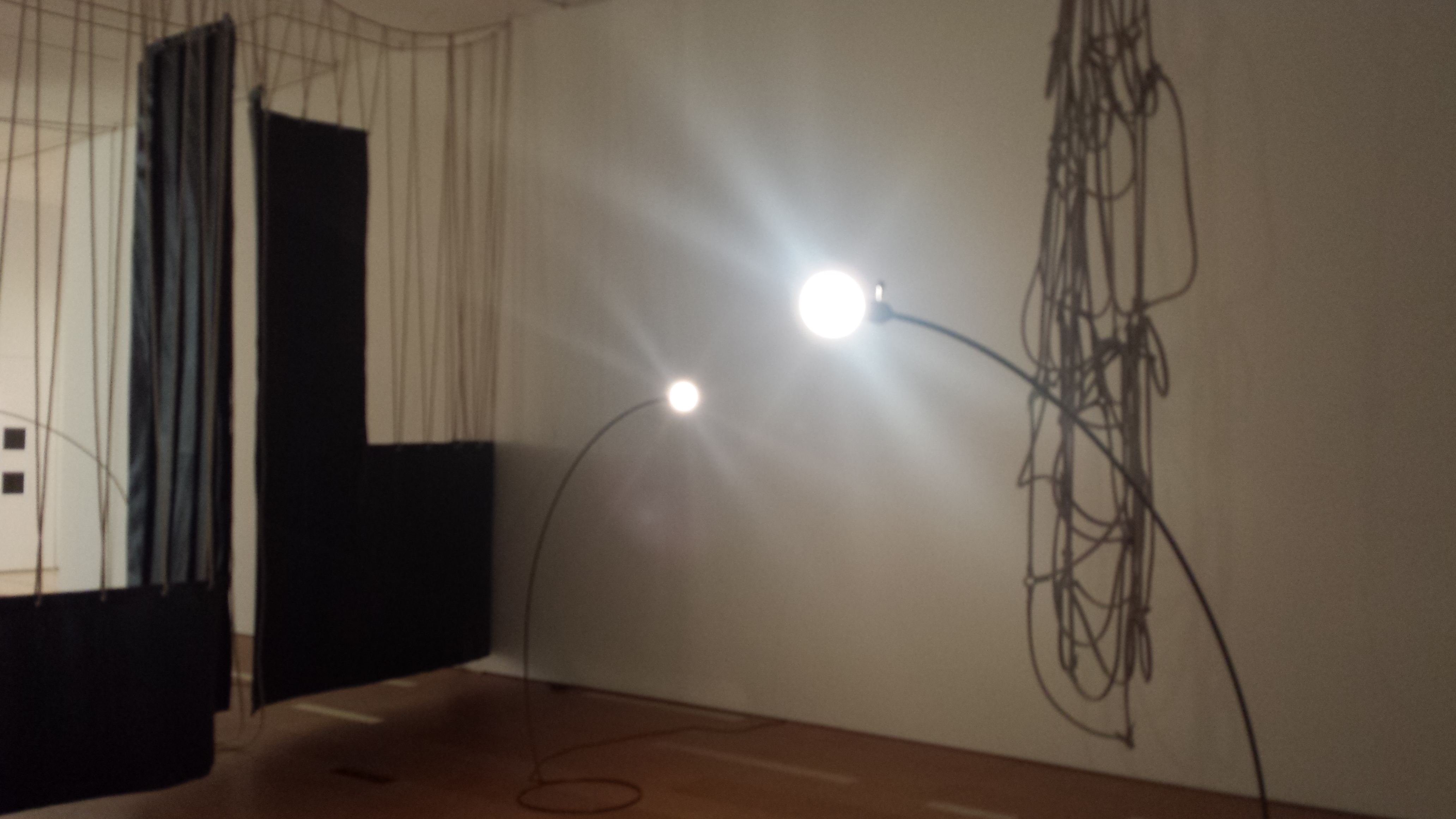
    A new contemporary art installation inaugurates the museum’s New Work -space. Leonor Antunes, has created work with a title ‘a spiral staircase leads down to the garden’ (2016).  This piece communicates with the architecture, showing diverse angles to enter the gallery space. The artist has stated that she carries ghosts with her into her works, in bringing artists, designers, and architects whom she admires to her installations. ‘a spiral staircase leads down to the garden’ is no different, appearing as a continuation of the space as an interior. The handcrafted materials cover the floor, hang from the ceiling, light the space, and block a direct path. The installation shows the artist’s interest in the Modernism, highlighting especially the woman practitioners in the history of craft and design.

    Leonor Antunes, installation view at SFMOMA.
    Leonor Antunes, 2016, installation views of her new work at SFMOMA.
    Leonor Antunes, new work at SFMOMA.
    Leonor Antunes, ‘a spiral staircase leads down to the garden’, 2016, Brass, cork, leather, hemp rope, nylon yarn, monofilament yarn, steel, electric cables, light pulps, brass and Bakelite light bulb sockets, and foam. Courtesy of the artist and kurimanzutto, Mexico City.

    The Doris and Donald Fisher Collection creates much of the museum’s art collection. In particular, noteworthy is the display around the historic gestural abstraction, which started molding the American Art after the end of the World War II. The movement started to erase questions about the art’s capability to evoke thoughts and feelings. Perhaps it originated in the idea of believing in the healing mechanisms of the art. One work is particularly interesting. Joan Mitchell’s large size triptych ‘Bracket’ (1989), is a great example of the instantaneous moment in art. For her, painting could represent similar forces as the sculpture, forging out the movement and physicality.

    Joan Mitchell, Bracket, 1989, oil on canvas, is an example of the gestural modernism.
    Joan Mitchell, Bracket, 1989, oil on canvas, is an example of the gestural modernism.

    The show around gestural modernism is well thought out as part of the SFMOMA’s new opening. It reaches up to redefining the concept of a gesture via selection of works. This becomes a red thread to other artistic displays as well. The museum exhibits plenty of work coming from the plural identities of the Bay Area, yet, some combining elements construct a more cohesive palette. The best part is that the transitional space of the West Coast and its cultural crossroads confuses the pattern of the gesture as something fixed, measured, white and universal. The inside of the culture is turned outside, as much as the architectural environment overlaps both domains.

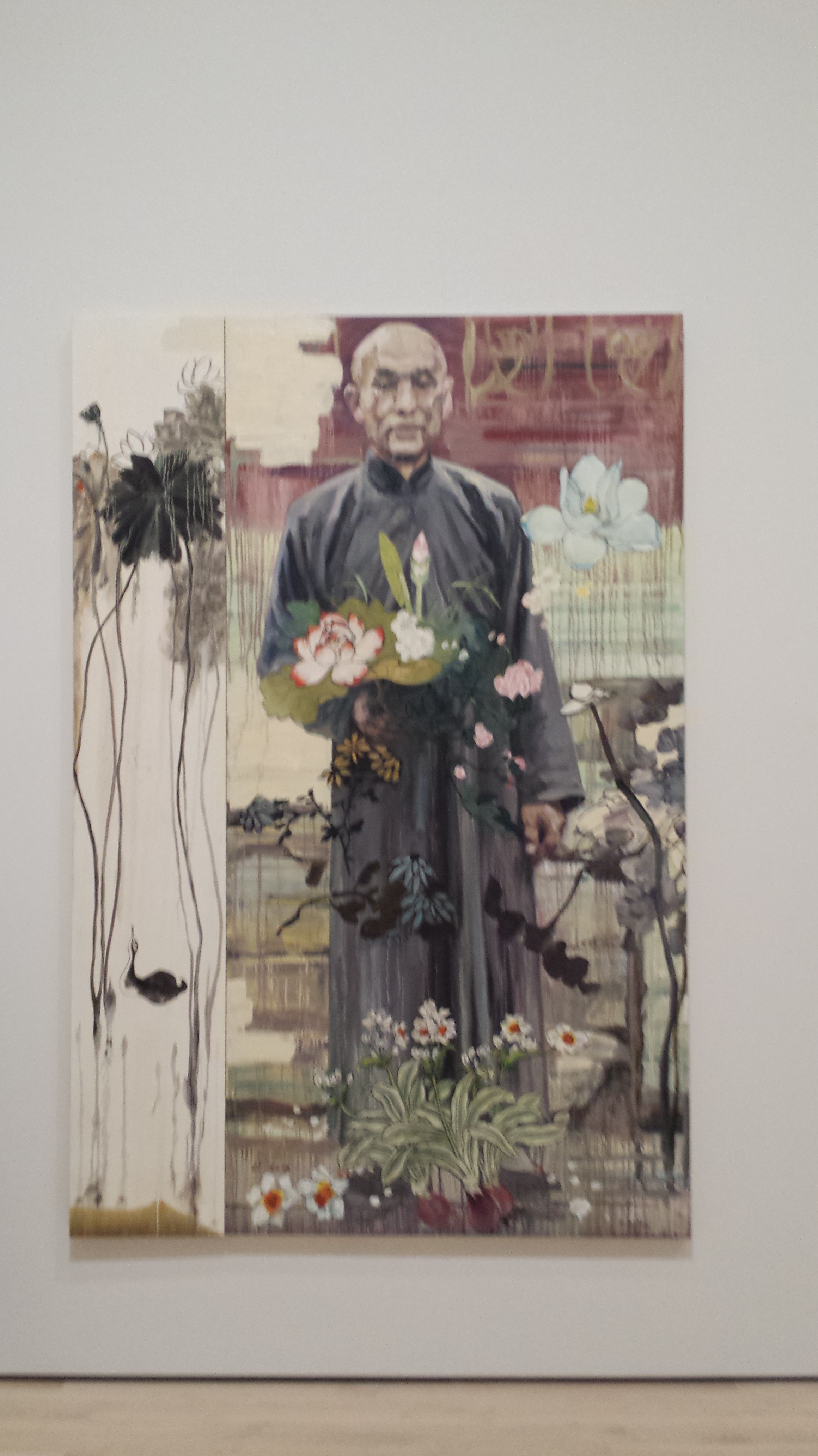
    Hung Liu's oil on canvas.
    Hung Liu, The Botanist, 2013, oil on canvas.

    The contemporary artworks do not create separation, but quite wisely culminate in supporting each other. Series of contemporary works follow black and white patterns, with a hip touch of pop art, and borrowing from chic minimalism of American interiors. These could of course be easily absorbed into the world of design and culture lending to Modernist and Postmodernist architectural patterns. Over all, the sometimes too heavy collective experiences are not so much emphasized, and there is more room for subdued artistic politics. Fragmented selves and posthumous experiences, ghosts of the artist’s personal influences as part of the installation define the process in the contemporary art.


    Images: Firstindigo&Lifestyle.