Tag: Finland

  • Artist spotlight: Johanna Tuukkanen, The Outstanding performer

    Artist spotlight: Johanna Tuukkanen, The Outstanding performer

    I interviewed Johanna Tuukkanen, who is currently preparing her PhD in art education and cultural policy. She is a well-known curator and art-maker herself, and the Artistic Director of ANTI festival based in Finland’s Kuopio. This week, January 30, 2015, she will also have a premiere of a new work Panopticon together with her colleague, choreographer Pirjo Yli-Maunula in Oulu, which is a vibrant capital in Northern Finland. Their new multidisciplinary work will articulate a hot topic of women’s ‘controlled bodies’, as they are often portrayed in fashion industry and magazines, taking a theme of aesthetic violence in relation to women’s bodies as a starting point in their performance. Simultaneously, their performance asks, are we allowed to mock this phenomenon, and even make fun of it in the arts? Johanna Tuukkanen has been making noise with her performance art for good 15 years now, highlighting women’s bodies in her performances many times before.
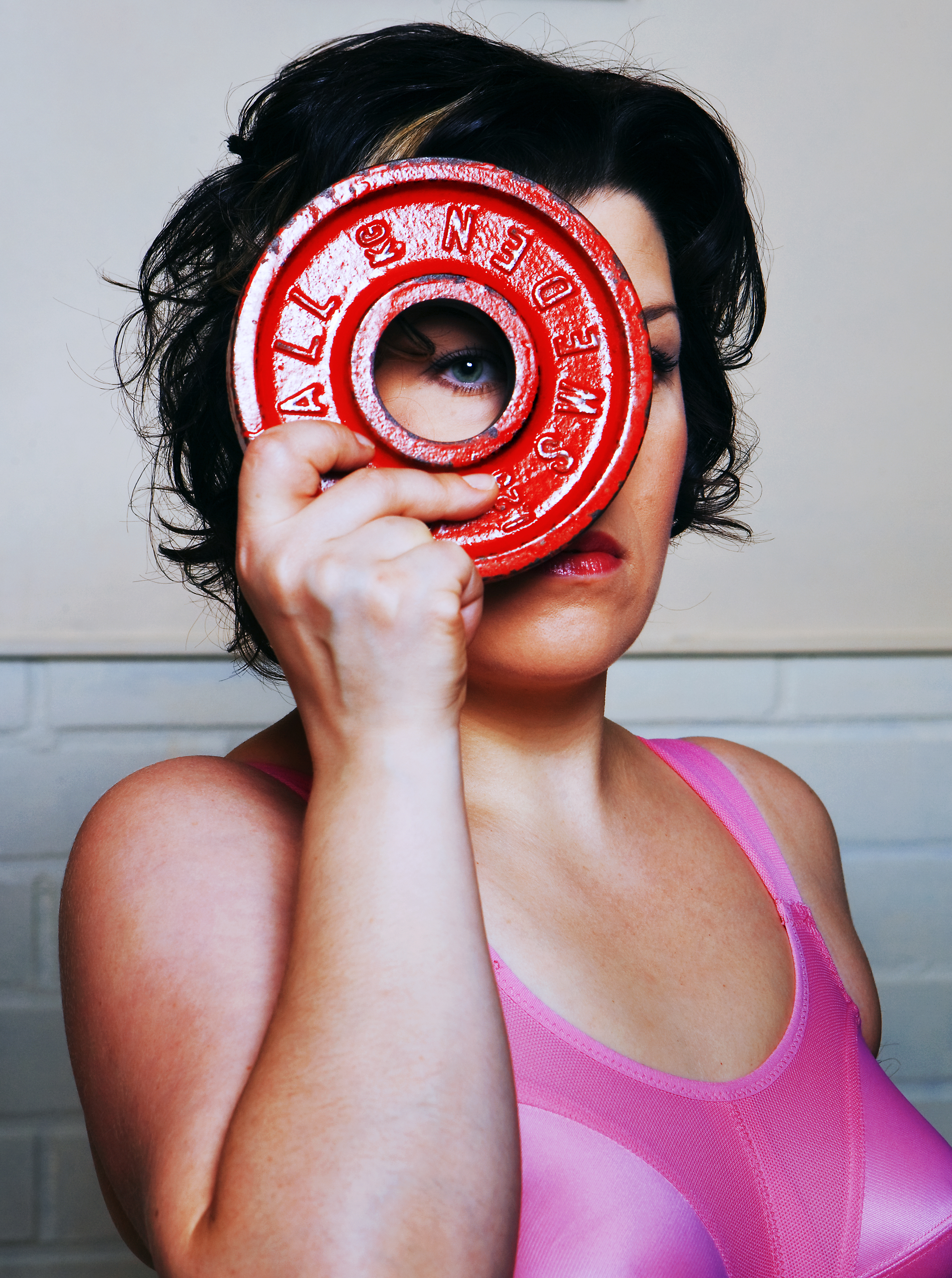
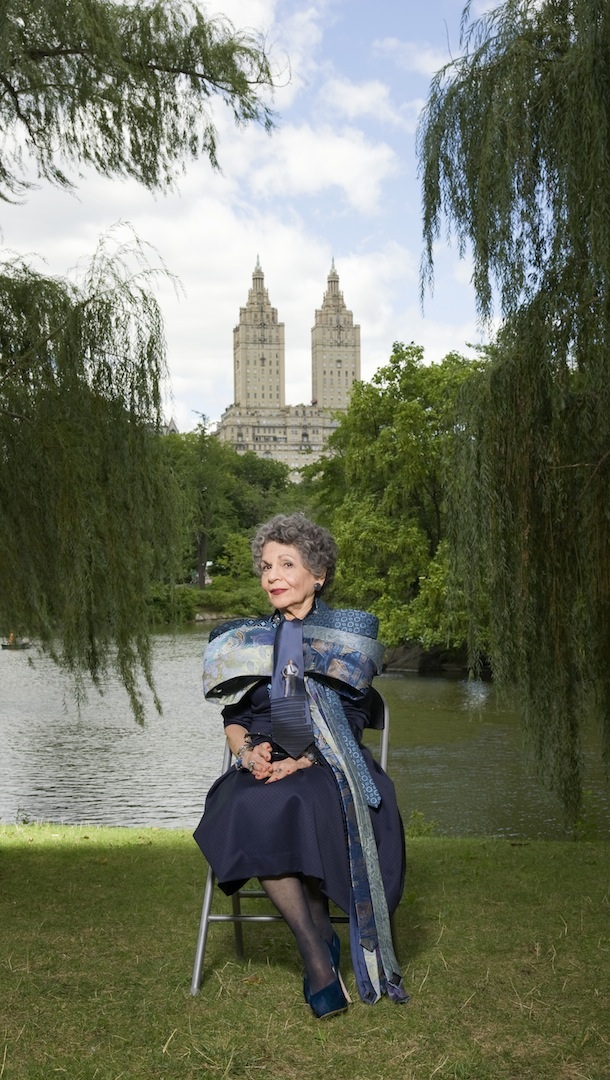
    Johanna Tuukkanen in Huippusuoritus, Outstanding Performance, Photo: Pekka Mäkinen
    Johanna Tuukkanen in Huippusuoritus, Outstanding Performance, Photo: Pekka Mäkinen

    Firstindigo&Lifestyle: Johanna, I have known you from the early 2000s onwards. It seems that there has been a lot of currency exchange around your artistry since that time. Finnish art scene, I believe, has also developed and changed during the past 15 years. Could you highlight in a nutshell, how did the 21-century look so far in the art world from your personal point of view? What are your greatest pros and cons in the field as a participant with so many roles?

    Johanna Tuukkanen: You are right, things really have changed! After studying performance and new dance in the Netherlands and Germany in 1990s, I moved back to Finland in 1997. In terms of the art scene, it was a kind of culture shock for me and it definitely took some time to find my way around it. From very early on, I found myself thinking how else I could make a difference in the arts other than working just as an artist.

    Since then, I do see and have also personally experienced that the field has expanded greatly, it has opened and it is accepted – not totally but more and more – that for example in the field of dance, there are multiple traditions from which an artistic practice can stem from, not only one or two. Also the growing interest in site-specifity, a kind of ‘trend’, has resulted in other kinds of expansions and effected how a cultural production organization whether a museum, a theatre, a festival or a freelance collective might operate. Currently I’m thinking a lot about the concept of social in the arts as many artists are producing socially engaged works in collectives and communities where the artist is not the central point of the work but the interest in a process, in shared authorship, in participation and dialogue…

    As a participant in the field, I feel that there are several communities in the art world where one can find a kind of ideological home and vast amount of possibilities. Yet, at the same time, although we do have some rather brave funding bodies, generally speaking our funding structures have not been able to develop in line with the field – thinking especially the amount of work that it produced by the freelance artists and companies in comparison with the institutions established in the 70s.

    Firstindigo&Lifestyle: You are known as a hardcore doer, and as a hands on professional when it comes to performance and to its management, to your curator’s role as well, and to a founder of a successful art-festival. Where lies the secret behind it all, how do you manage all your roles, or your doings, and don’t get burned-out at the same time? You seem to be shining.

    JT: Wow, thank you! I don’t really see myself that way… But yes, to say that I’m a doer is perhaps a good way to put it. I suppose I’ve been interested in many things and just started doing them, rather naively sometimes. I’ve not been waiting around for someone else to do the work but really dug my hands into stuff, working beyond my comfort zones, not counting hours… I can’t recommend it to anyone! To be enthusiastic, to get excited is a great energy and force also. For me doing different things is also very energizing, things feed off each other and I never feel that ‘I’m doing the same job’. Maybe also because I’m not a very organized person!

    But to be honest, time management is a big issue for me. I’m a very work oriented person and I have to actively work on prioritizing time for my family and friends and my own well-being. But I do do it! These days I prioritize regular exercise, try to eat well and sleep enough. I try to have one day off every week but if it’s not possible, I’ll make up for it by taking extended weekends off or mini holidays.

    I’m lucky to be working for organizations and things I really believe in and I feel connected to and supported by an international community. I’ve also managed to organize my life so that I live with my lovely family in a beautiful house where I can enjoy everyday aesthetics, quietness, the Finnish lake landscape, the forest and an amazing sauna.

    Firstindigo&Lifestyle: I associate you strongly with ANTI Contemporary Art Festival. How did this idea come forth, and develop into an international success story?

    JT: This is a long story but to put it short, I was working in the Regional Arts Council of North Savo at that time and with my regional artist colleague we wanted to create a new, international multidisciplinary contemporary art festival in Kuopio, to create international networking opportunities for local artists and to active the city and different sites in Kuopio through art. We really didn’t know how it would turn out, it was a real experiment! But already since the first festival, there was a lot of international interest and the festival was a great success. The networks I’d started building in the early 2000 were crucial for our international growth and reputation and of course artists themselves are great messengers of a quality festival. I’ve personally always thought that international networking is very important and for me it has also set the standards how to run a festival. But I suppose the most important thing is that ANTI has a unique concept and in fact, it’s also modelled in different parts of the world. This all has taken an enormous amount of work and I’m grateful for the wonderful individuals who have worked for the festival over the years.

    Firstindigo&Lifestyle: I admire your knowledge on the performance field, internationally you seem to have a network of artists that resonate with your own way of working. Was it organic to find collaborators accross the country borders?

     JT:  Yes, it all has happened very organically. ANTI has also been a partner in two European projects and it has been a great gift and learning process to collaborate with international live art curators and festival directors.

    Firstindigo&Lifestyle: Finland is getting a Dance House finally, how did the miracle happen?

     JT: Well, I’m extremely happy to be working for the Dance House but the background work with the private funding bodies was done and negotiated before I even started so I can’t take any credit for it. The Dance House initiative is very lucky to have a fantastic project manager, Hanna-Mari Peltomäki, but also the time was right – the Finnish dance sector was ready, the private funding partners were ready and lots work was done in a rather short amount of time.

    Firstindigo&Lifestyle: What does living and working in Finland mean to you? Where else in the world would you imagine to live?

    JT:  Living in Finland and outside the Helsinki area has been a very conscious cultural political choice for me. I’ve wanted to show that great art can be made anywhere and it is really crucial to have artists and cultural professional working and making an impact in different regions. These days, especially with digitalisation and good connections, I don’t really think it matters so much where you live.

    But in recent years, as my children are getting older and as I want to find new professional challenges, I’ve become open to other options as well. Like I said earlier, I’m very work oriented so it’s probably work that will take me somewhere… There many places I could imagine living i.e. Australia and Denmark. But where ever I’d go, my work has to be meaningful. I can’t really imagine moving somewhere for the sake of the place or city.

    Firstindigo&Lifestyle: Where are you heading next, any specific plans for the future?

    JT: Good question. I’m open and up for new challenges. I completed an MA in Cultural Policy last year and enjoyed that process greatly. What a luxury to deepen one’s knowledge and expertise! I’m the beginning of my PhD so probably for the next years I will be juggling my time between the Dance House, ANTI Festival and my research…unless something totally unexpected happens. Which of course is very likely in this life.

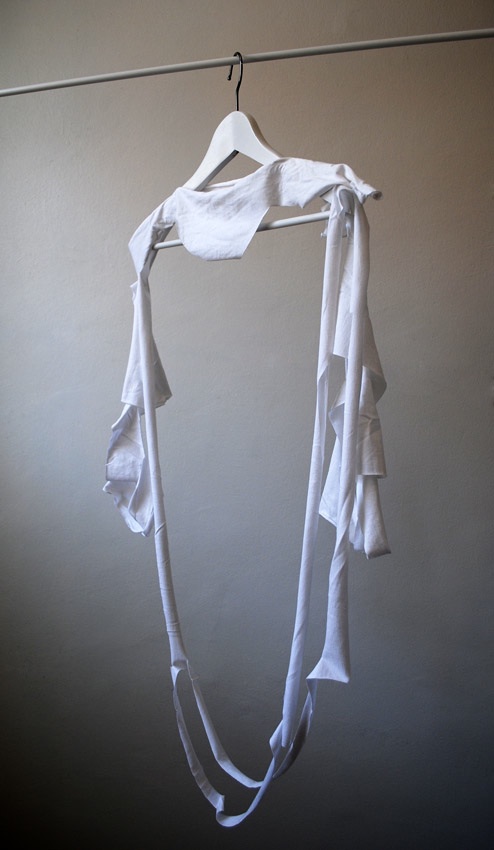
    Johanna Tuukkanen and Pirjo Yli-Maunula, Panopticon, Photo: Pekka Mäkinen
    Johanna Tuukkanen and Pirjo Yli-Maunula, Panopticon-premiere, Jan 30, 2015. Photo: Pekka Mäkinen
  • Fashion Curating: Unsustainability, gender and class readdressed

    Fashion Curating: Unsustainability, gender and class readdressed

    Fashion Interactions is a multidisciplinary exhibition that explores fashion culture by means of contemporary art, design and media. The exhibited works comment, on the unsustainability of the fashion industry, analyze the relationship of fashion and corporeality, and investigate how people use clothing as a tool for building identities. The exhibition is Curated by Annamari Vänskä & Hazel Clark and it presents works from: Federico Cabrera, Heidi Lunabba, Jasmin Mishima, Anna Mustonen, Nutty Tarts, Timo Rissanen, Salla Salin, Heidi Soidinsalo, Saara Töyrylä and Timo Wright. This exhibition opens on Friday November 15, 2013 in New York City. It is a collaboration with Parsons The New School for Design and the SheilaC. Johnson Design Center, Finnish Cultural Institute in New York, and the Centre for Fashion Studies (Stockholm University).

    Image 

    (Fashion Interactions-exhibition, Timo Wright-‘un fit’ video still)

    FASHION CURATING NOW is a daylong symposium at Parsons The New School for Design on Saturday November 16 9:30 am-5 pm. The symposium reflects the subjects around the Fashion Interactions exhibition focusing on the possibilities and challenges of contemporary fashion curating on a global scale. Critical points of view are stressed, as is contemplation of fashion’s kinship with art, design, industry, performance, and self-presentation. I asked a few questions from Leena-Maija Rossi, who is the Executive Director of Finnish Cultural Institute in New York, about the seminar and other related topics. 

    Firstindigo&Lifestyle: Can you explain the background of the seminar?

    L-M Rossi: The background of the Fashion Curating Now is in the exhibition project Fashion Interactions. It has its origins in the show Boutique, curated by Annamari Vänskä, which was part of Helsinki’s World Design Capital year in 2012. Finnish Cultural Institute wanted to bring a new edition of the show to New York and partnered with Parsons New School for Design in order to do that. The process of “re-curating” an already existing exhibition made us think of curating fashion at large: how to present fashion in an interesting way “outside the  market”? How to make engaging exhibitions on fashion, how to show its entwinement with fine art, how to find new fora for curating, e. g., in the new media? How to make visible the political aspects of fashion?

    Firstindigo&Lifestyle: Finnish fashion and design have gained more international visibility, creating their own trends as well, how do you see current research field is following trends from the industry?

    L-M Rossi: I see fashion research as a developing and dynamic field, especially when it connects with studies on class and consumerism, and, of course, studies of gender and sexuality. I do not know if the task for the research is to follow the trends, I rather see research as a field for critical interventions.

    Firstindigo&Lifestyle: In Finland, it seems that industries have also been able to point to cultural questions, what do you see as current research themes coming from the field/industries themselves?

    L-M Rossi: Sustainability is of course a timely research theme, and the way it intersects with the issue of class. I am also really interested in the potentiality of queer fashion research, and I would really like to see more analysis on gender nonconformity, not so much of equaling queer with identity categories.

    Firstindigo&Lifestyle: Yourself, you have written about advertising, media, gender representations/performance-related, in the contemporary visual culture. What do you see this global exchange is giving to these themes?

    L-M Rossi: I think fashion is a crucial part of visual culture at large, especially because of its border-crossing nature. Gender is being profoundly done by people’s choices of dressing up and wearing their clothes, and these choices are, again, influenced by advertising. So one could say that the fields of fashion and advertising are constantly participating in the global processes of doing and undoing gender.

    Firstindigo&Lifestyle: How well or how do Finnish fashion industries communicate globally? How do you see the branding, would it be more individual voices than a canon etc.?

    L-M Rossi: It seems that many Finnish designers communicate quite naturally in the international field of fashion. Like visual artists, I think they first and foremost present their individual voices; it is very difficult to build a uniform “brand.” But then again, many seem to be thinking of such issues as high quality materials and sustainability. 

     Firstindigo&Lifestyle: Art, fashion, design: How would you speed-describe these together?

     L-M Rossi: Fashion and design are artforms, fashion is an interesting field within design. All of them make difference in everyday life.  

     Image

    (Fashion Interactions-exhibition, Nutty Tarts & Heidi Lunabba) 

    /// INFO: FASHION INTERACTIONS ///

    Fashion Interactions-Exhibition

    Opening: Friday November 15, 6pm – 9pm

    November 11 – December 13, 2013

    Open daily 12pm – 6pm

    Arnold and Sheila Aronson Galleries

    Sheila C. Johnson Design Center

    Parsons The New School for Design

    66 Fifth Avenue at 13th Street, New York

    The exhibition is supported by the Finnish Ministry of Education and Culture, Frame Visual Art Finland and Consulate General of Finland in New York.

       /// FASHION CURATING NOW ///
    Symposium, Saturday November 16, 9:30am – 5:00pm

    David Schwartz Fashion Education
    Parsons The New School for Design
    560 Seventh Avenue at 40th Street
    New York

    Finnish Cultural Institute in New York Facebook.

    http://www.ficultureny.org/node/330

    http://www.newschool.edu/sjdc

  • Designer Mari Isopahkala // fresh whirlwind from the Milan Design Week

    Designer Mari Isopahkala // fresh whirlwind from the Milan Design Week

    Firstindigo&Lifestyle: COULD YOU TELL A GREAT STORY FROM MILAN, AN ENCOUNTER, HOW WAS IT LIKE THIS TIME?
    Mari Isopahkala: It was overall a great trip, although these design exhibition weeks are sometimes heavy. Meeting different people and professionals is very interesting and gives you back a lot. As I had to be standing a lot, and walk around long distances between the exhibit places, I kept changing my shoes to feel more comfortable. I got few great contacts. It will be exiting to see what these new things will bring me in the near future.

    Firstindigo&Lifestyle: HOW MANY TIMES HAVE YOU ATTENDED MILAN DESIGN WEEK?

    Mari Isopahkala: Many times, I have not even counted. Not every single year during my active working years, but almost. It is already a very familiar place to me.
     
     
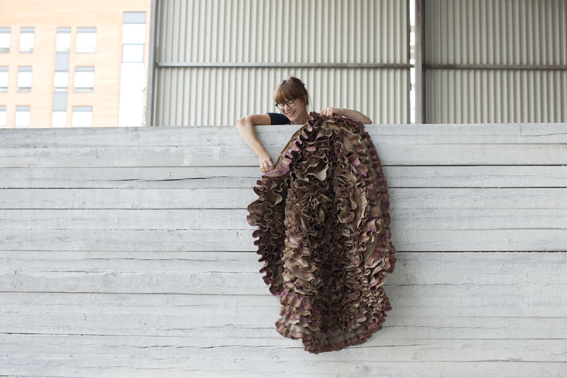
    (Designer Mari Isopahkala with a ruffle carpet, 2009. Capture: Liisa Valonen. Above: Kristallit small glasses, Konkkaronkka cutlery for Marimekko, designed by Mari Isopahkala)
    Firstindigo&Lifestyle: WHEN YOU WERE IN NEW YORK TWO YEARS AGO, WHAT DID THE CITY OFFER?

    Mari Isopahkala: It was good to see what the industry is like in North America. What are the current trends there, who are participating in those trends, and so forth. New York City is definitely quite different from the North Europe. Commercialism and business are in a higher level in the North American marketplace. What I can say about Finland is that we tend to be not so good in selling and marketing. I still have so much to learn about it, and even about how to brand my products. What I admired in New York City was the openness of people, how they have positive energy and courage. They also seemed to be forward thinking.

    Firstindigo&Lifestyle: Your design-language is very poetic, and perhaps minimalistic (or is this a stereotypy that is often attached to Scandinavian design?). In any event, how would you describe your designing?

    Mari Isopahkala: Thank you, poetic is very beautifully put. Well, I would not consider minimalism as a stereotypical thing in the Nordic design. I think that minimalism comes so naturally. We are living that type of lifestyle, and it shows in the designs, which is unpretentious. This notion contains our products and our environment. I would describe my own design-language as clear, and yet personal. It does not shout too loud, yet it does not leave you cold. I hope that my designs are attractive as well. My products have some Ostrobothnian (Finnish) femininity in them. They comply strength, and also sensitivity.  

    Firstindigo&Lifestyle: It is simply amazing that you are so diverse as a designer, you have interior design, jewellery, everyday objects, unique industrial design pieces, lighting design, and so on. Is there a design, which is closer to you personally and why?  

    Mari Isopahkala: Yes, I like to do different things. It keeps my mind open and fresh, and very much helps to discover new things. When I look at the ideas from outside, I have to learn new things. This creates newness and innovation. I enjoy working together with skilled craftsmen from different industries. I have a huge respect for artisan’s skills.  If I had to pick one material, it would be glass. I am so intrigued by the practice in glass factories. It is hypnotic to watch the melting glass. It feels almost sensational.

    Firstindigo&Lifestyle: Can you name a few of your mentors and inspirations, Finnish and international? 

    Mari Isopahkala: I have many inspirations in art, design, and in the everyday life. I have not been following anyone’s path really, but I have been gaining inspiration from many great masters in the past and in the present. The environment where I live inspires me tremendously.

    Firstindigo&Lifestyle: How would you describe the essence of nature in your designs, the Finnish nature-urban dynamics? What comes to mind also is the Nordic nature with mythological traces, how it can be present in our consciousness. Is there room for utopia in your designs?

    Mari Isopahkala: Nature is so important part of my life and that way it probably shows in my designs. It is not an absolute value but it is present. I have tried also other ‘domains’, and any kinds of oppositions interest me. I think I question existing myths in a good way. There is of course room for utopias in my designs. I have a need to move things forward towards the unknown paths.

    Firstindigo&Lifestyle: Can design be masculine and feminine?

    Mari Isopahkala: Good designer can utilize both, and then be without specificity of these qualities. Doing feminine or masculine design can be a conscious choice. I am very aware of my own choices. And I have used both of these two qualities. So I am trying my best.    

    Firstindigo&Lifestyle: What are your future plans?  

    Mari Isopahkala: There are many things, some of the plans are still in the air, so to speak, some on the other hand are in the process. Right now I have worked so hard that its time to start planning the summer. I believe that once you get some rest you gain new perspectives. Then it is also time to make next big decisions. 
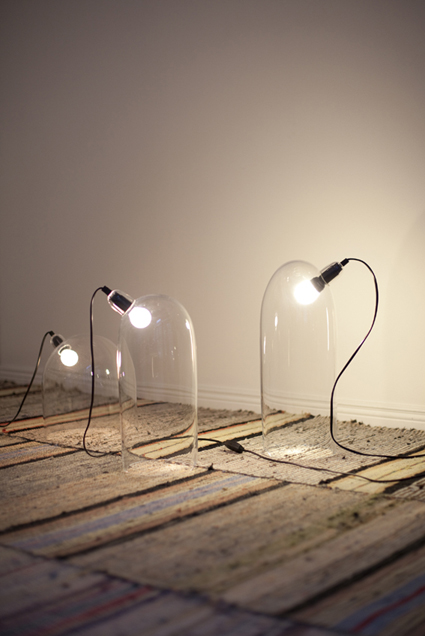
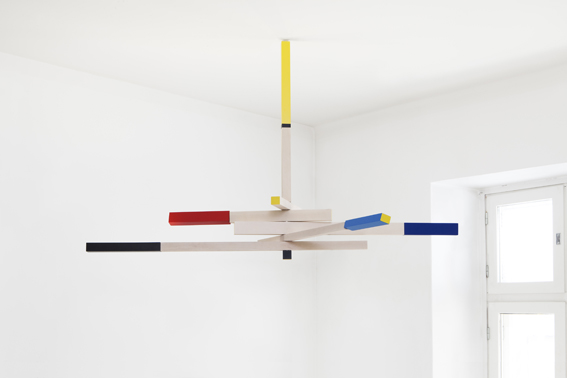
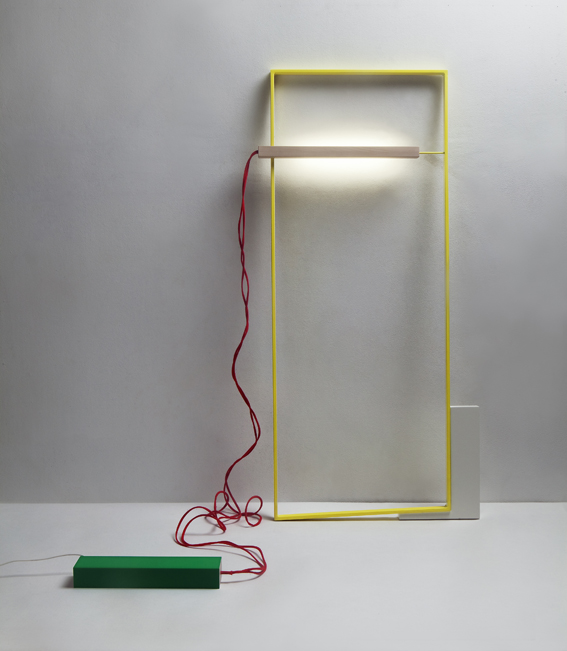
    1. greenhouse light, 2. viikari light in space, 3. viikari basis, 4. no jaa big sculpted light
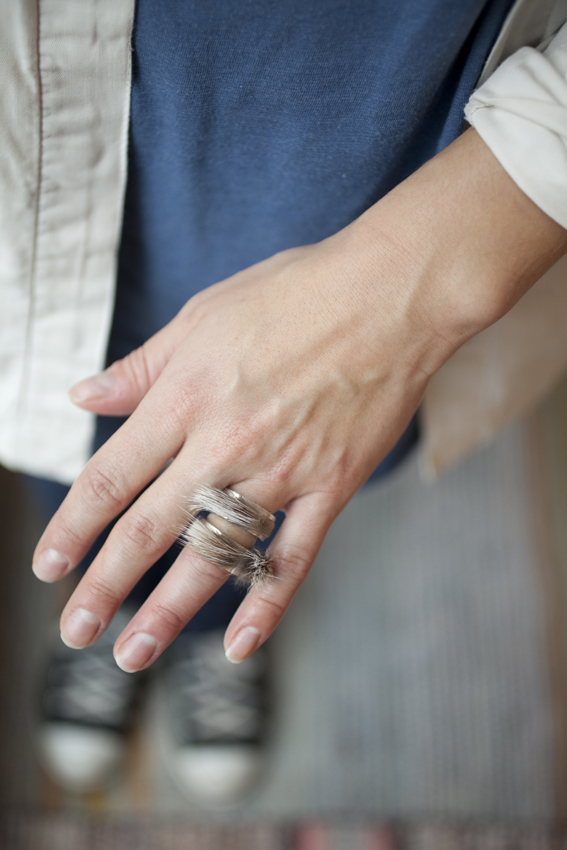
    5. furing jewellery, 6. winter pearl jewellery, 7. suma fiilis jewellery set,  8. kristallit fat glass