Tag: global and local

  • Artist Interview: Choreographer Simo Kellokumpu

    Artist Interview: Choreographer Simo Kellokumpu

    Sightseeing is a performative proposal to deconstruct an archetypal figure of tourism through a site specific procedure. It’s about shifting from sightseeing to siteseeing and what this involves in terms of spacialization and temporality of the seeing that can trigger a sight specific experience. (Simo Kellokumpu & Vincent Roumagnac) . Sightseeing is a Dance Film directed by Simo Kellokumpu and Vincent Roumagnac (FRA/FIN 2012, 28 min). The film will be part of the LOIKKA DANCE FILM-FESTIVAL next week in Helsinki.

    Firstindigo&Lifestyle: How did you choose dance and choreography?

    SK: I’m not sure if it is about choosing in my case –  I find it more like a development of perception within the conditions where I have lived. I have realized that choreography is something I have always been interested in, but I didn’t have a word for it before getting to know dance. As dance and choreography are two different media, what interests me now as a choreographer in choreography is to consider it as a form of (an artistic) practice, which articulates, shifts and opens social, temporal, spatial and material contextual circumstances. To think and practice choreography is to be in the movement all the time. When I auditioned for the Theater Academy (TeaK) in Helsinki, I already knew that I wanted to study choreography. They asked me in the final interview about the relation between a dance technique and choreography. Now after more than 10 years later, I still remember it as an important question in a way that I was confident that the choreography as a medium is the right one for me. We had 3 years BA-studies together and after these years there was another audition to the department of choreography. The audition again was an uneasy experience, but I’m very happy that I had the chance to study there 2 more years in that department.

    Firstindigo&Lifestyle: What does interdisciplinarity mean to you as choreographer?

    SK: In practice it’s now about the dialogue between me and my collaborator a French artist Vincent Roumagnac whose roots are in theater and in visual arts. Also, it is about the question how to shift and echo the choreographic process into another medium/and vice versa. In this way, I would prefer to use the term intermediality than interdisciplinarity, because it is about what is at stake ”in between” the different media we use. For example, I think that artists like Bruce Nauman or JulieMehretu have a lot to give for a choreographic process. The history of contemporary performance, the body – and the visual arts is full of makers into whose works I can relate to with my choreographical references. At the moment, I am interested in, what kind of aesthetic forms comes out from the artistic process, whichcombines contextual choreography and the economical and philosophical principles of degrowth. I don’t have any ”artistic ideas”, but I am rubbing the notion of choreography with other contexts, media and circumstances, and speculate on the resulting inter-forms.

    Firstindigo&Lifestyle: Tell me about the project in Iceland, who did participate in it, and what did you do with the landscape?

    SK: I was invited to an international Aeringur contemporary art festival (in Rif 2012) with Roumagnac. The festival invited artists 10 days before the opening to work on the specificity of the site where the festival took place. We decided to work by the volcano/glacier Snaefjellsjökull with the notion of Sightseeing (and playing with homophonic site-seeing…). We aimed to play with these notions from the critical point of view meaning, asking how mass tourism usually consumes landscapes. Therefore, we wished to ask, what logical system of perception does it enclose that the spectator-tourist him/herself imposes an arbitrary framing of the landscape (the cliché). We worked on the deconstruction of this logic of seeing and experiencing the site by embodying (the body of the viewer) and re-framing (the framing of the landscape). So, having alternative forms of perceptual experience of the specificity that is usually attached to the nature-tourism site. We filmed a video of 30-minutes including me + the local people and participants at the Aeringur art festival. We also made an installation for the opening of the festival.

    Firstindigo&Lifestyle: You live in Berlin, how is that now different from Helsinki, or Finnish dance and art scene?

    SK: One of the main reasons to move my base to Berlin was to concentrate on the development of choreographic practice in a vibrant international context. I always thought that I would move to Brussels or Paris, because I’ve studied french for 5 years. But I found in Berlin a lot ofinteresting contemporary art, and colleagues in the same position, so I decided to stay – typical storyfor an artist, I guess.

    When I went to Berlin in 2008, I was in the middle of a serious professional crisis. I was thinking to change the profession because this crisis had been going on already maybe a year or so in Finland, even if I had possibilities to work. I thought to quit practicing/making choreography. But what eventually happened to me was through questioning the logic, aesthetics and social and material conditions of the production-making, where I had been in Finland. I found some possibilities to realize workswhere choreographic thinking is processed out to, or with, the spectator without being subjected to the logic of a dance-piece or production, which is rehearsed and produced to be performed always the same way, no matter what is the context. I think there’s enough productions in the (art)world already. I try to find ways of making art and the living, which escapes this economic logic of the art-market – it’s a tricky equation to solve but I think it’s necessary.

    In Berlin, I also took time to study, what has happened within western contemporary choreography in the last 15 years. I dove into the contemporary arts and understood many crucial things for my professionalcrisis. Berlin was a perfect place to be for this kind of professional process. I think themajority of the art-scene is in Berlin for other reasons than ”making a career” – I think it’s a place for developing your artistic practice. Stimulating art-city it is.

    It’s been at the same time relieving and challenging to step out from the safe small scene into the total anonymity where no one knows who you are, and where you have no artistic institutional support at all. To step out from the familiar, expected and recognizable logic of working and presenting works, you inevitably bump into unexpected and unknown landscapes in many ways. It was right thing for me to do – to change the location doesn’t necessarily bring you something more, it can also be the movement, which prunes and clears out.

    The main differences with Finland are quite simple. Finland is quite homogeneous and the art-scene is small. Of course one of the reasons for this is the geographical position, which already positions artists in a certain way, I mean there’s not that much people going to Finland especially.Finnish choreographers are not yet well-known in the Mid-European scene. I’m happy to see that there are some interesting younger generation choreographers like for example Anna Mustonen on their way. I am confident that they start to appear in critical European contemporary stages and venues as well, if they want to participate into the logic of touring with works.

    In Berlin, there are artists from all over, and it seems to be in constant movement.  It is questioning already things in practice, which haven’t been spreading out yet. Different ways and disciplines of making are mixed, and as a spectator you have a good possibility to experience diverse vital critical art-scene, which challenges your thinking, perception and position. Berlin is poor, and the venues do not support artists the same way than in Finland, but it is a place, where people want to come to show their work even if also the audience is very demanding – in Finland the audience is very polite, and the discourse between the audience and the artist is completely different.

    In Finland, we are not used to talk about art that much. In Berlin it’s common that the spectator has critical questions about the work. Aesthetic talk is an aesthetic talk in Berlin, whereas in Finland I have experienced it more like a personal talk, which is connected to the romantic idea of an inspired artist who expresses him/herself. The tradition of dance and choreography is longer and thicker in Berlin and in Germany – Finland is a young country and the position of a contemporary choreographer is hardly to be taken seriously, or the position of an artist in general. But it’s hard everywhere for artists I guess, especially in these neoconservative political times. What I find meaningful in Berlin, is the history of a place where artists have been stretching, breaking, testing and questioning the ways of making and presenting art. Also this affects to the Berlin’s position as a vibrant, substantial and horizontal art-capital.

    In last 1,5 years, I have been more active again towards the ”scene” and been meeting more people. I have even learned to say no to the proposed possibilities also in Berlin. I’m interested in working with Finnish performers, because I think they are good in the way that they are grounded and down to earth. For the moment, I’m happy to be working in a light collaborative structure, but if there’s a working group included, I’d like to bring the group to Berlin and present the work then in Finland. This way there’s automatically cultural exchange, and stimulation happening to many directions. I am planning now together with a Finnish Berlin-based director Mikko Roiha to create a platform or stage for Finnish performing arts in Berlin. We are working on to find the ways now, and looking for collaborators from Finland and Berlin to get this project going to be able to offer one possibility for Finnish artists to present their work in Berlin.

    Firstindigo&Lifestyle: How do you understand dance technique? What is a Kellokumpu dance technique?

    SK: I think of it as a certain neuromuscular organizational system, what you can study and learn to embody. Nowadays, I have moved on from thinking dance-technique(s) as something necessary for the choreography. I mean, I am interested in finding the ways to understand, how a subject, we call a ”dance technique”, is used and connected to the broader social, aesthetic or historical context. For me as a choreographer, it is necessary to understand these connections more than having a ”dance-technique” – I find it problematic if a choreographer finds his/hers dance technique and sticks only to that without questioning its broader social, historical or aesthetic dimensions. Usually, I have worked with the dancers who have a broad understanding and physical potential. I find (Forsythe’s, if I remember correct) thought about dancer’s body as a body of a monster intriguing. I have certain elements and tasks to combine when it comes to the idea of the movement-texture. But like I said, I’m thinking about choreography nowadays as a medium, which doesn’t necessary need a body to be processed and presented. I am interested in working with the notion of choreography and its possibilities; dancers and dance-techniques can be part of it or not.

    Firstindigo&Lifestyle: So, what are your greatest influences?

    SK: In 2010, we (with Roumagnac) created a solo-work for me which included a staging of my choreographic mothers and fathers so to speak. From Finland, there were Ervi Sirèn and Tarja Rinne. And then, Merce Cunningham and William Forsythe were on stage with me in this work (not physically present, note). I am still aware that these names are important for me when it comes to the personal history of dance and choreography. Like many, I am interested in the 1960’slegacy in the western contemporary arts. To name a few, Judson Dance Theater, Situationists, Minimalists, Arte Povera-, Fluxus-artists and then choreographers like Cunningham, Lucinda Childs, Forsythe and Jérôme Bel are the sources of my inspiration. Of course, my position is nowadays to have a critical point of view to my genealogy as well, and to look ahead by following what is happening in the development of the choreography.

    Firstindigo&Lifestyle: What did you learn while you were spending some time in New York?

    SK: I spent only one month in New York and it was the first time for me there. I mainly wanted to go after Merce’s (Cunningham) footsteps a bit, so to speak. So I took some classes in Cunningham Studios and visited museums and galleries, got to see performances etc. The trip was part of the project of mine what I processed with Roumagnac who was in Paris at that time, it was a continuation for our one month work-trip to Beijing. In New York, I thought a lot about the relevance of being aware about the history and the line(s) where you belong into. I found it significant. I even bought a blue unitard.

    -Check the LOIKKA DANCE FILM-FESTIVAL calendar here.

    -Artist’s website: http://kellokumpu.wordpress.com/2010/09/21/11/

  • Paula Jaakkola’s music with wings

    Paula Jaakkola’s music with wings

    Exporting music and arts to different parts of the world belong to cultural heritage. Arts are sustainable and renewable part of culture. Some artists choose to live in another country to gain inspiration, to start a new career, and desiring to make it there. Each story is different. Finnish musician, singer, songwriter and composer Paula Jaakkola has lived in New York City since 1999. She is a graduate from the University of Helsinki’s Musicology program in 1999, and from The New School in 2002 where she studied jazz vocals. Recently Paula was in Finland recording her new album.

    Paula, how has the recording experience been so far?

    PJ: The first recording sessions in Finland this past December were fun and inspiring. We started with 3 songs of mine. The musicians Ape Anttila, Jaska Lukkarinen and Marzi Nyman are extremely talented artists and I am fortunate that they are excited to play my music. The recordings continue this spring in Finland and in New York so there is still a lot to be done.

    What other plans do you have for the near future?

    PJ: In the somewhat near future I am preparing for the CD release party for the fall of 2013. The plan is to work hard to get exposure for the album, make music as much as possible and hopefully tour a lot as well.

    What is your favorite song?

    PJ: This is a hard one as I don’t have a favorite song. There are so many. But lately I have been touched by Sia’s “Breathe Me”.

    How do you collaborate, arrange the songs with other musicians?

    PJ: If I am doing a gig with musicians and they haven’t played with me before I usually send them music charts along with MP3’s that are the demo versions of the songs. They get an immediate idea of the mood and style of the song. At the rehearsals we refine the ideas. I don’t always have a very clear idea what the drummer and the bassist should play so I always welcome honest input from the musicians.

    As to the album collaboration it is a bit different. I send my demo audio files to the producer. He arranges them further, maybe changes the form a bit, adds more instrumental ideas and grooves. He sends me MP3’s to listen to and I might have more ideas to add. It’s lots of back and forth as we work long distance and deal with e-communication. The fact that he is in Finland makes the process a bit challenging but so far it has been working. When the arrangements are ready the musicians will come to the studio and play their parts and usually bring their own additional ideas as well. It is a very organic process where everyone has the freedom to bring their creativity on the plate.

    You have performed in many venues in New York City, what is your favorite?

    PJ: I really liked the Living Room in the Lower East Side but it just closed, which is very sad. I also like Somethin’ Jazz Club in Midtown where I have been playing a lot recently. It is a super mellow venue. I have sung a few times at the legendary Joe’s Pub but those occasions haven’t been my own shows. My goal is to be able to have my own concert there sometime in the near future. It is a beautiful space with a really good sound system.

    What is the most inspirational Kalevala poem to you, how did Finnish National Epic Kalevala inspire you?

    PJ: Kalevala inspired me a lot when I was co-leading a Finnish world music group Kaiku. We used some Finnish folk poems as basis to our songs. I really cherish Kalevala’s mystical world. I like the part where the wizard Väinämöinen plays his “kantele” (traditional Finnish string instrument), starts singing and makes all the people and forest animals enchanted and trance induced. Music is his ultimate power and wisdom.

    Here are some of Paula’s up-coming performances in New York City:

    Friday, March 15, 10pm
    at Zirzamin
    90 W Houston St
    (btwn LaGuardia and Thompson)

    Friday, March 29, 7pm
    at Somethin’ Jazz Club
    212 E. 52nd St. 3Fl. (btw/ 2nd & 3rd Ave.)

    Paula’s website: www.musicwithwings.com/

    Her Facebook: https://www.facebook.com/paulaandmusic

  • Artist Nozomi Rose: Dai Dai

    Artist Nozomi Rose: Dai Dai

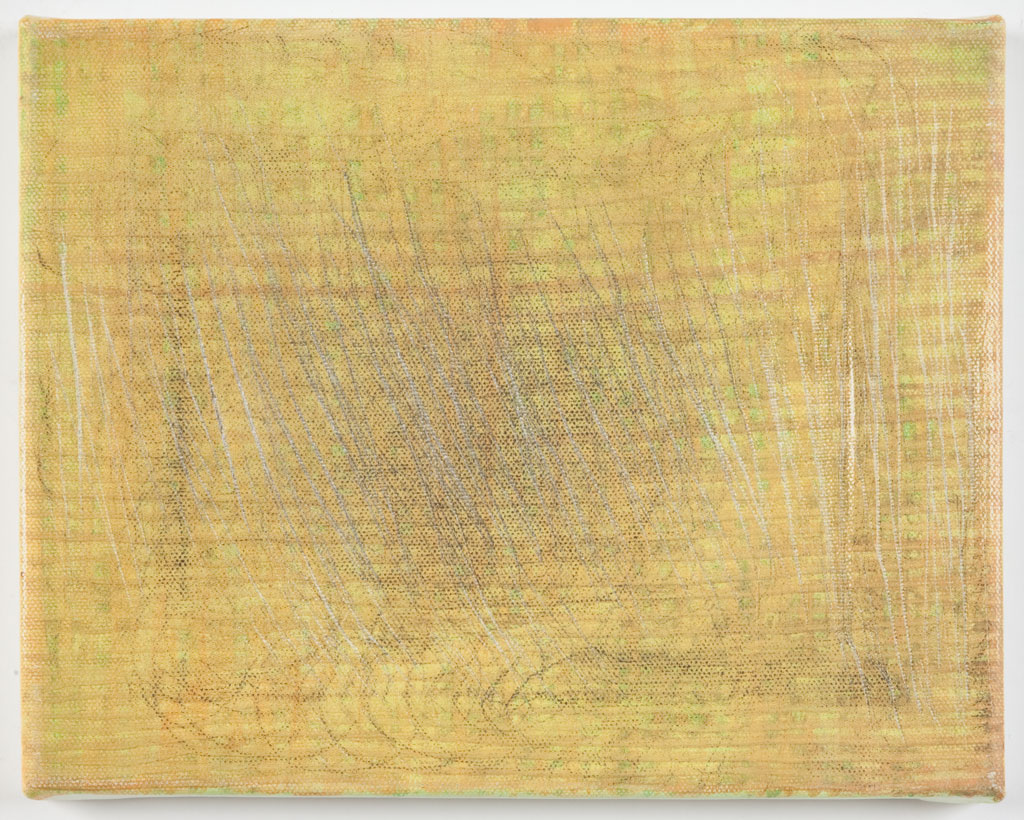
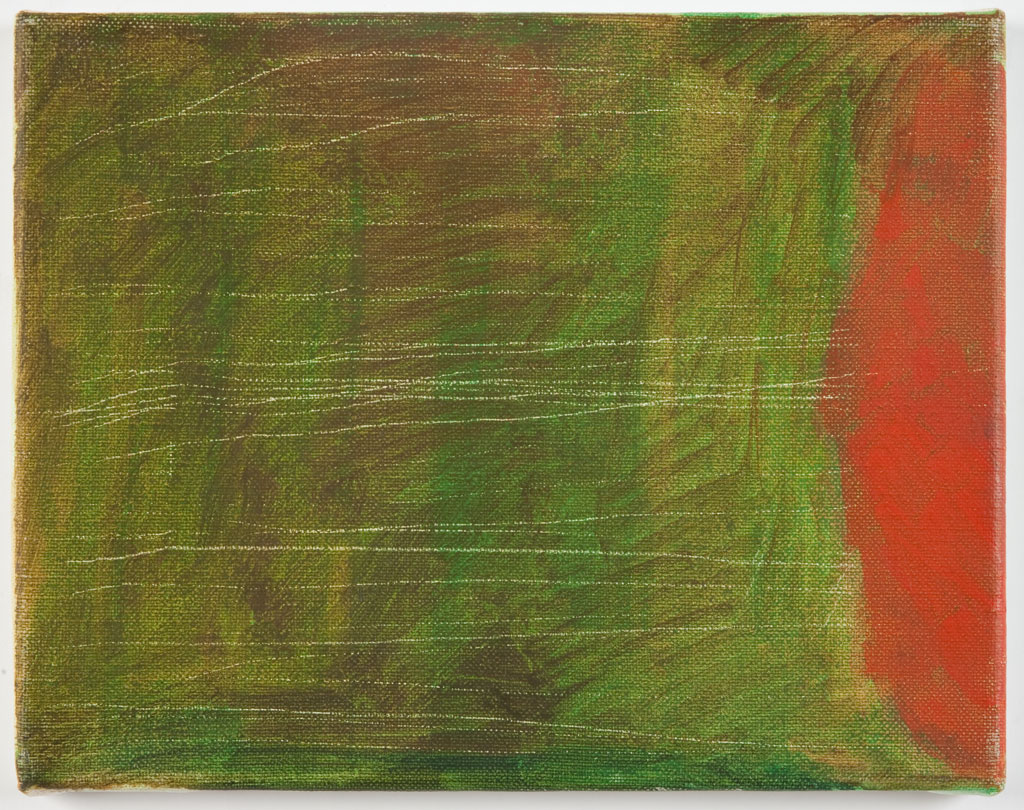
    Nozomi Rose is a rocking Japanese woman artist, who has a lot to say about the women’s role in the fine arts. From traditional Japanese Nihonga to Western artistic techniques, she uses fingernails to add dimension to the paintings. She was trained in painting at Cornell University and earned an MFA at the School of the Art Institute of Chicago. The focus for our discussion is on diversity of artistic practices. We listen to her plans from organizing a conference in New York City, where artists and scholars who have more than one practice get to present their work and share knowledge on how one discipline informs the other. She is publishing an e-book in Japanese on hybrid art teaching and learning for Tatsu-zine Publishing. Her exhibition ‘Dai Dai’ will open in New York at Japanese Embassy on October 2nd. This exhibition will feature her latest paintings of multiple techniques, along with her other works.

    Firstindigo&Lifestyle: We had a discussion about patriarchal Japanese art-institution, could you explain that a bit?

    NR: Haha. Are we really starting out our interview with this question? I was talking about the wife of Ikuo Hirayama, one of the most important Nihonga painters in Japan. Ikuo Hirayama is a Hiroshima-A bomb survivor, served as the President of Tokyo National University of Fine Arts and Music (a.k.a Geidai) twice, and a synonym for Nihonga, so I would say he is a Japanese version of Jackson Pollock. Well, sort of…Hirayama paints landscape and is known for Silk Road paintings. Everyone in Japanese art knows his name. His wife Michiko Hirayama entered the same university with Ikuo and was the top of their class. Ikuo was the second. Michiko, however, gave up on her painting career when they got married because their best man told her that having two painters in one household would not work. Michiko took the advice and stopped painting, and then, Ikuo truly climbed to the top of the field. It sounds similar to Lee Krasner now I think about it. There is a Japanese idiom “breaking one’s brush,” which typically means “stop writing stories,” but Japanese painters see that the words symbolize a female painter’s marriage with a male painter in Nihonga. Michiko’s episode is an urban folklore among Japanese painters worldwide. I heard this story for the first time when I was studying painting in Paris, France!

    Firstindigo&Lifestyle: You are using both western means of creating art and Japanese traditional Nihonga in your art, how naturally this came about to you as an artist and when?

    NR: Oh, you mean, I use Nihonga paints with acrylic medium on canvas and you see it as unusual? That is a very good point. The fact is that, though, many Japanese painters trained in Nihonga use this method in New York. Also, Nihonga pigments are heavy because their particles are much larger than western pigments, so I can’t really use gum arabic for this, like you do in watercolor. I can’t mix it with oil painting medium because oil paints cure through oxidation, and oxidation changes the colors in Nihonga pigments. These are scientific sides of why and how it came to me. The technical diversity creates the differences in visual effects in western and Japanese paintings. I am curious to see how Nihonga paints react to various western painting mediums in my work. I might try it with oil paints at a later time. I have increasingly been attracted to casual ways of making paintings, so the color change may be okay for certain types of work that I will create in the near future.

    You may be asking me about the conceptual side of the work. For me, using Nihonga paints is one way of “citing” Japan in my work, but this is not the main theme I promote in art. Personally, making art has more to do with erasing my own identity as Japanese rather than emphasizing it. I was told at an early stage of my artistic career that I should stay away from quoting Japanese art materials or Japanese visual languages for my own work because they can never make my art original. For example, I can never be unique by copying Ukiyo-e patterns as art because many people have seen those. I have never trained in Nihonga; learning Japanese traditional painting never attracted me. When I was still in Japan, I was studying oil painting; I liked Japanese oil painters such as Ryuzaburo Umehara who studied with Pierre-Auguste Renoir. I enjoyed seeing the world through the lens of Japanese artists influenced by the western aesthetics.

    I also liked the works by westerners influenced by the Japanese aesthetics. This included Impressionists and conceptual artists like Daniel Buren, so I went to Paris in 1999. I even went to Monet’s house in Giverny, but you know…he had a strong collection of Japanese woodcut prints and that was the secret! It was a bit unfair that I had to travel all the way from Japan to France only to witness that Claude Monet was a big fan of Japanese art. Daniel Buren, on the other hand, might not be familiar with Japan although his work looks very Japanese, especially the installations with color stripes.

    Do you know there was no art in Japan until Ernest Fenollosa came and made it happen with Okakura Tenshin, who established Tokyo National University of Fine Arts and Music and was a curator at the Museum of Fine Arts in Boston? Okakura Tenshin was Fenollosa’s assistant and both of them worked for the Museum of Fine Arts in Boston. People who say that the Japanese Constitution was written by the United States would probably claim that Americans created Japanese art, but I am not a historian.

    So my short answer is that it has always been on my mind. However, inserting something very Japanese directly into my own artwork, which I have long been resisted, came to me only when the Japan Tsunami Earthquake Disaster happened.

    Firstindigo&Lifestyle: The collaboration between Fenollosa and Tenshin is very moving, and kind of tells us how the world of artists has always been connected.  Do you feel you are mediating between East and West with your art, or do you think that it is stereotypical to make this opposition?

    NR: As a visual artist, color is my “language.” I would like color to mediate between east and west in my work, so my answer is yes and I feel there is no way for me to escape this. I am certainly interested in mediating between Japanese and American visual effects and aesthetics. Japanese art has borrowed elements from Indian and Chinese art, so it is the idea of East. I think the question is more about “how” I am doing it. I am watching how my art can mediate both east and west.

    (Courtesy of A. Sortie, Inc. Nozomi Rose, ‘Happening’, 2012. oil on canvas. 8″ x 10″)
    Firstindigo&Lifestyle: You participated in the Japan’s Earthquake and TsunamI 2011 art-project, could you tell me more about it?

    NR: I was an organizer for Silent Art Auction and a curator for Charity Art Exhibition, but they were both student-driven projects. Our students learned a lot by carrying out those charity art events. I was just a tool for them to communicate with the College and Japan. Students who wanted to show and sell their art for their fundraisers, first on campus and then in a Chelsea art gallery, got together, and through myself, they were able to even have a commercial gallery owner donate his space for one day, for free.

    We see those activities as our students’ educational experiences as well as healing processes. As a result, affected students successfully survived the crisis and graduated. I just presented on this theme with two other Professors, Kyoko Toyama in College Discovery/Counseling and Tomonori Nagano in Education and Language Acquisition, at the Opening Session at LaGuardia Community College: (For more details, look the website: http://www.lagcc.cuny.edu/Opening-Sessions/Workshops-II/)

    Our College President Dr. Gail O. Mellow has been sympathetic about what Japanese students went through due to the unfortunate disaster, so she briefly came to our presentation. I felt her attendance symbolized a kind gesture by the College to the affected population in Japan.

    The title of our paper is “Respecting Tradition and Creating a Community: Culturally Appropriate Response to the needs of Japanese Students and the College in the aftermath of Japan’s Earthquake and Tsunami.” We previously presented the same research in a session under the same title at the 2011 Asian American Psychological Association Conference in Washington D. C.

    Firstindigo&Lifestyle: Then, I am always curious what an artist like you holds for their future. I guess it is about the dreams, what are your dreams and future plans?

    NR: Wow, this is an interesting question. My dreams:

    1) Sending 1000 young women from the disaster areas of Japan to New York City to study visual arts at LaGuardia Community College. This can be for three months or longer like two years. They do not need to be all Japanese citizens and I believe this is the right way for us to start spending more money on women’s education. This art project is after “Fairytale” by Ai Weiwei. Please let me know if you know anyone who would be interested in funding this project!

    2) Creating a visiting East Asia artists and curators’ lecture series where people from various East Asia countries peacefully collaborate. After 3/11, my school suggested me to create an East Asia art course, so I wrote and proposed HUA191: the Art of Eastern Asia. It is now part of the College’s official course offerings. We are currently developing a new East Asia/ Japanese major, in collaboration with Queens College, so the new East Asia art course is becoming a permanent addition to the major. This is a bold step for diversity in the arts of Long Island City, Queens/ NYC. The next logical step would be an art lecture series with the same theme.

    Future plans

    1) To film “Dai Dai.” The title of my exhibition came from a film project that I started in 2010 entitled, “Orange.” Daidai is a Japanese word for one specific shade of orange, whose sound also connotes the concept of genealogy. The film content was mainly about my personal experience with the color orange, the largest earthquake in Japan, which was the Kobe earthquake before 3/11, and the sarin gas attack on Tokyo Subway system. I think production of a contemporary Japanese folklore was my initial purpose of this project. The tsunami earthquake was literally a life altering experience for me as an artist in part because it forced me to stop writing this script, but I recently decided to re-start it by re-structuring the entire work.

    2) Swan Hill Art Biennale. I am helping the Swan Hill Museum of Contemporary Art in Himeji, Japan, to create an art biennale. Himeji literally means “Princess Road.” It currently promotes art made by women and I want to eventually include transgender women. For that, I think the conservative region needs a good woman’s medical center. We want a feminist art “museum-medical center,” so I will start talking to artists and doctors who may be interested in this type of project. This can sound very different from what I have done in the past, but I think the fundraisers for Japan last year were really about helping to raise funds for medical treatments.

    3) Interdisciplinary Art Practices Conference in NYC. I am planning to organize a conference where artists and scholars who have more than one practice present their work and discuss how one discipline informs another one in their own practice.

    4) E-Publication. I am writing an e-book for Tatsu-zine Publishing (http://tatsu-zine.com/) in Tokyo, Japan. This will probably be about Art-in-NY for non-majors and online art learning tools because this Japanese publisher specializes in e-books for computer programmers.

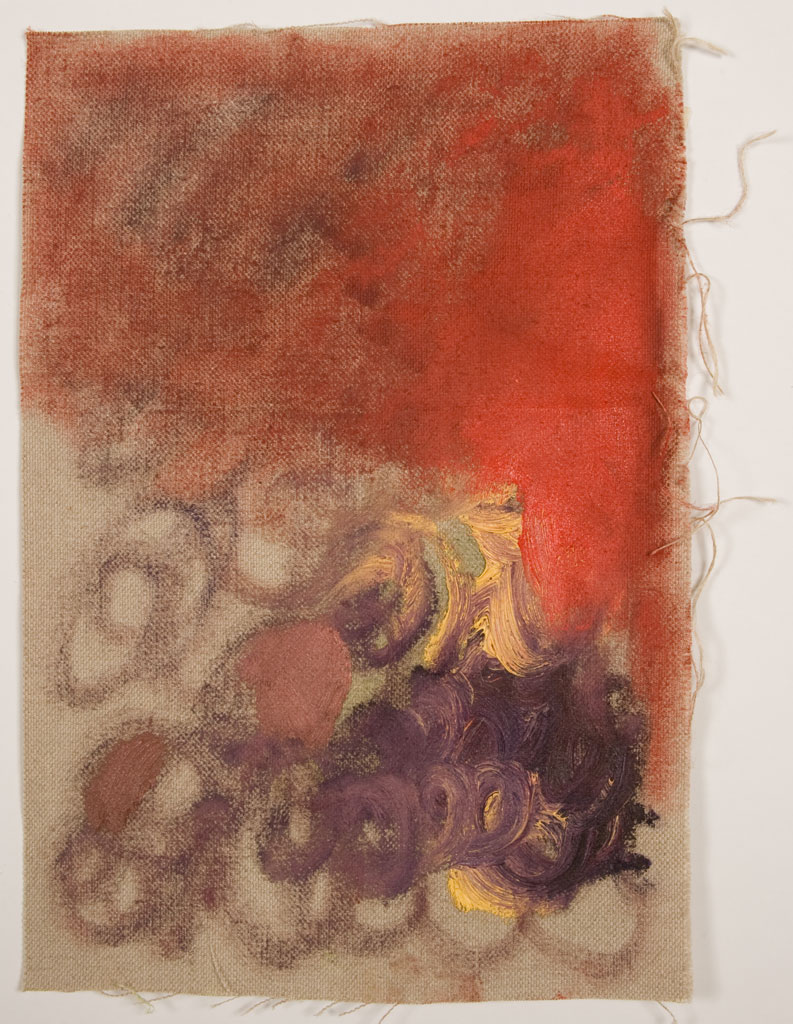
    (Courtesy of A. Sortie, Inc. Nozomi Rose, ‘One Summer Dream’, 2012. oil on unstretched linen)

    The artist’s website: http://nozomirose.com/

    Information about the upcoming ‘Dai Dai’ -exhibition: Opening Reception: Thursday, Oct. 4th, 2012. 11:00 a.m. – 1:00 p.m, Discussion with the artist: Friday, October 5th, 2012, at 1:00 p.m.

    http://www.ny.us.emb-japan.go.jp/en/i2/special_2012-10-02–31_DaiDaiExibition.html Opening

    • (Daidai is a fruit)