Tag: installation

  • Anish Kapoor returns to Italy with Descension

    Anish Kapoor returns to Italy with Descension

    Anish Kapoor returns to Italy with a new exhibition Descension, a project produced specially for the former cinema and theatre space of Galleria Continua in San Gimignano. The exhibition takes its name from the installation Descension, which is a black whirlpool consisting of motor-powered water swirling towards its center. Interested in binary relations and opposite energies, Kapoor (born in Bombay in 1954, lives in London) poses alchemical questions with the large scale installation. It creates paradoxical ideas of matter, energy and the universe, which also touch our human core and perception. The exhibition opened on May 2 and will run until September 5, 2015.

    The exhibition features a series of new sculptures in alabaster, in which the artist has meticulously carved out a more refined section. We can expect that the concepts of infinite and time are buried within their form and substance as they appear in nature. The intense red (and kind of orange) embedded in the translucent qualities of the alabaster sculptures suggest organic qualities. But idea travels well through the entire exhibition, which among alabaster includes a variety of mixed media works in fiberglass, paint, stainless steel, pigment and acrylic.
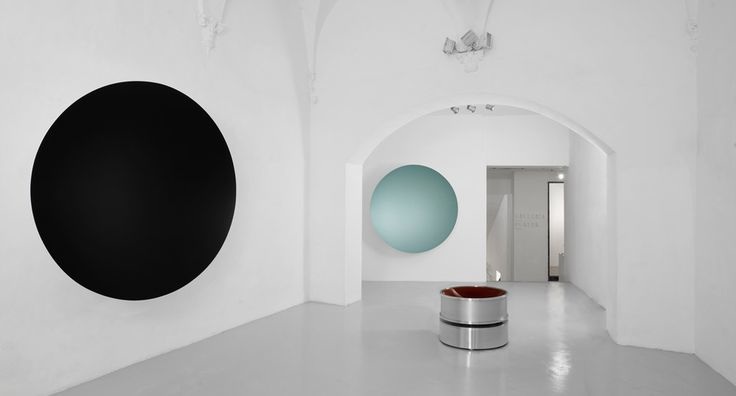
    Anish Kapoor, exhibition view 'Descension', Galleria Continua, San Gimignano, 2015
    Anish Kapoor, exhibition view ‘Descension’, Galleria Continua, San Gimignano, 2015

    Descension, the installation established by Kapoor in the stalls area of the cinema-theatre in San Gimignano, continues his earlier theme introduced as ‘Descent into limbo’ in 1992. The artist’s former work was presented respectively in Kassel, Germany as documenta IX; a Cubed building with a dark hole in the floor. In the middle of a cube, there was a kind of bottomless black hole opening up in the floor, which was “dragging” viewers with its powerful presence. The idea of Descension shows how Kapoor has an interest in non-objects and self-generated forms. In 2015, the installation destabilizes and undermines our perception of the earth as a solid element. The earth, perceived also as mother earth, is in constant flux and movement bringing forth a thrust downwards and towards an interior that is unknown and hidden from the visible world.
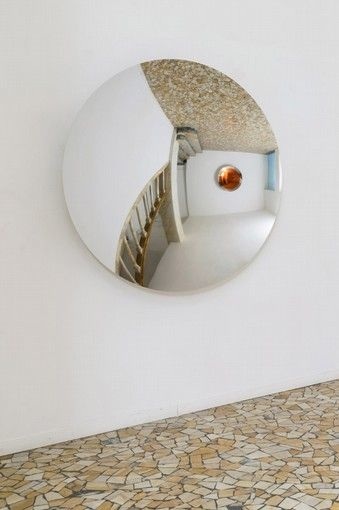
    Anish Kapoor, Untitled, 2015, stainless steel, Courtesy of Galleria Continua
    Anish Kapoor, Untitled, 2015, stainless steel, Courtesy of Galleria Continua

    Kapoor has inevitably shown how he is reinventing his artistic language both in monumental dimension, as in more intimate pieces. His philosophical inquiry begun early with his very first works and has continued through to recent and more large-scale installations in museums and public spaces. His themes are partially alchemical, dealing with mystery and universality of time and space. But the human beings with their self-awareness and experiences is at the heart of his artistry as well.

    ”… all my life I have reflected and worked on the concept that there is more space than can be seen, that there are void spaces, or, as it were, that there is a vaster horizon. The odd thing about removing content, in making space, is that we, as human beings, find it very hard to deal with the absence of content. It’s the horror vacui. This Platonic concept lies at the origin of the myth of the cave, the one from which humans look towards the outside world. But here there is also a kind of Freudian opposite image, that of the back of the cave, which is the dark and empty back of being. Your greatest poet, Dante, also ventured into a place like that. It is the place of the void, which paradoxically is full – of fear, of darkness. Whether you represent it with a mirror or with a dark form, it is always the “back”, the point that attracts my interest and triggers my creativity.”


    Anish Kapoor, Untitled, 2015, Alabaster, Courtesy of Galleria Continua
    Anish Kapoor, Untitled, 2015, Alabaster, Courtesy of Galleria Continua


    Galleria Continua, Via del Castello 11, San Gimignano (SI), Italia

    Tel. +390577943134 | info@galleriacontinua.com | http://www.galleriacontinua.com

    Descension opening: Saturday May 2, 2015, on view until September 5, 2015,

    Monday–Saturday, 10am–1pm, 2–7pm

  • Visitor experiences at Frieze 2015

    Visitor experiences at Frieze 2015


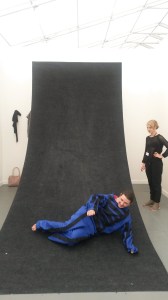
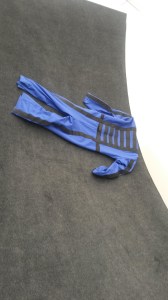
    Brazilian artist Martha Araújo’s piece Para um corpo nas suas impossibilidades, (For a body in its impossilibities) was created in 1985. Now at 2015 Frieze Art Fair, we celebrate the corporeal experience at the skateboard ramp dressed in suits that are patched with Velcro straps. The user-experience is less of a performance, and more of a subjective experience, which is very much according to the manifesto written by the artist. Martha Araújo (born in 1943) wrote the following:

    Believing in the impossible is also a way of making art, for it is to doubt the impossibilities that make our dreams and follies feasible. Our proposal consists of experiencing situations in which the body crawls (on the ground floor) and tries to climb vertically. It is a search to achieve utopia; an exercise in transcendence. For this we will wear two pairs of overalls with several strips of Velcro attached to them vertically and horizontally. We will also use  a runner rug measuring 6.00 x 2.00 m, stuck to a skate track-type wooden framework. The Velcro strips on the overalls are the elements that fix the bodies to the rug.


    The project was curated in the Frame section of the art fair by Galeria Jaqueline Martins from São Paulo. The gallery won the prize for most innovative Stand Prize this year. The stand is comprised of the ramp and few suits, which the public can wear and then try the structure. The booth also has black and white photographs from 1985, which document artist Araújo and her crew experimenting with the concept. At Frieze, these photographs are on sale, and so are the suits. The ramp belonging to the artwork can be reproduced with the suits.

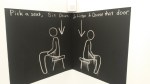
    Another visitor intervention at the Frieze was Japanese artist Aki Sasamoto’s Coffee/Tea project. Being one of the Frieze 2015 Projects, the artist created a three-dimensional personal test experience that included multiple-choice questionnaire. The maze-like structure was among the gallery booths, having several rooms, in which visitors/viewers make a choice between two objects or situations. Different choices lead through rooms and doors and then to the exit, where participants discover which personality suits the course of actions they chose. Here is my test in photographic documentation.

    In the beginning, the structure encourages you to think that you are boarding a spaceship, artist has written a dark statement on the wall:

    The world is ending. You are selected to board a spaceship with one animal. Which will you bring? A. Peacock, B. Horse, C. Tiger, D. Sheep

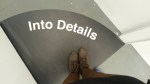
    As we don’t actually make this choice between four animals; we can choose to enter between two doors, one on the right and one on the left. Behind the left door there is a table with teacups and tea poured on them. Today I’m happy they would offer tea. Through my next choice, I’m encountering two kinds of blue on the floor; the other one looks like tiled, so will follow that one. Not quite getting the sitdown-point, where would have to ponder between the choices, rather stay moving and opening doors. Then, not quite sure how, suddenly entering the door with ‘intodetails’ exit floor mat in black-and-white. Feels like a fast experience. There was another blue, this time gymnastic mat on the floor with wooden board in the middle. A chance to balance a little bit, and the exit was right there.

    Is there anything in common with these two art projects? Martha Araújo’s art dates back to the mid- 1980s, and Aki Sasamoto’s project is very recent. The getting-involvedness, and the intellectual mind vs. trust yourself and let your body lead the way -issue; has both of these projects. Sasamoto’s making choices project encounters also our bodily input, as this is about experience. The color blue seems to be a fascinating factor in both projects.  Araújo’s and Sasamoto’s projects will be living in the form of re-enactments. Being convinced that there will be more photography and live-documentations happening.

  • Sarah Oppenheimer’s reoriented space

    Sarah Oppenheimer’s reoriented space

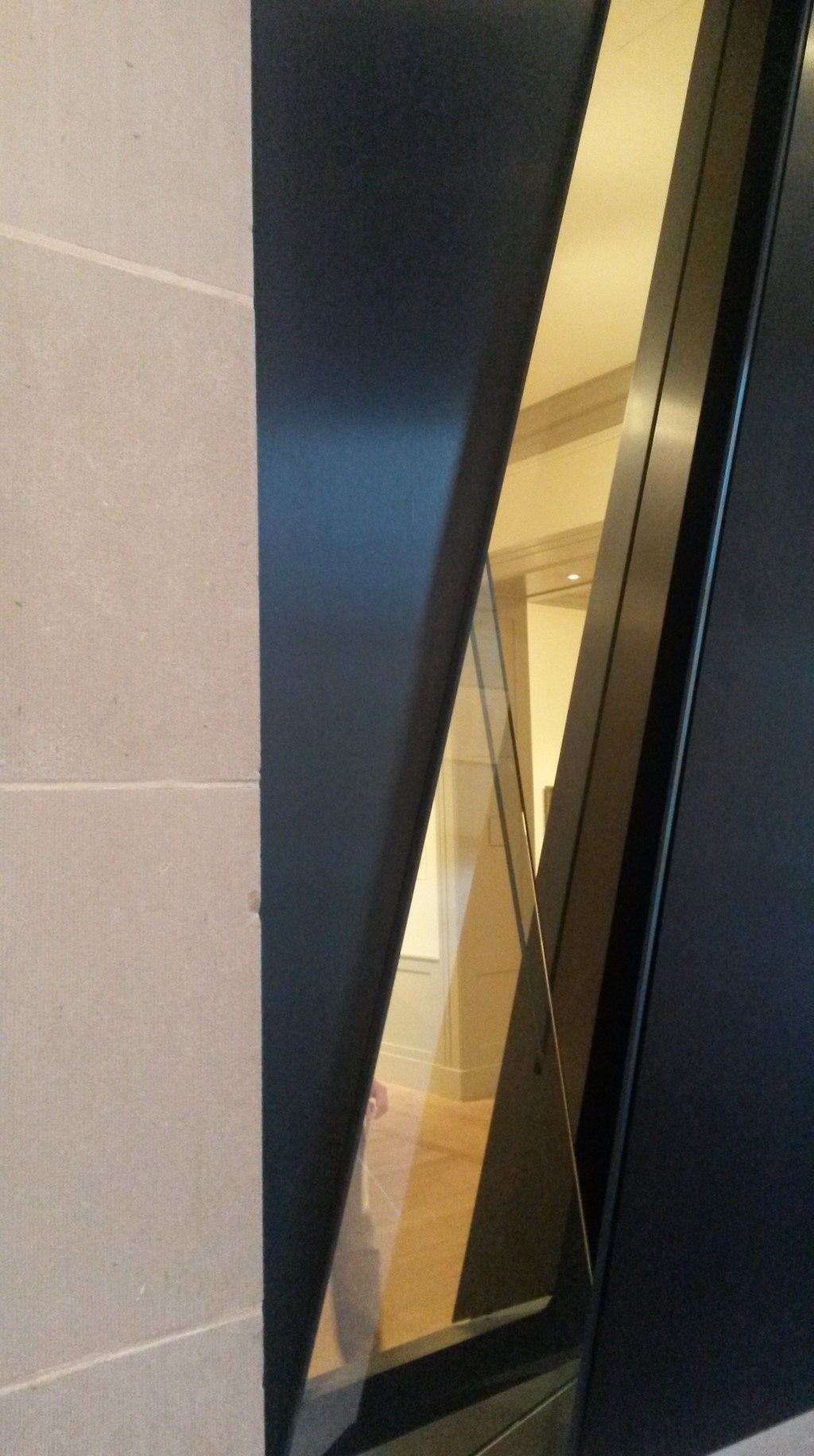
    Sarah Oppenheimer’s installations and public art works “W-120301 x P-010100” were commissioned for the Baltimore Museum of Art’s Contemporary Wing which reopened after its complete renovation in 2012 (built in 1994). The two-part permanent art work was concretely made in conjunction with the architectural space. It involved cutting holes in the museum walls and ceilings of various galleries. The holes, then, were filled with panes of metal and reflective glass to create new dimension for viewing at the space and art on different galleries, including visitors – who happen to be wandering through spaces simultaneously; and are reached by multifaceted and virtually charged viewing. The holes created ‘sightlines’ between the 2nd and 3rd floors of the Contemporary Wing and through the wall between the contemporary and Cone collections. What the installation claim is that the museum visitors can get glimpses and optical illiusions into spaces that are on different levels. Oppenheimer’s works radicalize the notion of museum space from a contemporary virtual perspective. The ’holes in the walls’ change the viewer’s perception when he/she suddenly sees others randomly passing by their visual screen that the artwork is.  The unexpected encounters create experiences with others simultaneously in the museum. My own ‘looking-at’ the sightlines makes me perceive someone on the other part of the museum as if they were sharing my experience. Its partially theoretical, and yet is twisting seriously with the architecture. With this installation, we can view art museums from a new perspective, as if this kind of illusory tool enables us to grasp art simultaneously from various historical eras. The sightlines allow viewers to see unexpected views of fellow visitors, art works, and galleries above, below, and across from them.

    The Baltimore Museum of Art is the first art museum to commission a site-specific installation by award-winning artist Sarah Oppenheimer. Anyone interested in Oppenheimer’s works would also say that the architectural dimension is much more than ”just” art. In fact, the installation combines art and curiosity borrowed from sciences that are engaged in visitors’ participation. The museum as architectural space and as encounters, interacts with its visitors and the institution’s daily life. The installation does not only play with space and our perception, but it encompasses it on a new level. Museum architectures might sometimes appear as ‘static’ and locked in particular histories.  The artist’s intervention of architectural space is a dynamic way to create interaction, encounters, and puzzles, and bring also art history discussions into new levels.

     Artist’s website:  http://www.sarahoppenheimer.com/