Tag: management

  • Training artists for innovation: Competencies for New Contexts

    Training artists for innovation: Competencies for New Contexts

    photo: Wilma Hurskainen: “He Doesn’t Like Water”, 2012

    The book Training artist for innovation: Competencies for new Contexts was published in 2013, (the Theatre Academy of the University of the Arts in Helsinki in Finland). It discusses the topic of artists who are trained for creating innovation in various contexts outside their own artistic practice. The book is  based on a  project, which  gathers together different agents in European countries, who are leading artistic innovation. Kai Lehikoinen and Joost Heinsius are the editors of the book.

    The book-project brought together artists, companies, organizations, universities and cities, which have experienced artists working with them.  The idea for the publication came from the challenge that both society and businesses need new solutions and interventions, as they face changes.  Professional artists with artistic interventions can respond to challenges of today, bringing in new questions and ways of thinking. Artists “offer contradiction, as well as confrontation and friction, and they provoke new ideas.”  

    Training Artists for Innovation: Competencies for New Contexts argues that artists who take the challenge for artistic interventions need specific training to establish their artistic know-how for new contexts. Artistic competencies can be trained, so to speak. Innovation can occur where artists, with their own practice and methods, contribute to the arts sectors and organizations, to the business world and sectors, where societal policies are made. The book responses to a framework of European context, but the idea can be shifted to other parts of the world.

    A very basic question; are artists not innovative by nature, opens up a dialogue between artists and new contexts.  According to editors Heinsius and Lehikoinen, “A gap has risen between the arts and society that needs to be bridged and closed” .

    Art can intervene not only on the walls of office spaces, but it can come to peoples’ working life as well.  This statement is inspired by models learned from community art, and by the experience coming from social and health sectors, where art has always been respected as part of human life.  The new innovation comes in the intersection, where businesses and organizations want to raise their creativity,  and understand their creator capacity in conjunction to human-based factors. As the book shows, the arts can add value, for example, by  bringing in emotional and aesthetic dimensions. Artistic interventions can boost creativity and raise energy, bring in new ways of listening, managing, and interacting with others. The book emphasizes that the term artistic intervention is understood as “interdisciplinary professional practice that takes places in business settings and involve professional art-making and creative arts practices”.

    What are, then, the issues that interventions can tackle? Topics and issues of course vary, and depend on each context. Artistic interventions can be connected to strategy and concept development, to work processes, to team-building and social interactions, and to public relations, for instance. In the level of cultural policy, the arts have a key role, together with other creative sectors, to add into the diversity of society. In a larger societal (European) policy level, the following seems very relevant and welcomed, when thinking of the creative economy:

    “At the national level, the starting points differ from country to country.  In some countries, it is the perceived gap between the arts sector and the rest of society that needs to be acknowledged – that is, the need for the arts to appear as relevant to other sectors in society. In other countries, innovation development welcomes the arts as the perception of shifting from technological innovations to social innovations and creativity.”

    Training Artists for Innovation: Competencies for New Contexts  is a book that asks a relevant question of,  how to do it with the arts. It gives several examples of the relevant competencies that artists can embody for their interventions. Gerda Hempel and Lisbeth Rysgaard,  from Danish Artlab, write in their chapter Competencies – in real life, about their own model of working with artists and businesses.  What they suggest is that artists need to manage a variety of specific tasks that relate to understanding the culture of the organization: such as developing and describing the concept, knowing how to sell and negotiate, and,“how to engage and conduct the process, how to extract learning and evaluate, and how to support the implementation within the organization.”

    Their chapter reveals that when artists share a common denominator, the artistic base, methods and tools vary in different art forms. For example, a violinist in the opera house has a different approach than an avant-garde performer who works in an experimental performance space.

    Artlab founders and consultants Gerda Hempel and Lisbeth Rysgaard bring in the artist perspective of working with businesses. They open their Artlab Entrepreneurial Model (that is based on their 12-year experience in the field) and reflect this in relation to real artists, who they interviewed. This shows how artistic interventions function from the artists point of view. The model itself is like a metaphoric artistic house, which includes 4 interactive work spaces and a storage. Its aim has been to help professional artist who want to go entrepreneurial and find new job opportunities, or look for new management skills for their career. The house allegory with 4 spaces  includes: The Shop/Back office, The Workshop/Development, The Scene/Artistic intervention, The Shop/Front office, and Storage/place for new ideas. Artlab’s  model functions as a visual guideline to see  parallel tracks. It offers artists a tool to plan and prioritize their work.

    Training Artists for Innovation: Competencies for New Contexts has a message for everybody working in creative industries. It offers chapters with real examples, and discusses  how real artists have solved their tasks, approached different organizations and worked with businesses. The book is a guideline to discussing competencies that artists need in order to work with various sectors.  It clearly opens a discussion, which goes to two directions. 1. Artists need more than ‘just’ their own artistic skills and competencies to go outside their craft. 2. Yet, artist have special skills and innovative qualities that (only) come from their artistic work and expertise.  To bring these two to meet; some common ways can be created.

    In summary, artists need special qualities to work with organizations and companies; this includes knowledge of those cultures. They should have pedagogic competencies to set up methods and approaches for intervention. Artists also benefit from research competencies to find information, and to critically view the information and other collected material. What artists also should learn about, are skills in project management and marketing. 

    (The book Training Artists for Innovation: Competencies for New Contexts is licensed under Creative Commons as BY/NC/ND, and it can be downloaded from the page/click the book’s link)

  • "Elephant Love" Pop-up Shop: Crowdsourcing for art and charity

    "Elephant Love" Pop-up Shop: Crowdsourcing for art and charity

    By Patricia Chow
    Last weekend I had my first photography show in Chelsea (New York City), as part of the High Line Open Studios.  Since my day job is in statistical research, this was my first experience putting together an art show – and it was fabulous!  The show was a great way for me to combine three completely separate facets of my life: the artistic side (I am a photographer and graphic artist); the volunteer side (I teach ESL 3 days a week); and my personal and professional networks, which were instrumental in ensuring the success of the show.
     
     
    I first started to photograph when I was living in Spain in 1995, and much of my photography focuses on the different perceptions that a newcomer has of ordinary surroundings. Since beauty can only exist in the eye of the beholder, I have tried to convey the essence of what I find beautiful in a place, rather than what is commonly considered beautiful, which, in many cases, is simply familiar.  There are a few images below – you can view more of my work on my photo blog.  Selected images are available for purchase as prints on Society6 and facebook.


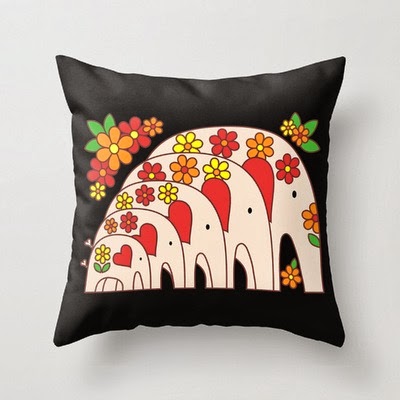
    In addition to photography, I also create whimsical, stylized elephant designs.  “Elephant Love” is the brand name for these designs, which are also sold on Society6 and facebook.  They are inspired by artists and design companies such as Marimekko, Keith Haring, Andy Warhol and Walasse Ting, as well as by traditional folk arts such as Russian matryoshka (nesting) dolls and the molas that are embroidered by the Kuna Indians in Panama.  A variety of home decor and novelty items are available with these designs, such as posters/prints, blank stationery cards, throw pillows, iPhone covers, tote bags and clothing (t-shirts, tank tops, hoodies, etc.).  The bright colors are great for decorating your apartment or nursery/kid’s room.

    Because my work is primarily digital, I appealed to my friends and family for donations to cover the cost of producing physical items for my show. This was my first attempt at crowdsourcing and I was very impressed by how supportive everyone was.   
    In order to encourage people to support my show, I promised to donate the profits from the sale of artwork and merchandise to a good cause: the Institute for Immigrant Concerns, where I am a board member.  The Institute is a New York City non-profit that provides free English classes and basic social services to low income immigrants, refugees and asylees.  The amazing stories of our alumni have been featured in the New York Times and other newspapers.  I was a volunteer English teacher with them for two years before becoming a board member, and 
     
    I continue to volunteer with them about 12 hours a week.  The combination of the artistic cause and the social cause was a great way to reach a wider audience.

    We are planning one more open studio day in a few weeks (possibly Thursday, November 7), so stop by if you happen to be in the area!  Details about the event to follow soon…  In the meantime, check out my website, blog and facebook page!  Thank you for your support!
     
    Patricia Chow  

    Photographer, Block-by-Block Photography
    Graphic Artist, Elephant Love
    (Read Patricia’s Firstindigo&Lifestyle interview from April 2013 here)
     
  • Oblivia performance group and the Museum of Postmodern Art

    Oblivia performance group and the Museum of Postmodern Art

    Founded in 2000 in Helsinki, the international performance company Oblivia is truly a unique phenomena in the Finnish performance scene. The group transforms larger than life themes into minimalist performances. Oblivia’s group fuses different genres and nationalities. The members are from Finland and the UK have experiences in music, dance and theory, which allows them to play between suspended tension and sense of humor. Since its beginning, the group has attempted to create a common language in the performance. In June 2013, Oblivia will perform its recent work ‘Museum of Postmodern Art’ in the NEW Performance Turku Festival in Turku Finland. The performance is co-produced by at PACT Zollverein and Espoo City Theatre. The premier took place at PACT Zollverein, Essen in November 2012 and the Finnish premier was at Espoo City Theatre in November 2012. The performance is the first in a series of five and part of the five-year project Museum of Postmodern Art – MOPMA. Annika Tudeer, the founding member of Oblivia tells about the history of the group and about her own background in dance.

    AT: In the late eighties I trained dance, contact improvisation and what was called new dance then. I then worked as a dancer and choreographer until I started at the Helsinki University in 1994 where I studied literature as a main subject, philosophy, theater studies and gender studies. I belong to the rather self-taught generation that mainly acquired knowledge and experience through training and working. I also did amdram and studenthteatre that was quite important as well. Oblivia was founded in 2000 in Helsinki during the European Cultural Capital year. I had this grand idea of creating a network and collective of artists doing site-specific work. However I had not realized that a collective does not have a leader who decides most things (that was me, of course) and is in charge, but that kind of leadership is better suited in a smaller group. We did 4 site specific pieces during that year that were very popular and had therefore a great start, and in the autumn Anna Krzystek from UK joined us and the smaller Oblivia that is still exists was formed.

    I basically wanted to create an alternative working environment to most of what I had experienced in the dance and theater field in Finland, experiment how to work together and have fun and create high quality work, merging theory and art in an organic way, not paying too much attention to theory but rely on the fact that it is there. I was also very interested in structures, all kind of structures: working environmental structures, political structures, artistic structures, architectonical structures, and that was always part for the work somehow. I still organize the practical stuff together with our producer, but the artistic work is purely collective.

     How has the concept developed during the years?

    AT: After doing site-specific work for a few years we decided to move into the black box using light and sound and start to explore the black box. It is the most challenging place and also the place for most concentration and innovation in performing arts we think. We are super organized, working away from 10-17 Monday to Friday over 4 months that are divided over the year. The work has evolved a lot, we work over several months with a piece, with pauses in-between where we tour or do other things (me mainly admin and networking). I also think that we have become much more many faceted in the work and how we perform and at the moment we are very much concerned with ideas of collaboration. Which means a lot of discussions and trials and errors. The work becomes richer and bolder all the time. It is minimalistic and maximalist at the same time. We work with an empty stage and fill it with ideas and images that are created in the heads of the audience.

    How international are you as a group in terms of performances, touring, attending festivals?

    AT: Anna Krzystek lives in Glasgow, so she commutes to Helsinki for rehearsals, we are occasionally on residencies in Europe, and our current project Museum of Postmodern Art that contains 5 performances over 5 years (2012-2016) has first an international premier and then a national premier. We tour as much as we possible internationally and although the growth could be swifter, we are touring quite nicely.

    How do you generate and create the concepts, what are the terms of collaboration?

    AT: Well, we decide on a theme, and since we like long term planning so the previous project Entertainment Island became a trilogy that was finished in 2010 and has toured since and now we have MOPMA (Museum of Postmodern Art) going. We decide on the big theme that is now art for five years and previously was entertainment. Then we decide on what kind of take we take for each new performance a little before we start to work on it. Then we start to improvise, devise material and do free association and a lot of talking and some field trips. Now we are working on the idea of bad art, and what that means to us and what it foes to us. We talked a lot at the beginning, had a workshop and at the moment we are in the second working phase where we go deeper in the material and slowly start to make sense of it and structure it. Basically we are the three of us (Anna, myself and Timo Fredriksson) working away, popping in and out of impros. But we have worked for 13 years together now so we have a secure sense of being in the studio without outside eyes. We have also started to involve our light and sound designers much more that is wonderful, so they share the process, the talking, and the figuring out a lot from the beginning. They also watch rehearsals and comment.


    What is your opinion of the performance field currently, how do art and performance co-exist?

    AT: I have a feeling that the field is growing rapidly, and that the boundaries are blurred totally. We have all diverse trainings: Anna studied at the Cunningham studio in New York for several years, you saw my background and Timo is a classical pianist. This kind of heterogenic diversity is perhaps not that common, but nevertheless companies and projects are vibrant and mixed. It is interesting and exciting times we are living in re: performances. Sometimes I am overwhelmed by the quantity of performances, and work and activities and sometimes I miss a feeling of a clear trend and some leading stars and high quality work is not all too common skilled yes, but work that moves me is not that common at the moment. But in general I think that there is a very exciting scene going on at the moment.


    Your most important influences?

    AT: The old companies like Needcompany, Forced Entertainment, Pina Bausch, John Cage, – the usual suspects…

     Where do you see your project going, how do you balance the work and life, how about the ‘other interventions’?

    AT: We are starting to reach out and are discussing several collaborations with other companies, which is a totally new situation. We intend to tour more and more for each year, and also to communicate more with other artists in various ways. Sometimes we feel a little isolated here, so we are working on breaking out from that isolation and become more part of the world, so to say. For me work and life are intertwined since my husband is Timo who is part of the Oblivia core and we have to deal with how to take care of our 9-year-old daughter as well. I have also been very active in founding the Performance center, ESKUS in Helsinki for working: with three studios, and a shared office for companies and individuals in the performance scene and independent scene in Helsinki. We have residencies, rent out spaces and work on different levels to be a supportive structure without being a venue or a production house.

     Oblivia will premier MOPMA 2 (that is the working title, the real title will emerge soon) in mid September in Trondheim, Norway at the Bastard festival. Until then the company will tour MOPMA 1 in Finland and Entertainment Island in Poland

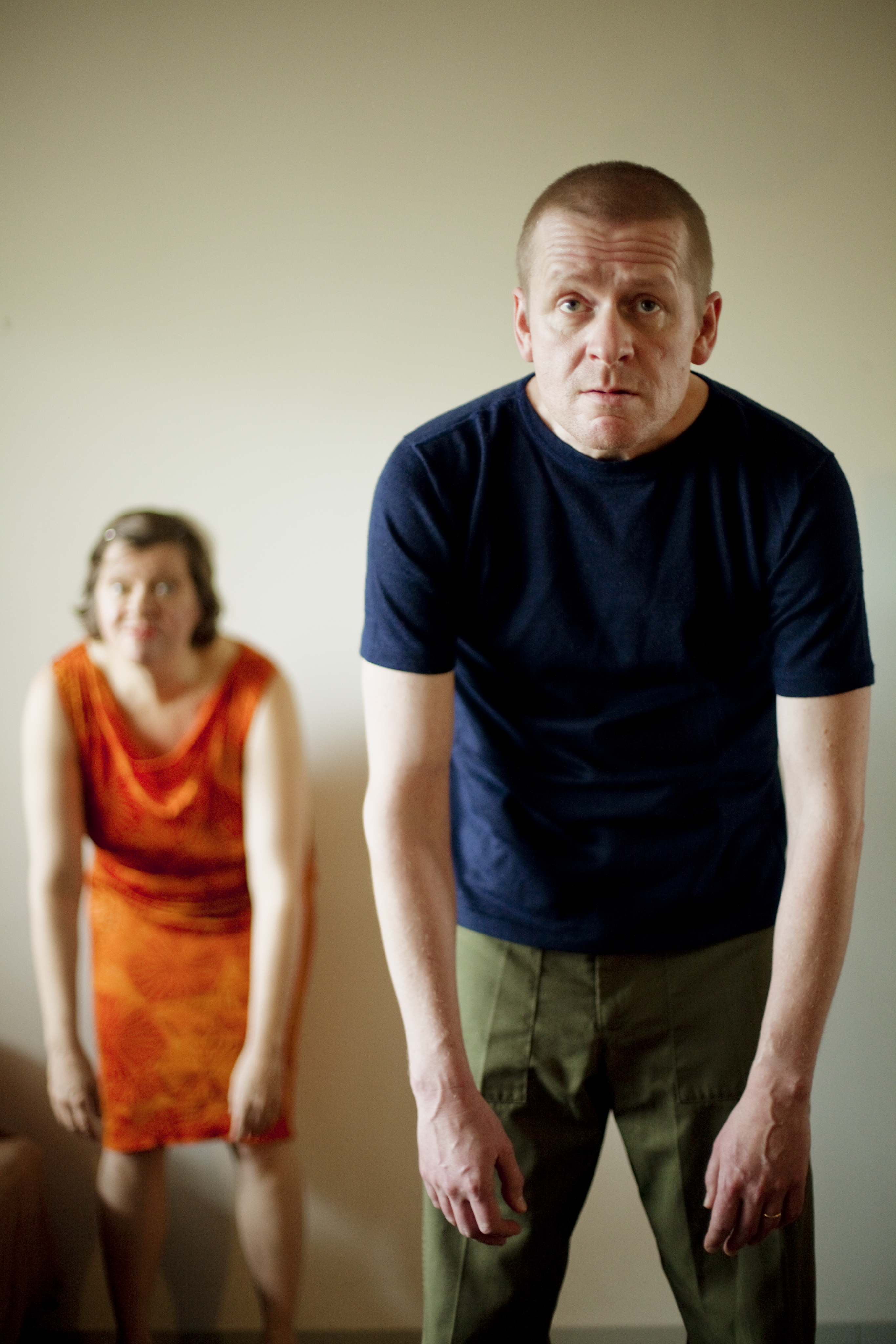
    MOPMA_v2_06
    (Annika Tudeer and Timo Fredriksson. capture: Eija Mäkivuoti)

    Oblivia’s website and Facebook page...