Tag: museums

  • Chinese Watersleeves

    Chinese Watersleeves

    Shuixiu is Chinese. The word can be translated literally to ‘water sleeves’. The sleeves are amazing part of the costume, or dress, which a Chinese stage performer wears. Not only are they made of fabric and is part of the costume, but the word refers to performer’s extraordinary skills to perform various movements with the sleeves.

    Water sleeves are ‘double white-silk sleeves attached to the cuffs of a costume’. The long sleeves can express performers’ mood. Overall, the gesture variation that one can perform with the sleeves, are hundreds. These include movements of ‘quivering, throwing, wigwagging, casting, raising, swinging, tossing, whisking, rolling, folding, crossing and so on’.

    Water sleeves can be used for many functions. For example, the sleeves wigwagging in front of face means a fun; one hand pulling another water sleeve sidewards indicates politeness or bowing; sadness and shyness are expressed by one hand pulling another water sleeve to cover the face; wiping tears and whisking dirt on costumes by water sleeves; raising and put up two persons’ water sleeves to embrace each other; water sleeves also indicates the music band when the singing performance starts (cultural-china.com).

    Here is a Female Dancer, a sculpture from Metropolitan Museum’s collection. It depicts fine water sleeves being a fine example of dance in the Chinese sculpture. This model is earthenware with pigments, and it is from the Western Han dynasty (206 b.c.–9 a.d.), 2nd century b.c. China. More information about the sculpture on the museum website here.

    Female Dancer, the Western Han dynasty (206 b.c.–9 a.d.), Metropolitan Museum of Art.
  • Marron Atrium in MoMA shaked with performance

    Marron Atrium in MoMA shaked with performance

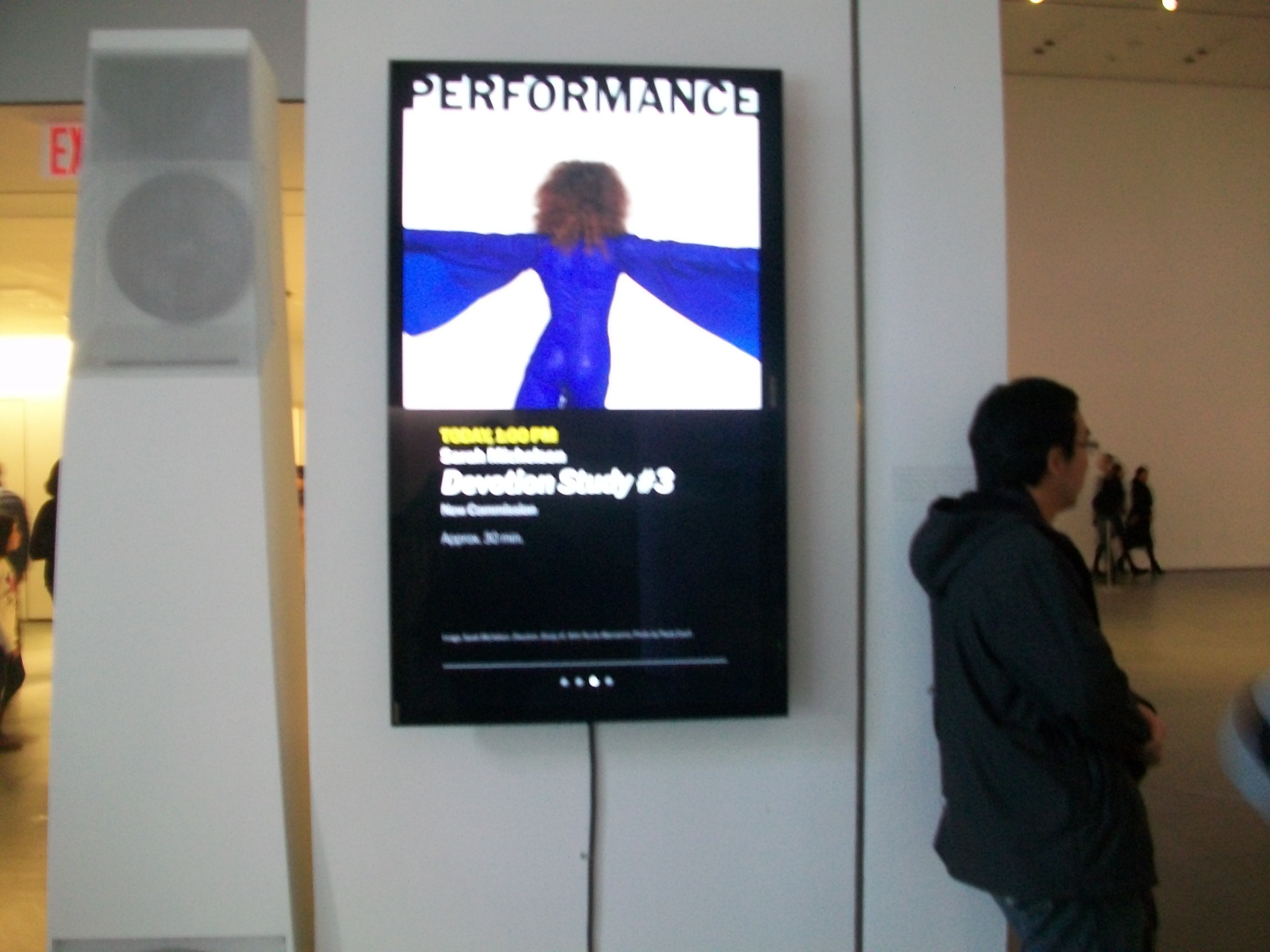
    {Artwork hanging on the wall of Marron Atrium during Sarah Michelson’s choreography “Devotion, study #3”}

    Atrium is to be violated, says one of the choreographers. There is nothing there, and the museum space with its white walls is so institutional. Does the empty atrium distance the museum’s audience? It is often showing the architectural without art. But it can be the performance space for all kinds of works.

    Some sweet day was a three-week (October 15-November 4, 2012) program of dance performances by contemporary choreographers in the MoMA’s Marron Atrium. New York’s Museum of Modern Art was showing works from several mature choreographers, who gained international status, and who experiment with concepts, performance art and contemporary art. American experimental choreographer Dean Moss has worked together with visual artist Laylah Ali. Their work “Voluntaries”, which explores the legacy of John Brown, was performed during the first week. The Judson Theater founding members Steve Paxton and Deborah Hay were invited as pioneers of performance. Presenting for Paxton, who included two of his works from 1960s, in art museums is not a big deal. However, it can be different for contemporary choreographers like Jérôme Bel. The French choreographer described in the October 20 panel discussion how his work “The Show Must Go On(2001) might encounter the museum space. 

    The piece has been made for theater so I was very surprised to perform it in the museum. People who come here, come more to see Picasso, and don’t even know that I’m here, so the work is experimental. You have to be generous, as there are people who don’t come to see ‘you’. Then, in the theater the audience is in the darkness, and here you see them.

    inka
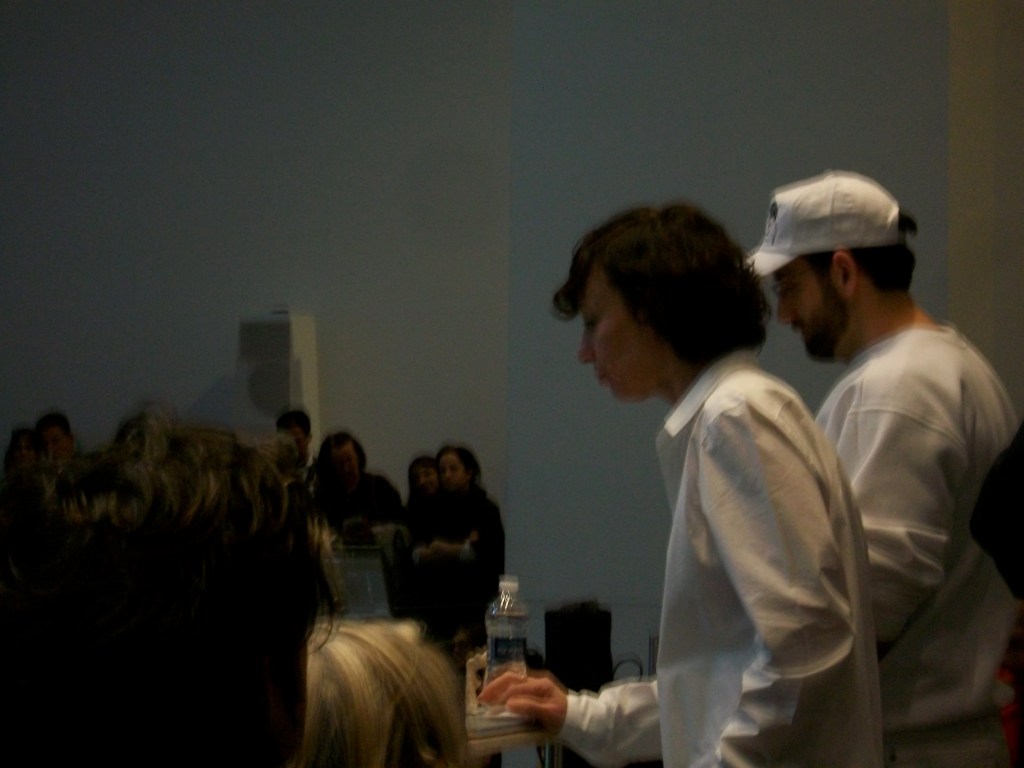
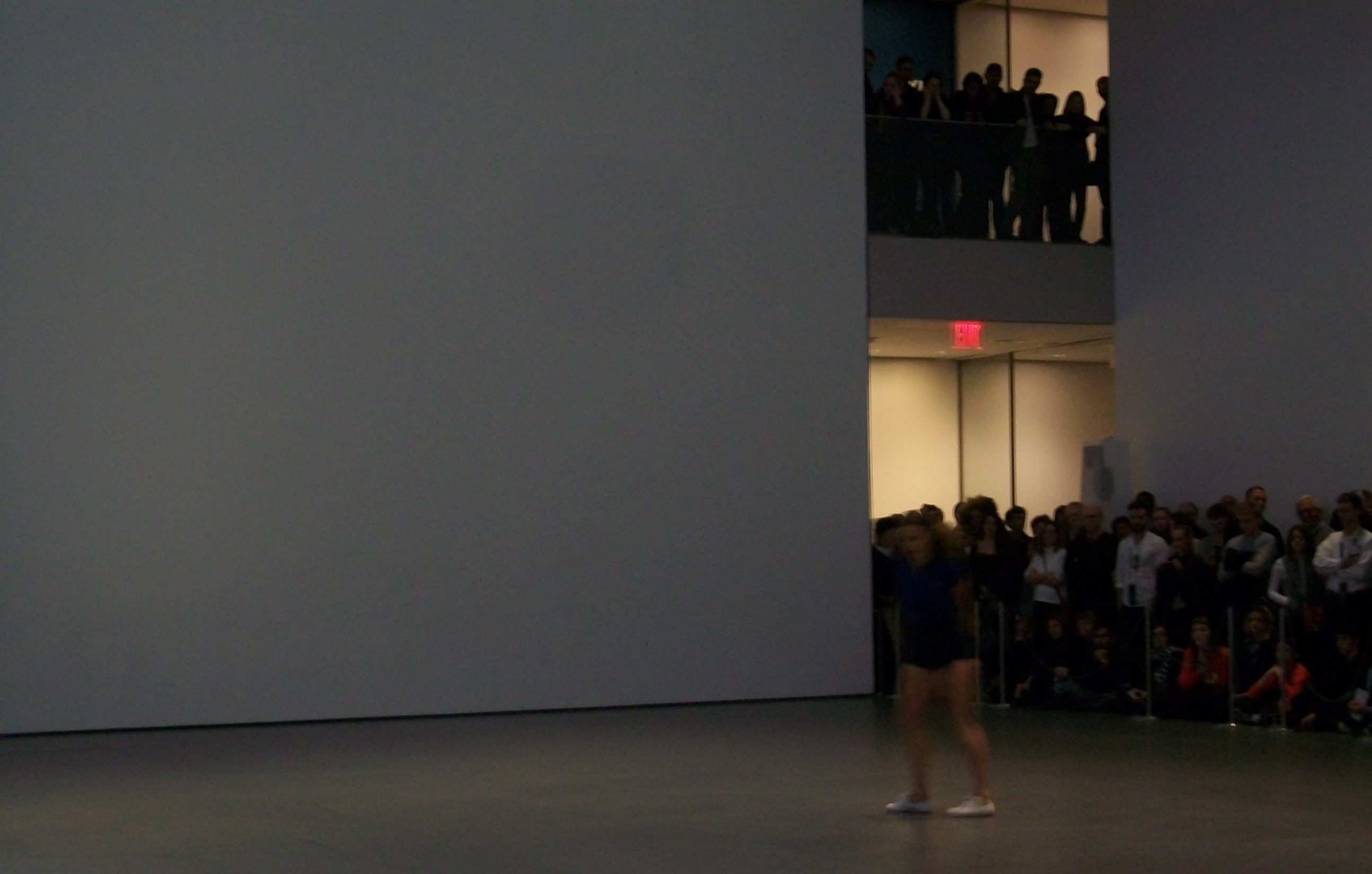
    {Audience arrives into Marron Atrium half an hour before the performance. The space gets very crowded few minutes after. photos:firstindigo&lifestyle}

    Deborah Hay told in the discussion held on November 3rd that for her the audience is the ‘unknown’. With the dancers, she explores the potentiality. The dancers are returning to the body. Hay encourages them to stay with the ‘question’. She finds the language and its linearity fascinating.

    – I use the linearity to create non-linearity for the individual who performs my work.

    British choreographer Sarah Michelson described in the same conversation, that museum space evoked new ideas. She had to close the main staircase from the audience to keep the space clear. She chose to use security guards, who were used as brief part of the piece. They brought in the dancer into the atrium, as well as escorted her out. This association created humor, and linked the dance performance into other parts of the museum.

    inka
    {Dancers Nicole Mannarino and James Tyson performing Sarah Michelson’s “Devotion, Study #3”. The choreographer herself as DJ during the performance, (below)}

    http://www.moma.org


  • Finnish design pop-up store in the Museum of Arts and Design (NY)

    Finnish design pop-up store in the Museum of Arts and Design (NY)

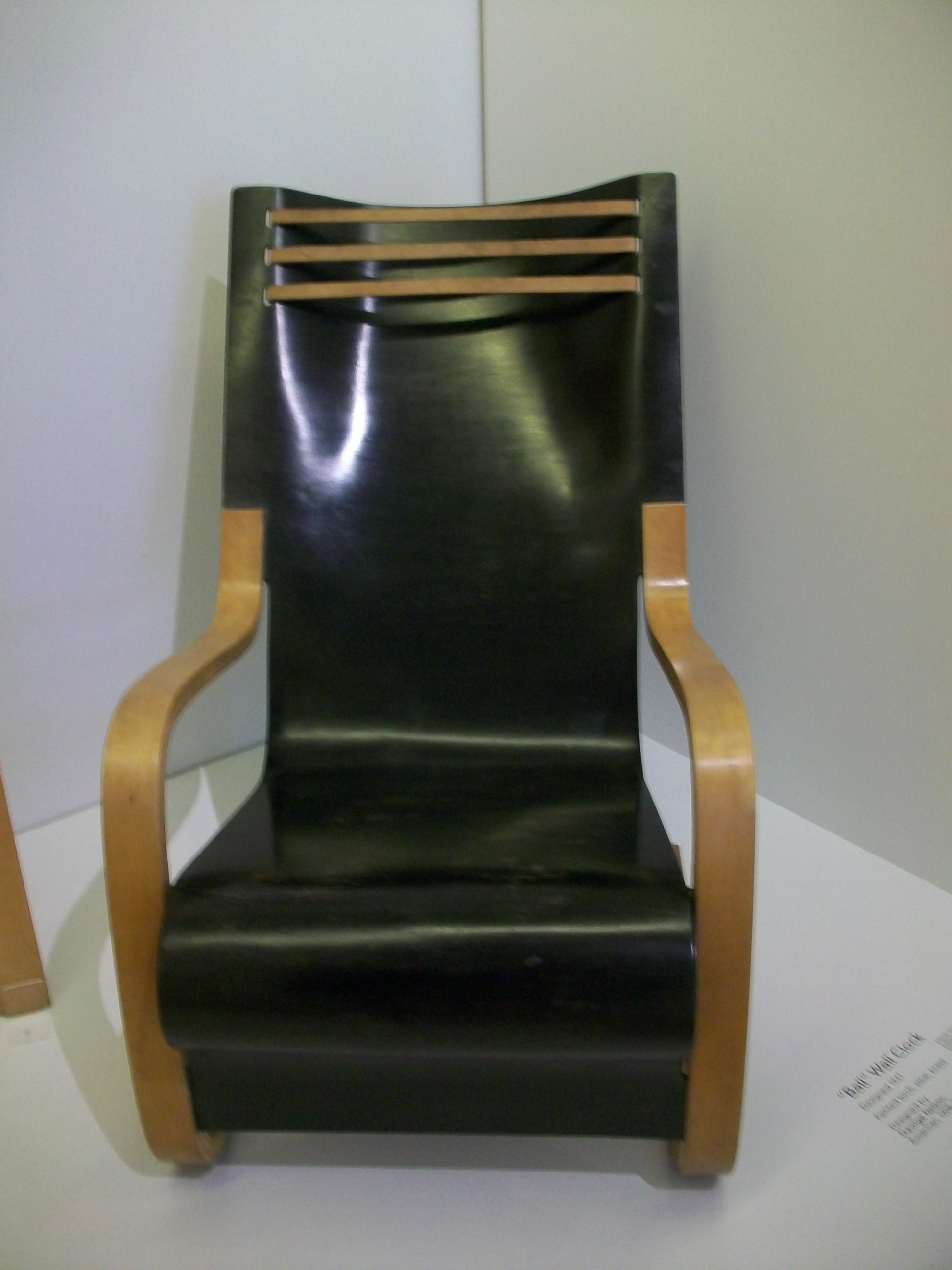
    Starting end of this week, we can scan bits of Finnish design in a pop-up store in the Museum of Arts and Design (MAD) foyer. The event is taking place soon, in 21-28 of October… Another great chance to get a glimpse to the 2012 World Design Capital…Helsinki and the surroundings. New York is promoting the uniqueness of Finnish design, as 2012 promises to be creating something extraordinary out of the concept thinking that is so true to contemporary design. The materials and products are connecting to the sustainable values, which global north now represents. ‘Arctic design’ is a concept, which will add dimension to Scandinavian design parameters and tradition. Finland’s architectural roots will be visible in Helsinki, so looking back in history is important. What is creating the contemporary presence, yet, is the remaking of the tradition. When looking back in the history of Finnish design, Alvar Aalto (among others) was not only an architect. His Aalto-vases have become well-known products around the world. His glasswork and furniture appear still in North American museums (MoMA, Philadelphia Museum of Art)… The conceptual thinking of adding different ingredients in the pot and then seeing and tasting what is the flavor of the ‘end-product’ describes today’s designs. Urban settings, architecture, city panning, environment, green values, greeneries, food-cultures, music, technologies, and so on, define what has value as a design. What still remains important is the craft and tradition to the content.

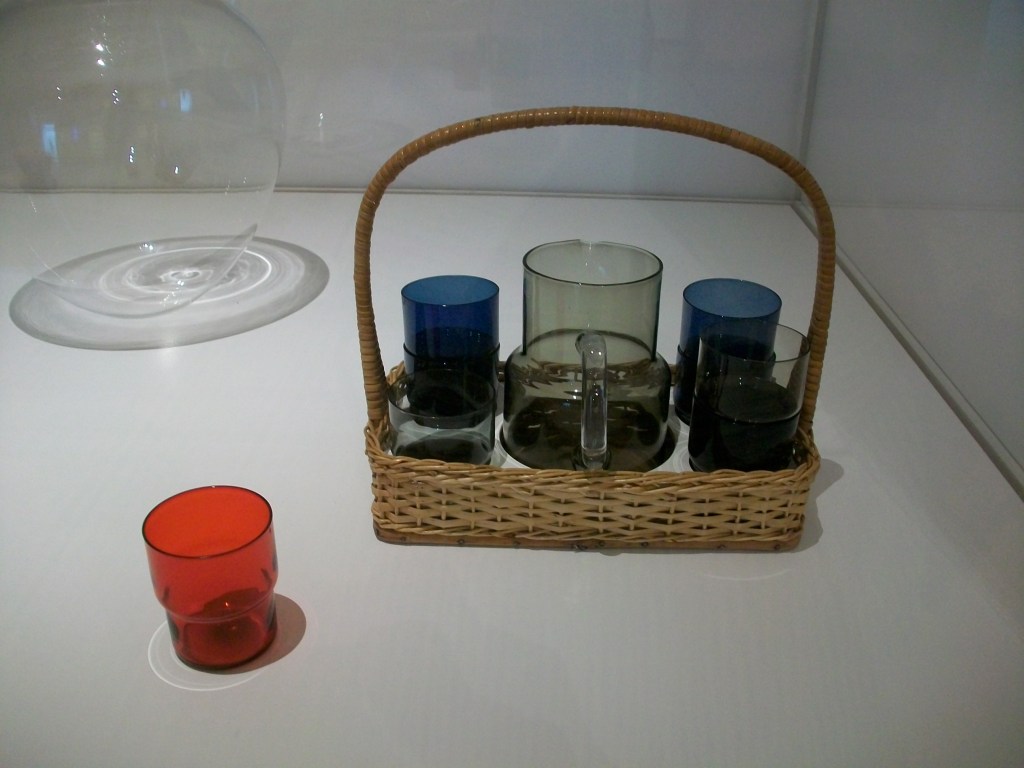
    As Philadelphia Museum of Art was exhibiting Finnish design classics among its contemporary design exhibition in the summer,  Caroline Tiger wrote for The Inquirer (in May 20, 2011: “Philadelphia Museum of Art to open major contemporary design exhibition”): “Although the Philadelphia Museum of Art’s modern design collection has grown to be the biggest and best-regarded of any general museum in the country, it has lived mostly under the radar” . Saying that this ‘low profile’ exhibition in the Perelman building’s modern design gallery showed several interesting pieces from Finnish design masters, is quite modest. Furniture of Alvar Aalto, for example Armchair Model No. 31 (picture below),  ‘Kilta’ Tableware from Kaj Franck, and a pitcher, glasses and basket combo from Saara Hopea (in the picture above).