Tag: music

  • Ocean Space in Venice meets indigenous art

    Ocean Space in Venice meets indigenous art

    During the opening week of the Venice Biennale, there are multiple programs of artist talks and performances taking place. This is also true in the Ocean Space-an art and scholarship incubator that was established in 2011. It has supported artistic production and environmental advocacy, bringing together collaboration and creating knowledge that is often missing in mainstream science.

    In the decade of ocean, while many conservation efforts are taking place across the world’s oceans, it is timely that Biennale in 2024 will have a program around the ocean. Playfully coined in the program’s title “Re-stor(y)ing Oceania“, the new exhibition and performance series in Ocean Space may just do that, restoring and mending broken practices. In a multidisciplinary artistic way, two new site-specific commissions by indigenous artists who come from the Pacific worked with a curator Taloi Havini, who is herself an indigenous artist from the Pacific. The new commissions by artists Latai Taumoepeau and Elisapeta Hinemoa Heta combine performance, sculpture, poetry, and movement. Bougainville-born curator Taloi Havini returns to Ocean Space after her own 2021 solo exhibition there.

    Ocean Space is part of TBA21–Academy, which as an educational branch of TBA21 (Thyssen-Bornemisza Art Contemporary) is a center for research initiatives. Ocean Space fosters a deeper relationship with the ocean and waterways, using art to inspire action. The center has been bringing art, science, policy and conservation around the same table.

    TBA21–Academy’s Ocean Space reopened “doors of the Church of San Lorenzo” when inaugurating their home in Venice few years ago. It has become a global incubator presenting and creating action and literacy about the ocean, creating programs and events around different artistic practices, design, architecture and research. Education programs, exhibitions and performances, also open the season of Ocean Space during the 60th Biennale Arte.

    Curator Havini’s vision is guided by an ancestral ‘call-and-response method’. She uses the concept as a vehicle to find solidarity and kinship in times of uncertainty. When exploring knowledge, she is focused on production, transmission, inheritance, mapping, and representation. Havini examines these in relation to land, architecture, and place. “Re-stor(y)ing Oceania” opened in Ocean Space on March 23, 2024, and will be on view through October 13, 2024, during the Venice Biennale.


    Real threats to life call for the need to slow down the clock on extraction and counter this with reverence for life of the Oceans.

    The Pacific Islands are one of the regions most impacted by the damaging effects of climate change. The area has many Indigenous leaders and entire communities who have participated in the call for action on the rising sea levels, and have advocated for the climate emergency that the planet is facing. There is more study of the crisis now, and there is a greater awareness of what is going on in terms of urgency, risk mitigation, and what it means to be vulnerable when it comes to the future of ocean-front communities. The indigenous artists have a voice in this continuum-their perspectives from across Oceania, Australia, and the Asia-Pacific, including the Diaspora, bring exchange and conversation. These voices create the meeting point around which the performances and exhibitions take place.

    The conversations and happenings in Ocean Space include three days of live performances held over the Venice Biennale vernissage week (April 16–20, 2024). These will also remain accessible online after the events. There will be a new archive of stories, including voices from the First Nations artists, curators, writers, community leaders, poets and musicians. Additionally, collaborators include navigators, sailors, fisherfolk and scholars, who will navigate the world’s oceanic spheres, and create further understanding about ocean’s existence.

    For the new commissions, curator Havini invited artist Latai Taumoepeau, who uses faivā (performing art) grounded in Tongan philosophies of relational vā (space) and tā (time). Taumoepeau is 2022 ‘ANTI Festival Live Art’ (Finland) Prize winner.

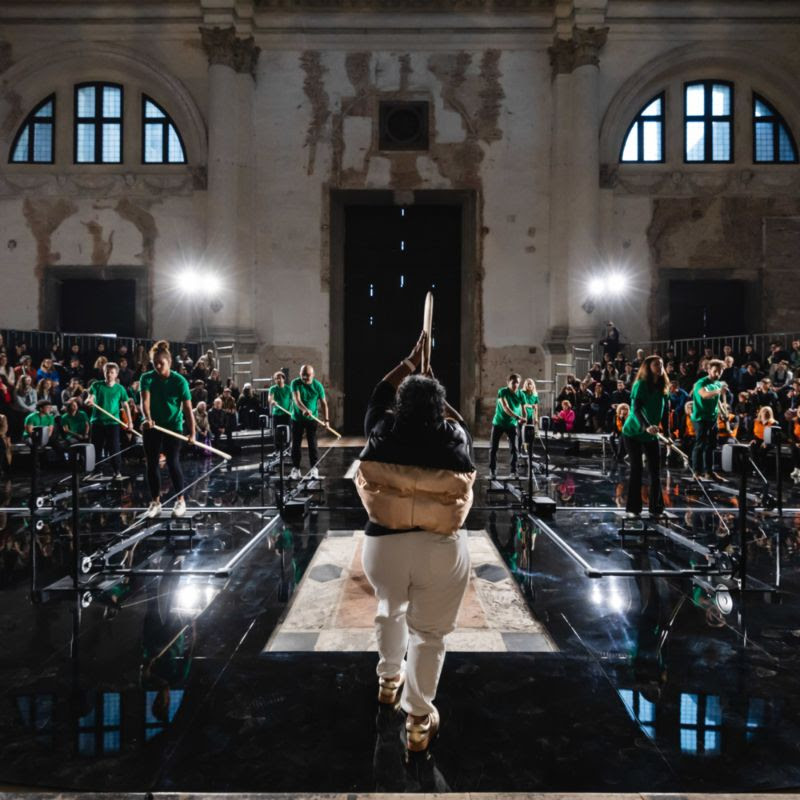
    Centered in the body, faivā cross-pollinates ancient and everyday temporal practices to make visible the impact of the climate crisis in the Pacific. In the artist’s own words, ‘The more ancient I am, the more contemporary my work is’. The artist’s commission addresses deep-sea mining in a new choral work. Her resistance is shown in a poetic way, using songs that share a power to store histories and carry values and knowledge in Taumoepeau’s homeland of Tonga. The newly commissioned work, Deep Communion sung in minor , “ArchipelaGO, THIS IS NOT A DRILL”, engages audiences in the process of giving Pacific islanders an opportunity to be heard in front of diverse audiences.

    There are sculptural and interactive machines installed in Ocean Space, which provide audiences with opportunities to engage with the Deep Communion sung in minor. Participants can either activate the installation – which will trigger part of the musical score – or take a seat in the surrounding bleachers to witness the performance. The work is being perfomed by local sports teams in live performance events.

    In response to Taumoepeau‘s new solo commission, a live project space has emerged at Ocean Space that was created in collaboration with architect Elisapeta Heta, a Māori, Samoan, and Tokelauan leader and advocate for change. Her imagination has provided Maori and Pasifika perspectives on the importance of place to design and cultural identity, and brought that knowledge to Ocean Space.

    As her response to the exhibition, the architect includes a new installation that uses a multisensory embodiment of ‘The Body of Wainuiātea‘. This title of the work means a ceremony combining ritual and a ceremony guided by the Māori concept of tikanga. She comes from Aotearoa, New Zealand, using the concepts from her ancestral lands alongside those from across the Te Moana-nui-a-kiwa.


    Tikanga is derived from the Māori word ‘tika’, which means ‘right’ or ‘correct’, so to act in accordance with tikanga is to behave in a way that is culturally proper or appropriate.

    The space is welcoming visitors and audiences, as it is also designed for exchange and collaboration. The space is formed around the ancient way of knowing and relating through story, and waiata (song). The goal is to connect to a greater awareness of atua (the gods’) connections to the Ocean. The tapu (sacred) is very much needed by current environmental and scientific campaigns, which seek to protect the life of the planets’ largest bodies of water.

    Hosting guests through various forms of storytelling, is a common practice in the Pacific communities. Heta’s work, The Body of Wainuiātea, is a safe space for a network of artists, curators, writers, community leaders, poets, musicians, as well as ocean-professionals and scholars to come together. Collaborators include Dr Albert Refiti, Hiramarie Moewaka, and Rhonda Tibble.

    The program is commissioned by TBA21–Academy and Artspace, Sydney, and produced in partnership with OGR Torino culture and innovation hub.

    — — —

    Curator Taloi Havini (Nakas Tribe, Hakö people) was born in Arawa, Autonomous Region of Bougainville and is currently based in Brisbane, Australia. She employs a research practice informed by her matrilineal ties to her land and communities in Bougainville. This manifests in works created using a range of media, including photography, audio – video, sculpture, immersive installation, and print. She curates and collaborates across multi-art platforms using archives, working with communities, and developing commissions locally and internationally.

    Latai Taumoepeau (b:1972 Gadigal Ngura (Sydney), Australia) makes live-art-work. Her faiva (body-centred practice) is from her homelands, the Island Kingdom of Tonga and her birthplace, the Eora Nation. She mimicked, trained, and un-learned dance in multiple institutions of learning, beginning with her village, a suburban church hall, the club, and a university. Latai engages in the socio-political landscape of Australia with sensibilities of race, class & the female body politic; committed to bringing the voice of unseen communities to the frangipani-less foreground. Latai has presented and exhibited across borders, countries, and coastlines. Her works are held in private and public collections, including written publications. Latai is the 2023 recipient of The Creative Australia Emerging and Experimental Arts Award following her win of the 2022 ‘ANTI Festival Live Art’ Prize in Finland.

    Elisapeta Hinemoa Heta (Ngātiwai, Ngāpuhi, Waikato Tainui, Sāmoan, Tokelauan) is a multidisciplinary artist, designer, and mother, living and working in Tāmaki Makaurau, Auckland, Aotearoa New Zealand. Elisapeta’s career has spanned architecture, art, writing, film and performance, teaching and research and has resulted in a rich tapestry of collaborative works and projects that are centered on indigenous mātauranga (knowledge and ways of knowing) and tikanga (protocols and ceremony). In working through multidisciplinary practice, Elisapeta creates experiences that make visible our stories, many of which have been hidden, with a focus on indigenous and wāhine (women) centered story-telling. Through her art practice, Elisapeta, in collaboration with photographer John Miller (Ngāpuhi), took the exhibition Pouwātū: Active Presence to the 22nd Biennale of Sydney: NIRIN 2020, and brought it home to Objectspace Gallery in Tāmaki Makaurau (March – May 2021)

    Program in Ocean Space: March 23-October 13, 2024.
    Address: Chiesa di San Lorenzo
    Castello 5069, Venezia

    Photo: Latai Taumoepeau performing her work ArchipelaGO, THIS IS NOT A DRILL with local sports team in Ocean Space.
  • Yuko Mohri creates the Japan Pavilion in Venice

    Yuko Mohri creates the Japan Pavilion in Venice

    Yuko Mohri is creating Compose for the Japan Pavilion in this year’s Venice Biennale. Mohri is putting focus on environmental issues with her work, which acts like a circular economy approach to creating art. With a title that etymologically references “to place together” (com+pose), the exhibition questions what it means for people to be together – at home, in society and at work – that pandemic changed. The post-pandemic world also faces a planetary climate emergency.

    The exhibition in the 60th Venice Biennale runs from April 20 to November 24, 2024, with the inauguration on April 17 in Japan Pavilion (Giardini di Castello, Venice). Compose is curated by Sook-Kyung Lee, Director of The Whitworth in Manchester UK, and it is organized by The Japan Foundation.

    Mohri who is interested in organic ecosystems is right at home in Venice. She has focused on the 2019 Venice floods and rising sea levels. The theme ’soft and weak like water’, which is a reference to the classical Chinese text ‘Dao De Jing’, is a source of inspiration for Mohri. The text by Lao Zi acts as a metaphor for change as “generated through gentle and persistent force”. The artist also created work for the 14th Gwangju Biennale in the Japan Pavilion. Her collaborator, curator Sook-Kyung Lee was the artistic director of the Biennale.


    Yuko Mohri has long been interested in the crisis and its connections to paradoxical creativity. She was interested in the Tokyo subway workers who needed to find solutions to water leaks.

    Utilizing materials that are sourced locally, from Venetian antique stores and furniture shops, as well as from grocery stores, liquor stores, and farmers and flea markets, Mohri took over the whole pavilion and made it to her own studio for a few months prior to its public opening.


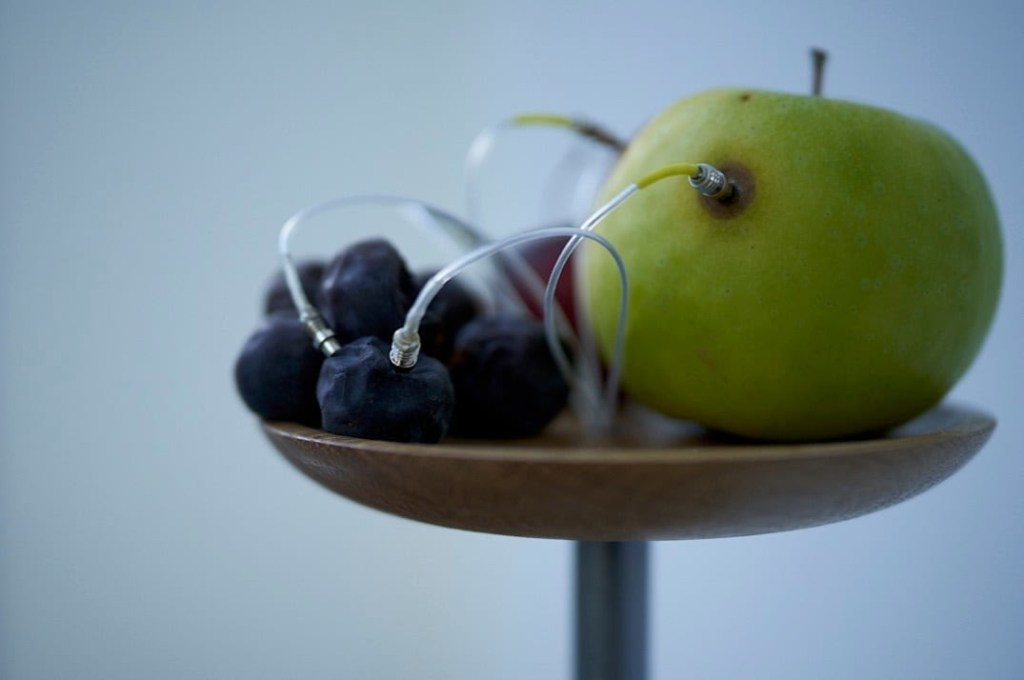
    From floor to ceiling – installation’s organic forms include experimental elements and acoustic sculptures, which are made of rotting fruit. Mohri’s creation repeats a series a works that are unified by a common element: water. The artist’s latest installations, Decomposition and Moré Moré (Leaky) will emerge as rare site-specific, one-time realizations presented in the Venice Biennale.

    The work Compose, additionally references the legacy of composers and artists; Erik Satie, Marcel Duchamp, John Cage, Nam June Paik, and the Fluxus Movement. All of these artists had an experimental approach, using methods of chance and improvisation as a basis, and strongly commenting on everyday mundane life with their works.

    Yuko Mohri takes a stance on nature, which is disappearing, and environmental catastrophe. Even if not literally, what is highlighted as the latent “changing events” of creating ecosystems that will be disappearing, are bound to water, the scarcity of it, and the flood that comes with it. Still using very familiar everyday objects as their backdrop.

    Known for her installations that are like ‘events’, Mohri creates changing environmental conditions for the Pavilion. It will be an event of light, sound, movement and smell.

    Mohri was born in Kanagawa, Japan in 1980 and now lives and works in Tokyo. She has been included in a number of international group shows including the 14th Gwangju Biennale (2023); 23rd Biennale of Sydney (2022); Asian Art Biennial (2021); Bienal de São Paulo (2021); Glasgow International (2021); Tai Kwun Contemporary, Hong Kong (2021); Ural Industrial Biennial of Contemporary Art, Russia (2019); Palais de Tokyo, France (2018); Asia Pacific Triennial of Contemporary Art (2018); Biennale de Lyon, France (2017); Centre Pompidou-Metz, France (2017); Kochi-Muziris Biennale, India (2016); Yokohama Triennale (Japan, 2014), among others.

    Featured photo: Courtesy of Yuko Mohri and Tanya Bonakdar Gallery.

  • Color comes with music for Ellen Hackl Fagan

    Color comes with music for Ellen Hackl Fagan

    Firstindigo&Lifestyle: The color field painting created space for exploration of color as a subject matter. How did this field of abstraction influence your work in the first place?

    Ellen Hackl Fagan is an American artist working with painting, which is richly influenced by music of her generation. Starting to figure out her artistic practice in the early 80s, she found color as a strong compositional element. When looking at her paintings, one could say the ideas derive from traditions of Color Field. But it’s more than that.

    The artistic experience and the bodily encounter with the materiality of work create another layer. Music and color go together also in a more profound and ethereal way in some of Hackl Fagan’s work, appearing as if systems and science were components of the network of sound and its emerging visual pattern.

    Firstindigo&Lifestyle: Now, the cobalt is a color, which is a great conversation starter. How many times have you experienced people just being absorbed into the inviting presence of the color?

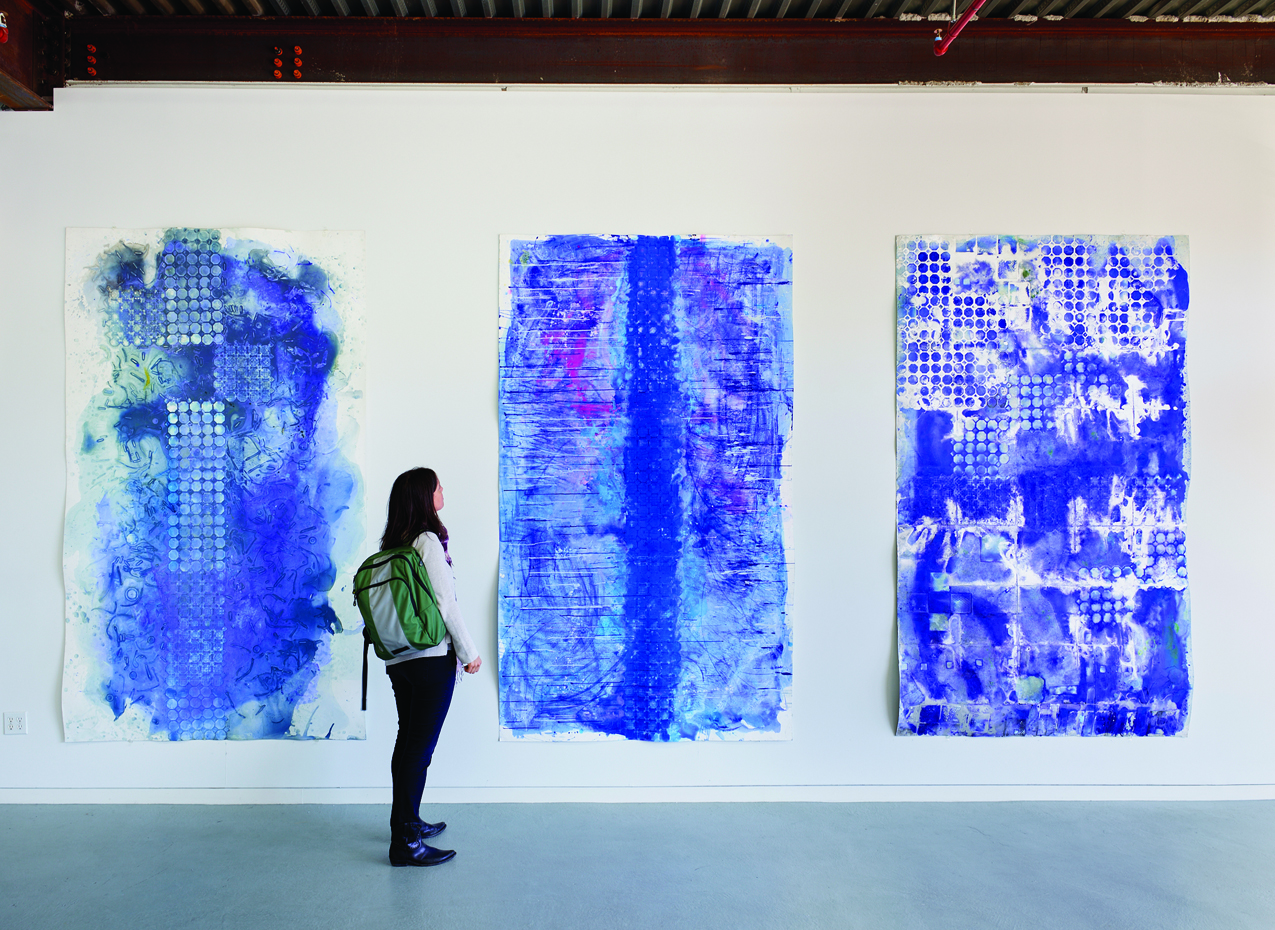
    EHF: That happens all of the time. In my studio space, which was in the back of ODETTA in Bushwick, one was surrounded by blue from my walls to the floor. I found visitors would linger there, and mentioned often that the blue made them feel really good. So, it emanated a healing resonance with visitors to my space. I think this is one reason why I’ve remained focused on the color and the surface from this particular paint, KT Color, is that it resonates, down to the individual particles, because of the matte surface and the saturated hue. 


    Firstindigo&Lifestyle: Can you tell, how did you find cobalt, and how long has this investigation been your premise?


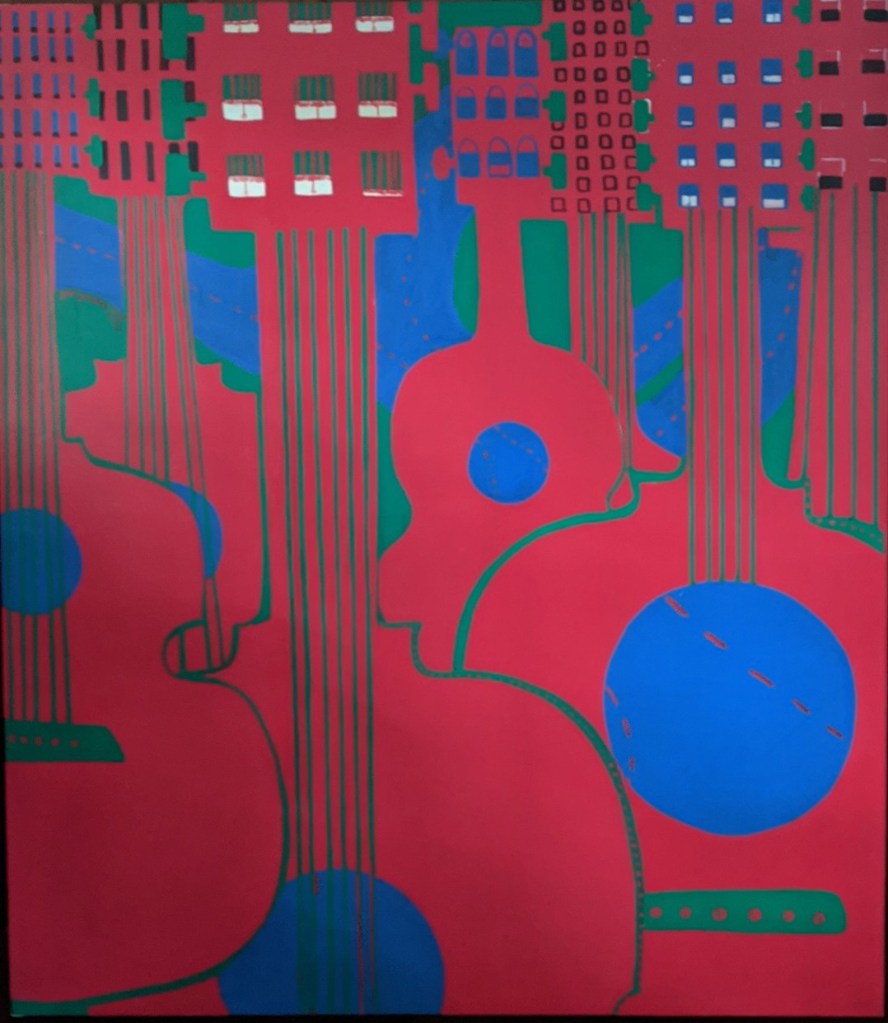
    EHF: I have attempted to make paintings emanate sound through saturated color since 1981. At that time I was pursuing my undergrad degree, BFA in painting and photography, and was seeing a lot of live music. Punk culture was in full force, so sound and design were interchangeable. A painting I created, The Floozies vs the Force, in 1981, was a painting that was predominantly red and blue, and is oversized. I began to see that the cobalt blue used in this painting, a latex/household paint, would turn to a white hot in low-light times of day: dawn and dusk. The red of the painting would recede, and the blue would advance, which was the opposite of what we were trained to understand about color in school. This intrigued me, and I began to consider cobalt blue as a color that had a broader communicative range, and could possibly hold the key to my color/sound investigation.


    Firstindigo&Lifestyle: You say that cobalt has some mystical components, does this mean transcendental in some ways?


    EHF: Yes, I feel that this color actually connects with our spirit, and that it communicates directly to this intangible part of our being, which is why the response to blue is universally tied to the spirit. I think we all feel it.

    Firstindigo&Lifestyle: The process of painting for you is very physical, it’s almost performative how you pour the paint on canvas, and work toward the outcome. Can you explain your process with paint, water, and objects, how they all are involved in your practice and contribute to it?


    I think it’s about immersion. I want to put my full body into painting, connect physically with each aspect of the process, and finish, like a yoga deep breathing exercise, with the eyes as the final part that communicates to the color. I have a long history in dance, and feel that this visceral connection comes from this history, or muscle memory. 


    Firstindigo&Lifestyle: There seems to be an element of covering and revealing in the process?

    EHF: Yes, I call this part “blind painting.” In order to gain a full field of pattern, I have to cover the surface. I can’t know for sure what the outcome will be, which is an aspect of trust I’ve established with the materials themselves. I feel they have more to teach me than I them. I want to explore the full range of their characteristics, which means I cannot be the author of the final image, the paint is the author. I set the stage, facilitate its dynamic potential, and then I leave the room and let gravity and evaporation do their part to finish the work. If I’m not happy with the result, I tend to live with it for a while before going back into it for a second pass. I learned a lot about listening to my materials through ceramics. Often the ceramic work would come out of the group kiln at school with an unexpected result in the glazing and painting that I had put together with the underglazes and oxides. 

    When I pulled the pieces out of the kiln, at first they disappointed me due to my expectations. But, over time, they made me look at the unfamiliar with an open mind, and would convince me that they had a strength to them that I could have never controlled or forseen. This made me want to explore accident and the unexpected more in my painting.

    Firstindigo&Lifestyle: Can you tell about your background, and how did you find your calling as an artist?


    EHF: I have always called myself an artist. From a very young age, 5 or 6, I can remember identifying myself in this way. I am the sixth of eight children, and married into a family of twelve children. My husband was a twin, he passed away in 1996 from an undiagnosed cancer, leaving me to raise three very young sons by myself. The boys are all young men now, with lives of their own, but we are close. I always made drawings, played school, painted, argued, and have had a life where I maintain a space for play. 

    Margaret Ellen Hackl, City Sounds, 1981, latex house paint on canvas, 60″x57″ in.

    Firstindigo&Lifestyle: What are your influences in different arts of technology, and the systems, which have an impact on your creation?

    EHF: For me, Color Field suggests an immersive experience of deep looking. Color Field has been a part of my development as a painter since 1981these paintings from 1981 are both full body size, which put me in full contact with responding to these contrasting colors when painting them, they literally would throw me off the easel as my eyes were having ocular severe reactions. I nicknamed them “retinal eye bouncers” for the punk era, these were a sympathetic relative to the music I was seeing live so colors spoke of sound, from the moment I began working in a flat, graphic style. Pop Art and Punk graphics were also a major influence at this time.

    EHF: My influences from technology all source from music since 1981. I have referenced punk music, early pioneers of abstract, electronic music like Morton Subotnik, the fluxus influences dating back as early as Dada and Schwitters to John Cage, to Frank Zappa, to Brian Eno and David Byrne. The systems tend to be based in the arts, but many have application in the sciences as well. 

    Firstindigo&Lifestyle: How about the collaborations you have created with musicians and composers?

    EHF: These collaborations have come to me since 1981 as well. Most composers/creators of music, see a relationship in my work to sound and are always eager to join me in my projects, musicians are natural collaborators, so it has been a path rich with artists to work with. 

    Firstindigo&Lifestyle: I remember you having an installation at the New York Public Library, how did this project succeed in terms of audience response?

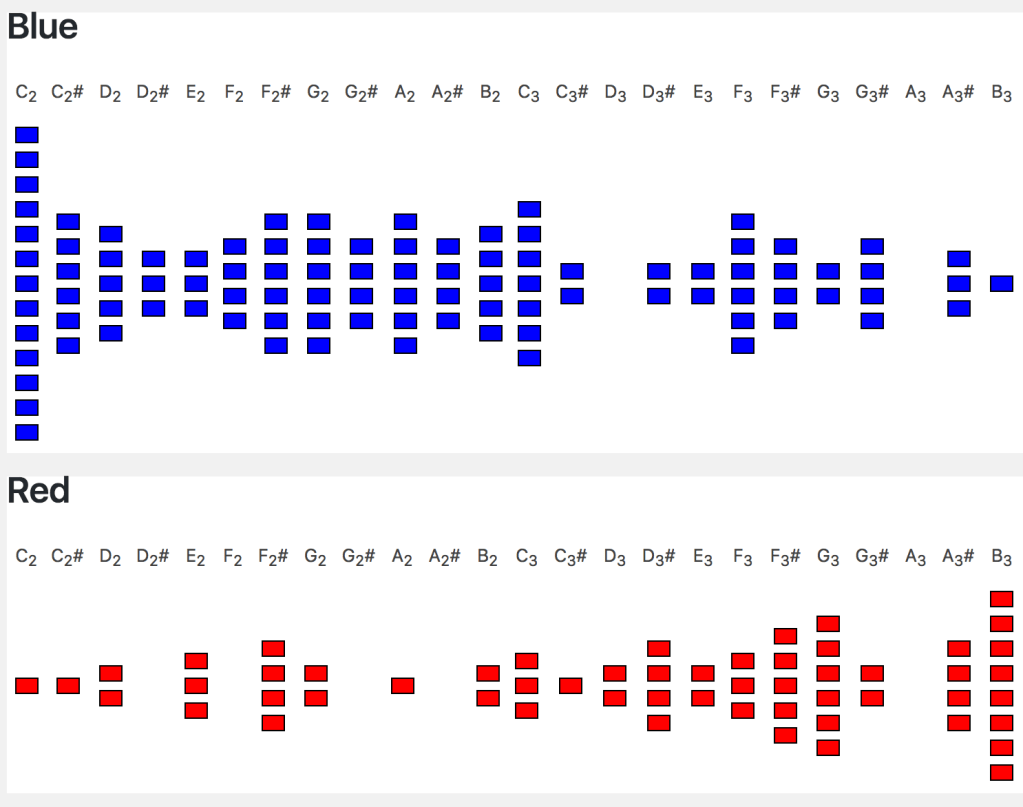
    EHF: I was invited to share a panel with two guest artists, of my choosing. As we all focused on the relationship of sound to color, and vice-versa, I asked the audience to play the Reverse Color Organ all together. We focused on blue and their responses when asked to pair a sound to the color looked like this, then I asked for red. You can see their results pretty much feels like common sense. I would like to collaborate with an institution or a person to gain a lot more viewer input  for the Reverse Color Organ

    Ellen Hackl Fagan, Riverse Color Organ.


    Firstindigo&Lifestyle: Your interest is very much also in the musical and sound aspect of the work. The blue color can have almost symphonic qualities. Do you feel this way?


    EHF: Yes, I am a product of a long history of rock and roll, punk, and some dabbling in jazz and world music especially growing up seeing punk bands and following certain bands over the past three decades. Music is a direct influence in my work.

    Firstindigo&Lifestyle: Could you tell a little more about your recent exhibition, and a project called Helpless?

    EHF: I was thrilled to be invited to create a solo exhibition for Five Points Center for the Visual Arts. I was asked a year ago. As COVID-19 took over our lives and the galleries and museums all closed, it wasn’t certain when this exhibition would open. I give them a ton of credit for staying on time with their programming during all this chaos. It has been a great experience working with them. 


    For Helpless, I began working in the studio in early May in the early night sky there was a congruence of Jupiter, Saturn, and Mars. This was visible to me when we took a Mother’s Day hike in a local park where we were finishing up as it grew dark. We all talked about which planets these might be, etc. These burned in my visual memory as I was painting, and then the song Helpless flooded my mind as well. It became a meditation of sorts, and the title felt right for the exhibition. I’m a real fan of Neil Young’s music, since my teens, it was comforting having his voice in my head. 

    Firstindigo&Lifestyle: COVID-19 has changed a lot of the daily practices. How have you experienced this time in your life?

    EHF: I run a gallery, which has now morphed into three distinct new projects, in addition to my solo work. If given a full time assistant, I’d really get on top of my work load. Mainly, I miss having the freedom to get together with family without a litany of interview-like questions but we’re working it out. I’m finally going to see my mother, who lives in the Midwest, and I continue my work commitment in and out of our recent quarantine periods. Otherwise, I’m staying healthy and patient that we will get through this pandemic. I paint in my garage, and am happy to have carved out this work space last summer. It is my source for happiness, the studio, and I’m thankful for this.

    Ellen Hackl Fagan Studio view. Seeking the Sound of Cobalt Blue, Big Blue, 2020, pigment, acrylic, museum board, FV, 108 x 60 in.

    Featured image: Margaret Ellen Hackl, The Floozies vs the Force, 1981.