Meditation as a practice implies self-awareness. Finding about inner strength, intuition, thought processes and wishes. Otherwise, putting things in the background while finding the inner focus to clarify and perform. All these aspects create the assurance of different levels of balance. One might believe that meditation is a pure focus, while the contrary is in fact true.
Mindfulness as a concept, a reality of nourishing the mind and soul by turning into more quiet time. Quieting one’s mind in order to listen to inner atmosphere of feelings and emotions. Why not to discover the universe that is within us? Replacing negative thoughts with appreciation of ourselves, of others and the world.
Breathing
It is not only about tuning into balancing acts, but also inspiration and self discovery. We are full of emotions and feelings, which are positive and not at all negative; and even some of the negative ones may turn into new energy and offer insight. Meditation implies a pause, opening a pathway to our inner thoughts.
A truthful path includes maintaining a certain level of anxiety and uncertainty when it comes to specific problems like climate change. If we sit back and relax, wash away our mind with calm waters of emptiness, we won’t have the energy required to fight the problem. Where our attention is needed, where frustration isn’t supposed to be solved by simply relying on our positive energy.
Collage: Firstindigo&Lifestyle @polyvore-designs
For the overachieving among us, stretching beyond our everyday selves is not the biggest question. Finding treasures in the more simplified notions of our inner powers might be. Not all progress is necessarily meaningful. But finding answers in more everyday actions, in nature, in the natural world, and in those encounters with others.
Sometimes there is time to learn compassion for ourselves, in order to better listen and pay attention to the natural world. Compassion is the key turned into caring on a deeper level about anything important. In meditation this manifests in being attentive to breathing, keeping the mind and body aware of the breathing. Step by step this awareness opens up into something deeper, reaching outside the limitations of us as humans.
Our consciousness can open up to thoughts where breathing becomes part of the universal rhythm of breathing together with this planet. The natural world requires our attention to the actual concept of breathing. We are all living, palpable things. Over consumption, unnecessary interruption of the natural course of life, creates chaos over rhythm of breathing in all living things. Planetary destruction is emblematic of bodies that have moved away from their breathing.
Meditation can be motivational, it can energize us to think more deeply about ourselves and others. This planetary home of ours calls for our attention into our breathing. Meditation is about becoming aware of how the parts can fit into the whole, and how that whole can mend the individual parts.
Between East and West
French philosopher Luce Irigaray’s literary work “Between East and West: From Singularity to Community”, investigates Eastern practices and philosophy from the point of view of the body, in which breathing has a central role. After herself practicing yoga and meditation, her research implies a personal awakening that has manifested through practice of the conscious breathing. Following ancient Eastern practices of breathing and yoga, Irigaray argues that both humans (women and men alike), nature, and the natural world including the spiritual life, are part of a bigger plan of discovering our being in here.
In this writing Irigaray examines the Western tradition through ancient Eastern disciplines. It is the meditation that teaches us to breathe. Yogic traditions, according to Irigaray can offer us a meaningful way to reconnect our human and planetary pasts with its futures.
In Jewish Kabbalah, which also is an ancient tradition, there is a lot of thought put into spirituality and our collective well being. We should gain more compassion for one another, and understand that ultimately we are all creatures essentially bound up with other creatures. All levels of the creation and the preservation of the planet is a common goal for us being here.
From this perspective, our meditative approach can lead to a child-like approach when it comes to life; the wonder that locks our inner core into things beautiful and wondrous. When we grow up, we tend to forget how things in nature put a smile on our face, how literally everything that grows out there can feel exciting and worth exploring. Nature’s mysterious part is also something that can open to one who will pause, sit back and absorb its presence. Listen to a birdsong, look at the trees behind the brick wall in the midst of urban life. We can imagine going back to nature anytime. Meditation is one key to acknowledging that this is possible.
The Natural world can lead us to believe in higher beings, in something more universal than our mundane lives. Species and subspecies come from somewhere, the universal energy and movement can lift us to have faith in the worlds that are often invisible.
Sparkles and a vessel as a thought introduced in Kabbalah. Our divine task to help ‘creation’, to correct errors in nature. To make the world a better place for all living things. There is something divine in the sun with the radiance that it wakes us up to each new day. The universe that keeps repeating the same mantra of coming back fresh every single day. We haven’t been able to stop the sun from rising, even with all our destructive human behavior. Even when sun stays in the clouds.
Climate change
It is more and more discussed how climate change can bring disturbance to our lives and shake our balance. The World Health Organization published a study about how climate change can have an impact on our overall health.
“The principal reason for the global increase in temperatures is a century and a half of industrialization, with the burning of ever-greater quantities of oil, gasoline, and coal; the cutting of forests; and use of certain farming methods.” (https://www.who.int/heli/risks/climate/climatechange/en/)
Global warming will certainly have consequences where our health may be at risk. In terms of changes in our ecosystems and as catastrophic weather phenomena, climate change can create new emergencies.
When we meditate, we can learn to appreciate each new day. And think how we can better meet the challenges. Climate Change is adding another layer that intensifies patterns and experiences that are abnormal, when the future holds more extreme rainfall, floods, tropical cyclones, droughts and heat waves, in addition to the increase in the frequency of calimas and atmospheric dust. (https://www.una-climateandoceans.org/448491047)
One of the nature’s emergencies is called calima. The calima is caused by a storm or change in weather impacting the Saharan Air Layer. Climate change will cause more of the phenomena. The hot, dry and dust filled system is located above the Sahara desert. It meets the more humid and colder system that linger over the Atlantic Ocean.
Reference: Luce Irigaray (2002): Between East and West. From Singularity to Community. Translated by Stephen Pluhácek. Columbia University Press.
After four decades in painting, American artist Francie Lyshak has a deep knowledge on her practice. A woman-artist who has a lifelong approach to learning, finds nature and it’s varying stages influencing her work. The artist examines nature also with photography. It seems, as if those pictorial notes would transfer into her paintings with subtle poetry and movement. In this interview, she discusses her career, love of painting and the meditative approach to being with her art. Remarkable is how the artist views art as a career, also in psychological terms as a radical act. Francie Lyshak’s recent paintings, which examine movement and gestures, will be on view until April 27, 2017 in the Carter Burden Gallery of NYC.
Firstindigo and Lifestyle: How did you find yourself doing painting? Where did you grow up?
Francie Lyshak: I will share with you two central memories that are at the very early roots of my art career (before it begun):
I am in Detroit, Michigan, in a single family home with a nice yard. I am a small child, somewhere between toddler and latency age. I am sitting in the mud, alone making a mess and enjoying it totally.
In the second memory, I am 18 years old, attending my first art history class. As I watch the projected images of works by modern artists, it is suddenly clear that making paintings is what I need to do with my life. I began to paint was when I went to a summer art school in Paris around the age of 19. I haven’t stopped since that time, except for one year in Boston in the early 70’s. After that point I switched from abstraction to figuration.
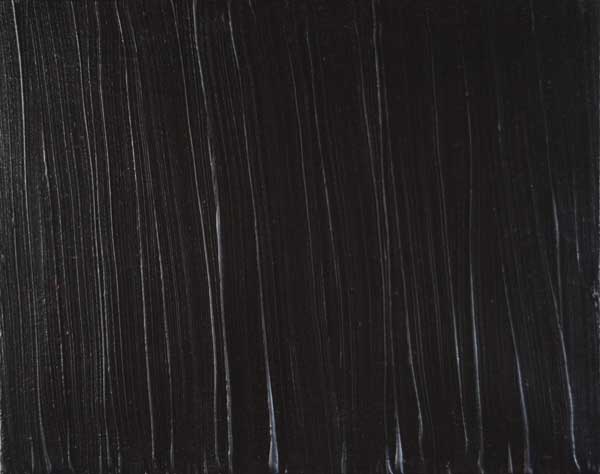
Francie Lyshak, Black Curtain, oil on canvas, 16×20, Courtesy of the artist.
Firstindigo and Lifestyle: You have an exhibition opening now at the Carter Burden Gallery in NYC, tell more about the theme of your paintings in the show?
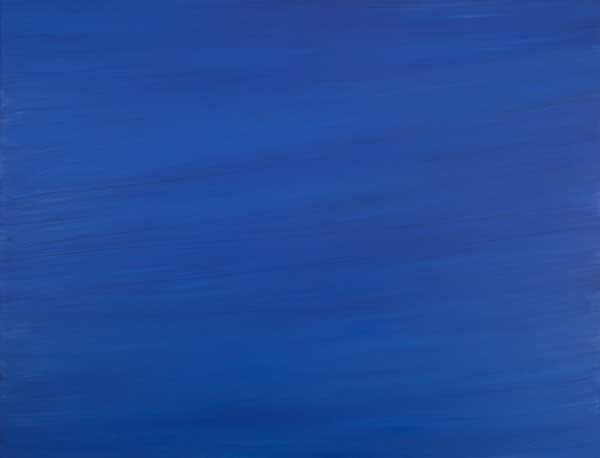
FL: These paintings focus purely on the physicality of painting, of paint, painter’s tools and the interaction of the painting surface with light. The use of a palette knife can be a violent destructive attack on a painting’s under-layer. A flowing brush mark can be evidence of the painter’s sweeping gesture. The painting then becomes a stop-action image of what was either a waltz or a wrestling match between the artist and the medium. It is painting without any intention other than leaving the physical evidence of its own dynamic birth.
Firstindigo and Lifestyle: What is really interesting is that your career spans for four decades, and there can be so many changes that fit into that time frame. Did you start with figurative or representational art?
FL: In my early work, my visual language was a figurative and a metaphorical narrative with strong feminist overtones. This work lasted for two decades in the 1970s and 80s. Animals, humans, dolls and toys populate these paintings, each one describing the psyche captured in a critical moment of time. Influenced by art therapy theory and practice, their emotional rawness challenged the viewer to contemplate disturbing aspects of life that are typically overlooked or avoided. After years of these explorations, I unearthed evidence of my own childhood sexual abuse. With the support of the late Ellen Stuart and La MaMa/La Galleria, this work resulted in a one-woman exhibition in 1993 narrating my own trauma recovery through my paintings. The series of paintings with accompanying prose was published in a book in 1999 entitled, The Secret: Art and Healing from Sexual Abuse. This exhibition provided me with a release from the narratives of the past. After that show, my work changed slowly but radically, moving towards landscape, then abstraction.
Firstindigo and Lifestyle: How did you choose painting and photography, how are they similar or different to you?
FL: I am a painter. However, I believe that no matter what medium an artist chooses, they cannot escape their artist’s sensibility. That means that we cannot help but consider the aesthetics in our environment. Also, we cannot help but be creative. It is a kind of compulsion that requires an outlet. In that vein, I took up photography. This was in part because I found it offensive that paintings are generally only affordable by the wealthy. I experimented with printing and multiples as a way to make my work more accessible to those with less means.
Firstindigo and Lifestyle: Can you say that what you do is abstract art, and if so what would this kind of abstraction be?
FL: The best way to describe my new work is ‘pre-verbal’. Before words, ideas and memories there is a mental space that is responsive to shape and texture, color and amorphous mood. That is the space that my paintings occupy. My abstract work is not expressionistic, nor is it minimal or conceptual. My newest work has something in common with action painting. Over the long haul, the trend of my work has been increasingly reductive. I seem to be constantly trying to reduce the content of my work to its simplest components. I removed the figure. I removed the narrative. I removed the symbolism. I removed the suggestion of landscape. Then I tried to suggest empty space alone (which made the work illusionist). Now I am just looking at the surface, the medium and the tools of application.
I recently saw a show that was simply lighting in an empty gallery. I understand that.
Francie Lyshak, Brushed Blue, oil on canvas, 34×44, Courtesy of the artist.
Firstindigo and Lifestyle: How do you choose your works for the exhibition, do you ‘curate’ yourself?
FL: No, my dealer is fully in control of the choice of work and the hanging. Of course, it is up to me to choose the paintings from which she makes her selection.
Firstindigo and Lifestyle: The process is of course different with each artist, do you like to add older paintings into the show, or is it mostly recent works?
FL: Mostly very recent works are shown in April exhibition. My first exhibition at Carter Burden had some pieces that were several years old but had never been displayed.
Firstindigo and Lifestyle: You are watching a lot of movies, how apparent is it that those moods or aesthetics you gain from films enter your works somehow? FL: I don’t think that the aesthetics of film influence my work, but perhaps the moods do on a subconscious level. I find great solace in the work of these great, underappreciated independent film makers. They address very important, very real aspects of being human. Hollywood spends mountains of capital selling fantasy worlds to viewers because it is a natural,human inclination to avoid and escape harsh reality. The filmmakers that I love make me look at the challenging underbelly of being human. This gives me courage and support in my effort to stay honest as a painter, to not be fooled by the illusionary rewards of commercial success, to lead my viewers to the challenging aspects of being human.
I have a fantastic list of my list of favorite movies. It is a long list and the titles are unrecognizable to most people. Almost all of the films were borrowed from the New York Public Library which has a treasure trove of great films.
Firstindigo and Lifestyle: What does a notion of ‘zen’ mean to you as an approach?
FL: I am not formally trained in Zen practice. However, I understand that Zen does not have a god head, and is focused on what westerners call mindfulness practices. My mind is constantly racing. I hunger for empty space and quietude. (Perhaps this is reflected in my urge to constantly minimize the content in my paintings.) We live in an overheated, overstimulating world (at least in NYC). I know, however, that it is not the fault of my environment that I am so mentally restless. I reach for ‘zen’ as a pathway towards a quiet mind or to attain full attention. When I paint, I am in a ‘full attention’ mode. In this sense, painting is a mindfulness practice. (Click the link to see a series of paintings that were specifically intended to be ‘meditations spaces.’ http://www.francielyshak.com/archive/New%20Monochromes/index.html)
Firstindigo and Lifestyle: What else do you do to balance with making art?
FL: Not much. I do some Yoga practice, go to the gym, take walks and, of course, watch movies. I would add that there isn’t anything much more rewarding that good conversation with other artists and intellectuals.
Firstindigo and Lifestyle: Where do your influences come from other than abstractions? Do you blend in narrative contents from today’s world and events? FL: My goodness, the political climate has a tremendous impact on the ‘climate’ of my work. There is very little joy in my work these days. On the other hand, I am finding surprising strength and power there. My work is definitely a mirror of my psychological condition. My psychological condition is a mirror of my personal and social life (which in these times encompasses the political environment). A new painting included in this April exhibition is entitled “Silence equals Extinction”. It was clearly a response to the nightmare political situation in the US.
Francie Lyshak, Knifed White, oil on canvas, 34×26, Courtesy of the artist.
Firstindigo and Lifestyle: In your photography there is a lot of nature in them; fog, mountains, trees, moon, and so on. How do you find your photographic subjects, do you just happen to be in those places in the moment?
FL: Yes, everything was done either in Michigan, where my family has a summer home, or NYC. I also did some photography when I did some traveling along the Adriatic, Ionian and Aegean Seas and along the Pacific Ocean shore. I am wild about landscapes.
On influences:
I am not influenced by art theory nearly as much as I am influenced by psychoanalytic theory, philosophy and religion. I have no belief in any religion. However, I find the search for self and meaning to be central to my practice as an artist. I am most affected by any work of art that creates a space for the viewer to engage in this search for identity or meaning. Works by Frieda Kahlo, Mark Rothko and Fred Sandback all succeed at doing this for me; although each uses a radically different method to set a stage for this to happen to the viewer.
On color:
Colors have a strong valence, a kind of personality. My latest pieces have been in various shades of black. I am choosing black because I have always feared it. Black oils cannot be controlled because they are wildly interactive with the light in the environment as it reacts to the surface of the painting. The color black, for me, has much to do with loss, change and the unknown. So colors themselves have a kind of personality and meaning and different oil colors also have a unique physicality, such as color density.
On my use of color in photography and painting:
I think of myself as a painter. I have spent forty years painting. Photography has been secondary to my work as a painter. My photography is in the early stages of development; but is created on a foundation of 40 years of evolved aesthetic sensibility and artistic practice. My photography is mostly rooted in local color or black and white. My new paintings, on the other hand, are each a deep explorations of color, the oil paint medium, the painters tools and methods of application. In other words, my practice as a painter has evolved to a point where I am exploring the very basics of the medium. It is full circle, back to the beginning.
Firstindigo and Lifestyle: Do you find inspiration in your travels to foreign places, how about those leaving an impact on your thinking and aesthetics?
FL: I just traveled to Japan. Their aesthetic and social values were a great comfort to me. The Japanese seemed so much more civilized than Americans. It was heartening to experience their aesthetic and their culture. I felt that my own values were much more supported by the Japanese culture than they are in my own culture.
Firstindigo and Lifestyle: Did you ever come up with a notion, who would be your best art audience, or collector? FL: Probably intellectuals, other painters and psychologically-minded people. It is hard to tell who is most taken by my work because people usually don’t say much. Most of us become a little inarticulate in the face of meaningful visual art. Art takes us to a non-verbal place. I admire people like you who are willing and able to give us language in the face of visual art.
Firstindigo and Lifestyle: With so much insight in the practice, we all want to know, what would you like to teach or say for younger generation artists and painters?
FL: I would like to say to them that it is worth the battle to stay true to their artistic sensibility. This is because, in the long term, losing touch with one’s core strivings (to be an artist, to be creative) has an unbearable cost. I would tell them, however, that they shouldn’t expect to be rewarded. Artmaking is essentially a radical act, because it means turning away from the influence of others and, instead, opening a channel to one’s true self. Being true to one’s core self usually means letting go of many of the rewards of social/commercial success. After all, in the short term we are nurturing ourselves rather than others. Who knows if our art will nurture others in the long term. That is in the hands of the vagaries of the art market.
Achieving commercial success in the art world is a totally different side of being an artist. It takes a combination of ambition, talent, personality, timing, social resources (such as health, social networks, time and money) to make income from making art. To have these resources is often a matter of privilege and other random social events. Artists don’t have control over most of these factors.
Francie Lyshak’s exhibition info:
April 6 – 27, 2017
Examining Movement & Gestures: Jonathan Bauch and Francie Lyshak
· Pratt Institute, Art Therapy and Creativity Development, Masters of Professional Studies, NYC, 9-76 to 5-78
· Wayne State University, Painting and Drawing, Bachelor of Fine Arts, Detroit, Michigan, 1-69 to 5-70.
· Center for Creative Studies, Fine Arts, Detroit, Michigan, 9-68 to 5-69
· University of Michigan, Humanities, Ann Arbor, Michigan, 9-66 to 5-68



 Firstindigo&Lifestyle