Tag: Smithsonian

  • Why to love Hokusai

    Why to love Hokusai

    The Japanese artist Katsushika Hokusai (1760–1849) is usually recognized for a single image—Great Wave Off the Coast of Kanagawa, which is an icon in the global art world. When we recognize the work, it is as if the unpredictability of the sea holds our attention when a mighty wave breaks against the beach. We are lucky, since The National Museum of Asian Art has had a commitment to build its Hokusai collection. The institution is now showing an exhibition Hokusai: Mad About Painting in the museum’s Freer Gallery of Art.

    In commemoration of the centennial of Charles Lang Freer’s death in 1919, the Freer Gallery presents an exploration of the prolific career of the artist Katsushika Hokusai. Freer himself recognized the richness of the artist’s works assembling the world’s largest collection of Hokusai’s paintings, sketches, and drawings.

    Like the Great Wave, many of Hokusai’s paintings convey his interest in the every-chancing ocean in motion, including its fishermen and sea creatures. The artist created thousands of works throughout his long life. He worked mainly in Edo (modern Tokyo) period with a proximity to the Pacific Ocean.

    Above on the left, we see one of the wave paintings Breaking Waves (Edo period, 1847), created by Hokusai. It is apparent how the rough curving motion really brings the sea to life. The artist was able to masterfully capture the ocean’s free spirit making it the focus of his works. On the right, another Japanese artist of Edo period, Utagawa Hiroshige (1797-1858) depicts Edo landspaces in his work consisting of six panels. A detail of his work Famous Sites of Edo, spreads in the screens in which each panel has a separate painting that is mounted to one panel of the screen. The coastline and sea are visible through these panels illustrating landscapes. Interestingly, during the life of the two artists, by the early nineteenth century, the city of Edo had grown to a metropolis with a population of more than one million.

    Hokusai, Egret on a Bridge Post
    Edo period, ca. 1801-1802
    Japan
    Ink and color on paper
    H x W (image): 85.8 × 25.5 cm (33 3/4 × 10 1/16 in)
    Gift of Charles Lang Freer
    Freer Gallery of Art

    Hokusai showed interest in nature through many of his works. One of them, Egret on a Bridge Post, shows a white egret at night with moonlight illuminating the bird’s pale form. He illustrated the bird on top of a bridge post. Egrets are still seen in Japan’s rivers looking for food.

    The works in the exhibition, including Hokusai’s humorous manga about the everyday life, activities and faces of Japan, shows the vastness and the creative mind of an artist, who thought he might achieve a true mastery in painting, if he lived to the age of 110.

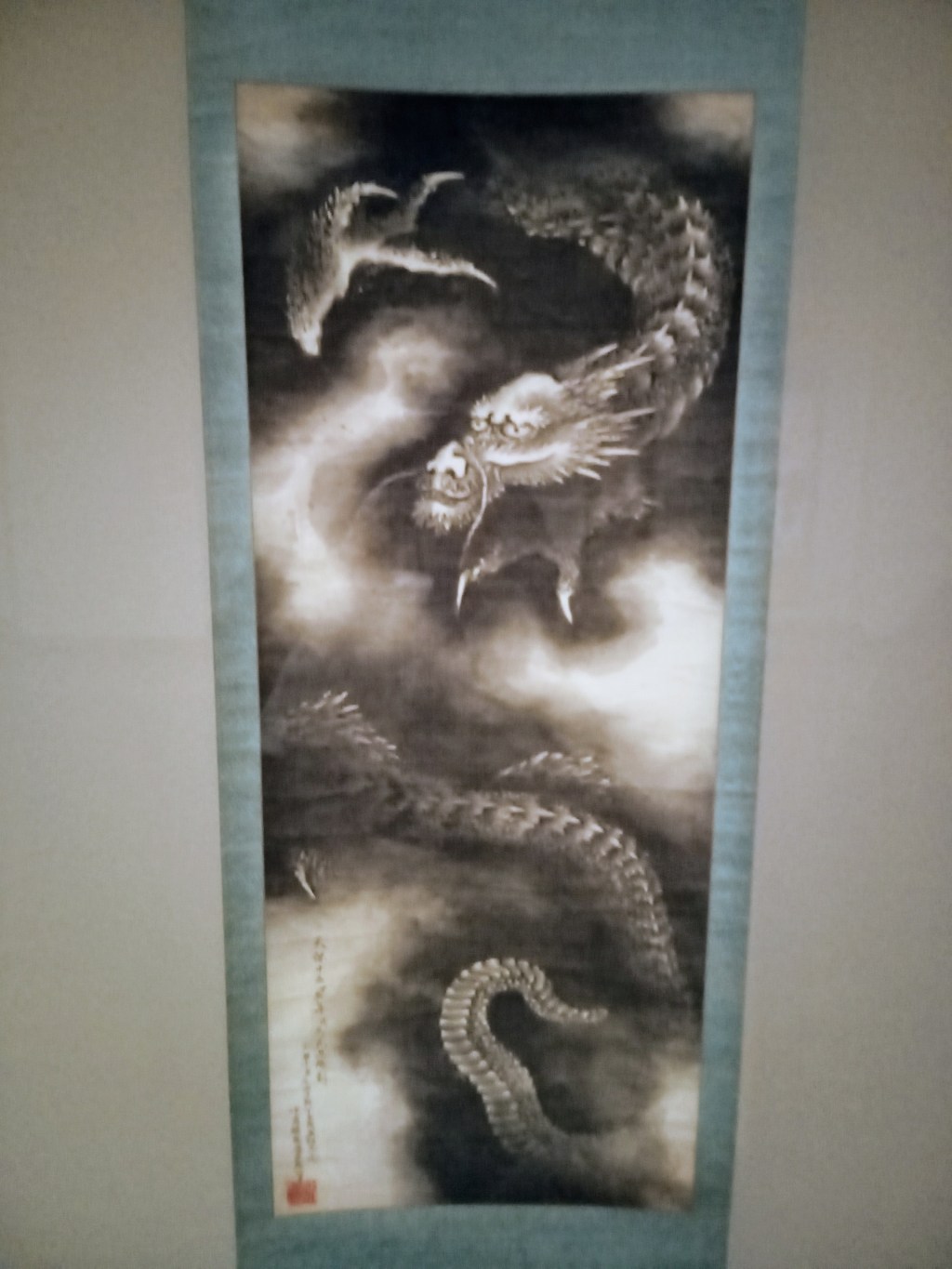
    During his eighties, Hokusai painted several mythical creatures known as dragons. The ultimate interest for him might have been in the character’s energy as the artist himself was ageing.

    One of these works, Dragon and Clouds (Edo period, 1844), was painted when he was at the age of eighty-five. The painting shows energy and vibrancy in the form of mighty mythical creature. The work is an important addition into documenting Hokusai’s life and art.

    Hokusai, Dragon and clouds
    Edo period, 1760-1849
    Japan
    Ink on paper
    H x W (image): 88.2 x 35.6 cm (34 3/4 x 14 in)
    Gift of Charles Lang Freer
    Freer Gallery of Art

    Visit and explore more about the exhibition: Hokusai: Mad About Painting

  • Asian Smithsonian: Bells, buddhas and the meditation

    Asian Smithsonian: Bells, buddhas and the meditation

    Bells, tools and meditation are all ancient. When it has been confirmed by historic research, that tools and weapons were among the earliest bronze objects in China, the bells also now belong to this bronze age era. The meditative component has eminently added value and appreciation among the Asian arts. People are looking for nurture from art, and statuesque buddhas seem nurturing, even healing with their meditative poses. Massive sculptures are surrounded with the calm that is often lacking from the demands of the everyday life. The journey inwards requires little more participation.

    Chinese bells have a special form that calls for a closer investigation. They are emblems of music, and when tried, the sound can be interestingly different from the Western terms of bell-sound. The church-bells have varying melodies, yet Chinese bells embody tones that are thousands of years old. It is believed, that the sound has not changed since they were casted. Bells still narrate of ancient technology as a soundsystem.

    Chinese bells in the Sackler Gallery.
    Chinese bells Free Gallery of Art & Arthur M. Sackler Gallery

    With the global travel, the world has shrunk, and meditation practices have become increasingly popular. We are at the moment pushed to scrutinize ourselves into increased indoor dwelling, so discovering new possibilities of meditative practices might be useful. Sound is one way to go, listening to music with new awareness, concentrating fully into music or sound may turn the focus into a particular matter. A ‘look’ inwards may be rewarding.

    Meditation is a bodily practice of a mind as operator. A word techne would also fit with its stance of the world. Techne is a philosophical term, which includes knowledge at its core. By using it in reference to bodily practice, it might as well connect to understanding your meditation approach. Learn to meditate by meditating, gain knowledge of meditation by doing it. Knowledge is coming from the act and art of doing.

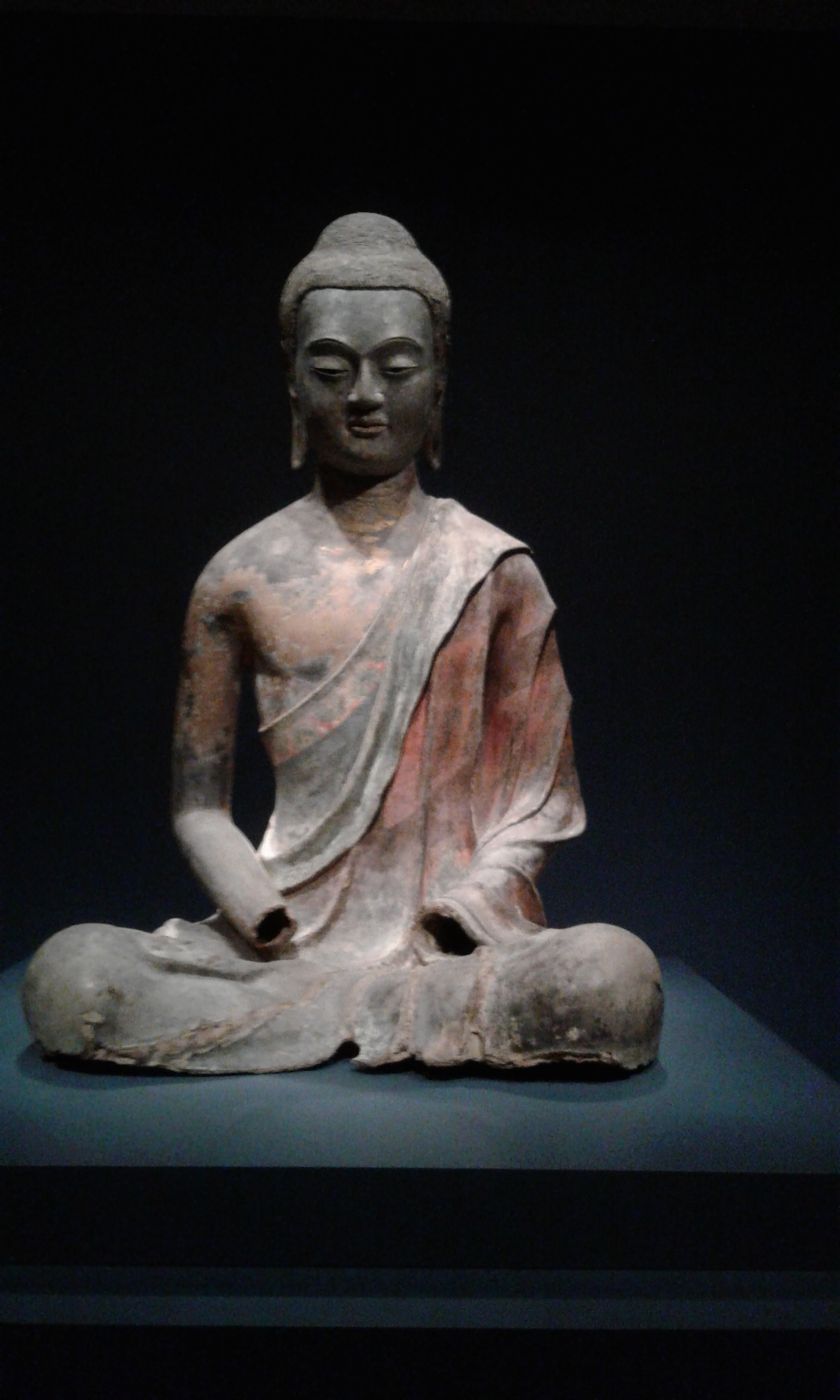
    Sitting buddhas are art works that meditate, giving out a pose with a silent approach that is almost demanding us to participate in a technology of looking inwards, of stopping our other activities, breathing with the sculpture. The art stimulates the senses into a sole pattern of sitting with a more disciplinary attitude.

    Buddha sculpture at the Sackler gallery.
    Buddha sculpture at the Free Gallery of Art & Arthur M. Sackler Gallery.


    Resound: Ancient Bells of China – exhibition on view at the Free Gallery of Art & Arthur M. Sackler Gallery in Washington DC.  

  • Bill Viola: The Moving Portrait

    Bill Viola: The Moving Portrait

    Bill Viola: The Moving Portrait is a retrospective exhibition happening at the National Portrait Gallery in Washington DC. The exhibition, on view until until May 2017, is celebrating a career of a pioneering video artist Bill Viola. The artist is recognized for his groundbreaking use of video technologies; and his works are known as poetic and performative, exploring the spiritual and perceptual side of human experience. Installed in multiple darker rooms, the show takes a viewer into a few episodes with the moving portraits. They are diverse, as one can imagine, and with each work the viewer’s experience becomes more fluid than staged or patterned. The works follow more circular way of reasoning than linear logic in storytelling.

    The portrait of Bill Viola himself is titled Self Portrait, Submerged, 2013 (color high-definition video on LED display; stereo sound; 10:18 minutes). This portrait connects to an idea of mortality, the artist himself is appearing underwater. He looks as if being still with his eyes closed, and he does not seemingly breath. However, the movement becomes present with the unfolding effect of the water moving and altering the stage so to speak. For Viola, self-portrait is an evergoing reflective way to figure oneself out. Self-portrait is always a self-representation. As an artistic discovery it would be more like looking beyond a merely simple representation of oneself; attaching a subjective and changing viewpoint into a larger psychological canvas. We live in an era of selfies, so what more is there to discover, beyond a representation? Where does the normative cultural portrait end, and the new interpretation start?

    In many of his works, Bill Viola summons the characters, young and old, male and female. These portraits are submerged underwater in a similar manner as his Self Portrait Submerged. A group of seven works are titled The Dreamers (2013). The portraits appear in a dark room as an installation of plasma displays mounted on the wall. They radiate very subtle visuality. There is water underneath of each character as their personal stage. It is the essence of the water that animates the otherwise still portraits to become sifting moments in space. The plasma videos are accompanied with a sound of a running water, which appears as a surrounding pulse for the portraits. These portraits take form as immersing works. In a way they are virtual, or the time is stopped as if there was an episode happening in another realm or in outer space. Each personality emerges as colors, when their fabric and hair covered bodies measure the dimensionality of the water. They contour and camouflouge barely within its surface.

    A very different video setting is formed around a work titled The Reflecting Pool originating from 1977-79. In the video, a man is emerging from the forest standing in front of the pool. As he is leaping up in a sudden movement, jumping into the water, the image freezes. The person remains still in the center of the image; he is frozen whilst the water in the pool is slightly moving and changing. Another take on a theme of time passing. This time, the person is also immersed into the surroundings even more, and perhaps becoming one with the green lush with all his senses.

    In a massive one screen video installation, a group of nineteen men and women from various ethnic backgrounds are struck by a great amount of water coming from a high pressure hose. The video called The Raft (May 2004), expresses different actions and reactions from the people to a seemingly catastrophic situation. Some are struggling physically showing hardship of survival with their bodies, the others remain more upright; yet all characters are touched and moved by the sudden force. The scene of the people reacting with their personal response, with their bodies moving, resisting, twisting, and falling, is effective. In the end, the water stops and leaves people with altered positions. The narrative brings into mind a natural force, which takes over peoples’ lives and controls their surroundings. An occurrence, which people cannot control. The video story opens a new stance to altered ways of being flooded, or being carried away with life occurrences.


    Bill Viola: The Moving Portrait exhibition is a well curated retrospective to the artist’s forty year career. It includes several works investigating life cycles, and the process of aging. It touches a question of gender, and the metaphysical place for people in the world. His video works speak with the language and gesture of the body and face. They confront us with emotion and presence. Portraits are not always beautiful, or the characters are not always beautiful in a sense of how we measure our bodily image. But they echo beauty with their truthfulness and soul, which goes further than a normative cultural presentation.

    Bill Viola started his discovery with a Portapak camera in the early 1970s. Since that time, the video has been his medium of expression.

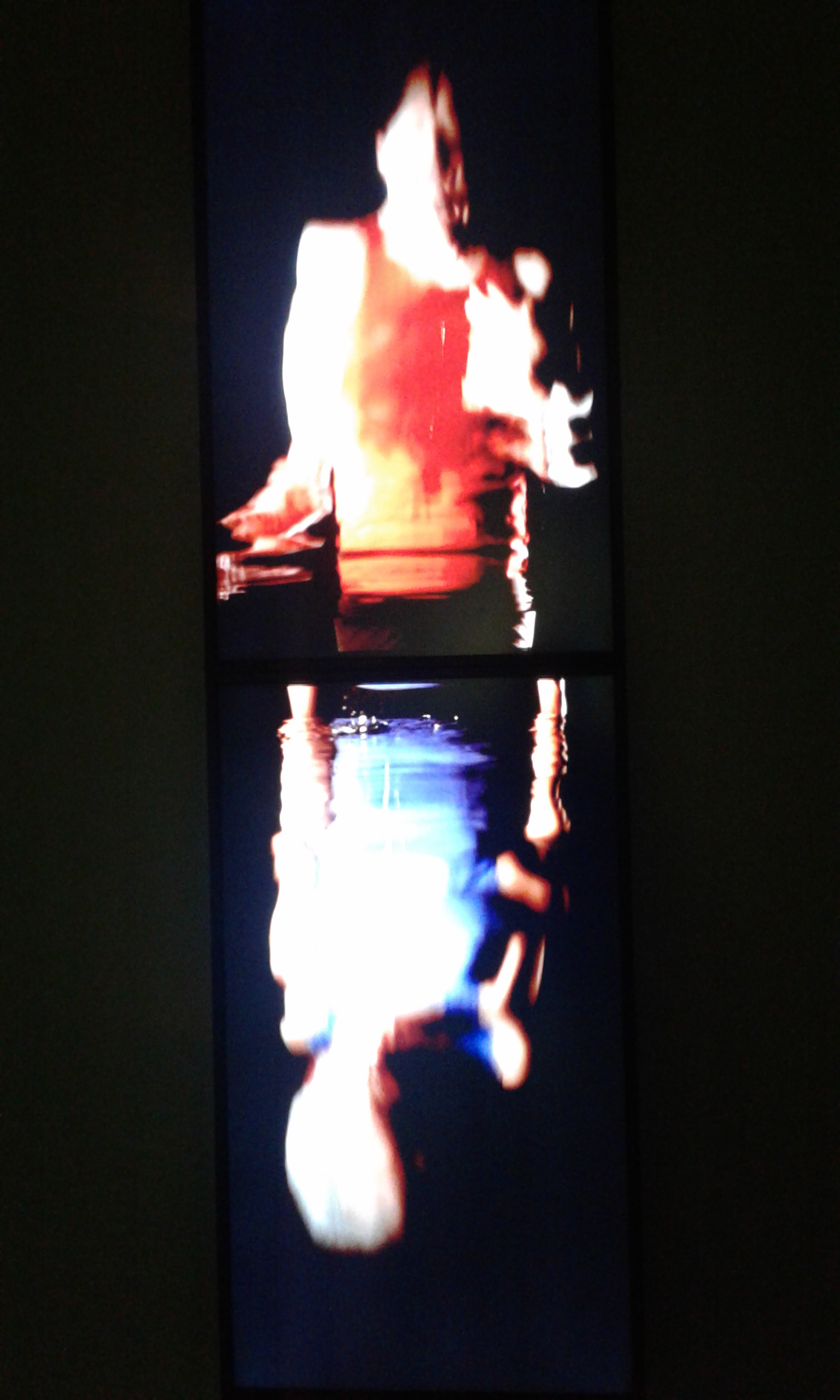
    Bill Viola, Surrender, 2001. Color video diptych on two plasma displays mounted vertically on wall; 18:00 minutes. Performers: John Fleck, Weba Garretson.
    Bill Viola, Surrender, 2001. Color video diptych on two plasma displays mounted vertically on wall; 18:00 minutes. Performers: John Fleck, Weba Garretson.

    ***

    More info about Bill Viola: The Moving Portrait exhibition at the National Portrait Gallery 

    More info about the artist on James Cohan Gallery 

    Artist website: http://www.billviola.com/