Bells, tools and meditation are all ancient. When it has been confirmed by historic research, that tools and weapons were among the earliest bronze objects in China, the bells also now belong to this bronze age era. The meditative component has eminently added value and appreciation among the Asian arts. People are looking for nurture from art, and statuesque buddhas seem nurturing, even healing with their meditative poses. Massive sculptures are surrounded with the calm that is often lacking from the demands of the everyday life. The journey inwards requires little more participation.
Chinese bells have a special form that calls for a closer investigation. They are emblems of music, and when tried, the sound can be interestingly different from the Western terms of bell-sound. The church-bells have varying melodies, yet Chinese bells embody tones that are thousands of years old. It is believed, that the sound has not changed since they were casted. Bells still narrate of ancient technology as a soundsystem.
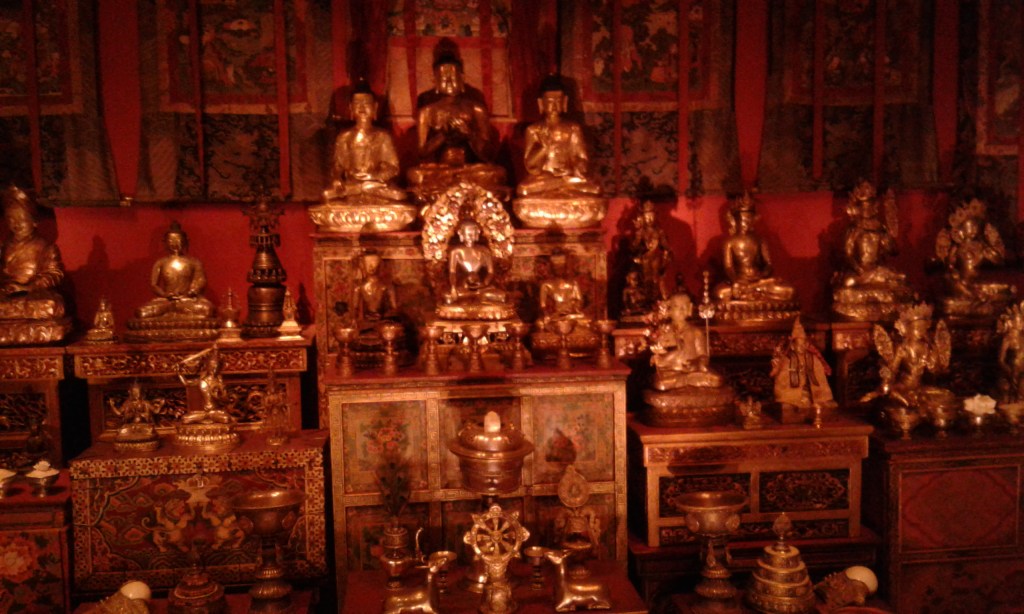
Chinese bells Free Gallery of Art & Arthur M. Sackler Gallery
With the global travel, the world has shrunk, and meditation practices have become increasingly popular. We are at the moment pushed to scrutinize ourselves into increased indoor dwelling, so discovering new possibilities of meditative practices might be useful. Sound is one way to go, listening to music with new awareness, concentrating fully into music or sound may turn the focus into a particular matter. A ‘look’ inwards may be rewarding.
Meditation is a bodily practice of a mind as operator. A word techne would also fit with its stance of the world. Techne is a philosophical term, which includes knowledge at its core. By using it in reference to bodily practice, it might as well connect to understanding your meditation approach. Learn to meditate by meditating, gain knowledge of meditation by doing it. Knowledge is coming from the act and art of doing.
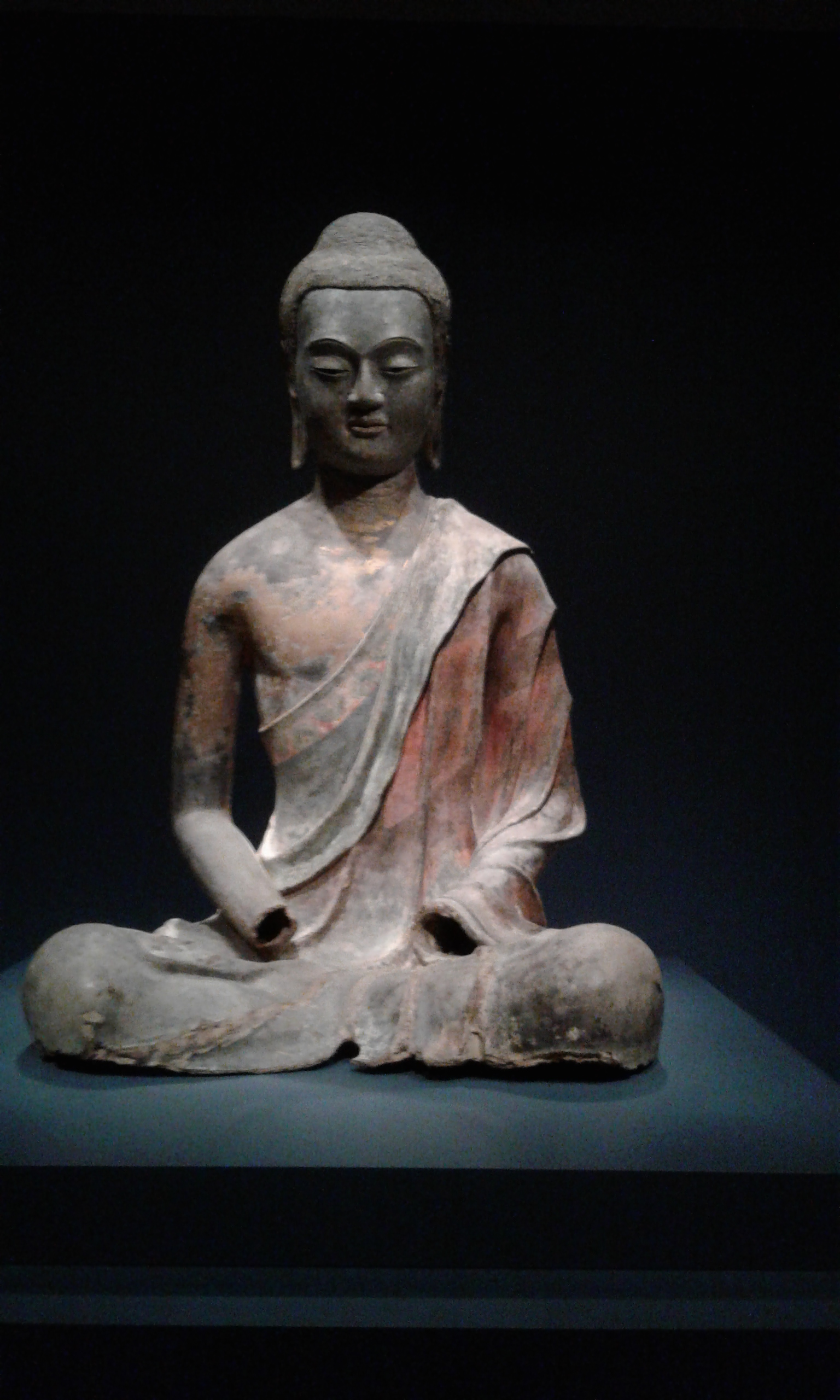
Sitting buddhas are art works that meditate, giving out a pose with a silent approach that is almost demanding us to participate in a technology of looking inwards, of stopping our other activities, breathing with the sculpture. The art stimulates the senses into a sole pattern of sitting with a more disciplinary attitude.
Buddha sculpture at the Free Gallery of Art & Arthur M. Sackler Gallery.
Anne Raudaskoski is a Finnish enterpreneur who wishes to create new connection to nature. Her approach can change the game of sustainability. With a background in dance, she has faith on the power of the arts:
“Arts provide a holistic approach to existence, and this is what we need to change the current linear system. Human beings are part of the nature; nature isn’t something that is “out there” to be exploited, but rather, we need to re-establish our connection with the nature to realise that we can create sustainable growth and well-being with far better rules than what we presently have”. (Anne Raudaskoski)
Firstindigo&Lifestyle: When and how did you start Ethica consulting company?
Anne Raudaskoski: I started Ethica in 2013 with my business partner Paula Fontell. We actually didn’t know each other at the time, but we both had been talking to our mutual friend of having a dream to set up a company focused on sustainability and the circular economy. This friend of ours suggested we should meet and share our ideas. We had our first meeting over lunch and we realised we shared the same vision. Three months later Ethica was formally established.
Firstindigo&Lifestyle: How did you get interested in the circular economy?
AR: My approach to CSR (corporate social responsibility) and sustainability has always been very business oriented. It means that there has to be a solid business case for sustainability and it should be embedded in strategy and R&D in such a way that sustainability works as a spring-board for the strategy instead of being an add-on or philanthropy. I wrote about the circular economy (CE) in early 2012 on my blog site after reading some articles on the Ellen McArthur Foundation (the global driver for the CE) site. I felt that some of the questions and pain points that CSR could not resolve – especially the intersection around environmental, strategic and economic issues – were inherently part of the circular economy. So when we started Ethica, it was very clear to us that the circular economy would be part of our service portfolio.
Firstindigo&Lifestyle: Is it possible to define, what circular economy actually changes?
AR: Circular economy is an economic model, so it affects all sectors and organisations in some way. I always say that the biggest hurdle in transition from a linear to a circular economy is our current mindset. All our processes, decision-making, governance and actions are based on linear thinking. In a nutshell, this means that we keep overusing natural resources, we accept the concept of waste as de facto, design processes are not based on biological and technical cycles and we haven’t figured out yet how to do business within the planetary boundaries. All this is changing as part of the transition towards the circular economy.
Firstindigo&Lifestyle: What are the basic principles that define the circular economy?
AR: The below list of six principles offers a good starting point to explore CE more in detail.
1 Circular economy is a resource wise economic model that is restorative and regenerative by nature. It operates within the planetary boundaries.
2. Materials cycle endlessly in technical and biological loops in society. Materials are safe & non-toxic.
3. The value of products, components and materials is maintained and increased through refinement.
4. All energy is renewable and is used efficiently.
5. Solutions are systemic and based on designing life cycles, ecosystems and multiple purposes.
6. Equal distribution of resources and well-being is in the heart of the circular economy.
Firstindigo&Lifestyle: How would you describe the ‘ethical’ core of Ethica?
AR: We want to create a circular future. To us this definition also entails equality, social well-being and in fact, a more just and transparent economic model than what we currently have as the result of the linear economy.
Firstindigo&Lifestyle: Finland seems to be a forerunner for ethical solutions when it comes to consumption, and the country is also involved in introducing new clean practices. What aspects in Finnish culture support these kind of thinking?
Indeed, there are quite a few aspects supporting this and I’d say it’s the unique combination of culture, history and welfare state: high number of clean tech innovations; excellent education system that educates children and young people about sustainability topics; frugal manners that our grandparents and parents had to adopt during the war, which then were passed on to younger generations; good recycling infrastructure with incentives…and of course ambitious policies and action plans in place. For example, circular and bio economy are one of the five flagship programmes of the current government. Finland was also the first country in the world to publish a national circular economy roadmap in 2016.
Firstindigo&Lifestyle: What in your mind defines good consumption?
AR: Understanding your own impact and power as a consumer. Exploring your own values; what kind of world I want to be building, do I want to be part of the solution or part of the problem? Questioning your own consumption habits: is there something that I could do and choose differently? Being your own leader when it comes to adopting new, sustainable solutions.
Firstindigo&Lifestyle: Tell more about your Relooping Fashion project?
AR:Relooping Fashion was about creating circular fashion. We piloted a circular ecosystem consisting of seven business partners ranging from waste management company to fashion retailer and packaging service. So the goal was to build, test and learn how a closed loop fashion ecosystem could work. Another important goal was to test VTT’s (Technical Research Centre of Finland) new technology for cotton dissolution that replaces the use of virgin cotton. Ethica’s role in the project was to model the business ecosystem as well as research the consumer interface. i.e. how to create demand for circular clothing.
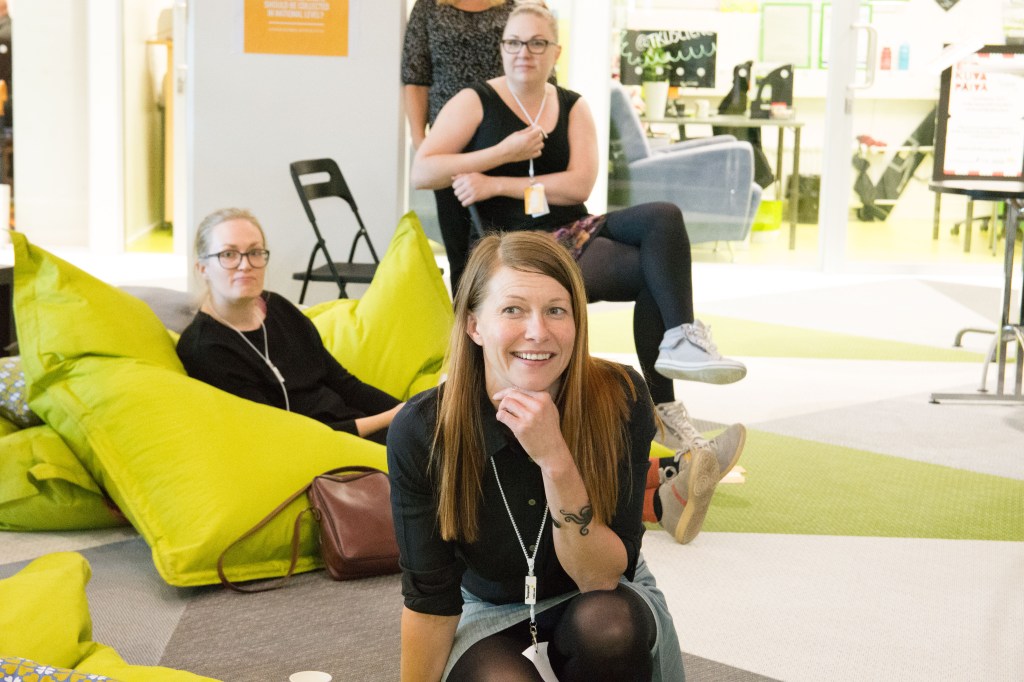
Anne Raudaskoski, photo: Janne Häkkinen, JFramesPhotography.
Firstindigo&Lifestyle: Where do you find your daily inspiration from?
AR: No matter how cliché it may sound, I simply and truly enjoy my work, so the work itself coupled with the opportunity learn new things is my source of inspiration. Every project is different, we have great clients and collaboration partners to work with and of course our own team is brilliant.
Firstindigo&Lifestyle: What can the world learn from Finnish innovation in clean practices?
AR: Great education and innovation support system are essential enablers. I also think that the Finnish way of living and thinking inherently has a fairly good level of social and environmental responsibility, and when these aspects are combined with innovation, you get the solutions that the world needs.
Firstindigo&Lifestyle: How do you like to influence and motivate people in their everyday life to incorporate more sustainable solutions and choices?
AR: There are a number of different players who all have a role to play. Of course we need businesses to develop solutions that are not only sustainable, but they’re also the best solutions available. Legislation can speed up the development and help mainstreaming new solutions. Education and the media also play a hugely important role in making sustainable choices the “new normal”.
Firstindigo&Lifestyle: Do you think that your background as a dancer helped you in your career path?
AR: It did in many ways. Working as a freelance dancer requires endless curiosity, self-discipline, perseverance and ambitious attitude. You’re always seeking new opportunities and you need to welcome constant change. You need to be a good team player, but at the same time you’re 100% in charge of your own development. There are hardly any permanent vacancies available, so you have to build your own career and make sure you are sufficiently networked just to be even considered to be one of the many candidates. Basically, you work as an entrepreneur without the formal status of entrepreneur.
Also my dance teacher background has been an asset when running workshops and giving presentations.
Firstindigo&Lifestyle: In what ways can arts support circular economy?
Arts can create connections and mental horizons that escape the typical business environment. It can bridge rational and emotional in a way that enables eureka moment, which is a prerequisite for willingness to change the status quo.
Firstindigo&Lifestyle: How many countries have you visited to lecture and share about your business?
AR: A few so far: China, the Netherlands, Estonia and Reunion Island (France). We also exhibited in Austin (US) at the EcoExhibition a couple of years ago. Next month I’m going to Sweden.
Firstindigo&Lifestyle: Is it easy to name clients that are best for your brand?
AR: The ones who want to work ambitiously, are truly interested in raising the bar and finding new opportunities through the circular economy thinking, no matter the size or sector of the organisation. From the circular economy perspective, we are still at the dawn of the new era and endless opportunities that this new approach can provide us with.
Firstindigo&Lifestyle: Is the questions of climate change significant and embedded in your models?
AR: Absolutely. To start with, all energy should be renewable, this is one of the basic tenets of the circular economy. Decoupling growth from the use of virgin raw materials and resources is another key principle. In short, it means doing more with less and designing our products, systems and societies in a circular way so that emissions can be decreased significantly.
Featured image credit: textile hackathon, Sara Malve-Ahlroth.
Ernest Hemingway once said, “In every port in the world, at least two Estonians can be found”. This is also true about New York, where more than a few community members share their Estonian House, New Yorgi Eesti Maja. The New York Estonian Educational Society was founded in 1929. As a great coincidence, and as a brilliant and thoughtful part of the Performa 17 biennial, which took place from November 1 to 19, Estonian artist Flo Kasearu created a nostalgic ode to this members’ club house. Her site-specific performance tour guided groups through different rooms of the house. Her artist-led tour highlighted the very house’s past, changing its authentic traditional feeling into an updated stage, in which the local members themselves took part in the performing. All staged and directed by Flo Kasearu.
Kasearu runs also an artmuseum in her native Estonia. In Tallinn, visitors can book special guided tours in the Flo Kasearu House Museum. The historic wooden house belonged to the artist’s family from the time of its construction.
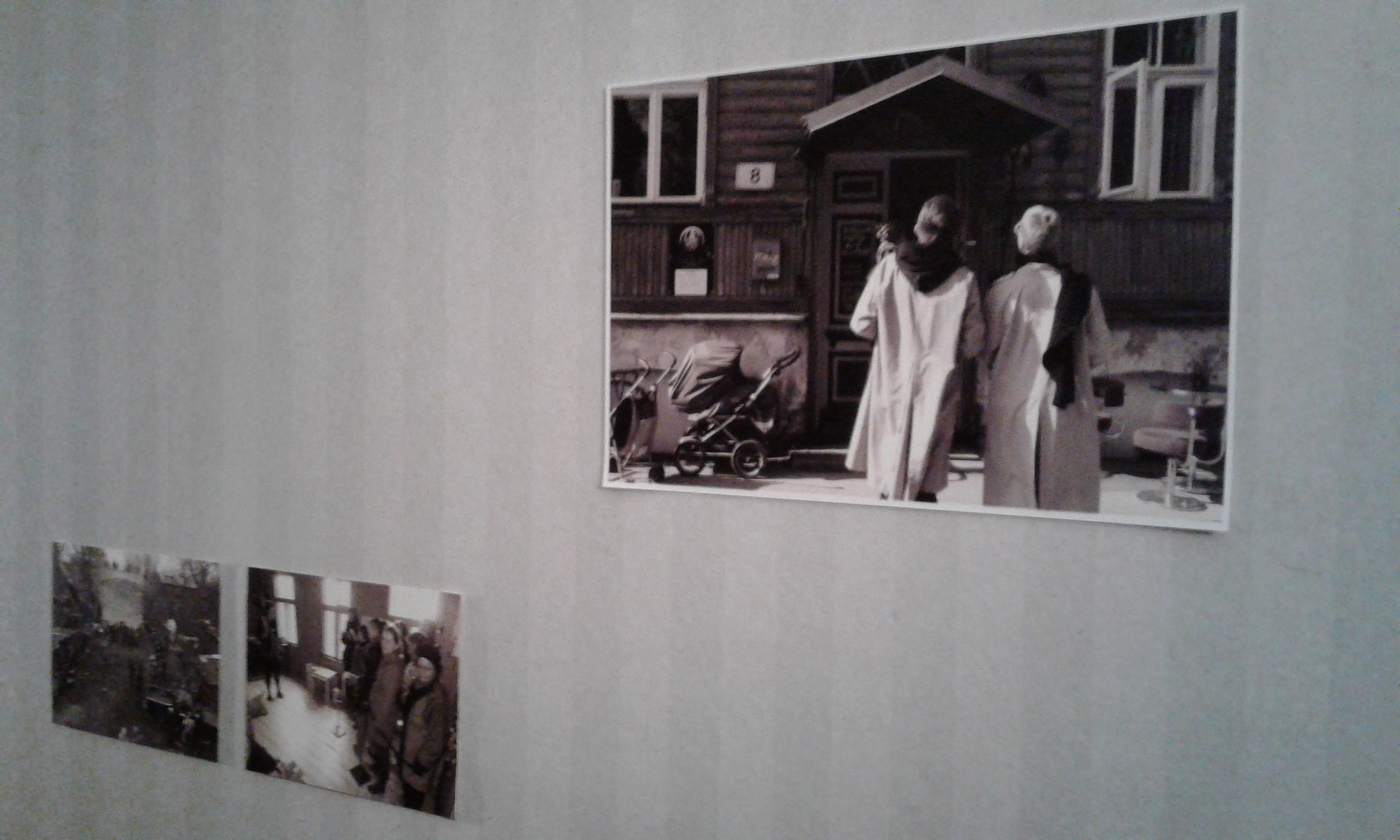
Flo Kasearu’s House in Tallinn in the family history pictures as shown in the New York Estonian House performance, Performa 17.
Firstindigo&Lifestyle: Your great great-grandmother was building the house in which you live now in Tallinn. How did that heritage inspire you to pick up the idea of bringing performative component of your family house to New York Estonian House?
Flo Kasearu: Both of my great great grandparents built the house. (I just have a photo of my great grandmother, so I mentioned her in the tour).
While living there since 2009, and getting involved with so many domesticity issues and problems of living in an over 100-year-old house, many ideas have grown out of the problems. I like to solve my problems through artistic practice, turning them into objective artworks. So I established a Flo Kasearu House Museum in the house, which is open by appointment only. I do guided tours to visitors through the house and its garden. Otherwise it would be difficult to find artworks from the middle of my everyday things.
The house tour is a sight-specific art project, and as such it’s difficult to transport it elsewhere. I can partly exhibit the tour, or works from it somewhere else.
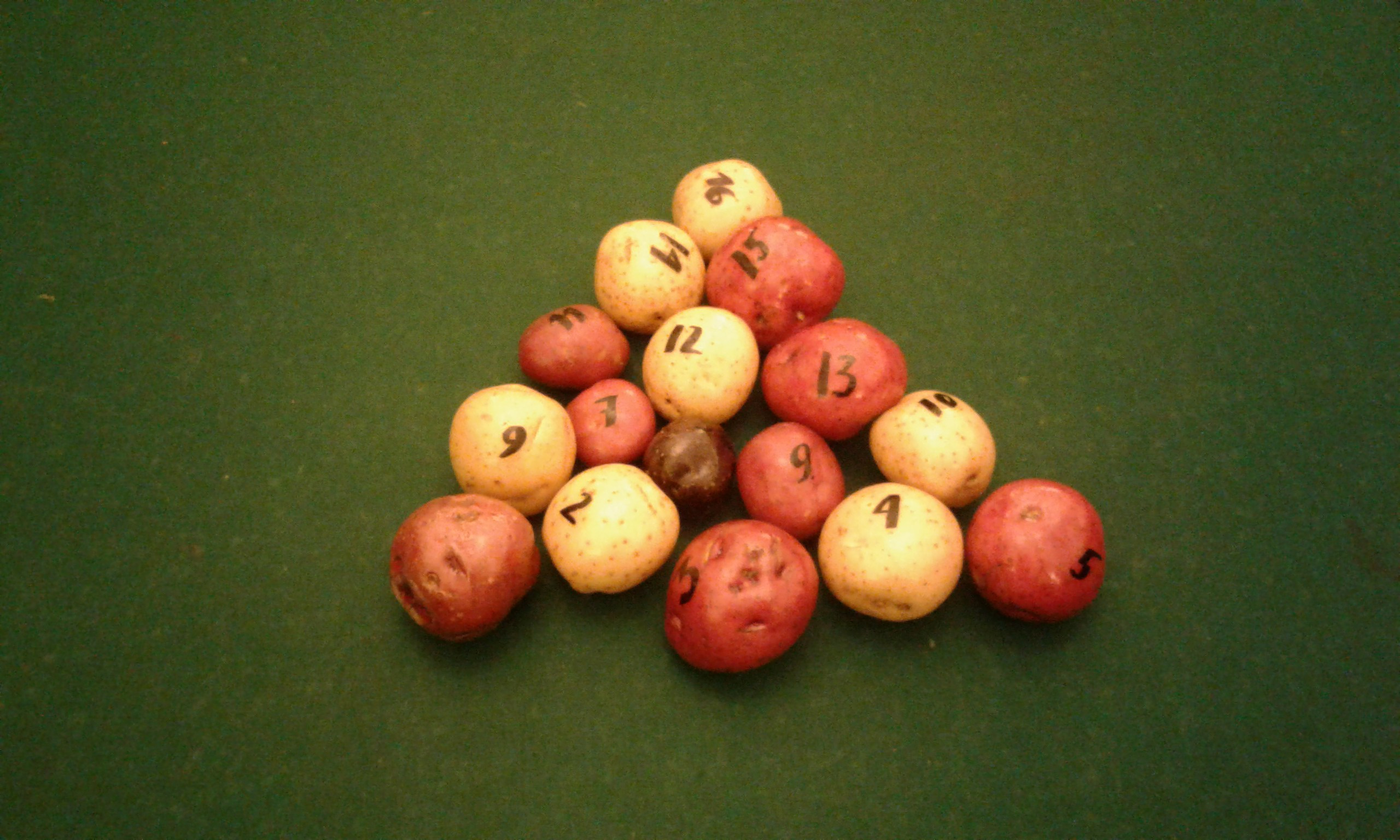
Flo Kasearu, Installation view at the Estonian House, staged in the social room ‘potatoes as billiards’, Performa 17.
Firstindigo&Lifestyle: How long ago was it when your family built the house, and how did Tallinn preserve its old buildings during the times of the Soviet Union?
FK: The house was built in 1911 and my museum and the tours started in 2013.
During the Soviet era, most of the private property was nationalised and belonged to the state. After 1991, 20 year-long restitution started taking place, during which the property was given back to successors of original lawful owners. Houses that belonged to the city were taken care by the renters. City of Tallinn, for example, did not put any money into renovating them. During the restitution process houses were in a legal loophole in terms of their ownership, and thus were not dealt with by the renters, as they thought that any original lawful owners could come back and take the houses over.
Performer doing kissing sound experiments at the Flo Kasearu tour in the New York Estonian House.
Firstindigo&Lifestyle: How did you end up doing a similar kind of tour in New York at the Estonia house as part of Performa 17?
FK: Just the method of being a tour guide is the same anywhere, and talking about the history of my museum house is also the same. But otherwise it is a very different project.
‘The Members Only tour’ (Performa 2017 project), is a sight-specific work for New York Estonian House and its community. As I am not a big performer, I did not want to perform it on stage. So doing the guided tour seemed a logical method. The work also included the community members participating in the performance. Guiding people to go through the house, and then becoming like a tour guide in a museum which New York Estonian House is in a way. Everything in the house looks so authentic to its original times and everything is based on old traditions and rituals.
Firstindigo&Lifestyle:Do you feel that NYC local community members joined your project easily? From an audience member viewpoint everything seemed going smoothly and appeared well rehearsed.
FK: I took the time to talk with them, listen their stories, so then it was not too difficult to convince them to join. I got recommendations from one member to talk to another member, and then it developed on until I had enough members to invite. I had two ladies cancelling in a last-minute, for example an older lady’s husband got so sick that she had to take care of him and she could not join in the end. But luckily I had also backup members in mind.
Firstindigo&Lifestyle: You’re a multidisciplinary artist in the true sense. Did performance enter into your working methodology from the very start of your practice?
FK: I started doing video-performances while I was an exchange student in UDK, Berlin. I was in Rebecca Horn studio, a performance and installation artist, and she told me that there is no point for me to paint for her, as she doesn’t know much to comment on painting. I started doing video-performances, relating myself and my Eastern European identity with this new city and new space. So from that time I have been doing performances once in a while.
Flo Kasearu, drawing, 2014. Estonian House staircase presented drawings of the artist. Her fears of what could possibly happen to the house.
Firstindigo&Lifestyle: In New York City, the visual components in ‘The Members Only’ tour were really stretching the context of the Estonian House in a unique way. How did the imagination for the ‘sets’ evolve?
FK: They are a combination of ideas that evolve from speaking with people and wanting to bring them and their stories to this very abstract and minimal level. And mixing them with some of my older haunting ideas. It is very sight-specific. And I wanted to bring also humour and irony level in, as I felt this is really lacking in this house.
Firstindigo&Lifestyle: Now thinking also how the music room was evolving, with the grand piano in it. In your tour, you mentioned that behind the doors there is a choir practice going on, but the scene was so surprising?
FK: My point was not to repeat the same things that are happening in the house otherwise regularly. I went to see the choir rehearsal happening there, and I noticed the choir teacher who is such a strong character putting also chairs. So I wanted to highlight the choir teacher and show her alone. I have had this kissing-ticking sound long time haunting in my head and I thought to display this in the room as it is kind of abstraction from the emotions that I felt in the choir rehearsal.
For example, in the choir singing room, instead of singing patriotic songs, the notes are made of this kissing-ticking, which has similar emotion and a character being nostalgic, but abstracted. And then the humor comes in, with over-reacting with this kissing note, and this way it’s also more open to interpretation.
Flo Kasearu, The choir room transformed into an installation with kissing-ticking sounds at the Estonian House, Performa 17.
Firstindigo&Lifestyle: Going back to Estonia. How would you describe the Estonian contemporary art scene today?
FK: Its tiny but rather interesting. Some years ago art used to be dealing more with the social and political problems, now it is much more in its comfort zone. Although the fees in Estonian art are still quite minimal. The younger generation is more similar to Western formalistic approach, seems to me.






 Firstindigo&Lifestyle