Category: art education&management

  • Interview: Eric Decastro, a French painter

    Interview: Eric Decastro, a French painter

    French artist Eric Decastro is known for his large-sized paintings that he constructs using the dripping technique. He is focused on creating a balance of color and light by applying thick impasto into canvas. Since 2008, Decastro has been running an art space Kunstraum Dreieich | Artspace Frankfurt in Germany that promotes artists with the motto of welcoming them back. The artist himself has a solo exhibition A Whiter Shade of Pale, Level 2 in New York City at The Bronx Art Spaceuntil April 30. Decastro is also showing as part of the DOPPELGÄNGER -exhibition, which is currently at Torrance Art Museum in California, and runs until May 28. The group show is a dialogue between German and US artists, and is curated by Dr. Julia-Constance Dissel and Sandra Mann from Germany together with Los Angeles-based curators Ichiro Irie and Max Presneill. The exhibition explores similarities of practices within globally expansive and hyper-connected art production.

    In the solo exhibition at the Bronx Art Space, the visitor encounters a poetic cosmos, ‘which is intentionally designed to allow the illusion of landscapes or outer spaces.’ The theme of the Whiter Shade of Pale, Level 2 -exhibition is to explore issues of fugacity.
    Firstindigo&Lifestyle: How did you decide to become a painter? 

    EricD: I already knew as a child that I wanted to be an artist. When I was 5 years old I was able to paint in my mothers atelier. It was something I was destined to do and I finally fulfilled my dream.

    So what did you learn from your mother, who is the painter Mirei de Castro? How about your other influencers?

    EricD: I learned the basics from my mother. Painters like Richard Poussette Dart, Lee Krasner but also Cecily BrownFabienne Verdier, Paul Rebeyrolle, Gerhard Richter and Sigmar Polke, have all also influenced me.

    There is installation and performance development mixed with your paintings. In one installation you used, or it looks like, fake grass in the gallery as part of the show?  

    EricD: The installation Prevenue d’avance (Warned in advance) from the performance artist Mike Hentz (USA) and myself at a Kunstverein near Heidelberg 2012  has been furthering me a lot. Through Mike I was able to get a perspective for what one can call art. The lawn was actually real and has been tended and watered for a week in Kunstraum-Dreieich. After the event, it was fully removed. Then, the over dimensional “Dejeuner sur l’herbe” was a parody of the famous works of Edouard Manet.

    prevenudavance
    Eric Decastro, Dejeuner sur l’herbe, installation view.

    You have also painted tsunami? 

    EricD: After the Fukushima Tsunami, I did a complete series of works that looked like aerial shots of Tsunamis.

    Some of the dripping technique paintings come out with natural confrontations, what do you see yourself in the works, are there reoccurring themes that come out?

    EricD: One topic has been on my heart since 2008. My near death experiences have been both positive and negative for me, and I’ve been trying to depict this experience on canvases through a dripping technique in a meditative state. That’s how those paintings mostly have been created.

    A really interesting one is the point when you washed some of the acrylic painting out of the canvas, and went on the real action forward method of making art. Tell about the work, in which the canvas and you are hanging from the tree?

    EricD: This artwork was actually not created in the woods. I was walking with my dogs and saw this tree who looked like it could be a perfect frame for a canvas. I called a good friend of mine, a renowned Art-photographer Sandra Mann. We decided to do a photoshoot with one of my green paintings and put it in the natural frame of the tree.

    How does the performance aspect work with the painting, are they part of the same discipline for you?

    EricD: Of course the performance on a canvas in a natural state is my art. The work is being created, the performance oftentimes is the beginning of an idea that develops through painting.

    For example, in “suffocating performance” the artist wrapped cellophane around his head to represent a type of suffocation. He was filmed and was also supervised (Don’t try at home). Afterwards I painted his performance “Suffocating Performance” for the exhibition “CARNAL DESIRE” in Museum Villa Rot. The other artists were Wim Delevoye, Hermann Nitsch,  and Fischli and Weiss. It’s a hommage to a boy from Kosovo who was suffocated and skewed and grilled all while his father was watching. I tried to depict the cruelty of this war.
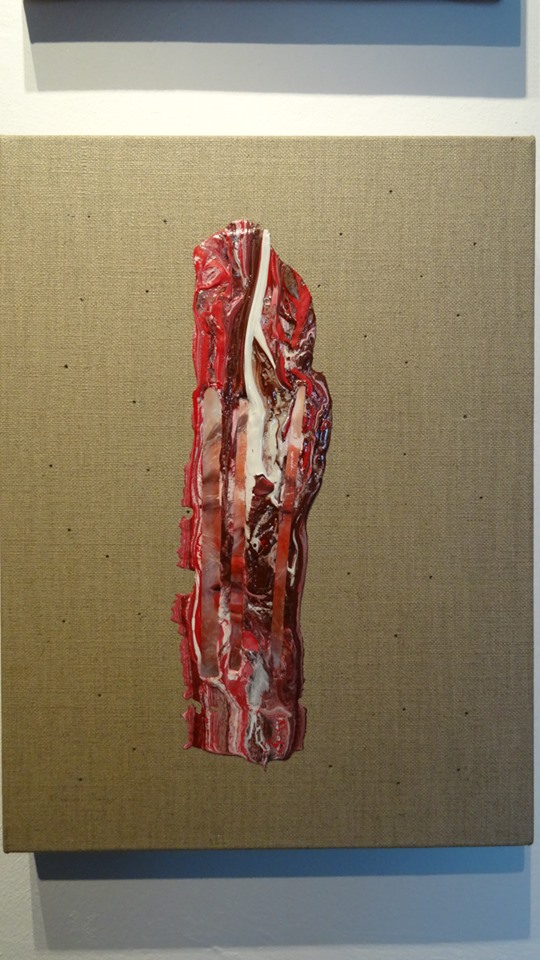
    suffocate
    Eric Decastro, Suffocating Performance, Acrylic on canvas.

    Then, few questions about identity, how do you criss-cross between different countries, locations, and even continents? 

    EricD: I’ve been traveling my whole life. I really enjoy it and have been able to visit over 110 countries in this world. I’m getting my inspiration and positive energy from exceptional places. In the next time I’ll be traveling to Tibet, Nepal, Buthan and North India.

    You have recently been exhibiting in Peru, and one of your galleries is in France, how are these art cultures different from each other?

    My gallerist Mathias Bloch from Gallery Younique is French and my last exhibition was in “Alliance Française de Lima” so it was a home match for me as a French man myself. My abstract art is established in South America. A subsidiary of Coca-Cola (Inca-Cola) has recently bought one of my works.

    You must feel that you are dealing with a variety of roles, a gallerist being one, and then a painter, is there a difference that is significant?

    EricD: I’m not a traditional gallerist. I don’t participate in the art fairs. Kunstraum Dreieich  is an Artspace with the motto “Rendes-Vous des Artistes.” It’s supposed to be an opportunity for artists to be displayed in the circles of art collectors that I have tended. This concept works well in Europe and especially in a city like Frankfurt the art will sell really quickly.

    Art world is a phenomenon for its own sake yet many artists are involved in societal practice, mending the world so to speak. What do you wish to say about that? 

    EricD: Jonathan Meese said at Art-Basel in Miami in 2012 „Art is the new currency.“ He’s right, art is seen more like an investment nowadays. Never have people previously in history spent so much money on art as it is done today. Independently from whatever the artist wanted to reach with his art, whether a political message, improving the world, to amuse someone or as a wakeup call, art is and will be a good that can be traded in stock. Most buyers, buy art because they have a mindset to leverage the art.


    unnamed
    Eric Decastro uses dripping technique to create acrylic color patterns on canvas

    As April is the Earth Month, could you say something about, how does art and preserving our planet correlate, or meet thematically?

    EricD: To preserve the planet and to make it better for our children is more vital than to collect art and display it in museums. What kind of benefit comes from a world that has been destroyed when museums are full of artworks, and there are no humans to enjoy the art, because then all of humankind will be too busy to focus on survival than to look at art. Politics don’t react to the signs of mother earth, the glaciers have been melting, global warming is unstoppable, and still there is no change of mind or thinking. One should replace the democracy through Geniocracy.

    Tell a little bit about the project in Nepal, how long has it been in progress, and how did it start?

    EricD: My wife is buddhist, and through her Master Lopen Tensing Namdak Rinpoche we got the idea to build a boarding school for children from Nepal in Tibet through fundraising and even some profit from selling my paintings. Since then it was possible to finance the first step of the project. We have already built a hospice in Katmandu in 2012. I myself volunteer as a hospice worker in a hospice in Frankfurt for about 4 years now. The experiences I have made there have helped me to stay grounded and to be confronted with the topic of death and what happens after death. This has been something I have been processing for years.


    Eric Decastro online:

    Artist website: http://www.decastro-art.net/

    Artspace Frankfurt: http://www.kunstraum-dreieich.de/

    Current exhibitions:

    A Whiter Shade of Pale – Level 2 -solo exhibition at the Bronx Art Space, until April 30, 2016

    http://www.bronxartspace.com/

    DOPPELGÄNGER, at Torrence Art Museum, until May 28, 2016

    http://www.torranceartmuseum.com/


  • Cho Kuwakado: making murals

    Cho Kuwakado: making murals

    Cho Kuwakado is a Buddhist priest and director of Lumbini Kindergarten in Saiki City in Japan. He is an Arts educator together with his team that makes Chara-Rimpa mural projects in Japan and abroad. The most recent international collaboration was for the opening event for the celebration of Colegio Madrid’s 75th anniversary in Mexico. In the interview, Cho discusses the background of these projects, and encourages us to think together with his educational philosophy, which is rooted in the history of Art and in the Buddhist thinking.

    There are two levels of nature in my thinking. One is a superficial level like weather, vegetation, and ecosystem. Another is a cosmological level from which the superficial workings of nature emerge. Valuable works of art for me entail some elements of nature at a cosmological level. I think that is the source of the universal appeal of fine art work.


    Chara-Rimpa is an art project initiative with a global production perspective, how did it get started and when?

    It started in Spring 2013 when I began planning for our kindergarten’s 50th anniversary event. I contacted Dr. Yasuyuki Sakura, a graduate of our school and an established artist based in Tokyo, to ask him to be involved in our celebration event. Dr. Sakura agreed to be the art director of our kindergarten as well as to be a co-planner of our anniversary celebration- this was the initiation of the Chara-Rimpa project.

    The global production idea came up when teachers from our sister school in California visited our school in Saiki. They were quite attracted by the professional work of Dr. Sakura and in the large mural in our school play yard that was created with 64 kindergartners in one day. I then thought about the possibility of doing a Chara-Rimpa art project in California and was interested to see how it could be carried out. I made a proposal to one of the teachers, Sarah Clark, to visit her school with my artist team. Then we started to talk about the details of a possible mural making project in California. After six months, in June 2014, we visited the town of Burney, CA where the movie “Stand by Me” was filmed. We worked with the sixth graders of Burney Elementary School. Our Chara-Rimpa project in Burney was a great success.

    I’m very curious, what is your own background in the intersection of the arts and community involvement/community work?

    My family has resided in Saiki City, Oita Prefecture, Japan since the 17th century as a hereditary Buddhist temple chief-priest/caretaker family. I am the 17th head priest of a Shin Buddhist temple, Zenkyoji, as well as the director of its kindergarten. As I grew up, I often looked into the writings and possessions of the former head priests, and I learned that india-ink painting, calligraphy, and mastery in classical Chinese poetry were common practices of former Buddhist priests until a century ago. Nowadays some limited groups of priests do continue these traditional practices. My interest in art came from my predecessor’s interest in Chinese art culture.

    With 1500 households belonging to my temple, I think it is an important part of my responsibility to serve our community. Planning art events and workshops building relationships between children and adults is one of my community commitments.

    Where did you study, and how did you find your international networks?

    I was trained in Buddhist practice at my temple since the age of five. I studied social anthropology at Claremont Colleges (Pitzer) in Southern California, University College London, and Cornell University. My father was a Buddhist priest and a child education specialist. He studied in the US for one year. He developed a scholarly network then, which later led to my interest in studying at a university in the US. When I was a student there, I was fortunate to make friends from various countries, though I lost contact with many of them after graduation. However, through Internet SNS, mainly Facebook, I have reconnected with many friends that I studied with in the US and the UK.

    Your recent project took place in Mexico City, how did the murals come about? How do you feel, what was the impact at the local level?   Do you use multicultural tactics?

    Dr. Sakura and his partner Toshie Yoshioka worked together to develop the design theme of the mural. In a photograph of the elementary school wall, they noticed a water fountain in the lower central part of the wall. The shape of the water fountain resembled a plant pot and they decided to draw a big tree growing from ‘the pot.’ It came out incredibly vibrant and beautiful and the impact of the mural was greater than I had expected. It was an opening event for the celebration of Colegio Madrid’s 75th anniversary. About 20 teachers and 70~80 students participated in making a giant mural on its elementary school building wall. I felt the power of the artists’ imaginations, which enabled many people to work together for the same purpose enthusiastically. The directors, teachers, students, and invited guests all looked happy and marveled to see the beauty of the completed mural. We also organized and ran workshops which incorporated elements of traditional Japanese culture. Our photographer took photographs of Mexican people in “on the job/off the job” style to be used for later workshops in other countries.

    Who are your greatest influencers in terms of the arts and creativity?

    I have always been influenced by the thoughts and activities of Ryuichi Sakamoto (Japanese composer/musician), Levi-Strauss (Claude) for his work “La Pensée Sauvage,” and the Vienna Secession for their quest for freedom in art, departure from historicism and conservatism.

    Could you tell us about your most important collaborators, who are they and what is their role in the projects?

    Dr. Yasuyuki Sakura is the key artist of our project, conceptualizing the overall plan. His partner Toshie Yoshioka is a splendid designer who creates our workshops and mural design. Hiroaki Seo is our indispensable photographer who records the process of our activities, the finished work, and also captures the fleeting expressions of the participants. Hiroaki is responsible for all those vibrant images of the project and the people involved. Hanako Suro, our writer, communicates in a friendly and warm style to share information about our projects for a Japanese audience. Keiko, my wife, helps me making plans and doing projects. Kate Milling Yonezawa always helps me with English wording. Hao Phan, my friend from Cornell University, has been very helpful in planning overseas projects. It was thanks to Hao that our project in Mexico was so successful. I am very appreciative of Hao’s support with her global network. Another Cornell alumna, Young Ju Kwon, owner of the sushi restaurant YUZU, is helping us with possible project development in New York City.

    When we plan our overseas projects, it is crucial to have a devoted, experienced person in charge of the art project. Sarah Clark in Burney and Laura Gilabert at Colegio Madrid were such teachers. We were very lucky to have Sarah and Laura in charge of the project at each school.

    Do you have a specific education philosophy that gives you guidelines? Does being Japanese implement ideas that you think are unique, and that the world should learn about?

    My education philosophy has its base in Buddhism; every individual’s potential is valued equally and is educated accordingly, everyone needs to play a role for a peaceful society.

    A former professor of Tokyo University of Arts, art critic Hideto Fuse points out that one of the distinctive characteristics of Japanese art throughout its history is to cultivate “the mind of children” as expressed in the facial beauty of Buddhist statues. I agree with him that the Japanese art tradition valued “the mind of a child” in the sense that Picasso expressed, “It took me four years to paint like Raphael, but a lifetime to paint like a child. “ I think that if there is something Japanese artists can offer to the world, one thing is its artistic tradition of expressing “the mind of a child” in art forms as can be seen in the contemporary works of Takashi Murakami and Yoshitomo Nara.

    Do you have a favorite art form, performing arts or visual arts, what does being so multidisciplinary mean to you?

    Visiting museums is always a treat for my mind. I was fascinated by William Turner’s work in London. I love music very much. A solo performance by Rostropovich that I attended at Cornell Concert Hall was one of my most fortunate experiences. A Sankaijuku dance performance that I saw in LA was impressive. Form itself does not define my preference. I am more attracted to the spirit expressed in any kind of art form. I think multidisciplinary is a very stimulating concept. It is a very effective approach to reach more audience in the context of technologically progressing diversified modern society. I think our art project can be viewed as a type of participatory art or relational art, which is usually, categorized as multidisciplinary art.

    What kind of role does nature play in your thinking? Are there any specific metaphors in the nature that are important for you personally, and in your creative process?

    There are two levels of nature in my thinking. One is a superficial level like weather, vegetation, and ecosystem. Another is a cosmological level from which the superficial workings of nature emerge. Valuable works of art for me entail some elements of nature at a cosmological level. I think that is the source of the universal appeal of fine art work.

    What kinds of projects you have in mind for the future in Japan and overseas?

    Dr. Sakura and I are planning mural making projects in Japanese towns. We are also planning another overseas art project for the next year involving mural making and cultural exchange art workshops. The mural design and the workshops are planned taking into account the project location and the country’s unique culture and traditions.

    We are also planning to partake in a local festival here to attract more people and to create an improvisational call-and-response singing event. We are hoping that more people will experience and enjoy the spirit of Chara-Rimpa.

    The mural design and the workshops are planned taking into account the project location and the country’s unique culture and traditions.

  • Leah Oates in spotlight: artist, curator, gallerist

    Leah Oates in spotlight: artist, curator, gallerist

    A woman to watch now in the art world is an artist with multiple roles. Leah Oates runs her own art gallery Station Independent Projects in New York’s Lower East Side. In the interview she sheds light on how she found her path. 

    Firstindigo&Lifestyle: Your photography reflects multiple textures, showing light, contrast, opening up to magical worlds, how did you find your own medium?

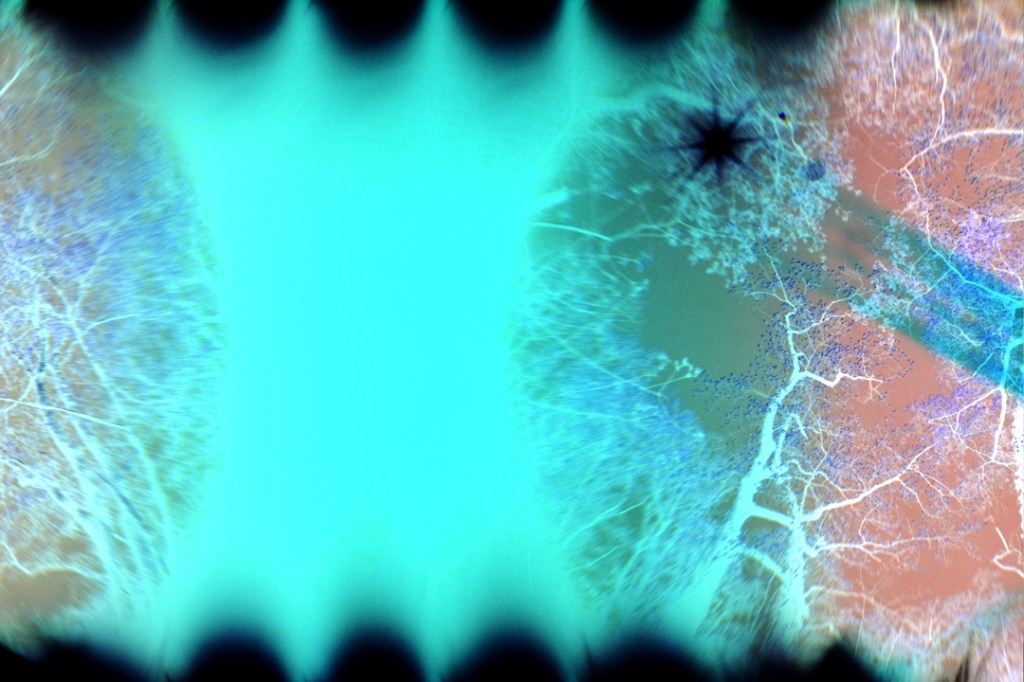
    Leah Oates: I started as a painter and printmaker, and I still see the influence of both in my current work with the layering and density of color and light. The common thread with my past work in other medias was always photography as I painted and printed from photographs but in the past I saw the photos I took at support materials or documentation. At some point I realized that the photography was the main and most continuous thread in my work so transitioned to how I work now.

    Firstindigo&Lifestyle: Do you feel that memories, or where you come from resonates in your art?  Your works have been also exhibited overseas, how was the experience in China, for instance?

    LO: Where I was raised and my specific family definitely connects to my current work. My grandmother is a biologist who studied at Harvard and one of my uncles worked for the Environmental Protection Agency (he is now a private consultant on environmental issues) and another worked for the Army Corp of Engineers. Thus there was a lot of dialogue about the environment, nature, human rights and politics.

    My mom, brother and grandmother are painters and my grandfather was a painter and photographer who ran a photo studio when he was young taking family, wedding and baby photos. He later became a real estate lawyer with a big Irish Catholic brood of six kids including my dad Danny who was a writer and carpenter. I have an uncle who is a successful ceramic artist in Maine and an aunt who is a glass artist in Massachusetts.

    This mix very much informed my work as well as growing up in the city of Cambridge, Massachusetts and in rural town in Sanford, Maine where my family goes back in both states to the 1600s.

    Being and working in China was amazing. We all absolutely loved it there from the street culture to the food to the parks to the incredible energy there. It was wonderful to photograph there and yes its polluted and yes it can be messy but the light is wonderful and the people are friendly, sweet and almost old fashioned. We would go back in a heartbeat.

    With China I had a lot of reverence for their history beyond Mao and the revolution etc. China is an ancient place and much older than the US or Europe with so much amazing history. China is a work in progress and like all places has things to work on but it’s a really vibrant, alive and interesting place.

    My work there dealt with the changes happening in the culture related to climate change, random urban planning that is erasing local culture and customs and how nature reacts to all of this within a rapidly expanding urban setting.

    This slideshow requires JavaScript.

    Firstindigo&Lifestyle: Could you describe in few words how did your road lead to New York?

    LO: My husband Pierre traveled to NYC on a few business trips and instantly loved the NYC. We where living in Chicago at the time and liked it but NYC is closer to both our families in New England and Canada and it has a thriving and large art community so we moved here when I finished up my MFA.  At first I was not sure about living in NYC for that long but gave it a try.

    I began ironically to love NYC after September 11th as the city just melted ones heart. I saw how the city came together in a way I would not have imagined as you know normally is like ‘get outta my way’, or ‘move it fast’, on a daily basis here.  But the thing about New Yorkers is that in a crisis situation they have your back and this is what I learned about NYC that made me really fall for this city.

    And the art community is the best I’ve experienced. People are energetic, they work hard and like to do so, are open to new things and they make things happen and quickly. It’s a hopping, creative, and no nonsense art city. Yes there is the regular nonsense you have in any city but things really get done here and in high volume and at top quality too.  You see the best here and yes the worst too but here we move so fast that there is no time for that stuff. It’s a very discerning crowd here.


    I’ll give an example. Pierre, my husband has shot films in other cities and it always move so much slower than in NYC and he often hits walls initially either from unions or agents etc. In NYC it’s the total opposite where he finds what he needs easily and hears yes a lot! It gets done here without the baloney. Here it’s a YES lets do it mentality which I really like, and opens things potentially for innovation, creativity and hybrids. I now cannot conceive of living anywhere else, and I’m now head over heals in love with this city.

    Firstindigo&Lifestyle: It’s quite easy to imagine that last few years have been truly busy in leading your own art space. How do you feel the transition has been in terms of becoming a gallerist?

    LO: I love running a gallery, and working with my artists to plan their shows.  I’m really happy about the quality of the shows, level of press and number of curator visits and attention that the gallery shows have received and sales have been good.

    It’s been an amazing experience all around. The first few months when I initially opened where very exciting and there was a bit of anxiety about how it would impact our family. Mainly it was our son Max who wanted his mom to be around 24/7 but he really got behind the gallery when he saw the space and saw that it made me happy. He even wanted to serve drinks and where a suit which was so cute! There has been a good balance between family, the gallery and my studio practice for quite some time now so it all good.

    Firstindigo&Lifestyle> What is your secret in balancing between different roles in the art world?

    LO: Most artists or art professionals have jobs so it’s the norm in most cases unless you’re very rich.

    A quote I like is ‘A good artist studies art and a great artist studies everything’. My dream is to be an artist, curator and gallerist, so I’ve followed this to see where it leads. It’s an interesting and rich journey that is worth taking. What I’ve learned too is to plan out the week and get the work done. Just do it and don’t think too much about it. Get your self into studio and get working as through the work interesting stuff happens and if your not there it’s less likely to happen. The same goes for running the gallery.

    Additionally, trust yourself and go for it, plan strategically and it’s ok to say no, rest when needed and spend time with those that make you feel good and even better loved.

    Firstindigo&Lifestyle: You have also featured artists in the art fairs; do you find attending art fairs rewarding?

    LO: The gallery participated in Pulse NY last year and it went really well with sales and press, work placed in a corporate collection and several private collections and so much great feedback and contacts. It was a complete buzz and reinforced that the gallery artists and program was as good as I thought it was. People who visited our booth loved it and where so positive. But with all of this great stuff we only broke even and fairs are expensive to do. But they are now so much a part of the art world that it’s a must to do them as a gallery and again I think it best to be strategic with this and keep to a budget. I have only good thing to say about Pulse from a gallery perspective. This fair is run very professionally and everyone is super nice and efficient. Everything they promised they delivered on.

    As an artist I’m not a huge fan of fairs overall but I do love Pulse, Spring Break and The Independent art fairs. They are so different as fairs but seem to push the dialogue forward and are visually interesting.

    As an artist at fairs I like running into so many people and taking about art but think that fairs can be too formulaic and favor art that is easy to process with too much surface and not enough depth.  As an artist I think fairs are a survey of trends, are about status and art world hierarchy and not so much about art or pushing the dialogue ahead. But again as a gallerist, curator or as an artist participating in a fair you have to do it as it’s for the potential for so much attention in a short period of time and in a condensed fashion.


    Firstindigo&Lifestyle: It is very delighting that Station Independent features Finnish artists. Could you tell in few words about the Finnish collaborations that are coming up this summer?

    LO: Yes I’m pleased that the gallery will be hosting two guest curated shows this summer by Ilari Laamanen and Leena-Maija Rossi both from Finnish Cultural Institute.

    Ilari has curated a group show of Finnish artists called  ‘The Powers That Be’ which is on view from July 17-August 9th. This show is part of FCINY’s 25th Anniversary year’s program on Urban Nature and explores human’s relationship to the environment.

    Rossi has curated a two person show that explores shifting ideas on dwellings in urban space called  ‘(Un)livable’ with work by Kari Soinio and Janet Biggs which opens August 13th and is on view through September 6th.

    Firstindigo&Lifestyle: How would you define your own curatorial motto?

    LO: My curatorial motto is to not follow trends but to follow art and artists. I’ve been following the gallery artists from between 5-25 years. Also, it’s important to love the work your showing and to choose work based on its merits and not on if it’s easy to sell. It’s all about the artwork itself and about dialogues about art within a larger context of the past, present and future.

    ***

    The gallery and artist websites:

    www.stationindependent.com
    www.leahoates.com