Category: asian art

  • Interview: Yasushi Koyama, cuteness and nature in Finnish and Japanese aesthetics

    Interview: Yasushi Koyama, cuteness and nature in Finnish and Japanese aesthetics

    Japanese sculptor Yasushi Koyama lives in Helsinki, Finland and exhibits frequently in the local galleries. In this interview, he ponders the aesthetics behind his cute wooden sculptures. The artist brings the two artistic worlds together in his deep knowledge of both Finnish and Japanese cultures. One of his revelations connects to an idea of etic (or ethic), a general belief that influences people’s behavior and attitudes.

    Firstindigo&Lifestyle: When did you move to Finland, and how did you decide to go there to study?

    Yasushi Koyama: I moved to Finland in Autumn 2007 to study Fine arts in Saimaa University of Applied Sciences in Imatra. In 2006, I met Finnish printmaker Tuula Moilanen and took her art courses in Kyoto Japan. She was a good teacher and gave me some advice for Finnish education and art school. Then I decided to come to Finland to study.

    Firstindigo&Lifestyle: What is the best part of having two cultures to live in and with?

    YK: The best part is to have another viewpoint beyond one culture. In addition, in my own artwork Finnish culture meets Japanese culture automatically, unconsciously and unintentionally. It is a good mixture of two cultures for me.

    Firstindigo&Lifestyle: Do you think that new cultural heritage transforms you?

    YK: I am transformed by Finnish culture on a daily basis especially with the sense of nature and with the contemporary culture of art & design in Helsinki. While in Imatra I experienced a lot of nature such as forest, lake, snow, river, waterfall etc. I took many photos of the beautiful Finnish nature during each season. In this point I was transformed to be a person who likes nature. At the same time, it reminded me of how to be a Japanese, because a life with nature is the very style of Japanese culture too. I came to Helsinki in 2012 to have my solo exhibition in NAPA Gallery. In 2012 Helsinki was the world design capital and my exhibition joined in with some events of World design capital 2012. NAPA Gallery had many artists who were related to graphic design. It was very fresh for me. The art of NAPA members inspired my own art language to absorb the feeling of contemporary graphic design into my art. So I am transformed to get the design viewpoint from the Helsinki contemporary culture.

    Firstindigo&Lifestyle: You are currently taking part of an exhibition at the Cable Factory in Helsinki. Tell about the background for this particular show.

    YK: The show is called “Masters of Saimaa’16”. It is Masters of Fine Arts graduation exhibition in The Saimaa University of Applied Sciences. 9 master degree students have joined in the show. My artworks are 3 works. There are 2 wood sculptures and 1 wood installation from me.

    One of the wood sculptures is titled Panda papa and child. It is a large sculpture, 160cm high and weighting more than 400 kg. The artwork is made for my Art for Children project in 2016. People can touch & hug this Panda papa sculpture, so it is interactive art, and the art also connects to our well-being. It is going to be donated to children’s public place as a public art after my upcoming solo exhibition in Galleria AARNI. I have a good memory attached to Panda. When I was 6 years old Panda came to Ueno Zoo in Japan from China. I visited the Zoo to watch the Panda with my father.

    Another wood sculpture is titled Walking cat with Katja’s T-shirt – collaboration with Katja Tukiainen. It is 150 cm high and weights more than 200 kg. Artist Katja Tukiainen is my supervisor for my final works of my thesis. Both Katja and I had a similar experience of having cats as pets in our childhood, and we both like cats. Katja Tukiainen has also designed the official T-shirt for the Cable factory. I liked the T-shirts and so got the idea for the collaboration with her.

    Then, my  wood installation’s goes with the title The horizontal – wood installation. It is composed of 6 pieces of woods that were originally from one large tree (5m high). Each piece weights between 30 kg to 150 kg. It is made from ash wood that my friend gave me. The title is from Eija–Liisa Ahtila’s video work “The horizontal “ to use 6 screen panels to show one long tree in horizontal way. Her video work “The house” was the first contemporary Finnish art that I saw in Tokyo in 2003. Through this work I wanted to express the culture of wood in Finland and Japan, the process of wood sculpting and wood as a material itself. In Finland the forest area is 71% of the entire land area. In Japan the forest area is about 68% of the land area. In the world, the average of forest area is 31%. So in comparison, our countries have a lot of forest and woods. I think that we both have the tradition of wood culture such as wooden buildings, wooden houses, wooden tools, wooden arts etc. So wood is really important material for me.

    yasushi-koyama-panda-papa-and-child-2016-birch-house-paint-oil-color-162x85x80cm
    Yasushi Koyama, Panda papa & child, 2016, birch, oil color, house paint, 162 x 85 x 80 cm.

    Firstindigo&Lifestyle: You hear often that Finnish and Japanese cultures have something in common from the point of view of the design cultures. Do you think it’s true and in what ways?

    YK: Yes, it is true. As I told, both Finland and Japan have the culture of wood. Both Finnish and Japanese like nature in life. So natural materials have an influence on the expression of our cultures of design, architecture and art. In addition simplicity, clarity and repetitive nature are similar in both cultures.

    Firstindigo&Lifestyle: How did you find your artistic expression with the sculpture? 

    YK: My artworks are animal sculptures described as “Cute, lovely and humorous”. Most of my works are made from one piece of wood by using hand chisels. The rich textures of wood sculpting give people a warm impression. My wood sculptures have the good mixture between traditional wood sculpting and contemporary expression.

    I learnt traditional wood sculpturing in Japan, New Zealand, Transylvania and Finland. For example in Finland in school I learnt wood sculpting from Finnish sculptor Pasi Karjula. He cherished the traditional way of wood sculpting using axe and hand chisels as well as other methods.

    In the contemporary art context my wood sculptures have the expression of cuteness and positive energy. Finnish painter Katja Tukiainen had an influence on those expressions. And Finnish sculptor Kim Simonsson inspired me with his innocence of cartoonish sculpture. In addition, the graphic design of Marimekko etc., as well as the culture of the Finnish children’s characters, especially the Moomins took effect on me.

    At the same time Japanese Manga & Anime and “neo-pop” art by Japanese painter Yoshitomo Nara have influenced my art language of cuteness. The ideas of art works are inspired by animals, natural shape of wood, self-drawing, Finnish art, illustration, textile design and Japanese art & culture.

    Firstindigo&Lifestyle: Are your cute animal sculptures loved by both Finnish and Japanese audiences alike?

    YK: Yes, I think so. They are loved and sold in both Finland and Japan. The interesting issue is that Finnish people say Yasushi’s works have Japanese feeling, and Japanese people say that Yasushi’s works have Finnish feeling in them. I accept their viewpoints as a good mixture between Finnish and Japanese culture.

    Firstindigo&Lifestyle: How do you develop and teach your concepts to kids? 

    YK: I remember that I was making animal sculptures with clay almost every day when I was between 4-6 years old. My father gave me photo books of animals. After I looked at them I made animals. It was my ordinary life during my childhood. So it was natural for me to make cute animals. Although I was making a human sculpture while in school, after my graduation I remembered my enjoyment with animal sculptures. So it is normal and natural for me to make these cute animal sculptures. After starting to create animals, some friends and gallerists told me that my artworks include concepts for kids. So I will continue developing art based on my own childhood memories.

    Firstindigo&Lifestyle: What is your favorite museum or museums in Finland and why?

    YK: I have many favorite museums in Finland. It is difficult to tell of all the museums. So I point my favorite 3 art museums with exhibitions in 2016. I liked Ai Weiwei & Yayoi Kusama exhibitions in Helsinki Art Museum, Ernesto Neto’s exhibition in 5th floor in Kiasma and “Suomen Taiteen Tarina” (Stories of Finnish Art) in Ateneum Art Museum. Ai Weiwei and Yayoi Kusama are top well-known artists in the world. I appreciate HAM to have offered their exhibitions to people in Finland. I also like the space in Kiasma’s 5th floor. Ernesto Neto’s exhibition gave us the participation and experience, the post colonial and interdisciplinary disciplines in the contemporary art context. “Stories of Finnish Art” was very compact exhibition, but at the same time a very profound way to show Finnish art history. I thought it was a great opportunity for tourists in summer to see the exhibition in Ateneum and also for Finland to show their image through Finnish art.

    Firstindigo&Lifestyle: How would you describe Finnish aesthetics?

    YK: I want to describe 3 concepts of “less is more”, “silence” and “sorrow” as Finnish aesthetics.

    When I think about aesthetics, I always think about “etic” of aesthetics. Etic (or ethic) is a general idea or belief that influences people’s behavior and attitudes. I think that Finnish etic are diligent, honest and simple. Finnish aesthetics is the general idea that influences Finnish people’s behavior to understand beauty. So in my opinion one of Finnish aesthetics is about “less is more”. When I see the simple structures of Finnish architectures, it is so obvious.

    About “silence” (hiljaisuus in Finnish), and how it is connected to nature. I remember silent landscape of snow in forest during winter. It was very beautiful. One of my Finnish friends gave me the message about nature, comparing sisu to silence (sisu is a Finnish spirit against strong power). “Nature means more than forests or lakes. It means freedom for oneself. Sisu is the most important for Finns. But how can one respect the other’s freedom? To respect one’s own freedom and the other’s freedom, Finns are keeping silent.” It is poetic but precisely showing the Finnish behavior of silence.It says that silence is the expression to respect one’s own and other’s freedom. Silence is one core of beauty related to the idea of freedom in Finnish culture.

    About “sorrow” (suru in Finnish). A Finnish pop singer-song writer Kaija Koo says the phrase: Niin kaunis on hiljaisuus, mutta kauniimpaa on kaipaus. It means: So beautiful is silence but more beautiful is longing. So, when a Finn misses another person or a place, they feel sorrow. The sense of sorrow is connected to the feeling of longing and missing. In addition, a Finnish sense of sorrow takes place in the melancholic climate of Finland, such as during cold, dark and snow etc. “Sorrow” is a general and profound concept in Finnish art, film, novel, mythology etc.

    Firstindigo&Lifestyle: What does innovation mean to you?

    YK: Innovation is the attitude to look for new applications of old knowledge and the one to create new concepts by mixing more than two different concepts and cultures.

    Firstindigo&Lifestyle: Who do you collaborate with and where do you work? Is teamwork important to you? 

    YK: To meet a person is very important for me. So I would like to cherish meeting a person. This time I collaborated with Finnish painter Katja Tukiainen in Cable Factory, Helsinki. I met her in Cable Factory in 2009 coincidentally, when I was walking around the Cable Factory. She was very kind to me even though I didn’t know her at all at that time. She talked to me friendly about Japan and her exhibition in Yokohama, Japan. I think that meeting is sometimes coincidental but often meaningful. I would like to cherish such a meeting. For the collaboration it is important for me to have a similar concepts, and to be able to share ideas. It is important for me to make collaboration beyond your own culture and to create something new from it. I have collaborated with artists such as painters, sculptors and printmakers. For the future I am interested in collaborating with not only artists but also with designers, anthropologists, philosophers, children, and with ordinary people to be transforming my art.

    yasushi-koyama-walking-cat-with-tshirt-by-katja-tukiainen-2016-birch-house-paint-156-x-72-x-71-cm
    Yasushi Koyama, Walking cat, T-shirt collaboration with Katja Tukiainen, 2016, birch, paint, 152 x 72 x 71 cm.


    Firstindigo&Lifestyle: Do you have an opinion about Kusama’s works, she is now extremely popular in the West. How do you like the exhibition in Helsinki at the moment?

    In my opinion Kusama’s exhibition includes an important concept of interdisciplinarity, the roles of post colonial and gender in the contemporary art world. So it is natural for the West to accept her art. And her exhibition shows not only art but also an idea to share an experience of her art with visitors. It means that her art works are not only objects but also the image of her art, spirit and that of the contemporary culture. Her exhibition goes beyond art and connects with people in the gallery space to share their experiences. From this point of view, the visitors can participate in her exhibition. And I find that her paintings have an influence coming from native art and aboriginal art. Then, I think that her dot art includes not only pop art but also biological consideration of a cell, Shintoism and neo animism. I imagine that those concepts are fresh and still new to the West. So I admire HAM (Helsinki Art Museum) to have her exhibition.

    Firstindigo&Lifestyle: Does Kusama have an approach that can be applied to other things, or could there be a recipe for a good idea to be developed further. There seems to be something that makes people really want to participate in it?

    YK: Yayoi Kusama was the world’s most popular artist in 2014. And she is still one of the most popular artist in 2016. I think that the quality of this exhibition is among the top of the world. And her exhibition has been already developed by the point of visitor’s participation, comparing it to her exhibition that I saw in Matsumoto, Japan in 2003. It would be possible for her to use 5 senses to prompt visitors to participate in her art, such as the sense of touch, the sense of smell and auditory sense.

    Firstindigo&Lifestyle: Do you think that art should be more sensorial, and available for people to touch?

    YK: Yes, at least for me. I think touching art is a much deeper experience than seeing art. I make my large animal wooden sculptures (about 160 x 80 x70 cm) to be touchable and huggable. It is a hands-on way of “interactive art” in a sense that visitors also take action towards the art. And it is also “participation art” as you are touching and hugging a sculpture in the exhibition gallery space or in the public space. The importance of touching art is also connected to the internet period or described as a post-internet period. Although we can see a lot of images through internet, we can’t get a sense of touch through internet as well. So the sense of touch is a strong point attached to my animal sculptures. The feeling of a wood material is little warm and nice to human body. My animal sculptures have been already in some public places as public art. It gives people happiness and experiences in a way that they participate in a society through art.

    Firstindigo&Lifestyle: Is there a line between art and design in contemporary art or does there have to be?

    YK: For me such a line is not so meaningful in our contemporary time. Design can be art and art can be design. I think that art and design have an effect on each other especially here in Helsinki.

    Firstindigo&Lifestyle: What are you planning next, do you have new ideas and exhibitions coming up? 

    YK: My next exhibition is coming soon 23.11-18.12.2016 in Galleria AARNI in Espoo, Finland. The concept is “Cute” –between SÖPÖ and Kawaii. I mix Finnish cuteness “SÖPÖ” with Japanese cuteness “Kawaii” in my art. In Japan “Kawaii” (= the quality of cuteness) has become a prominent aspect of Japanese popular culture. This term Kawaii has taken on the secondary meanings of cool, groovy, charming and innocent. The book “Kawaii Syndrome” tells “cute” and “neat” have taken precedence over the former Japanese aesthetics of “beautiful” and “refined”. So cuteness is a new cultural wave of Japanese postwar generation especially of the ones born in 70’s and 80’s. This cultural wave has come to Europe particularly through Manga and Anime. For the design of my animal wood sculptures I use Finnish wood, and the Finnish cuteness of SÖPÖ is inspired by Finnish art and design. In the exhibition visitors can see ”Cute” animal sculptures, touch & hug a large sculpture ”Panda Papa & Child”. I am hoping the audiences will enjoy Yasushi Koyama’s world of cute animals in the exhibition coming to Galleria AARNI.

    ***

    yasushi-koyama-photo-by-ayana-palander
    Yasushi Koyama, photo by Ayana Palander

    Artist profile: http://www.kuvataiteilijamatrikkeli.fi/en/artists/3620

  • Interview: Katsutoshi Yuasa, from photographic imagination to woodcut reality

    Interview: Katsutoshi Yuasa, from photographic imagination to woodcut reality

    Katsutoshi Yuasa is a Japanese artist who has revitalized the original idea of photography, thinking about its early techniques, and bringing the digital production close to ancient Japanese printmaking practices. His detailed and lengthy artistic process starts usually with a digital snapshot. Eventually the image finds a new life as woodcut print or relief work, which the artist carves and prints all by a hand. In this production the original alters into something else, depicting a feeling or experience. Katsutoshi Yuasa was born in Tokyo. He graduated from the Royal College of Art in London, and has exhibited internationally for over a decade now.

    For Katsutoshi Yuasa, the photography contains several layers of meaning. The complexity of the medium implies that the production cannot be perceived as pure images.

    Firstindigo&Lifestyle: Your woodcutting is based on photography, did this practice in your mind transform the idea of photography?

    Katsutoshi Yuasa: Yes, my process of making art works is a way of thinking about an origin of photography. Or it is about image-making. How we understand and transform an image in front of our eyes to our mind.

    I start from a photographic snapshot, but re-emergence of a photographic image is not my goal. My purpose of using a photograph is to make visible something which is perceived but no one sees.

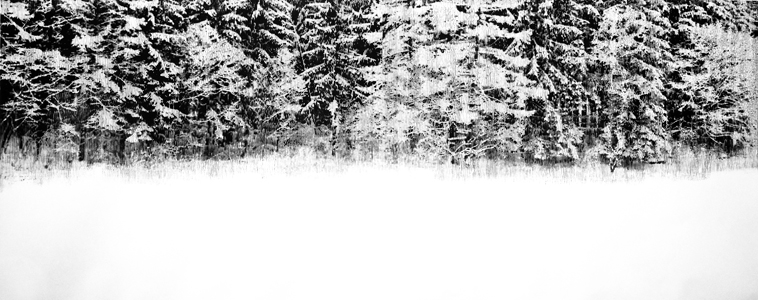
    Katsutoshi Yuasa, 2014, After a long pause  60cm x 150cm  Oil-based woodcut on paper
    Katsutoshi Yuasa, 2014, After a long pause, 60cm x 150 cm, oil-based woodcut on paper.

    Firstindigo&Lifestyle: What is your background in the arts, how did you end up choosing woodcutting?

    KY: I studied painting at first when I was a student. But I gave up my paintings because I couldn’t find a good future in my paintings. So I participated in a short printmaking course, and then found positive possibilities in the printmaking. Even that time my interest was photography, so I was thinking photo etching or screen print technique as my primary expression. At first, woodcut print seemed to be too far from photography. But later I concerned carving lines on wood as a similar process to making lights in the dark room. Now I’ve been making woodcut prints and works related to wood for over 10 years. Basically, woodcut print includes questions about light, image, water and colour.

    Firstindigo&Lifestyle: In how many countries have you exhibited so far, including art galleries and art fairs?

    KY: Maybe about 15 or 16 countries.

    Firstindigo&Lifestyle: Coming from Japan, do you find that there are common approaches to making art in Japanese and Nordic cultures, asking this also because your art has been showed in Nordic countries quite often?

    KY: My main subject is woodcut print but it is about light, image, water and colour. So I made a project with an idea of these and created a concept from a place where I stayed. When I visited Norway with the art project “20 Coastal Stations”, my subject was water & colour. I’m going to have a exhibition in October 2016 with artists who traveled together in Norway last year (see info here  http://www.sfk.museum.no/nn/node/48).

    Firstindigo&Lifestyle: You spent also some artist residence time in Finland, how was this experience like, did it change your artistry, how about finding new influences?

    KY: I spend a really good time in Finland. During the artist residence in Finland, I searched Scandinavian myths and poems. I’m interested in how myths are made. I made woodcut prints titled as “Illmatar” and “The world without words”. Also “Listen, Nature is full of songs and truth” is a phrase that I borrowed from Finland.

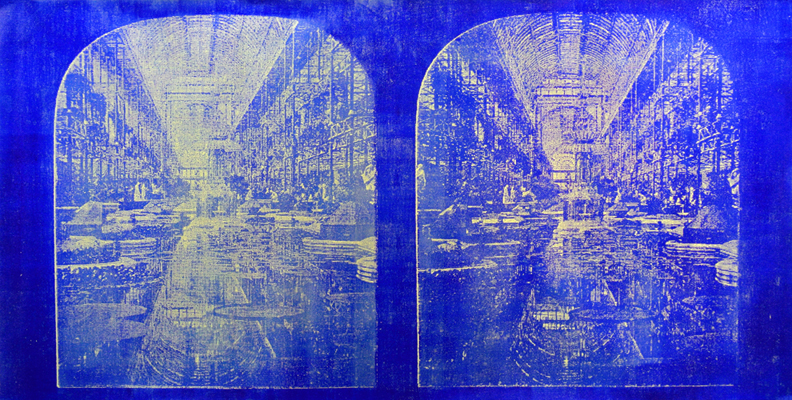
    Katsutoshi Yuasa, 2013, The world without words, water-based woodcut on paper
    Katsutoshi Yuasa, 2013, The world without words, water-based woodcut on paper.

    Firstindigo&Lifestyle: It seems that many of your photographs carry nature imagery, what is your artistic philosophy about nature and how does it change in the process of making your works?

    KY: I am not interested in making just beautiful pictures. My interest are words, stories and myths behind the nature and the landscape. The topics are words, images, art, nature, politics and beauty. I would also like to show and include ambivalence in my works.

    Firstindigo&Lifestyle: In recent years, you have made a series of works that imply thematic concerns about what is happening in the world. You did a series titled  “The Colors of the Innocents”; the theme is based on events in the Middle East adopting Syrian crisis. How did this project come about?

    KY: Everyday we see many shocking images on TV or on a screen. There are too many images around us via the internet. I have the works titled as “We lost something but we don’t know what we lost”. And, we can say “We see anything but we don’t remember what we saw” and also “We know something is happening in the world but we don’t know the smell and temperature”. These topics are about cruelty and colour.

    Katsutoshi Yuasa, 2015, The colours of the Innocents #4  60cm x 90.5cm  Water-based woodcut on paper
    Katsutoshi Yuasa, 2015, The colours of the Innocents #4 60cm x 90.5cm. Water-based woodcut on paper.

    Firstindigo&Lifestyle: The result of these prints is quite amazing. Tell about the aesthetic choices of making “The Colors of the Innocents”? They are quite different from your other works, which are more representational.

    KY: For these works, I was more interested in making colourful works because colour is getting more important in my practice. One colour work is following up from my CMYK printing system. So I made 4 wood blocks with different lines and printed with 4 CMYK colours.

    Firstindigo&Lifestyle: You can see that in 2015 there are new lines and shapes emerging, and result is perhaps more geometry and color. The prints titled All is Vanity, CMYCYMMCYMYCYCMYMC, and Nordlys, to name a few, have this form. Can you say that there is a fine line between design and art in the project that you are doing with these shapes?

    KY: The most important idea for these works is “A Throw of the Dice Never Abolish Chance”. My interest is making an Image by a chance. Especially the I Ching is very interesting. There is a question that we choose something by a will or a chance. So my latest solo exhibition was titled as Colour/Numbers. How we choose numbers or how a number was chosen by us.


    Firstindigo&Lifestyle: Tell about the “Beyond assumption” exhibition, which you had in Copenhagen in 2011, you kind of wanted to create an oppositional imagery of disaster, could you tell about this background, and what did you choose to be part of the imagery beyond assumption?

    Yes, the exhibition “Beyond assumption” is a word from the Natural disaster that hit in Japan in 2011. Artists want to make their art works beyond assumption in the end. And of course Nature is always beyond our assumption. But we made a system under an unstable base. So here art connects to nature.

    Firstindigo&Lifestyle: The works from 2016 also are experimenting with different shapes, reflecting pattern explorations, and bringing forth new influences. It seems that you have a flux of going between geometry and nature, to create and implement beauty?

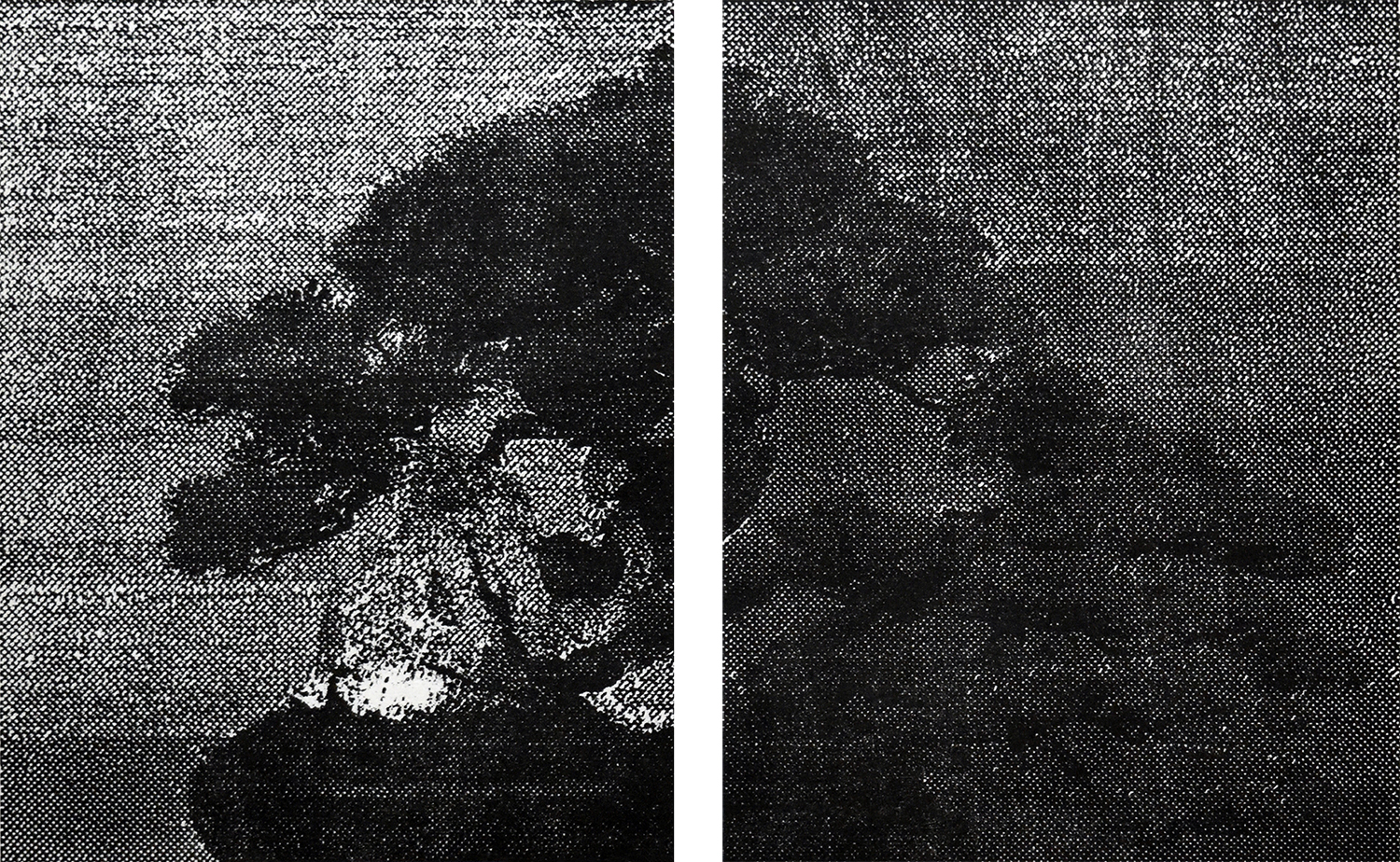
    Katsutoshi Yuasa, 2015, Observation point  95.5cm x 190cm  Oil-based woodcut on aluminum leaf paper
    Katsutoshi Yuasa, 2015, Observation point 95.5cm x 190cm Oil-based woodcut on aluminum leaf paper.

    KY: Yes, I’m very interested in geometry and patterns. It is about image-making. History and culture are included behind an image.

    Katsutoshi Yuasa, 2016, Aesthetics of 12 #1  28cm x 45cm  Oil-based woodcut on paper
    Katsutoshi Yuasa, 2016 Aesthetics of 12 #1 28cm x 45 cm, oil-based woodcut on paper.

    Firstindigo&Lifestyle: Where are you heading next with your art and career?

    KY: My next exhibition will be in Norway in October. It includes works from 20 Coastal Stations project. So 6 artists will be showing together, presenting the project. Also, I will have a group exhibition with young Japanese artists, who make water-based woodcut prints, in Melbourne in October.

    Artist website: http://www.katsutoshiyuasa.com/

  • Aimee Lee about sound, art books and hanji

    Aimee Lee about sound, art books and hanji

    Aimee Lee is an artist, papermaker, writer, and the leading hanji researcher and practitioner in the United States. With paper, she makes thread, sculpture, books, drawings, prints, garments, and installations. Aimee Lee’s background as a performing artist and musician carries traces of paper as sets and costumes. Her installations are artistic research on paper and sound. She has pursued a career with traditional Korean hanji, coming up with new aesthetic concerns and techniques for her artistic practice.  As a scholar, she is author of award-winning book, Hanji Unfurled (The Legacy Press).

    Firstindigo&Lifestyle: You are a musician, a performer with live violin. How did you start creating performances onsite, including your own installations, manifesting set designs and creating costumes? Did everything start with music?

    Aimee Lee: My early aspirations were to become a concert violinist, but I learned in college that I was not serious enough to devote the requisite hours of practice and study. However, I still loved music and wanted to stay close to musicians, so I continued to play and my first jobs were in music administration—bringing music to people who did not have access, or bringing people together through music.

    When I moved to Chicago for graduate school, I entered an interdisciplinary program that encouraged combining different media, especially performance. It was a book and paper program, but I was interested in the intersection of books and performance. Once I began to make paper, the connection between paper and performance was so compelling that I created installations that were dependent on paper that I made. The performances, which almost always included sound from my violin, activated the installations.


    Firstindigo&Lifestyle: Some of the live performances, which you composed and put together implement almost haunting kind of sound that responds back from the architecture of the venue, and then audience is stretched to interactive listening and feedback, where did you get the ideas to make these works?

    AL: Mostly, I studied classical music, but later learned improvisation and jazz. The heart of what I have always loved to do is rooted in improvisation, whether or not I was aware of it. Human communication, which sound and music are, has always fascinated me, so I wanted immediate feedback and interaction with my audiences. In Chicago, I was influenced by performance residencies with Aaron Williamson and Greg Allen, and by Julie Laffin.

    Firstindigo&Lifestyle: Now, we can perhaps say that you have become a master of hanji, the Korean traditional paper making. Where did you find the enthusiasm to start exploring it, and how did it come about?

    AL: While I studied papermaking history in the graduate school, I noticed that it began in China, moved to Korea, and then traveled to and flourished in Japan. Most of the existing research in English on East Asian paper was based in Japan, and I was unable to find much about hanji (Korean paper). I grew up at a time and place in the US where people always tried to guess my heritage, but they could only imagine that I was Chinese or Japanese. This sense of Korea being overshadowed affected me deeply, so I felt a curiosity about Korean paper history. My Fulbright research in Korea uncovered an entire history and culture that fascinated me on all levels, as an artist, a researcher, a Korean American, a person in the world. After my return to the U.S., I felt a strong responsibility to share what I had learned. I would never call myself a hanji master, but will always be a steadfast hanji ambassador and artist (read Aimee Lee’s exhibition review in Firstindigo&Lifestyle)

    Firstindigo&Lifestyle: Is the knowledge of making hanji widespread in Korea today, how about the new generations and passing down this historic form that goes back hundreds of years?

    AL: Korea has similar issues to the U.S. and other cultures where the current knowledge of traditional craft by the general public is quite limited. It is not a priority in contemporary life, so not many people in Korea are aware of the process of making hanji and its impact on Korean history. There are less than 25 paper mills remaining in Korea, and very few have serious apprentices, because it’s not an easy living. In a world where you could live and work in an urban center with all the amenities you need, why would someone decide to live in a rural area doing manual labor for very little money? There are no good incentives to do the work, even if you believe in continuing an ancient and important tradition.

    Firstindigo&Lifestyle: How sustainable is the process, could you tell about the ecological aspect of the paper making?

    AL: Papermaking on a small scale (meaning individuals or families who are in business) in Korea is ecologically sustainable, though it may not be financially so. The main raw material is the paper mulberry tree, which is cut each year. This coppicing practice encourages the plant to grow back every year, so the same plant can produce material for over 20 years. These are not trees in the way Western minds think of hardwood lumber: they are tall and skinny, almost shrublike, and cutting them down does not kill the plant. The traditional methods of processing always used plant materials so that production byproducts were easy and not toxic to dispose of or reuse. The bulk of the energy that goes into making hanji is human energy, which means that the process is very labor intensive but has a very light ecological footprint.

    Aimee Lee discussing hanji at the Korean Cultural Center, NY, March 2016
    Aimee Lee discusses hanji objects at the Korean Cultural Center in New York, March 2016

    Firstindigo&Lifestyle: Is it correct that Hanji derives from nature, or implies a closeness to it?

    AL: Hanji is made from plants, and could never have been invented without a human closeness to non-human nature by observing the possibilities of certain species and experimenting over time. Dorothy Field, artist and author (my favorite is her book Paper and Threshold) writes beautifully about how certain plants long to become paper, and all they needed was the human hand to let them reach that state.

    Firstindigo&LifestyleCan Hanji accessories, or clothing, be compared to textiles, or is it irrelevant?

    Paper and textile have a very strong connection, aside from each being able to be transformed into the other. The first paper was made from hemp cloth, and hanji can be cut, spun, and woven into cloth. Hanji has been used to make clothing, and today’s contemporary designers and manufacturers are including hanji into their textile production.


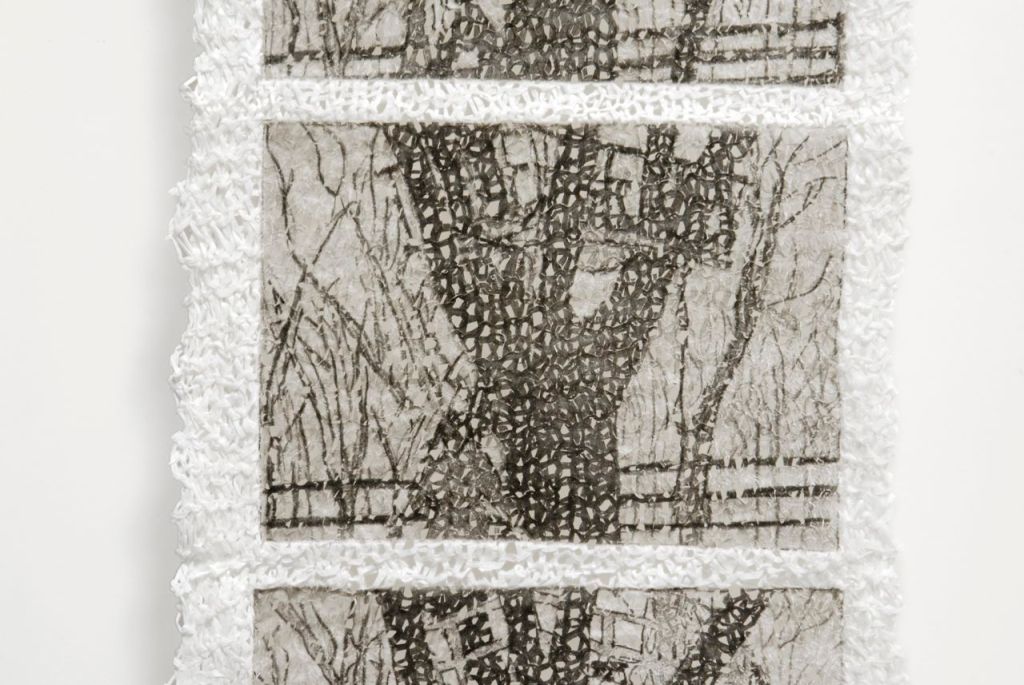
    Aimee Lee, All there, 2016. Dye on paper, thread. 11 x 11.5″. Private collection.
    Aimee Lee, All there, 2016, Dye on paper, thread, private collection.

    Firstindigo&Lifestyle: You are teaching as well, could you tell about the workshops and education aspect?

    AL: I mentioned before that sense of responsibility to share knowledge about hanji to a much wider audience. Part of this is from a conservation instinct, out of a fear that hanji is disappearing. But most of it comes from a joyous instinct, out of my love for this material that is so endlessly versatile. I always knew that handmade paper had great range, but even after almost a decade, I continue to find possibilities for hanji. If the substrate was not impressive, I would not feel compelled to promote it. However, I want people to know about hanji as an option, so that they can have another tool in the toolkit. This means that I teach a range of workshops, from preparing fiber to making hanji to manipulating it by hand. I travel continually to spread the word, in the hopes that eventually hanji will become as familiar as other papers, and that paper itself can be regarded on the same level as canvas, clay, metal, glass, wood, and so on.

    Aimee Lee, Beating fiber to make hanji while teaching students at Paper Book Intensive 2016 at Ox-Bow in Saugatuck, Michigan.
    Aimee is beating fiber to make hanji while teaching at Paper Book Intensive 2016 in Saugatuck, Michigan.

    Firstindigo&Lifestyle: The aesthetic form of Hanji art and folk art influences your making, how do people receive these traditional objects, which you are making today?

    AL: Most people don’t know about the lineage of the objects, so the responses are mostly of wonder—they are amazed that my pieces are made of paper in the first place. This provides an opening to share the stories of their historical use, and illuminate the ways that humans have always made objects that are not only useful, but embedded with meaning. Some have asked if I am interested in using the techniques to make much more contemporary ‘looking’ art. I have wanted for years to extend crafts like jiseung into installation and larger work that goes past the original shapes and functions of their predecessors. The issue is that the time and labor that it takes to make one piece is so great that I could only go in that direction if I had a very long and uninterrupted stretch of time to work. However, I am gratified to see that some of my students are moving in that direction after learning about hanji and its applications.

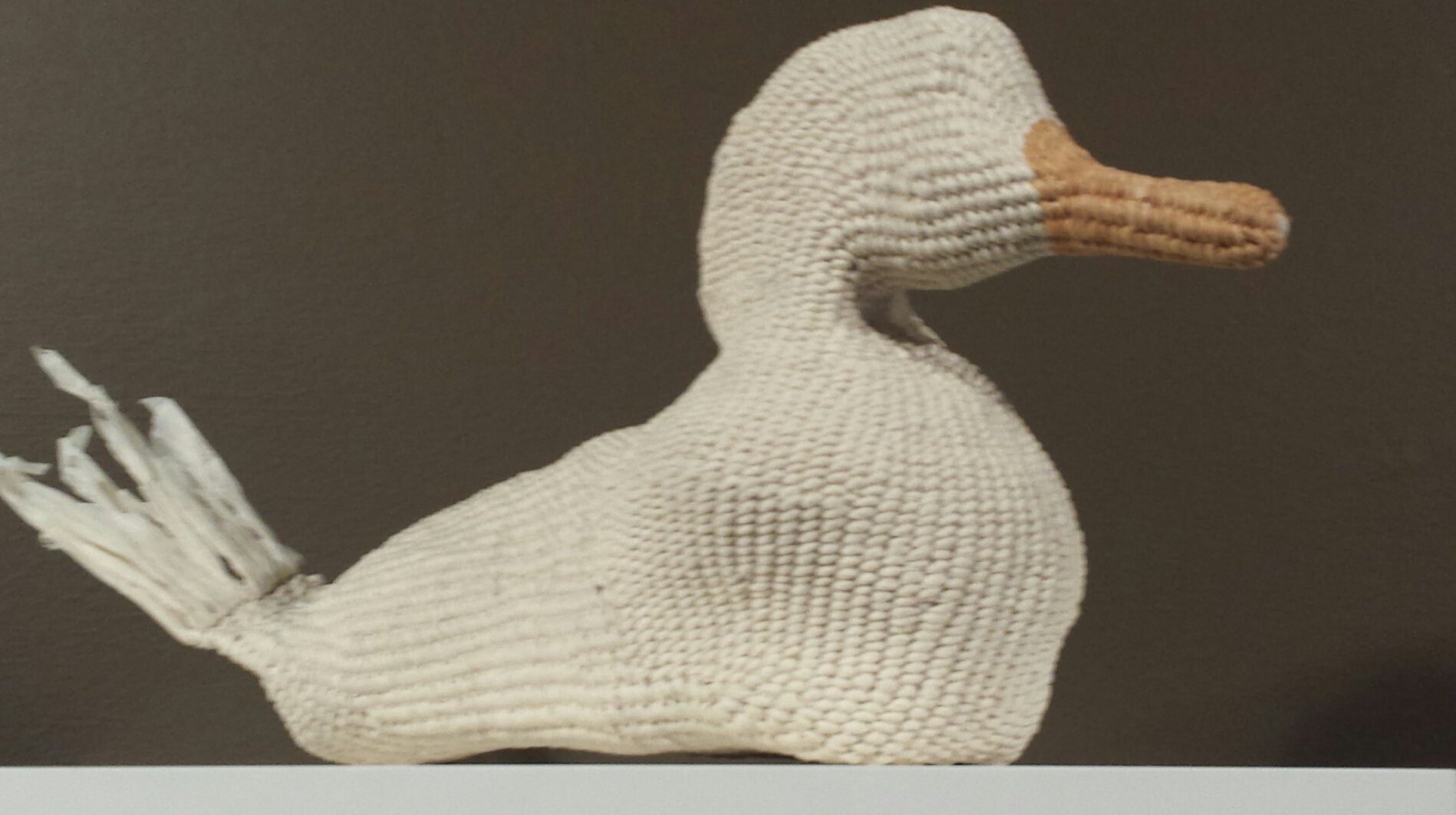
    Aimee Lee, hanji duck, Korean Cultural Center, March 2016
    Aimee Lee, hanji duck, exhibition at the Korean Cultural Center, NY, March 2016

    Firstindigo&Lifestyle: What other materials do you use today in the making of your art?

    AL: For the longest time, I have been very strict about using hanji whenever possible, or other handmade papers. My thread box is always full of different paper threads I have made, though I use cotton, linen, and silk thread to sew my hanji dresses. I also use the raw materials that make these papers, such as the cooked bark before it is beaten to a pulp. I use mostly natural dyes and finishes, which add color, structure, and protection to the paper. Last year, I collaborated with Kristen Martincic on a paper and ceramic installation, and recently had a couple of jewelry metals artists help me with additions to my paper ducks at Haystack Mountain School of Crafts. I’m interested in continuing this last investigation further.

    Firstindigo&Lifestyle: What is fascinating about your use of paper is its multiple dimensions from small objects to books. Your own writing and art (illustration) is sealed into these art books. Tell about the books, which you have made, how did the stories develop?

    AL: Books came first for me, before paper. I was making artists’ books at Oberlin College while studying with Nanette Yannuzzi Macias, which was a game changer. It was a way to combine writing, drawing, storytelling, and all kinds of other media into a form that felt very familiar and yet new. I don’t remember when I started to draw comics, but like improvisation, it was something that came naturally to me. I always thought that the point of being able to make my own books was the ability to create all of my own content. Most of my books contain original writing and stories that come from my own life experience, literature that I love, and the immediate present moment—whether an emotional space or an actual time in history that could be marked in the news cycle.


    Firstindigo&Lifestyle: Do you travel to Korea to get new ideas and exchange?

    AL: I am able to get back every several years, whenever I am funded. However, because of the distance and difficulty of making enough time to visit (I prefer going for longer periods of time), it’s not a journey I make often. Certainly it is inspiring, but it is a challenge as well because the expectations of me as a Korean American woman can be stressful.

    Firstindigo&Lifestyle: Often you hear that there is a division of thought between Eastern and Western approaches or philosophies. Do you feel you are bridging the gap between east and west in your practice, or do you think about these questions?

    AL: This idea comes up often and much of my work can be seen as bridge building between cultures. However, I do my best to stay away from the reductive nature of “East/West” because it sets up an automatic “Us/Them” mentality that can become dangerous. My life experience of feeling reduced to a single word, automatically, because of how I looked, keeps me aware of the unconscious instincts we have to categorize everything. I prefer to present my scholarship and artwork as being rooted in and inspired by many different traditions and cultures. It’s impossible for me to work any other way because I was born to immigrant parents and always lived between at least two disparate cultures.

    The “east meets west” cliché is one I particularly dislike, as if it has just happened, and as if there are only two monoliths in the world. It also comes from the point of view of a certain place being the center or more superior, which is problematic. Most cultures around the world have been in contact with each other for centuries, so cross-cultural understanding is not a new thing or an anomaly. Rather, it’s the norm.

    Firstindigo&Lifestyle: Where do you see yourself as an artist and educator in the future?

    AL: My goal is to build a new hanji studio for myself, where I can work, make paper, and teach independently, while continuing to travel to teach and exhibit. I want to train apprentices in this new space so that I can increase the number of people who can support hanji. There’s at least one more scholarly book left in me as well, so I look forward to finding the ideal setting to properly research and write it. All of this will be unlocked, I think, once I find the right place for myself to be.

    … … …

    Check out Aimee Lee on web: http://aimeelee.net/

    Her artists’ books can be found under the Bionic Hearing Press imprint from Vamp & Tramp.