Category: fine and contemporary art

  • Bildmuseet poses strong perspectives in Umeå

    Bildmuseet poses strong perspectives in Umeå

    A tree blossoms, meadow is green, horizon is filled with stillness, which is almost touchable. The rich video footage by Jumana Emil Abboud narrates without noise. Palestinian artist, who lives and works in Jerusalem, uses video and audio to add into other mediums of storytelling. For her exhibition in Bildmuseet, The Horse, The Bird, The Tree and The Stone, the artist has added murals, and included drawings and sculptural objects to create installations that open up about personal and communal memories and losses. Her art handles belonging and peoples’ attachments to territories. For her project, she has visited sites, which carry haunted memory of the past. The artist visited wells and other water sites that no longer exist, but are retold in the oral history. Abboud’s current artwork carries magical components that mix with reality. The imaginary intertwines with researched material, which both influenced the art. The artist has collected stories and reinterpreted fairy tales from new perspectives. She used a story of Rapunzel, for example, to imagine lives of Arab women from a domestic point of view, to make it a women’s story that has universal visibility and resonance.

    Abboud was born in Shefa-‘Amr, Galilee and moved to Ontario, Canada with her family. After returning back home, and moving to Jerusalem, she encountered personal questions of belonging, and started making her journey towards finding her own connection to the place. Her exhibition at the Bildmuseet, asks through visual images and oral performances, what the personal and collective memories can be, and what the myths can tell us about ourselves and our history. What stories connect us to the places that we live in?

    Jumana Emil Abboud's videostill in Bildmuseet exhibition.
    Jumana Emil Abboud’s videostill in Bildmuseet exhibition.

    Abboud’s three-channel video installation Hide Your Water from the Sun (2016), goes back to 1920. The video is based on a study by ethnographer Tawfiq Canaan who dived into the Palestinian customs and folklore. The ‘haunted locations’ presented in the study, connect to multiple water sources, which are inhabited by demons, good or bad. Abboud visited these locations together with cinematographer Issa Freij. The original wells and springs pointed in the study have disappeared.  The artist applied the notion that in the Palestinian traditions the haunted or blessed sites become activated with storytelling and through fairy-tale practices.

    Upon returning home as a young adult, the artist did not feel connection to the place called home. She found a new connection by looking at the landscape, which played an important part of her childhood. It acted again as a direct link to her past. Abboud had also experienced stories as a child. The stories were not written down, so she wanted to ask questions about them and find out, how the political layer attached to Palestinians had pushed the oral history down. In her mind, the landscape related to all the stories told about the people, creatures, monsters and goblins. Landscape related to the past, and what she had learned as a child, but also to collective memory, which belonged to others as well.

    Abboud’s artistic whole, The Horse, The Bird, The Tree and The Stone, relocates the disappeared landscape, which went through alteration and changes of infrastructure. Many of the original sites have been buried. Only the older generation has memory of the haunted sites. Abboud’s installation include film, drawing and painting, reflecting the journey to the past that confronts the current political reality. The artist has also created recent performances out of the Palestinian folktales, which connect to contemporary life-stories of the people.

    ***

    More info about the exhibition at the Bildmuseet

    Besides Bildmuseet, Umeå, Jumana Emil Abboud has had solo exhibitions in Tel Aviv and in Switzerland, among other places. Her work has been exhibited at venues such as the Istanbul Biennial (2009); Acción! MAD-Festival, Madrid (2010); Sharjah Biennial (2011); Bodies that Matter, Galeri Man, Istanbul (2013); the Venice Biennale (2009, 2015); Baltic, Newcastle (2016); and Kunstraum, London (2016). Bildmuseet represents artist’s first major solo exhibition in Scandinavia.

    Bildmuseet.
    Bildmuseet by Henning Larsen Architects in Umeå University.
  • Linda Cunningham’s Whose Land? Whose God?

    Linda Cunningham’s Whose Land? Whose God?

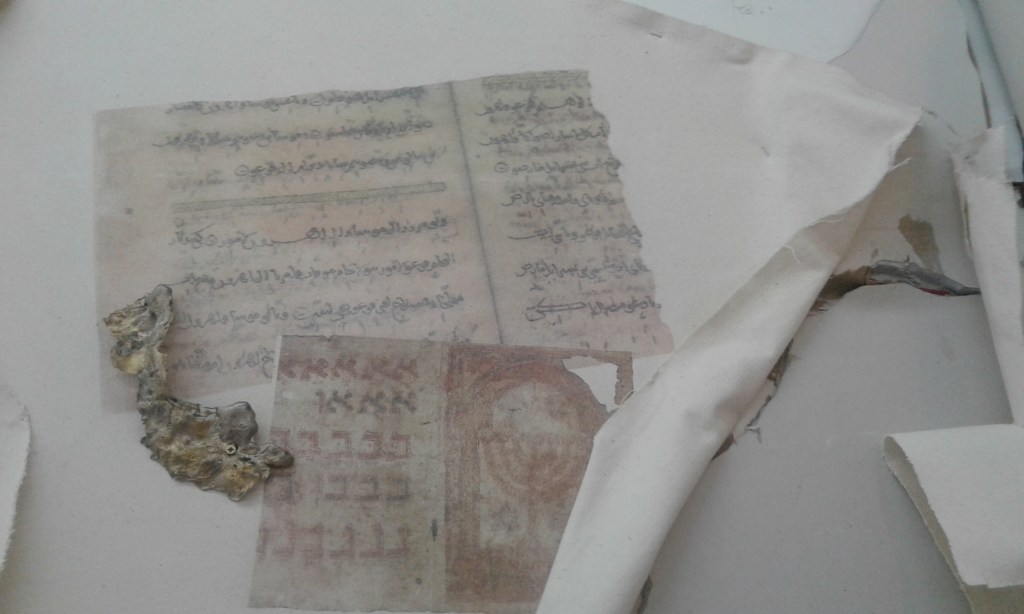
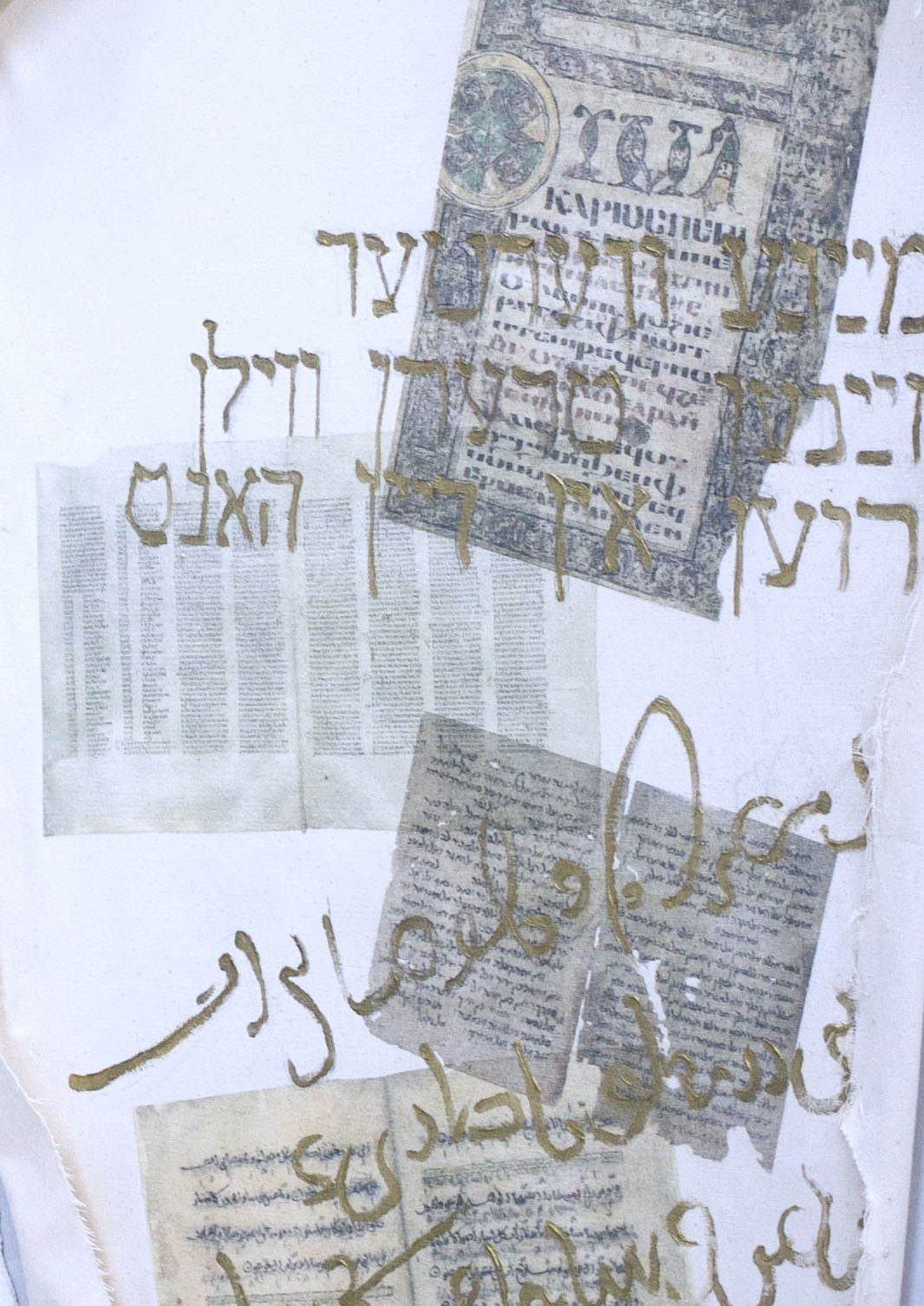
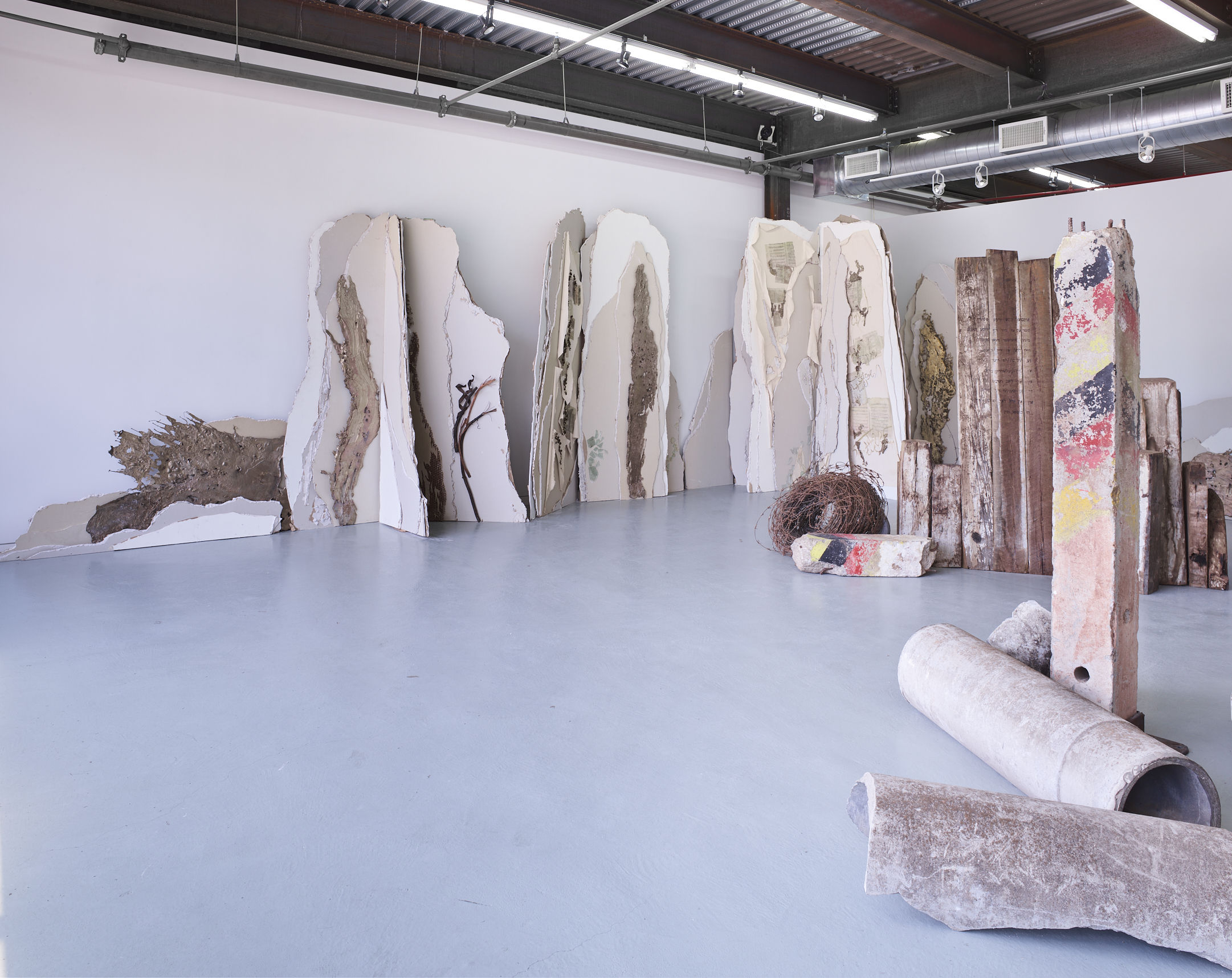
    Linda Cunningham’s sculptural installations speak many languages. Much of her recent work has been tapping into environmental specificity relating to the South Bronx waterfront. The artist has explored a topic of climate change in urban environments. Through July-August, Cunningham has her solo exhibition up in Brooklyn at the celebrated ODETTA. The current show features a large installation of her sculptural pieces well put together with drywall photo collages, both mediums that Cunningham frequently works with. This time Cunningham’s exhibition features textual patterns as mixed media works. The images display historic texts, which carry references to three monotheist World religions (Judaism, Christianity, and Islam) in earlier times when the cultures co-existed peacefully, a scenario impossible to imagine now. Many of the texts seem to be fragments that have been saved, depicting religious writings in Coptic, Hebrew and Arabic. The title of her exhibition: Whose Land? Whose God?, also includes remnants, which the artist acquired from the Berlin Wall in 1989. As the artist herself is well-traveled, behind the exhibition story is an expedition.

    Firstindigo&Lifestyle: Let’s talk a bit about the bronze as a material in the exhibition. As I understood, you were running your own bronze workshop in Pennsylvania? 

    LC: As a young professor at Franklin & Marshall College, I was challenged to create a bronze casting facility to make use of a very old oil burning furnace that a former professor had acquired for the sculpture facility. Enthusiastic art students and guest professors helped me build the facility and develop the expertise to do traditional bronze casting which I later taught in Advanced Sculpture classes. I eventually ran some women’s bronze casting weekend workshops which was wonderfully empowering for the participants who never had had such an opportunity.

    Firstindigo&Lifestyle: About the process of pouring the metal, how do you create the movement so evident in your sculptures. What is the methodology behind the pouring, and using sand in the process?

    LC: I eventually became interested in much more experimental casting methods that sculptors like Isaac Witkin were using, pouring bronze in single sided shallow molds filled with foundry sand. I developed the technique of pouring long thin forms that record the flow of the hot melted bronze. The bronze freezes the flow patterns and splatters creating the highly textured surface as it solidifies in seconds. Early on I found a way to acquire scrap military bronze and was using these lacy bronze forms to create 11 ft high shells of figures I called “War Memorial.” I thought of them of as vulnerable survivors. Five of those bronze images framed the entrance to the City University Graduate Center when it still stood for many years on 42nd St across from Bryant Park. They are now owned by Grounds for Sculpture in Hamilton, New Jersey.

    detail_panel_wire_nails.jpg
    Linda Cunningham’s innovative bronze becomes part of a drywall sculpture.

    Firstindigo&Lifestyle: Your exhibition Whose Land? Whose God? is inspired by an exhibition that you saw in Germany, when and where did this exhibition take place?

    LC: The text Images were taken from the catalog of an exhibition I saw and was deeply impressed by in Berlin, 2015 titled: ‘One God: Abraham’s descendants on the Nile. Jews, Christians and Muslims in Egypt from late Antiquity to the Early Middle Ages’ at the Staatliche Museen zu Berlin, known as the Bode Museum on the Museum island in Berlin.


    Firstindigo&Lifestyle: How many texts, including a variety of liturgical, bible & prayer books, are there included in your exhibition? 

    LC: I used 16 different examples. Many more were included in the exhibit in Berlin.

    Detail of Coptic and Hebrew.
    Linda Cunningham, installation detail at ODETTA. Textual imagery is relevant to early history of three monotheist World religions. Often saved as fragments like this.

    Firstindigo&Lifestyle: How about the pieces in the exhibition that you acquired from the Berlin Wall, what is the story behind them?

    LC: I was invited to create a sizable installation in an alternative arts factory building in Kassel as an alternative documenta exhibit in 1992 about 2 1/2 years after the wall had opened up. A man who worked in the factory that was sponsoring the project took me to the town where he lived that was just over the former border where mountains of posts, fence, electrical cable and barbed wire were assembled as they dismantled the border that reach across the entire country. They were happy to have me take what I could fit in his van and charged me 50 Deutschmarks. The elements fit perfectly into the theme of the installation I was working on at that time.

    Firstindigo&Lifestyle: How did the transportation of the wall pieces take place, literally from Germany to the US?

    LC: When the exhibition came to an end after 90 days, I couldn’t bear to throw them out and storing was also prohibitive. My German friends helped me to get crates built and one friend drove the crates to Hamburg to get them loaded on a freighter. I picked them up with a van at a New Jersey port outside Newark. I always intended to exhibit them again and they have been schlepped from one studio to the next ever since.

    Linda Cunningham's installation view at Odetta Gallery.
    Installation view to Linda Cunningham’s exhibition at ODETTA. Remnants of the Berlin Wall are on the right.

    ***

    More exhibition info: 

    Linda Cunningham Whose Land? Whose God? 

    July 7 – August 20, 2017

    ODETTA | 229 Cook Street, Brooklyn, NY 11206

    Artists Talk: Sunday, August 6, 3 pm

    Odetta Gallery: http://www.odettagallery.com/

    Artist website: http://www.lindalcunningham.com/

    Read about the visit to Linda Cunningham’s studio as featured in Firstindigo&Lifestyle.


  • Diana Al-Hadid: Liquid City

    Diana Al-Hadid: Liquid City

    Diana Al-Hadid: Liquid City is an exhibition full of history that is so relevant today. Al-Hadid’s solo show is currently on view through September 24, 2017 at San Jose Museum of Art in San Jose, California.  Liquid City is like a micro-cosmos of a world, in which the observer has carefully assembled her sharp point of view towards the core. It features an art-historical study on a matter that is hybrid and timely in the world, where archaeological sites and cultural homes are disappearing in front of our eyes. The subject is immense, but in this exhibition, the history gets rewritten in more pleasant terms.

    The exhibition focuses on Al-Hadid’s creative process by bringing together works and related primary source materials. One example of this fruitful exchange is a large sculptural installation titled Nolli’s Orders (2012), which refers to Giambattista Nolli’s landmark 1748 map of Rome. The artist has included a reprinted folio of Nolli’s map and works on paper by old masters, to support the idea for the sculpture. The two-dimensional papers are an interesting contrast to the three-dimensional sculpture, perhaps showing how the process evolves from sketches to more complete forms. The constellation addresses how works are fluid and in-between states before their final spatial configurations.

    Sculptural centerpiece Nolli’s Orders brings Al-Hadid’s installation idea to the museum space. With the multiple references, the sculpture addresses an idea of a city as public and shared space. Showing private and public structures of contemporary life, it anchors the idea of the sculpture into city with piazzas and fountains. Cities have been shaped around sources of water, around which the people have gathered and shared their belongingness. The conflict, which this work implies, is embedded in the idea of not belonging. It touches on the private spheres in which people feel uncertainty and alienation from firm structures, lacking the real connection to the architecture of the city. Resulting in the shapes as structures without roots, narrative and story?

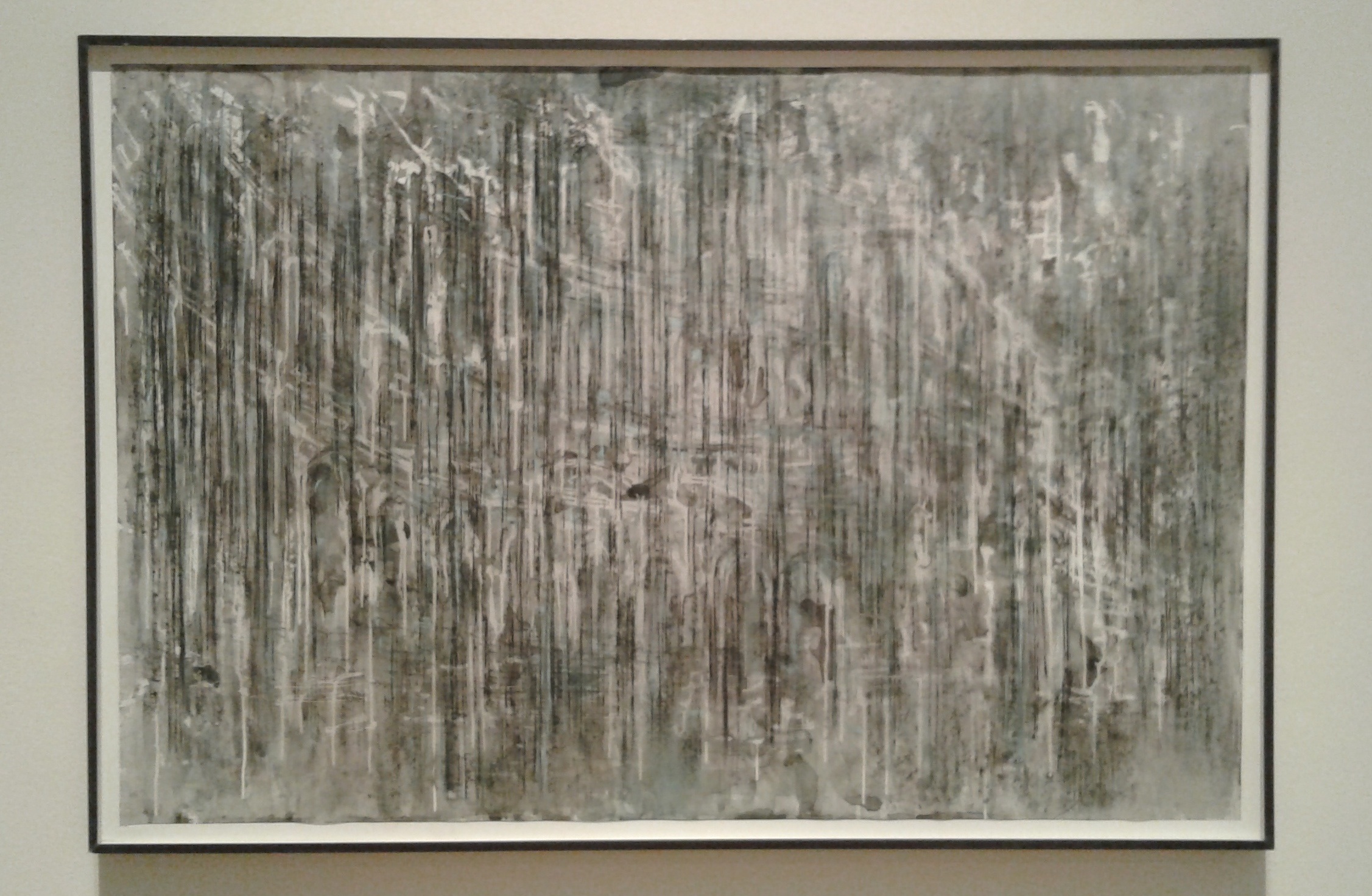
    The idea of the sculpture continues also in Al-Hadid’s two-dimensional works, which aesthetically relate to its colors and patterns. On the other hand, Diana Al-Hadid has employed yet another ephemeral pattern and style on their surface. In these works, the historical evidence is present as influence of ruins. The dripping paint creates the delicate surface as if showing traces of archeology as rendering marks. During her graduate studies, the artist was influenced by Hellenistic history that is visible in the ruins near Aleppo. She also explored Moorish layers in Spanish cathedrals.

    Diana Al-Hadid, Untitled, 2013, Conte crayon, charcoal, pastel and acrylic on Mylar.
    Diana Al-Hadid, Untitled, 2013, Conte crayon, charcoal, pastel and acrylic on Mylar. Collection of ICG Advisors, Los Angeles. photo: firstindigoandlifestyle

    Diana Al-Hadid: Liquid City is displayed in the SJMA’s central skylight gallery, and as such fits to the space eloquently. The work questions boundaries of the space. Putting together the reference materials is brilliant, as all surrounding works add to the monumental scale of the sculpture. The visual of the artist’s own works is compelling, interwoven, giving a context to a deeper thinking of history. Al-Hadid’s thinking is full of vivid ideas of fusing materials into new order, rewriting history from today’s point of view. How the artist got interested in the borderlines and beloningness/alienation thematic, comes from her own background as an immigrant to the United States. The artist was born in Aleppo, Syria, but was brought up in Ohio, US. Being contradicted with different experiences was a nourishing source for imagination and thinking. The theme connects many fragmented ideas across continents, beyond physical and social realms, and certainly travels across the world with its relevance. The works in the exhibition are far from being literal.

    ***

    More information about the exhibition at San Jose Museum of Art: http://sjmusart.org/exhibition/diana-al-hadid-liquid-city