Category: interviews

  • Artist in focus: Sasha Huber

    Artist in focus: Sasha Huber

    Sasha Huber is a multidisciplinary artist who hopes that our world would be a better place for people with different ethnic and racial backgrounds. She is determined to continue her family’s Haitian heritage in the arts, and has challenged the postcolonial controversies left behind by figures like Christopher Columbus and Louis Agassiz. Her artistic career has brought her international merit across continents. Sasha Huber’s art is currently shown in the DNA of Water -exhibition at the Newhouse Center for Contemporary Art in Staten Island, New York City.

    Firstindigo&Lifestyle: You were born in Switzerland with Swiss and Haitian heritage, how did this dynamic and background influence your youth and early artistry? Where did you get your education from, and how did you eventually find yourself living in Finland? 

    Sasha Huber: Being from two such opposite cultures inspired me from the start, although becoming an artist was not my first choice in my professional live. My interest was first in graphic design that I learned in Zurich, Switzerland. I then worked some years as a graphic designer at different studios and agencies and then applied and was accepted for a one year scholarship at the research and design and research centre Fabrica by Benetton in Treviso in 2000. Its a multidisciplinary and international environment that I missed in Switzerland. That is also where I met my husband and collaborator Petri Saarikko who is from Finland. So love brought me to Finland at the first place. There I also graduated in 2006 with the Masters Degree in Visual Culture from the University of Art and Design, today known as Aalto University. One situation that triggered the idea for my first art project that I made in 2004 was related to that I was not allowed to visit my mother’s home country and family in Haiti, due to the political situation there. My mother was especially worried for me, and basically forbade me to go when I was younger. Starting to make my art about Haiti served as a compensation instead, and eventually brought the place closer. As an adult I’ve visited Haiti so far twice and each time within the artist context. First time Petri and I took part in the 2nd Ghetto Biennale in 2011, and the second  time we were invited to make projects at the Le Centre D’Art in Port-au-Prince during one month in 2016. Both visits went very well and allowed us to work collaboratively with multidisciplinary artists. Working with the Centre D’Art was also special for me since my artist grandfather Georges Remponeau was one of the co-founders of the school in 1944.

    Firstindigo&Lifestyle: Could you tell more about in what ways your European upbringing was intercultural. Do you have an opinion that European culture and heritage changed in recent years in relation to migration, and with the impacts of globalization? 

    Sasha Huber: Coming from a rich cultural background with over ten different nationalities, including the joining families through the different unions in our family, made me aware of the differences and similarities in cultures, and broadened my horizon. I think it helped me to feel comfortable in new places very quickly. For me this is a positive experience. Now when Europe is growing, as we can see with the influx of the newcomers and others too, there are also conflicts, and that brings sorrow to the people trying to find safety.

    I would hope there could be other, more human and respectful ways to handle this situation. Luckily there are creative initiatives by grass roots organisations, and individuals who help to contribute to make welcoming people more dignified. Sometimes its forgotten that Europe is also made of very many cultures after all. In a time like this, where racism against the black and brown people is in the rise, and not only in Europe, I’d came to think that it would be good for people to read more such books as James Baldwin’s book I’m not your Negro, or watch the documentary by Haitian film maker Raoul Peck (1953–) under the same name. And read the Orientalism by Edward Said (1935–2003) who founded the academic field of postcolonial studies. Both books were written long ago, but are very relevant in the current climate we live in.

    Firstindigo&Lifestyle: One of your artistic discoveries relates to the historical context of the colonization and cultural imperialism. What did you find out about the subject from your specific study, and how did you translate it into your artistic practice? 

    SH: I would say that the starting point of my career was to deal with the colonialism, and the topic has actually been a red thread throughout my entire practice ever since. In my first project, which was a portraiture series named Shooting Back – Reflection on Haitian Roots, I for instance portrayed people that were responsible of the troubles in Haiti. I started from the beginning and portrayed Christopher Columbus (1451–1506), a figure that has in recent years become more and more challenged; which I find is very important. For instance, in the United States several cities don’t celebrate the Christopher Columbus Day anymore in October as his first arrival in the “New World”. Instead they highlight the meaning as Indigenous Peoples Day. Or, in 2015 in Argentina his statue was replaced with the large statue of freedom fighter Juana Azurduy. We should not forget that some 95 % of the indigenous population in the Americas were killed after his arrival, and the European invasion that followed brought disease and slavery.


    Firstindigo&Lifestyle: Is a question of taking over land and leaving marks on its surface, in the environmental sense perhaps, part of the colonization history as you understand it and discuss it in your artistry?

    SH: I became conscious about this in 2007, when I joined part of the Demounting Louis Agassiz campaign that was launched by historian and political activist Hans Fässler. Until recently, the life and work of Louis Agassiz (1807, Switzerland – 1873, USA) have been intentionally embellished. He has mainly been presented as a glaciologist, scientist, and director of academic institutions, both in his country of origin, Switzerland, and in his adopted country, the USA. The campaign raised awareness that Agassiz was a proponent of scientific racism and a pioneering thinker of segregation and “racial hygiene”. The aim was at removing Louis Agassiz’s name from a 3946 m peak in the Swiss Alps and renaming it Rentyhorn in honour of the Congolese-born slave Renty, and of those who met similar fates. Agassiz ordered Renty to be photographed on a South Carolina plantation in 1850, “to prove the inferiority of the black race”. This initiative began to open the eyes of the Swiss public, and exposed Louis Agassiz’s involvement in the crimes against humanity. Today, there are over sixty places all over the world, and in our Solar System (the Moon and Mars) that bear Agassiz’s name. I call this micro colonialism of a single person marking his existence around the world while ignoring the local perspective.

    My way to react and act through my work as an artist manifested for the first time after I joined the transatlantic committee of Demounting Louis Agassiz, as I started to plan my first intervention to the Agassizhorn in 2008. I airlifted a metal plaque bearing a graphic representation of Renty to the top of Agassizhorn, on the borders of the Swiss cantons of Berne and Valais. In doing so, I took the first step towards renaming the mountain into Rentyhorn. I also started the petition website rentyhorn.ch which is still online. Even though for now, the mountain will not be renamed officially after many years of negotiating with the communes. In New Zealand’s Te Waipounamu – South Island in comparison, I traveled to the Agassiz Glacier with local Māori greenstone carver Jeff Mahuika who performed a karakia (Māori blessing) on the glacier to symbolically de-name the glacier and hens cleanse it from it’s associations to Agassiz’s racism. *

    Prototype of Sasha Huber and Thomas Götz as Louis Agassiz, Wet plate collodion photography by Borut Peterlin, comissioned by Sasha Huber, 2013, 10” x 12”.

    Prototype of Sasha Huber and Thomas Götz as Louis Agassiz, Wet plate collodion photography by Borut Peterlin, comissioned by Sasha Huber, 2013, 10” x 12”.

    Firstindigo&Lifestyle: Your background is in graphic design, and you have also worked with video; how do these mediums and techniques correlate with your artistic vision and outcome?  

    SH: I use a variety of mediums to realize projects. For me the defining reason to choose a specific medium is, first the idea I want to realize and then to decide based on that. I also often collaborate with experts to help me realize a work, such as videographers, editors and photographers.

    Firstindigo&Lifestyle: Do you also work with text, for example, to generate ideas, which then take visual forms and so forth? 

    SH: My artworks are predominately visual, but finding the title of the works is important, and for each project I write a text as well. Sometimes the artwork idea is inspired by text, poem or song as for instance the Strange Fruit poem. I made two projects about this poem that were performed by Billy Holiday and Nina Simone as well. The poem was written by a teacher Abel Metropol in 1937. It protests American racism and tells about the lynching of African Americans.

    Firstindigo&Lifestyle: Do you write about your own art, keep diary, and perhaps discuss it in essays?

    SH: Mostly curators, academics and journalists write about my work. I participate in conferences to speak about my work. As an example, last year I was a keynote speaker at the Archival Re-enactments Symposium arranged by the Living Archive project of the University of Malmö in Sweden. This summer, I will participate in the 6th International Afroeuropeans: Black Cultures and Identities in Europe conference (http://www.uta.fi/yky/en/6thafroeuropeans/index.html) in Tampere, Finland. I’m currently also doctoral student at the Art Department of the Aalto University’s School of Arts, Design, and Architecture in Helsinki, Finland. So far, I’ve published two books as part of my doctoral project, which I started several years before in collaboration with some historians. I edited Rentyhorn published by Kiasma Museum of Contemporary Art in Helsinki. Then, I co-edited (T)races of Louis Agassiz: Photography, Body and Science, Yesterday and Today published as part of the 29th Sao Paulo Biennale in 2010.


    Sasha Huber in collaboration with Petri Saarikko, The Prototype, 2013, installation view.Sasha Huber in collaboration with Petri Saarikko, The Prototype, 2013, installation view.

    Firstindigo&Lifestyle: As a result of your investigations through several years, do you see that your art is influenced by Haitian aesthetics, nature and environment in multiple ways? 

    SH: As mentioned earlier, the starting point of my art practice was inspired by Haiti’s history. As a matter of fact, I developed a technique for myself with metal staples shot with air pressure onto abandoned wood, as for instance in the Shooting Back – Reflection on Haitian Roots (2004) portrait series. For me the staple gun is like a weapon and I use this technique only when the project relates in some ways to the historic trauma. But aesthetically it could perhaps remind of the traditional beading and stitching as for instance utilized in the creation of the colourful Voodou flags. 
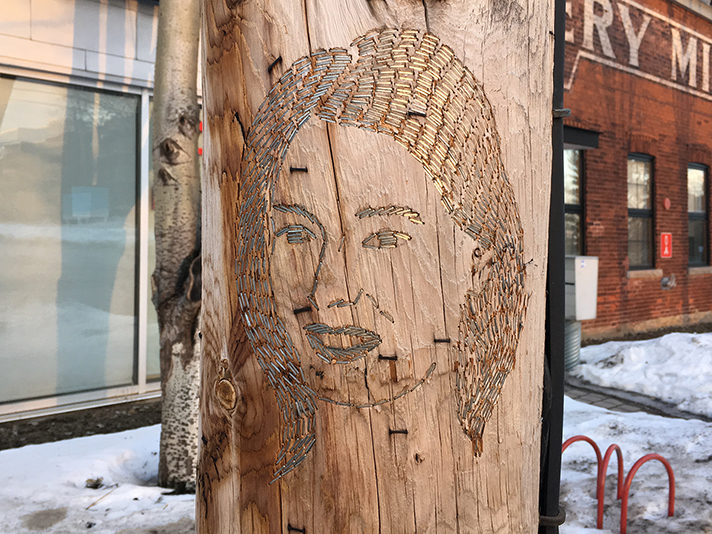
    You Are Missed, is a work in progress project by Sasha Huber, depicting a new portrait series that uses wood and metal stitching. Huber's artist residency at Axenèo7 in Gatineau, Canada in 2017.
    You Are Missed, is a work in progress project by Sasha Huber, depicting a new portrait series that uses wood and metal staples stitching. Started in Huber’s artist residency at Axenèo7 in Gatineau, Canada in 2017.

    Firstindigo&Lifestyle: In the fall of 2016, there was a curated group exhibition titled “Botany under Influence” taking place at Apexart in New York City. Your collaboration with Petri Saarikko was included in the show. How did you get involved in this special exhibition?

    SH: We met curator Clelia Coussonnet in Paris, where I participated in the Haïti exhibition about contemporary and historical Haitian art at the Grand Palais in 2014. When she was planning her group exhibition Botany under Influence I told her about our Australian remedies video that she then included into her exhibition at Apexart (http://apexart.org/exhibitions/coussonnet.php). The exhibition delves into the politics of plants, and explores systems of meaning that have been impressed upon nature, flora, and seeds throughout the eras of imperialism, colonialism, and globalization.

    Firstindigo&Lifestyle: Could you tell more about the video work that you showed in Apexart. The title of it is ‘Remedies Australia’  (2014). Does this work include material from several geographical locations and have different cultural components in it? Is this process still ongoing? 

    SH: Remedies is a series I initiated with my artist husband Petri Saarikko during an artist residency at Botkyrka Konsthall in Sweden in 2010-11. It was inspired by our interest in aurally transmitted family knowledge and remedies that we learned from our own families. Later we expanded the project to New Zealand, Australia, Haiti, Russia, Germany and back in Sweden. The Australian edition of Remedies casted Mildura based inhabitants to contribute eucalyptus tree related unwritten narratives and oral histories for an individual and collective portraiture.

    Firstindigo&Lifestyle: You are currently in New York City taking part in an exhibition DNA of Water, what kind of works do you have in Staten Island?  

    SH: Together with my family we just came from a residency in Canada, and continued directly to our current artist residency on Staten Island. We are participating in the group exhibition DNA of Water at the Newhouse Center for Contemporary Art which is curated by Sasha Dees. I am showing couple projects of which two are portraits from the ongoing Shooting Stars series, which is dedicated to worldwide victims of gunshot assassinations and killing perpetrated for political, ethnic, ideological or economic reasons (http://sashahuber.com/?cat=10040). I will show the portrait of Martin Luther King Jr. (1929-1968). I also made a new portrait of Eric Garner (1970-2014) who was living on Staten Island. At the end of the exhibition in September, I will gift the portrait to his mother Gwen Carr.

     — — —

    The DNA of Water exhibit is open from March 26 until September 3, 2017 on Wednesdays through Sundays from 10;00 a.m. to 5:00 p.m., at the Newhouse Center for Contemporary Art at the Main Hall of Snug Harbour, Staten Island (http://snug-harbor.org/event/the-dna-of-water/?instance_id=3179). 

    More info about the artist: www.sashahuber.com

    *(see: http://www.sashahuber.com/?cat=10046&lang=fi&mstr=4)

  • Favela Vera Ortiz: Choreography unplugged

    Favela Vera Ortiz: Choreography unplugged

    Favela Vera Ortiz is a Finnish-Argentinian choreographer based in Helsinki, Finland. The choreographer has recently been celebrating her artistic anniversary. She is currently finding herself with compositions that extend the boundaries of the body, self, and the space. Vera Ortiz is well known as an inventor of Choreographer’s Appointment, in which participants find their solo movements with the choreographer, and engage in a social form of personal choreography with a performance. The choreographer has worked with multiple themes in her native Finland, in Stockholm, Buenos Aires, Paris, and Melbourne, Australia, to name a few locations.

    Firstindigo&Lifestyle: Your career spans over 15 years, and in fact you just celebrated your artistic anniversary. Starting from the time you went to study at the Danshögskolan in Stockholm, how did you end up choosing to go there?

    Favela Vera Ortiz: Actually I had tried to get in to some schools already earlier, but always seemed to be the one who almost got in. But I continued dancing all the time and became more and more interested in making choreography. I chose to apply to Danshögskolan because they had a choreography program. I got in on first attempt and was very happy about it.

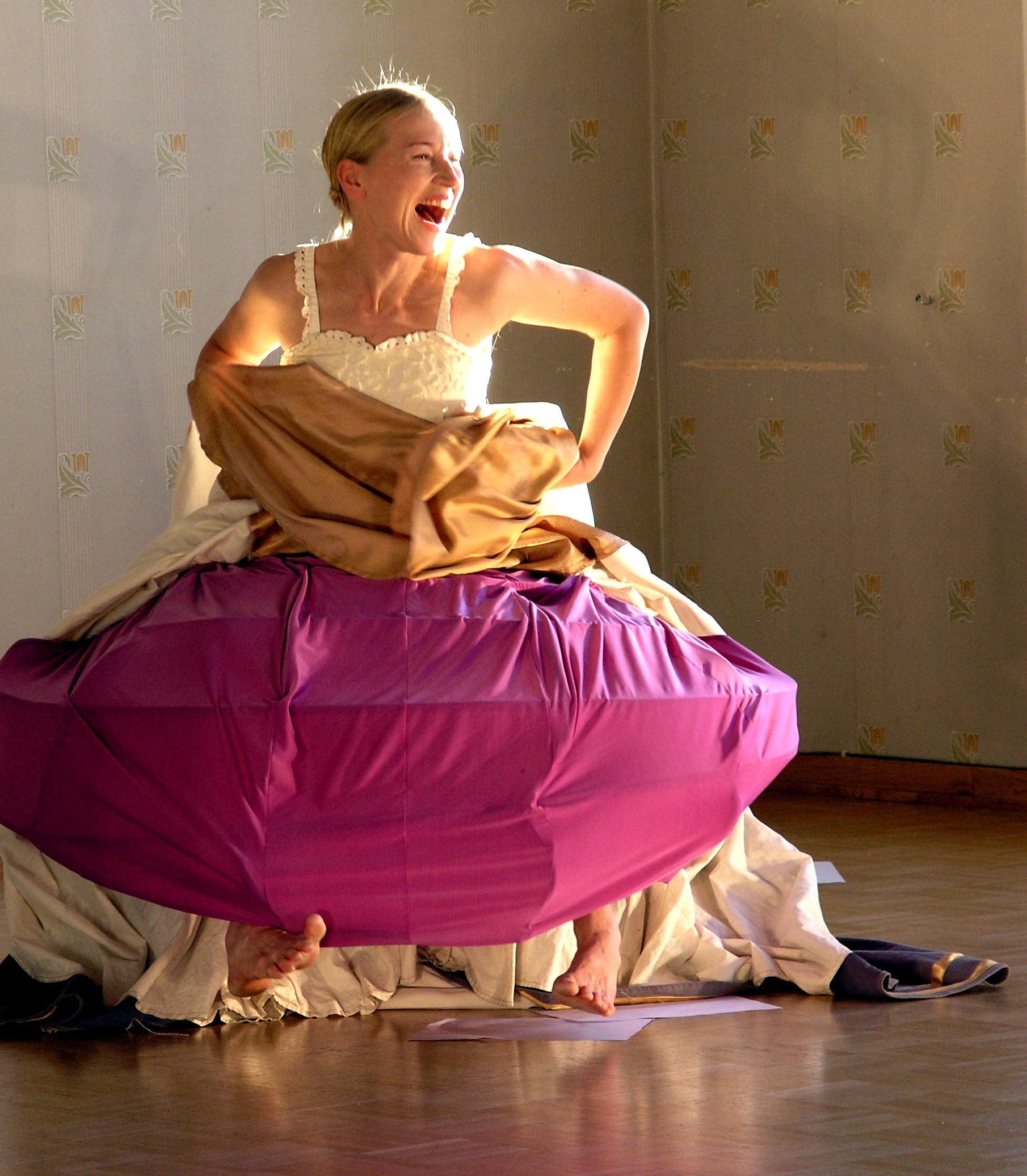
    deux2-choreography-favela-vera-ortiz-photo-anna-diehl
    deux2, Choreography Favela Vera Ortiz. Photo Anna Diehl.

    Firstindigo&Lifestyle: What are the key ideas and modes of working you learned while studying choreography in Stockholm, and have they stayed with you?

    Favela VO: During the 3 years of education, I learned many tools from several visiting teachers. We were 3 students at the choreography program/education, and one of the learning processes was to be able to follow how the 2 others did their compositions when the starting point was the same for all. For example, professor Örjan Andersson gave a task to use certain compositional tools with 9 dancers and the result was interesting to see how different the works were.

    I also invented a method of trying to be free of judgement while making the movement, this was kind of a brainwash that was supposed to get the body to produce material earlier unknown. I am a curious chameleon and tend to try out new things which leads to different works. I’d say styles in my works vary a lot. Similarities tend to pop up afterwards, but it is not intentional.

    One example is the question of how to use time. I am very interested in the concept of time being round instead of linear. This shapes the movements and music choices I make, and it has stayed with me from the first work with this “round time” that I did at school. It was a choreography of 15 minutes with several black outs cutting scenes, the shortest scene was only 4 seconds. Work with playing visibility, repetition and strong visual images.

    Firstindigo&Lifestyle: Looking back, does it feel that so many elements have changed over this time?

    Favela VO: It is a long time – 15 years – and certainly a lot has changed. But it is hard to put a finger on it and say here is a changing point and then something happened. Mostly change comes slowly with several try-outs and when there is a new direction it grows from a process and forms new frame. This overlapping process is a living creature in itself. The old and the new exist at the same time. During the past five years I have done some collaborations with visual artists which is new for me.

    Firstindigo&Lifestyle: Many of your works have a strong visual element in them. You have worked with costume designers, in which a dress, costume and also architectural and spatial elements are conducting the narrative, or directing the movements in a way. Is doing choreography sometimes like being a composer with a certain thematic?

    Favela VO: I’d say the thematic sometimes brings the costume or other visual elements conducting the movement. I have often done costume, lights and stage design by myself as it feels they are so closely linked to each other and push the movement to what it is. Last year, for example, I did a site-specific work L’AUTRE in a bomb shelter where the strong  visuality comes with shadows on an uneven wall and laser light. I did the lights with five torches. What the photos don’t show very well was the glitter on the body of the dancer, she was covered in gold shiny glitter, very thin layer of it though. (Check the photos of this work here: www.photoslautre.tumblr.com)  I also enjoy working in a group with visual artists who bring their ideas to the common table. It is always an adventure to see how the process goes forward and which elements grow to be presented. My latest work OPUS CORPUS III is a beautiful example of this.

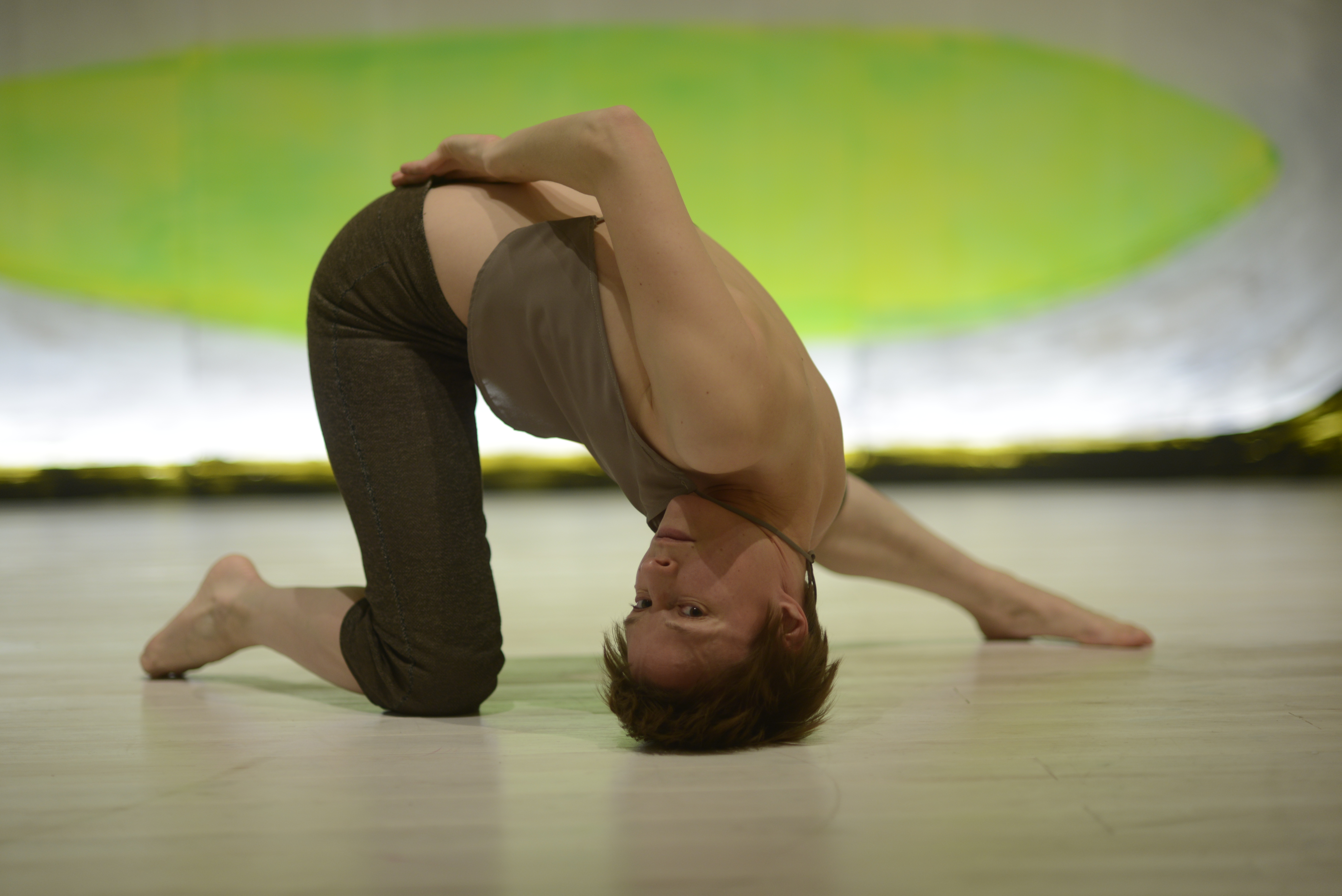
    opus-corpus-iii-choreography-favela-vera-ortiz-2016-photo-valdis-jansons
    Opus Corpus III, Choreography Favela Vera Ortiz, 2016. Photo Valdis Jansons.

    Firstindigo&Lifestyle: While working in Buenos Aires, you also started working with plastic wraps or bags that evolved to be headpieces for the performers. Tell about this choreography, which was created in a local park?

    Favela VO: This work I made for three dancers, the inspiration was Greek mythology so the dancers were sort of goddesses. Even the name for the piece is MOERAE which are the three sisters making and cutting the line of life. But it was not a narrative work, merely the inspiration gave some movement ideas. It was made for Villa Ocampo, a cultural house in Buenos Aires. We used the terrace of the house and the park. The idea of using plastic bags to make costume was fabulous, it worked well. I did the wigs and tutus of thin white plastic. We also planned a stage version of the piece and filmed it while I still was in Buenos Aires. Later it got invited to Chile to a dance festival, so there are two versions of this work.

    Firstindigo&Lifestyle: Does word intercultural resonate in your personality, or multicultural, and how?

    Favela VO: I am half Finnish, half Argentinian. I have lived a nomad life for several years while working in different artist residencies. I was born in Helsinki and I am still based in Helsinki, but this year is the first full year that I have actually spent here entirely.

    Firstindigo&Lifestyle: You have created solos for dancers, for example, for Finnish dancer Riikka Kekäläinen. How much does a dancer direct the development of the work with her personality, and how do ideas come together in the end?

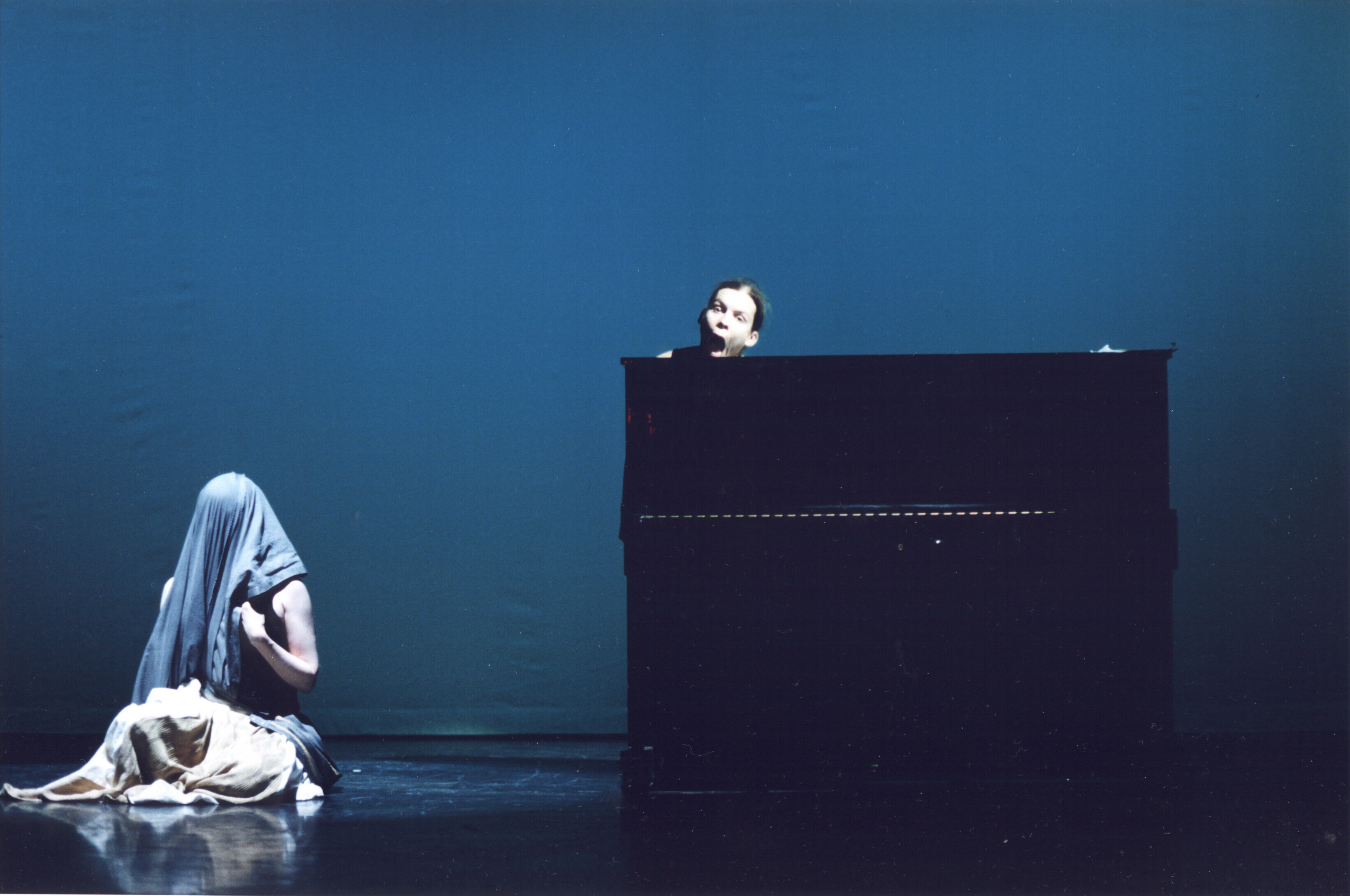
    Favela VO: The dancer has an enormous impact for the work. I often use different improvisations to search the movement so it is essential for the dancer. I choose the dancer who I believe is the best for the theme I am working with. The frame for the improvisations come from the vision I have for the theme, but then I choose the material from what comes out while working with the dancer and develop it further with the dancer. It is like a puzzle building the body of the work. One solo for Riikka, which I enjoyed a lot to do was called LA SEULE. It was seen in Finland but also in Paris at the Finnish Institute and in Düsseldorf Tanzmesse. The theme is the history of hysteria.

    OLYMPUS DIGITAL CAMERA
    LaSeule, Choreography Favela Vera Ortiz. Dancer Riikka Kekäläinen, Photo Vilma Niskala.

    Firstindigo&Lifestyle: Tell about the work in STOA Cultural Centre in Helsinki, in which the floor had mirrors all over, and the audience was sitting in a tight setting looking at the performer from a close distance?

    Favela VO: The work is called 21 notations on human. We had visitors in our rehearsal space. They were 20 persons who each came to share one rehearsal day with us. My question for them was “What is it that interests you in humans?” So, it was very wide question with personal answers. We created movement material with the visitors during the day with the dancer Hanna Ahti and got kind of a movement bank. The work is a selected composition of these things, as the material was several hours of material on video. The 21st notations on human (https://vimeo.com/35870033) is our version. The mirror floor reflects the dancer as many and brings also a visual element with light reflecting to the walls. It is a tender piece with the dancer having a conversation with notations on the body and the surface.

    21-muistiota-2011-choreography-favela-vera-ortizuupi
    21 notations on human, Choreography Favela Vera Ortiz, Dancer Hanna Ahti. Photo Uupi Tirronen.

    Firstindigo&Lifestyle: Somehow there is a sense that dancing for you carries several elements that might be also called as non-human, such as animal like, or vegetal, or spiritual; are these definitions closer to what you are aiming or thinking?

    Yes, there is an idea I’ve been working with for some time now where the body is half human, half animal. Like a hybrid body. This creature was more animal in the work Myoclonic (year 2013) and more human than animal in L’AUTRE (year 2015). This year (2016) the work OPUS CORPUS III was asking the question of where is the human, where is the animal, where does it start or end? The whole work seems to be a question so there is no answer. This hybrid is also an alienated body and represents the other, the strange, the weird in each of us.

    Firstindigo&Lifestyle: Your time spent in Australia, and doing the piece with yet another visual component, reminds a lot of the spiritual elements that are perhaps inherent to the aboriginal heritage, with the embodiment of place and environment and the essence of the human body in the entire life cycle. Could you tell more about this work?

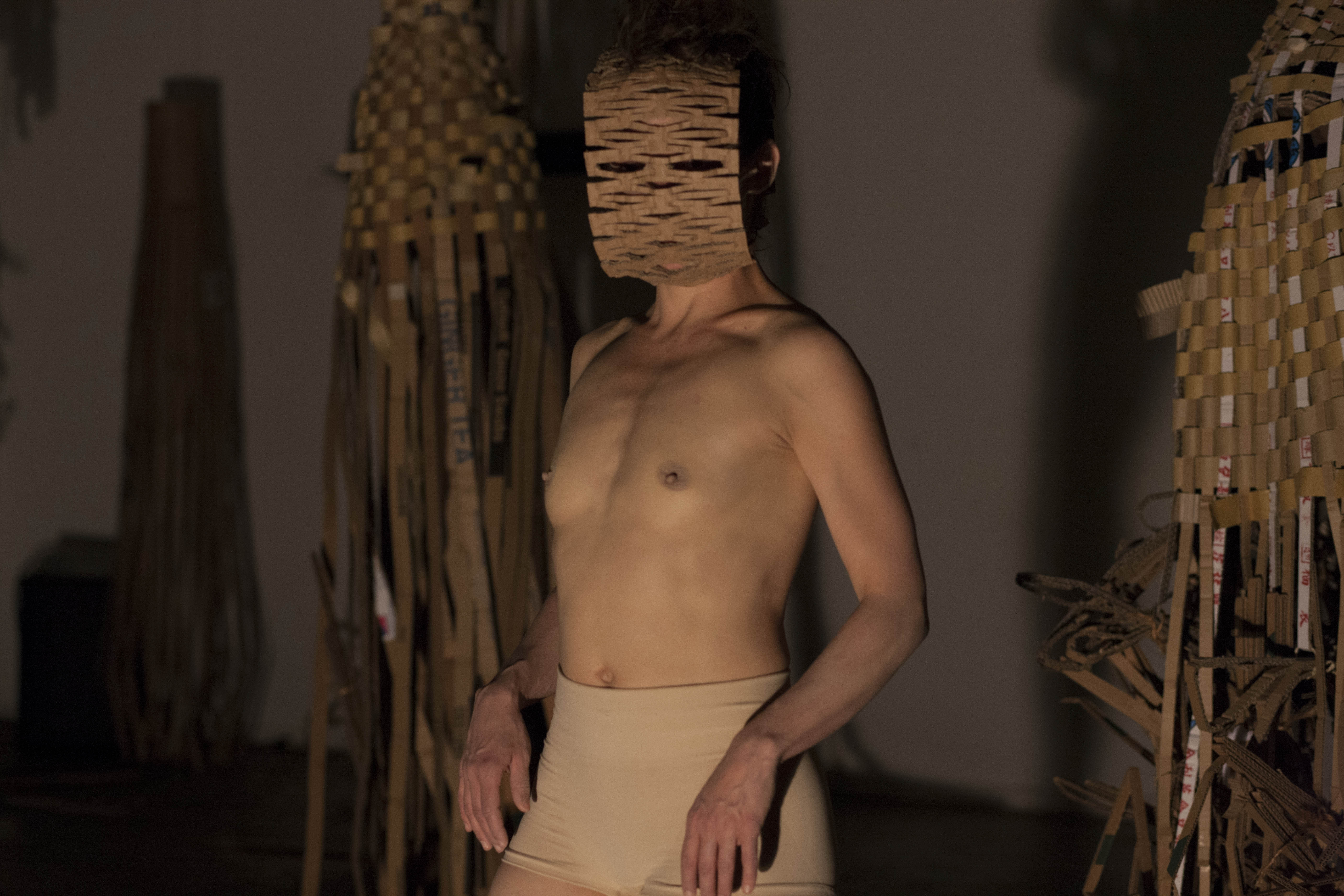
    Favela VO: This work started as a collaboration with Annee Miron, a sculptor and visual artist from Melbourne. We met in Paris in the Cité Internationale des Arts residency in 2010. The meeting and our discussions and sharing knowledge of our previous works made both of us interested of a common project. It took some time in between until it happened. I was working in Melbourne with Annee in 2013. The collaboration started with Annee’s project of sleepless, which developed into a performance MYOCLONIC (https://vimeo.com/66894548). Annee built a huge installation at the Yarra Sculpture Gallery, it worked as its own piece but also as a scenography for the dancer. I consider it is some kind of a jungle of mind. Annee used cardboard as the material and we used cardboard mask for the dancer. The performer, Sanna From is a Finnish dancer who came to Melbourne to work with this project. In our working group was also a local artist Anna Brownfield making the video. The work grew with visions of subconciousness and muscle tension of extremes, forming the body of being awake and alert. The name comes from Myoclonic jerks often appearing when falling asleep. The creature grew during the process and became more animal than human. It is as if this animal, creature is a relative to the hanging installation. The idea of animal body gave a strong impact to the piece. The hands were as kangaroos keep them, this certainly came after me seeing kangaroos in live for the first time. I was not thinking of using the aboriginal heritage.

    myoclonic-choreography-favela-vera-ortiz-dancer-sanna-from-photo-kelly-russ
    Myoclonic, Choreography Favela Vera Ortiz, 2013. Dancer Sanna From. Photo: Kelly Russ.

    Firstindigo&Lifestyle: Finland has a rich contemporary dance culture. How would you describe Finnish contemporary dance scene from your own point of view, and experience, how has it changed over the years?

    Favela VO: It has grown a lot during the past 15 years. It has grown hugely since I started to follow contemporary dance as that is about 29 years ago. Now we have more dance artists than ever, which also brings more voices, more variations of how to use dance as an art form, and gives more lively platform to all of us.

    Firstindigo&Lifestyle: What are your favorite places to work?

    I have enjoyed working in residencies as I enjoy of impulses each place resonates concerning space, energy, people, it is the whole world around – colours, light, different languages, working with local artists and getting other visions. But the absolutely best place to work is whenever the working group is working well, despite in where it is.

    Firstindigo&Lifestyle: Who are your greatest mentors or influencers?

    Favela VO: During the school I had a strong experience being thought by Hilda Hellwig, a theatre director. I liked her methods of thinking of the working process and leading it with great intuition. I suppose I have tried to keep that knowledge as one base while working. I do not tend to have idols, most of the time, I consider it is more some works that make a strong influence, so it is more one work per each artist I know that I admire. Some of the latest are works by Sophie Calle and Bill Viola. I get inspiration in books, films and exhibitions. Films having strong feeling of movement are special for me, it feels that they fill a dwell in my mind with visions and movement combined, and these strong images bubble and some day grow to live in yet another form. Margaret Atwood is one of my favorite novelists, her latest books with dystopia visions have given inspiration for my work with human/animal/alienated body.

    Firstindigo&Lifestyle: Where are your plans for the future, you have a one-year scholarship starting now, where do you think it could take you?

    Favela VO: That’s what I am planning at the moment! Not sure yet where it will take me, but I am definitely planning a new residency far away from Helsinki. I also want to continue with my latest working group in Helsinki so surely part of the year I will be spending at home.

    ***

    Artist website: http://favelaveraortiz.tumblr.com/

    Check out video about CHOREOGRAPHER’S APPOINTMENT https://vimeo.com/14337885

  • Artist in focus: Liu Shiyuan

    Artist in focus: Liu Shiyuan

    Artist and global citizen Liu Shiyuan is a young generation Chinese artist. She comes from Beijing and lives currently between China and Copenhagen, Denmark. Her multiplicity as an artist has gained her presentation across continents. Liu Shiyuan’s visually colorful photography and video montage, and her approach to cultural patterns perform traditions from new angles. In her body of works, monochromatic tones meet performative arrays.

    Firstindigo&Lifestyle: What made you decide to move to Copenhagen Denmark, as you have lived in so many places?

    Liu Shiyuan: I was born and grew up in Beijing. I studied in The Central Academy of Fine Arts (CAFA). Then after that, I went to NYC to get my MFA from the School of Visual Arts. I´m a very typical Beijing person, my dialogue accent and my behavior are pretty local Beijing type. I got used to living in a big city where there´s a lot of competitions going on. I like it, it makes me always have to work harder and be a better person and so on. So I actually never thought about moving to a place like Denmark. But I met my husband in Beijing in 2009 while he was doing his exchange studies there. We kept the relationship going even when we were living 8000 miles away from each other. He is Danish, and that is the reason why I am living in Denmark now.

    Firstindigo&Lifestyle: How has your choice of living in multiple places changed your artistic identity and your perspective into things?

    Liu Shiyuan: I got influenced by this kind of “international” life style a lot. Meeting with people from different places, it brought me a bigger image of understanding the world. I started thinking about things in a totally different way. By living with three different languages, my words are getting less, but my emotions are getting more. There´s so many things coming to me every day that I cannot even explain, they are too big and too complicated to be expressed by any language. That is why I work as a visual artist.

    Firstindigo&Lifestyle: What are the best aspects of living in Copenhagen as an artist, in what ways do you think it is special there?

    Liu Shiyuan: I found out here in Denmark that the “artists” (not including the Danish artists living outside of Denmark) are not like the “artists” I understood at all. I still don´t know what I can do here to the Danish society as an immigrant, except continue what I used to do. And I think doing art is enough for me. I don´t care where I live, as long as the life goes on. I travel a lot every year, we bring our baby with us to wherever we go. So home for us could be at any new places. We also stay in Berlin for a lot of time, since it´s very close to Copenhagen, so I guess besides Beijing, Berlin could be our second city.

    Do you feel Scandinavian now?

    Not very.

    Firstindigo&Lifestyle: How about your time spent in New Yock City, how did you experience the living and studying. Could you explain what ingredients did the art education give you?

    Liu Shiyuan: I went to NYC in 2010, when I was 24. And I graduated from CAFA in Beijing in 2009, so there was only one year I was doing some stuff in Beijing in the time between. I wouldn´t call it a career, I only built my own performance group, and we made two conceptual theater pieces. I´m still very proud of the works and the people I was working with in my team, because the two pieces ARE really good whenever I watch the video recordings again. It was really for fun, for doing something new, without thinking it is the beginning of anyone´s career. People from the art circle didn´t even think I was an artist. But I was a very serious student in NYC, I never wasted my time, I never gave myself a chance to do so-so stuff, I had to make sure my artwork was going in the best way as it could. It was really the fantastic two years in my life that I really put my art practice together, clear everything up. I was working very hard, having a BF on the other side of the earth, so I spent most of my time in the studio while in school.

    Firstindigo&Lifestyle: What is your primary medium of working now, or are you making art with different and varying tools and efforts?

    I am very hard on myself. Every time I make a new proposal, I begin from imagining I have never done art before. This is exhausted I agree, a lot of artists don’t work like this, but I just couldn´t help. I don´t have a studio in Denmark, I don´t put my works on the wall, and when I start a new project, I try not to look at my old works. So, I don´t think about the medium or the tools. Rather, the ideas are all coming from a brand new clean mind.

    Firstindigo&Lifestyle: You have created video works together with sound artist Kristian Mondrup Nielsen; how do these works usually develop?

    Liu Shiyuan: I am also a video artist. But I know nothing about sound, so I work with Kristian Mondrup Nielsen when I need sound in my work. He is a very professional musician, for finishing the sound part of my work, he also needs to cooperate with other people. The process usually starts from renting a recording room, inviting people to play, then he mixes the sound by himself, and the final step is mastering.

    Liu Shiyuan, The Edge of Vision, or the Edge of the Earth, 2013
    Liu Shiyuan, The Edge of Vision, or the Edge of the Earth, March 2013, Medium: Single channel video, color, 6mins, video still.

    Firstindigo&Lifestyle: Then your Wonderland’ color photography series was on display at the Frieze New York in May 2016 with Leo Xu Projects. This collage of photography brought to mind European food ingredients. Are these works influenced by Danish meals?

    Liu Shiyuan: Maybe. Danish food can be very conceptual sometimes, because they really care about where the ingredients come from, if the farming is bad for the environment. So when you go to a good restaurant in Denmark, often what you get can look very minimal, no exaggerations. But the taste is just so good because of all the effort behind the curtain, the carrots taste like the best carrots you have ever had, the black coffee tastes like it has milk in it. This way that they treat the ingredients is very similar to how I treat the elements in my artwork. I show how I fully respect the pictures I use in my photos, just simply placing them on “the plate”. ‘Wonderland’ is also related to how fictions are influencing our real life.

    In that series of photos, the amount of humor equals the same amount of sadness. So when you look at them, they are actually not food any more, they become the actors on the stage.


    Firstindigo&Lifestyle: What does the word Bentu, meaning native soil, personally resonate in you? It was a title of the exhibition, in which Fondation Louis Vuitton represented contemporary Chinese artists, who are crossing boundaries across traditions and geographical places, or are transforming something?

    Liu Shiyuan: Bentu was the group exhibition I attended in January 2016. The defenition of Bentu definitely doesn´t mean a location or a pin on the map. I think it´s more like the root of you, the foundation of your understanding of things.

    Firstindigo&Lifestyle: There is a lot of discussion going on about the role of Chinese contemporary artists as part of the art market booming in Chinese centers. Do you want to say something specific about the phenomenon?

    There´s a boom of something in China, but I´m not sure if it is mainly related to the art market. Among all the money China got every year there´s only 5% coming from art. So I think the discussion is more on the economical level. It is very scary if you go visit a small city in China, you see new buildings everywhere, but they are empty. So I guess it´s like someone took a loan from the bank to build them while hoping a lot of people can also take loans to buy them. So the whole thing is holy. I am actually very bad at thinking about money, so maybe I shouldn´t talk too much about economy.

    Firstindigo&Lifestyle: How do you see older generations contemporary Chinese artists like Ai Weiwei influencing your thinking or methods of working, or something like that?

    Liu Shiyuan: He definitely made me thought about my art practice a lot, especially in NYC when almost everyone was asking me about him. Sometimes I explained a bit about how understandings can get twisted between cultures, sometimes I just answer he is not my uncle I don´t know.

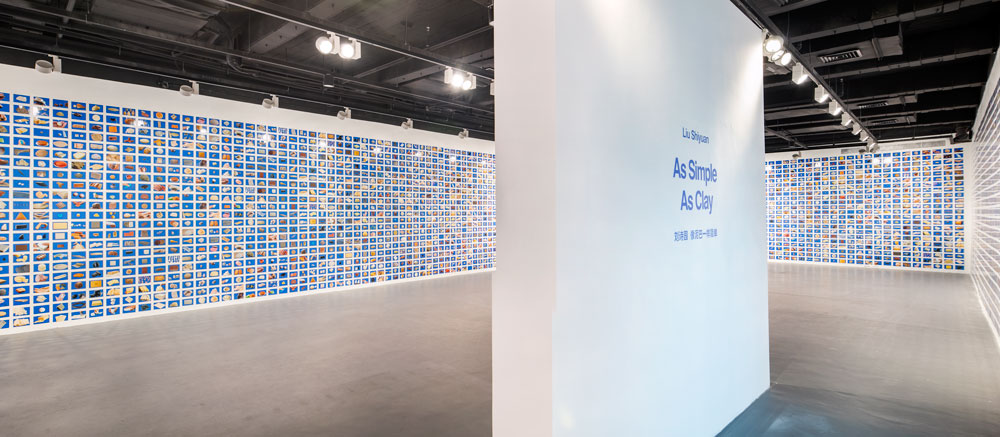
    liu-shiyuan-as-simple-as-clay-2013-photography-installation
    Liu Shiyuan, As Simple As Clay, 2013, Photography exhibition, C-prints. Courtesy of Liu Shiyuan and Leo Xu projects.

    Firstindigo&Lifestyle: Would you like to say something specific about the galleries, which represent you in Beijing and in Copenhagen. Do you feel that there is a common nominator now in the international art world, meaning that the patterns of working and featuring artists can be too similar?

    Liu Shiyuan: Definitely. The culture of mixing thing has been going on for a long time, and now it starts to seem a bit boring. I don´t think the way most of the people use the word “international” is right.

    Firstindigo&Lifestyle: As your art works have been exhibited in different platforms and sites; in museums, galleries, and art fairs, however, who would be an ideal collector for your art?

    Liu Shiyuan: Anyone who loves the works. For me, and also my galleries I believe, the best is not always the biggest. Of course, my artworks only have few editions, sometimes they are unique, so I hope the collectors are willing to show them again somewhere, to let more people see them, to make the works live forever in a way.

    Firstindigo&Lifestyle: Do you think there is something unique for being a woman contemporary artist that has a new empowering resonance?

    Liu Shiyuan: Actually I don´t feel any difference as being a woman. I don´t really know the art world a lot, maybe some people think there´s too few female Chinese artists, so we need to dig more out. But for me, I don´t think about it, it has been a long long long time that I didn´t think of myself as a woman, but I do remind myself all the time that I am an artist.

    ***

    Liu Shiyuan’s website: http://www.shiyuanliu.com/index.html