Category: performance&dance

  • Dance meets art at Loretta Howard Gallery

    Dance meets art at Loretta Howard Gallery

    Yvonne Rainer’s work Trio A (1966), is one of the most enchanting dance pieces of dance history that paved the way to contemporary and postmodern dance practices. It is an interesting choreographic work, not least because it is exhilarating from pure performance and performer points of view. How many times do contemporary performers get immersed in new projects, where choreographers and directors inquire effortless, non-virtuous task-oriented movements and behavior to use them as backbones for their pieces. This in fact is not so easy to accomplish at all. As what performer goes through is not so much about ‘performing’ from a merely audience seduction point of view, but follows more a neutral way of not-doing too much. This might sound complicated, but makes all sense when in dance the performers start tapping the space, letting their bodies organize the way through the space. The inheritance of this type of movement in dance, a meticulous way of appearing happens sometimes simultaneously in conjunction to things and objects. In sculptural and spatial terms, the dancer is like a living and moving human sculpture. But more than that, the art of dancing in this case is shaped also around imaginary objects, or spatial lines that cut through the architecture of space. In Trio A, it seems that the space and objects were a great source of inspiration for Rainer, acting as inner elements, and shaping the movement sequences. There are, of course, noticeable tricky movements and balancing included in the work, even when the dancer (herself in the original Trio A, which was part of a larger work The Mind Is a Muscle) would not make a full sequence of complicated turns, for example. In 1966, Trio A changed the dance scene by examining the possibilities of human movement. Rainer had learned from Merce Cunningham and John Cage to have different approach to the her audience or spectators in general. She also started to experiment with film using the same methods as in choreography.

    When watching the composition of Trio A evolve on the video, it comes to mind that perhaps the biggest challenge is to maintain a calm steady movement flow. The work became a classic not only because it still makes powerful statements of what a composition and a performance is about; but stating a strong performer making the composition. It changed so much in the Western dance history.

    Dance does not always get noticed among contemporary art forms, or is quite rarely placed in the art history like visual arts. When it appears to be paired together with and being a component of the visual arts as a performance art, or in conjunction of musical composition, it gets a different approach. The so-called post-modern dance era brought in new curiosities in terms of artistic collaborations that stretched beyond boundaries of different art forms and genres.

    Loretta Howard Gallery opens on September 10 with a new exhibition entitled “Where Sculpture and Dance Meet: Minimalism from 1961 to 1979.” The gallery curates annually an historical exhibition, and this truly interesting archival exploration showcases videos of historic performances and sculptures associated with minimalism both in art and dance. The exhibit is timely as it is doing homage to ideas that are still in a dialogue setting current trends in visual arts and performance. The exhibition shows that choreographers and sculptors, for instance, used methods of composition that were known as subjective. Yvonne Rainer belongs to these artists who brought minimalism to dance. She did not eventually wish to include her Trio A showing into the gallery exhibition, but her historic rehearsal recording from Conneticut with a group of performers works as a good intro to her style.

    In the exhibit, there is also a video of sculptor Robert Morris’ work,  in which a masked male performer performs with a sculpture created by Morris. In the 1960s, he built his early sculptures in Yoko Ono’s loft that also involved unique performance elements. Choreographer Simone Forti’s archival video of her piece Slantboard (1961), is an important addition to the exhibition. The work includes a platform in its center for performers to attach to and play with. The exhibit culminates around a piece Dance created by Lucinda Childs (original from 1979). The video is a double performance in a sense that Childs’ company performs in the background video when the Dance is recreated for stage. The choreography gathers an architectural sculpture from Sol LeWitt around it. Childs collaborated with the artist in set designs, and used music from composer Philip Glass.

    Andy Warhol’s installation of helium filled pillows, Silver Clouds, adds an interesting story to the exhibition. Warhol created the pillows which then functioned as a set in Merce Cunningham’s dance work Rainforest (1968). Performers in this choreography encountered the clouds when they were floating across the stage. Cunningham often explored dancers and objects to create ‘random’ encounters, so it is great that the exhibition’s shows a performance video and the sets in the gallery space to make the central point come across.

    In addition to the artists and collaborations mentioned, Loretta Howard Gallery displays Trisha Brown’s video Group Primary Accumulation (1973) as part of this archival display. The choreography explored altered understanding of the beauty and power with simple repetitive movements. Brown used principles of mathematics, modularity and repetition when composing the dance. Next to this video, there are minimalistic sculptures on the walls from Donald Judd, who created designs for some of Brown’s choreography. Then, a strong sculptural work is on display from Ronald Bladen.

    The exhibition “Where Sculpture and Dance Meet: Minimalism from 1961 to 1979”, is curated by Wendy Perron, who is the author of “Through the Eyes of a Dancer” and former editor in chief of Dance Magazine. It is co-curated by Julie Martin, who is an independent scholar and currently Director of Experiments in Art and Technology (EAT). The exhibit is on display from September 10 until October 31st, 2015 at Loretta Howard Gallery, 525-531 West 26th Street, New York.



  • Artist spotlight: Johanna Tuukkanen, The Outstanding performer

    Artist spotlight: Johanna Tuukkanen, The Outstanding performer

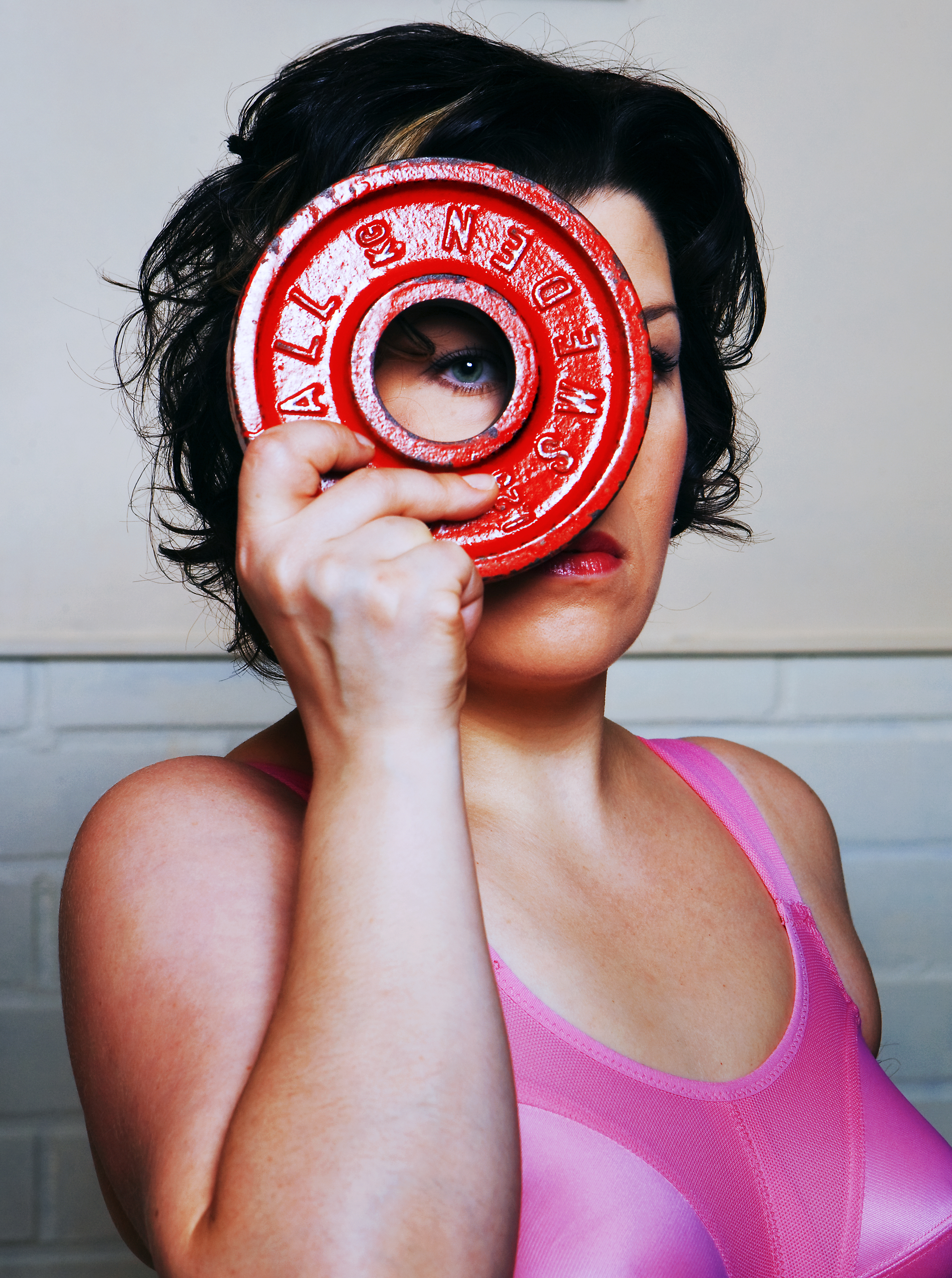
    I interviewed Johanna Tuukkanen, who is currently preparing her PhD in art education and cultural policy. She is a well-known curator and art-maker herself, and the Artistic Director of ANTI festival based in Finland’s Kuopio. This week, January 30, 2015, she will also have a premiere of a new work Panopticon together with her colleague, choreographer Pirjo Yli-Maunula in Oulu, which is a vibrant capital in Northern Finland. Their new multidisciplinary work will articulate a hot topic of women’s ‘controlled bodies’, as they are often portrayed in fashion industry and magazines, taking a theme of aesthetic violence in relation to women’s bodies as a starting point in their performance. Simultaneously, their performance asks, are we allowed to mock this phenomenon, and even make fun of it in the arts? Johanna Tuukkanen has been making noise with her performance art for good 15 years now, highlighting women’s bodies in her performances many times before.

    Johanna Tuukkanen in Huippusuoritus, Outstanding Performance, Photo: Pekka Mäkinen
    Johanna Tuukkanen in Huippusuoritus, Outstanding Performance, Photo: Pekka Mäkinen

    Firstindigo&Lifestyle: Johanna, I have known you from the early 2000s onwards. It seems that there has been a lot of currency exchange around your artistry since that time. Finnish art scene, I believe, has also developed and changed during the past 15 years. Could you highlight in a nutshell, how did the 21-century look so far in the art world from your personal point of view? What are your greatest pros and cons in the field as a participant with so many roles?

    Johanna Tuukkanen: You are right, things really have changed! After studying performance and new dance in the Netherlands and Germany in 1990s, I moved back to Finland in 1997. In terms of the art scene, it was a kind of culture shock for me and it definitely took some time to find my way around it. From very early on, I found myself thinking how else I could make a difference in the arts other than working just as an artist.

    Since then, I do see and have also personally experienced that the field has expanded greatly, it has opened and it is accepted – not totally but more and more – that for example in the field of dance, there are multiple traditions from which an artistic practice can stem from, not only one or two. Also the growing interest in site-specifity, a kind of ‘trend’, has resulted in other kinds of expansions and effected how a cultural production organization whether a museum, a theatre, a festival or a freelance collective might operate. Currently I’m thinking a lot about the concept of social in the arts as many artists are producing socially engaged works in collectives and communities where the artist is not the central point of the work but the interest in a process, in shared authorship, in participation and dialogue…

    As a participant in the field, I feel that there are several communities in the art world where one can find a kind of ideological home and vast amount of possibilities. Yet, at the same time, although we do have some rather brave funding bodies, generally speaking our funding structures have not been able to develop in line with the field – thinking especially the amount of work that it produced by the freelance artists and companies in comparison with the institutions established in the 70s.

    Firstindigo&Lifestyle: You are known as a hardcore doer, and as a hands on professional when it comes to performance and to its management, to your curator’s role as well, and to a founder of a successful art-festival. Where lies the secret behind it all, how do you manage all your roles, or your doings, and don’t get burned-out at the same time? You seem to be shining.

    JT: Wow, thank you! I don’t really see myself that way… But yes, to say that I’m a doer is perhaps a good way to put it. I suppose I’ve been interested in many things and just started doing them, rather naively sometimes. I’ve not been waiting around for someone else to do the work but really dug my hands into stuff, working beyond my comfort zones, not counting hours… I can’t recommend it to anyone! To be enthusiastic, to get excited is a great energy and force also. For me doing different things is also very energizing, things feed off each other and I never feel that ‘I’m doing the same job’. Maybe also because I’m not a very organized person!

    But to be honest, time management is a big issue for me. I’m a very work oriented person and I have to actively work on prioritizing time for my family and friends and my own well-being. But I do do it! These days I prioritize regular exercise, try to eat well and sleep enough. I try to have one day off every week but if it’s not possible, I’ll make up for it by taking extended weekends off or mini holidays.

    I’m lucky to be working for organizations and things I really believe in and I feel connected to and supported by an international community. I’ve also managed to organize my life so that I live with my lovely family in a beautiful house where I can enjoy everyday aesthetics, quietness, the Finnish lake landscape, the forest and an amazing sauna.

    Firstindigo&Lifestyle: I associate you strongly with ANTI Contemporary Art Festival. How did this idea come forth, and develop into an international success story?

    JT: This is a long story but to put it short, I was working in the Regional Arts Council of North Savo at that time and with my regional artist colleague we wanted to create a new, international multidisciplinary contemporary art festival in Kuopio, to create international networking opportunities for local artists and to active the city and different sites in Kuopio through art. We really didn’t know how it would turn out, it was a real experiment! But already since the first festival, there was a lot of international interest and the festival was a great success. The networks I’d started building in the early 2000 were crucial for our international growth and reputation and of course artists themselves are great messengers of a quality festival. I’ve personally always thought that international networking is very important and for me it has also set the standards how to run a festival. But I suppose the most important thing is that ANTI has a unique concept and in fact, it’s also modelled in different parts of the world. This all has taken an enormous amount of work and I’m grateful for the wonderful individuals who have worked for the festival over the years.

    Firstindigo&Lifestyle: I admire your knowledge on the performance field, internationally you seem to have a network of artists that resonate with your own way of working. Was it organic to find collaborators accross the country borders?

     JT:  Yes, it all has happened very organically. ANTI has also been a partner in two European projects and it has been a great gift and learning process to collaborate with international live art curators and festival directors.

    Firstindigo&Lifestyle: Finland is getting a Dance House finally, how did the miracle happen?

     JT: Well, I’m extremely happy to be working for the Dance House but the background work with the private funding bodies was done and negotiated before I even started so I can’t take any credit for it. The Dance House initiative is very lucky to have a fantastic project manager, Hanna-Mari Peltomäki, but also the time was right – the Finnish dance sector was ready, the private funding partners were ready and lots work was done in a rather short amount of time.

    Firstindigo&Lifestyle: What does living and working in Finland mean to you? Where else in the world would you imagine to live?

    JT:  Living in Finland and outside the Helsinki area has been a very conscious cultural political choice for me. I’ve wanted to show that great art can be made anywhere and it is really crucial to have artists and cultural professional working and making an impact in different regions. These days, especially with digitalisation and good connections, I don’t really think it matters so much where you live.

    But in recent years, as my children are getting older and as I want to find new professional challenges, I’ve become open to other options as well. Like I said earlier, I’m very work oriented so it’s probably work that will take me somewhere… There many places I could imagine living i.e. Australia and Denmark. But where ever I’d go, my work has to be meaningful. I can’t really imagine moving somewhere for the sake of the place or city.

    Firstindigo&Lifestyle: Where are you heading next, any specific plans for the future?

    JT: Good question. I’m open and up for new challenges. I completed an MA in Cultural Policy last year and enjoyed that process greatly. What a luxury to deepen one’s knowledge and expertise! I’m the beginning of my PhD so probably for the next years I will be juggling my time between the Dance House, ANTI Festival and my research…unless something totally unexpected happens. Which of course is very likely in this life.

    Johanna Tuukkanen and Pirjo Yli-Maunula, Panopticon, Photo: Pekka Mäkinen
    Johanna Tuukkanen and Pirjo Yli-Maunula, Panopticon-premiere, Jan 30, 2015. Photo: Pekka Mäkinen
  • Artist spotlight: Hiroaki Umeda discusses his recent works

    Artist spotlight: Hiroaki Umeda discusses his recent works

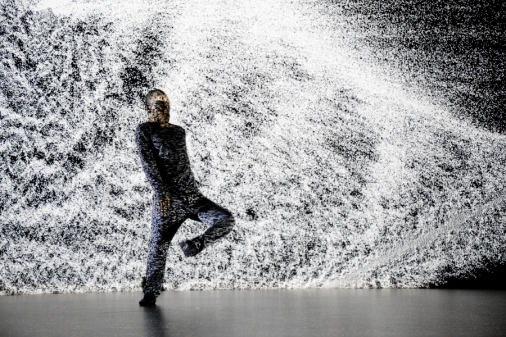
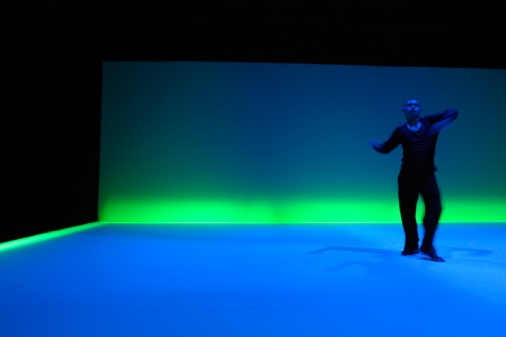
    Japanese contemporary choreographer Hiroaki Umeda recently presented his new choreography Peripheral Stream with L.A. Dance Project at Théâtre du Châtelet in Paris. in 2013, he worked with an ensemble of 11 dancers from GöteborgsOperans Danskompani in Sweden. In the piece, Interfacial Scale, Umeda created the choreography, set, costume, light and sound design. As well as being a choreographer and dancer, Umeda is a visual artist, photographer and video artist. He established his own company S20 in 2000. Umeda has entered the international scene with his multimedia performance works that employ his own body and self-created video images, music and lighting designs. These are recorded on a single notebook computer.

    (On the video Hiroaki Umeda talks about the Interfacial Scale which he created for the GöteborgsOperans Danskompani in Sweden in 2013)

    Since he first drew attention at the 2002 Yokohama Dance Collection R, Umeda has gone on to win praise of dance professionals around the world for the way he wraps his improvisational body movement in intricately woven spaces defined by light (video) and music with the beauty of an art installation. (Tatsuro Ishii for 国際交流基金 / The Japan Foundation Performing Arts Network)

    FIRSTINDIGO&LIFESTYLE: You are known for your own choreographic language that has influences from different styles, and, from the movement point of view is highly flowing and gestural. Is there a way to trace the evolution of it, how did the movement develop?

    Hiroaki Umeda: I started to dance at the age of 20, which is very late in general. At the beginning, I took some dance classes, such as Ballet, Hip Hop and etc. After a year of taking some dance lessons, I realized that there is no specific “dance style” that I want to learn: the dance I wanted to pursue had in fact not existed yet. Plus, I found that what is interesting for me in dance was, not the style, but what lays beneath those styles which is the “principal of movement.” So I started figuring out and understanding the principal of movement by myself, then I applied that principal to my body movement. I would say that my dance should be addressed not as dance but rather as a movement, since I focus on, again, what lays beneath the system of dance, which is the system of movement.

    HIROAKI UMEDA: "Haptic." Photo: Shin Yamagata.
    HIROAKI UMEDA: “Haptic.” Photo: Shin Yamagata.

    You are a Japanese contemporary choreographer, can you describe the dance scene in Japan?

    HU: I have been accepted more abroad than in Japan from the beginning of my career, so I cannot say much on behalf of the Japanese choreographers about what you are asking. However, I personally feel that contemporary dance scene in Japan has not been developed enough yet. The scene is very closed. But on the other hand, it is also true that because of the close-knit circumstances, it has developed very idiosyncratic styles. I cannot say if this close-knit condition is good or not good for the Japanese contemporary dance scene. Anyway, in Japan now, there are so many people who have been struggling and working hard to develop and open-up the scene more; that is a really big hope for me and I thank them a lot.

    You started your artistic career with photography, and then moved towards dance, how did this transition happen?

    HU: I was looking for an art style, which can accept real-time expression, thus, more than photography, I found that dance could be suitable for what I want to express. Dance is an art form in which I can physically put myself into in real time. In photography, on the contrary, it was really hard for me to materialize a piece in real. That is why I shifted to dance from photography. However, I have not totally detached myself from the photographic art form since I have been taking a standpoint throughout that dance can be a form of visual art. Lighting design, which I learned in photography, is now an essential factor for a dance piece.

    The way you construct your choreography seems multidisciplinary. The sound and lighting design, and the visual dimension is crucial in your composition? Can you even differentiate which comes first?

    HU: In practice, I start from abstract drawings, in fact, just lines. This drawing expresses my image of the tension of space, and it functions like the score of the piece to become. According to the drawings, which envision the whole image of the piece, I put together all materials, such as sound, light, dance and etc.

    The visual addition or sometimes ’distortion’ makes your compositions also appear aesthetically ’charged’, could you say something about it?

    HU: In my work, I focus a lot on how the bodily sensation could emerge from the space, and how, in turn, the bodily sensation could change the tension of space. That is, first and foremost, what I am interested in. The basic composition of my piece is always based on choreographing the tension of the space. By acutely tuning into the space, it is possible to attain a lot of stimuli that can provide you with physical sensations.

    What does it culturally mean to be a Japanese choreographer now, from the point of view of globalization?

    HU: have not been working consciously as a “Japanese” choreographer. I have been working as just an artist, focusing on how to bring my pieces to more people all over the world. I think that it is more important to be one of the many artists of the world, than just a Japanese artist.

    Does Butoh as art movement mean anything to you? How about Kabuki, Gutai, and action art? They have also called you ’’avant-garde’’?

    HU: I really appreciate their art works. But actually I am not so close to those Japanese avant-garde cultures. And I cannot tell if they have called me as “avant-garde.”

    What role a nature and technology play in your mind-set?

    HU: Nature and technology are not oppositional concepts for me. As a matter of fact, technology is a tool to understand and approximate nature. By the same token, I think that human beings and art, which human beings create, are a part of nature.

    Where did you grow up? Where do you work these days?

    HU: For the last several years I have been traveling almost all year round. I grew up in Tokyo, and I consider Tokyo as my hometown. But I have been working everywhere in the world. I think that what I do in my art is not connected to any specific country, city or place, so actually I don’t mind working any place in the world.

    You did a work for Gothenburg Dance Company (GöteborgsOperans Danskompani). How was it to work in Sweden, also in terms of cultural exchange? Did dancers like the movement?

    HU: Dancers of the company were from all over the world. They were really skillful and had great intelligence, and were very professional. To start off with, I gave them a system of movement which becomes the under layer of my choreography, and the dancers tried to find their own movements from tapping into that system. I am sure that I enjoyed seeing their movements develop from my system, even more than they enjoyed learning my system. At the moment, I have limited experience as a choreographer for big companies so the dancers helped me a lot and I learned so much from them. I would say that the process was more of collaboration, rather than providing choreography to the dancers.

    In terms of the cultural exchange you are asking, the company was too international to feel any specific cultural differences. I would say that working with them was rather like a kind of universal project, working in various mixed cultures.

    How was it to collaborate in Benjamin Millepied’s LA Dance Project 2? How was the audience response in Paris?

    HU: Compared to LA Dance Project, the Gothenburg Dance Company was strict in terms of working procedures and time schedule precisely because they are a huge public company; I needed to follow their administrative schedule in terms of creative process, which I totally understood. On the contrary, Benjamin’s LA Dance Project is, although they have diverse range or repertoire, still small in scale as a company. For this reason, I could work more closely with the dancers and staff that enabled me to go further and experiment more in the piece. To be very honest, I didn’t expect a good response from audience in the Châtlet. Surprisingly, however, the Paris audience quite openly accepted and appreciated my piece. I was impressed by their open-mindedness.

    Can you name some of your influence or mentors, colleagues?

    HU: There are too many names to list up here.

    What are your plans for the future, and dreams?

    HU: From last year, I have started making choreography devoid of human body. For me, human bodies are not the only elements for choreographic consideration. In fact, I want to really challenge choreographing anything with “movement,” and develop a dance piece with various elements. One of my dreams now is to choreograph water.