A tree blossoms, meadow is green, horizon is filled with stillness, which is almost touchable. The rich video footage by Jumana Emil Abboud narrates without noise. Palestinian artist, who lives and works in Jerusalem, uses video and audio to add into other mediums of storytelling. For her exhibition in Bildmuseet, The Horse, The Bird, The Tree and The Stone, the artist has added murals, and included drawings and sculptural objects to create installations that open up about personal and communal memories and losses. Her art handles belonging and peoples’ attachments to territories. For her project, she has visited sites, which carry haunted memory of the past. The artist visited wells and other water sites that no longer exist, but are retold in the oral history. Abboud’s current artwork carries magical components that mix with reality. The imaginary intertwines with researched material, which both influenced the art. The artist has collected stories and reinterpreted fairy tales from new perspectives. She used a story of Rapunzel, for example, to imagine lives of Arab women from a domestic point of view, to make it a women’s story that has universal visibility and resonance.
Abboud was born in Shefa-‘Amr, Galilee and moved to Ontario, Canada with her family. After returning back home, and moving to Jerusalem, she encountered personal questions of belonging, and started making her journey towards finding her own connection to the place. Her exhibition at the Bildmuseet, asks through visual images and oral performances, what the personal and collective memories can be, and what the myths can tell us about ourselves and our history. What stories connect us to the places that we live in?
Jumana Emil Abboud’s videostill in Bildmuseet exhibition.
Abboud’s three-channel video installation Hide Your Water from the Sun (2016), goes back to 1920. The video is based on a study by ethnographer Tawfiq Canaan who dived into the Palestinian customs and folklore. The ‘haunted locations’ presented in the study, connect to multiple water sources, which are inhabited by demons, good or bad. Abboud visited these locations together with cinematographer Issa Freij. The original wells and springs pointed in the study have disappeared. The artist applied the notion that in the Palestinian traditions the haunted or blessed sites become activated with storytelling and through fairy-tale practices.
Upon returning home as a young adult, the artist did not feel connection to the place called home. She found a new connection by looking at the landscape, which played an important part of her childhood. It acted again as a direct link to her past. Abboud had also experienced stories as a child. The stories were not written down, so she wanted to ask questions about them and find out, how the political layer attached to Palestinians had pushed the oral history down. In her mind, the landscape related to all the stories told about the people, creatures, monsters and goblins. Landscape related to the past, and what she had learned as a child, but also to collective memory, which belonged to others as well.
Abboud’s artistic whole, The Horse, The Bird, The Tree and The Stone, relocates the disappeared landscape, which went through alteration and changes of infrastructure. Many of the original sites have been buried. Only the older generation has memory of the haunted sites. Abboud’s installation include film, drawing and painting, reflecting the journey to the past that confronts the current political reality. The artist has also created recent performances out of the Palestinian folktales, which connect to contemporary life-stories of the people.
Jumana Emil Abboud installation view, Bildmuseet, 2017.
Jumana Emil Abboud installation view, Bildmuseet, 2017.
Besides Bildmuseet, Umeå, Jumana Emil Abboud has had solo exhibitions in Tel Aviv and in Switzerland, among other places. Her work has been exhibited at venues such as the Istanbul Biennial (2009); Acción! MAD-Festival, Madrid (2010); Sharjah Biennial (2011); Bodies that Matter, Galeri Man, Istanbul (2013); the Venice Biennale (2009, 2015); Baltic, Newcastle (2016); and Kunstraum, London (2016). Bildmuseet represents artist’s first major solo exhibition in Scandinavia.
Bildmuseet by Henning Larsen Architects in Umeå University.
Danish designer MargretheOdgaard’s exhibition was on view at the DesignMuseum in Helsinki during this summer. An introduction to her work put the creative aspect of design in focus. Odgaard’s study of color and the cultural signification of it is very relevant and timely for innovative design conversation, in which we are looking for perspectives that see beyond the pure form.
It feels timely to give design process a platform, which naturally builds discussion about contemporary creative culture. In the world of high tech platforms, we may say that the DNA of design can be found in those practices, which designers organically share with the world in which they live. Without the personal and playful approach, perhaps the future of design would find itself in trouble.
The Helsinki exhibition featured MargretheOdgaard’s collaborations and use of materials bringing forth an idea of process. What it highlights is that design should not abandon creativity and art. MargretheOdgaard was assisting late LouiseBourgeois in the artist’s large scale work, which she created for MoMA in 2005-2006. The young designer learned from this experience with the famous artist. Bourgeois shared an approach that artist has to believe 100 percent in the work, even if the outside world is not able to see the same thing. According to her, ideas and vision come with a careful attention to detail, and from a non-compromising attitude.
In the future, Odgaard hopes to work more from her own studio base, and focus on the quality of the materials and colors. There is still huge call for colors in our contemporary cultural environment. Tactility of design does not come to mind as a top priority, and the colors still belong to a neglected area in the design world and architecture. Odgaard’s dream is to bring colors back to the black and grey field of architecture, which she frequently collaborates with.
Odgaard’s design can appear as minimal, yet playful, featuring bold ideas and patterns. It is important for her that the work has emotive response from various audiences. She hopes that the designs bring comfort and energy to our everyday life. Colors have so much potential to give birth to moods and create different atmospheres. Odgaard has focused on the cultural context of colors. She traveled to Japan in 2015, and to Morocco in 2016 investigating culturally specific domains for colors. The designer aimed to find out if there are specific ways to code the local colors from architecture and objects that are attached to particular places.
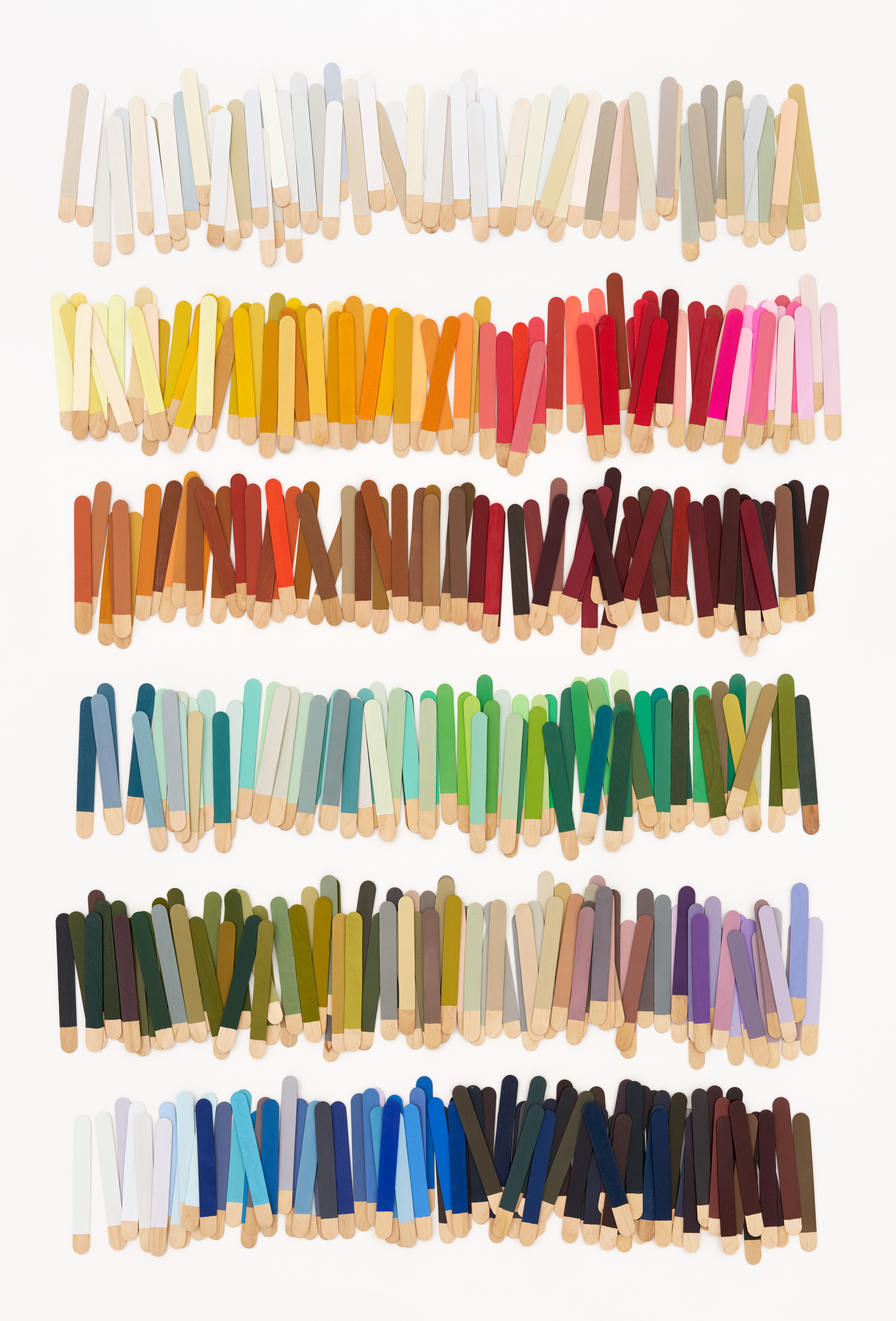
Odgaard trusts that as a younger generation Scandinavian designer, she is aware of the craft that carries a long cultural history. This means that she is able to add on the existing knowledge, and offer solutions to design questions and problems, which can be both beautiful and functional. At the heart of her color thinking is ThePopsicleIndex, which she created as a tool. It comes out in rich color hues that appeal to the senses and relate to the body.
Margrethe Odgaard wanted to create a color system as an alternative to Pantone color system.
Copenhagen based Odgaard studied at the RoyalDanishAcademyofFine Arts and the RhodeIslandSchoolofDesign in the United States. After graduating in 2005, she worked as a textile designer in Philadelphia. Before opening her own studio in Copenhagen in 2013, she also designed in Paris. In 2016, the designer received a prestigious TorstenandWanjaSöderbergPrize, which is the largest design prize in the world.
Margrethe Odgaard sates that colors and textiles can make together strong combinations, leaving an impact that is speaking to feelings as much as to eyes.
The textile designer looks for the purpose behind the design, and confirms that it should be always clearly attached to the process. The product is the end result of what the process entails. MargretheOdgaard keeps diary of the colors which are inspirational for the designs. Details of colors have become a crucial part of her process. Nuances are extremely important, and the diary is a great tool as part of the investigation. Results are far away from being shy. It is truly a matter of sharing as well.
“Share your knowledge, ideas and skills without hesitation. Be specific to order to become general. Use good tools and create new if necessary. Think through your hands. Free yourself from the limits of coolness. Allow things to evolve in their own pace. Listen. Laugh. Dance.” – Margrethe Odgaard.
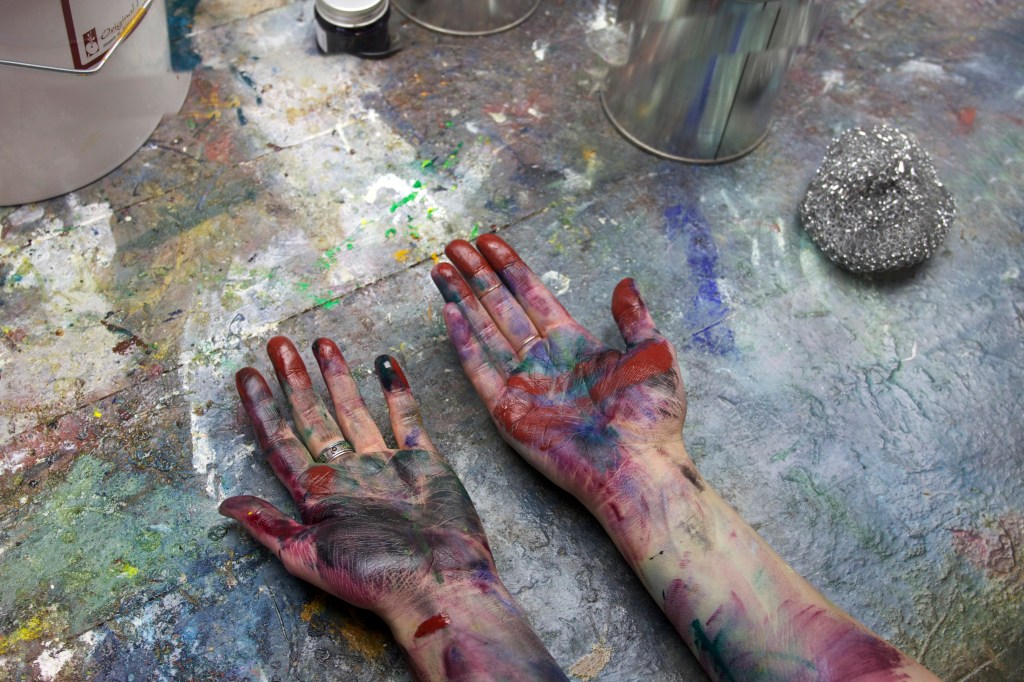
The designer investigates colors.
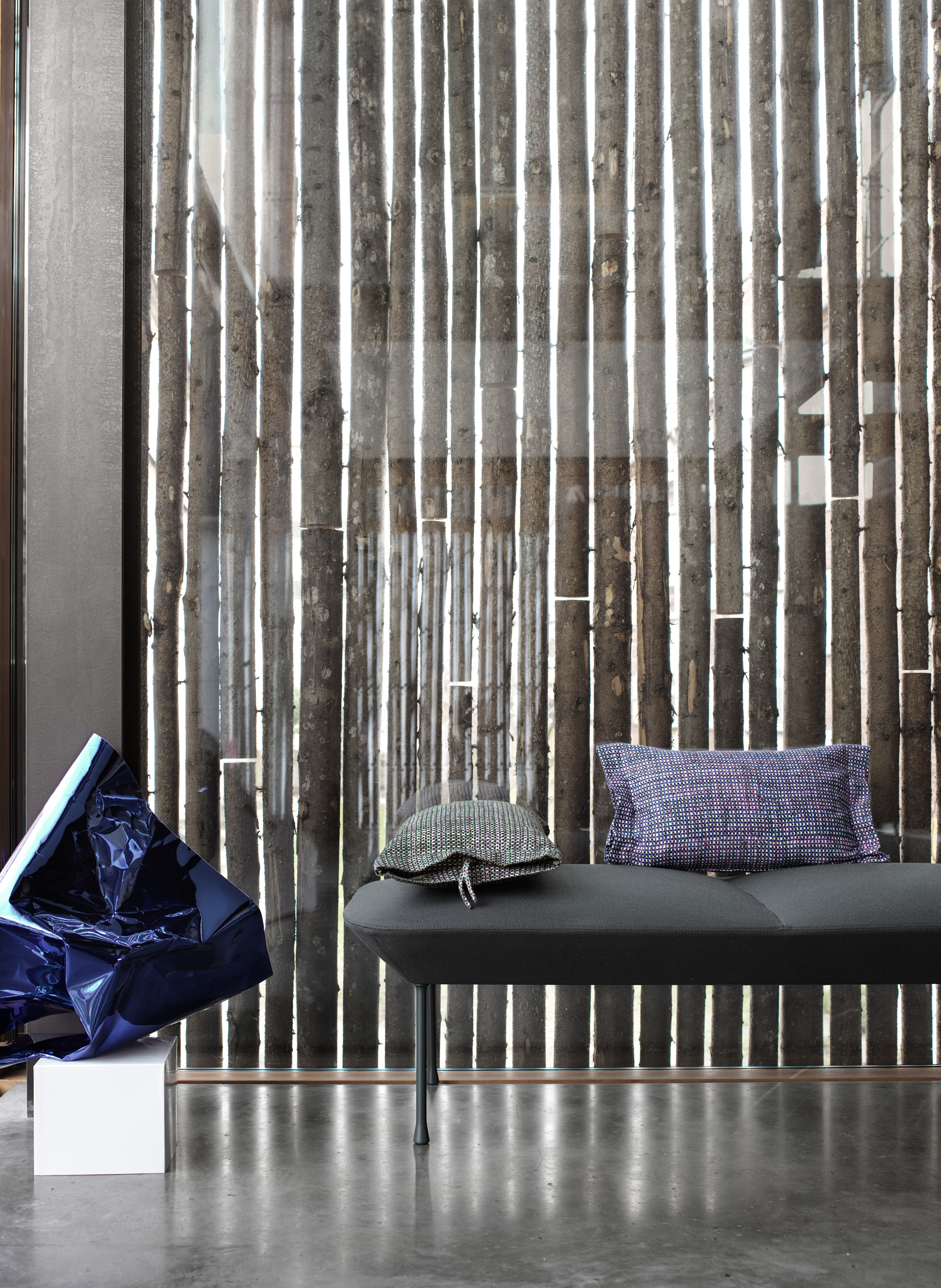
For Odgaard wood can offer pattern and color combination to textile ply.
MargretheOdgaard’s exhibition was on view until August 28, at the DesignMuseum in Helsinki, more info:
New York City based performer Marina Celander crosses boundaries in her artistic practice, which combines a variety of genres and approaches to making art. Her solo performances echo authentic voice, and her deep participation on stage with theater groups comes across as statuesque, moving, gentle and charismatic. Marina Celander is born as Swedish-Korean, and is a recipient of 2014 Lilah Kan Red Socks Award for her outstanding contribution to the Asian American professional theater in New York City.
Firstindigo&Lifestyle: What choices did you make to become an actor, what is your background in the field?
MC: I started out as a modern dancer. After I graduated from London Contemporary Dance School I moved to New York and danced for a bit with various companies and choreographers. At one point I decided to take acting classes, which was something I had always felt I wanted to try but was afraid to do, and started studying with Gene Frankel at the Gene Frankel Theatre Workshop on Bond Street. Despite my fears, I took that first class with Gene and I remember feeling so elated and high, almost, as I stepped out from the darkness of the theater and in to the sunshine on the street. From that moment on I knew I had found what I needed to do with the rest of my life.
Firstindigo&Lifestyle: Where were you born and raised, at least Sweden is on the map?
MC: I was born and raised in Sweden. I grew up in Malmö which is in southern Sweden, right across the strait from Copenhagen, Denmark. I lived in London for three years while I was studying dance, and then I moved to New York when I was in my early twenties. I have been in New York ever since! I go back to Sweden every other year or so to visit my family.
Firstindigo&Lifestyle: You have performed with Yara Arts Group that is based in La MaMa Theatre for many years. How did you find yourself part of the company?
MC: I auditioned for a show that Virlana Tkacz, the artistic director of Yara Arts group, was putting up at La MaMa in 2000, called Circle. This particular show was special in that it had actors and musicians from Buryatia and Mongolia, as well as us New York actors. We had the chance to learn to sing these hauntingly beautiful Buryat songs from the Altai mountains. Two years later I traveled with Yara to Ukraine to sing Ukrainian folksongs, and visit Babushki, the grandmas, in the villages of Kratchkivka in Poltava and Svaritsevichiy in Polissia, and then we performed in Kyiv. This trip was also lead by Ukrainian singer, Mariana Sadovska, who was the musical director for our performance. Ever since then I have come back to work for Virlana in various poetry readings and events that she hosts, as well as being part of some of her theater productions.
Firstindigo&Lifestyle: Virlana Tkacz, one of the founders of Yara, and the director of the company, and many company members have a Ukrainian cultural background, But Yara is appreciated as multicultural in its productions echoing ideas of a World Theater. Did you find this conception as a great home for your own performance identity?
MC: Yes, I am really attracted to the idea of World theater. It is very fitting that Yara Arts Group is a resident theater company at La MaMa, because it is the home of World theater. Ellen Stewart, the founding mother of La MaMa Experimental Theatre, bravely and courageously invited individuals and companies from all over the world to perform and work at La MaMa.
Yara is an exciting company to work with, because of the always multi-lingual performances and multi ethnic cast. Lately, Virlana has been working with Ukrainian artists, but in the past she has worked with artists from Buryatia (in Siberia) and Kyrgyzstan. As a woman of color and a theater artist, I always deeply appreciate directors who are not type-casting based on ethnicity and race. In downtown theater in general, but at La MaMa in particular, I have always been given opportunities to act in a myriad of roles where my ethnic make up is not important. Virlana has given me and many other actors of color opportunities. I believe that putting a minority actor on stage for no other reason than the fact that (s)he is a good person to have in the show, is always a strong choice against the established order of theater in the West.
Firstindigo&Lifestyle: In 2015, you were part of a production that directly was touching Ukraine and the war that was happening on a huge crisis level there. Yara’s production premiere ‘Hitting Bedrock’ took place in La MaMa, (it was conceived and directed by Virlana Tkacz, set & light by Watoku Ueno, music by Julian Kytasty, assistant director: Wanda Phipps). Your role in the work was central. Tell more about your role and how it shaped in the context?
MC: The production Hitting Bedrock, was an important production as it addressed the war in Eastern Ukraine. My character was The Refugee, and her significance in the piece was that she represented all of those humans, women, children, men, the elderly, that have been rendered homeless because of the war in Ukraine, and elsewhere in the world. She represented all of those that have had to leave something important behind, a memory, a treasure, a family member, a secret, a lover, old letters, a photograph… It was a role that moved me deeply. As a result, that summer (2015) I went on a self financed, crowd-funded trip to face paint and give dance workshops to children in refugee centers in Ukraine.
Firstindigo&Lifestyle: In this play, the audiences had a participatory role. At one point, we were asked to give our belongings away, and were offered big tote bags instead, to put our coats and personal items in them. This was altering a perception from an audience member’s point of view into the experimental, perhaps reminiscing the point of view of people in the war. In what ways did being a central actor discussing your war losses while audience is so close to you, alter your own performance? Did this event change you?
MC: Yes, the audience were forced to walk through a long corridor in the basement of the theater, and thereafter they were asked to give away their personal belongings only to have them put into bags. The audience immediately got those bags back to hold for the remainder of the show, but many felt uncomfortable and some refused to give up their belongings even for a second. We had brusque and insistent “guards” in uniforms commanding people to go here, put their stuff there, go up, sit down, etc. When the audience had finally arrived in a “holding area” after having been shuttled around with their big bags, they had to witness the guards doing the same to me. The guards demanded to see what was in my back-back, and I showed them my toothbrush and my papers. At this point the audience is really right next to me in the holding area. Having the audience being so close to me, being one of them, really does something to the performance. As an actor I loved feeling them so close, feeling their reactions to me, their doubts, their fears, and them feeling my fears. It was also a little intimidating when on one occasion we had a lady who was a little drunk in the audience, and she was shouting quite aggressively at the stuff I said. That was worrisome, because she was so close.
Firstindigo&Lifestyle: Besides being an actor and performer, you handle multiple different roles. How did you come to dancing and performing Hula?
MC: Yes, I handle multiple different roles in my life on a daily basis. I am a mother, and an artist, a teaching artist, performer, face painter, a freelancer. I wake up every morning thinking, what am I doing today?
I started dancing Hula, traditional Hawaiian dance, in 2000, after finding an organization that gave beginner hula classes. I was very fortunate to stumble upon the Hawaiian Cultural Foundation (HCF), and there I studied with Michelle Akina, Janu Cassidy, Keo Woolford and kumu hula June Tanoue. I have since been involved with a hula halau, hula school, Pua Ali’i ‘Ilima o Nuioka, under the leadership of kumu hula Vicky Holt Takamine.
Firstindigo&Lifestyle: What is your connection to the hula/Hawaiian community in New York?
MC: It’s a small, but growing, community of Hawaiians, and Hawaiians at heart, hula lovers, and Hawaiian language and music lovers and enthusiasts. It is a beautiful and loving and inclusive community of people from all over. My connection is through hula.
Firstindigo&Lifestyle: A very interesting part of your practice is also face painting. That is a skill that requires another set of imagination and sense of personality in people. How did you start?
MC: I started face painting for my own children’s birthday parties, and it grew from there. Now I do other kids’ birthday parties. It’s a small side business, and I get clients usually through word of mouth. I really enjoy the face painting, and it makes me happy to paint kids’ faces.
Firstindigo&Lifestyle: In 2016, you created a solo work for yourself that was performed in Sweden. The work titled Mermaid’s Howl, handled a theme of you mother, and her Korean identity. How did you experience the project from the point of view of her identity, and your own, adding into the narratives that are so personal?
MC: I created a solo show called Mermaid’s Howl and performed it at the Stockholm Fringe in 2016. The story had been a long time in the making. As early as 2013, I had talked to my friend and mentor, Fred Ho, about my idea of writing a solo show. He quickly said, in typical Fred Ho style “Write it, I’ll produce it. Here is your deadline, use it.” He unfortunately passed away before that came to fruition, but I stayed true to my promise to myself and to Fred, to finish writing that piece. I am grateful to the Stockholm Fringe Festival for inviting me and giving Mermaid’s Howl its premier.
The story is about me growing up in Sweden and finding out who my mother was, and finally being able to connect the dots in my adult years. Connecting the dots from me, to her, to all of our maternal ancestors. The play is part dream, part real memory snippets, part madness and part immigrant mother-daughter story. It was a deeply personal process, of course, to write this play, which delved into questions of what is must have been like to an immigrant woman, all alone in a completely foreign country, without family, to raise a child on her own, have her dreams crushed or set aside. It also explores the question of women and madness, and what it means for women to not be able to fully express themselves as artists and human beings in a society that sees women as less valued than men.
MARINA CELANDER, MERMAID’S HOWL – PHOTO YOUN JUNG KIM
MARINA CELANDER, MERMAID’S HOWL – STOCKHOLM, SWEDEN 2016
Firstindigo&Lifestyle: Was the theme of mental illness and it’s feminine counter-narrative hard to project into a play?
MC: Mental illness is a topic that is still not openly talked about, it’s a little taboo. I wanted to bring it to the forefront and not skirt around the issue. Without glorying mental illness, I wanted to shine a light on it from a different angle, to let people see that there may be a societal value to possessing a different sight and different viewpoint from what is deemed “normal”. Normal is a societal rule, and normal is different in other cultures. In the West there is absolutely no point to mental illness at all. It is just a nuisance, a bother, a hindrance, a difficulty, something to be shunned and stowed away, far far away. I am not saying that it is not utterly devastating when serious mental illness occurs in a family, but I am saying that there are options as to how you would view someone with a divergent view of the world. Those with divergent behavior can actually have value in society, their divergence is seen as highly creative as well as highly unusual and abnormal. At the same time, madness in women have always been a tool to belittle and demean women, to incarcerate “difficult” women, and put women in their place by the patriarchic machinery.
Firstindigo&Lifestyle: The play also involved projections as part of it, tell more about the visual and performance collaboration?
MC: I had three amazing collaborators. The electronic score was composed by Dåkot-ta Alcantara-Camacho. The costumes were designed and made by Jane Catherine Shaw, and the projection design was made by Youn Jung Kim. Youn Jung knew my play very well. She was a student of Fred Ho, that is how we met. In the beginning of the writing process she and I used to meet regularly and have our little mini-writing labs, where we shared, read and discussed our work. Because of her connection to the piece from the start, she really knew the flow, the pace, the colors, the feelings of the piece. The projections grew out of her intimate knowledge of the story I wanted to tell, and her receptiveness to my suggestions made the working process so easy.
Dåkot-ta created a score that was so sensitive and evocative, and reminiscent of water and forests and shaman drums. His sounds were instrumental in setting the scenes for particularly relevant moments in the piece. It really was amazing to hear the music loud, with real speakers, for the first time! Goosebumps moment! Cathy made these amazing creations that felt magical to wear, and helped me grow into the characters I was portraying in the various environments.
Firstindigo&Lifestyle: What would you like to say about the performance experience in Sweden, did you feel you were at the crossroads of cultures while bringing the work there?
MC: I didn’t necessarily feel I was at a cultural crossroads in Sweden, but my piece, Mermaid’s Howl, is an exploration of my cultural heritage, so it was very fitting to have its premier in Sweden. Performing in Sweden was a homecoming of sorts. Being bi-racial I guess means you are a hub for cross-cultural activities within you.
Firstindigo&Lifestyle: This play involved also a Kickstarter- fundraising, and the audience was able to have a glimpse into the concept and to you as a person. What was this campaign process like?
MC: Yes, I decided to crowd-fund with Kickstarter as it seemed as the most reputable and an easy way to go. The opportunity to go to Sweden came up very quickly as I was invited to perform with Mermaid’s Howl just a couple of months before the festival started. I had to come up with the funds to go very quickly.
Youn Jung Kim is a great conceptual artist and photographer and film artist. She has a great eye and a great feel for what works and she listened to what I wanted to convey in my little promo video. From the short interaction we had on camera she created a little gem of a video for my Kickstarter campaign. (You can view the campaign here: https://www.youtube.com/watch?v=pq4-2zW7GZ0)
Firstindigo&Lifestyle: You are an activist in social platforms. You have performed radical acts in public places, closing yourself in a body-bag for instance.Tell more about the involvement. Do you think activism can change the dominant narratives in crisis? Are you an optimist?
MC: Yes, I’m always an optimist. The particular event you are mentioning was Belarus Free Theatre’s demonstration in NYC against Capital punishment in Belarus, where young people disappeared and their families were not notified of their deaths, and never received their bodies back. This was an event planned together with La MaMa. We gathered by City Hall, and then walked over to Foley Square, where we crawled in to body bags, zipped ourselves up and laid still for 30 minutes to raise awareness of the issue. We had monitors who were watching us to make sure nothing came to pass as we were inside the body bags, or in case anyone would freak out they could quickly zip us open again. It was a very intense experience, I have to say.
As artists we have an obligation to tell stories where we stand up for the underdogs, speak up for those weaker than us, for those who do not have a voice or platform with which to tell of their story.
Firstindigo&Lifestyle: What new adventures do you have planned?
MC: I performed a first draft, a first work-in-progress version, of a new solo show called Shakespeare’s Sistersat Dixon Place in NYC in January of 2017. My plan is to perform it again in a larger venue and to see the piece grow. Mermaid’s Howl will also be traveling to Massachusetts sometime in the near future. We are working out the details now, so I will tell you more when I can reveal more, but I am very excited that this show will have a future life.
Firstindigo&Lifestyle: You are also performing with Yara in their new production?
MC: I’m currently performing with Yara Arts Group’s new show at La MaMa called 1917-2017: Tychyna, Zhadan and the Dogs. Again, it is a project based on Serhiy Zhadan’s poetry. It was shown this spring in Kyiv, by a Ukrainian cast, and now it’s our turn to put our spin on it. Serhiy and his punk-rock band, The Dogs, are in New York performing with us. It’s an exciting show! It’s always very special to perform with a live band. Other musical elements in the show are Julian Kytasy’s bandura compositions. This piece makes us reflect on the concept of tyranny and how easily it arises – it did in Europe in 1917, and now in 2017 we are currently in danger of allowing it to rise again. The show opened on Friday June 9 and runs at LaMama ETC until June 25, 2017.
***
Information about the Yara’s 1917-2017: Tychyna, Zhadan and the Dogs at La Mama here: http://lamama.org/tychyna/






 Firstindigo&Lifestyle