Category: sustainability

  • Cultural geography and ‘hiisi’-territoriality…

    Cultural geography and ‘hiisi’-territoriality…

    Cultural geographies can be full of imagination. Finland’s geography shares attributes of ice and snow, whereas some other places are filled with sand and heat. North, cold, south, warm, masculine, feminine, are ideas that we unconsciously relate to our cultural geographies. Then, ‘space’ when attached to cultural geographies is partially ‘virtual’. Interesting is, how our imagination creates space as ‘absolute’, ‘relative’, and ‘relational’ (as David Harvey challenges it).

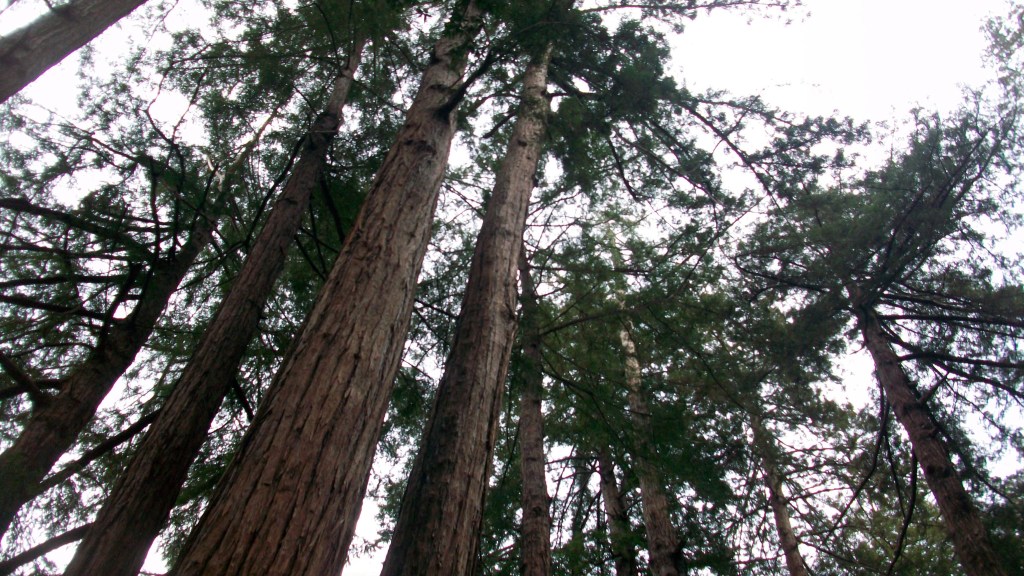
    What I am thinking in relation to my new work-in-progress research project within arts, is a questions of imagination; how do we as cultural beings and citizens of the global world, create meaning from our cultural origins, or from our cultural geographies. My current research is not about Finland, but I like to reflect one particular attribute, which so often defines Finland’s geographical imaginary. That is the forest, and forest has a meaningful and long prehistory in Finland.

    Folk traditions in Finland’s territory never considered forest as pure wilderness. From the prehistoric times, people utilized its resources leaving marks on a terrain. Originally, forest metsä in Finnish language did not mean the totality of space where trees are a dominant feature of the landscape, but the term pointed to the sacred. Metsä was an edge where inhabited regions of the people ends. It was a borderline for the everyday social life (tämänpuoleinen) and it was a route to the other world (tuonpuoleinen) (Anttonen 2003, 299-301).

    In the thirteenth century, early Baltic-Finnic population covered over 230 local villages in Finland’s territory. An old custom was that ritualized spaces were separated apart from the living areas. Certain trees in metsä had hiisi-inhabitants (hiidenväki) were the dead beings were put to rest at hiisi-sites. These hiisi-inhabitants were the supernatural people of the post-mortal world. When Christianity was brought into the country, the hacking of trees that had hiisi-inhabitants started, and churches were built on those spots. What then happened was, that folklore also converted hiisi –term and its ontological referent to signify ‘Hell’, as a borrowed duality from the Christian theology. The forest started to signify borders between the ‘civilized’ world and the ‘pagan’ world (Anttonen 2003, 299-301).

    How does this imagination enter our current ideas of the forest, is intriguing. How do we see the forest, how do we process it, occupy it, harness it, and so on?

    Reference: Anttonen, Veikko 2003: “Sacred Sites as Markers of Difference-Exploring Cognitive Foundations of Territoriality”. In Lotte Tarkka (ed.): Dynamics of Tradition. Perspectives on Oral Poetry and Folk Beliefs. (Essays in honour of Anna-Leena Siikala on her 60th Birthday, January 1st 2003). Finnish Literature Society: Helsinki, pp. 291-305.
  • Heritage month

    Heritage month

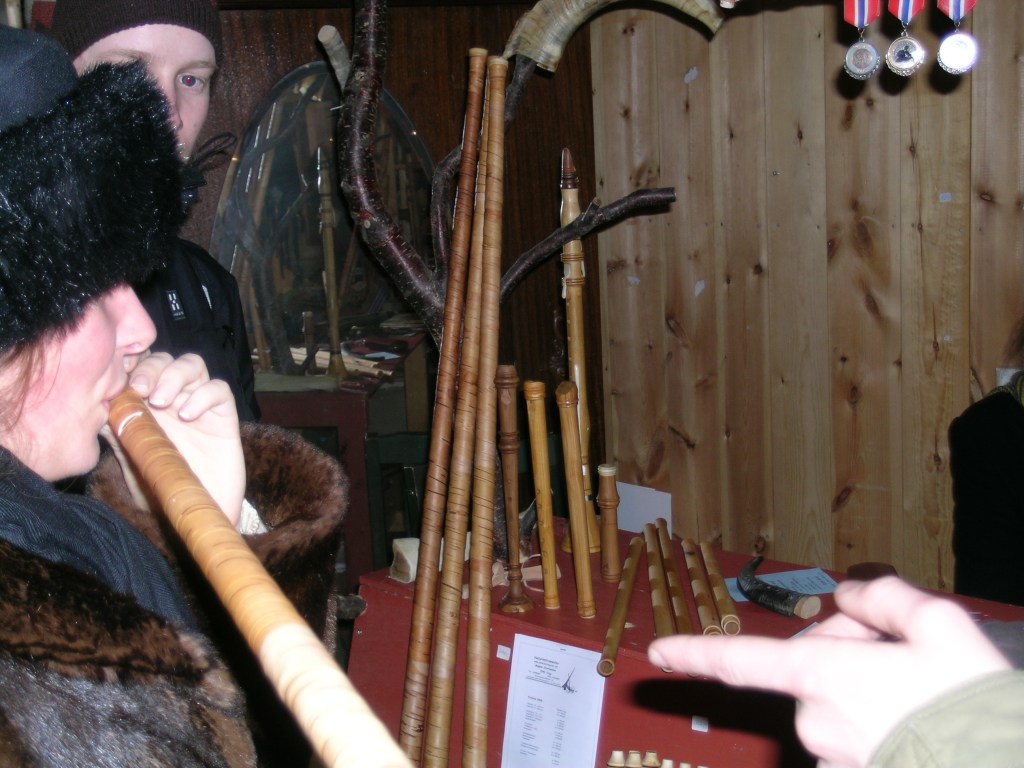
    February is a great month. Sami national day on the 6th celebrates cultures and heritage of indigenous Sami people, on February 28th Finns have their Kalevala (the National Epic)-day. During the mid month, people who are interested in the old time traditions can head to Røros in Norway. This event is called Rørosmartnan – Røros Market, and will be held for two weeks starting February 15th until the 29th. The historical marketplace opened in 1854, and has occurred every year since. Fans of traditional dance and music can learn and dance at old sangerhus (singerhouse) with the tunes of rørospols-dance. The old mining town is since 1980 a Unesco World Heritage site.  The market itself is a wonderful place to look for vintage, arts and crafts, local and traditional foods, etc.  Be prepared as the town is located 630 meters above sea level. I went there in 2005 for couple of days and recommend the event as a fun social experience.

    official website for market: http://www.rorosmartnan.no/

  • Event about historic preservation at The Van Alen institute

    Event about historic preservation at The Van Alen institute

    Coming up is a super cool event about Historic preservation in New York. Preserving our ecosystems and heritage includes also streets and other public spaces, as well as historic buildings and architectural landmarks.

    Tomorrow on January 17th, Euro Circle network is hosting a benefit for the “Neighborhood Preservation Center”. The Van Alen Institute’s 6th floor gallery is the event location, and the address is 30 West 22nd Street New York. One of the event hosts Elin Jusélius is pursuing her Masters at Pratt in Historic Preservation. She told me that the basic idea of this event is to introduce the historic preservation field to people who are interested in learning more about it.

    EJ: Historic preservation (or heritage conservation as it is called outside of the US) is a changing field, it deals with both tangible and intangible heritage. It is closely linked to sustainability as it is always greener to keep existing buildings, than to build new ones. For instance, all buildings have ’embodied energy’, the energy spent on building it, on processing materials, and on transporting the materials to the site.

    Historic preservation also deals with ‘a sense of place’ it examines what the contributing factors are that gives a neighborhood, a town, a city an identity. It evaluates the significance of a building which could be cultural, architectural, historical etc.

    FI: New York’s Penn Station demolition in the 1960s was pretty horrible. I saw the Pennsylvania Station past and future exhibit in the Transit Museum Annex in Grand Central Terminal last summer.

    EJ: Penn Station has inspired many to get involved in preservation, personally I am still shocked that anyone could think that it was a good idea to tear it down! Grand Central nearly had the same fate but preservationists won, this was a highly significant event, the court decision made preservation ‘legal’ in New York!