Category: women in art

  • Christy Rupp’s animalistic art

    Christy Rupp’s animalistic art

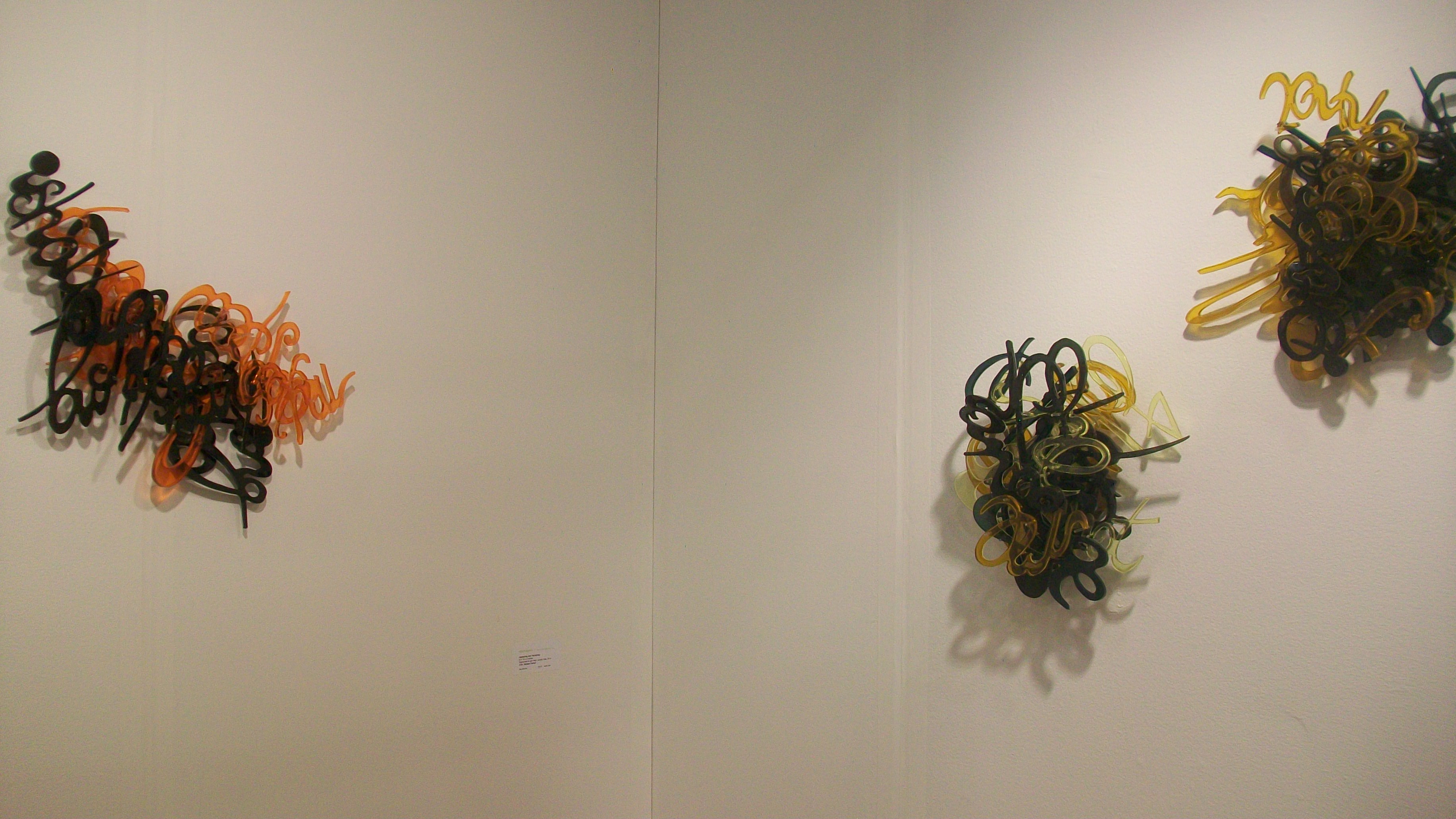
    Christy Rupp was presented at VOLTA NY’ 14 by Frederieke Taylor Gallery. The artist who is known for her 1980s public art projects, was at the art fair with her new work that raises questions about environmental threats and issues around wild animals and nature. One part of her presentation was a series of sculptures around microfauna from the Gulf of Mexico; artworks are made from welded steel and encaustic wax.  In another series of sculptures (images above), Rupp explored the relationship between ivory and energy. These were made in response to threats coming from drilling, addressing also accurate issues around poaching. The artist has made sculptures called ‘The Fake Ivory Series‘ (welded steel and encaustic wax) pointing that wild animal spices are threatened to extinction as they are poached for their tusks. The art stands for trophies as desired objects that include animal parts such as ivory.  Scrimshaw or tattoo-like scribbles on them make comments on the value placed on energy over life. The sculpture ‘Walrus‘, 2014, a mixed media work with credit card solicitations, concretely points to currency over humanistic ideals that protect our environment.

    The artist’s past includes diverse projects that are politically, socially and environmentally engaging. Rupp participated in the legendary “The Times Square Show” and “The Real Estate Show” of 1979-80, and she is affiliated with Colab and Group Material. To address artist’s past and her works in context, the gallery also showed video and documentation of her art projects from the early 80’s period.

    Christy Rupp’s recent notable shows include:

    “Dead or Alive” at the Museum of Arts and Design, NY 2010, “Dear Mother Nature” at the Dorsky Museum of Art, SUNY New Paltz, NY 2012, “This Will Have Been: Art, Love & Politics in the 1980’s”, Museum of Contemporary Art, Chicago, IL 2012, “American Dreamers” Pallazzo Strozzi, Florence, Italy w/ Hudson River Museum, and “XFR STN” Transfer Station at the New Museum, NY 2013, among numerous others.

  • VOLTA NY 14: Simeen Farhat’s ‘Alice’ and the language puzzles

    VOLTA NY 14: Simeen Farhat’s ‘Alice’ and the language puzzles

    simeen farhat she looses her temper
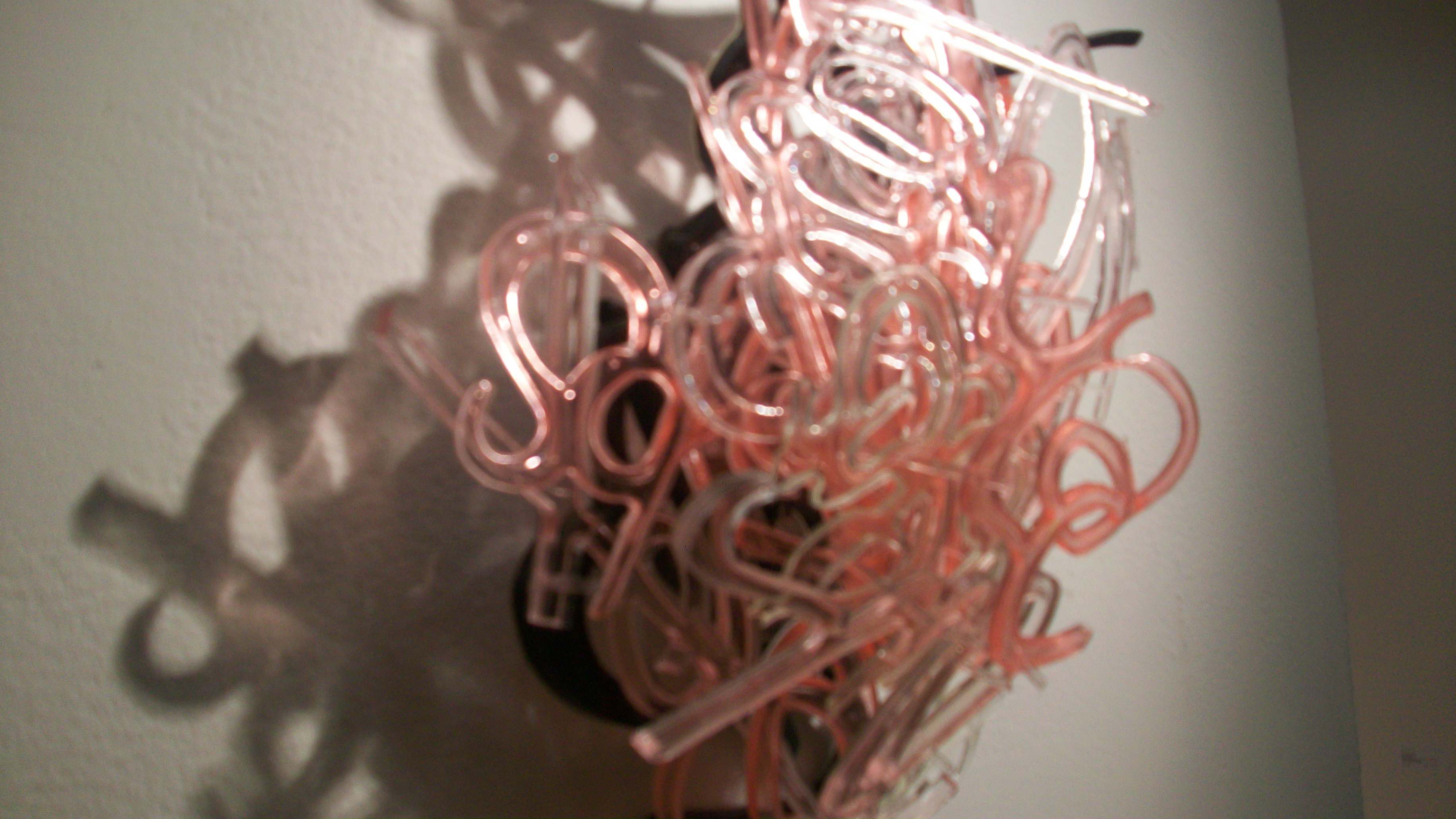
    Simeen Farhat, “She Looses her Temper”, 14 x 16 x 5 inches. Cast and pigmented resin & acrylic rods, 2014.

    Pakistani-born, Dallas-based artist Simeen Farhat has taken a classic novel ‘Alice’s Adventures in Wonderland’ as a starting point for her new installation for VOLTA NY 2014 edition, which ran from March 6-9 in Soho. VOLTA is called as ‘invitational solo project fair for contemporary art’, so Farhat’s solo exhibition was equally presented by a gallery who is already endorsed multiple times by the fair. Her exhibition, curated by Christine Pfister of Pentimenti Gallery from Philadelphia, emphasizes a materiality of the language puzzles. The artist is known for creating poetic works with dimensionality and message, that come with the use of different languages and ways of communicating in our cultural encounters. This time, her colorful and even candy-colored sculptures and installation speak about the problematic nature of cross-cultural communication, showing the emotions and frustrations that are attached to the rules of using our languages. Farhat’s previous works have drawn from such languages as Farsi (RUMI poetry) and Urdu. Text used around the ”Alice” installation is English.

    The immediate surface of the words come across as part of the form, and the text intermingles with the sculptural transparency. This already creates puzzles as we see only fragments of language, which, when viewed from a distance, create aesthetical form. When we step closer to the sculptures, the objects invite us to perceive them from different angles. Pink and black cast resin wall sculpture “She Looses her Temper”, is an example of Farhat’s sculptures that emphasizes the multiplicity of the form when viewed from various positions. As it comes to the emotional statements of texts, the ”pointiness” of words structure dynamic messages.

    Philosophy is important element in Farhat’s artist statement:

    “Words – written or spoken, understood or misunderstood, poetic or prosaic, curvilinear or rectilinear, are what motivate me to create my visual narrative. I am fascinated by how, through language, we understand a great deal about ourselves and surroundings, and how ideas: simple, complex and abstract, are conveyed and understood using symbols.” (Simeen Farhat)

    simeen farhat_image2
    Simeen Farhat, “She Looses her Temper”, 2014
    simeen farhat _image7
    Simeen Farhat puzzles with languages, Pentimenti Gallery, VOLTA NY2014.

    ”Alice’s tears” create undoubtely the center of Simeen Farhat’s VOLTA installation. The blue teardrops in various sizes seem to flow effortlessly from the ceiling, pouring down from Alice’s eyes when she has grown tall.  The viewer can imagine Alice, by experiencing the shades of blue in the sculptures, some of them so light-colored that they are almost invisible towards the white backdrop, some darker. The shapes also vary from softer and rounder to sharper ones, and they accumulate and reshape closer to the ground. The tears are seen differently depending on the lighting conditions; the shadows are creating part of the narrative too. Farhat has sometimes included textiles into her previous installations to reference the (female) ‘body’. For Alice, the handcrafted cast resin has worked miracles. Different blue shapes and sizes embody the space leaving room for imagination and story.

    Simeen Farhat has exhibited in the United States and internationally, including Pakistan, London, the UAE, India, Finland and Germany. Her collaboration with Pentimenti Gallery will continue through 2014, and her solo exhibition will open in Philadelphia later this year.

    for more information visit: www.pentimenti.com

  • Fog in art by Fujiko Nakaya

    Fog in art by Fujiko Nakaya

    Japanese artist Fujiko Nakaya’s environmental installations and fog sculptures have become widely known around the world.  According to her, fog represents an interactive medium which makes the audiences feel and participate in its pure natural wonder. Fog comes closer than clouds; although these are scientifically the same, fog calls for a different kind of dialogue with nature. The above fog sculpture by Fujiko Nakaya is at Toyota Municiple Museum of art in Toyota, Aichi.

    Born in Japan, Nakaya is a daughter of the physicist and science essayist Ukichiro Nakaya, who is credited for making first artificial snowflakes in the world. Inspired by natural weather phenomena, she created her first fog sculpture for Expo ’70 (Osaka Japan) to be presented at the Pepsi Pavilion. Ever since, Fujiko Nakaya’s works have been on display on international venues, including Guggenheim Bilbao and Australian National Gallery. In 2013, her Fog Bridge became a waterfront wonder for local and international audiences in San Francisco’s Exploratorium. The work was part of the year’s waterfront celebrations, highlighting the bay area and its special weather conditions (famous for its dense fogs).


    What makes ‘fog’ so dimensionally touching is that it as a natural phenomena varies in the circumstances. The fog sculptures live with the wind, temperature and humidity.

    Nakaya’s fog has also entered theatrical stages. She created stage sets for Trisha Brown, David Tudor, and Bill Viola.

    .