• Olena Jennings: Correspondence

    Olena Jennings: Correspondence

    Olena Jennings’s recent poetry narrates travel to Georgia in the summer of 2017. Her lyric lingers between urbanness and coupling, remembering moments, and capturing an essence of absurdity.

    September 2, 2017, NYC

    Stray cats begged at our table, as our faces
    grew moist, looking up at the sun.
    Enclosures followed: the tight
    space on the plane and then the cubicle. 
    I ignored the eclipse, the way the shadows
    on the pavement repeated themselves
    like the words that fall in steady drops, 
    overpowering the notations on calendars
    and to-do lists. We wake beneath
    the blanket from the market 
    near the dry bridge. Once we drove 
    towards the light, the tires against
    cobblestones, the shape of the moon
    calling us to the rows of jewelry, 
    the repetition of desire for translucent beads
    around your neck.

    September 13, 2017, NYC

    You gave me the key. There is a trick
    you didn’t teach me, though there were often lessons:
    the way to peel a carrot, to cut an onion without 
    crying, and to buy carnations instead of roses. 
    You spun daily life like the plot
    of one of your romance novels. Your dress is always
    caught in the wind even when there is only the breeze
    from the window. You invite the men over who leave
    their newspapers on the table, so that you are subject
    to the nightly violence. Sometimes
    there is even a hand against your cheek emphasizing
    the glow. The street signs shine green, creating a map
    of our memories. Together we lived in this house 
    until you started filling the walls with other peoples’ 
    portraits.
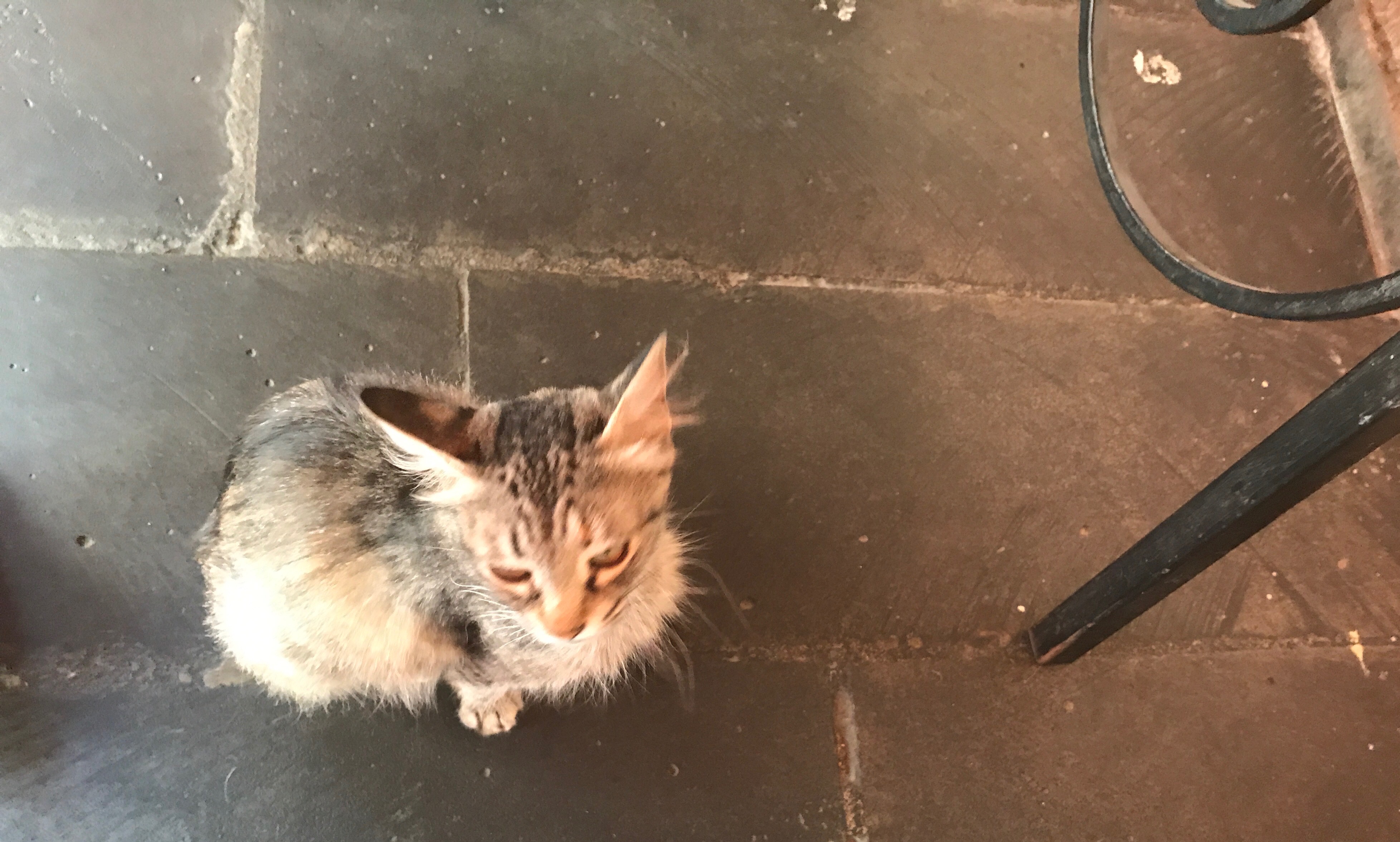
    Olena Jennings, Georgia Kitten.
    Olena Jennings, Georgia Kitten, 2017.

    GHOSTS OF CATS

    They prance down
     the hall to the studio
     where scent
     is outlawed.
     Making it even easier
     to forget
     the view of the lake
     from my window.
     I’m always working
     on the same translation,
     anarchy in my head
     and cancelled European
     adventures, my body
     already halfway there.
     He is shocked by
     the connection with his
     words, as if they are mine:
     the moment he looked up
     at the hall light
     on his way to borrow stamps
     and saw the world. I wake up
     early to caress his heart,
     but I know in this studio
     when we finally meet
     everything is too real to exist
     the way we dreamed it. There
     is the blue door, the water boiling for
     the French press, and my bare feet
     against the soft rug.

    Olena Jennings’s collection of poetry “Songs from an Apartment” was released in 2017 by Underground Books. Her translations of poetry from Ukrainian can be found in Chelsea, Poetry International, and Wolf. She has published fiction in Joyland, Pioneertown, and Projecttile. Her novel Shut Mouth will be published in 2018. She completed her MFA in writing at Columbia and her MA focusing in Ukrainian literature at the University of Alberta.

    Artist website: olenajennings.com

  • Bildmuseet poses strong perspectives in Umeå

    Bildmuseet poses strong perspectives in Umeå

    A tree blossoms, meadow is green, horizon is filled with stillness, which is almost touchable. The rich video footage by Jumana Emil Abboud narrates without noise. Palestinian artist, who lives and works in Jerusalem, uses video and audio to add into other mediums of storytelling. For her exhibition in Bildmuseet, The Horse, The Bird, The Tree and The Stone, the artist has added murals, and included drawings and sculptural objects to create installations that open up about personal and communal memories and losses. Her art handles belonging and peoples’ attachments to territories. For her project, she has visited sites, which carry haunted memory of the past. The artist visited wells and other water sites that no longer exist, but are retold in the oral history. Abboud’s current artwork carries magical components that mix with reality. The imaginary intertwines with researched material, which both influenced the art. The artist has collected stories and reinterpreted fairy tales from new perspectives. She used a story of Rapunzel, for example, to imagine lives of Arab women from a domestic point of view, to make it a women’s story that has universal visibility and resonance.

    Abboud was born in Shefa-‘Amr, Galilee and moved to Ontario, Canada with her family. After returning back home, and moving to Jerusalem, she encountered personal questions of belonging, and started making her journey towards finding her own connection to the place. Her exhibition at the Bildmuseet, asks through visual images and oral performances, what the personal and collective memories can be, and what the myths can tell us about ourselves and our history. What stories connect us to the places that we live in?

    Jumana Emil Abboud's videostill in Bildmuseet exhibition.
    Jumana Emil Abboud’s videostill in Bildmuseet exhibition.

    Abboud’s three-channel video installation Hide Your Water from the Sun (2016), goes back to 1920. The video is based on a study by ethnographer Tawfiq Canaan who dived into the Palestinian customs and folklore. The ‘haunted locations’ presented in the study, connect to multiple water sources, which are inhabited by demons, good or bad. Abboud visited these locations together with cinematographer Issa Freij. The original wells and springs pointed in the study have disappeared.  The artist applied the notion that in the Palestinian traditions the haunted or blessed sites become activated with storytelling and through fairy-tale practices.

    Upon returning home as a young adult, the artist did not feel connection to the place called home. She found a new connection by looking at the landscape, which played an important part of her childhood. It acted again as a direct link to her past. Abboud had also experienced stories as a child. The stories were not written down, so she wanted to ask questions about them and find out, how the political layer attached to Palestinians had pushed the oral history down. In her mind, the landscape related to all the stories told about the people, creatures, monsters and goblins. Landscape related to the past, and what she had learned as a child, but also to collective memory, which belonged to others as well.

    Abboud’s artistic whole, The Horse, The Bird, The Tree and The Stone, relocates the disappeared landscape, which went through alteration and changes of infrastructure. Many of the original sites have been buried. Only the older generation has memory of the haunted sites. Abboud’s installation include film, drawing and painting, reflecting the journey to the past that confronts the current political reality. The artist has also created recent performances out of the Palestinian folktales, which connect to contemporary life-stories of the people.

    ***

    More info about the exhibition at the Bildmuseet

    Besides Bildmuseet, Umeå, Jumana Emil Abboud has had solo exhibitions in Tel Aviv and in Switzerland, among other places. Her work has been exhibited at venues such as the Istanbul Biennial (2009); Acción! MAD-Festival, Madrid (2010); Sharjah Biennial (2011); Bodies that Matter, Galeri Man, Istanbul (2013); the Venice Biennale (2009, 2015); Baltic, Newcastle (2016); and Kunstraum, London (2016). Bildmuseet represents artist’s first major solo exhibition in Scandinavia.

    Bildmuseet.
    Bildmuseet by Henning Larsen Architects in Umeå University.
  • Designer Margrethe Odgaard about process and color

    Designer Margrethe Odgaard about process and color

    Danish designer Margrethe Odgaard’s exhibition was on view at the Design Museum in Helsinki during this summer. An introduction to her work put the creative aspect of design in focus. Odgaard’s study of color and the cultural signification of it is very relevant and timely for innovative design conversation, in which we are looking for perspectives that see beyond the pure form.

    It feels timely to give design process a platform, which naturally builds discussion about contemporary creative culture. In the world of high tech platforms, we may say that the DNA of design can be found in those practices, which designers organically share with the world in which they live. Without the personal and playful approach, perhaps the future of design would find itself in trouble.

    The Helsinki exhibition featured Margrethe Odgaard’s collaborations and use of materials bringing forth an idea of process. What it highlights is that design should not abandon creativity and art. Margrethe Odgaard was assisting late Louise Bourgeois in the artist’s large scale work, which she created for MoMA in 2005-2006. The young designer learned from this experience with the famous artist. Bourgeois shared an approach that artist has to believe 100 percent in the work, even if the outside world is not able to see the same thing. According to her, ideas and vision come with a careful attention to detail, and from a non-compromising attitude.

    In the future, Odgaard hopes to work more from her own studio base, and focus on the quality of the materials and colors. There is still huge call for colors in our contemporary cultural environment. Tactility of design does not come to mind as a top priority, and the colors still belong to a neglected area in the design world and architecture. Odgaard’s dream is to bring colors back to the black and grey field of architecture, which she frequently collaborates with.

    Odgaard’s design can appear as minimal, yet playful, featuring bold ideas and patterns. It is important for her that the work has emotive response from various audiences. She hopes that the designs bring comfort and energy to our everyday life. Colors have so much potential to give birth to moods and create different atmospheres. Odgaard has focused on the cultural context of colors. She traveled to Japan in 2015, and to Morocco in 2016 investigating culturally specific domains for colors. The designer aimed to find out if there are specific ways to code the local colors from architecture and objects that are attached to particular places.

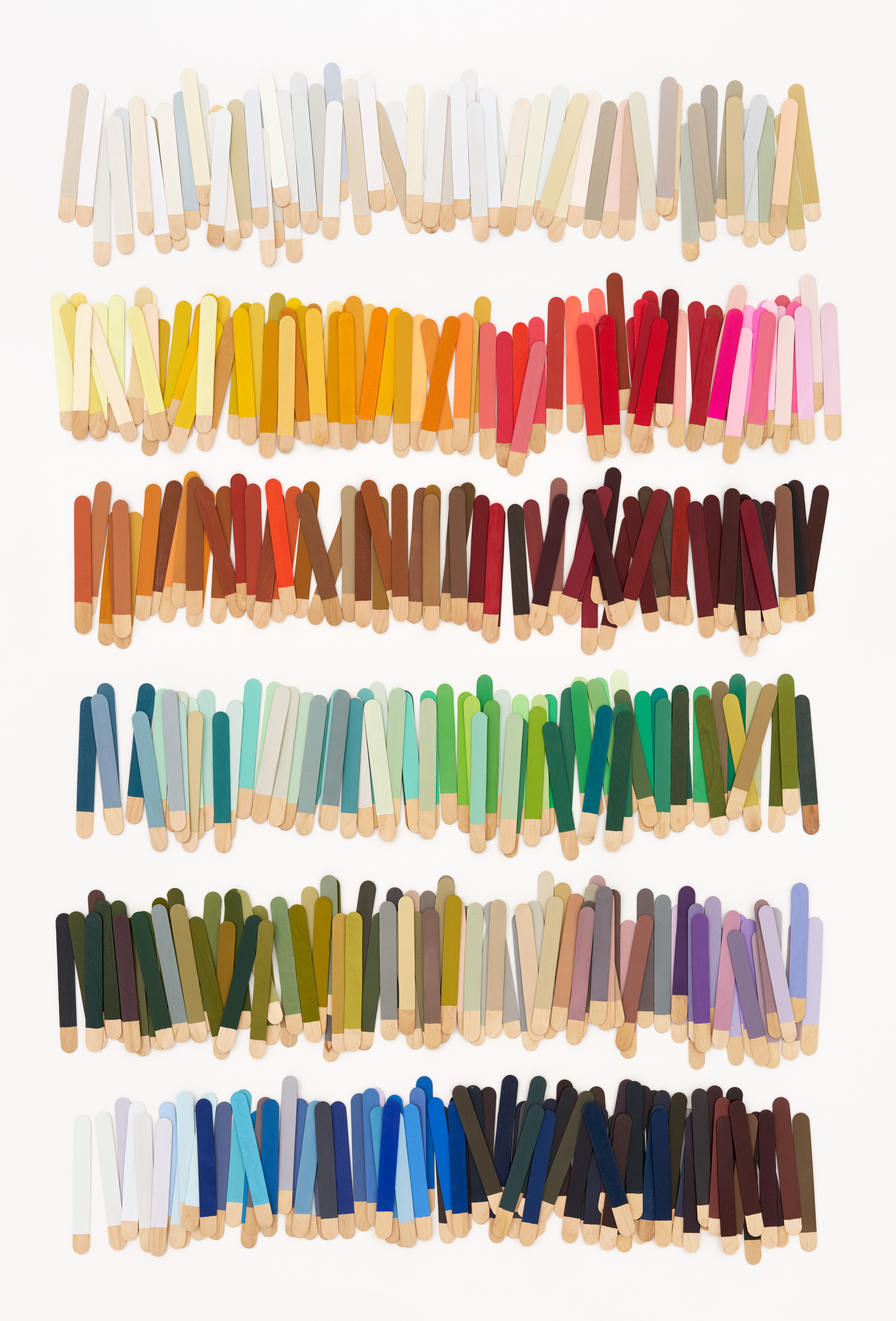
    Odgaard trusts that as a younger generation Scandinavian designer, she is aware of the craft that carries a long cultural history. This means that she is able to add on the existing knowledge, and offer solutions to design questions and problems, which can be both beautiful and functional. At the heart of her color thinking is The Popsicle Index, which she created as a tool. It comes out in rich color hues that appeal to the senses and relate to the body.

    dm_popsicle-index-1_photo-andreas-omvik
    Margrethe Odgaard wanted to create a color system as an alternative to Pantone color system.

    Copenhagen based Odgaard studied at the Royal Danish Academy of Fine Arts and the Rhode Island School of Design in the United States. After graduating in 2005, she worked as a textile designer in Philadelphia. Before opening her own studio in Copenhagen in 2013, she also designed in Paris. In 2016, the designer received a prestigious Torsten and Wanja Söderberg Prize, which is the largest design prize in the world.

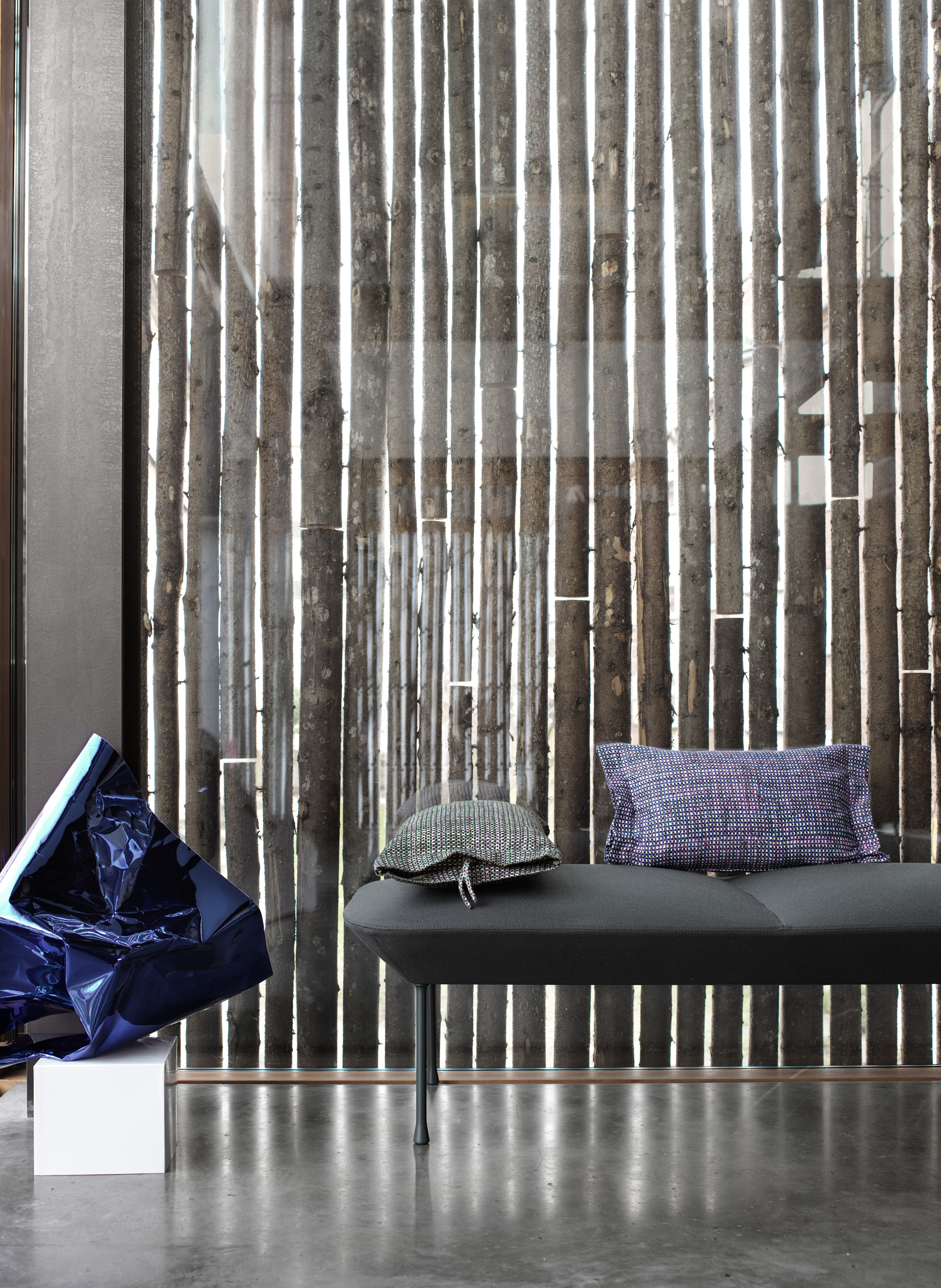
    Muuto shoot
    Margrethe Odgaard sates that colors and textiles can make together strong combinations, leaving an impact that is speaking to feelings as much as to eyes.

    The textile designer looks for the purpose behind the design, and confirms that it should be always clearly attached to the process. The product is the end result of what the process entails. Margrethe Odgaard keeps diary of the colors which are inspirational for the designs. Details of colors have become a crucial part of her process. Nuances are extremely important, and the diary is a great tool as part of the investigation. Results are far away from being shy. It is truly a matter of sharing as well.

    “Share your knowledge, ideas and skills without hesitation. Be specific to order to become general. Use good tools and create new if necessary. Think through your hands. Free yourself from the limits of coolness. Allow things to evolve in their own pace. Listen. Laugh. Dance.” – Margrethe Odgaard.


    Margrethe Odgaard’s exhibition was on view until August 28, at the Design Museum in Helsinki, more info:

    www.designmuseum.fi.