• Artist in focus: Liu Shiyuan

    Artist in focus: Liu Shiyuan

    Artist and global citizen Liu Shiyuan is a young generation Chinese artist. She comes from Beijing and lives currently between China and Copenhagen, Denmark. Her multiplicity as an artist has gained her presentation across continents. Liu Shiyuan’s visually colorful photography and video montage, and her approach to cultural patterns perform traditions from new angles. In her body of works, monochromatic tones meet performative arrays.

    Firstindigo&Lifestyle: What made you decide to move to Copenhagen Denmark, as you have lived in so many places?

    Liu Shiyuan: I was born and grew up in Beijing. I studied in The Central Academy of Fine Arts (CAFA). Then after that, I went to NYC to get my MFA from the School of Visual Arts. I´m a very typical Beijing person, my dialogue accent and my behavior are pretty local Beijing type. I got used to living in a big city where there´s a lot of competitions going on. I like it, it makes me always have to work harder and be a better person and so on. So I actually never thought about moving to a place like Denmark. But I met my husband in Beijing in 2009 while he was doing his exchange studies there. We kept the relationship going even when we were living 8000 miles away from each other. He is Danish, and that is the reason why I am living in Denmark now.

    Firstindigo&Lifestyle: How has your choice of living in multiple places changed your artistic identity and your perspective into things?

    Liu Shiyuan: I got influenced by this kind of “international” life style a lot. Meeting with people from different places, it brought me a bigger image of understanding the world. I started thinking about things in a totally different way. By living with three different languages, my words are getting less, but my emotions are getting more. There´s so many things coming to me every day that I cannot even explain, they are too big and too complicated to be expressed by any language. That is why I work as a visual artist.

    Firstindigo&Lifestyle: What are the best aspects of living in Copenhagen as an artist, in what ways do you think it is special there?

    Liu Shiyuan: I found out here in Denmark that the “artists” (not including the Danish artists living outside of Denmark) are not like the “artists” I understood at all. I still don´t know what I can do here to the Danish society as an immigrant, except continue what I used to do. And I think doing art is enough for me. I don´t care where I live, as long as the life goes on. I travel a lot every year, we bring our baby with us to wherever we go. So home for us could be at any new places. We also stay in Berlin for a lot of time, since it´s very close to Copenhagen, so I guess besides Beijing, Berlin could be our second city.

    Do you feel Scandinavian now?

    Not very.

    Firstindigo&Lifestyle: How about your time spent in New Yock City, how did you experience the living and studying. Could you explain what ingredients did the art education give you?

    Liu Shiyuan: I went to NYC in 2010, when I was 24. And I graduated from CAFA in Beijing in 2009, so there was only one year I was doing some stuff in Beijing in the time between. I wouldn´t call it a career, I only built my own performance group, and we made two conceptual theater pieces. I´m still very proud of the works and the people I was working with in my team, because the two pieces ARE really good whenever I watch the video recordings again. It was really for fun, for doing something new, without thinking it is the beginning of anyone´s career. People from the art circle didn´t even think I was an artist. But I was a very serious student in NYC, I never wasted my time, I never gave myself a chance to do so-so stuff, I had to make sure my artwork was going in the best way as it could. It was really the fantastic two years in my life that I really put my art practice together, clear everything up. I was working very hard, having a BF on the other side of the earth, so I spent most of my time in the studio while in school.

    Firstindigo&Lifestyle: What is your primary medium of working now, or are you making art with different and varying tools and efforts?

    I am very hard on myself. Every time I make a new proposal, I begin from imagining I have never done art before. This is exhausted I agree, a lot of artists don’t work like this, but I just couldn´t help. I don´t have a studio in Denmark, I don´t put my works on the wall, and when I start a new project, I try not to look at my old works. So, I don´t think about the medium or the tools. Rather, the ideas are all coming from a brand new clean mind.

    Firstindigo&Lifestyle: You have created video works together with sound artist Kristian Mondrup Nielsen; how do these works usually develop?

    Liu Shiyuan: I am also a video artist. But I know nothing about sound, so I work with Kristian Mondrup Nielsen when I need sound in my work. He is a very professional musician, for finishing the sound part of my work, he also needs to cooperate with other people. The process usually starts from renting a recording room, inviting people to play, then he mixes the sound by himself, and the final step is mastering.

    Liu Shiyuan, The Edge of Vision, or the Edge of the Earth, 2013
    Liu Shiyuan, The Edge of Vision, or the Edge of the Earth, March 2013, Medium: Single channel video, color, 6mins, video still.

    Firstindigo&Lifestyle: Then your Wonderland’ color photography series was on display at the Frieze New York in May 2016 with Leo Xu Projects. This collage of photography brought to mind European food ingredients. Are these works influenced by Danish meals?

    Liu Shiyuan: Maybe. Danish food can be very conceptual sometimes, because they really care about where the ingredients come from, if the farming is bad for the environment. So when you go to a good restaurant in Denmark, often what you get can look very minimal, no exaggerations. But the taste is just so good because of all the effort behind the curtain, the carrots taste like the best carrots you have ever had, the black coffee tastes like it has milk in it. This way that they treat the ingredients is very similar to how I treat the elements in my artwork. I show how I fully respect the pictures I use in my photos, just simply placing them on “the plate”. ‘Wonderland’ is also related to how fictions are influencing our real life.

    In that series of photos, the amount of humor equals the same amount of sadness. So when you look at them, they are actually not food any more, they become the actors on the stage.


    Firstindigo&Lifestyle: What does the word Bentu, meaning native soil, personally resonate in you? It was a title of the exhibition, in which Fondation Louis Vuitton represented contemporary Chinese artists, who are crossing boundaries across traditions and geographical places, or are transforming something?

    Liu Shiyuan: Bentu was the group exhibition I attended in January 2016. The defenition of Bentu definitely doesn´t mean a location or a pin on the map. I think it´s more like the root of you, the foundation of your understanding of things.

    Firstindigo&Lifestyle: There is a lot of discussion going on about the role of Chinese contemporary artists as part of the art market booming in Chinese centers. Do you want to say something specific about the phenomenon?

    There´s a boom of something in China, but I´m not sure if it is mainly related to the art market. Among all the money China got every year there´s only 5% coming from art. So I think the discussion is more on the economical level. It is very scary if you go visit a small city in China, you see new buildings everywhere, but they are empty. So I guess it´s like someone took a loan from the bank to build them while hoping a lot of people can also take loans to buy them. So the whole thing is holy. I am actually very bad at thinking about money, so maybe I shouldn´t talk too much about economy.

    Firstindigo&Lifestyle: How do you see older generations contemporary Chinese artists like Ai Weiwei influencing your thinking or methods of working, or something like that?

    Liu Shiyuan: He definitely made me thought about my art practice a lot, especially in NYC when almost everyone was asking me about him. Sometimes I explained a bit about how understandings can get twisted between cultures, sometimes I just answer he is not my uncle I don´t know.
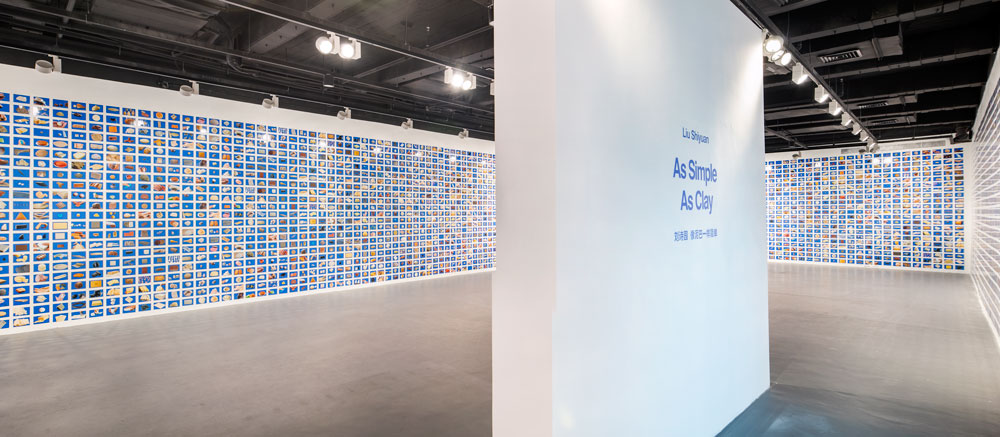
    liu-shiyuan-as-simple-as-clay-2013-photography-installation
    Liu Shiyuan, As Simple As Clay, 2013, Photography exhibition, C-prints. Courtesy of Liu Shiyuan and Leo Xu projects.

    Firstindigo&Lifestyle: Would you like to say something specific about the galleries, which represent you in Beijing and in Copenhagen. Do you feel that there is a common nominator now in the international art world, meaning that the patterns of working and featuring artists can be too similar?

    Liu Shiyuan: Definitely. The culture of mixing thing has been going on for a long time, and now it starts to seem a bit boring. I don´t think the way most of the people use the word “international” is right.

    Firstindigo&Lifestyle: As your art works have been exhibited in different platforms and sites; in museums, galleries, and art fairs, however, who would be an ideal collector for your art?

    Liu Shiyuan: Anyone who loves the works. For me, and also my galleries I believe, the best is not always the biggest. Of course, my artworks only have few editions, sometimes they are unique, so I hope the collectors are willing to show them again somewhere, to let more people see them, to make the works live forever in a way.

    Firstindigo&Lifestyle: Do you think there is something unique for being a woman contemporary artist that has a new empowering resonance?

    Liu Shiyuan: Actually I don´t feel any difference as being a woman. I don´t really know the art world a lot, maybe some people think there´s too few female Chinese artists, so we need to dig more out. But for me, I don´t think about it, it has been a long long long time that I didn´t think of myself as a woman, but I do remind myself all the time that I am an artist.

    ***

    Liu Shiyuan’s website: http://www.shiyuanliu.com/index.html

  • Interview: Yasushi Koyama, cuteness and nature in Finnish and Japanese aesthetics

    Interview: Yasushi Koyama, cuteness and nature in Finnish and Japanese aesthetics

    Japanese sculptor Yasushi Koyama lives in Helsinki, Finland and exhibits frequently in the local galleries. In this interview, he ponders the aesthetics behind his cute wooden sculptures. The artist brings the two artistic worlds together in his deep knowledge of both Finnish and Japanese cultures. One of his revelations connects to an idea of etic (or ethic), a general belief that influences people’s behavior and attitudes.

    Firstindigo&Lifestyle: When did you move to Finland, and how did you decide to go there to study?

    Yasushi Koyama: I moved to Finland in Autumn 2007 to study Fine arts in Saimaa University of Applied Sciences in Imatra. In 2006, I met Finnish printmaker Tuula Moilanen and took her art courses in Kyoto Japan. She was a good teacher and gave me some advice for Finnish education and art school. Then I decided to come to Finland to study.

    Firstindigo&Lifestyle: What is the best part of having two cultures to live in and with?

    YK: The best part is to have another viewpoint beyond one culture. In addition, in my own artwork Finnish culture meets Japanese culture automatically, unconsciously and unintentionally. It is a good mixture of two cultures for me.

    Firstindigo&Lifestyle: Do you think that new cultural heritage transforms you?

    YK: I am transformed by Finnish culture on a daily basis especially with the sense of nature and with the contemporary culture of art & design in Helsinki. While in Imatra I experienced a lot of nature such as forest, lake, snow, river, waterfall etc. I took many photos of the beautiful Finnish nature during each season. In this point I was transformed to be a person who likes nature. At the same time, it reminded me of how to be a Japanese, because a life with nature is the very style of Japanese culture too. I came to Helsinki in 2012 to have my solo exhibition in NAPA Gallery. In 2012 Helsinki was the world design capital and my exhibition joined in with some events of World design capital 2012. NAPA Gallery had many artists who were related to graphic design. It was very fresh for me. The art of NAPA members inspired my own art language to absorb the feeling of contemporary graphic design into my art. So I am transformed to get the design viewpoint from the Helsinki contemporary culture.

    Firstindigo&Lifestyle: You are currently taking part of an exhibition at the Cable Factory in Helsinki. Tell about the background for this particular show.

    YK: The show is called “Masters of Saimaa’16”. It is Masters of Fine Arts graduation exhibition in The Saimaa University of Applied Sciences. 9 master degree students have joined in the show. My artworks are 3 works. There are 2 wood sculptures and 1 wood installation from me.

    One of the wood sculptures is titled Panda papa and child. It is a large sculpture, 160cm high and weighting more than 400 kg. The artwork is made for my Art for Children project in 2016. People can touch & hug this Panda papa sculpture, so it is interactive art, and the art also connects to our well-being. It is going to be donated to children’s public place as a public art after my upcoming solo exhibition in Galleria AARNI. I have a good memory attached to Panda. When I was 6 years old Panda came to Ueno Zoo in Japan from China. I visited the Zoo to watch the Panda with my father.

    Another wood sculpture is titled Walking cat with Katja’s T-shirt – collaboration with Katja Tukiainen. It is 150 cm high and weights more than 200 kg. Artist Katja Tukiainen is my supervisor for my final works of my thesis. Both Katja and I had a similar experience of having cats as pets in our childhood, and we both like cats. Katja Tukiainen has also designed the official T-shirt for the Cable factory. I liked the T-shirts and so got the idea for the collaboration with her.

    Then, my  wood installation’s goes with the title The horizontal – wood installation. It is composed of 6 pieces of woods that were originally from one large tree (5m high). Each piece weights between 30 kg to 150 kg. It is made from ash wood that my friend gave me. The title is from Eija–Liisa Ahtila’s video work “The horizontal “ to use 6 screen panels to show one long tree in horizontal way. Her video work “The house” was the first contemporary Finnish art that I saw in Tokyo in 2003. Through this work I wanted to express the culture of wood in Finland and Japan, the process of wood sculpting and wood as a material itself. In Finland the forest area is 71% of the entire land area. In Japan the forest area is about 68% of the land area. In the world, the average of forest area is 31%. So in comparison, our countries have a lot of forest and woods. I think that we both have the tradition of wood culture such as wooden buildings, wooden houses, wooden tools, wooden arts etc. So wood is really important material for me.

    yasushi-koyama-panda-papa-and-child-2016-birch-house-paint-oil-color-162x85x80cm
    Yasushi Koyama, Panda papa & child, 2016, birch, oil color, house paint, 162 x 85 x 80 cm.

    Firstindigo&Lifestyle: You hear often that Finnish and Japanese cultures have something in common from the point of view of the design cultures. Do you think it’s true and in what ways?

    YK: Yes, it is true. As I told, both Finland and Japan have the culture of wood. Both Finnish and Japanese like nature in life. So natural materials have an influence on the expression of our cultures of design, architecture and art. In addition simplicity, clarity and repetitive nature are similar in both cultures.

    Firstindigo&Lifestyle: How did you find your artistic expression with the sculpture? 

    YK: My artworks are animal sculptures described as “Cute, lovely and humorous”. Most of my works are made from one piece of wood by using hand chisels. The rich textures of wood sculpting give people a warm impression. My wood sculptures have the good mixture between traditional wood sculpting and contemporary expression.

    I learnt traditional wood sculpturing in Japan, New Zealand, Transylvania and Finland. For example in Finland in school I learnt wood sculpting from Finnish sculptor Pasi Karjula. He cherished the traditional way of wood sculpting using axe and hand chisels as well as other methods.

    In the contemporary art context my wood sculptures have the expression of cuteness and positive energy. Finnish painter Katja Tukiainen had an influence on those expressions. And Finnish sculptor Kim Simonsson inspired me with his innocence of cartoonish sculpture. In addition, the graphic design of Marimekko etc., as well as the culture of the Finnish children’s characters, especially the Moomins took effect on me.

    At the same time Japanese Manga & Anime and “neo-pop” art by Japanese painter Yoshitomo Nara have influenced my art language of cuteness. The ideas of art works are inspired by animals, natural shape of wood, self-drawing, Finnish art, illustration, textile design and Japanese art & culture.

    Firstindigo&Lifestyle: Are your cute animal sculptures loved by both Finnish and Japanese audiences alike?

    YK: Yes, I think so. They are loved and sold in both Finland and Japan. The interesting issue is that Finnish people say Yasushi’s works have Japanese feeling, and Japanese people say that Yasushi’s works have Finnish feeling in them. I accept their viewpoints as a good mixture between Finnish and Japanese culture.

    Firstindigo&Lifestyle: How do you develop and teach your concepts to kids? 

    YK: I remember that I was making animal sculptures with clay almost every day when I was between 4-6 years old. My father gave me photo books of animals. After I looked at them I made animals. It was my ordinary life during my childhood. So it was natural for me to make cute animals. Although I was making a human sculpture while in school, after my graduation I remembered my enjoyment with animal sculptures. So it is normal and natural for me to make these cute animal sculptures. After starting to create animals, some friends and gallerists told me that my artworks include concepts for kids. So I will continue developing art based on my own childhood memories.

    Firstindigo&Lifestyle: What is your favorite museum or museums in Finland and why?

    YK: I have many favorite museums in Finland. It is difficult to tell of all the museums. So I point my favorite 3 art museums with exhibitions in 2016. I liked Ai Weiwei & Yayoi Kusama exhibitions in Helsinki Art Museum, Ernesto Neto’s exhibition in 5th floor in Kiasma and “Suomen Taiteen Tarina” (Stories of Finnish Art) in Ateneum Art Museum. Ai Weiwei and Yayoi Kusama are top well-known artists in the world. I appreciate HAM to have offered their exhibitions to people in Finland. I also like the space in Kiasma’s 5th floor. Ernesto Neto’s exhibition gave us the participation and experience, the post colonial and interdisciplinary disciplines in the contemporary art context. “Stories of Finnish Art” was very compact exhibition, but at the same time a very profound way to show Finnish art history. I thought it was a great opportunity for tourists in summer to see the exhibition in Ateneum and also for Finland to show their image through Finnish art.

    Firstindigo&Lifestyle: How would you describe Finnish aesthetics?

    YK: I want to describe 3 concepts of “less is more”, “silence” and “sorrow” as Finnish aesthetics.

    When I think about aesthetics, I always think about “etic” of aesthetics. Etic (or ethic) is a general idea or belief that influences people’s behavior and attitudes. I think that Finnish etic are diligent, honest and simple. Finnish aesthetics is the general idea that influences Finnish people’s behavior to understand beauty. So in my opinion one of Finnish aesthetics is about “less is more”. When I see the simple structures of Finnish architectures, it is so obvious.

    About “silence” (hiljaisuus in Finnish), and how it is connected to nature. I remember silent landscape of snow in forest during winter. It was very beautiful. One of my Finnish friends gave me the message about nature, comparing sisu to silence (sisu is a Finnish spirit against strong power). “Nature means more than forests or lakes. It means freedom for oneself. Sisu is the most important for Finns. But how can one respect the other’s freedom? To respect one’s own freedom and the other’s freedom, Finns are keeping silent.” It is poetic but precisely showing the Finnish behavior of silence.It says that silence is the expression to respect one’s own and other’s freedom. Silence is one core of beauty related to the idea of freedom in Finnish culture.

    About “sorrow” (suru in Finnish). A Finnish pop singer-song writer Kaija Koo says the phrase: Niin kaunis on hiljaisuus, mutta kauniimpaa on kaipaus. It means: So beautiful is silence but more beautiful is longing. So, when a Finn misses another person or a place, they feel sorrow. The sense of sorrow is connected to the feeling of longing and missing. In addition, a Finnish sense of sorrow takes place in the melancholic climate of Finland, such as during cold, dark and snow etc. “Sorrow” is a general and profound concept in Finnish art, film, novel, mythology etc.

    Firstindigo&Lifestyle: What does innovation mean to you?

    YK: Innovation is the attitude to look for new applications of old knowledge and the one to create new concepts by mixing more than two different concepts and cultures.

    Firstindigo&Lifestyle: Who do you collaborate with and where do you work? Is teamwork important to you? 

    YK: To meet a person is very important for me. So I would like to cherish meeting a person. This time I collaborated with Finnish painter Katja Tukiainen in Cable Factory, Helsinki. I met her in Cable Factory in 2009 coincidentally, when I was walking around the Cable Factory. She was very kind to me even though I didn’t know her at all at that time. She talked to me friendly about Japan and her exhibition in Yokohama, Japan. I think that meeting is sometimes coincidental but often meaningful. I would like to cherish such a meeting. For the collaboration it is important for me to have a similar concepts, and to be able to share ideas. It is important for me to make collaboration beyond your own culture and to create something new from it. I have collaborated with artists such as painters, sculptors and printmakers. For the future I am interested in collaborating with not only artists but also with designers, anthropologists, philosophers, children, and with ordinary people to be transforming my art.

    yasushi-koyama-walking-cat-with-tshirt-by-katja-tukiainen-2016-birch-house-paint-156-x-72-x-71-cm
    Yasushi Koyama, Walking cat, T-shirt collaboration with Katja Tukiainen, 2016, birch, paint, 152 x 72 x 71 cm.


    Firstindigo&Lifestyle: Do you have an opinion about Kusama’s works, she is now extremely popular in the West. How do you like the exhibition in Helsinki at the moment?

    In my opinion Kusama’s exhibition includes an important concept of interdisciplinarity, the roles of post colonial and gender in the contemporary art world. So it is natural for the West to accept her art. And her exhibition shows not only art but also an idea to share an experience of her art with visitors. It means that her art works are not only objects but also the image of her art, spirit and that of the contemporary culture. Her exhibition goes beyond art and connects with people in the gallery space to share their experiences. From this point of view, the visitors can participate in her exhibition. And I find that her paintings have an influence coming from native art and aboriginal art. Then, I think that her dot art includes not only pop art but also biological consideration of a cell, Shintoism and neo animism. I imagine that those concepts are fresh and still new to the West. So I admire HAM (Helsinki Art Museum) to have her exhibition.

    Firstindigo&Lifestyle: Does Kusama have an approach that can be applied to other things, or could there be a recipe for a good idea to be developed further. There seems to be something that makes people really want to participate in it?

    YK: Yayoi Kusama was the world’s most popular artist in 2014. And she is still one of the most popular artist in 2016. I think that the quality of this exhibition is among the top of the world. And her exhibition has been already developed by the point of visitor’s participation, comparing it to her exhibition that I saw in Matsumoto, Japan in 2003. It would be possible for her to use 5 senses to prompt visitors to participate in her art, such as the sense of touch, the sense of smell and auditory sense.

    Firstindigo&Lifestyle: Do you think that art should be more sensorial, and available for people to touch?

    YK: Yes, at least for me. I think touching art is a much deeper experience than seeing art. I make my large animal wooden sculptures (about 160 x 80 x70 cm) to be touchable and huggable. It is a hands-on way of “interactive art” in a sense that visitors also take action towards the art. And it is also “participation art” as you are touching and hugging a sculpture in the exhibition gallery space or in the public space. The importance of touching art is also connected to the internet period or described as a post-internet period. Although we can see a lot of images through internet, we can’t get a sense of touch through internet as well. So the sense of touch is a strong point attached to my animal sculptures. The feeling of a wood material is little warm and nice to human body. My animal sculptures have been already in some public places as public art. It gives people happiness and experiences in a way that they participate in a society through art.

    Firstindigo&Lifestyle: Is there a line between art and design in contemporary art or does there have to be?

    YK: For me such a line is not so meaningful in our contemporary time. Design can be art and art can be design. I think that art and design have an effect on each other especially here in Helsinki.

    Firstindigo&Lifestyle: What are you planning next, do you have new ideas and exhibitions coming up? 

    YK: My next exhibition is coming soon 23.11-18.12.2016 in Galleria AARNI in Espoo, Finland. The concept is “Cute” –between SÖPÖ and Kawaii. I mix Finnish cuteness “SÖPÖ” with Japanese cuteness “Kawaii” in my art. In Japan “Kawaii” (= the quality of cuteness) has become a prominent aspect of Japanese popular culture. This term Kawaii has taken on the secondary meanings of cool, groovy, charming and innocent. The book “Kawaii Syndrome” tells “cute” and “neat” have taken precedence over the former Japanese aesthetics of “beautiful” and “refined”. So cuteness is a new cultural wave of Japanese postwar generation especially of the ones born in 70’s and 80’s. This cultural wave has come to Europe particularly through Manga and Anime. For the design of my animal wood sculptures I use Finnish wood, and the Finnish cuteness of SÖPÖ is inspired by Finnish art and design. In the exhibition visitors can see ”Cute” animal sculptures, touch & hug a large sculpture ”Panda Papa & Child”. I am hoping the audiences will enjoy Yasushi Koyama’s world of cute animals in the exhibition coming to Galleria AARNI.

    ***

    yasushi-koyama-photo-by-ayana-palander
    Yasushi Koyama, photo by Ayana Palander

    Artist profile: http://www.kuvataiteilijamatrikkeli.fi/en/artists/3620

  • Amelia Marzec’s Weather Center for the Apocalypse

    Amelia Marzec’s Weather Center for the Apocalypse

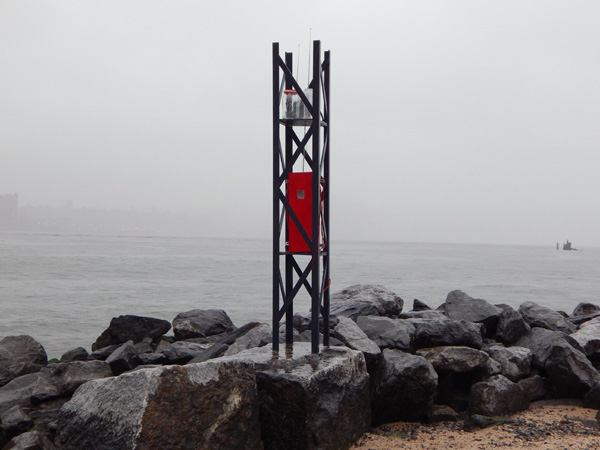
    New York city based artist Amelia Marzec has been working on a project Weather Center for the Apocalypse since 2015. The work is presented during Climate Week in NYC, opening taking place on September 20, 2016 at United Nations Plaza. The artist has created an ongoing and evolving Weather Tower installation, which handles a theme of change in the environment and culture where we live in. Weather Center for the Apocalypse is an alert to an uncertain future as it predicts those “changes that could affect the autonomy of citizens in the event of disaster”. According to Marzec, the project offers alternative perceptions to the media-driven forecasts we constantly encounter, and takes seriously the fears and superstitions that we as community may have. Recently, the project was on display at Sixth Extinction Howl at Billings Library in the University of Vermont in Burlington, VT.

    Firstindigo&Lifestyle: How did you find weather? It is there all the time, but to become a derivative and subject for art, do you find it is common at all?

    Amelia Marzec: Currently there are a lot of artists doing work either directly or indirectly on the influence of human activity on climate change. I have seen a few other weather projects since starting the Weather Center for the Apocalypse. Everyone on earth is participating in this story right now, whether they are aware of it or not.

    Firstindigo&Lifestyle: Tell about the background for your project, which will also materialize during Climate Week in New York. 

    AM: The Weather Center for the Apocalypse began during an anxious time when I was in a relationship that was failing, at the same time that my Grandfather’s health was failing. It was a moment of knowing that these things were going to end, while not knowing exactly when that was going to happen. I needed to prepare and put things in perspective: what would be the most outrageous ending? The world could end, of course. With the current focus on climate change, it didn’t seem that far off.

    Firstindigo&Lifestyle: Have you always been future oriented, foreseeing the future, as apocalypse might imply?

    AM: Yes. My current work began a number of years ago, when I lost all of my hearing in one ear due to a tumor. I began to focus on the reality of daily communication failure in my life, and to pay more attention to the physical objects that make up our telecommunications infrastructure: our phones, our internet, our radios, and other devices. I began building objects to avert possible future disasters of communication in our society. The Weather Center for the Apocalypse continues this work by becoming a news media center for a pre-apocalyptic world.

    Firstindigo&Lifestyle: How about the narrative part of your Weather Center for the Apocalypse project, in which the visual implements a strong narrative element, what do you want to say about it?

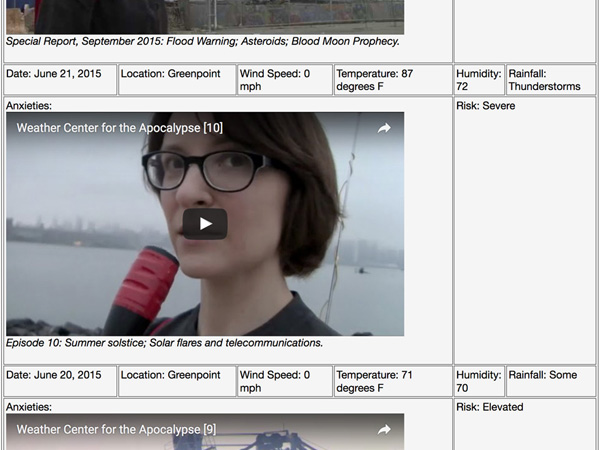
    AM: The story of the Weather Center unfolds over time as the project is built and refined. It began by providing forecasts to STROBE Network, a news network that was broadcast from Flux Factory in 2015. News and weather reports that were both practical and fantastical fed a daily apocalypse warning system. However, it has become clear that the Weather Center needs to be prepared for complete telecommunications failure, so the Weather Tower, which is a functioning weather station, was built mostly from salvaged materials that I gathered in my neighborhood. It collects local weather data so we don’t need to rely on major news sources. Predictions, fears, and anxieties are collected by interviewing local residents, and severe warnings are broadcast over a short distance with an FM radio transmitter.

    Firstindigo&Lifestyle: Where did you install the Weather Tower before, and how did those environments alter the direction?

    The Weather Tower has traveled to different locations in New York to collect weather data and predictions from residents, including Industry City with Creative Tech Week; Governor’s Island with FIGMENT festival; Sag Harbor with Wetland, a fully sustainable houseboat; and Long Island City with Flux Factory and the Artificial Retirement exhibition. Being outdoors tends to trigger people’s memories more of changes that are happening on the earth. I’ve been caught in the rain a few times now, which has forced me to become better at weatherproofing the work.


    amelia-marzec-weather-tower
    Amelia Marzec, Weather Tower, part of the Weather Center for the Apocalypse -project.

    Firstindigo&Lifestyle: Since you will have the UN presentation, what expectations do you have for it. Is it possible that the work will gain more global visibility with the location?

    AM: There are some meetings that week at the UN about climate change, so it would be really nice to continue those conversations in a public place, as it affects all of us. I would also let passers by know about Climate Week. This type of artwork tends to happen one conversation at a time, so I don’t expect it to be a global phenomenon. Hopefully I can collect some interesting predictions.

    Firstindigo&Lifestyle: Does the work read a label climate change art, do you think that art can be a vehicle towards a better understanding on what is happening?

    AM: Yes, climate change is one of the major themes of the Weather Center for the Apocalypse. I do think art is a vehicle towards better understanding of the issues, and I also think that is one of the responsibilities of an artist.

    Firstindigo&Lifestyle: You have been connected to Eyebeam in New York City, what has this education and community meant for your creative thinking?

    AM: I’m currently an Impact Resident at Eyebeam, working on our conference Radical Networks. The conference brings together artists, educators, and technologists to discuss the future of alternative networks in the context of community. This could mean experimental social computer networks, local community and rural networks, network security, uses of networks for activism, and the overall question of who owns the network. The community at Eyebeam is made up of some of the most forward-thinking people on the future of art and technology, and it is an honor to be among them. Seeing how other artists live and get work done has given me the confidence to pursue these projects, in addition to expanding my thinking about the work itself.

    Firstindigo&Lifestyle: What do you think a notion artistic research designates, a process that goes beyond a merely presentation to include research on a specific subject?

    AM: It depends on the context, sometimes it simply means searching for images or text to be used in a project. But it should mean practice-based research, which has more depth in that the projects are leading a conversation, which happens in the context of previous writers and theorists. There’s other types of research where you’re mostly talking about artwork, but not making it. I’m a very hands-on person so I’m letting the work lead for now.

    Firstindigo&Lifestyle: It is so interesting how you relate to technology with a nostalgic wibe. There seems to be also a feature of old electronics and low tech involved in the making. How do the objects make you inspired?

    AM: My previous project, New American Sweatshop, is a working model of an electronics manufacturing factory for a post-industrial economy, using our trash as a natural resource. I had gotten frustrated with building activist projects that were only possible for very privileged groups of people: people who could afford to buy technology, and had the education to know how to build it. I was also getting parts from international companies. During hurricane Sandy, there was no way to get supplies, as the roads were closed. So I started the New American Sweatshop to source parts locally from the resources that we had, which turned out to be our trash. It’s not so much nostalgia as necessity, knowing what we’d have to do to build communications infrastructure in a disaster scenario.

    Firstindigo&Lifestyle: You have discussed a role of the digital as something that might alienate us from connecting to one another. Should we go back in time, beyond the internet in our human communication, or do you think there is something else, which is a possible way to go?

    AM: We need to use the current digital technology as a tool to organize and meet up in person. We need each other as human beings, and we will never be able to duplicate the experience of being together in the same space, despite advances in technology.

    Firstindigo&Lifestyle: What are the philosophies which you rely upon, and make references in you work?

    AM: I’ve always been very much into DIY culture, having grown up in the 80’s and 90’s.

    Firstindigo&Lifestyle: One strong sensibility which comes across in your approach is feminist art, or a community of women making societal art. You have been featured in conjunction to A.I.R. Gallery in Brooklyn that promotes the women’s voices. Would you like to say something about this special connection?

    Women are not on equal footing worldwide, so anything that serves to amplify women’s voices and give them confidence in their work is something I appreciate. Being together to have this discussion and forming our own networks is key. It’s possible that I’ve gotten more opportunities through connections with other women than with men. The idea of women competing with each other is outdated; we are more effective when we collaborate, and that is something that I see younger women doing more and more.

    Firstindigo&Lifestyle: Does VR resonate with anything you are interested in? Can we save the world with the idea of VR offering alternative perspectives?

    AM: I’m both fascinated and frightened by VR. I don’t believe it will save the world. Having different perspectives is always helpful, but people have to be open to them. Whatever happens, we have to keep working on our own morality.

    amelia-marzec-forecast-portal-from-weather-center-for-the-apocalypse-2016
    Amelia Marzec, Forecast Portal, from the Weather Center for the Apocalypse.

    Firstindigo&Lifestyle: Where do you wish yourself going next in terms of plans?

    AM: I’d like to build out more of the Weather Center, and I’m looking for support in order to do that.

    ***

    Amelia Marzec was born in Red Bank, New Jersey, and went to college at Mason Gross School of the Arts at Rutgers in New Brunswick. She came to NYC to attend the Design and Technology MFA program at Parsons in 2003, and has lived in the city ever since.

    Check out artist website: http://www.ameliamarzec.com/