
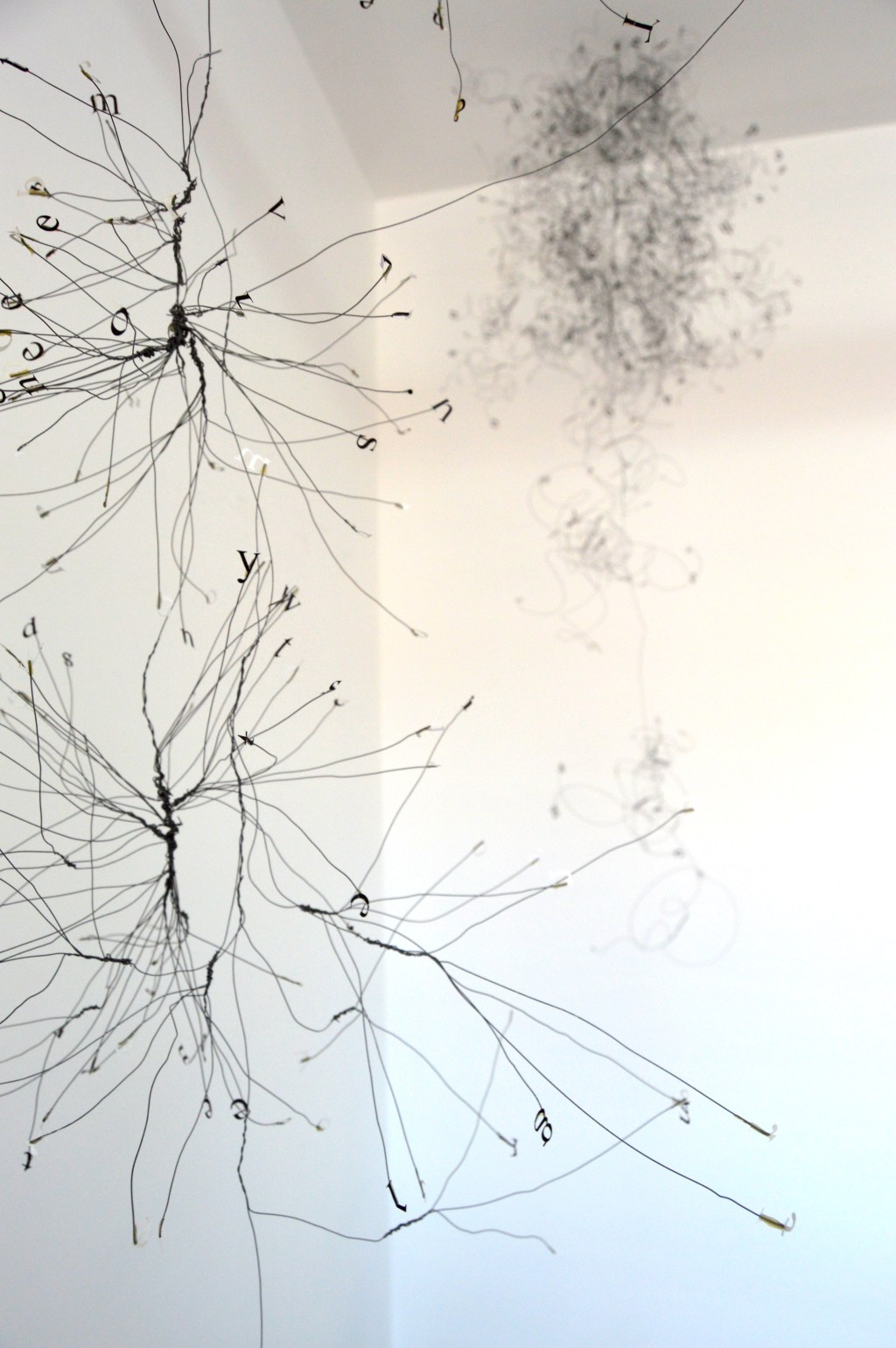
Jocelyn Shu is an Asian American artist whose wire sculpture installations draw from the philosophical texts of the Tao Te Ching. The sculptures walk you through chapter by chapter, and the aesthetic captures the essence of language and thought through visual forms. She is also a researcher in psychology, which has inspired her interests in exploring the visual aspects of language. While self-isolating during the pandemic, she has created work responding to the changing environment.

Firstindigo&Lifestyle: I remember meeting you at the Flux Art Fair in Harlem a few years back. This was a great event, and it was an opportunity for artists working in the Harlem area. How many years did you keep your studio there?
Jocelyn Shu: I maintained a studio in Harlem either in a separate space, or in my home, from 2013 until I moved out of New York City in 2019. The years I lived in Harlem encompassed a lot of growth for me. I feel very lucky to have been part of the art community there, and to have been in an environment where I was constantly inspired by the work of Black artists and artists of color who were exploring their cultural history and spirituality. It was also a time when I sought to further understand my own roots, which included deepening my understanding of systemic oppression in American history and culture.
Firstindigo&Lifestyle: What was interesting to me was that you as well were doing your research at Columbia University. You were hard at work with your doctoral thesis, and then wanted to create art as a balancing act. How did that plan work out?
JS: I don’t think I would have been able to complete my PhD without also maintaining my art practice! It has been important for me to have both channels of work to turn to and find inspiration in. In both research and art, one often faces hurdles that seem difficult to overcome. It has been productive for me to be able to turn to alternate creative channels, which can provide space and inspiration during these times.
Firstindigo&Lifestyle: Has it been hard to keep up two practices, or do you think it is actually the opposite?
JS: While there are definitely benefits to keeping up the two practices, it is not always easy to balance the two. It can be difficult to have the time and energy to pursue everything that I am interested in!

Firstindigo&Lifestyle: When you started doing art, you first studied the subject in the Bay area. Do you think of the Bay Area as your home, and has the place itself influenced your artistry?
JS: I was born about an hour south of San Francisco. I grew up in that region immersed in the immigrant Asian communities there. So, a large part of figuring out my identity during that time, as is the case with many who are part of immigrant communities, involved learning how to navigate multiple cultures: that of my parents and relatives (who are from Taiwan), that of being American, and that of being Asian American. This is an ongoing journey for me.
I stayed in the Bay Area for college, and majored in Painting and Drawing through a joint program held at the time between the University of San Francisco and the California College of the Arts. I had wanted very much to attend an art school for my undergrad experience. My parents placed an incredibly high value on higher education, but were opposed to this idea. At the time, attending this program was a way to compromise on our different values by being at both of these institutions. Reflecting back, I think this experience left a lasting influence on me by allowing me to develop intellectual interests rooted in a liberal arts tradition while also cultivating a studio practice in the creative environment of an art school.
I am not sure that I would consider the Bay Area my home now. I feel I am constantly in a transitory state, traveling between different cultures, geographies, and intellectual and creative traditions. I have a sense of feeling at home in different ways, in the various places that I’ve lived and visited. However, the drawback to this is that there isn’t any one place where I fully feel at home, at least not in the current moment.
Firstindigo&Lifestyle: Do you think that your fine art education defines what you chose to study after graduation?
JS: Being able to pursue my interests in the fine arts during college felt like an incredible gift. I loved having the time to hone my interests and creativity, and to be surrounded by artists who were passionate about their craft. The experience fostered a deep curiosity to understand the world and humanity better. In the following few years after I graduated, I focused on my painting practice, but also became interested in psychology. I would read about it, as well as take a course at the local community college in my spare time. This interest eventually inspired me to pursue the field further by moving to New York City and taking post-baccalaureate courses at Columbia. With the knowledge and research experience I gained, I eventually completed my PhD in psychology there.
Firstindigo&Lifestyle: As we look at your identity today, how did science eventually play so important role in your life?
JS: I have been doing research in psychology for about 12 years now. I’ve learned over this time that science is a process in which our knowledge of the world is built slowly through accumulated evidence. It is not a linear or straightforward process. What is thought of as true can later be demonstrated to be false, and sometimes vice versa. It has been a difficult journey at times, but I’ve appreciated the various ways in which the scientific process can cultivate one’s thinking, ranging from how one observes the world to how one interprets data, from how one clarifies their writing and thinking, to how one responds to criticisms of their work. It can take many years for a scientific project to be completed, and I’ve gained an appreciation for work that is undertaken over such timescales.
Firstindigo&Lifestyle: What is your art about, how would you describe it? Do you find any similarities in your artistic practice and scientific research?
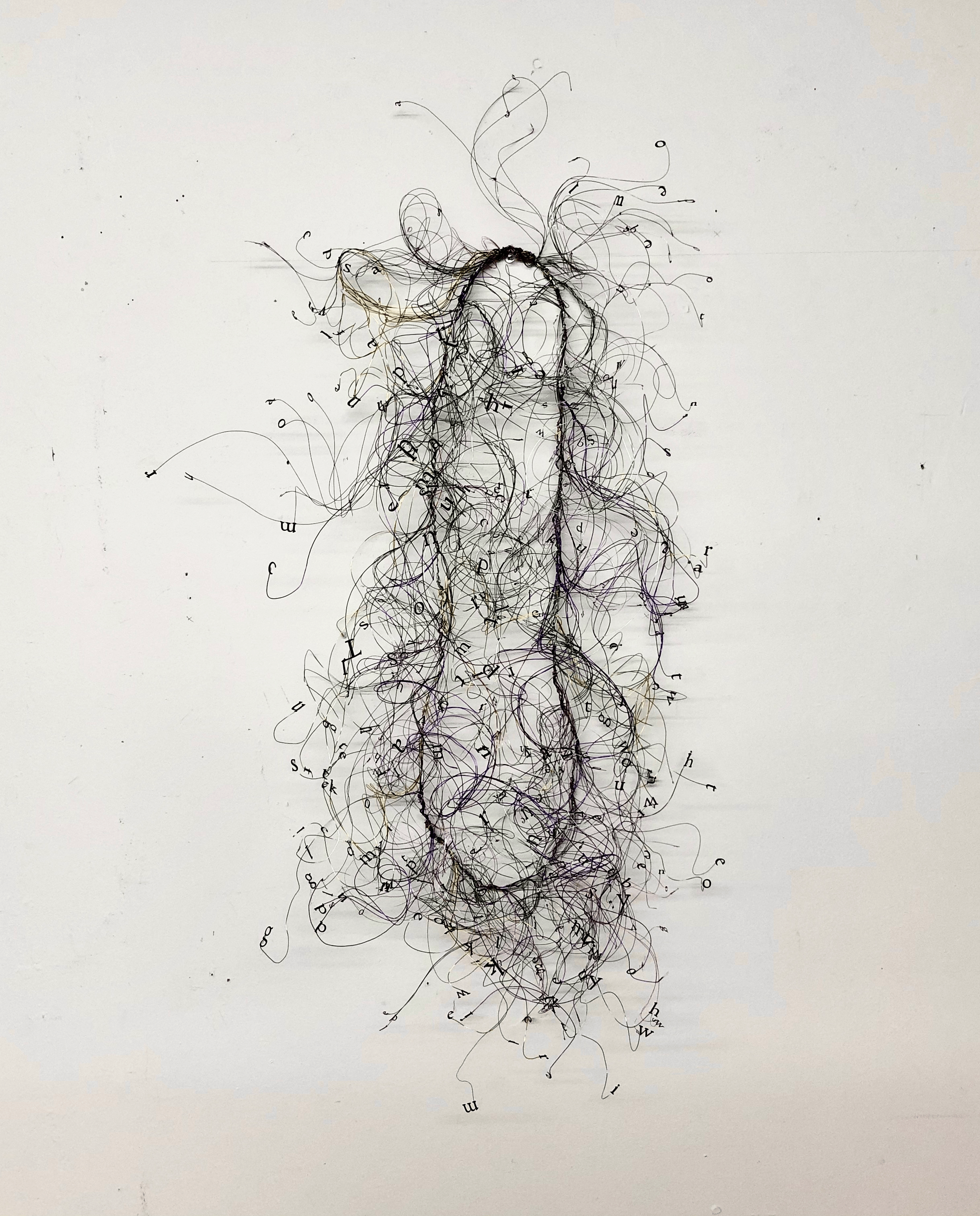
JS: For many years, I have been working on a series of wire sculptures that are meant to be displayed together and adapted to the environment that they are installed in (you had seen some of the earlier pieces in this series at the Flux Fair). I had the idea for this series shortly before moving to New York City in 2008. At that time, I was in Taiwan to visit family and to reacquaint myself with the culture. The pieces in this series are each comprised of text from a chapter of the Tao Te Ching. The process of making these pieces involves cutting the translated words and letters from each chapter, and then incorporating them into wire sculptures. These pieces take on various forms that hang from the ceiling or wall, or sit on the ground. Working on this series is a slow, ongoing process. I was not raised with religion, so it has been meaningful for me to connect with text that has an ancient history from the culture of my ancestors. Working on this series has shaped how I view and respond to change in the world and in my life.
Outside of this series, I’ve become more and more interested in considering the visual components of language, and in exploring various ways that language and art can intersect with each other. I think this has stemmed from having to constantly develop my writing in the research that I do. Other than this, I don’t think the similarities between my art and research manifest in a direct way, at least not yet. People often point out that the forms of my sculptures resemble neurons. This has not been conscious on my end, but it would make sense that elements from the work that I do in one field find their way into work that I do in the other field.

Firstindigo&Lifestyle: You have visited and travelled in Europe, and met with artists there. Do you have any opinions or experiences about how artists work in Europe versus in the US?
JS: My relationship with visiting Europe, and traveling in general, started when I studied abroad in Florence, Italy, during my junior year of undergrad. It is hard for me to make generalizations about how artists work in the US vs. Europe. However, I do feel that art is more valued in many places in Europe, and more deeply intertwined into the fabric of society than in the US.
Firstindigo&Lifestyle: As a postdoctoral fellow, you are currently based at the Harvard University. How is this environment different from your time in New York City?
JS: As I have been here for about a year, I am still processing my experiences in this new environment. There are clear differences in that I am no longer in a big city, and the quietness of my surroundings seems to lead to a sense of having a bit more time.
Firsindigo&Lifestyle: The current COVID-19 pandemic has changed our daily lives in so many ways. Have you found this time altering?
JS: I have been going through different phases. During some weeks, the isolation has allowed me to focus on my work and explore different creative paths. During other weeks, it has been hard to concentrate on work amidst the societal upheavals we are facing. It is understandable and necessary that attention during these times should focus on the pandemics involving COVID-19 and racism in this country.
Firsindigo&Lifestyle: Do you think that going through self-isolating has initiated new art as well?
JS: Yes, I have turned to drawing and making small pieces for the immediacy that working in this medium and format provides. Doing so has allowed me to respond more rapidly to changing events from day to day. I have also continued to work on the series of wire chapters.
Firsindigo&Lifestyle: Have you exhibited someplace recently?
JS: I recently had a small drawing in an online show at Gallery 263, a non-profit art gallery in Cambridge that had put out a call for local artists in Massachusetts to submit work as a way to gather the arts community together during the pandemic.
Firsindigo&Lifestyle: Do you have any specific plans for the future, in terms of your research and artistic practice?
JS: I am constantly exploring ways to combine the different interests I’ve had in my life and career. I have a feeling it will be a lifelong pursuit!
Firsindigo&Lifestyle: It would be nice to hear what kind of late summer and early fall ideas you have?
JS: It is hard to say for sure in this tumultuous time! On the research end, studies for the foreseeable future will need to be run online, in accordance with safety protocols in response to the COVID-19 pandemic. As usual, I am looking to establish a routine with this work and my studio practice. My current studio is located in Somerville, in Vernon Street Studios, which houses multiple floors of art studios in a large foam factory. As I mentioned, I have been exploring new ways of combining language and art, a process that has been inspired by the literary tradition in the Cambridge area.
While I feel very lucky to have all of this in my life, and to have been healthy and safe throughout these difficult times, I am also hoping that there will be a way to reunite with my partner, who is currently based in Germany. As I’m sure many others are also experiencing, travel restrictions have prevented us from being together.



 Firstindigo&Lifestyle