Tag: Asian arts

  • Artist in focus: Liu Shiyuan

    Artist in focus: Liu Shiyuan

    Artist and global citizen Liu Shiyuan is a young generation Chinese artist. She comes from Beijing and lives currently between China and Copenhagen, Denmark. Her multiplicity as an artist has gained her presentation across continents. Liu Shiyuan’s visually colorful photography and video montage, and her approach to cultural patterns perform traditions from new angles. In her body of works, monochromatic tones meet performative arrays.

    Firstindigo&Lifestyle: What made you decide to move to Copenhagen Denmark, as you have lived in so many places?

    Liu Shiyuan: I was born and grew up in Beijing. I studied in The Central Academy of Fine Arts (CAFA). Then after that, I went to NYC to get my MFA from the School of Visual Arts. I´m a very typical Beijing person, my dialogue accent and my behavior are pretty local Beijing type. I got used to living in a big city where there´s a lot of competitions going on. I like it, it makes me always have to work harder and be a better person and so on. So I actually never thought about moving to a place like Denmark. But I met my husband in Beijing in 2009 while he was doing his exchange studies there. We kept the relationship going even when we were living 8000 miles away from each other. He is Danish, and that is the reason why I am living in Denmark now.

    Firstindigo&Lifestyle: How has your choice of living in multiple places changed your artistic identity and your perspective into things?

    Liu Shiyuan: I got influenced by this kind of “international” life style a lot. Meeting with people from different places, it brought me a bigger image of understanding the world. I started thinking about things in a totally different way. By living with three different languages, my words are getting less, but my emotions are getting more. There´s so many things coming to me every day that I cannot even explain, they are too big and too complicated to be expressed by any language. That is why I work as a visual artist.

    Firstindigo&Lifestyle: What are the best aspects of living in Copenhagen as an artist, in what ways do you think it is special there?

    Liu Shiyuan: I found out here in Denmark that the “artists” (not including the Danish artists living outside of Denmark) are not like the “artists” I understood at all. I still don´t know what I can do here to the Danish society as an immigrant, except continue what I used to do. And I think doing art is enough for me. I don´t care where I live, as long as the life goes on. I travel a lot every year, we bring our baby with us to wherever we go. So home for us could be at any new places. We also stay in Berlin for a lot of time, since it´s very close to Copenhagen, so I guess besides Beijing, Berlin could be our second city.

    Do you feel Scandinavian now?

    Not very.

    Firstindigo&Lifestyle: How about your time spent in New Yock City, how did you experience the living and studying. Could you explain what ingredients did the art education give you?

    Liu Shiyuan: I went to NYC in 2010, when I was 24. And I graduated from CAFA in Beijing in 2009, so there was only one year I was doing some stuff in Beijing in the time between. I wouldn´t call it a career, I only built my own performance group, and we made two conceptual theater pieces. I´m still very proud of the works and the people I was working with in my team, because the two pieces ARE really good whenever I watch the video recordings again. It was really for fun, for doing something new, without thinking it is the beginning of anyone´s career. People from the art circle didn´t even think I was an artist. But I was a very serious student in NYC, I never wasted my time, I never gave myself a chance to do so-so stuff, I had to make sure my artwork was going in the best way as it could. It was really the fantastic two years in my life that I really put my art practice together, clear everything up. I was working very hard, having a BF on the other side of the earth, so I spent most of my time in the studio while in school.

    Firstindigo&Lifestyle: What is your primary medium of working now, or are you making art with different and varying tools and efforts?

    I am very hard on myself. Every time I make a new proposal, I begin from imagining I have never done art before. This is exhausted I agree, a lot of artists don’t work like this, but I just couldn´t help. I don´t have a studio in Denmark, I don´t put my works on the wall, and when I start a new project, I try not to look at my old works. So, I don´t think about the medium or the tools. Rather, the ideas are all coming from a brand new clean mind.

    Firstindigo&Lifestyle: You have created video works together with sound artist Kristian Mondrup Nielsen; how do these works usually develop?

    Liu Shiyuan: I am also a video artist. But I know nothing about sound, so I work with Kristian Mondrup Nielsen when I need sound in my work. He is a very professional musician, for finishing the sound part of my work, he also needs to cooperate with other people. The process usually starts from renting a recording room, inviting people to play, then he mixes the sound by himself, and the final step is mastering.
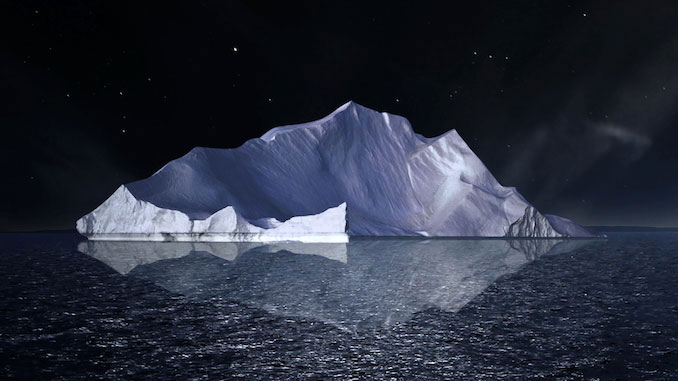
    Liu Shiyuan, The Edge of Vision, or the Edge of the Earth, 2013
    Liu Shiyuan, The Edge of Vision, or the Edge of the Earth, March 2013, Medium: Single channel video, color, 6mins, video still.

    Firstindigo&Lifestyle: Then your Wonderland’ color photography series was on display at the Frieze New York in May 2016 with Leo Xu Projects. This collage of photography brought to mind European food ingredients. Are these works influenced by Danish meals?

    Liu Shiyuan: Maybe. Danish food can be very conceptual sometimes, because they really care about where the ingredients come from, if the farming is bad for the environment. So when you go to a good restaurant in Denmark, often what you get can look very minimal, no exaggerations. But the taste is just so good because of all the effort behind the curtain, the carrots taste like the best carrots you have ever had, the black coffee tastes like it has milk in it. This way that they treat the ingredients is very similar to how I treat the elements in my artwork. I show how I fully respect the pictures I use in my photos, just simply placing them on “the plate”. ‘Wonderland’ is also related to how fictions are influencing our real life.

    In that series of photos, the amount of humor equals the same amount of sadness. So when you look at them, they are actually not food any more, they become the actors on the stage.


    Firstindigo&Lifestyle: What does the word Bentu, meaning native soil, personally resonate in you? It was a title of the exhibition, in which Fondation Louis Vuitton represented contemporary Chinese artists, who are crossing boundaries across traditions and geographical places, or are transforming something?

    Liu Shiyuan: Bentu was the group exhibition I attended in January 2016. The defenition of Bentu definitely doesn´t mean a location or a pin on the map. I think it´s more like the root of you, the foundation of your understanding of things.

    Firstindigo&Lifestyle: There is a lot of discussion going on about the role of Chinese contemporary artists as part of the art market booming in Chinese centers. Do you want to say something specific about the phenomenon?

    There´s a boom of something in China, but I´m not sure if it is mainly related to the art market. Among all the money China got every year there´s only 5% coming from art. So I think the discussion is more on the economical level. It is very scary if you go visit a small city in China, you see new buildings everywhere, but they are empty. So I guess it´s like someone took a loan from the bank to build them while hoping a lot of people can also take loans to buy them. So the whole thing is holy. I am actually very bad at thinking about money, so maybe I shouldn´t talk too much about economy.

    Firstindigo&Lifestyle: How do you see older generations contemporary Chinese artists like Ai Weiwei influencing your thinking or methods of working, or something like that?

    Liu Shiyuan: He definitely made me thought about my art practice a lot, especially in NYC when almost everyone was asking me about him. Sometimes I explained a bit about how understandings can get twisted between cultures, sometimes I just answer he is not my uncle I don´t know.
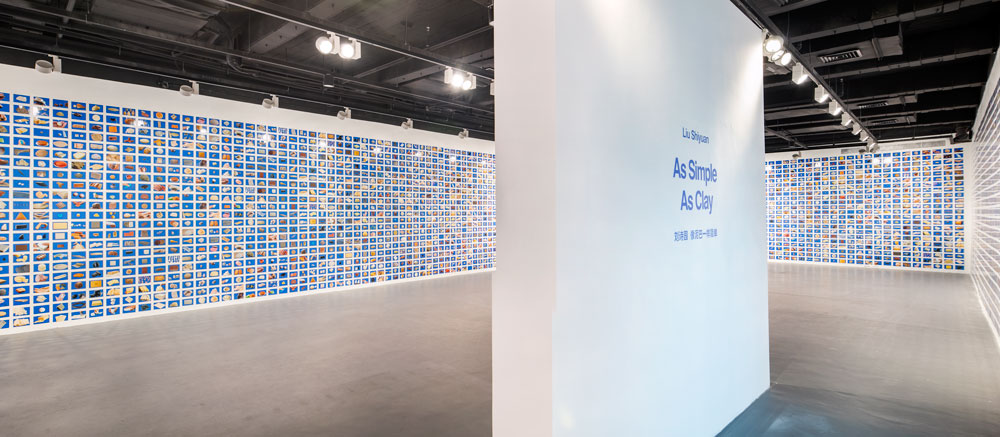
    liu-shiyuan-as-simple-as-clay-2013-photography-installation
    Liu Shiyuan, As Simple As Clay, 2013, Photography exhibition, C-prints. Courtesy of Liu Shiyuan and Leo Xu projects.

    Firstindigo&Lifestyle: Would you like to say something specific about the galleries, which represent you in Beijing and in Copenhagen. Do you feel that there is a common nominator now in the international art world, meaning that the patterns of working and featuring artists can be too similar?

    Liu Shiyuan: Definitely. The culture of mixing thing has been going on for a long time, and now it starts to seem a bit boring. I don´t think the way most of the people use the word “international” is right.

    Firstindigo&Lifestyle: As your art works have been exhibited in different platforms and sites; in museums, galleries, and art fairs, however, who would be an ideal collector for your art?

    Liu Shiyuan: Anyone who loves the works. For me, and also my galleries I believe, the best is not always the biggest. Of course, my artworks only have few editions, sometimes they are unique, so I hope the collectors are willing to show them again somewhere, to let more people see them, to make the works live forever in a way.

    Firstindigo&Lifestyle: Do you think there is something unique for being a woman contemporary artist that has a new empowering resonance?

    Liu Shiyuan: Actually I don´t feel any difference as being a woman. I don´t really know the art world a lot, maybe some people think there´s too few female Chinese artists, so we need to dig more out. But for me, I don´t think about it, it has been a long long long time that I didn´t think of myself as a woman, but I do remind myself all the time that I am an artist.

    ***

    Liu Shiyuan’s website: http://www.shiyuanliu.com/index.html

  • Interview: Katsutoshi Yuasa, from photographic imagination to woodcut reality

    Interview: Katsutoshi Yuasa, from photographic imagination to woodcut reality

    Katsutoshi Yuasa is a Japanese artist who has revitalized the original idea of photography, thinking about its early techniques, and bringing the digital production close to ancient Japanese printmaking practices. His detailed and lengthy artistic process starts usually with a digital snapshot. Eventually the image finds a new life as woodcut print or relief work, which the artist carves and prints all by a hand. In this production the original alters into something else, depicting a feeling or experience. Katsutoshi Yuasa was born in Tokyo. He graduated from the Royal College of Art in London, and has exhibited internationally for over a decade now.

    For Katsutoshi Yuasa, the photography contains several layers of meaning. The complexity of the medium implies that the production cannot be perceived as pure images.

    Firstindigo&Lifestyle: Your woodcutting is based on photography, did this practice in your mind transform the idea of photography?

    Katsutoshi Yuasa: Yes, my process of making art works is a way of thinking about an origin of photography. Or it is about image-making. How we understand and transform an image in front of our eyes to our mind.

    I start from a photographic snapshot, but re-emergence of a photographic image is not my goal. My purpose of using a photograph is to make visible something which is perceived but no one sees.

    Katsutoshi Yuasa, 2014, After a long pause  60cm x 150cm  Oil-based woodcut on paper
    Katsutoshi Yuasa, 2014, After a long pause, 60cm x 150 cm, oil-based woodcut on paper.

    Firstindigo&Lifestyle: What is your background in the arts, how did you end up choosing woodcutting?

    KY: I studied painting at first when I was a student. But I gave up my paintings because I couldn’t find a good future in my paintings. So I participated in a short printmaking course, and then found positive possibilities in the printmaking. Even that time my interest was photography, so I was thinking photo etching or screen print technique as my primary expression. At first, woodcut print seemed to be too far from photography. But later I concerned carving lines on wood as a similar process to making lights in the dark room. Now I’ve been making woodcut prints and works related to wood for over 10 years. Basically, woodcut print includes questions about light, image, water and colour.

    Firstindigo&Lifestyle: In how many countries have you exhibited so far, including art galleries and art fairs?

    KY: Maybe about 15 or 16 countries.

    Firstindigo&Lifestyle: Coming from Japan, do you find that there are common approaches to making art in Japanese and Nordic cultures, asking this also because your art has been showed in Nordic countries quite often?

    KY: My main subject is woodcut print but it is about light, image, water and colour. So I made a project with an idea of these and created a concept from a place where I stayed. When I visited Norway with the art project “20 Coastal Stations”, my subject was water & colour. I’m going to have a exhibition in October 2016 with artists who traveled together in Norway last year (see info here  http://www.sfk.museum.no/nn/node/48).

    Firstindigo&Lifestyle: You spent also some artist residence time in Finland, how was this experience like, did it change your artistry, how about finding new influences?

    KY: I spend a really good time in Finland. During the artist residence in Finland, I searched Scandinavian myths and poems. I’m interested in how myths are made. I made woodcut prints titled as “Illmatar” and “The world without words”. Also “Listen, Nature is full of songs and truth” is a phrase that I borrowed from Finland.

    Katsutoshi Yuasa, 2013, The world without words, water-based woodcut on paper
    Katsutoshi Yuasa, 2013, The world without words, water-based woodcut on paper.

    Firstindigo&Lifestyle: It seems that many of your photographs carry nature imagery, what is your artistic philosophy about nature and how does it change in the process of making your works?

    KY: I am not interested in making just beautiful pictures. My interest are words, stories and myths behind the nature and the landscape. The topics are words, images, art, nature, politics and beauty. I would also like to show and include ambivalence in my works.

    Firstindigo&Lifestyle: In recent years, you have made a series of works that imply thematic concerns about what is happening in the world. You did a series titled  “The Colors of the Innocents”; the theme is based on events in the Middle East adopting Syrian crisis. How did this project come about?

    KY: Everyday we see many shocking images on TV or on a screen. There are too many images around us via the internet. I have the works titled as “We lost something but we don’t know what we lost”. And, we can say “We see anything but we don’t remember what we saw” and also “We know something is happening in the world but we don’t know the smell and temperature”. These topics are about cruelty and colour.

    Katsutoshi Yuasa, 2015, The colours of the Innocents #4  60cm x 90.5cm  Water-based woodcut on paper
    Katsutoshi Yuasa, 2015, The colours of the Innocents #4 60cm x 90.5cm. Water-based woodcut on paper.

    Firstindigo&Lifestyle: The result of these prints is quite amazing. Tell about the aesthetic choices of making “The Colors of the Innocents”? They are quite different from your other works, which are more representational.

    KY: For these works, I was more interested in making colourful works because colour is getting more important in my practice. One colour work is following up from my CMYK printing system. So I made 4 wood blocks with different lines and printed with 4 CMYK colours.

    Firstindigo&Lifestyle: You can see that in 2015 there are new lines and shapes emerging, and result is perhaps more geometry and color. The prints titled All is Vanity, CMYCYMMCYMYCYCMYMC, and Nordlys, to name a few, have this form. Can you say that there is a fine line between design and art in the project that you are doing with these shapes?

    KY: The most important idea for these works is “A Throw of the Dice Never Abolish Chance”. My interest is making an Image by a chance. Especially the I Ching is very interesting. There is a question that we choose something by a will or a chance. So my latest solo exhibition was titled as Colour/Numbers. How we choose numbers or how a number was chosen by us.


    Firstindigo&Lifestyle: Tell about the “Beyond assumption” exhibition, which you had in Copenhagen in 2011, you kind of wanted to create an oppositional imagery of disaster, could you tell about this background, and what did you choose to be part of the imagery beyond assumption?

    Yes, the exhibition “Beyond assumption” is a word from the Natural disaster that hit in Japan in 2011. Artists want to make their art works beyond assumption in the end. And of course Nature is always beyond our assumption. But we made a system under an unstable base. So here art connects to nature.

    Firstindigo&Lifestyle: The works from 2016 also are experimenting with different shapes, reflecting pattern explorations, and bringing forth new influences. It seems that you have a flux of going between geometry and nature, to create and implement beauty?

    Katsutoshi Yuasa, 2015, Observation point  95.5cm x 190cm  Oil-based woodcut on aluminum leaf paper
    Katsutoshi Yuasa, 2015, Observation point 95.5cm x 190cm Oil-based woodcut on aluminum leaf paper.

    KY: Yes, I’m very interested in geometry and patterns. It is about image-making. History and culture are included behind an image.

    Katsutoshi Yuasa, 2016, Aesthetics of 12 #1  28cm x 45cm  Oil-based woodcut on paper
    Katsutoshi Yuasa, 2016 Aesthetics of 12 #1 28cm x 45 cm, oil-based woodcut on paper.

    Firstindigo&Lifestyle: Where are you heading next with your art and career?

    KY: My next exhibition will be in Norway in October. It includes works from 20 Coastal Stations project. So 6 artists will be showing together, presenting the project. Also, I will have a group exhibition with young Japanese artists, who make water-based woodcut prints, in Melbourne in October.

    Artist website: http://www.katsutoshiyuasa.com/

  • Aimee Lee about sound, art books and hanji

    Aimee Lee about sound, art books and hanji

    Aimee Lee is an artist, papermaker, writer, and the leading hanji researcher and practitioner in the United States. With paper, she makes thread, sculpture, books, drawings, prints, garments, and installations. Aimee Lee’s background as a performing artist and musician carries traces of paper as sets and costumes. Her installations are artistic research on paper and sound. She has pursued a career with traditional Korean hanji, coming up with new aesthetic concerns and techniques for her artistic practice.  As a scholar, she is author of award-winning book, Hanji Unfurled (The Legacy Press).

    Firstindigo&Lifestyle: You are a musician, a performer with live violin. How did you start creating performances onsite, including your own installations, manifesting set designs and creating costumes? Did everything start with music?

    Aimee Lee: My early aspirations were to become a concert violinist, but I learned in college that I was not serious enough to devote the requisite hours of practice and study. However, I still loved music and wanted to stay close to musicians, so I continued to play and my first jobs were in music administration—bringing music to people who did not have access, or bringing people together through music.

    When I moved to Chicago for graduate school, I entered an interdisciplinary program that encouraged combining different media, especially performance. It was a book and paper program, but I was interested in the intersection of books and performance. Once I began to make paper, the connection between paper and performance was so compelling that I created installations that were dependent on paper that I made. The performances, which almost always included sound from my violin, activated the installations.


    Firstindigo&Lifestyle: Some of the live performances, which you composed and put together implement almost haunting kind of sound that responds back from the architecture of the venue, and then audience is stretched to interactive listening and feedback, where did you get the ideas to make these works?

    AL: Mostly, I studied classical music, but later learned improvisation and jazz. The heart of what I have always loved to do is rooted in improvisation, whether or not I was aware of it. Human communication, which sound and music are, has always fascinated me, so I wanted immediate feedback and interaction with my audiences. In Chicago, I was influenced by performance residencies with Aaron Williamson and Greg Allen, and by Julie Laffin.

    Firstindigo&Lifestyle: Now, we can perhaps say that you have become a master of hanji, the Korean traditional paper making. Where did you find the enthusiasm to start exploring it, and how did it come about?

    AL: While I studied papermaking history in the graduate school, I noticed that it began in China, moved to Korea, and then traveled to and flourished in Japan. Most of the existing research in English on East Asian paper was based in Japan, and I was unable to find much about hanji (Korean paper). I grew up at a time and place in the US where people always tried to guess my heritage, but they could only imagine that I was Chinese or Japanese. This sense of Korea being overshadowed affected me deeply, so I felt a curiosity about Korean paper history. My Fulbright research in Korea uncovered an entire history and culture that fascinated me on all levels, as an artist, a researcher, a Korean American, a person in the world. After my return to the U.S., I felt a strong responsibility to share what I had learned. I would never call myself a hanji master, but will always be a steadfast hanji ambassador and artist (read Aimee Lee’s exhibition review in Firstindigo&Lifestyle)

    Firstindigo&Lifestyle: Is the knowledge of making hanji widespread in Korea today, how about the new generations and passing down this historic form that goes back hundreds of years?

    AL: Korea has similar issues to the U.S. and other cultures where the current knowledge of traditional craft by the general public is quite limited. It is not a priority in contemporary life, so not many people in Korea are aware of the process of making hanji and its impact on Korean history. There are less than 25 paper mills remaining in Korea, and very few have serious apprentices, because it’s not an easy living. In a world where you could live and work in an urban center with all the amenities you need, why would someone decide to live in a rural area doing manual labor for very little money? There are no good incentives to do the work, even if you believe in continuing an ancient and important tradition.

    Firstindigo&Lifestyle: How sustainable is the process, could you tell about the ecological aspect of the paper making?

    AL: Papermaking on a small scale (meaning individuals or families who are in business) in Korea is ecologically sustainable, though it may not be financially so. The main raw material is the paper mulberry tree, which is cut each year. This coppicing practice encourages the plant to grow back every year, so the same plant can produce material for over 20 years. These are not trees in the way Western minds think of hardwood lumber: they are tall and skinny, almost shrublike, and cutting them down does not kill the plant. The traditional methods of processing always used plant materials so that production byproducts were easy and not toxic to dispose of or reuse. The bulk of the energy that goes into making hanji is human energy, which means that the process is very labor intensive but has a very light ecological footprint.

    Aimee Lee discussing hanji at the Korean Cultural Center, NY, March 2016
    Aimee Lee discusses hanji objects at the Korean Cultural Center in New York, March 2016

    Firstindigo&Lifestyle: Is it correct that Hanji derives from nature, or implies a closeness to it?

    AL: Hanji is made from plants, and could never have been invented without a human closeness to non-human nature by observing the possibilities of certain species and experimenting over time. Dorothy Field, artist and author (my favorite is her book Paper and Threshold) writes beautifully about how certain plants long to become paper, and all they needed was the human hand to let them reach that state.

    Firstindigo&LifestyleCan Hanji accessories, or clothing, be compared to textiles, or is it irrelevant?

    Paper and textile have a very strong connection, aside from each being able to be transformed into the other. The first paper was made from hemp cloth, and hanji can be cut, spun, and woven into cloth. Hanji has been used to make clothing, and today’s contemporary designers and manufacturers are including hanji into their textile production.


    Aimee Lee, All there, 2016. Dye on paper, thread. 11 x 11.5″. Private collection.
    Aimee Lee, All there, 2016, Dye on paper, thread, private collection.

    Firstindigo&Lifestyle: You are teaching as well, could you tell about the workshops and education aspect?

    AL: I mentioned before that sense of responsibility to share knowledge about hanji to a much wider audience. Part of this is from a conservation instinct, out of a fear that hanji is disappearing. But most of it comes from a joyous instinct, out of my love for this material that is so endlessly versatile. I always knew that handmade paper had great range, but even after almost a decade, I continue to find possibilities for hanji. If the substrate was not impressive, I would not feel compelled to promote it. However, I want people to know about hanji as an option, so that they can have another tool in the toolkit. This means that I teach a range of workshops, from preparing fiber to making hanji to manipulating it by hand. I travel continually to spread the word, in the hopes that eventually hanji will become as familiar as other papers, and that paper itself can be regarded on the same level as canvas, clay, metal, glass, wood, and so on.

    Aimee Lee, Beating fiber to make hanji while teaching students at Paper Book Intensive 2016 at Ox-Bow in Saugatuck, Michigan.
    Aimee is beating fiber to make hanji while teaching at Paper Book Intensive 2016 in Saugatuck, Michigan.

    Firstindigo&Lifestyle: The aesthetic form of Hanji art and folk art influences your making, how do people receive these traditional objects, which you are making today?

    AL: Most people don’t know about the lineage of the objects, so the responses are mostly of wonder—they are amazed that my pieces are made of paper in the first place. This provides an opening to share the stories of their historical use, and illuminate the ways that humans have always made objects that are not only useful, but embedded with meaning. Some have asked if I am interested in using the techniques to make much more contemporary ‘looking’ art. I have wanted for years to extend crafts like jiseung into installation and larger work that goes past the original shapes and functions of their predecessors. The issue is that the time and labor that it takes to make one piece is so great that I could only go in that direction if I had a very long and uninterrupted stretch of time to work. However, I am gratified to see that some of my students are moving in that direction after learning about hanji and its applications.

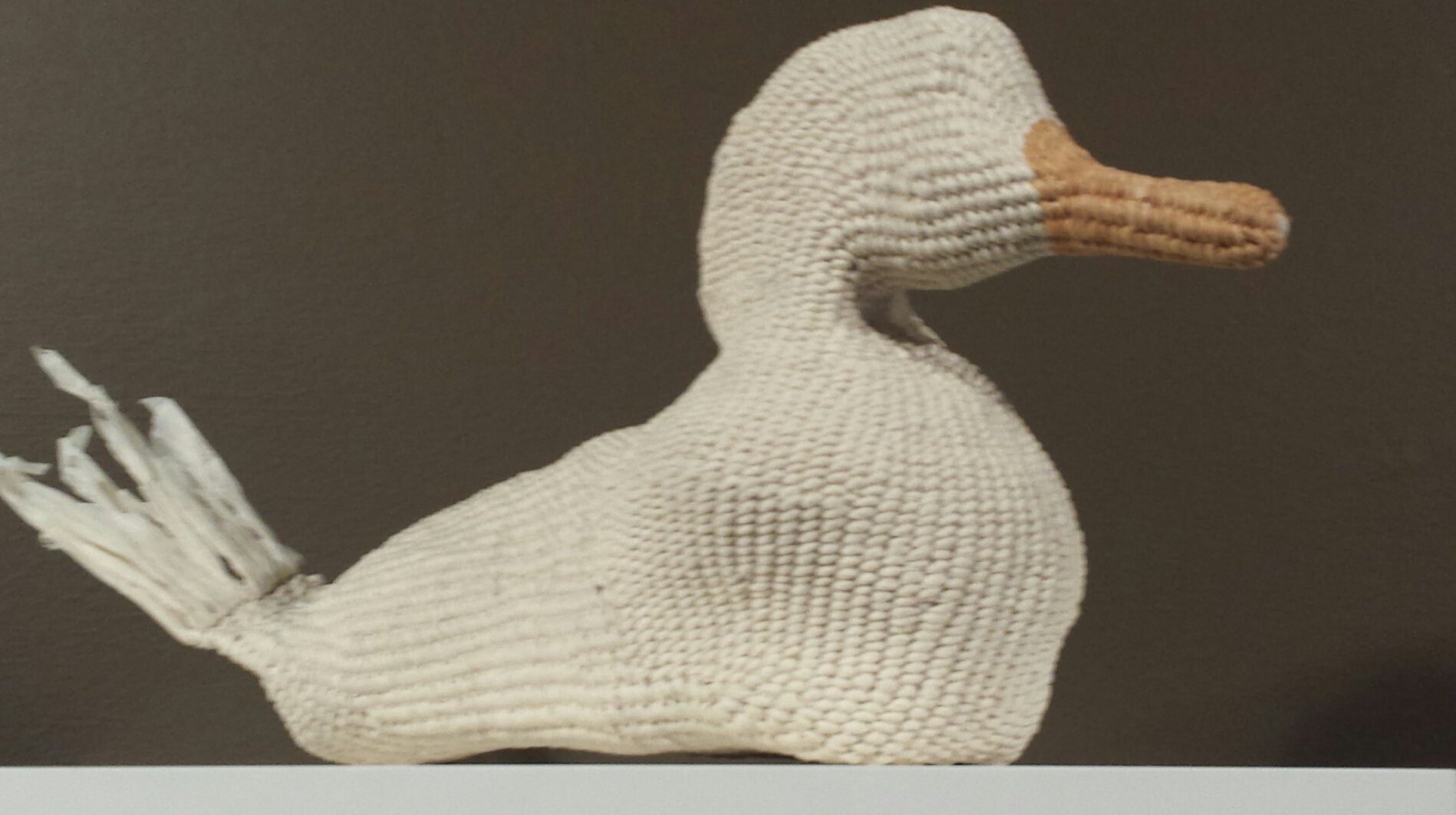
    Aimee Lee, hanji duck, Korean Cultural Center, March 2016
    Aimee Lee, hanji duck, exhibition at the Korean Cultural Center, NY, March 2016

    Firstindigo&Lifestyle: What other materials do you use today in the making of your art?

    AL: For the longest time, I have been very strict about using hanji whenever possible, or other handmade papers. My thread box is always full of different paper threads I have made, though I use cotton, linen, and silk thread to sew my hanji dresses. I also use the raw materials that make these papers, such as the cooked bark before it is beaten to a pulp. I use mostly natural dyes and finishes, which add color, structure, and protection to the paper. Last year, I collaborated with Kristen Martincic on a paper and ceramic installation, and recently had a couple of jewelry metals artists help me with additions to my paper ducks at Haystack Mountain School of Crafts. I’m interested in continuing this last investigation further.

    Firstindigo&Lifestyle: What is fascinating about your use of paper is its multiple dimensions from small objects to books. Your own writing and art (illustration) is sealed into these art books. Tell about the books, which you have made, how did the stories develop?

    AL: Books came first for me, before paper. I was making artists’ books at Oberlin College while studying with Nanette Yannuzzi Macias, which was a game changer. It was a way to combine writing, drawing, storytelling, and all kinds of other media into a form that felt very familiar and yet new. I don’t remember when I started to draw comics, but like improvisation, it was something that came naturally to me. I always thought that the point of being able to make my own books was the ability to create all of my own content. Most of my books contain original writing and stories that come from my own life experience, literature that I love, and the immediate present moment—whether an emotional space or an actual time in history that could be marked in the news cycle.


    Firstindigo&Lifestyle: Do you travel to Korea to get new ideas and exchange?

    AL: I am able to get back every several years, whenever I am funded. However, because of the distance and difficulty of making enough time to visit (I prefer going for longer periods of time), it’s not a journey I make often. Certainly it is inspiring, but it is a challenge as well because the expectations of me as a Korean American woman can be stressful.

    Firstindigo&Lifestyle: Often you hear that there is a division of thought between Eastern and Western approaches or philosophies. Do you feel you are bridging the gap between east and west in your practice, or do you think about these questions?

    AL: This idea comes up often and much of my work can be seen as bridge building between cultures. However, I do my best to stay away from the reductive nature of “East/West” because it sets up an automatic “Us/Them” mentality that can become dangerous. My life experience of feeling reduced to a single word, automatically, because of how I looked, keeps me aware of the unconscious instincts we have to categorize everything. I prefer to present my scholarship and artwork as being rooted in and inspired by many different traditions and cultures. It’s impossible for me to work any other way because I was born to immigrant parents and always lived between at least two disparate cultures.

    The “east meets west” cliché is one I particularly dislike, as if it has just happened, and as if there are only two monoliths in the world. It also comes from the point of view of a certain place being the center or more superior, which is problematic. Most cultures around the world have been in contact with each other for centuries, so cross-cultural understanding is not a new thing or an anomaly. Rather, it’s the norm.

    Firstindigo&Lifestyle: Where do you see yourself as an artist and educator in the future?

    AL: My goal is to build a new hanji studio for myself, where I can work, make paper, and teach independently, while continuing to travel to teach and exhibit. I want to train apprentices in this new space so that I can increase the number of people who can support hanji. There’s at least one more scholarly book left in me as well, so I look forward to finding the ideal setting to properly research and write it. All of this will be unlocked, I think, once I find the right place for myself to be.

    … … …

    Check out Aimee Lee on web: http://aimeelee.net/

    Her artists’ books can be found under the Bionic Hearing Press imprint from Vamp & Tramp.