Tag: environment

  • Cultural geography and ‘hiisi’-territoriality…

    Cultural geography and ‘hiisi’-territoriality…

    Cultural geographies can be full of imagination. Finland’s geography shares attributes of ice and snow, whereas some other places are filled with sand and heat. North, cold, south, warm, masculine, feminine, are ideas that we unconsciously relate to our cultural geographies. Then, ‘space’ when attached to cultural geographies is partially ‘virtual’. Interesting is, how our imagination creates space as ‘absolute’, ‘relative’, and ‘relational’ (as David Harvey challenges it).

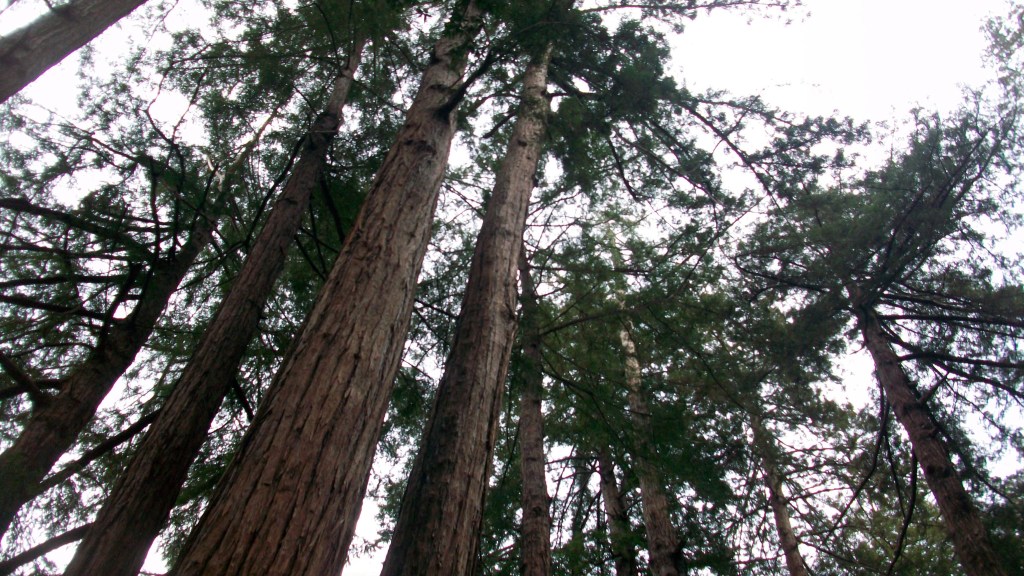
    What I am thinking in relation to my new work-in-progress research project within arts, is a questions of imagination; how do we as cultural beings and citizens of the global world, create meaning from our cultural origins, or from our cultural geographies. My current research is not about Finland, but I like to reflect one particular attribute, which so often defines Finland’s geographical imaginary. That is the forest, and forest has a meaningful and long prehistory in Finland.

    Folk traditions in Finland’s territory never considered forest as pure wilderness. From the prehistoric times, people utilized its resources leaving marks on a terrain. Originally, forest metsä in Finnish language did not mean the totality of space where trees are a dominant feature of the landscape, but the term pointed to the sacred. Metsä was an edge where inhabited regions of the people ends. It was a borderline for the everyday social life (tämänpuoleinen) and it was a route to the other world (tuonpuoleinen) (Anttonen 2003, 299-301).

    In the thirteenth century, early Baltic-Finnic population covered over 230 local villages in Finland’s territory. An old custom was that ritualized spaces were separated apart from the living areas. Certain trees in metsä had hiisi-inhabitants (hiidenväki) were the dead beings were put to rest at hiisi-sites. These hiisi-inhabitants were the supernatural people of the post-mortal world. When Christianity was brought into the country, the hacking of trees that had hiisi-inhabitants started, and churches were built on those spots. What then happened was, that folklore also converted hiisi –term and its ontological referent to signify ‘Hell’, as a borrowed duality from the Christian theology. The forest started to signify borders between the ‘civilized’ world and the ‘pagan’ world (Anttonen 2003, 299-301).

    How does this imagination enter our current ideas of the forest, is intriguing. How do we see the forest, how do we process it, occupy it, harness it, and so on?

    Reference: Anttonen, Veikko 2003: “Sacred Sites as Markers of Difference-Exploring Cognitive Foundations of Territoriality”. In Lotte Tarkka (ed.): Dynamics of Tradition. Perspectives on Oral Poetry and Folk Beliefs. (Essays in honour of Anna-Leena Siikala on her 60th Birthday, January 1st 2003). Finnish Literature Society: Helsinki, pp. 291-305.

  • Feeling good about my environment

    Feeling good about my environment

    I was tuning into Björk’s Joga, looking at videos of Icelandic landscape and thinking about the affective aspects of our environments. Where we grow up, the landscapes that we get used to, has an impact on us. I strongly believe that landscapes shape our emotions and our approaches to different environments.

    When I think about some of Björk’s own comments about the environment she grew up in, I feel the same way as she does about the North. We should reconsider the Arctic resources and the Northern environment, and take climate change more seriously. Rapid climate change would be huge threat to our landscapes, and even change our feelings about them. I recently learned about a new book, which speaks about the unspoken sites of the climate change process. “To Cook a Continent. Destructive Extraction and Climate Crisis in Africa” is a book by Nnimmo Bassey.

    Bassey writes about Africa, where nature and natural resources have been traditionally considered a blessing. His insight is that by using the nature in a wrong way can turn it into a curse. Bassey accuses global North for taking raw materials from Africa. This also means that when the wealthy economies are consuming fossil fuels, indigenous forests, and commercializing the global agriculture, those economies also destruct their own sense of the good. Our question should be, how to maintain our responsible approach to nature and environment? Perhaps one way is to keep enjoying the nature, and also bring that sense into our designing.

    The human aspect in the community development is a central part of the contemporary design of environments. A new and innovative design-thinking considering public spaces is now more focused in the ‘good-feeling’ aspect that can be attached to making the spaces. Adding dimension of ‘feeling good and happy’ recreates the interiors and designs to fit better in our lives, and to serve us better as communities. Design education at its simplest comes with a recognition that people want to feel good, weather they are in their work offices, at home, or visiting serving centers and service points in public spaces.

    Also, another important question is, what is my favorite place and environment? And, how do I define the good feeling attached to my favorite environment?  I consider a human component to be the core factor even when it comes to a work environment. Feeling good would come with additional space for interaction, which would bring awareness and a sense of collaboration. My experience of my favorite environment is attached to my own memory of different places, which I have visited in my life. Then, the collective images surrounding places shape my feelings about them. In retrospect, my feelings about different environments is influenced by various representations about them.

    In modern design the interiors and exteriors can change my perception of my surroundings quite significantly. How I experience the space, of course, depends of my age, size, and my habitat. I have become nostalgic about the childhood landscapes that my family used to visit. Calling those national parks also my favorite places on this earth makes me rethink how important they are today. Feeling good and remembering the favorite places is one way to respect the future of our environments and the nature.

  • Gigantic cake for a cause/light from recycled bottles

    Gigantic cake for a cause/light from recycled bottles

    What would be more uplifting in the season of the fall with less light approaching us, than to surprise your friends with a gigantic cake to vibrate senses. It is tasting good and creates a visual sculpture with a low cost budget. There is absolutely no reason why not. And it is a great excuse to do some communal action.

    Take this example from Helsinki, a parade of huge cake shared with hundreds of people walking in during one night. The cake definitely creates the performance in itself, and there will be lots to discuss around it. It is a terrific site for some new action plans. How about a theme of recycling, or new energy-saving strategies to create light with the Solar Bottles? The solar bottles is one of the smartest innovation to employ already existing material, namely used soda bottles, and hang them down from the hole in the ceiling/roof. This, of course, fits purposefully in the warmer climates, but one could also think of using them in the summerhouse, or while camping. Most importantly, this is a low-cost solution for the energy problem in South East Asia, where villages suffer from electricity cuts, and where the local areas are over-populated with households. (Go Youtube and search for the topic: Plastic soda bottles become light source…)

    When you start baking your communal action cake, think about solar bottles, recycling, and new design innovations from existing materials. Get involved in creating light. Light is increasing quality of life, it is fighting against depression, sustaining life, engaging our senses.